Author name: Prasanna

HBSE 10th Class Social Science Important Questions Civics Chapter 1 सत्ता की साझेदारी

Haryana State Board HBSE 10th Class Social Science Important Questions Civics Chapter 1 सत्ता की साझेदारी Important Questions and Answers.

Haryana Board 10th Class Social Science Important Questions Civics Chapter 1 सत्ता की साझेदारी

सत्ता की साझेदारी Extra Questions HBSE 10th Class प्रश्न-
बेल्जियम में जातीय बनावट का विवरण दीजिए।
उत्तर-
फ्लेमिश इलाके के डच बोलने वाले लोग : 59% वेलोनिया क्षेत्र के फ्रेंच बोलने वाले लोग : 40% जर्मन बोलने वाले लोग

Satta Ki Sajhedari Important Questions HBSE 10th Class प्रश्न-
बेल्जियम की राजधानी की जातीय बनावट बताइए।
उत्तर-
बेल्जियम की राजधानी ब्रुसेल्स का जातीय बनावट इस प्रकार है : फ्रेंच बोलने वाले लोग 80% है जबकि डच भाषा बोलने वाले लोगों की संख्या 20% है।

प्रश्न-
भारत के संदर्भ में श्रीलंका की भौगोलिक स्थिति क्या है?
उत्तर-
श्रीलंका भारत के दक्षिण में स्थित है।

प्रश्न-
क्या सत्ता का बँटवारा सत्ता के टुकड़े होते हैं?
उत्तर-
सत्ता की बाँट सत्ता की साझेदारी होती है, उसका टुकड़ों में बाँट नहीं।

HBSE 10th Class Social Science Important Questions Civics Chapter 1 सत्ता की साझेदारी

प्रश्न-
श्रीलंका में सिंहली जाति के लोग कुल जनसंख्या का कितना भाग हैं?
उत्तर-
74%

प्रश्न-
श्रीलंका में तमिल लोग कुल जनसंख्या का कितना भाग है?
उत्तर-
18%। इनमें श्रीलंकाई मूल के तमिल 13% है जबकि भारत मूल के तमिल 5%

प्रश्न-
सिंहली-भाषी लोगों का सम्बन्ध किस धर्म से
उत्तर-
बौद्ध धर्म से।

प्रश्न-
तर्क दीजिए कि सरकार के मंत्री किन्हीं सामाजिक समूहों के आधार पर बनाए जाएँ।
उत्तर-
सामाजिक समूहों की संख्या के अनुपात में मन्त्रियों की नियुक्ति सामाजिक एकता बनाए रखने में सहायता करती है।

प्रश्न-
गृहयुद्ध किसे कहते हैं?
उत्तर-
किसी देश में सरकार विरोधी समूहों की हिंसक लड़ाई गृहयुद्ध होती है।

प्रश्न-
2005 में जर्मनी में जो चुनाव हुए उनमें किस राजनीतिक दल को बहुमत प्राप्त हुआ था?
उत्तर-
जर्मनी में 2005 में हुए चुनावों में किसी भी राजनीतिक दल को बहुमत प्राप्त नहीं हुआ था।

प्रश्न-
जर्मनी के राजनीतिक दलों मे दो प्रमुख दलों के नाम बताइए।
उत्तर-
(1) क्रिश्चियन डेमोक्रेटिक पार्टी (2) सोशल डेमोक्रेटिक पार्टी।

प्रश्न-
ख़लील के पिता का सम्बन्ध किस धर्म से था?
उत्तर-
आर्थोडक्स ईसाई धर्म से। प्रश्न-खलील की माँ का सम्बन्ध किस धर्म से था? उत्तर-ख़लील की माँ सुन्नी मुखलमान थी।

प्रश्न-
लेबनान की राजधानी का नाम बताइए।
उत्तर-
बेरूत।

प्रश्न-
विधानपालिका का मुख्य कार्य क्या है?
उत्तर-
कानूनों का निर्माण करना।

प्रश्न-
अगर आपको लेबनान का कानून फिर से लिखने का अधिकार दिया जाए तो आप क्या करना चाहेंगे?
उत्तर-
लेबनान में गृहयुद्ध की स्थिति को बचाने के लिए वहाँ के बुजुर्गों ने कुछेक नियम बनाकर सत्ता बाँट करने की व्यवस्था को स्वीकृति दी थी। परन्तु ऐसा सब कुछ लोकतांत्रिक नहीं था। सामाजिक समूहों में एकता बनाने के लिए परस्पर ताल-मेल की आवश्यकता है। परन्तु इसे लोकतांत्रिक रूप दिया जाना चाहिए एवं निर्वाचन व्यवस्था लाने हेतु नए कानून बनाने की ज़रूरत है।

प्रश्न-
बेल्जियम में कौन-से जातीय समूह अल्पसंख्यक हैं? डच-भाषा बहुसंख्यक समुदाय की स्थिति बताइए।
उत्तर-
बेल्जियम में फ्रेंच-भाषी जातीय समूह अल्पसंख्यक से है। इस भाषा के बोलने वाले लोग बेल्जियम का कुल आबादी के केवल 40% लोग हैं। परन्तु अल्पसंख्यक फ्रेंच-भाषी लोग तुलनात्मक रूप से ज़्यादा समृद्ध और ताकतवर रहे हैं। बहुत बाद में जाकर आर्थिक विकास और शिक्षा का लाभ पाने वाले डच-भाषी लोगों को इस स्थिति से नाराज़गी थी। डच-भाषी लोग जनसंख्या से अधिक थे परन्तु, धन व समृद्धि के मामले में फ्रेंच-भाषी लोग सशक्त थे।

प्रश्न-
श्रीलंका में तमिल-भाषा अल्पसंख्यक लोग देश के किस क्षेत्र में आबाद हैं? उनका सम्बन्ध किस ध म से है?
उत्तर-
श्रीलंका में तमिल-भाषा अल्पसंख्यक लोग देश के उत्तर व पूर्वी प्रान्तों में आबाद हैं। इनमें अधिकतर का सम्बन्ध हिन्दू व इस्लाम धर्म से है। कुछेक ईसाई लोग भी हैं जिनकी संख्या कुल जनसंख्या का सात प्रतिशत है। वह सिंहाली भी बोलते हैं तथा तमिल भी। तमिल बोलने वाले 18% लोगों 13% श्रीलंकाई हैं तथा शेष भारतीय मूल के तमिल।

HBSE 10th Class Social Science Important Questions Civics Chapter 1 सत्ता की साझेदारी

प्रश्न-
तमिल-भाषा लोगों की क्या माँगें हैं?
उत्तर-
श्रीलंका में तमिल-भाषा लोगों ने अपने राजनीतिक दलों के माध्यम से निम्नलिखित माँगें रखी हुई हैं-

  • तमिल भाषा को राजभाषा बनाया जाए;
  • क्षेत्रीय स्वायतता दी जाए।
  • अन्य जातीय-समूहों के समान शिक्षा व रोजगार की सुविधाएँ/अवसर दिए जाएँ।
  • 1980 के दशक में तमिल ईलम (सरकार) बनाने की माँग की थी।

प्रश्न-
बेल्जियम में वह कौन-से प्रयास किए गए हैं जिनके कारण जातीय एकता बनाया रखा जा सके?
उत्तर-

  • केन्द्र सरकार में मुख्य भाषा बोलने वालों को मन्त्रिमण्डल में एक-समान प्रतिनिधित्व दिया। .
  • ऐसे कानून बनाए गए हैं कि कोई भी एक जातीय समूह एक तरफा फैसला न कर सके।
  • केन्द्रीय सरकार की अनेक शक्तियाँ देश के दो क्षेत्रों की क्षेत्रीय सरकारों को दी गयी हैं जो केन्द्र सरकार से अलग __ शासन करती हैं।
  • बेल्जियम की राजधानी ब्रुसेल्स में बनी सरकार में दोनों जातीय समूहों को एक समान प्रतिनिधित्व प्राप्त हैं।

प्रश्न-
बेल्जियम की सामुदायिक सरकार के बारे में आप क्या जानते हैं?
उत्तर-
बेल्जियम में केन्द्रीय और राज्य सरकारों के अलावा एक तीसरे स्तर की सरकार भी काम करती है यानी सामुदायिक सरकार। इस सरकार का चुनाव एक ही भाषा बोलने वाले लोग करते हैं। डच फ्रेंच और जर्मन बोलने वाले समुदायों के लोग चाहे वे जहाँ भी रहते हों, इस सामुदायिक सरकार को चुनते हैं। इस सरकार को संस्कृति, शिक्षा भाषा जैसे मसलों पर फैसले लेने का अधिकार है।

प्रश्न-
यूरोपीय देशों ने यूरोपीय संघ का मुख्यालय ब्रुसेल्स को क्यों चुना?
उत्तर-
बेल्जियम जातीय एकता का एक महत्त्वपूर्ण उदाहरण है। प्रायः अनेक देशों में रहने वाले अलग-अलग जातियों के लोग एक-दूसरे से लड़ते रहते हैं। परन्तु बेल्जियम के डच व फ्रेंच-भाषी लोगों के समुदाय जातीय एकता का प्रमाण देते हुए एक-साथ मिल-जुलकर रहते हैं। इसी जातीय एकता के कारण यूरोपीय संघ का मुख्यालय ब्रसेल्स को चुना गया।

प्रश्न-
श्रीलंका में बहुसंख्यकवाद व उसके प्रभाव का वर्णन कीजिए।
उत्तर-
बहुसंख्यकवाद से अर्थ उस व्यवस्था से है जहाँ तक बहुसंख्यक वर्ग अपने बहुमत के कारण शासन करते हुए मनमानापन कर सकता है तथा अल्पसंख्यकों के हितों की अनेदेखी करता है। श्रीलंका इसका एक उदाहरण है। सन् 1948 में श्रीलंका स्वतंत्र राष्ट्र बना। सिंहली समुदाय के नेताओं ने अपनी बहुसंख्या के बल पर शासन पर प्रभुत्व जमाना चाहा। इस वजह से लोकतांत्रिक रूप से निर्वाचित सरकार ने सिंहली समुदाय की प्रभुता कायम करने के लिए अपनी बहुसंख्यक-परस्ती के तहत कई कदम उठाए।

  • 1956 में एक कानून बनाया गया जिसके तहत तमिल को दरकिनार करके सिंहली को एकमात्र राजभाषा घोषित कर दिया गया।
  • विश्वविद्यालयों और सरकारी नौकरियों में सिंहलियों को प्राथमिकता देने की नीति भी चली।
  • नए संविधान में यह प्रावधान किया गया कि सरकार बौद्ध मत को संरक्षण और बढ़ावा देगी।

इन सरकारी फैसलों ने श्रीलंकाई तमिलों की नाराजगी और शासन को लेकर उनमें बेगानापन बढ़ाया। उन्हें लगा कि बौद्ध धर्मावलंबी सिंहलियों के नेतृत्व वाली सारी राजनीतिक पार्टियाँ उनकी भाषा और संस्कृति को लेकर असंवेदनशील हैं। उन्हें लगा कि संविधान और सरकार की नीतियाँ उन्हें समान राजनीतिक अधिकारों से वंचित कर रही है। परिणाम यह हुआ कि तमिल व सिंहली समुदायों में सम्बन्ध बिगड़ने लगे।
श्रीलंका में दो समुदायों के बीच पारस्परिक अविश्वास ने बड़े टकराव का रूप ले लिया। यह टकराव गृहयुद्ध में परिणत हुआ। परिणामस्वरूप दोनों पक्ष के हजारों लोग मारे जा चुके हैं।
अनेक परिवार अपने मुल्क से भागकर शरणार्थी बन गए हैं। .. इससे भी कई गुना ज्यादा लोगों की रोजी-रोटी चौपट हो गई है।

प्रश्न-
परस्पर जातीय तत्वों के उन्मूलन व जातीय एकता लाने हेतु बेल्जियम में क्या प्रभाव किए गए? उदाहरण सहित वर्णन कीजिए।
उत्तर-
बेल्जियम के नेताओं ने श्रीलंका से अलग रास्ता अपनाने का फैसला किया। उन्होंने क्षेत्रीय अंतरों और सांस्कृतिक विविधता को स्वीकार किया। 1970 और 1993 के बीच उन्होंने अपने संविधान में चार संशोधन सिर्फ इस बात के लिए किए कि देश में रहने वाले किसी भी आदमी को बेगानेपन का अहसास न हो और सभी मिल-जुलकर रह सकें। उन्होंने इसके लिए जो व्यवस्था की वह बहुत की कल्पनाशील है उसकी कुछ मुख्य बातें निम्नलिखित हैं-

  • संविधान में इस बात का स्पष्ट प्रावधान है कि केंद्रीय सरकार में डच और फ्रेंच-भाषी मंत्रियों की संख्या समान रहेगी। कुछ विशेष कानून तभी बन सकते हैं जब दोनों भाषायी समूह के सांसदों का बहुमत उसके पक्ष में हो। इस प्रकार किसी एक समुदाय के लोग एक तरफ फैसला नहीं कर सकते।
  • केंद्र सरकार की अनेक शक्तियाँ देश के दो इलाकों की क्षेत्रीय सरकारों को सुपुर्द कर दी गई है यानी राज्य सरकारें केंद्रीय सरकार के अधीन नहीं है।
  • ब्रूसेल्स में अलग सरकार है और इसमें दोनों समुदायों का समान प्रतिनिधित्व है। फ्रेंच-भाषी लोगों ने ब्रूसेल्स में समान प्रतिनिधित्व के इस प्रस्ताव को स्वीकार किया क्योंकि डच-भाषी लोगों ने केंद्रीय सरकार में बराबरी का प्रतिनधित्व स्वीकार किया था।
  • 4. ऐसी व्यवस्था से अलग-अलग एक सामुदायिक सरकार की भी रचना की गयी है जो सभी भाषी लोगों द्वारा चुनी जाती है तथा जिसका मुख्य कार्य शिक्षा व भाषा के मामलों पर निर्णय लेना है।

प्रश्न-
आधुनिक लोकतांत्रिक व्यवस्थाओं में सत्ता की साझेदारी के विभिन्न रूप बताइए।
उत्तर-
आधुनिक लोकतांत्रिक व्ययवस्थाओं में सत्ता की साझेदारी के विभिन्न रूपों में कुछेक का निम्नलिखित का वर्णन किया जा सकता है
1. शासन के विभिन्न अंग, जैसे विधायिका, कार्यपालिका और न्यायपालिका के बीच सत्ता का बँटवारा रहता है। इसे हम सत्ता का क्षैतिज वितरण कहेंगे क्योंकि इसमें सरकार के विभिन्न अंग एक ही स्तर पर रहकर अपनी-अपनी शक्ति का उपयोग करते हैं। ऐसे बँटवारे से यह सुनिश्चित हो जाता है कि कोई भी एक अंग सत्ता का असीमित उपयोग नहीं कर सकता। हर अंग दूसरे पर अंकुश रखता है। इससे विभिन्न संस्थाओं के बीच सत्ता का संतुलन बनता है। हमारे देश में कार्यपालिका सत्ता का उपयोग करती ज़रूर है पर यह संसद के अधीन कार्य करती है; न्यायपालिका की नियुक्ति कार्यपालिका करती है पर न्यायपालिका ही कार्यपालिका पर और विधायिका द्वारा बनाए कानूनों पर अंकुश रखती है। इस व्यवस्था को ‘नियंत्रण और संतुलन की व्यवस्था’ भी कहते हैं।

2. सरकार के बीच भी विभिन्न स्तरों पर सत्ता का बँटवारा हो सकता है : जैसे, पूरे देश के लिए एक सामान्य सरकार हो और फिर प्रांत या क्षेत्रीय स्तर पर अलग-अलग सरकार रहे। पूरे देश के लिए बनने वाली ऐसी सामान्य सरकार को अक्सर संघ या केंद्र सरकार कहते हैं, प्रांतीय या क्षेत्रीय स्तर की सरकारों को हर जगह अलग-अलग नामों से पुकारा जाता है। भारत में हम
इन्हें राज्य सरकार कहते हैं। हर देश में बँटवारा ऐसा ही नहीं है। कई देशों में प्रांतीय या क्षेत्रीय सरकारे नहीं हैं। लेकिन हमारी तरह, जिन देशों में ऐसी व्यवस्था है वहाँ के संविधान में इस तथ्य को स्पष्ट किया जाता है। राज्य सरकारों से नीचे के स्तर की सरकारों के लिए भी ऐसी ही व्यवस्था हो सकती है। नगरपालिकाएँ और पंचायतें ऐसी ही इकाइयाँ हैं। उच्चतर और निम्नतर स्तर की सरकारों के बीच सत्ता के ऐसे बँटवारे को उर्ध्वाधर वितरण कहा जाता है।

3. सत्ता का बँटवारा विभिन्न सामाजिक समूहों, मसलन, भाषायी और धार्मिक समूहों के बीच भी हो सकता है। बेल्जियम में ‘सामुदायिक सरकार’ इस व्यवस्था का एक अच्छा उदाहरण है। कुछ देशों के संविधान और कानून में इस बात का प्रावध न है कि सामाजिक रूप से कमजोर समुदाय और महिलाओं को विधायिका और प्रशासन में हिस्सेदारी दी जाए।

4. सत्ता के बँटवारे का एक रूप हम विभिन्न प्रकार के दबाव-समूह और आंदोलनों द्वारा शासन को प्रभावित और नियंत्रित करने के तरीके में भी लक्ष्य कर सकते हैं। लोकतंत्र में लोगों के सामने सत्ता के दावेदारों के बीच चुनाव का विकल्प होता है। समकालीन लोकतांत्रिक व्यवस्थाओं में यह विकल्प पार्टियों के रूप में उपलब्ध होता है। पार्टियाँ सत्ता के लिए आपस में प्रतिस्पर्धा करती हैं। पार्टियों की यह आपसी प्रतिद्वंद्विता ही इस बात को सुनिश्चित करती है कि सत्ता एक व्यक्ति या समूह के – हाथ में न रहे। प्रायः सत्ता बारी-बारी से अलग-अलग विचारध परा और सामाजिक समूहों वाली पार्टियों के हाथ आती-जाती रहती है। कई बार सत्ता की यह भागीदारी एकदम प्रत्यक्ष दिखती है क्योंकि दो या अधिक पार्टियाँ मिलकर चुनाव लड़ती हैं या सरकार का गठन करती हैं। लोकतंत्र में हम व्यापारी, उद्योगपति, किसान और औद्योगिक मजदूर जैसे कई संगठित हित-समूहों को भी सक्रिय देखते हैं। सरकार की विभिन्न समितियों में सीध ी भागीदारी करके या नीतियों पर अपने सदस्य-वर्ग के लाभ के लिए दबाव बनाते हुए ऐसे समूह सत्ता में भागीदारी करते हैं।

विकल्पीय प्रश्न

प्रश्न 1.
रिक्त स्थान को उचित शब्दों में भरिए-
(i) बेल्जियम जातीय. …का एक महत्त्वपूर्ण उदारहरण है (एकता, फूट)
(ii) श्रीलंका में शासन में……..है। (बहुसंख्यकवाद, . अल्पसंख्यकवाद)
(iii) श्रीलंका भारत के……….में स्थित एक द्वीपीय देश है। (उत्तर, दक्षिण)
(iv) ख़लील का सम्बन्ध…….देश से है। (सीरिया, लेबनान)
(v) विधानपालिका, कार्यपालिका, न्यायपालिका में सत्ता की बाँट………हैं। (क्षैतिज, उर्ध्वाधर)
उत्तर-
(i) एकता
(ii) बहुसंख्यकवाद,
(iii) दक्षिण,
(iv) लेबनान,
(v) क्षैतिजा

HBSE 10th Class Social Science Important Questions Civics Chapter 1 सत्ता की साझेदारी

प्रश्न 2.
निम्नलिखित में सही व गलत का चयन कीजिए।
(i) बेल्जियम की जनसंख्या भारत में उत्तर प्रदेश से भी अधि . क है।
(ii) श्रीलंका भारत के उत्तर में स्थित एक पहाड़ी देश है।
(iii) श्रीलंका में सिंहली व तमिल जातियाँ देखी जा सकती
(iv) एक नियम के अनुसार लेबनान में एक मुसलमान ही प्रधानमंत्री बन सकता है।
(v) बेल्जियम में सामुदायिक प्रकार की सरकार है।
उत्तर-
(i) गलत,
(ii) गलत
(iii) सही,
(iv) सही,
(v) सही।

प्रश्न 3.
सही विकल्पक का चयन करें

1. (i) बेल्जियम की राजधानी ब्रूसेल्स में यूरोपीय संघ का मुख्यालय है।
(ii) श्रीलंका में जातीय एकता पायी जाती है।
उत्तर-
कूट (क) (i) ठीक है
(ख) (ii) ठीक है .
(ग) (i) ठीक है परन्तु, (ii) गलत है
(घ) (ii) ठीक है परन्तु, (i) गलत है।

2. सही विकल्प का चयन करें
सूची। — सूची II
A. ख़लील 1. बेल्जियम
B. एनिले 2. लेबनान
C. सेल्वी 3. श्रीलंका
उत्तर-
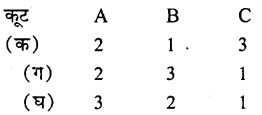
HBSE 10th Class Social Science Solutions Civics Chapter 1 सत्ता की साझेदारी 2

3. सही कथन का चयन कीजिए।
(क) बेल्जियम में सामुदायिक सरकार है
(ख) श्रीलंका में जातीय एकता है।
(ग) सत्ता की साझेदारी में समझदारी नहीं है।
(घ) श्रीलंका में तानाशाही व बेल्जियम में लोकतंत्र है।
उत्तर-
(i) (ग),
(ii) (क),
(iii) (क)

HBSE 10th Class Social Science Important Questions Civics Chapter 1 सत्ता की साझेदारी Read More »

HBSE 10th Class Social Science Important Questions Geography Chapter 7 राष्ट्रीय अर्थव्यवस्था की जीवन रेखाएँ

Haryana State Board HBSE 10th Class Social Science Important Questions Geography Chapter 7 राष्ट्रीय अर्थव्यवस्था की जीवन रेखाएँ Important Questions and Answers.

Haryana Board 10th Class Social Science Important Questions Geography Chapter 7 राष्ट्रीय अर्थव्यवस्था की जीवन रेखाएँ

राष्ट्रीय अर्थव्यवस्था की जीवन रेखाएँ Important Questions Geography HBSE 10th Class प्रश्न 1.
परिवहन क्यों आवश्यक है?
उत्तर-
परिवहन की आवश्यकता मुख्यतः दो कारणों से है-

  1. मनुष्यों के एक स्थान से दूसरे स्थान पर सुगमतापूर्वक यातायात हेतु।
  2. मालों को एक स्थान दो दूसरे स्थान पर सहजता से ले जाने हेतु।

HBSE 10th Class राष्ट्रीय अर्थव्यवस्था की जीवन रेखाएँ Important Questions Geography प्रश्न 2.
परिवहन के पाँच साधनों के नाम बताइए।
उत्तर-

  1. सड़क मार्ग,
  2. रेलमार्ग,
  3. पाइप लाइन,
  4. जलमार्ग,
  5. वायुमार्ग।

Chapter 7 राष्ट्रीय अर्थव्यवस्था की जीवन रेखाएँ Important Questions HBSE 10th Class प्रश्न 3.
जीवन के लिए संचार साधन क्यों आवश्यक हैं?
उत्तर-
संचार साधनों की आवश्यकता दूसरे लोगों के साथ संपर्क बनाये रखने के लिए आवश्यक है। आज संचार साधनों के विकसित रूप ने ही सुविधा प्रदान की है कि सात समुद्र पार स्थित अपने प्रियजनों से पलभर में संपर्क स्थापित किया जा सकता है। वस्तुत: वह संचार साधनों का ही श्रेय है कि आज सारा विश्व सिमटकर एक गाँव जैसा बन गया है।

HBSE 10th Class Social Science Important Questions Geography Chapter 7 राष्ट्रीय अर्थव्यवस्था की जीवन रेखाएँ

प्रश्न 4.
संचार के चार साधनों के नाम बताइये।
उत्तर-
संचार के चार साधन हैं-

  1. डाक तार,
  2. टेलिफोन,
  3. रेडियो,
  4. समाचार-पत्र।

प्रश्न 5.
जनसंचार क्या है?
उत्तर-
जनसंचार संचार का वह माध्यम है जिसके द्वारा बहुत से लोगों तक एक साथ सूचना या जानकरी दी जा सके। जनसंचार के माध्यम से लोगों तक मनोरंजन भी पहुँचाया जा सकता है।
टाटा-तमीणबाटणटावा जनसंचार के दो स्वरूप हैं-1. प्रिटमीडिया, 2. इलैक्ट्रोनिक मीडिया।

प्रश्न 6.
भारत के दो अंतःस्थलीय जलमार्गों के नाम बताइए।
उत्तर-
भारत के दो अंत:स्थलीय जलमार्गों के नाम निम्नवत् हैं

  1. गंगानदी जलमार्ग-इलाहाबाद से हल्दिया के मध्य।
  2. ब्रह्मपुत्र नदी जलमार्ग-सदिया से धुबरी के मध्य। ‘

प्रश्न 7.
भारत के पूर्वी तट पर स्थित प्रमुख पत्तनों के नाम बताइए।
उत्तर-

  1. कोलकाता,
  2. हल्दिया.
  3. पारादीप,
  4. विशाखापट्टनम,
  5. इन्नौर,
  6. चेन्नई,
  7. तुतीकोरिन।

प्रश्न 8.
उन राज्यों के नाम बताइए, जिनमें मुरमूर्गों व न्यू मंगलौर, पारीदीप और तुतिकारिन पत्तन स्थित हैं?
उत्तर-
पत्तन — राज्य

1. मूरमूगाँव — गोवा
2. न्यू मंगलौर — कर्नाटक
3. पारादीप — उड़ीसा
4. तूतीकोरिन — तमिलनाडु।

प्रश्न 9.
अनुकूल व्यापार संतुलन का अर्थ समझाइये। भारत के विदेशी व्यापार का संतुलन कैसा है?
उत्तर-
अनुकूल व्यापार संतुलन का अर्थ विदेश व्यापार की उस स्थिति से है जहाँ आयात कम और निर्यात अधिक हो। वर्तमान में भारत में आयात की अपेक्षा निर्यात कम है अत: वर्तमान समय में भारत का विदेशी व्यापार संतुलन प्रतिकूल अवस्था में है।

प्रश्न 10.
सड़के किस प्रकार के परिवहन के लिए उत्तम हैं,
उत्तर-
सड़कें छोटी और मध्यम दूरी की यात्रा और माल परिवहन के लिए बहुत उत्तम साधन हैं।

प्रश्न 11.
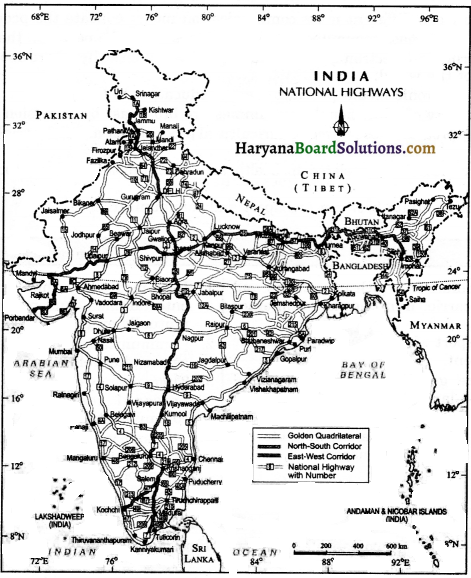
चार महानगरों को जोड़ने वाले एक्सप्रेस महामार्ग का क्या नाम रखा गया है।
उत्तर-
स्वर्णिम चतुष्कोण।

प्रश्न 12.
पूर्व-पश्चिम गलियारा पोरबंदर से किस नगर को जोड़ेगा?
उत्तर-
पूर्व-पश्चिम गलियारा पोरबंदर से सिलचर को जोड़गा।

प्रश्न 13.
भारतीय रेलवे का एशिया में कौन-सा स्थान
उत्तर-
भारतीय रेलवे का एशिया में दूसरा स्थान है।

प्रश्न 14.
भारत में सार्वजनिक क्षेत्र का सबसे बड़ा उपक्रम कौन-सा है?
उत्तर-
भारत में सार्वजनिक क्षेत्र का सबसे बड़ा उपक्रम भारतीय रेल है।

प्रश्न 15.
भारत में कितने रेलवे स्टेशन हैं?
उत्तर-
भारत में इस समय 7031 रेलवे स्टेशन हैं।

प्रश्न 16.
भारत में रेलमार्गों को कितना भाग विद्युतीकृत हो चुका है?
उत्तर-
भारत में रेलमार्गो की लगभग 23% भाग विद्युतीकृत किया जा चुका है।

प्रश्न 17.
छोटी लाइनों को बड़ी लाइनों में बदले जाने के पीछे क्या कारण है?
उत्तर-
छोटी लाइनों को बड़ी लाइनों में बदलने से रेलवे की पटरियों के बीच एक जैसी दूरी हो जायेगी जिससे परिवहन क्षमता तो बढ़ेगी ही, साथ ही गति भी बढ़ेगी।

प्रश्न 18.
भारत में इस समय कितने राष्ट्रीय जलमार्ग हैं?
उत्तर-
पाँच। प्रश्न-उद्योग मंडल नहर किस राज्य में है? उत्तर-उद्योग मंडल नहर केरल राज्य में हैं।

HBSE 10th Class Social Science Important Questions Geography Chapter 7 राष्ट्रीय अर्थव्यवस्था की जीवन रेखाएँ

प्रश्न 19.
वायु परिवहन का राष्ट्रीयकरण कब किया गया था?
उत्तर-
वायु परिवहन का राष्ट्रीयकरण सन् 1953 में किया गया था।

प्रश्न 20.
मुंबई को भारत का द्वारा क्यों कहा जाता है?
उत्तर-
वायु परिवहन की दृष्टि से मुंबई भारत से सबसे बड़ा पत्तन है। इसी कारण से इसे भारत के द्वारा की संज्ञा की गई है।

प्रश्न 21.
भारतीय पत्तनों के माध्यम से आयात और निर्यात में से कौन-सा अधिक होता है?
उत्तर-
भारतीय पत्तनों से आयात अधिक होता है और निर्यात कम।

प्रश्न 22.
आकाशवाणी के पास इस समय कितने रेडियों स्टेशन और ट्रांसमीटर्स है?
उत्तर-
आकाशवाणी के पास इस समय 200 रेडियो स्टेशन और 327 ट्रांसमीटर्स हैं।

प्रश्न 23.
समाचर-पत्र किस प्रकार की डाक सेवा के अंतर्गत शामिल किये जाते हैं?
उत्तर-
समाचार-पत्र दूसरे दर्जे की डाक सेवा के अंतर्गत शामिल किये जाते हैं।

प्रश्न 24.
डाक को जल्दी पहुँचने के लिए कौन-कौन से नए चैनल प्रारंभ किये जाते हैं?
उत्तर-
डाक व्यवस्था को तीव्रगति देने के लिए निम्नलिखित छः चैनल आरंभ किए गये हैं-

  1. राजधानी चैनल,
  2. मैट्रो चैनल,
  3. ग्रीन चैनल,
  4. व्यापार चैनल,
  5. भारी डाक चैनल,
  6. पत्र-पत्रिका चैनल।

प्रश्न 25.
भारत में सबसे अधिक किस वस्तु का आयात किया जाता है?
उत्तर-
भारत में सबसे अधिक पेट्रोलियम का आयात होता

प्रश्न 26.
भारत में प्रतिवर्ष लगभग कितने विदेशी पर्यटक आते हैं?
उत्तर-
भारत में प्रतिवर्ष 26 लाख विदेशी पर्यटक आते है।

प्रश्न 27.
भारत में सबसे अधिक दैनिक समाचार-पत्र किस भाषा में प्रकाशित होते हैं?
उत्तर-
हिंदी में।

प्रश्न 28.
वर्ष 2005 तक भारत की निर्यात वृद्धि वाली वस्तुओं की सूची बनाइए।
उत्तर-
पिछले कुछ वर्षों से वर्ष 2005-2004 तक, निर्यात वृद्धि वाली, वस्तुएँ थीं कृषि वर्गों से संबंधित उत्पाद (वृद्धि 2.53),खनिज व अयस्क (9.21%), रत्न व जवाहरात (26.75%), रसायन व संबंधित उत्पाद (24.45%) तथा पेट्रोलियम उत्पाद (कोयला सहित) (86.12%) आदि।

प्रश्न 29.
भारत में आयातित वस्तुओं की एक सूची बनाइए।
उत्तर-
भारत में आयातित वस्तुओं में पेट्रोलियम तथापेट्रोलियम उत्पाद (वृद्धि 28.6%), मोती व बहुमूल्य रत्न (9.4%), कोयला, कोक तथा कोयले का गोला (briquettes) (2.7%), मशीनरी (12.56%) आदि शामिल थे। एक समूह के रूप में भारी वस्तुओं के आयात में 28.2% प्रतिशत (कुल आयात का) वृद्धि हुई है। इस समूह में उर्वरक (3.4%), खाद्यान्न (14. 3%), वनस्पति तेल (17.4%) व न्यूज प्रिंट (40.3%) छपाई मशीनें भी शामिल हैं। अंतर्राष्ट्रीय व्यापार में पिछले 15 वर्षों में भारी बदलाव आया है। वस्तुओं के आदान-प्रदान की अपेक्षा सूचनाओं, ज्ञान तथा प्रौद्योगिकी का आदान-प्रदान बढ़ा है।

प्रश्न 30.
राष्ट्रीय महामार्ग क्या हैं?
उत्तर-
राष्ट्रीय महामार्ग का तात्पर्य उन सड़को से जो राष्ट्रीय महत्त्व की है। ये महामार्ग एक राज्य को दूसरे राज्य से जोड़ते हैं। इन राष्ट्रीय महामार्गों का निर्माण कार्य तथा रखरखाव केंद्र सरकार द्वारा करवाया जाता है। वर्तमान समय में भारत में राष्ट्रीय महामार्गों की कुल लंबाई लगभग 52,000 किमी. है। परंतु भारत की कुल सड़कों की लंबाई में इनका हिस्सा केवल 2% ही है। देश में 1991-2007 के मध्य लगभग 14,856 किमी. लंबा राष्ट्रीय महामार्ग बनाये जाने का प्रस्ताव है। ये राष्ट्रीय महामार्ग 4-6 लेन वाले होंगे। इनके निर्माण में आने वाले विशाल खर्च को संतुलित करने हेतु सरकार ने “बनाओ, चलाओं, और सौंपों। की नीति निर्धारित की है।

HBSE 10th Class Social Science Important Questions Geography Chapter 7 राष्ट्रीय अर्थव्यवस्था की जीवन रेखाएँ

प्रश्न 31.
पेट्रोलियम और प्राकृतिक गैस के परिवहन में पाइपलाइनों के लाभ बताइए।
उत्तर-
पहले समय में पाइपलाइनों का उपयोग नगरों तथा उद्योगों तक पानी पहुंचाने में ही होता था। परंतु आज इन पाइप लाइनों के माध्यम से कच्चा तेल और प्राकृतिक गैस को उत्पादन क्षेत्रों से परिष्करण शालाओं तक पहुंचाया जाता है। इससे सबसे बड़ा लाभ यह है कि इस प्रकार के ताप केंद्रों को बहुत थोड़े समय में ही मांग क्षेत्रों के निकट स्थापित किया जा सकता है। वर्तमान में देश में देश में तीन पाइपलाइनों के परिवहन जाल फैले हुए हैं। इनके प्रमुख लाभ निम्नवत हैं

  1. पाइप लाइन के रखरखाव में अत्यधिक खर्च नहीं आता।
  2. भूमिगत पाइपलाइन से प्रदुषण भी नहीं फैलता। 3. यह साधन सुविधाजनक होने के साथ-साथ सस्ता भी

प्रश्न 32.
एक्सप्रेस राष्ट्रीय महामार्ग किसे कहते हैं?
उत्तर-
एक्सप्रेस राष्ट्रीय महामार्ग का तात्पर्य उन मार्गों से है जिनका निर्माण देश में तीव्रगमी परिवहन की आवश्यकता की पूर्ति के लिए किया जा रहा है। 1999-2007 के मध्य इस प्रकार के 14,846 किमी. लंबे महामार्ग निर्माण की योजना है। इसमें आने वाले खर्च की भरपाई करने हेतु सरकार ने “बनाओं, चलाओ , और सौंपो” की नीति निर्धारित की है। एक्सप्रेस राष्ट्रीय महामार्गों का 4-6 लेन वाला होना निर्धारित है।
इस एक्सप्रेस राष्ट्रीय महामार्गों के नाम निम्नवत हैं-

  1. स्वर्णिम चतुष्कोण-यह चारों महानगरों को जोड़ने वाला महामार्ग है। इसकी प्रस्तावित लंबाई 5846 किमी. है।?
  2. उत्तर-दक्षिण तथा पूर्व-पश्चिम गलियारे-ये महामार्ग जहाँ एक ओर श्रीनगर को कन्याकुमारी से जोड़ेगें वही दूसरी ओर पोरबंदर को सिलचर से जोडेंगे। इनकी कुल प्रस्तावित लंबाई 7300 किमी. है।
  3. स्वर्णिम चतुष्कोण तथा गलियारों को 10 प्रमुख पत्तनों से जोड़ने वाले महामार्ग-इन महामार्गों की प्रस्तावित लंबाई 363 किमी. है। ये मार्ग कांडला, न्हावशेवा, मूरमूगाँव, तूतीकोरिन, चेन्नई, विशाखापट्टनम, पारादीप आदि पत्तनों को जोडेंगे।

प्रश्न 33.
स्वर्णिम चतुष्कोण एक्सप्रेस महामार्ग से जोड़ने वाले नगरों के नाम बताइए।
उत्तर-
स्वर्णिम चतुष्कोण एक्सप्रेस महामार्ग से जोडे जाने वाले नगरों के नाम हैं

  1. दिल्ली,
  2. मुंबई,
  3. कोलकाता,
  4. चेन्नई।

प्रश्न 34.
अंतर स्पष्ट कीजिए।
(क) व्यक्तिगत संचार साधन और जनसंचार के साधन
उत्तर-
व्यक्तिगत संचार साधन

  1. इसका तात्पर्य संचार के उन साधनों से है जिनका प्रयोग व्यक्तिगत तौर पर किया जाता है।
  2. इनके माध्यम से एक साथ सामान्यतः एक ही व्यक्ति से संपर्क किया जा सकता है।
  3. इसमें पत्र, टेलिफोन इंटरनेट, ई-मेल आदि सम्मिलित हैं

जनसंचार के साधन ।

  1. इनका प्रयोग मुख्यतः सार्वजनिक तौर पर किया जाता है।
  2. इनके माध्यम से एक साथ एक से अधिक व्यक्तियों से संपर्क किया जा सकता है।
  3. इसमें समाचार-पत्र, रेडियो, टी.वी., तथा चलचित्र आदि सम्मिलित है।

(ख) परिवहन और संचार
उत्तर-
परिवहन

  1. ये वे साधन है जिनके माध्यम से एक स्थान से दूसरे स्थान पर आवागमन कर सकते है।
  2. इनके माध्यम से वस्तुओं को भिन्न-भिन्न स्थानों पर ले जाया जा सकता है।
  3. परिवहन साधन मुख्यतः तीन वर्गों में विभक्त हैं-1. जल, 2. स्थल, 3. वायु परिवहन।

संचार:

  1.  इनके माध्यम से व्यक्ति एक दूसरे के साथ संपर्क स्थापित कर सकते हैं।
  2. इनके माध्यम से विचारों का आदान-प्रदान हो सकता
  3. संचार माध्यम मुख्यत5 दो भागों में विभक्त हैं- 1. व्यक्ति गत 2. जनसंचार।

प्रश्न 35.
भारतीय रेलों के सामने बढ़ते हुए दबावों को आप कैसे कम करेंगे।
अथवा
भारतीय रेल के बढ़ते दबावों को कम करने के कुछ उपाय सुझाइए।
उत्तर-
भारतीय रेल के बढ़ते दबावों को कम करने के लिए निम्नलिखित उपाय अपनाये जा सकते हैं

  1.  अधिक-से अधिक रेलमार्गों का विद्युतीकरण कर दिया जाए ताकि परिवहन में और भी अधिक शीघ्रता आ सके।
  2. रेल दुर्घटनाओं को रोकने के पुख्ता बंदोबस्त किए जायें।
  3. रेल दुर्घटनाओं के लिए जिम्मेदार लोगों को कठिन-से-कठिन और कठोरतम सजा दी जाये।
  4. रेलवे के साथ-साथ भारी मालों की ढुलाई के लिए अन्य परिवहन साधनों का भी प्रयोग किया जाये।
  5. प्राकृतिक गैस तथा पेट्रोलियम पदार्थो की ढुलाई के लिए पाइप लाइनों का प्रयोग अधिकाधिक किया जाये।
  6. थोड़ी दूरी के लिए बस ट्रक सेवाओं का प्रयोग अधि क किया जाये।

प्रश्न 36.
क्या आप इस कथन से सहमत हैं कि यदि सीमा सड़क संगठन सीमावर्ती क्षेत्रों में सड़क बनाने में सफल नहीं होता तो देश की सुरक्षा के लिए खतरा उत्पन्न हो सकता था?
उत्तर-
भारत के अधिकांश उत्तरी राज्य सीमा पर विदेशी के साथ जुड़े हुए हैं। ऐसे में इन सीमावर्ती इलाकों की सुरक्षा
एक नाजुक विषय है क्योंकि एक ओर तो यहाँ से शत्रु देशों से आक्रमण का भय बना रहता है दूसरी और घुसपैठियों भी इन्हीं मार्गों से आते हैं। इस संवेदनशील को देखते हुए ही सीमा क्षेत्रों में पुरानी सड़कों की देखभाल और नई सड़कों को बनाने के उद्देश्य से केंद्र सरकार ने सीमा सड़क संगठन की स्थापना की। इस संगठन ने सफलता पूर्वक सीमाक्षेत्र में सड़कों का विकास किया। इससे जहाँ देश की सुरक्षा के पुख्ता बंदोबस्त किये जा सके है। वहीं दुर्गम इलाकों पर तैनात सैनिकों तक रक्षा उपकरण तथा आवश्यक साजो-सामान सहजता से पहुँचाया जाना संभव हो पाया है। इससे देश को स्थायी सुरक्षा बंदोबस्त प्राप्त हो सका है। अत: यह स्पष्ट है कि सीमा सड़क संगठन द्वारा सीमावर्ती क्षेत्रों में सड़क बनाने में सफलता न मिलने पर देश की सुरक्षा के लिए खतरा उत्पन्न हो सकता था।

HBSE 10th Class Social Science Important Questions Geography Chapter 7 राष्ट्रीय अर्थव्यवस्था की जीवन रेखाएँ

प्रश्न 37.
निम्नलिखित पर संक्षिप्त टिप्पणी करें।
अंतर्राष्ट्रीय महामार्ग।
उत्तर-
अंतर्राष्ट्रीय महामार्ग-ये वे महामार्ग हैं जो देश को दूसरे देश के साथ जोड़ते हैं जैसे-ये महामार्ग भिन्न-भिन्न देशों से होकर गुजरते हैं। इन महामार्गों की देखरेख तथा सुरक्षा का दायित्व उस देश पर होता है। जिससे होकर ये मार्ग गुजरते

प्रश्न 38.
हुगली नदी को नाव्य बनाए रखने के लिए कौन-कौन से प्रयास किए गये हैं?
उत्तर-
हुगली नदी को नाव्य बनाए रखने के लिए निम्नलिखित प्रयास किये गये हैं

  1.  फरक्का बांध बनाकर पानी को स्तर को ऊँचा किया गया। जिससे नावों के चलने में आसानी हों
  2. फरक्का बांध की भांति और अधिक बांध बनाकर इसे इलाबाद तक नाव्य बनाये जाने की योजना बनाई जा रही है।

प्रश्न 39.
सघन व सक्षम परिवहन का जाल तथा संचार के साधन आज विश्व, राष्ट्र व स्थानीय व्यापार हेतु पूर्व-अपेक्षित है। समीक्षा कीजिए।
उत्तर-

  1. आज भारत अपने विशाल आकार, विविधताओं भाषाई तथा सामाजिक व सांस्कृतिक बहुलताओं के बावजूद संसार के सभी क्षेत्रों से सुचारू रूप से जुड़ा हुआ है।
  2. रेल, वायु, एवं जल परिवहन, समाचार-पत्र, रेडियो, दूरदर्शन सिनेमा तथा इंटरनेट आदि इसके सामाजिक-आर्थिक विकास में अनेक प्रकार से सहायक है।
  3. स्थानिक से अंतर्राष्ट्रीय स्तरीय व्यापार ने अर्थव्यवस्था को जीवन शक्ति दी है। इसने हमारे जीवन को समृद्ध किया है तथा आरामदायक जीवन के लिए सुविधाओं व साधनों में बढ़ोतरी की है।
  4. आधुनिक संचार तथा परिवहन के साधन हमारे देश है और इसकी आधुनिक अर्थव्यवस्था को संचालित करते हैं। अतः यह स्पष्ट है कि सघन व सक्षम परिवहन का जाल तथा संचार के साधन आज विश्व, राष्ट्र व स्थानीय व्यापार हेतु पूर्व-अपेक्षित हैं।

प्रश्न 40.
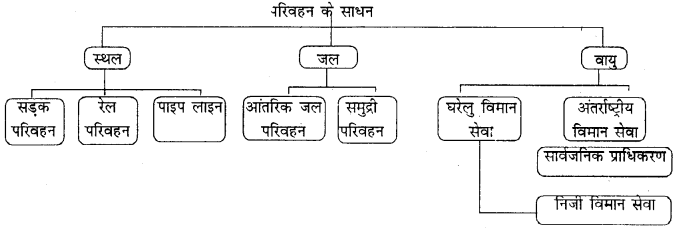
परिवहन के विभिन्न साधनों को एक रेखाचित्र के माध्यम से दर्शाइए।
उत्तर-
HBSE 10th Class Social Science Solutions Geography Chapter 7 राष्ट्रीय अर्थव्यवस्था की जीवन रेखाएँ 2

प्रश्न 41.
भारत में सड़क परिवहन को किन समस्याओं से जूझना पड़ रहा है?
उत्तर-

  1. भारत में सड़क परिहवन अनेक समस्याओं से जूझ रहा है। यातायात व यात्रियों की संख्या को देखते हुए सड़कों. को जाल अपर्याप्त है।
  2. लगभग आधी सड़के कच्ची है तथा वर्षा ऋतु को दौरान इनका उपयोग सीमित हो जाता है।
  3. राष्ट्रीय राजमार्ग भी अपर्याप्त है।
  4. इसके साथ ही शहरों में भी सड़के अत्यंत तंग तथा भीड़ भरी है तथा इन पर बने पुल व पुलिया पुराने तथा तंग है।

प्रश्न 42.
देश में फैले पाइपलाइन परिवहन के जालों की व्याख्या करें।
उत्तर-
देश में पाइपलाइन परिवहन के तीन प्रमुख जाल हैं

  1.  ऊपरी असम के तेल क्षेत्रों से गुवाहाटी, बरौनी, इलाहाबाद, के रास्ते कानपुर (उत्तर प्रदेश) तक। इसकी एक शाखा बरौनी से राजबंध होकर हल्दिया तक है; दूसरी राजबंध से मौरी ग्राम तक तथा गुवाहाटी से सिलिगुडी तक है।
  2. गुजरात में सलाया से वीरमगाव, मथुरा, दिल्ली व सोनीपत के रास्ते पंजाब में जालंधर तक। इसकी अन्य शाखा वडोदरा के निकट कोयली को चक्शु व अन्य स्थानों से जोड़ती है।
  3. गैस पाइपलाइन गुजरात में हजीरा को उत्तर प्रदेश में जगदीशपुर से मिलाती है। यह मध्यप्रदेश के विजयपुर के रास्ते होकर जाती है। इसकी शाखाएं राजस्थान में कोटा, तथा उत्तरप्रदेश के शाहजहाँपुर, बबराला, व अन्य स्थानों पर हैं।

प्रश्न 43.
भारत सरकार द्वारा घोषित राष्ट्रीय जलमार्गों की जानकरी दीजिए।
उत्तर-
निम्न जलमार्गों को भारत सरकार द्वारा राष्ट्रीय जलमार्ग घोषित किया गया है

  1. हल्दिया तथा इलाहाबाद के मध्य गंगा जलमार्ग जो 1620 किमी. लंबा है- नौगम्य जलमार्ग संख्या-1।
  2. सदिया व धुबरी के मध्य 891 किमी. लंबा ब्रह्मपुत्र नदी जलमार्ग-नौगम्य जलमार्ग संख्या-21
  3. केरल में पश्चिम-तटीय नहर (कोट्टमपुरम से कोम्मान तक, उद्योगमंडल तथा चंपक्कारा नहरें-205 किमी.) नौगम्य जलमार्ग संख्या-3 ।

प्रश्न 44.
आजकल रेल परिवहन की अपेक्षा सड़क परिवहन महत्त्व क्यों बढ़ रहा है? ।
उत्तर-
भारत विश्व के सर्वाधिक सड़क जाल वाले देशों में से एक हैं यह सड़क जाल लगभग 23 लाख किमी. है। भारत में सड़क परिवहन, रेल परिहवन से पहले प्रारंभ हुआ। निर्माण तथा व्यवस्था में सड़क परिवहन, रेल परिवहन की अपेक्षा अधिक सुविधाजनक है। रेल परिवहन की अपेक्षा सड़क परिवहन की बढ़ती महता निम्न कारणों से है-

  1. रेलवे लाइन की अपेक्षा सड़कों की निर्माण लागत बहुत कम है।
  2. अधिक ढाल प्रवणता तथा पहाड़ी क्षेत्रों में भी सड़कें निर्मित की जा सकती है।
  3. अपेक्षाकृत ऊबड़-खाबड व विच्छिन्न भू-भागों पर सड़कें बनाई जा सकती है।
  4. अपेक्षाकृत कम व्यक्तियों कम दूरी व कम वस्तुओं के परिवहन में सड़क मितव्ययी है।
  5. यह घर-घर सेवाएं उपलब्ध करवाता है तथा सामान चढ़ाने व उतारने की लागत भी अपेक्षाकृत कम है।
  6. सड़क परिवहन अन्य परिवहन साधनों के उपयोग में एक कड़ी के रूप में भी कार्य करता है, जैसे सड़कें, रेलवे स्टेशन, वायु व समुद्री पत्तनों को जोड़ती है।

प्रश्न 45.
भारतीय रेलों के आधुनिकीकरण हेतु आप क्या सुझाव देंगे?
अथवा
भारतीय रेल द्वारा उपलब्ध कारायी जा रही सुविध ाओं के बारे में आप क्या जानते हैं? आप इन सुविधाओं के विस्तार हेतु क्या सुझाव देंगे। .
उत्तर-
भारतीय रेल देश में सबसे बड़ा सार्वजनिक उपक्रम है। यह एशिया का दूसरा सबसे बड़ा रेल तंत्र है। भारतीय रेल के आधुनिकीकरण हेतु तथा यात्रियों को अधिकाधिक सुविधा उलब्ध कराने हेतु समय-समय पर अनेकानेक कदम उठाये जाते रहे हैं। इनका बिंदुवत उल्लेख निम्न प्रकार से किया जा सकता है-

  1. रेलमार्गों को अधिक-से-अधिक विद्युतीकरण किया जा रहा है। ताकि विद्युत इंजनों का अधिक प्रयोग हो सके, जिससे प्रदुषण की समस्या का अंत तो होगा ही साथ; परिवहन अधिक सुविधाजनक तथा तीव्रगामी हो सकेगां विद्युतीकरण की दिशा में और भी त्वरित प्रगति की जाय।
  2. रेल पटरियों की संख्या में प्रचुर इजाफा किया गया है। इससे अधिकाधिक रेलों को एक समय पर चला पाना संभव हो रहा है। फिर भी यात्रियों की भीड़ को देखते हुए मार्गों के और भी विस्तार की आवश्यकता है।
  3. सभी रेल लाइनों को शीघ्रतिशीघ्र बड़ी लाइन में बदल दिया जाये।
  4. जिन गाड़ियों में यात्रियों की संख्या कम होती है उनमें सवारी डिब्बों की संख्या कम की जाये और उन गाड़ियों में डिब्बों की संख्या बढ़ाई जो जिनमें यात्रियों की संख्या अधिक होती है।
  5. रेलवे में परोसे जाने वाले भोजन तथा पीने के पानी की गुणवता पर पुरा ध्यानि दिया जाये।
  6. रेलवे द्वारा कुलियों का शुल्क निर्धारित किया जाये।

प्रश्न 46.
‘भारतीय पर्यटन-ए व्यापार के रूप में’ विषय पर एक निबंध लिखिए।
उत्तर-
पिछले तीन दशकों में भारत में पर्यटन उद्योग में महत्त्वपूर्ण वृद्धि हुई है। वर्ष 2003 की अपेक्षा 2004 के दौरान देश में विदेशी पर्यटकों के आगमन में 23.5% वृद्धि दर्ज की गई जिसे 21,828 करोड़ विदेशी मुद्रा प्राप्त हुई। । प्रत्येक वर्ष, भारत में 26 लाख से अधिक विदेशी पर्यटक आते हैं। 150 लाख से अधिक व्यक्ति पर्यटन उद्योग में प्रत्यक्ष रूप से संलगन हैं। पर्यटन राष्ट्रीय एकता को प्रोत्साहित करता है। तथा स्थानीय हस्तकला व सांस्कृतिक उद्यमों को प्रश्रय देता है। अंतर्राष्ट्रीय स्तर पर यह में संस्कृतिक तथा विरासत कीसमझ विकसित करने में सहायक है। विदेशी पर्यटक भारत में विरासत पर्यटन, पारि-पर्यटन रोमांचकारी पर्यटन, सांस्कृतिक पर्यटन, चिकित्सा पर्यटन तथा व्यापारिक पर्यटन के लिए आते हैं।
भारत में विदेशी पर्यटकों के लिए राजस्थान, गोवा, जम्मू व कश्मीर तथा दक्षिण भारत के मंदिरों के नगर प्रमुख दर्शनीय स्थल है। उत्तर-पूर्वी भारत व हिमालय के अंदरूनी भाग संभव्य पर्यटन विकास स्थल है, लेकिन सामरिक कारणों से इनके विकास को अब तक प्रोत्साहित नहीं किया गया है। यद्यपि पर्यटन उद्योग विकास का एक उज्ज्वल भविष्य है।

HBSE 10th Class Social Science Important Questions Geography Chapter 7 राष्ट्रीय अर्थव्यवस्था की जीवन रेखाएँ

प्रश्न 47.
जनसंचार मानव को मनोरंजन के साथ-साथ बहुत से राष्ट्रीय कार्यक्रमों व नीतियों के विषय में जागरूक करता है। विवेचना कीजिए।
उत्तर-
जन-संचार, मानव को मनोरंजन के साथ बहुत से राष्ट्रीय कार्यक्रमों व नीतियों के विषय में जारूकता करता है। इसमें रेडियों, दूरदर्शन, समाचार-पत्र, पत्रिकाएं किताबें तथा चलचित्र सम्मिलित है। आकाशवाणी (ऑल इंडिया रेडियो) राष्ट्रीय, क्षेत्रीय तथा स्थानीय भाषा में देश के विभिन्न भागों में अनके वर्गों के व्यक्तियों के लिए विविध कार्यक्रम प्रसारित करता है। दूरदर्शन देश का राष्ट्रीय समाचार व संदेश माध्यम है तथा विश्व के वृहत्तम संचार-तंत्र में एक है। यह विभिन्न आयु वर्ग के व्यक्तियों हेतु मनोरंजक ज्ञानावर्धक, व ,खेल-जगत संबंधी कार्यक्रम प्रसारित करता है।

भारत में वर्षभर अनेक समाचार-पत्र तथा सामायिक पत्रिकाएं प्रकाशित की जाती है। ये पत्रिकाएं सामयिक होने के नाते (जैसे-मासि, साप्ताहिक आदि) कई प्रकार की है। समाचार-पत्र लगभग आते हैं। भारत विश्व में सर्वाधिक चलचित्रों का उत्पादक भी है। यह कम अवधि वाली , फिल्में वीडियों फीचर फिल्म तथा छोटी वीडियों फिल्में बनाता है। भारतीय व विदेशी सभी फिल्मों को प्रमाणित करने का अधिकार केंद्रीय फिल्म प्रमाणन बोर्ड को है।

प्रश्न 48.
रेलवे की समस्याओं का वर्णन कीजिए।
उत्तर-

  1. रेलवे की सबसे बड़ी समस्या आये दिन होने वाली दुर्घटनाएं हैं। इन दुर्घटनओं का कारण जहाँ एक ओर मानवीय भूल होती है तो दूसरी ओर तकनीकी खरीबी या असामाजिक तत्वों का उपद्रव। कारण जो भी हो इस समस्या से निजात पाना भारतीय रेलवे के लिए अत्यंत आवश्यक है।
  2. भारत में बड़ी संख्या में बिना टिकट यात्रा करते हैं इससे रेलवे को करोड़ों रूपये की हानि सहनी पड़ती है। साथ ही इसका विकास भी प्रस्तावित होता है।
  3. रेलवे के मालों की चोरी एक आम समस्या है। रेलवे __ अभी तक इस समस्या से निजात पाने का कोई प्रभावी कदम नहीं ढूंढ पाया है।
  4. यात्री समय-असमय व्यर्थ ही गाड़ी की चैन खींच देते हैं।
  5. असामाजिक तत्व जनता को तथा सरकार को परेशान करने के उद्देश्य से रेलवे को अपना निशाना बनाते हैं। वे कहीं रेलवे की पटरियों उखाड़ देते हैं। तो कहीं तोड़फोड़ और आगजनी तक कर बैठते हैं। इससे रेलयात्रा की सुरक्षा पर प्रश्न-चिह्न लग जाता है।
  6. भारतीय रेल की कई पटरियाँ, स्लीपर, तथा नदियों पर बनाये गये पुल पुराने हो चुके हैं। जिनके कारण दुर्घटना का व्यपाक भय बना रहता है।

प्रश्न 49.
स्वतंत्रता प्राप्ति के बाद भारत के अंतर्राष्ट्रीय व्यापार की प्रकृति में क्या परिवर्तन आया है।
उत्तर-
स्वतंत्रता से पहले जहाँ भारत का विदेश व्यापार भारत से अधिक इंग्लैण्ड को लाभ पहुंचाता था वहीं स्वतंत्रता के बाद भारत का अंतर्राष्ट्रीय व्यापार पूर्णत: भारत के हितों की पूर्ति करता है। स्वतंत्रता के बाद भारत के विदेश व्यापार के क्षेत्र में मुख्यतः निम्नलिखित अंतर आये हैं

  1. स्वतंत्रता के बाद भारत के विदेशी व्यापार की मात्रा में अभूतपूर्व वृद्धि हुई है।
  2. स्वतंत्रता के बाद का विदेश व्यापार भारत को अधि क-से-अधिक मूल्य उपलब्ध करा रहा हैं
  3. स्वतंत्रता प्राप्ति के बाद भारत का विदेश व्यापार मात्र इंग्लैण्ड या राष्ट्रमण्डल के देशों तक ही सीमित नहीं है। वरन् यह विश्वभर में फैल गया है।
  4. आज भारत कच्चे माल का निर्यात नक करके तैयार माल का निर्यात करता है। इससे अधिकतम लाभ अर्जित कर पाना संभव होता है।
  5. आज भारत कई ऐसी वस्तुओं का आयात भीकरता है जिन्हें पुनः उत्पादित करके वह निर्यात कर सकता है। और अधिक मुनाफा कमा सकता है।
  6. भारत का विदेशी व्यापार अब इंग्लैण्ड को अपेक्षा यूरोप के अन्य देशों पोलैण्ड जर्मनी आदि के साथ अधिक हो रहा है।
  7. स्वतंत्रता के बाद का भारतीय विदेश व्यापार भारत की आय तथा आर्थिक समृद्धि को बढ़ा रहा है।

इस प्रकार स्वतंत्रता के बाद भारत के विदेश व्यापार की प्रकृति में न केवल रूख में परिवर्तन आया है बल्कि यह अधि क-से अधिक देश तथा जनता का हित साधने वाला हो गया है।

प्रश्न 50.
भारत का सबसे महत्त्वपूर्ण बंदरगाह कौनसा है?
अथवा
क्या कारण है कि मुंबई को भारत का सबसे महत्त्वपूर्ण बंदरगाह माना जाता है? ..
उत्तर-
भारत का सबसे महत्त्वपूर्ण बंदरगाह मुंबई कहा जाता है। इसके प्रमुख कारण निम्नलिखित हैं

  1. मुंबई बंदरगाह भारत से होने वाले विदेश व्यापार को बड़ी मात्रा में संचालित करता है।
  2. यात्रियों का आवागमन सबसे अधिक मुंबई बंदरगाह द्वारा ही होता है।
  3. चूंकि भारत का विदेश व्यापार मुख्यतः यूरोपीय दक्षिण पश्चिमी एशियाई तथा अफ्रीकी देशों के साथ है; अत: व्यापार का केंद्रबिंदु यही बंदरगाह है।

प्रश्न 51.
भारत में वायु परिवहन पर संक्षिप्त टिप्पणी करें।
उत्तर-
वायु, परिवहन, परिवहन का आधुनिकतम रूप मो है ही, साथ ही सबसे मंहगा साधन भी है। लेकिन परिवहन साधनों में सबसे तेज साधन भी वायु परिवहन ही है। वायु परिवहन का आज के समय में बहुत अधिकक महत्त्व है। विशेष कर विशाल आकार और नियोजित आर्थिक विकास के कारण परिवहन का यह साधन भारत के लिए बहुत महत्त्वपूर्ण बन गया है। बड़े-बड़े औद्योगिक व व्यापारिक केन्द्र इसी माध्यम से आपस में संपर्क स्थापित करते हैं। भारत की वायु सीमा में सुरक्षित व सक्षम वायु यातायात व वैमानिक संचार सेवा प्रदान करने का दायित्व भारतीय विमानन प्राधिकरण का है। यह प्राधिकरण का है। यह प्राधिकरण वर्तमान समय में 11 अंतर्राष्ट्रीय विमान पत्तनों, 112 घरेलू विमानों पत्तनों तथा 28 सैनिक विमान टर्मिनलों का प्रबंध कर रहा है।
भारत में बायुपरिवहन मुख्य रूप से दो प्रकारों में उपलब्ध है-

1. अंतर्राष्ट्रीय वायु परिवहन सेवा-यात्रियों तथा माल परिवहन के लिए भारत में अंतर्राष्ट्रीय वायु सेवा एयर इंडिया द्वारा प्रदान की जाती है। एयर इंडिया के माध्यम से चार प्रमुख विमान पत्तनों-1. दिल्ली, 2. मुंबई, 3. चेन्नई, 4. कोलकाता से 35 देशों के लिए विमान सेवा उपलब्ध कराई जाती है। वर्ष 2000-01 में एयर इंडिया ने 38.3 लाख यात्रियों को सेवा प्रदान की।

भारत के प्रमुख अंतर्राष्ट्रीय वायु मार्ग हैं- 1. दिल्ली-रोम-फैकफुर्ट, 2. दिल्ली-मास्को, 3. कोलकाता-टोकियों, 4. कोलकाता-पर्थ, 5. मुंबई-लंदन-न्यूयार्क।

एयर इंडिया के अतिरिक्त कुछ विदेशी विमान कंपनियों भी भारत से विदेशों के लिए वायु सेवा प्रदान करती हैं।

2. घरेलू वायु परिवहन सेवा-भारत में घरेलू वायु परिवहन सेवा इंडियन एयर लाइंस अलांयस एअर और कुछ निजी वायु सेवा कंपनियों द्वारा तथा एयर टैक्सियों द्वारा प्रदान की जाती है। – इंडियन एयरलाइस दक्षिण-पूर्व-एशिया और पश्चिम एशिया के पड़ोसी देशों को भी वायु सेवा प्रदान की जा रही है, जबकि 38 निजी कंपनियों के पास अनियमित एयर टैक्सी चलाने का परमिट है।
निजी वायु सेवा कंपनियों की घरेलू वायु याततायात में इस समय 52.8% की भागीदारी है।

प्रश्न 52.
भारत के प्रमुख पत्तनों का संक्षिप्त परिचय दें
उत्तर-

  1. मुंबई-यह प्राकृतिक बंदरगाह है और देश का सबसे बड़ा पत्तन है।
  2. न्हावाशेवा-यह स्थान मुंबई में पास है। इसका विकास मुंबई बंदरगाह पर दबाव कम करने के लिए किया गया है।
  3. कांडला-स्वतंत्रता के समय कराची बंदरगाह के पाकिस्तान में चले जाने के बाद देश के उत्तर-पश्चिम भाग की आवश्यकतों को पूरा करने के लिए इस बंदरगाह काविकास किया गया है।
  4. मुरमूगांव-यह पोताश्रय गोवा में स्थित है। यहाँ से मुख्यतः लौह-अयस्क, मछलियों के उत्पादों, नारियल, और मसालों का निर्यात किया जाता है।
  5. न्यू मंगलौर-यह कर्नाटक में अवस्थित है और कुद्रेमुख के लौह अयस्क तथा लौह सान्द्र का निर्यात करता है।
  6. कोचीन-यह केरल में स्थित है। यह केरल, दक्षिण कर्नाटक और दक्षिणी-पश्चिमी तमिलनाडु की आवश्यकतों को पूरा करता है।
  7. कोलकता-यह हुगली नदी पर स्थित एक नदीय पत्तन है। यह बंगाल की खाड़ी से 128 किमी. दूर अंदर की ओर स्थित है। इस पत्तन का विकास ब्रिटिश भारत में ही हो गया था। यह एक ज्वारीय पत्तन है।
  8. हल्दिया-यह कोलकता से लगभग 105 किमी. दूर है और इसका विकास कोलकाता बंदरगाह के दबाव को कम करने के लिए किया गया है।
  9. पारीदीप-उड़ीसा के तट पर स्थित यह पत्तन मुख्य रूप से लौह अयस्क तथा कोयले का व्यापार करता है।
  10. विशाखापट्टनम-यह आंध्र प्रदेश के तट पर स्थित हैं यह सबसे गहरा और स्थल रूद्ध पत्तन है। इसे सबसे अधि क सुरक्षित पत्तन भी माना जाता है।
  11. चेन्नई-इसका विकास भी ब्रिटिश शासन में हो चुका __ था यह एक कृत्रिम पत्तन है। तट के निकट जल की कम गहराई के कारण इसमें बड़े जहाज नहीं आ पाते।
  12. इन्नौर-इसे एण्णर भी कहा कहा जाता है। यह एक नया पतन है। ये चेन्नई पत्तन दबाव कम करने के उद्देश्य से विकसित किया गया है।

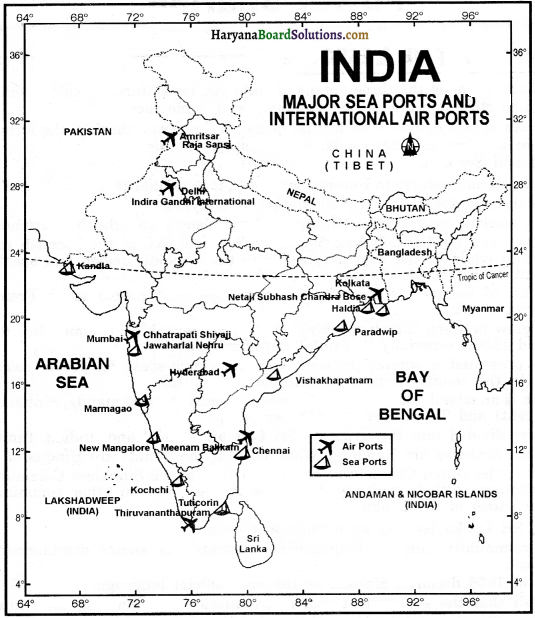
मानचित्र

प्रश्न-
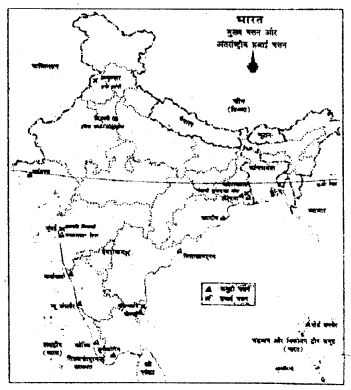
भारत के मानचित्र पर पाँच प्रमुख पत्तन तथा पाँच प्रमुख हवाई पत्तन को दर्शाइए।
उत्तर-
HBSE 10th Class Social Science Solutions Geography Chapter 7 राष्ट्रीय अर्थव्यवस्था की जीवन रेखाएँ 3

वस्तुनिष्ठ प्रश्न

1. सही उत्तर का चयन कीजिए।

प्रश्न 1.
भारत में सड़कों का जाल कितना लंबा है?
(क) 15 लाख किमी.
(ख) 18 लाख किमी.
(ग) 25 लाख किमी.
(घ) 23 लाख किमी.
उत्तर-
(घ) 23 लाख किमी.

प्रश्न 2.
स्वर्णिम चतुर्भूज महा मार्ग किस संस्था के अधि कार क्षेत्र में है?
(क) राष्ट्रीय राजमार्ग प्राधिकरण
(ख) सीमा सड़क संगठन
(ग) सी.पी. डब्ल्यू. डी.
(घ) इनमें कोई नहीं
उत्तर-
(क) राष्ट्रीय राजमार्ग प्राधिकरण

HBSE 10th Class Social Science Important Questions Geography Chapter 7 राष्ट्रीय अर्थव्यवस्था की जीवन रेखाएँ

प्रश्न 3.
जिला मार्गों की व्यवस्था का दायित्व किस संस्था का होता है?
(क) सी.पी.डब्ल्यू.डी
(ख) पी.डब्ल्यू. डी.
(ग) जिला परिषद्
(घ) एन.एच.ए.आई
उत्तर-
(ग) जिला परिषद्

प्रश्न 4.
सीमा सड़क संगठन की स्थापना कब हुई थीं?
(क) 1947
(ख) 1952
(ग) 1960
(घ) 1971
उत्तर-
(ग) 1960

प्रश्न 5.
सड़कों का औसत राष्ट्रीय घनत्व कितना है।
(क) 50 किमी. प्रति सौ वर्ग किमी.
(ख) 75 किमी. प्रति सौ वर्ग किमी.
(ग) 95 किमी. प्रति सौ वर्ग किमी.
(घ) 105 किमी. प्रति सौ वर्ग किमी.
उत्तर-
(ख) 75 किमी. प्रति सौ वर्ग किमी.

प्रश्न 6.
2004 ई. में भारतीय रेल की मार्गीय लंबाई क्या थी?
(क) 63,221 किमी
(ख) 50522 किमी
(ग) 63,729 किमी
(घ) 85,005 किमी
उत्तर-
(क) 63,221 किमी

प्रश्न 7.
भारत में पहली बार रेल कब चलाई गई थीं?
(क) 1848
(ख) 1851
(ग) 1853
(घ) 1858
उत्तर-
(ग) 1853

प्रश्न 8.
भारतीय रेल को कितने प्रखंडों में संकलित किया गया है?
(क) 9
(ख) 13
(ग) 18
(घ) 16
उत्तर-
(घ) 16

प्रश्न 9.
भारत में अंतः स्थलीय नौसंचालन जलमार्ग कितना किलोमीटर लंबा है?
(क) 14,500
(ख) 18500
(ग) 17,800
(घ) 21,523
उत्तर-
(क) 14,500

प्रश्न 10.
नौगम्य जलमार्ग संख्या-
1 की कुल लंबाई कितनी
(क) 14,500 किमी
(ख) 1620 किमी
(ग) 3700 किमी
(ग) 891 किमी
उत्तर-
(ख) 1620 किमी

प्रश्न 11.
देश का कितना प्रतिशत व्यापार समुद्र द्वारा होता है?
(क) 60%
(ख) 75%
(ग) 95%
(ग) 99%
उत्तर-
(ग) 95%

प्रश्न 12.
भारत की समुद्री तटरेखा कितनी लंबी हैं?
(क) 7,516.6 किमी.
(ख) 8,5116.6 किमी.
(ग) 95,16.6 किमी.
(घ) 5,516.6 किमी.
उत्तर-
(क) 7,516.6 किमी.

प्रश्न 13.
भारत में कितने बड़े पत्तन हैं?
(क) 5
(ख) 7
(ग) 9
(घ) 12
उत्तर-
(घ) 12

HBSE 10th Class Social Science Important Questions Geography Chapter 7 राष्ट्रीय अर्थव्यवस्था की जीवन रेखाएँ

प्रश्न 14.
भारत का पहला पत्तन कौन है? ।
(क) हल्दिया
(ख) कांडला
(ग) पारादीप
(घ) मुंबई
उत्तर-
(ख) कांडला

प्रश्न 15.
मारमागाओं पत्तन से कितना लौह-अयस्क निर्यात किया जाता है?
(क) 25%
(ख) 50%
(ग) 70%
(घ) 80%
उत्तर-
(ख) 50%

प्रश्न 16.
हमारे देश का प्राचीनतम कृत्रिम पत्तन का क्या नाम है?
(क) मुंबई
(ख) कोची
(ग) कांडला
(घ) चेन्नई
उत्तर-
(घ) चेन्नई

प्रश्न 17.
वायु परिवहन का राष्ट्रीयकरण कब किया गया था?
(क) 1953
(ख) 1954
(ग) 1955
(घ) 1956
उत्तर-
(क) 1953

प्रश्न 18.
भारत में अंतर्राष्ट्रीय वायुसेवा प्रदान करने वाली कंपनी का नाम बताइए।
(क) इंडियन एयरलाइस
(ख) जेट एयरवेज
(ग) एयर इंडिया
(घ) एलाइस एयर
उत्तर-
(ग) एयर इंडिया

प्रश्न 19.
किस देश का डाक-संचार तंत्र विश्व का वृहत्तम है?
(क) भारत
(ख) अमेरिका
(ग) फ्रांस
(घ) रूस
उत्तर-
(क) भारत

प्रश्न 20.
हमारे देश में सर्वाधिक समाचार-पत्र किस भाषा में प्रकाशित होता है?
(क) अंग्रेजी
(ख) बंगला
(ग) हिंदी
(घ) मलयालम
उत्तर-
(ग) हिंदी

प्रश्न 21.
बड़े शहरों व नगरों में डाक-संचार में शीघ्रता हेतु कितने डाकमार्ग बनाए गए हैं?
(क) 4
(ख) 6
(ग) 8
(घ) 11
उत्तर-
(ख) 6

2. निम्नलिखित सूचियों का सही मिलान कीजिए-

सूची (अ) — सूची (ब)
(क) एशिया ओशनिया — (अ) वायु परिवहन का राष्ट्रीयकरण
(ख) केरल — (ब) सर्वाधिक निर्यात
(ग) 1953 — (स) आंध्रप्रदेश
(घ) जवाहर लाल नेहरू पत्तन — (द) न्हावाशेवा
(ङ) वारंगल — (य) चंपाकर नहर
उत्तर-
(क) – ब,
(ख) – य,
(ग) – अ,
(घ) -घ,
(ङ) – स

3. निम्नलिखित सूचियों का सही मिलान कीजिए-

सूची (अ) — सूची (ब)
(क) 63,000 किमी — (अ) भारत की तटरेखा
(ख) 6867 — (ब) भारत में रेल मार्गों की कुल लंबाई
(ग) 5846 किमी. — (स) भारत में रेलवे स्टेशनों की संख्या
(घ) 7500 किमी. — (द) स्वर्णिम चतुष्कोण की लंबाई
(ङ) 32,000 — (य) भारत में टेलिफोन एक्सचेंजों
(च) 14 किमी. — (र) चम्पाकर नहर।
उत्तर-
(क) – ब,
(ख) – स,
(ग) – द,
(घ) – अ,
(ङ) – य
(च) – (र)

HBSE 10th Class Social Science Important Questions Geography Chapter 7 राष्ट्रीय अर्थव्यवस्था की जीवन रेखाएँ Read More »

HBSE 10th Class Social Science Important Questions Civics Chapter 4 जाति, धर्म और लैंगिक मसले

Haryana State Board HBSE 10th Class Social Science Important Questions Civics Chapter 4 जाति, धर्म और लैंगिक मसले Important Questions and Answers.

Haryana Board 10th Class Social Science Important Questions Civics Chapter 4 जाति, धर्म और लैंगिक मसले

जाति, धर्म और लैंगिक मसले प्रश्न उत्तर HBSE 10th Class प्रश्न-1.
राजनीति विज्ञान से घरेलू कामकाज की चर्चा राजनीति होती हैं? (इन्टैक्सट प्रश्न : पृष्ठ ; 40)
उत्तर-
घरेलू कामकाज की चर्चा इस रूप में राजनीति हैं क्योंकि स्त्रियों द्वारा किए गए घरेलू कामों को ‘निजी’ मानकर लिगभेद किया जाता है। और फिर परिवार में पुरुष की प्रधानता ‘सत्ता’ से जुड़ा तत्व हैं। .

जाति, धर्म और लैंगिक मसले के प्रश्न उत्तर HBSE 10th Class प्रश्न-2.
परिवार में काम करने वाली महिला अपने आपकों हाउसवाइफ कहती है और सारा दिन काम करती रहती है। तब भी वह कहती हैं कि वह काम नहीं करती। क्या इसका काम क्यों काम नहीं कहलाता? (इन्टैक्सट प्रश्न : पृष्ठ : 43)
उत्तर-
परिवार में महला द्वार किए गए काम का वेतन नहीं मिलता। वेतन न मिलने वाला काम को लोग काम नहीं समझते।

प्रश्न-3.
क्या नारीवाद अच्छा हैं? (इन्टैक्सट प्रश्न : पृष्ठ : 45)
उत्तर-
नारीवाद महिलाओं को समाज में पुरुषों के बराबर अधिकार व सुविधाएँ देने की मांग करता है। इस दृष्टि से नारीवाद साम्प्रदायिकतावाद व जातिवाद से बहतर है। नारीवाद महिलाओं पर हुए अत्याचार का विरोध करता है।

HBSE 10th Class Social Science Important Questions Civics Chapter 4 जाति, धर्म और लैंगिक मसले

प्रश्न-4.
लोग धार्मिक नहीं होते, क्यों उन्हें साम्प्रदायिकता और धर्म-निरपेक्षता की परवाह करनी चाहिए? (इन्टैक्सट प्रश्न : पृष्ठ : 46)
उत्तर-
धार्मिक व धार्मिक न होना एक अलग-सी स्थिति है। एक गैर-धार्मिक व्यक्ति को साम्प्रदायिकता की परवाह इसलिए करनी चाहिए, क्योंकि साप्प्रदायिकता का कुप्रभाव इस पर भी हो सकता है। धर्म-निरपेक्षता का कुप्रभाव भी व्यक्ति पर हो सकता है।

प्रश्न-5.
क्या जाति की चर्चा जातिवाद को बढ़ावा देती हैं? (इन्टैक्सट प्रश्न : पृष्ठः 51)
उत्तर-
जातिवाद की चर्चा से हम जाति के कुप्रभावों की जानकारी प्राप्त करते है इससे जातिवाद को बढ़ावा नहीं मिलता।

प्रश्न-6.
क्या चुप रहने से जाति व्यवस्था समाप्त हो जाती है? (इन्टैक्स प्रश्न : पृष्ठ : 51)
उत्तर-
जातिवाद की बुराइयाँ चुप रहने से कभी भी समाप्त नहीं होती। हम इसकी जितनी चर्चा करेंगे, हमें इसके कुप्रभावों का उतनी गहन समझ आएगी।

प्रश्न-7.
उन देशों का नाम बताइए जहां के सार्वजनिक जीवन में महिलाओं की भागीदारी का स्तर ऊँचा होता हैं?
उत्तर-
स्वीडर, नावे।, फिनलैंड।

प्रश्न-8.
भारत में महिलाओं की साक्षरता दर कितनी
उत्तर-
2001 की गणना के अनुसार, 54%।

प्रश्न-9.
भारत में लिंग अनुपात कितना हैं?
उत्तर-
2001 की गणना के अनुसार, 933 प्रति हजार पुरुष।

प्रश्न-10.
ग्रामीण व शहरी निकायों में निर्वाचित महिलाओं की संख्या बताइए।
उत्तर-
प्रायः यह संख्या सन्तोषजनक हैं।

प्रश्न-11.
साम्प्रदायिकता का अर्थ स्पष्ट कीजिए।
उत्तर-
जब धर्म को किहीं राजनीतिक लक्ष्यों की प्राप्ति का साधन बनाया जाता है तो उसे साम्प्रदायिकता कहा जाता है।

प्रश्न-12.
धर्म-निरपेक्ष राज्य में राज्य की क्या भूमिका होती हैं?
उत्तर-
धर्म-निरपेक्ष राज्य में राज्य सभी धर्मो को एक दृष्टि से देखता है तथा सबका एक समान सम्मान करता है।

प्रश्न-13.
किन्हीं दो भारतीय नेताओं के नाम बताइए जिन्होंने जातिवाद के विरुद्ध आवाज उठायी थीं?
उत्तर-
ज्योतिबा फुले, पेरियार रामास्वामी नायकर।

HBSE 10th Class Social Science Important Questions Civics Chapter 4 जाति, धर्म और लैंगिक मसले

प्रश्न-14.
भारत में 2001 में हिंदुओं की संख्या कितनी थी?
उत्तर-
पूरी जनसंख्या का 80.5% ।

प्रश्न-15.
2001 गणना के अनुसार भारत में मुसलमानों की संख्या बताइए।
उत्तर-
कुल जनसंख्या का 13.4%

प्रश्न-16.
2001 की जनगणना के अनुसार भारत में अनुसूचित जातियों व जनजातियों की संख्या बताइए।
उत्तर-
अनुसूचित जाति के लोग कुछ जनसंख्या का 16. 2%तथा जनजाति के लोग 8.2%।

प्रश्न-17.
भारत में पिछड़ी जातियों की कितनी संख्या है?
उत्तर-
राष्ट्रीय नमूना सर्वेक्षण 2004-2005 के अनुसार पिछड़ी जातियों के लोगों की संख्या कुल संख्या का 41% हैं।

प्रश्न-18.
अपने समाज में आदर्श स्त्री के बारे में प्रचलित धारणाओं की चर्चा कीजिए। आदर्श स्त्री के बारे में आपकी धारणा क्या हैं? (इन्टैक्सट प्रश्न : पृष्ट 41)
उत्तर-
आदर्श स्त्री ड्राइिंगरूम में सोफे पर बैठी टी.वी. देखने वाली स्त्री नहीं होती क्योंकि ऐसी स्त्री कोई सामाजिक कार्य नहीं करती। फैशन-उद्योग में भाग लेने वाली स्त्री को भी आदर्श स्त्री नहीं कहा जा सकता। स्त्रियां सुंदरता की प्रतीक अवश्य हाते हैं, पर उन्हें इस कारण आदर्श नही कहा जा सकता। आदर्श स्त्री घर में काम करने वाली ग्रहिणी नहीं होती; वह तो समस्त समय शोषित व्यक्ति के रूप में गुजारती आदर्श – स्त्री तो परिवार, समाज व सार्वजनिक जीवन में अपनी सही भूमिका निभाने वाली पुरुष के समान सदस्या होती है।

प्रश्न-19.
भारत में लिंग अनुपात की चर्चा कीजिए।
उत्तर-
2001 की जनगणना के अनुसार, भार में लिंग अनुपात 933 है। कुछेव राज्यों में प्रति हजार पुरुषों में स्त्रियों की संख्या 800 से भी कम रही है। पंजाब, हरियाणा हिमाचल प्रदेश और गुजरात जैसे राज्यों में स्थिति बड़ी गंभीर है। इन राज्यों में बाम लिंग अनुपात तेजी से घटा है। यहां प्रति हजार बालकों के मुकाबले में बालिकाओं की संख्या 800 से भी कम थीं।

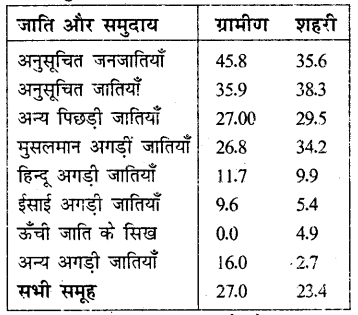
गरीबी रेखा के नीचे जीवन बसर करने वालों का प्रतिशत अनुपात,
HBSE 10th Class Social Science Solutions Civics Chapter 4 जाति, धर्म और लैंगिक मसले 2

प्रश्न-20.
उदाहरण सहित श्रम के लैंगिक विभाजन की चर्चा कीजिए।
उत्तर-
औरतों व पुरुषों के बीच श्रम को लेकर लैंगिक विभाजन की चर्चा इस प्रकार की जाती है कि औरतें घर का काम करती हैं तथा पुरुष, बाहर का। औरतें घर के अन्दर का सारा कामकाज जबकि मर्द घर के बाहर का काम करते हैं। इस आधार पर औरतों के काम को घर के अन्दर काम में व पुरुषों को ‘घर के बाहर के कामों में’ श्रम आधार पर बाँट दिया जाता है। औरतों के काम को कम मूल्यावन तथा पुरुषों के बाद को अधिक मूल्यवान मान लिया जाता है।

प्रश्न-21.
श्रम के लैंगिक विभाजन का परिणाम बताइए।
उत्तर-
श्रम के लैंगिक विभाजन का नतीजा यह हुआ है कि औरत तो घर की चारदीवारी में सिमट के रह गई है और बाहर का सार्वजनिक जीवन पुरुषों के कब्जे में आ गया है। मनुष्य जाति की आबादी में औरतों का हिस्सा आधा है पर सार्वजनिक जीवन में उन की भूमिका नगण्य ही है। हाल के कुल वर्षों में महिलाओं की स्थिति में सुधार हुआ है।

प्रश्न-22.
नारीवादी आन्दोलन किसे कहते हैं?
उत्तर-
महिलाओं के पक्ष में होने वाले आन्दोलनों को नारीवादी आन्दोलन कहा जाता है। इन आन्दोलनों में महिलाओं के लिए अधिक सुविधाओं की माँगें की जाती हैं। संसार के अलग-अलग हिस्सों में औरतों ने अपने संगठन बनाए हैं और पुरुषों के मुकाबले में बराबरी के अधिकार प्राप्त करने की माँग की है; अनेक अन्यों ने महिलाओं के राजनीतिक व वैधानिक दर्जे को ऊँचा करने की आवाजें भी उठायी हैं। यह सब नारीवादी आन्दोलन के कुछ पहलू कहे जा सकते हैं।

प्रश्न-23.
नारीवादी आन्दोलनों के क्या प्रभाव हुए हैं अथवा हो रहे हैं?
उत्तर-
लैंगिक विभाजन में महिलाओं की स्थिति हेतु चलाए गए नारीवादी आन्दोलनों ने सार्वजनिक जीवन में महिलाओं की भूमिका को बढाने में मदद की है। आज हम वैज्ञानिक, डॉक्टर, इंजीनियर, प्रबंधक, कॉलेज और विश्वविद्यालयों में शिक्षक जैसे पेशों में बहुत-सी औरतों को देख पाते हैं जबकि पहले महिलाओं के इन कामों के लायक नहीं समझा जाता था। दुनिया के कुछ हिस्सों, जैसे स्वीडन, नार्वे और फिनलैंड जैसे स्कैंडिनेवियाई देशों में सार्वजनिक जीवन में महिलाओं की भागीदारी का स्तर काफी ऊँचा है।

प्रश्न-24.
भारत के पुरुष प्रधान समाज में औरतों के साथ हो रहे भेदभाव को उदाहरण सहित समझाइए।
उत्तर-
भारत में, भले ही महिलाओं की स्थिति में सुधार हुआ है। इसके बावजूद अभी भी कई तरह से औरतों के साथ भेदभाव होते हैं, उनका दमन होता है। इनका साक्षरता दर पुरुषों के मुकाबले में कम है, ऊँचे पदों पर पहुँचनी वाली स्त्रियों की संख्या बहुत कम है। लड़कों के मुकाबले में लड़कियों की शिक्षा पर कम ध्यान दिया जाता है। पारिवारिक कानून जितना पुरुषों के पक्ष में है, उतने स्त्रियों के पक्ष में नहीं है।

प्रश्न-25.
साम्प्रदायिकता क्या है?
उत्तर-राजनीति में धर्म को जोड़ना साम्प्रदायिकता होती है। जब कोई एक धार्मिक समूह अपनी मांगों के लिए धर्म का सहारा लेता है तथा उस समूह के नेता धार्मिक भावनाओं को उकसाते हैं, तो इसे साम्प्रदायिकता कहा जाता है। राजनीतिक उद्देश्यों की प्राप्ति के लिए धर्म का प्रयोग साम्प्रदायिकता है। लोगों की धार्मिक भावनाओं को उकसाना साम्प्रदायिकता है। राजनीति में धर्म का प्रयोग साम्प्रदायिकता है।

HBSE 10th Class Social Science Important Questions Civics Chapter 4 जाति, धर्म और लैंगिक मसले

प्रश्न-26.
साम्प्रदायिकता क्यों भारत के लिए एक चुनौती
उत्तर-
साम्प्रदायिकता भारत में कुछ लोगों के लिए ही खतरा नहीं है। यह सम्पूर्ण देश के लिए, सामाजिक व्यवस्था के लिए, कानून व व्यवस्था के लिए चुनौती है। यह भारत की बुनियादी अवधारणा के लिए एक चुनौती है, एक खतरा है। हमारी तरह का धर्म-निरपेक्ष संविधान जरूरी चीज है पर अकेले इसी के बूते साम्प्रदायिकता का मुकाबला नहीं किया जा सकता। हमें अपने दैनिक जीवन में साम्प्रदायिक पूर्वाग्रहों और दुष्प्रचारों का मुकाबला करना होगा तथा धर्म पर आधारित गोलबंदी का मुकाबला राजनीति के दायरे में करने की जरूरत है। .

प्रश्न-27.
जाति की जटिलता को उदाहरण सहित बताइए।
उत्तर-
जाति की जटिलता उसकी विशेषता होती है। एक जाति समूह के लोग एक या मिलते-जुलते पेशों के तो होते ही हैं साथ ही उन्हें एक अलग सामाजिक समुदाय के रूप में भी देखा जाता है। उनमें आपस में ही बेटी-रोटी अर्थात् शादी और खानपान का संबंध रहता है। अन्य जाति समूहों में उनके बच्चों की न तो शादी हो सकती है न महत्त्वपूर्ण पारिवारिक और सामुदायिक आयोजनों में उनकी पाँत में बैठकर दूसरी जाति के लोग भोजन कर सकते हैं।

प्रश्न-28.
राजनीति किस प्रकार जातिगत पहचान को प्रभावित करती है?
उत्तर-
केवल राजनीति ही जातिग्रस्त नहीं होती, जाति भी राजनीतिग्रस्त होती है। राजनीति जातियों व उनकी उपजातियों को एक-दूसरे के के साथ अपने साथ लाने का प्रयास करती है। जातियाँ एक-दूसरे के निकट आती है अथवा निकट लायी जाती हैं ताकि उनकी राजनीतिक ताकत की पहचान बढ़ साके। राजनीति इस प्रकार के प्रयास करती है। राजनीति जातियों में गोलबंदी बनाए रखने का प्रयास करती है।

प्रश्न-29.
पुरुषों के मुकाबले में महिलाओं के साथ हुए भेदभाव के मुख्य उदाहरण बताइए।
उत्तर-
पुरुषों के मुकाबले में महिलाओं के साथ हुए भेदभाव के कुछैक मुख्य उदाहरण निम्नलिखित हैं-

  • महिलाओं में साक्षरता की दर अब भी मात्र 54 फीसदी है जबकि पुरुषों में 76 फीसदी। इसी प्रकार स्कूल पास करने वाली लड़कियों की एक सीमित संख्या ही उच्च शिक्षा की ओर कदम बढ़ा पायी हैं।
  • इस स्थिति के चलते अब भी ऊँची तनख्वाह वाले और ऊँचे पदों पर पहुँचने वाली महिलाओं की संख्या बहुत ही कम है। भारत में औसतन एक स्त्री एक पुरुष की तुलना में रोजाना एक घंटा ज्यादा काम करती है। पर उसको ज्यादातर काम के लिए पैसे नहीं मिलते। इसलिए अक्सर उसके काम को मूल्यवान
    नहीं माना जाता।
  • समान मजदूरी से संबंधित अधिनियम में कहा गया है कि समान काम के लिए समान मजदूरी दी जाएगी। बहरहाल, काम के हर क्षेत्र में यानी खेल-कूद की दुनिया से लेकर सिनेमा के संसार तक और कल कारखानों से लेकर खेत खलिहान तक महिलाओं को पुरुषों की तुलना में कम मजदूरी मिलती है, भले ही दोनों ने समान काम किया हो।
  • भारत के अनेक हिस्सों में माता-पिता को सिर्फ लड़के की चाह होती है। लड़की को जन्म लेने से पहले ही खत्म कर देने के तरीके इसी मानसिकता से पनपते हैं। इससे देश का लिंग अनुपात [प्रति हजार लड़कों पर लड़कियों की संख्या] गिरकर 927 रह गया है। तथ्यों से यह संकेत मिलता है कि कई जगहों पर यह अनुपात गिरकर 850 और कहीं-कहीं तो 800 से भी नीचे चला गया है।

प्रश्न-30.
भारत में राजनीति में महिलाओं के प्रतिनिधित्व पर चर्चा करें।
उत्तर-
भारत की विधायिका में महिला प्रतिनिधियों का अनुपात बहुत की कम है। जैसे, लोकसभा में महिला सांसदों की संख्या कभी कुल सदस्यों की दस फीसदी तक भी नहीं पहुंची है। राज्यों की विधान सभाओं में उनका प्रतिनिधित्व 5 फीसद से भी कम है। इस मामले में भारत का नंबर दुनिया के देशों में काफी नीचे है। भारत इस मामले में अफ्रीका और लातिन अमरीका के कई विकासशील देशों से भी पीछे है। कभी-कभार कोई महिला प्रधानमंत्री या मुख्यमंत्री की कुर्सी तक आ गई है पर मंत्रिमंडलों में पुरुषों का ही वर्चस्व रहा है।
इस समस्या को सुलझाने का एक तरीका तो निर्वाचित संस्थाओं में महिलाओं के लिए कानूनी रूप से एक उचित हिस्सा तय कर देना है। भारत में पंचायती राज के अंतर्गत कुछ ऐसी ही व्यवस्था की गई है। स्थानीय सरकारों यानी पंचायतों और नगरपालिकाओं में एक तिहाई पद महिलाओं के लिए
आरक्षित कर दिए गए हैं। आज भारत के ग्रामीण और शहरी स्थानीय निकायों में निर्वाचित महिलाओं की संख्या खासी ज्यादा है। लोकसभा और राज्य विधान सभाओं की भी एक तिहाई सीटें महिलाओं के लिए आरक्षित हेतु संसद में इस आशय का एक विधेयक पेश भी किया गया था पर दस वर्षों से ज्यादा अवधि से वह लटका पड़ा है।

प्रश्न-31.
साम्प्रदायिक राजनीति किस सोच पर आध रित है? समझाइए।
उत्तर-
साम्प्रदायिक राजनीति इस सोच पर आधारित होती है कि धर्म ही सामाजिक समुदाय का निर्माण करता है। इस मान्यता के अनुकूल सोचना साम्प्रदायिकता है। इस सोच के अनुसार एक खास धर्म से आस्था रखने वाले लोग एक ही समुदाय के होते हैं उनके मौलिक हित एक जैसे होते हैं तथा समुदाय के लोगों के आपसी मतभेद सामुदायिक जीवन में कोई अहमियत नहीं रखते। इस सोच में यह बात भी शामिल है कि किसी अलग धर्म को मानने वाले लोग दूसरे सामाजिक समुदाय का हिस्सा नहीं हो सकते; अगर विभिन्न धर्मों के लोगों की सोच में कोई समानता दिखती है तो यह ऊपरी और बेमानी होती है। अलग-अलग धर्मों के लोगों के हित तो अलग-अलग होंगे ही और उनमें टकराव भी होगा। साम्प्रदायिक सोच जब ज्यादा आगे बढ़ती है तो उसमें यह विचार जुड़ने लगता है कि दूसरे धर्मों के अनुयायी एक ही राष्ट्र में समान नागरिक के तौर पर नहीं रहे सकते। यह मानसिकता हानिकारक हो सकती है।

प्रश्न-32.
साम्प्रदायिकता राजनीति में किस प्रकार के रूप धारण कर सकती है? स्पष्ट कीजिए।
उत्तर-
साम्प्रदायिकता राजनीति में किस प्रकार के रूप ध गरण कर सकती है। इसमें प्रमुख का वर्णन निम्नलिखित है

  • साम्प्रदायिकता की सबसे आम अभिव्यक्ति दैनिक जीवन में ही दिखती है। इनमें धार्मिक पूर्वाग्रह, धार्मिक समुदायों के बारे में बनी बनाई धारणाएँ और एक धर्म को दूसरे धर्म से श्रेष्ठ मानने की मान्यताएँ शामिल हैं। ये चीजें इतनी आम है कि अक्सर हम उन पर ध्यान तक नहीं देते जबकि ये हमारे अंदर ही सहमति होती है।
  • साम्प्रदायिक सोच अक्सर अपने धार्मिक समुदाय का राजनीतिक प्रभुत्व स्थापित करने के फिराक में रहती है। जो लोग बहुसंख्यक समुदाय के होते हैं उनकी यह कोशिश बहुसंख्यकवाद का रूप ले लेती है। जो अल्पसंख्यक समुदाय के होते हैं उनमें यह विश्वास अलग राजनीतिक इकाई बनाने की इच्छा का रूप ले लेता है।
  • साम्प्रदायिक आधार पर राजनीतिक गोलबंदी साम्प्रदायिकता का दूसरा रूप है। इसमें धर्म के पवित्र प्रतीकों, धर्मगुरुओं, भावनात्मक अपील और अपने ही लोगों के मन में डर बैठाने जैसे तरीकों का उपयोग बहुत आम है। चुनावी राजनीति में एक धर्म के मतदाताओं की भावनाओं या हितों की बात उठाने जैसे तरीके अक्सर अपनाए जाते हैं।
  • कई बार साम्प्रदायिकता सबसे गंदा रूप लेकर सम्प्रदाय के आधार पर हिंसा, दंगा और नरसंहार कराती है। विभाजन के समरा भारत और पाकिस्तान में भयावह साम्प्रदायिक दंगे हुए थे। आजादी के बाद भी बड़े पैमाने पर साम्प्रदायिक हिंसा हुई है।

प्रश्न-33.
भारतीय संविधान में धर्म-निरपेक्षता से सम्बन्धि त कुछेक प्रावधान मिल गए हैं। उनमें प्रमुख का वर्णन कीजिए।
उत्तर-
भारतीय संविधान में धर्म-निरपेक्षता से सम्बन्धित कुछेक प्रावधान प्रत्यक्ष व परोक्ष रूप से , किए गए हैं। इनमें कुछेक वर्णन निम्नलिखित है
(क) भारतीय राज्य ने किसी भी धर्म को राजकीय धर्म के रूप में अंगीकार नहीं किया है। श्रीलंका में बौद्ध धर्म, पाकिस्तान में इस्लाम और इंग्लैंड में ईसाई धर्म का जो दर्जा रहा है उसके विपरीत भारत का संविधान किसी धर्म को धर्म को विशेष दर्जा नहीं देता।
(ख) संविधान सभी नागरिकों और समुदायों को किसी भी धर्म का पालन करने और प्रचार करने की आजादी देता है।
(ग) संविधान धर्म के आधार पर कि जाने वाले किसी तरह के भेदभाव को अवैधानिक घोषित करता है।
(घ) इसके साथ ही संविधान धार्मिक समुदायों में समानता सनिश्चित करने के लिए शासन को धार्मिक मामलों में दखल देने का अधिकार देता है। जैसे यह छुआछूत की इजाजत नहीं देता।
इस हिसाब से देखें तो धर्म-निरपेक्षता कुछ पार्टियों या व्यक्तियों की एक विचारधारा भर नहीं है। यह विचार हमारे संविधान की बुनियाद है।

प्रश्न-34.
राजनीति में जाति के मुख्य रूपों का वर्णन कीजिए।
उत्तर-
राजनीति में जाति के मुख्य रूपों को निम्नलिखित बताया जा सकता है-

  • जब पार्टियाँ चुनाव के लिए उम्मीदवारों के नाम तय करती हैं तो चुनाव क्षेत्र के मतदाताओं की जातियों का हिसाब ध्यान में रखती है ताकि उन्हें चुनाव जीतने के लिए जरूरी वोट मिल जाए। जब सरकार का गठन किया जाता है तो राजनीतिक दल इस बात का ध्यान देखते हैं कि उसमें विभिन्न जातियों और कबीलों के लोगों को उचित जगह दी जाए।
  • राजनीतिक पार्टियाँ और उम्मीदवार समर्थन हासिल करने के लिए जातिगत भावनाओं को उकसाते हैं। कुछ दलों को कुछ जातियों के मददगार और प्रतिनिधि के रूप में देखा जाता
  • सार्वभौम वयस्क मताधिकार और एक व्यक्ति एक वोट की व्यवस्था ने राजनीतिक दलों का विवश किया है कि वे राजनीतिक समर्थन पाने और लोगों को गोलबंद करने के लिए सक्रिय हों। इससे उन जातियों के लोगों में नयी चेतना पैदा हुई जिन्हें अभी तक छोटा और नीच माना जाता था।

प्रश्न-35.
क्या चुनावों को जातियों का खेल कहा जा सकता है? अपने पक्ष में तर्क दीजिए।
उत्तर-
चुनावों को जातियों का खेल नहीं कहा जा सकता। इस सम्बन्ध में निम्नलिखित तर्क दिए जा सकते हैं-

  • देश के किसी भी एक संसदीय चुनाव क्षेत्र में किसी एक जाति के लोगों का बहुमत नहीं है इसलिए हर पार्टी और उम्मीदवार को चुनाव जीतने के लिए एक जाति और एक समुदाय से ज्यादा लोगों का भरोसा हासिल करना पड़ता है।
  • कोई भी पार्टी किसी एक जाति या समुदाय के सभी लोगों का वोट हासिल नहीं कर सकती। जब लोग किसी जाति विशेष को किसी एक पार्टी का ‘वोट बैंक’ कहते हैं तो इसका मतलब यह होता है कि उस जाति के ज्यादातर लोग उसी पार्टी को वोट देते हैं।
  • अगर किसी चुनाव क्षेत्र में एक जाति के लोगों का प्रभुत्व माना जा रहा हो तो अनेक पार्टियों को उसी जाति का उम्मीदवार खड़ा करने से कोई रोक नहीं सकता। ऐसे में कुछ मतदाताओं के सामने उनकी जाति के एक से ज्यादा उम्मीदवार होते हैं तो किसी-किसी जाति के मतदाताओं के सामने उनकी जाति का एक भी उम्मीदवार नहीं होता।
  • हमारे देश में सत्तारूढ़ दल, वर्तमान सांसदों और विध यकों को अक्सर हार का सामना करना पड़ता है। अगर जातियों और समुदायों की राजनीतिक पसंद एक ही होती तो संभव नहीं हो पाता।

विकल्पीय प्रश्न

प्रश्न 1.
निम्नलिखित में सही व गलत की चयन कीजिए।
(i) भारत में पुरुषों के मुकाबले में स्त्रियों का अनुपात अधि क है।
(ii) नारीवादी लैंगिक विभाजन को बनावटी मानते हैं।
(iii) साम्प्रदायिकता लोकतंत्र को सुदृढ़ करती है।
(iv) भारत में जातिप्रथा की उत्पति वर्ण-अवस्था से की जाती है।
(v) लोकतंत्र में जातिगत भावनाएँ उसे कमजोर बनाती है।
उत्तर-
(i) गलत,
(ii) सही,
(iii) गलत,
(iv) सही,
(v) सही।

HBSE 10th Class Social Science Important Questions Civics Chapter 4 जाति, धर्म और लैंगिक मसले

प्रश्न 2.
निम्नलिखित में रिक्त स्थानों को उचित शब्दों में भरें
(i) लैंगिक अनुपात ……… के पक्ष में है। (स्त्रियों, पुरुषों)
(ii) साम्प्रदायिकता ……….. का नकारात्मक रूप है। (ध र्म, लोकतंत्र)
(iii) जातिवाद से जुड़े लोग ………. जाति के हित को ध्यान में रखते हैं। (अपनी, दूसरों)
(iv) भारत …….. प्रधान देश है। (स्त्री, पुरुष)
उत्तर-
(i) पुरुषों,
(ii) धर्म,
(iii) अपनी,
(iv) पुरुष।

प्रश्न 3.
(क) सही विकल्प का चयन करें
(i) गाँधी जी धर्म को नैतिक रूप में समझते थे।
(ii) जातिवाद लोकतंत्र को मजबूत बनाता है।
(iii) धर्म साम्प्रदायिकता का दूसरा रूप है।
उत्तर-
(i) सही

(ख) (i) भारत में लैंगिक अनुपात स्त्रियों व पुरुषों के बीच लगभग समान हैं।
(ii) साम्प्रदायिकता धर्म का राजनीतिकीकरण है।
कूट 1. (i) ठीक है, (ii) गलत है
2. (i) गलत है, (i) ठीक है
3. (i) तथा (ii) दोनों ठीक हैं
4. (i) तथा (i) दोनों गलत हैं।
उत्तर-
2. (i) गलत तथा (ii) ठीक है।

HBSE 10th Class Social Science Important Questions Civics Chapter 4 जाति, धर्म और लैंगिक मसले Read More »

HBSE 11th Class Sanskrit Solutions Shashwati Chapter 5 सौवर्णशकटिका

Haryana State Board HBSE 11th Class Sanskrit Solutions Shashwati Chapter 5 सौवर्णशकटिका Textbook Exercise Questions and Answers.

Haryana Board 11th Class Sanskrit Solutions Shashwati Chapter 5 सौवर्णशकटिका

HBSE 11th Class Sanskrit सौवर्णशकटिका Textbook Questions and Answers

1. संस्कृतेन उत्तरं दीयताम्
(क) मृच्छकटिकम् इति नाटकस्य रचयिता कः?
(ख) दारकः (रोहसेनः) रदनिका किम याचत?
(ग) वसन्तसेना दारकस्य विषये किं पृच्छति?
(घ) रदनिका किमुक्त्वा दारकं तोषितवती?
(ङ) रोहसेनः कस्य पुत्रः आसीत् ?
(च) आर्यचारुदत्तः केन आत्मानं विनोदयति?
(छ) रोहसेनः कीदृशी शकटिकां याचते?’
(ज) वसन्तसेना कैः मृच्छकटिकां पूरयति?
(झ) रोहसेनेन स्वपितुः किम् अनुकृतम्?
(ज) वसन्तसेना किमुक्त्वा दारकं सान्त्वयामास?
उत्तराणि:
(क) मृच्छकटिकम् इति नाटकस्य रचयिता ‘महाकवि शूद्रकः’ अस्ति।
(ख) दारकः रदनिकां सौवर्णशकटिकाम् अयाचत् ।
(ग) वसन्तसेना दारकस्य विषये पृच्छति, कस्य अयं दारकः?
(घ) रदनिका दारकं कथयति “तातस्य पुनरपि ऋद्ध्या सुवर्णशकटिकया क्रीडिष्यसि। इति कथयित्वा तोषितवती।”
(ङ) रोहसेनः आर्यचारुदत्तस्य पुत्रः आसीत्।
(च) आर्यचारुदत्तः अनेन पुत्रेण आत्मानं विनोदयति।
(छ) रोहसेनः सौवर्णशकटिकां याचते स्म।
(ज) वसन्तसेना आभूषणैः मृच्छकटिकां पूरयति।
(झ) रोहसेनेन स्वपितुः रूपं शीलं च अनुकृतम्।
(ञ) वसन्तसेना आभरणानि दत्वा कथयति “सौवर्णशकटिकां कारय।” इति उक्त्वा दारकं सान्त्वयामास ।

2. हिन्दीभाषया व्याख्यां लिखत

(क) अनलकृतशरीरोऽपि चन्द्रमुख आनन्दयति मम हृदयम्।
उत्तराणि:
प्रसंग प्रस्तुत नाट्यांश ‘शाश्वती प्रथमो भागः’ पुस्तक के अन्तर्गत ‘सौवर्णशकटिका’ नामक पाठ से उद्धृत है। वसन्तसेना चारुदत्त के पुत्र को देखकर कहती है कि व्याख्या यद्यपि इस बालक के शरीर पर किसी भी प्रकार का आभूषण नहीं है फिर भी इसका मुख चन्द्रमा के समान सुन्दर प्रतीत हो रहा है। इस कारण अपनी भोली आकृति के कारण मेरे हृदय को आनन्दित कर रहा है।

(ख) न केवलं रूपं शीलमपि तर्कयामि।
उत्तराणि:
प्रसंग-प्रस्तत नाटयांश ‘शाश्वती प्रथमो भागः’ पुस्तक के अन्तर्गत ‘सौवर्णशकटिका’ नामक पाठ से उदधत है। वसन्तसेना रोहसेन के सौन्दर्य पर मुग्ध होकर कहती है कि

व्याख्या इसका रूप तो बिल्कुल अपने पिता जैसा है। जब वसन्तसेना को यह मालूम हुआ कि रोहसेन आर्य चारुदत्त का पुत्र है तो वह अपने को यह कहने से न रोक पाई कि यह आकृति में अपने पिता के समान ही है। इसी मध्य रदनिका ने अपना मत स्पष्ट करते हुए कहा कि केवल रूप ही नहीं, अपितु इसका स्वभाव भी आर्य चारुदत्त जैसा ही है।

(ग) पुष्करपत्रपतितजलबिन्दुसदृशैः क्रीडसि त्वं पुरुषभागधेयैः।
उत्तराणि:
प्रसंग-प्रस्तुत नाट्यांश ‘शाश्वती प्रथमो भागः’ पुस्तक के अन्तर्गत ‘सौवर्णशकटिका’ नामक पाठ से उद्धृत है। आर्य चारुदत्त की निर्धनता पर चिन्तन करते हुए वसन्तसेना कहती है कि

व्याख्या तुम कमल के पत्ते पर गिरी पानी की बूंद की भाँति मनुष्य के भाग्य से खेल रहे हो। जिस प्रकार कमल के पत्ते पर गिरी जल की बूंद क्षणभर के लिए मोती की सुन्दरता को धारण करती है और फिर यथावत् स्थिति को प्राप्त हो जाती है उसी प्रकार तकदीर भी मनुष्यों को क्षण भर के लिए सुख पहुँचाती है तथा लम्बे समय के लिए दुःख उत्पन्न करती है।

(घ) जात! मुग्धेन मुखेन अतिकरुणं मन्त्रयसि।
उत्तराणि:
प्रसंग-प्रस्तुत नाट्यांश ‘शाश्वती प्रथमो भागः’ पुस्तक के अन्तर्गत ‘सौवर्णशकटिका’ नामक पाठ से उद्धृत है। जब रदनिका ने यह कहा कि यह आर्या तुम्हारी माँ होती है। ऐसा सुनकर बालक ने अत्यन्त सरल रूप से कहा कि यह मेरी माँ है तो इन्होंने आभूषण क्यों धारण किए हैं। बालक के इस बात को सुनकर वसन्तसेना कहती है व्याख्या हे बेटे! तू भोले मुख से अत्यन्त करुणा व्यक्त कर रहा है।

वस्तुतः वसन्तसेना ने बालक की भावना को भली-भाँति समझ लिया और उसने आँसू बहाते हुए अपने सभी आभूषण उतारकर उस बालक को दे दिए। आभूषणों को देखकर उसने बच्चे से कहा कि तुम इन आभूषणों से सोने की गाड़ी बनवा लेना।

HBSE 11th Class Sanskrit Solutions Chapter 5 सौवर्णशकटिका

3. अधोलिखितानां पदानां स्वसंस्कृतवाक्येषु प्रयोगं कुरुत
मृत्तिकाशकटिकया, सुवर्णव्यवहारः, अश्रूणि, विनोदयति, प्रातिवेशिकः, ऋद्ध्या, रोदिति।
उत्तराणि:
मृत्तिकाशकटिकया मिट्टी की गाड़ी से किं मम एतया मृत्तिकाशकटिकया।
सुवर्णव्यवहारः-सोने का व्यवहार। कुतः अस्माकं सुवर्णव्यवहारः।
अश्रूणि आँसुओं को। सा अश्रूणि प्रमृज्य माम् अवदत्।
विनोदयति-बहलाता है। रोहसेनेन आर्यचारुदत्तः आत्मानं विनोदयति।
प्रातिवेशिकः-पड़ोसी। मम प्रतिवेशिकः अद्य अत्र नास्ति।
ऋद्ध्या-सम्पन्नता से। तातस्य ऋद्ध्या पुनः अपि सौवर्णशकटिकया क्रीडिष्यसि।
रोदिति-रोती है। वसन्तसेना आभरणानि अवतार्य रोदिति।

4. अधोलिखितानां क्रियापदानि वीक्ष्य समुचितं कर्तृपदं लिखत
(क) …………. क्रीडावः।
(ख) ……………….. विनोदयामि।
(ग) ………… सुवर्णशकटिकया क्रीडिष्यसि।
(घ) …………….. अलीकं भणसि।
(ङ) किं निमित्तम् …………………. रोदिति।
उत्तराणि:
(क) वत्स आवां क्रीडावः।
(ख) अहं रोहसेनं विनोदयामि।
(ग) त्वं सुवर्णशकटिकया क्रीडिष्यसि।
(घ) त्वं अलीकं भणसि।
(ङ) किं निमित्तम् एषः रोदिति।

5. अधोलिखितानां पदानां सन्धिविच्छेदं कुरुत
(क) कुतोऽस्माकम् = …………….
(ख) पुनरपि = ………….
(ग) किनिमित्तम् = ………….
(घ) पुनस्ताम् = ……………..
(ङ) यद्यस्माकम् = ……………
(च) आभरणान्यवतार्य = ……………
उत्तराणि:
(क) कुतः + अस्माकम्।
(ख) पुन + अपि
(ग) किम् + निमित्तम्
(घ) पुनः + ताम्
(ङ) यदि + अस्माकम्
(च) आभरणानि + अवतार्य

6. निर्दिष्टप्रकृतिप्रत्ययनिर्मितं पदं लिखत
(क) निः + श्वस् + ल्यप् = ………………
(ख) अनु + कृ + क्त = ……………….
(ग) अलम् + कृ + क्त + टाप् = ………………..
(घ) अव + तृ + णिच् + ल्यप् = …………………
(ङ) पूर् + क्त्वा = ………………..
(च) आ + दा + ल्यप् = ……………
(छ) ग्रह + क्त्वा = ……………….
(ज) उप + सृ + ल्यप् = …………..
(झ) क्रीड् + क्त = ……………..
(ञ) प्र + मृज् + ल्यप् = …………
उत्तराणि:
(क) निःश्वस्य
(ख) अनुकृतम्
(ग) अलङ्कृता
(घ) अवतार्य
(ङ) पूरयित्वा
(च) आदाय
(छ) गृहीत्वा
(ज) उपसृत्य
(झ) क्रीडितम्
(ञ) प्रमृज्य

7. अधोलिखितानां पदानां विलोमपदानि लिखत
(क) सौवर्णशकटिका = ……………
(ख) अलीकम् = ……………..
(ग) अलङ्कृता = ……………..
(घ) निष्क्रान्ता = …………….
(ङ) अपेहि = …………….
(च) परसम्पत्त्या = ……………
उत्तराणि:
(क) सौवर्णशकटिका = मृत्तिकाशकटिका
(ख) अलीकम् = सत्यम्
(ग) अलङ्कृता = अनलङ्कृता
(घ) निष्क्रान्ता = प्रविष्टा
(ङ) अपेहि = उपेहि
(च) परसम्पत्त्या = स्वसम्पत्त्या

8. अधोलिखितानां पदानां पर्यायवाचिपदानि लिखत
दारकः, पितुः, तर्कयामि, जननी, नीता, भणति, अलीकम् ।
उत्तराणि:
दारकः = बालः, शिशुः, बालकः, वत्सः।
पितुः = तातस्य, जनकस्य, जन्मदस्य, जनयितुः।
तर्कयामि = चिन्तयामि, विचारयामि, विकल्पयामि।
जननी = माता, अम्बा, प्रसूः, जनित्री, माता।
नीता = गृहीत्वागता, आदाता।
भणति = वदति, कथयति, उदीर्यति।
अलीकम् = अनृतम्, असत्यम्, मृषा, मिथ्यावचनम्।

HBSE 11th Class Sanskrit Solutions Chapter 5 सौवर्णशकटिका

9. अधोलिखिताः पङ्क्तयः केन के प्रति उक्ताः
(क) एहि वत्स! शकटिकया क्रीडावः।
(ख) आर्यायाः वसन्तसेनायाः समीपम् उपसर्पिष्यामि।
(ग) एहि मे पुत्र! आलिङ्ग।
(घ) किं निमित्तं एष रोदिति।
(ङ) रदनिके! का एषा।
(च) जात! कारय सौवर्णशकटिकाम् ।
उत्तराणि:

पंक्तिःकः काकें प्रति
(क) एहि वत्स! शकटिकया क्रीडावः।रदनिकादारकम् प्रति
(ख) आर्यायाः वसन्तसेनायाः समीपम् उपसर्पिष्यामि।रदनिकास्वगतम्
(ग) एहि मे पुत्रक्! आलिड्ग।वसन्तसेनादारकम् प्रति
(घ) किं निमिंत्तं एष रोदिति।वसंन्तसेनादारकम् प्रति
(ङ) रदनिके! का एषा ।दारकःरदनिकाम्
(च) जात! कारय सौवर्णशकटिकाम्।वसन्तसेनादारकम्

10. पाठमाश्रित्य सोदाहरणं वसन्तसेनायाः रोहसेनस्य च चारित्रिकवैशिष्ट्यम् हिन्दीभाषायां लिखत
उत्तराणि:
वसन्तसेना-वसन्तसेना चारुदत्त की प्रेमिका है। गणिका होते हुए भी उसकी एक पुरुष के प्रति आसक्ति है। चारुदत्त के प्रति आसक्ति के कारण ही वह उसके पुत्र रोहसेन से मातृवत् प्रेम करती है। जब उसे रदनिका द्वारा पता चलता है कि यह चारुदत्त का पुत्र है तो उसके प्रति अपनी प्रतिक्रिया व्यक्त करते हुए कहती है कि ‘अनलङ्कृतशरीरोऽपि चन्द्रमुख आनन्दयति मम हृदयम्।’ अर्थात् बिना अलंकार के शरीर वाला भी चन्द्रमा के समान मुख वाला मेरे हृदय को आनन्दित कर रहा है। वह रोहसेन के रूप सौन्दर्य को देखकर उसकी समता चारुदत्त से करती है।

वसन्तसेना अत्यन्त उदार हृदय वाली स्त्री है। जब उसे पता चलता है कि रोहसेन सोने की गाड़ी के लिए रो रहा है तो वह मनुष्य की निर्धनता पर दुःखी हो जाती है। वह दुर्भाग्य की निन्दा करते हुए कहती है कि-“पुष्कर पत्र पतित-जल बिन्दु सदृशैः क्रीडसि त्वं पुरुषभागधेयैः।” अर्थात् कमल के पत्ते पर गिरी हुई जल की बूँद की भाँति तुम पुरुष के भाग्य से खेलते हो।

रोते हुए रोहसेन को प्रसन्न करने के लिए वह अपने सभी आभूषण उतार कर रोहसेन को मिट्टी की गाड़ी में रख देती है तथा उससे कहती है कि तुम इन आभूषणों से अपने लिए सोने की गाड़ी बनवा लेना। इस प्रकार वसन्तसेना का चरित्र एक कुशल प्रेमिका का तथा वात्सल्य से परिपूर्ण करुण हृदय वाली नायिका के रूप में वर्णित है।

रोहसेन-आर्य चारुदत्त का पुत्र रोहसेन अपने पिता की आर्थिक स्थिति को नहीं जानता बल्कि अपने पड़ोसी के बेटे जैसी सोने की गाड़ी माँगता है। इतना सब कुछ होते हुए रदनिका जब वसन्तसेना को उसकी माँ बताती है तो वह उसके आभूषणों से युक्त शरीर को देखकर कहने लगता है कि यह मेरी माँ कैसे हो सकती है, क्योंकि मैं एक ऐसे परिवार की सन्तान हूँ जिस परिवार में आभूषणों का प्रयोग नहीं होता। अपने पिता के समान ही रोहसेन स्वाभिमानी बालक है। जब वसन्तसेना अपने आभूषण रोते हुए उसे देती है तो वह लेने से इंकार कर देता है। वह कहता है तुम रो रही हो इसलिए मैं इन आभूषणों को नहीं लूँगा।

योग्यताविरतारः

सौवर्णशकटिका इति पाठस्य साभिनयं नाट्यप्रयोगं कुरुत
उत्तरम्:
छात्राः! प्राध्यापकस्य सहायतया अस्य नाट्यांशस्य अभिनयं कुरुत।

HBSE 11th Class Sanskrit सौवर्णशकटिका Important Questions and Answers

अतिरिक्त प्रश्नोत्तराणि

I. अधोलिखितान् नाट्यांशान् पठित्वा एतदाधारितानां प्रश्नानाम् उत्तराणि संस्कृतेन लिखत
(निम्नलिखित नाट्यांशों को पढ़कर नीचे दिए गए प्रश्नों के उत्तर संस्कृत में लिखिए।)

(1) रदनिका- एहि वत्स! शकटिकया क्रीडावः।
दारकः- (सकरुणम्)
रदनिके! किम्मम एतया मृत्तिकाशकटिकया? तामेव सौवर्णशकटिकां देहि। रदनिका- (सनिर्वेदं निःश्वस्य)
जात! कुतोऽस्माकं सुवर्णव्यवहारः? तातस्य पुनरपि ऋद्ध्या सुवर्णशकटिकया क्रीडिष्यसि। (स्वगतम्) तद्यावद् विनोदयाम्येनम् । आर्याया वसन्तसेनायाः समीपमुपसर्पिष्यामि। (उपसृत्य) आर्ये! प्रणमामि। वसन्तसेना-रदनिके! स्वागतं ते। कस्य पुनरयं दारकः?
अनलकृत-शरीरोऽपि चन्द्रमुख आनन्दयति मम हृदयम्।
(i) दारकः कस्य आसीत्?
(ii) अस्मिन् संवादे कति पात्राणि सन्ति?
(iii) वसन्तसेनायाः हृदयं किमर्थम् आनन्दयति?
उत्तराणि:
(i) दारकः चारुदत्तस्य आसीत्।
(ii) अस्मिन संवादे त्रीणि पात्राणि सन्ति।
(iii) अनलङ्कृतशरीरोऽपि चन्द्रमुखः चारुदत्तस्य पुत्रः रोहसेनः वसन्तसेनायाः हृदयम् आनन्दयति।

2. वसन्तसेना-हा धिक् हा धिक् ! अयमपि नाम परसम्पत्त्या सन्तप्यते? भगवन् कृतान्त! पुष्करपत्रपतित-जलबिन्दुसदृशैः क्रीडसि त्वं पुरुषभागधेयैः। (इति सास्रा)। जात! मा रुदिहि! सौवर्णशकटिकया क्रीडिष्यसि।
(i) अयं कया सन्तप्यते?
(ii) कृतान्तः कैः क्रीडति?
(iii) कृतान्त कीदृशैः क्रीडति?
उत्तराणि:
(i) अयं परसम्पत्त्या सन्तप्यते।
(ii) कृतान्तः पुरुषभागधेयैः क्रीडति।
(iii) कृतान्तः पुष्करपत्रपतितजलबिन्दुसदृशैः क्रीडति।

3. दारकः-रदनिके! का एषा?
रदनिका-जात! आर्या ते जननी भवति।
दारक:- रदनिके! अलीकं त्वं भणसि। यद्यस्माकमार्या जननी तत् केन अलङ्कृता?
वसन्तसेना-जात! मुग्धेन मुखेन अतिकरुणं मन्त्रयसि।
(i) आर्या ते का भवति?
(ii) दारकः मुग्धेन मुखेन किं मन्त्रयति?
(iii) दारकः वसन्तसेनायाः विषये किं कथितम्?
उत्तराणि:
(i) आर्या ते जननी भवति।
(ii) दारकः मुग्धेन मुखेन अतिकरुणं मन्त्रयति।
(iii) दारकः वसन्तसेनायाः विषये कथितम् सा अलीकं भणति। यद्यस्माकमार्या जननी तत् केन अलङ्कृता।

II. रेखांकित पदानि आधृत्य प्रश्ननिर्माणं कुरुत
(रेखांकित पदों के आधार पर प्रश्न निर्माण कीजिए।)
(i) रोहसेनः आर्यचारुदत्तस्य पुत्रः आसीत्।
(ii) दारकः रदनिका सौवर्णशकटिकाम् अयाचत्।
(iii) रोहसेनेन स्वपितुः रूपं शीलं च अनुकृतम्।
(iv) रोहसेनः सौवर्णशकटिकया क्रीडितुम् इच्छति।
उत्तराणि:
(i) रोहसेनः कस्य पुत्रः आसीत्?
(ii) दारकः रदनिका किम् अयाचत्?
(iii) रोहसेनेन स्वपितुः किम् अनुकृतम् ?
(iv) रोहसेनः कया क्रीडितुम् इच्छति?

HBSE 11th Class Sanskrit Solutions Chapter 5 सौवर्णशकटिका

बहुविकल्पीय-वस्तुनिष्ठ प्रश्नाश्च

III. अधोलिखित दश प्रश्नानां प्रदत्तोत्तरविकल्पेषु शुद्धविकल्पं लिखत
(निम्नलिखित दस प्रश्नों के दिए गए विकल्पों में से शुद्ध विकल्प लिखिए)

1. ‘मृच्छकटिकम्’ इति नाटकस्य रचयिता कः अस्ति?
(A) चारुदत्तः
(B) कालिदासः
(C) शूद्रकः
(D) अश्वघोषः
उत्तरम्:
(C) शूद्रकः

2. रोहसेनः कस्य पुत्रः आसीत्?
(A) रदनिकायाः
(B) आर्यचारुदत्तस्य
(C) वसन्तसेनायाः
(D) सुवर्णशकटिकस्य
उत्तरम्:
(B) आर्यचारुदत्तस्य

3. सौवर्णशकटिका अत्र कः समासः?
(A) कर्मधारयः
(B) द्वन्द्वः
(C) तत्पुरुषः
(D) अव्ययीभावः
उत्तरम्:
(D) तत्पुरुषः

4. ‘पुनरपि’ अस्य सन्धिविच्छेदः अस्ति
(A) पुन + रपि
(B) पुनः + अपि
(C) पुर्न + रपि
(D) पुनर + अपि
उत्तरम्:
(B) पुनः + अपि

5. ‘यदि + अस्माकम्’ अत्र संधियुक्तपदम् अस्ति
(A) यद्यस्माकम्
(B) यद्यआस्माकम्
(C) यद्यअस्माकम्
(D) यदिडस्माकम्
उत्तरम्:
(A) यद्यस्माकम्

6. ‘अलम् + कृ + क्त + टाप्’ अत्र निष्पन्न रूपम् अस्ति
(A) अलङ्कृतम्
(B) अलंकृतः
(C) अलङ्कृता
(D) अलंकृतस्य
उत्तरम्:
(C) अलङ्कृता

7. ‘उपसृत्य’ इति पदे कः प्रत्ययः अस्ति?
(A) त्य
(B) ल्यप्
(C) क्त
(D) शत्
उत्तरम्:
(B) ल्यप्

8. ‘अलम्’ इति उपपदयोगे का विभक्तिः ?
(A) चतुर्थी
(B) प्रथमा
(C) तृतीया
(D) द्वितीया
उत्तरम्:
(B) प्रथमा

9. ‘आर्यायाः’ इति पदस्य विलोमपदं किम् ?
(A) आर्यम्
(B) आर्यास्या
(C) अनार्या
(D) आचार्यस्य
उत्तरम्:
(C) अनार्या

10. ‘अलीकम्’ इति पदस्य पर्यायवाचिपदं वर्तते
(A) सत्यम्
(B) लीकम्
(C) अनित्यम्
(D) असत्यम्
उत्तरम्:
(D) असत्यम्

IV. निर्देशानुसारं रिक्तस्थानानि पूरयत
(निर्देश के अनुसार रिक्त स्थान को पूरा कीजिए)

(क)
(i) ‘तामेव’ अस्य सन्धिविच्छेदः …………….. अस्ति ।
(ii) ‘गृहपति’ इति पदस्य विग्रहः ……….. अस्ति।
(iii) ‘क्रीडितम्’ अत्र प्रकृतिप्रत्यय विभागः …………… अस्ति।
उत्तराणि:
(क) (i) ताम् + एव,
(ii) गृहस्य पति,
(iii) क्रीड् + क्त।

(ख)
(i) ‘अव + तृ + णिच् + ल्यप्’ अत्र निष्पन्न रूपम् ……
(ii) ‘तातस्य’ इति पदस्य विलोमपदं …… ……. वर्तते। ।
(iii) ‘यमराजः’ इति पदस्य पर्यायपदम् ……. वर्तते।
उत्तराणि:
(i) अवतीर्य,
(ii) मातुः,
(iii) कृतान्तः।

(ग) अधोलिखितपदानां संस्कृत वाक्येषु प्रयोग करणीयः
(निम्नलिखित पदों का संस्कृत वाक्यों में प्रयोग कीजिए)
(i) अलीकं,
(ii) अपेहि,
(iii) भणति।
उत्तराणि:
(i) अलीकं (झूठ) त्वं अलीकं वदसि।
(ii) अपेहि (दूर हटो)-अपेहि न ग्रहीष्यामि।
(iii) भणति (बोलना) वसन्तसेना सत्यं भणति।

नाट्यांशों के सरलार्थ एवं भावार्थ

1. (ततः प्रविशति दारकं गृहीत्वा रदनिका)
रदनिका- एहि वत्स! शकटिकया क्रीडाकः ।
दारकः- (सकरुणम्) रदनिके! किम्मम एतया मृत्तिकाशकटिकया? तामेव सौवर्णशकटिकां देहि।
रदनिका- (सनिर्वेद निःश्वस्य)
जात! कुतोऽस्माकं सुवर्णव्यवहारः? तातस्य पुनरपि ऋद्ध्या सुवर्णशकटिकया क्रीडिष्यसि। (स्वगतम्)
तद्यावद् विनोदयाम्येनम् । आर्याया वसन्तसेनायाः समीपमुपसर्पिष्यामि। (उपसृत्य) आर्ये! प्रणमामि।

शब्दार्थ-दारकम् = बच्चे को । शकटिकया = गाड़ी के द्वारा। मृत्तिकाशकटिकया = मिट्टी की गाड़ी द्वारा। सौवर्णशकटिकाम् = सोने की गाड़ी से । देहि = दो। सनिर्वेदम् = दुख के साथ। निःश्वस्य = ठंडी आह भरकर । सुवर्णव्यवहारः = सोने का लेन-देन। ऋद्ध्या = समृद्धि के द्वारा/सम्पन्नता होने पर। विनोदयाम्येनम् (विनोदयामि + एनम्) = इसका मनोरंजन करता हूँ/करती हूँ। उपसर्पिष्यामि = पास जाऊँगी।

प्रसंग-प्रस्तुत नाट्यांश ‘शाश्वती प्रथमो भागः’ पुस्तक के अन्तर्गत ‘सौवर्णशकटिका’ नामक पाठ से उद्धृत है। यह पाठ महाकवि शूद्रक-प्रणीत ‘मृच्छकटिक’ प्रकरण के छठे अंक से संकलित है।

सन्दर्भ-निर्देश-प्रस्तुत नाट्यांश में रदनिका एवं दारक के वार्तालाप के माध्यम से बाल हठ का वर्णन किया गया है। सरलार्थ-उसके बाद बच्चे को लेकर दासी रदनिका प्रवेश करती है। रदनिका-आओ पुत्र! (हम दोनों) मिट्टी की गाड़ी से खेलते हैं।

बच्चा-(करुणा के साथ) अरी रदनिका! मुझे इस मिट्टी की गाड़ी से क्या? (मुझे तो) वही सोने की गाड़ी दो।

रदनिका (दुःख के साथ ठण्डी आह भरकर) बेटा! हमारा सोने का व्यवहार (लेन-देन) कहाँ? पिता के पुनः सम्पन्न होने पर सोने की गाड़ी से खेलोगे। (अपने मन में ही) तो तब तक इस (मिट्टी की गाड़ी) से इसे बहलाती हूँ। आर्या वसन्तसेना के पास पहुँचती हूँ। पास जाकर आर्ये (मैं) प्रणाम करती हूँ।

भावार्थ–इस गद्यांश में सोने की गाड़ी के लिए हठ करने वाले बालक के हठ को शान्त करने का प्रयास किया गया है। लोक में बाल-हठ, राज-हठ तथा नारी-हठ तीन प्रकार के हठ बताए गए हैं। रदनिका बच्चे को समझाती है कि हमारा सोने का व्यापार नहीं है। गरीबी का कष्ट भोग रहे तुम्हारे पिता अभी तो सोने की गाड़ी बनवा नहीं सकते। हाँ, जब अमीर हो जाएँगे तब तू सोने की गाड़ी से खेलेगा, परन्तु रोहसेन के न मानने पर रदनिका वसन्तसेना के पास पहुंचती है।

HBSE 11th Class Sanskrit Solutions Chapter 5 सौवर्णशकटिका

2. वसन्तसेना-रदनिके! स्वागतं ते। कस्य पुनरयं दारकः? अनलङ्कृत- शरीरोऽपि चन्द्रमुख आनन्दयति मम हृदयम्। रदनिका- एष खलु आर्यचारुदत्तस्य पुत्रो रोहसेनो नाम।
वसन्तसेना- (बाहू प्रसार्य) एहि मे पुत्रक! आलिङ्ग। (इत्यके उपवेश्य) अनुकृतमनेन पितुः रूपम्।
रदनिका- न केवलं रूपं, शीलमपि तर्कयामि। एतेन आर्यचारुदत्त आत्मानं विनोदयति।
वसन्तसेना- अथ किनिमित्तमेष रोदिति?

शब्दार्थ-अनलकृत शरीरः = बिना अलंकार के शरीर वाला, न सजा हुआ। प्रसार्य = फैलाकर। अङ्के = गोद में। उपवेश्य = बिठाकर। अनुकृतम् = अनुकरण किया है। किन्निमित्तम् = किस बात के लिए।

प्रसंग प्रस्तुत नाट्यांश ‘शाश्वती प्रथमो भागः’ पुस्तक के अन्तर्गत ‘सौवर्णशकटिका’ नामक पाठ से उद्धृत है। यह पाठ महाकवि शूद्रक-प्रणीत ‘मृच्छकटिक’ प्रकरण के छठे अंक से संकलित है।

सन्दर्भ-निर्देश-प्रस्तुत नाट्यांश में वसन्तसेना रोहसेन के विषय में जानकारी प्राप्त करती है।

सरलार्थ-वसन्तसेना-रदनिका! तुम्हारा स्वागत है। तो फिर यह किसका बालक है? बिना किसी अलंकार से युक्त शरीर वाला भी चन्द्रमा के समान इसका मुख मेरे हृदय को आनन्दित कर रहा है। रदनिका-निश्चय से यह आर्य चारुदत्त का रोहसेन नामक बेटा है।

वसन्तसेना-(दोनों भुजाएँ फैलाकर) आओ मेरे पुत्र! मुझे गले मिलो। (इस प्रकार अपनी गोद में बिठाकर)-इसने तो पिता के रूप का अनुकरण किया है, अर्थात् इसका रूप (सौन्दय) बिल्कुल अपने पिता के समान है। .. रदनिका-इसने न केवल रूप का ही अपितु शील का भी (अनुकरण किया है। ऐसा मैं समझती हूँ। इससे आर्य चारुदत्त अपने-आपको बहलाते हैं। वसन्तसेना-तो फिर यह किस बात के लिए रो रहा है?

भावार्थ-भाव यह है कि रोहसेन के रूप एवं सौन्दर्य को देखकर वसन्तसेना उस बालक पर मुग्ध हो जाती है। वह उसे अपनी गोद में बिठाती है तथा उसके रोने का कारण पूछती है। .

3. रदनिका- एतेन प्रातिवेशिकगृहपतिदारकस्य सुवर्णशकटिकया क्रीडितम्। तेन च सा नीता। ततः पुनस्तां मार्गयतो मयेयं मृत्तिकाशकटिका कृत्वा दत्ता। ततो भणति रदनिके! किम्मम एतया मृत्तिकाशकटिकया? तामेव सौवर्णशकटिकां देहि इति।
वसन्तसेना-हा धिक् हा धिक्! अयमपि नाम परसम्पत्त्या सन्तप्यते? भगवन् कृतान्त। पुष्करपत्रपतित-जलबिन्दुसदृशैः क्रीडसि त्वं पुरुषभागधेयैः। (इति सास्रा)। जात! मा रुदिहि! सौवर्णशकटिकया क्रीडिष्यसि।

शब्दार्थ-प्रातिवेशिक = पड़ोस में रहने वाले । गृहपति = घर के स्वामी। मार्गयतः = खोजने वाले का। भणति = कहता है। परसम्पत्त्या = पराई समृद्धि से। सन्तप्यते = सन्तप्त हो रहा है। कृतान्त = हे यमराज। पुष्कर पत्र पतित = कमल के पत्ते पर गिरे हुए। पुरुषभागधेयैः = मनुष्य के भाग्य के साथ। सास्रा = आँसू भरकर।

प्रसंग-प्रस्तुत नाट्यांश ‘शाश्वती प्रथमो भागः’ पुस्तक के अन्तर्गत ‘सौवर्णशकटिका’ नामक पाठ से उद्धृत है। यह पाठ महाकवि शूद्रक-प्रणीत ‘मृच्छकटिक’ प्रकरण के छठे अंक से संकलित है।

सन्दर्भ-निर्देश-इस नाट्यांश में रदनिका वसन्तसेना को रोहसेन के रोने का कारण बताती है।

सरलार्थ-रदनिका-इसने पड़ोस में रहने वाले घर के स्वामी के पुत्र की सोने की गाड़ी से क्रीड़ा की है (खेलता रहा)। वह (पड़ोसी का पुत्र) उस गाड़ी को ले गया। तब उस सोने की गाड़ी को खोजने वाले इसको (रोहसेन को) मैंने यह मिट्टी की गाड़ी बनाकर दी। इसलिए वह बोलता है-अरी रदनिका! मुझे इस मिट्टी की गाड़ी का क्या करना है? मुझे तो वही सोने ?

वसन्तसेना-हाय धिक्कार है! हाय धिक्कार है! यह भी पराई समृद्धि से सन्तप्त हो रहा है। हे भगवन् यमराज! तू कमल के पत्ते पर गिरी पानी की बूंद के समान मनुष्य के भाग्य के साथ खेल रहा है। (इस प्रकार आँखों में आँसू भरकर) बेटा! मत रो! तू सोने की गाड़ी से खेलेगा।

भावार्थ भाव यह है कि वसन्तसेना बालक के रोने के कारण को जानकर व्यथित हो जाती है। इस नाट्यांश में मनुष्य के भाग्य की तुलना कमल के पत्ते पर गिरी पानी के बूंद से करने के कारण उपमा अलंकार है। इसके अतिरिक्त वसन्तसेना का वात्सल्य तथा निर्धनता के अभिशाप को भोगने वाले की मनोव्यथा की अभिव्यक्ति जो वसन्तसेना के द्वारा हुई है, वह भी देखते ही बनती है।

4. दारकः- रदनिके! का एषा?
रदनिका- जात! आर्या ते जननी भवति।
दारकः- रदनिके! अलीकं त्वं भणसि। यद्यस्माकमार्या जननी तत केन अलकता?

वसन्तसेना- जात! मुग्धेन मुखेन अतिकरुणं मन्त्रयसि।
(नाट्येन आभरणान्यवतार्य रोदिति) एषा इदानीं ते जननी संवृत्ता। तद् गृहाणैतमलङ्कारकम्, सौवर्णशकटिकां घटय।
दारकः- अपेहि, न ग्रहीष्यामि। रोदिषि त्वम्।
वसन्तसेना- (अश्रूणि प्रमृज्य) जात! न रोदिष्यामि। गच्छ, क्रीड। (अलङ्कारैर्मृच्छकटिकां पूरयित्वा) जात! कारय सौवर्णशकटिकाम्। (इति दारकमादाय निष्कान्ता रदनिका)

शब्दार्थ-एषा = यह। अलीकम् = झूठ। भणसि = बोलती है। अलङ्कृता = आभूषण पहने हुए। मुग्धेन मुखेन = भोले मुख से। आभरणानि = आभूषणों को। अवतार्य = उतारकर। रोदिति = रोती है। संवृत्ता = हो गई। अपेहि = दूर हटो। प्रमृज्य = पोंछ कर। पूरयित्वा = भरकर। मृच्छकटिकम् = मिट्टी की गाड़ी को। आदाय = लेकर। निष्कान्ता = बाहर निकल गई।

प्रसंग-प्रस्तुत नाट्यांश ‘शाश्वती प्रथमो भागः’ पुस्तक के अन्तर्गत ‘सौवर्णशकटिका’ नामक पाठ से उद्धृत है। यह पाठ महाकवि शूद्रक-प्रणीत ‘मृच्छकटिक’ प्रकरण के छठे अंक से संकलित है।

सन्दर्भ-निर्देश इस नाट्यांश में वसन्तसेना द्वारा अपने गहने उतारकर रोहसेन को देने का वर्णन किया गया है। बच्चा-अरी रदनिका! यह कौन है। रदनिका बेटा! आर्य तुम्हारी माँ लगती है। बच्चा-अरी रदनिका! तू झूठ बोल रही है। यदि आर्या हमारी माँ है तो (यह) किससे आभूषण पहनाई गई है (आभूषण पहने

वसन्तसेना-बेटा! (तू) भोले-भाले मुख से अत्यन्त करुणा वाली बातें कर रहा है। (अभिनय के साथ आभूषणों को उतारकर रोती है) यह लो अब मैं तुम्हारी माता बन गई। तो इन गहनों को ले लो और इनसे सोने की गाड़ी बनवा लो।

बच्चा-दूर हटो, नहीं लूँगा। तुम रो रही हो। वसन्तसेना-(आँसुओं को पोंछकर) बेटा अब नहीं रोऊँगी। जा खेल। (आभूषणों से मिट्टी की गाड़ी को भरकर) बेटा! सोने की गाड़ी बनवा लो। (इस प्रकार बच्चे को लेकर रदनिका बाहर निकल गई।)

भावार्थ भाव यह है कि वसन्तसेना ने अपने सारे आभूषण उतारकर रोहसेन को दे दिए। नाटककार ने यहाँ पर बाल मनोदशा का अत्यन्त सुन्दर चित्रण किया है। वसन्तसेना को रोती हुई देखकर रोहसेन गहने नहीं लेता। तब वसन्तसेना आँसू पोंछकर रोना .. बन्द करती है। तब बच्चा आभूषण लेने के लिए तैयार होता है।

सौवर्णशकटिका (वाणी (सरस्वती) का वसन्त गीत) Summary in Hindi

महाकवि शूद्रक-प्रणीत ‘मृच्छकटिक’ प्रकरण तत्कालीन समाज का दर्पण माना जाता है। अपने दानशील स्वभाव के कारण धनहीन ब्राह्मण सार्थवाह आर्यचारुदत्त तथा उज्जयिनी नगर की गणिका वसन्तसेना की प्रणयकथा पर आधारित यह नाट्यकृति उस युग की अराजकता, समाज में व्याप्त कुरीति, द्यूतव्यसन, चौर्यवृत्ति, न्यायालय में व्याप्त पक्षपात तथा राजा के सगे-सम्बन्धियों के स्वेच्छाचार का प्रामाणिक वृत्त प्रस्तुत करती है।

प्रस्तुत नाट्यांश ‘मृच्छकटिक’ के छठे अंक से लिया गया है। इसमें शिशु-मन को उद्वेलित करने वाली बालसुलभ इच्छा को मार्मिक ढंग से व्यक्त किया गया है। धनी-मानी पड़ोसी बच्चे की सोने की गाड़ी देख धनहीन चारुदत्त का बेटा रोहसेन अशांत हो जाता है। दासी रदनिका उसे मिट्टी की गाड़ी देकर फुसलाने का प्रयत्न करती है। परन्तु भोला शिशु अपनी जिद्द पर अड़ा रहता है।

रदनिका उसे वसन्तसेना के पास ले जाती है। बच्चे का परिचय तथा उसके रोने का कारण जानकर वसन्तसेना अपने सारे आभूषण बच्चे को सौंप देती है और कहती है “इनसे तुम भी सोने की गाड़ी बनवा लेना।” इस प्रकार प्रस्तुत नाट्यांश शिशुओं के निर्मल अन्तःकरण तथा संवेदनशील नारी की वत्सलता को प्रकाशित करता है।

HBSE 11th Class Sanskrit Solutions Shashwati Chapter 5 सौवर्णशकटिका Read More »

HBSE 10th Class Social Science Important Questions History Chapter 8 उपन्यास, समाज और इतिहास

Haryana State Board HBSE 10th Class Social Science Important Questions History Chapter 8 उपन्यास, समाज और इतिहास Important Questions and Answers.

Haryana Board 10th Class Social Science Important Questions History Chapter 8 उपन्यास, समाज और इतिहास

उपन्यास, समाज और इतिहास प्रश्न उत्तर HBSE 10th Class प्रश्न-1.
उपन्यास के अवतरित होने का क्या कारण था?
उत्तर-
उपन्यास के अवतरित होने का प्रमुख कारण छापेखाने का आविष्कार था।

HBSE 10th Class Important Questions History Chapter 8 उपन्यास, समाज और इतिहास प्रश्न-2.
प्राचीनकाल में पुस्तकें किस प्रकार लिखीं जाती थी?
उत्तर-
प्राचीकाल मे पुस्तकें हस्तलिखित होती थीं जिन्हें पाण्डुलिपियाँ कहा जाता था।

उपन्यास, समाज और इतिहास Important Questions History HBSE 10th Class प्रश्न-3.
मशीन द्वारा उपन्यास में क्या परिवर्तन आया?
उत्तर-जब मशीन से उपन्यास छपने लगे तक नए और अधिक संख्या में पाठक वर्ग का उदय हुआ इससे. बृहस् उत्पादन का विकास हुआ जिसमें एक साथ बड़ी संख्या मे उपन्यास छप सकते थे।

प्रश्न-4.
लेखकों के जीवन में किताबों के बाजार के बढ़ने से क्या परिवर्तन हुआ?
उत्तर-
जब बाजार में किताबों की संख्या और पाठकों में वृद्धि हुई, लेखकों की आय भी बढ़ी। अब वे स्वतंत्र होकर लिखने लगे तथा अपने मन के विचारों को व्यक्त करने लगे। वे कुलीन वन से आजाद थे।

HBSE 10th Class Social Science Important Questions Chapter 8 उपन्यास, समाज और इतिहास

प्रश्न-5.
उपन्यासों का विकास कब आरंभ हुआ?
उत्तर-
उपन्यासों को सत्रहवीं सदी से लिखा जा रहा था, परंतु इनका विकास 18वीं सदी में आरंभ हुआ।

प्रश्न-6.
18वीं सदी के हेनरी फील्डिंग का क्या दावा था?
उत्तर-
18वीं सदी के हेनरी फील्डिंग ने यह दावा किया कि उन्होंने एक अलग साम्राज्य का निर्माण किया है जहाँ के कानूनों को निर्मित उन्होंने ही किया है।

प्रश्न-7.
भद्र समाज क्या है?
उत्तर-
वह समाज जो उच्च खानदानों से संबंधित था, उसे भद्र समाज कहा गया। उन्हें ऊँची हैसियत का माना जाता था। वे अत्यन्त धनवान थे तथा समाज के नियमों का निर्माण भी करते थे।

प्रश्न-8.
पत्रात्मक उपन्यास किसे कहते हैं?
उत्तर-
वे उपन्यास जिसे पत्रों की श्रृंखला के रूप में लिख जाता है, उसे पत्रात्मक उपन्यास कहा जाता हैं,

प्रश्न 9.
पत्रात्मक उपन्यास का एक उदाहरण दीजिए।
उत्तर-
सैमुएल रिचर्डसन के द्वारा लिखा गया उपन्यासपामेला। इसमें प्रेमियों की कहानी पत्रों द्वारा की गई है।

प्रश्न-10.
आरंभ के प्रकाशित महंगे उपन्यास का उदाहरण दें।
उत्तर-
हैनरी फील्डिंग का उपन्यास ‘टॉम जोन्स’ जो छ: खण्डों में प्रकाशित हुआ। प्रत्येक खंड का मूल्य तीन शिलिंग था।

प्रश्न-11.
1740 से आए उपन्यास बाजार के परिवर्तनों का उल्लेख कीजिए?
उत्तर-
1740 में उन पुस्तकालयों की स्थापना हुई जो चलने वाले थे। इस कारण पुस्तकें आसानी से लोगों तक पहुँचने लगीं। छपाई की तकनीकी में परिवर्तन हुआ तथा किताबों की बिक्री भी बढ़ गई। उपन्यासों को अधिक स्तर में उत्पादित किया जान लगा तथा एक घंटे के लिए किराए पर दिया जाता।

प्रश्न-12.
उपन्यासों की लोकप्रियता का क्या कारण था?
उत्तर-
उपन्यासों की संसार लोगों की अत्यन्त लुभावना लगा। पाठक किसी और ही दुनिया में विचरण करने लगता था। उपन्यास को अकेले बैटकर पढ़ा जा सकता था। और इसे चर्चा का विषय भी बनाया जा सकता था।

प्रश्न-13.
उन्नीसवीं सदी के ब्रिटने में आए ऐसे कुछ सामजिक बदलावों की चर्चा करें जिनके बारे में ऑमस हार्डी और चार्ल्स डिकेन्स ने लिखा है।?
उत्तर-
चार्ल्स डिकिन्स का मुख्य उपन्यास पिकनिक पेपर्स था। इसके द्वारा उपन्यास को धारावाहिक के रूप में प्रकाशित किया जाने लगा। उन्होंने ‘हार्ड टाईम्स में औद्योगिक समाज के विषय में बताया तथा उनके दुष्प्रभावों का जिक्र किया। उन्होंने लाभ के लिए होने वाले मानवीय शोषण का चित्रण किया इसके अतिरिक्त जर्मिनल में खदान श्रमिकों की दयनीय अवस्था का उल्लेख किया गया। इसी समय टॉमस हार्डी नामक उपन्यासकार ने इंग्लैंड में गायब होते देहाती समुदायों के विष में लिखा। टॉमस ने मेयर ऑफ कैस्टरब्रिज में उन कृषकों का उल्लेख किया जिन्होंने जमीनों की बाड़ाबंदी की और मशीनें लगाकर उतपादन शुरू किया।

HBSE 10th Class Social Science Important Questions Chapter 8 उपन्यास, समाज और इतिहास

प्रश्न-14.
महिलाओं का उपन्यास से जुड़ने की प्रक्रिया समझाइए।
उत्तर-
18वीं सदी से मध्यर्गीय लोगों की आर्थिक स्थिति में सुधार आरंभ हुआ। इस कारण जो औरतें केवल घर का काम करती थीं, अब वे खाली समय बिताने लगीं। इस समय को उन्होंने उपन्यास पढ़ने में लगाना आरंभ कर दिया। वे बाहरी तथा अन्य दुनिया से जुड़ने लगीं। महिला अधिकार के विषय में उन्हें अब समझ आने लगा। उनकी भावनाओं, रुचियों तथा अधिकारों को समझा जाने लगा। इन्हीं अनुभवों को आधार बनाकर महिला उपन्याकारों न उपन्यास लिखें।

प्रश्न-15.
शारलॉट ब्रांट के उपन्यासों की विशेषता क्या थी?
उत्तर-
शारलॉट ब्रांट ने अपने उपन्यासों में स्त्री को केवल एक घरेलू महिला के रूप में ही नहीं दर्शाया। उसने अपने उपन्यास ‘जेन आथर’ मे नायिका को स्वच्छंद विचारों वाली स्त्री के रूप में दर्शाया। उसने महिलाओं का शालीन रूप ही नहीं बल्कि चौंकाने वाला रूप दिखाया।

प्रश्न-16.
युवाओं के लिए किस प्रकार के उपन्यास लिखे गए?
उत्तर-
युवाओं के लिए उपन्यास का नायक आदर्श पुरुष होता था जो अत्यन्त बलवान, दृढ़ स्वतंत्र था। उनके लिए नायक साहसी काम करने वाला होता था। जो नायक उपनिवेशों का निर्माण करता, उसे युवा पंसद करते थे।

प्रश्न-17.
युवाओं के लिए लिखे गए दो उपन्यासों के नाम लिखिए।
उत्तर-
आर, एल, स्टीवेंसन की ‘ट्रेजर आइलैंड’ तथा रूडयॉर्ड किपलिंग की ‘जंगल बुक’।

प्रश्न-18.
जी. ए. हेठी के उपन्यासों की क्या विशेषताएँ थीं?
उत्तर-
जी. ए. हेटी के उपन्यास ऐतिहासिक थे। इनके उपन्यासों से यह उत्साह मिलता था कि दूसरे क्षेत्रों पर विजय प्राप्त की जाए। इन्होंने मैक्सिको, साइबीरिया आदि क्षेत्रों को अपने उपन्यासों का आधार बनाया।

प्रश्न-19.
किशोरियों के लिए लिखे गए उपन्यासों के नाम बताएँ जो 19वीं सदी में लिखे गए।
उत्तर-
किशोरियों के पढ़ने हेतु अमेरिका में हेलेन जैक्सन ने ‘रमोना’ और सूजन कूलिज का ‘ह्वाट केठी डिड’ प्रसिद्ध रहे।

प्रश्न-20.
उपनिवेशवाद के आंरभिक उपन्यास यूरोप में किस प्रकार के थे? !
उत्तर-
यूरोप में उपन्यास का जन्म उपनिवेश के उदय के साथ ही हुआ। इन उपन्यासों ने पाठकों में उपनिवेशको के समुदाय का भाग होने के एहसास का उदय किया। .

प्रश्न-21.
भारत की एक पुरातत्व लोक/गद्य कथा का उदाहरण दें।
उत्तर-
भारत में दो पुरातत्व गद्य कथाएँ प्रसिद्ध थीं-कादम्बरी तथा पंचतन्त्र।

प्रश्न-22.
‘यमुना पर्यटन’ उपन्यास किस पर आधारित था?
उत्तर-
‘यमुना पर्यटन’ एक मराठी उपन्यास था जिसे बाबा पद्मणजी ने लिखा था। इस उपन्यास में उन्होंने विधवाओं की दुर्दशा के विषय में लिखा था।

प्रश्न-23.
दक्षिण भारत के औपनिवेशिक काल के उपन्यासों का उल्लेख करें।
उत्तर-
औपनिवेशिक काल के उपन्यास अधिकतर अनुवाद होते थे जिन्हें अंग्रेजी भाषा से परिवर्तित किया जाता था परंतु उपन्यास लोगों को पसंद नहीं आए, क्योंकि ये उनके रहन-सहन से मेल नहीं खाता था। इंदुलेखा प्रथम आधुनिक उपन्यास था जो मलयालम में लिखा गया। इसके अतिरिक्त आन्ध्र प्रदेश में तेलुगु अनुवाद का चलन आरंभ हुआ।

HBSE 10th Class Social Science Important Questions Chapter 8 उपन्यास, समाज और इतिहास

प्रश्न-24.
चंद्रकांता संतति एक महत्त्वपूर्ण हिंदी उपन्यास किस प्रकार बना?
उत्तर-
चंद्रकांता संतति देवकी नंदन खत्री ने लिखा जो एक रूमानी उपन्यासा था। इसमें छल, फंतासी, तिलस्म आदि का ताना-बाना बुना गया जो लोगों को बहुत पसंद आया तथा यह एक बेस्ट-सैलर उपन्यास बन गया। हिंदी तथा नागरी लिपि ने इसमें अहम भूमिका अदा की।

प्रश्न-25.
19वीं सदी में बंगाल के उपन्यासों की क्या विशेषताएँ थीं?
उत्तर-
19वीं सदी में दो प्रकार के उपन्यास लिखे जाते थे। पहली प्रकार में महिलाओं की दुर्दशा का उल्लेख किया जाता था। जबकि दूसरे प्रकार के उपन्यास रोमांचक एवं ऐतिहासिक कथाओं से जुड़े होते थे। व्यापारी कुलीन वर्ग को उपन्यास अत्यन्त पंसद आए। बंगाल में बंकिम चंद्र चट्टोपाध्याय के सभी उपन्यास प्रसिद्ध हुए। उनका ‘दुर्गेशनंदिनी’ अति प्रसिद्ध हुआ।

प्रश्न-26.
इंदिराबाई के विषय में 5-6 पंक्तियाँ लिखें।
उत्तर-
इंदिराबाई उपन्यास औपनिवेशिक काल में अतयन्त प्रसिद्ध हुआ जिसे गुलावड़ी वेंकटराव ने कन्नड़ में लिखा। यह उपन्यास उस नायिका की कहानी थी जिसका विवाह बहुत कम उम्र में एक वृद्ध से होता है। पति की मृत्यु के बाद नायिका को विधवा का जीवन व्यतीत करना पड़ता है, परन्तु उसकी शिक्षा और दूसरे विवाह के बाद स्थितियों में परिवर्तन होता है। इस उपन्यास में कम उम्र में विवाह तथा विधवा जीवन की त्रासदियों का उल्लेख हुआ।

प्रश्न-27.
औपनिवेशिक सरकार के लिए उपन्यास किस प्रकार लाभदायक थे?
उत्तर-
ब्रिटिश सरकार कदापि भारतीय परिवारों के विषय में नहीं जानती थी। अगल-अगल प्रकार के समुदायों, धर्मों जातियों एवं उनके रीति-रिवाजों के विषय में सरकार जानना चाहती थी। यह सलुभता उन्हें उपन्यासों के द्वारा प्राप्त हुई। कुछ उपन्यासों का प्रशासकों ने अंग्रेजी में अपवाद भी किया।

प्रश्न-28.
औपनिवेशिक उपन्यासों का प्रयोग भारत में किस प्रकार किया गया?
उत्तर-
औपनिवेशिक उपन्यासों को समाज की बुराइयाँ दिखाने के लिए प्रयुक्त किया गया। समाज की जो बुराइयाँ थीं, उनकी आलोचना लेखकों ने करनी आरंभ कर दी। इसके द्वारा ऐतिहासिक समय से संबध जोड़ा गया। इन उपन्यासों में शौर्य तथा रोमांचनक कथाएँ होती थीं।

प्रश्न-29.
लेखकों ने नायक-नायिकाओं को उपन्यासों किस प्रकार चित्रित किया जाता था?
उत्तर-
उन्यासकार नायक-नायिकाओं को आदर्श चरित्र के रूप में प्रसतुत करते थे। वे चाहते थे कि पाठक उनका अनुसरण करें। उदाहरण-‘इंदुलेखा’। इसकी नायिका को सुंदर एवं पढ़ा-लिखा दिखाया गया। नायक माधवन था जो नायर वर्ग का था। इस प्रकार नायक-नायिकाओं का चित्रण आधुनिक रूप में किया जाने लगा।

प्रश्न-30.
उपन्यास से मनोरंजन क्षेत्र में किस प्रकार परिवर्तन आया?
उत्तर-
उपन्यास भारतीय मध्यवर्ग के लिए एक मनोरंजन का साधन था। लोगों को अब पढ़ने में रुचि थी वे अनुवाद, लोकगीत, आदि के अनुवादित भागों को पढ़ते थे। आरंभ की 20वीं सदी में बहुत से उपन्यास लोकप्रिय हुए। इसी समय रहस्यात्मक और जासूसी उपन्यास भी प्रसिद्ध हो गए। काफी समय तक उपन्यासों को पढ़कर सुनाया जाता था। धीरे-धीरे इसे अकेले पढ़ने का चलन हो गया। लोग पढ़ते समय पूर्ण संसार को भूल जाते थे।

प्रश्न-31.
इस बारे में बताएँ कि हमारे देश में उपन्यासाओं में जाति के मुद्दे को किस तरह उठाया गया। किन्हीं दो उपन्यासों का उदाहरण दें और बताएं कि पाठकों को मौजदा सामाजिक मुद्दों के बारे में सोचने की प्रेरित करने के लिए क्या प्रयास किए गए?
उत्तर-
जाति का विषय हमारे देश का सदैव ही मुख्य विषय रहा है। उपन्यासकारों ने जाति-प्रथा के मुद्दे को उठाने का प्रयत्न समय-समय पर किया। उदाहरण ‘पोथेरी कुंजाम्बु’ की सरस्वतीविजयम जिसका नायक एक अछूत था। वह शहर भाग जाता है तथा अंग्रेजी पढ़-लिखकर तथा ईसाई धर्म अपनाकर लौटता है। इसमें निम्न जाति के व्यक्तियों की तरक्की का सपना देखा गया। बंगाल में भी निम्न जाति के विषय में लिखा गया। अन्य उदाहरण हैं-अद्वैव मल्ला बर्मन द्वारा लिखित ‘तीताश बदीर नाम’ जिसमें मल्लाहों के जीवन की त्रसदी को दर्शाया गया।

प्रश्न-32.
बशीर लेखक के विषय में व्याख्या करें।
उत्तर-
वैकोम मुहम्मद बशीर मलयालम के लेखक थें उनकी औपचारिक शिक्षा अत्यन्त कम थी। उनकी रचनाएँ अपने अनुभवों पर आधारित थीं। पाँच वर्ष की उम्र में उन्होंने नमक आंदोलन में भाग लिया। उन्होंने अपनी रचनाओं में आम भाषा का प्रयोग किया। वे स्वयं अपनी किताबें घर-घर जाकर बेचते थे। बशीर ने गरीबी, बंदी आदि जीवन पर रचनाएं लिखीं।

HBSE 10th Class Social Science Important Questions Chapter 8 उपन्यास, समाज और इतिहास

प्रश्न-33.
बताइए कि भारतीय उपन्यासी में एक अखिल भारतीय जुड़ाव का अहसास पैदा करने के लिए किस तरह कोशिशें की गई?
उत्तर-
भारतीय उपन्यासों में राष्ट्र को जोड़ने के प्रयास किए गए। उन उपन्यासों में लिखा जाने लगा जिसमें गुलामी से निकलने के विषय में लिखा गया और औपनिवेशिक सत्ता की बुराई की गई। आनन्दमठ’ उपन्यास में स्वतंत्रता सेनानियो को संगठिन होने के लिए प्रेरित किया गया। साहस तथा शौर्य से राष्ट्र को एकीकृत करने का प्रयास जारी रहा। उपन्यासों में इसके लिए हर समुदाय के लोगों को चित्रित किया जाने लगा। मजदूर, किसान, जमींदार, व्यवसायी, मध्ववर्ग, उच्चवर्ग, अशिक्षित एवं शिक्षित सभी को चित्रित किया जाता था।

प्रश्न-34.
प्रेमचंद के उपन्यासों में क्या खासियत थी?
उत्तर-
प्रेमचद के उपन्यास अधिकतर सामाजिक बुराइयों को चित्रित करने का प्रयास किया। उनहोंने कभी ऐतिहासिक चित्रण नहीं किया। ‘निर्मला’ की नायिका का विवाह एक अधेड़ उम्र के व्यक्ति से होता है, जबकि ‘रंगभूमि’ का नायक अछूत तथा नेत्रहीन था। ‘गोदान’ भारतीय किसानों पर लिखा गया जो बहुत लोकप्रिय हुआ।

प्रश्न-35.
उन्नीसवीं सदी के यूरोप और भारत, दोनों जगह उपन्यास पढ़ने वाली औरतों के बारे में जो चिंता पैदा हुई, उसे संक्षेप में लिखे। इन चिंताओं से इस बारे में क्या पता चलता है कि उस समय औरतों को किस तरह देखा जाता था?
उत्तर-
लिंग-भेद हमेशा समाज में विमान रहा है, चाहे वह भारत क्षेत्र हो या यूरोप उपन्यास सभी पढ़ रहे थे। औरत को केवल एक घर में रहने वाली या एक वस्तु के रूप में देखा जा रहा था। उपन्यासों में उसे छीन-हीन दर्शाया गया। यूरोप में औरतों की छवि को विभिन्न प्रकार से चित्रित किया गया। उनके अधि कारों की बात होने लगी। यह चिंता उत्पन्न हुई कि इस प्रकार के उपन्यास औरतों में आंदोलन की भावना भर देंगे। इसी प्रकार भारत में उपन्यास पढ़ने वाली च लिखने वाली औरतों को शक की नजर से देखा जाता। लेखिका हाना मूलेन्स ने उपन्यास को छिपकर लिखा था। महिलाओं को उपन्यास पढ़ने या लिखने के लिए सदैव निरुत्साहित किया जाता था। उपन्यासों ने यूरोप एवं भारत दोनों में ही औरतों के जीवन को परिवर्तित कर दिया। उनमें आजादी का भाव भरा। उपन्यासों की नायिकाओं के समान वं स्वच्छंद जीवन व्यतीत करना चाहती थीं।

वस्तुनिष्ठ प्रश्नोत्तर

प्रश्न 1.
निम्नलिखित रिक्त स्थानों को दिए गए उपयुक्त शब्दों से पूरा करें।

(i) उपन्यास साहित्य की एक…………..विधा है (प्राचीन, आधुनिक)
(ii) प्राचीनकाल में …………..हस्तलिखित होती थीं (पुस्तकें. पाण्डुलिपिया)
(iii) हेनरी फील्डिंग का ………………….उपन्यास 6 खंडों . में प्रकाशित था।
(iv) चार्ल्स डिकिन्स का उपन्यास पिकनिक पेपर्स का…………..में प्रकाशन अभूतपूर्व घटना थी (1836,1837)
(v) …………के बाद उपन्यास जगत् में परिवर्तन हुआ। (1941,1740)
(vi) हार्ड टाइम्स …………….पर आधारित था। (किसानों औद्योगिकरण)
(vii) ऑलिवर टिव्स्ट एक ………….की कहानी है (अनाथ, कुलीन वर्ग)
(viii) उपन्यास की सबसे अच्छी बात ……………का उनसे जुड़ना था (किसानों, महिलाओं)
(ix) …………..के उपन्यासों में हमें ब्रिटने के कुलीन समाज की झाँकी मिलती है। (जेन ऑस्टिन टॉमस हार्डी)
उत्तर-
(i) आधुनिक,
(ii) पाण्डुलिपियां
(iii) टॉम, जोन्स,
(iv) 1836,
(v) 1740,
(vi) उद्योगिकरण
(vii) अनाथ,
(viii) महिलाएँ
(ix) जेन-ऑस्टिन।

प्रश्न 2.
निम्नलिखित में सही (√) व गलत (x) की पहचान करें।

(i) शारलॉट ब्राण्ड ने जेन आयर में अंधविश्वासी युवती का चित्रण किया।
(ii) जॉर्ज इलियट का असली नाम मेरी एन इवान्स था।
(iii) यूरोप में उपनिवेशवाद के अंत के पश्चात् उपन्यास का जन्म हुआ।
(iv) 18वीं सदी के कई सारे उपन्यास घरेलू जिंदगी पर केंद्रित नहीं थे।
(v) रमोना किशारों के लिए एक उपन्यास था।
(vi) रॉबिन्सन क्रूसो का नायक दास व्यापारी था।
(vii) पंचतंत्र भारत की एक पुरातत्व गद्य विधा थी।
उत्तर-
(i) (x),
(ii) (√),
(iii) (x),
(iv) (x),
(v) (x);
(vi) (√),
(vii) (√)।

प्रश्न 3.
निम्नलिखित में दिए गए विकल्पों में सही का चयन कीजिए।

1. चार्ल्स डिकेन्स के उपन्यास का नाम था।
(क) हार्ड टाइम्स
(ख) ऑलिवर ट्विस्ट
(ग) उपर्युक्त दोनों ।
(घ) पामेला।
उत्तर-
(ग) उपर्युक्त दोनों ।

2. 19वीं सदी में ने औद्योगिक युग में प्रवेश किया।
(क) फ्रांस
(ख) यूरोप
(ग) भारत
(घ) उपर्युक्त कोई नहीं।
उत्तर-
(ख) यूरोप

3. प्रेमचंद की प्रमुख कृति थी।
(क) गोदान
(ख) मुक्तमाला
(ग) उपर्युक्त दोनों
(घ) उपर्युक्त कोई नहीं।
उत्तर-
(क) गोदान

4. …..में युवाओं को बुरी संगत के परिणामों से अवगम करवाया गया।
(क) परीक्षा गुरु
(ख) राजशेखर चरितम्
(ग) चंद्रकांता संतति
(घ) सेवासदन।
उत्तर-
(क) परीक्षा गुरु

HBSE 10th Class Social Science Important Questions Chapter 8 उपन्यास, समाज और इतिहास

5. ……. ने दुर्गेशपंदिनी लिखा।
(क) शरतचंन्द्र चट्टोपध्याय
(ख) बंकित चंद चट्टोपाध्याय
(ग) प्रेमचंद
(घ) रामशंकर राय।
उत्तर-
(ग) प्रेमचंद

6. इंदिरा और इंदुलेखा में………प्रथा का विरोध किया गया।
(क) बाल विवाह
(ख) धर्म
(ग) जाति
(घ) दास।
उत्तर-
(क) बाल विवाह

7. पोथेरी कुजाम्बु ने ……………मे सरस्वती विजयम नामक उपन्यास लिखा।
(क) 1892
(ख) 1893
(ग) 1894
(घ) 1895
उत्तर-
(क) 1892

8. रोकैया हुसैन ने अंग्रेजी में सुल्तानाज ड्रीम …………….में लिखा।
(क) 1900
(ख) 1904
(ग) 1903
(घ) 1961
उत्तर-
(ग) 1903

HBSE 10th Class Social Science Important Questions History Chapter 8 उपन्यास, समाज और इतिहास Read More »

HBSE 10th Class Social Science Important Questions Geography Chapter 3 जल संसाधन

Haryana State Board HBSE 10th Class Social Science Important Questions Geography Chapter 3 जल संसाधन Important Questions and Answers.

Haryana Board 10th Class Social Science Important Questions Geography Chapter 3 जल संसाधन

जल संसाधन Class 10 Important Questions HBSE प्रश्न 1.
भारत की भौम जल क्षमता कितनी है।
उत्तर-
434 अरब घन मी.।

जल संसाधन के प्रश्न उत्तर HBSE 10th Class प्रश्न 2.
पूर्वी यमुना नहर का निर्माण कब और कहां किया गया?
उत्तर-
पूर्वी यमुना नहर का निर्माण 1882 में उत्तरप्रदेश में किया गया।

HBSE 10th Class Important Questions Geography Chapter 3 जल संसाधन प्रश्न 3.
कोसी बहुद्देशीय परियोजनाओं का संबंध भारत के किस प्रदेश से हैं?
उत्तर-
बिहार।

HBSE 10th Class Social Science Important Questions Geography Chapter 3 जल संसाधन

प्रश्न 4.
इंदिरा गाँधी नहर से लाभान्वित होने वाले राज्यों के नाम लिखिये।
उत्तर-
1. पंजाब,
2. राजस्थान,
3. हरियाणा।

प्रश्न 5.
हीराकुण्ड परियोजना किस नदी पर आश्रित हैं?
उत्तर-
महानदी।

प्रश्न 6.
प्रवाल भित्तियों का क्या तात्पर्य है?
उत्तर-
प्रवाल भित्तियों का तात्पर्य समुद्र के अंदर के ऐसे छोटे द्वीपों से है जो एक लम्बे समय तक प्रवाल नामक प्राणियों के अस्थि अवशेषों के एकत्रित होने से बनता है।

प्रश्न 7.
धरातल का कितना भाग जल से ढका हुआ
उत्तर-
तीन चौथाई भाग।

प्रश्न 8.
अवलणीय जल के दो मुख्य स्त्रोत क्या हैं?
उत्तर-
1. भौम जल
2. सतही अपवाह।

प्रश्न 9.
विश्व में जल के कुल आयतन का कितना हिस्सा महासागरों में पाया जाता है? इनमें लवणीय जल कितना है?
उत्तर-
1. विश्व मे जल के कुल आयतन का 96.5 प्रतिशत भाग महासागरों में पाया जाता हैं
2. इसमें केवल 2.5 प्रतिशत अलवणीय जल है।

प्रश्न 10.
विश्व में अलवणीय जल का वितरण किस प्रकार है?
उत्तर-

  1. विश्व में अलवणीय जल का लगभग 70 प्रतिशत भाग अंटार्कटिका ग्रीनलैण्ड तथा पर्वतीय क्षेत्रों में बर्फ की चादरों और हिमनदों के रूप में मिलता है।
  2. 30 प्रतिशत से थोड़ा कम भौमजल के जलमृत के रूप में पाया जाता है।

HBSE 10th Class Social Science Important Questions Geography Chapter 3 जल संसाधन

प्रश्न 11.
प्रकृति में जल नवीकरण किस प्रकार सुनिश्चित होता हैं
उत्तर-

  1. पृथ्वी में उपलब्ध अलवणीय जल का लगातार नवीकरण एवं पुनर्भरण जलीय चक्र द्वारा होता रहता है।
  2. सारा जल जलीय चक्र में गतिशील रहता है। जिससे जल नवीकरण सुनिश्चित होता है।

प्रश्न 12.
भारत को विश्व वृष्टि का कितना हिस्सा प्राप्त होता है। जल उपलब्धता के संदर्भ में भारत का विश्व में क्या स्थान है?
उत्तर-

  1. 4 प्रतिशत।
  2. प्रतिव्यक्ति प्रतिवर्ष जल उपलब्धता में विश्व में भारत का स्थान 133 है।

प्रश्न 13.
भारत में कुल नवीकरण योग्य जल संसाधन किनता है?
उत्तर-
1897 वर्ग किमी. प्रतिवर्ष।

प्रश्न 14.
भारत में जल की नितांत कमी कब महसूस किया जाएगा?
उत्तर-
सन् 2025 ई. तक।

प्रश्न 15.
भारत में जल दुर्लभता का क्या कारण है?
उत्तर-

  1. जल का अतिशोषण,
  2. जल का अत्यधिक प्रयोग और
  3. समाज के विभिन्न वर्गों में जल का असमान वितरण।

प्रश्न 16.
निजी कएँ एवं जलकपों से खेतों की सिंचाई करने के क्या दुष्परिणाम हो सकते हैं? ।
उत्तर-
निजी कुएं एवं नलकूपों से खेतों की सिंचाई करने से भौम जलस्तर नीचे गिर सकता है। और लोगों के लिए जल की उपलब्धता में कमी हो सकती है और भोजन सुरक्षा खतरे में पड़ सकता है।

प्रश्न 17.
जल संसाधनों के अतिशोषण और कुप्रबंधन का क्या परिणाम हो सकता है?
उत्तर-
जल संसाधनों के अतिशोषण और कुप्रबंधन से इन संसाधनों का ह्रास हो सकता है। और परिस्थतिकी संकट की समस्या पैदा हो सकती है। जिसका हमारे जीवन पर गंभीर प्रभाव हो सकता है।

HBSE 10th Class Social Science Important Questions Geography Chapter 3 जल संसाधन

प्रश्न 18.
बांधों को बहुद्देशीय परियोजनाएं क्यों कहते
उत्तर-
आज कल बाँध सिर्फ सिंचाई के लिए नहीं बनाए जाते अपितु उनका उद्देश्य विद्युत उत्पादन, घरेलू और औद्योगिक उपयोग, जल आपूर्ति, बाढ़ नियंत्रण, मनोरंजन, आंतरिक नौचालन और मछली पालन भी है। इसलिए बाँधों को बहुउद्देशीय परियोजनाएँ भी कहत हैं जहाँ एकत्रित जल के अनेकों उपयोग समन्वित होते हैं।

प्रश्न 19.
प्राचीन काल में भारत में जल संरक्षण एवं प्रबंधन कैसे किया जाता था?
उत्तर-
पुरातत्व वैज्ञानिकों और ऐतिहासिक अभिलेख/दस्तावेज बताते हैं कि प्राचीन काल से ही भारत में सिंचाई के लिए पत्थरों और मलबे से बांध, जलाशय अथवा झीलों के तटबंध और नहरों जैसी उत्कृष्ट जलीय कृतियां बनाई जाती थी।

प्रश्न 20.
भारत की दो बहुद्देशीय परियोजनाओं के नाम और उनका उपयोग बताइए।
उत्तर-

  1. सतलुज-व्यास बेसिन में भाखड़ा-नांगल परियोजना जल विद्युत उत्पादन और सिंचाई दोनों के काम में आती है।
  2. महानदी, बेसिन हीराकुण्ड परियोजना जलसंरक्षण और बाढ़ नियंत्रण का समन्वय।

प्रश्न 21.
क्या यह संभव है कि किसी क्षेत्र में प्रचुर मात्रा में जल संसाधन होने के बावजूद भी वहां जल की दुर्लभता हो?
उत्तर-
यह सच है कि किसी क्षेत्र में प्रचुर मात्रा में जल संसाधन होने के बावजूद भी वहां जल की दुर्लभता हो। इसके निम्नलिखित मुख्य कारण हो सकते हैं-

  1. घरेलू और औद्योगिक अपशिष्टों,
  2. कीटनाशकों का अत्यधिक प्रयोग
  3. कृषि में प्रयुक्त उर्वरक
  4. रसायनों के प्रयोग से जल की गुणवता प्रभावित हो सकती है।

प्रश्न 22.
औद्योगिकरण तथा शहरीकरण का जल संसाध न पर क्या प्रभाव पड़ा है?
उत्तर-

  1. स्वतंत्रता के बाद भारत में द्रुतगति से औद्योगीकरण और शहरीकरण हुआ और विकास के अवसर प्राप्त हुए। आजकल हर जगह बहुराष्ट्रीय कंपनियाँ बड़े औद्योगिक घरानों के रूप में फैली हुई हैं।
  2. उद्योगों की बढ़ती हुई संख्या के कारण अलवणीय जल संसाधनों पर दबाव बढ़ रहा है।
  3. उद्योगों को अत्यधिक जल के अलावा उनको चलाने के लिए ऊर्जा की भी आवश्यकता होती है और इसकी पर्याप्त पूर्ति जल विद्युत से होती है।
  4. वर्तमान समय में भारत में कुल विद्युत का लगभग 22% भाग जल विद्युत से प्राप्त होता है।
  5. इसके अतिरिक्त शहरों की बढ़ती संख्या और जनसंख्या तथा शहरी जीवन शैली के कारण न केवल जल और ऊर्जा की आवश्यकता में बढ़ोतरी हुई है बल्कि इनसे संबंधित समस्याएँ और भी विकट हुई हैं।
  6. शहरी आवास समितियों या कालोनियों पर दृष्टिपात करें तो आप पाएँगें कि उनके भीतर जल पूर्ति के लिए नलकूप स्थापित किए गए हैं।

प्रश्न 23.
बांध पर एक संक्षिप्त टिप्पणी लिखिए।
उत्तर-
बाँध बहते जल को रोकने, दिशा देने या बहाव कम करने के लिए खड़ी की गई बाधा है जो सामान्यतः जलाशय, झील अथवा जलभरण बनाती हैं। बाँध का अर्थ जलाशय से लिया जाता है न कि इसके ढाँचे से। अधिकतर बाँधों में एक ढलवां हिस्सा होता है जिसके ऊपर से या अन्दर से जल रुक-रुक कर या लगातार बहता है। बाँधों का वर्गीकरण उनकी संरचना और उद्देश्य या ऊँचाई के अनुसार किया जाता है। संरचना और उनमें प्रयुक्त पदार्थों के आधार पर बाँधों को लकड़ी के बाँध, तटबंध बाँध या पक्का बाँध के अतिरिक्त कई उपवर्गों में विभाजित किया जा सकता है। ऊँचाई के अनुसार बाँधों को बड़े बाँध और मुख्य बाँध या निम्न बाँध, मध्यम बाँध और उच्च बाँधों में वर्गीकृत किया जा सकता है।

प्रश्न 24.
पिछले कुछ वर्षों में बहुद्देशीय परियोजनाएं और बड़े बांध कई धारणों परिनिरीक्षण और विरोध का कारण बन गए हैं। स्पष्ट कीजिए।
अथवा
बहुद्देशीय परियोजनाओं की हानियां बताइए।
उत्तर-

  1. पिछले कुछ वर्षों में बहुउद्देशीय परियोजनाएँ और बड़े बाँध कई कारणों से परिनिरीक्षण और विरोध के विषय बन गए हैं।
  2. नदियों पर बाँध बनाने और उनका बहाव नियंत्रित करने से उनका प्राकृतिक बहाव अवरुद्ध होता है, जिसके कारण तलछट बहाव कम हो जाता है और अत्यधिक तलछट जलाशय की तली पर जमा होता रहता है। परिणामस्वरूप नदी का तल अधिक चट्टानी हो जाता है और नदी जलीय जीव-आवासों में भोजन की कमी हो जाती है।
  3. बाँध नदियों को टुकड़ों में बाँट देते हैं जिससे विशेषकर अंडे देने की ऋतु में जलीय जीवों का नदियों में स्थानांतरण अवरुद्ध हो जाता है।
  4. बाढ़ के मैदान में बनाए जाने वाले जलाशयों द्वारा वहाँ उपस्थित वनस्पति और मृद्राएँ जल में डूब जाती हैं जो कालांतर में अपघटित हो जाती है।

HBSE 10th Class Social Science Important Questions Geography Chapter 3 जल संसाधन

प्रश्न 25.
‘नमर्दा बचाओं आंदोलन का मुख्य उद्देश्य क्या
उत्तर-

  1. नर्मदा बचाओ आंदोलन एक गैर सरकारी संगठन (एन जी ओ) है जो जनजातीय लोगों, कृषकों, पर्यावरणविदों और मानवाधिकार कार्यकर्ताओं को गुजरात में नर्मदा नदी पर सरदार सरोवर बाँमा के विरोमा में लामबंद करता है।
  2. हाल ही में इस आंदोलन का लक्ष्य बाँमा से विस्थापित निर्धन लोगों को सरकार से संपूर्ण पुनर्वास सुविधाएँ दिलाना हो गया है।

प्रश्न 26.
जल संग्रहण के उद्देश्य बताइए।
उत्तर-
जल संग्रहण के उद्देश्य निम्नलिखित हैं-

  1. जल की बढ़ती हुई मांग की पूर्ति करना,
  2. धरातल परजल बहाव को कम करना,
  3. सड़कों को जल भराव से बचाना,
  4. भौम जल को इकट्ठा करने की क्षमता तथा जलस्तर में वृद्धि करना।
  5. भौम जल की गुणवता बढ़ाना।

प्रश्न 27.
जीवन मे जल के महत्त्व का वर्णन कीजिए।
उत्तर-
जल का महत्त्व एक कहावत है कि मात्र से ही स्पष्ट हो जाता है कि ‘जल ही है’ वस्तुतः यह विश्वास भी किया जाता है कि पृथ्वी से पहले जीवन की उत्पत्ति जल में ही हुई। जल निस्संदेह जीवन की प्रथम आवश्यकता है। निम्न बिंदुओं को माध्यम से जल के महत्त्व को प्रकट किया जा सकता है।

  1. जल द्वारा ही सिंचाई होती है।
  2. जल से जल-विद्युत बनती है।
  3. मत्स्य उद्योग जल पर ही निर्भर हैं
  4. बहुद्देशीय नदी घाटी परियोजना का आधार भी जल ही है।
  5. जल पर्यावरण संतुलन हेतु आवश्यक हैं
  6. जनसंख्या वृद्धि से उत्पन्न हुई अस्वच्छता जल से ही दूर की जाती है।

प्रश्न 28.
भारत में सिंचाई के सबसे मुख्य साधन के रूप में क्या प्रचलित है?
या
सिंचाई के भिन्न-भिन्न साधन कौन-कौनसे हैं? बतायें।
या
शुद्ध बोये गये क्षेत्र की सिंचाई में साधनों के योगदान का प्रतिशत वतायें
उत्तर-
भारत में सिंचाई के निम्नलिखित मुख्य साधन प्रचलित हैं
सिंचाई के साधन सिंचाई में योगदान-

  1. सरकारी नहरें – 30%
  2. निजी नहरें – 1%
  3. नलकूप और कुएँ – 51%
  4. तालाब – 6%
  5. अन्य साधन – 6%

इस प्रकार भारतीय कृषि में सबसे अधिक प्रचलित साध न नलकूप और कुएं दूसरे स्थान पर सरकारी नहरें हैं।

प्रश्न 29.
जल संभर विकास क्या हैं?
उत्तर-
जल संभर विकास का तात्पर्य एक समुचित और समग्र विकास से है जिसे निम्नलिखित विकास क्षेत्र शामिल किये जाते हैं-

  1. मिट्टी और आर्द्रता का संरक्षण
  2. जल संग्रहण
  3. वृक्षारोपण
  4. उद्यान
  5. चारागाह विकास
  6. सामुदायिक भूमि काविकास आदि!

प्रश्न 30.
वर्षाजल संग्रहण क्या है?
उत्तर-
जल संग्रहण का तात्पर्य भूमिगत जल की क्षमता को बढ़ाने से है। संग्रहण तकनीक के रूप में वर्षा जल को रोकने ओर इकट्ठा करने के लिए विशेष ढांचों जैसे-कुएं, गड्ढे तालाब आदि के निमार्ण को शामिल किया जाता है। इन सबसे जल संग्रहण ही नहीं होता बल्कि भूमिगत जल स्त्रोत में बढ़ोतरी भी होती है।

HBSE 10th Class Social Science Important Questions Geography Chapter 3 जल संसाधन

प्रश्न 31.
प्राचीन काल में भारत में जल संग्रहण के लिए क्या उपाय किए जाते थे?
उत्तर-

  1. प्राचीन भारत में उत्कृष्ट जलीय निर्माणों के साथ-साथ जल संग्रहण ढाँचे भी पाए जाते थे। लोगों को वृष्टि पद्धति और मृदा के गुणों के विषय में गहरा ज्ञान था।
  2. उन्होंने स्थानीय पारिस्थितिकीय परिस्थितियों और उनकी जल आवश्यकतानुसार वर्षाजल, भौमजल, नदी जल तथा बाढ़ जल संग्रहण के अनेक उपाय विकसित कर लिए थे।
  3. पहाड़ी और पर्वतीय क्षेत्रों में लोगों ने ‘गुल’ अथवा ‘कुल’ (पश्चिमी हिमालय) जैसी वाहिकाएँ, नदी की धारा का मार्ग परिवर्तित कर खेतों में सिंचाई के लिए बनाई हैं।
  4. पश्चिमी भारत, विशेषकर राजस्थान में पीने योग्य जल एकत्रित करने के लिए ‘छत वर्षा जल संग्रहण’ का उपाय आम था।
  5. पश्चिम बंगाल में बाढ़ के मैदान में लोग अपने खेतों की सिंचाई के लिए बाढ़ जल वाहिकाएँ बनाते थे।
  6. शुष्क और अर्धशुष्क क्षेत्रों में खेतों में वर्षा जल एकत्रित करने के लिए गड्ढे बनाए जाते थे ताकि मृदा को सिंचित किया जा सके और संरक्षित जल को कृषि के लिए उपयोग में लाया जा सके। राजस्थान के जिले जैसलमेर में ‘खादीन’ और अन्य क्षेत्रों में ‘जोहड़’ इसके उदाहरण हैं।

प्रश्न 32.
बहद्देशीय परियोजनाओं का किसानों पर क्या प्रभाव पड़ा है?
अथवा
बहुद्देशीय परियोजनाओं के पारिस्थितिकी एवं सामाजिक परिणामों का विवरण दीजिए।
उत्तर-

  1. प्रायः देखा जाता है कि बहुद्देशीय परियोजनाओं का लाभ स्थानीय, लोगों को कम ही मिल पाता है। इनका अधि क लाभ शायद जमीदारों, उद्योगपतियों बड़े किसानों और कुछ नगरीय केन्द्रों को पहुंचता है।
  2. सिंचाई ने कई क्षेत्रों में फसल प्रारूप परिवर्तित कर दिया है जहां किसान जल गहन और वाणिज्य फसलों कीओर आकर्षित हो रहे हैं
  3. इससे मृदाओं के लवणीयकरण जैसे गंभीर पारिस्थितिकीय परिणाम हा सकते है।
  4. इसने अमीर भूमि मालिकों और गरीब भूमिहीनों में सामाजिक दूरी बढ़ाकर सामाजिक परिदृश्य बदल दिया है।
  5. बांध उसी जल के अलग-अलग उपयोग और लाभ चाहने वाले लोगों के बीच संघर्ष पैदा करते हैं। ___

प्रश्न 33.
कर्नाटक के गंडाथूर गांव में ग्रामीणों ने अपनी बढ़ती हुए जल आवश्कताओ की पूर्ति के लिए क्या व्यवस्था की है। विस्तृत जानकारी दीजिए।
उत्तर-
कर्नाटक के मैसूर जिले में स्थित एक सूदूर गाँव गंडाथूर में ग्रामीणों ने अपने घर में जल आवश्यकता पूर्ति छत वर्षाजल संग्रहण का प्रबन्ध किया हुआ की है। गाँव के लगभग 200 घरों में यह व्यवस्था है और इस गाँव ने वर्षा जल संपन्न गाँव की प्रसिद्धि प्राप्त की है। यहाँ प्रयोग किए जा रहे वर्षा जल संग्रहण ढाँचों के विषय में अधिक जानकारी के लिए चित्र 3.4 को देखिये। इस गाँव में प्रत्येक वर्ष लगभग 1,000 मिलीमीटर वर्षा होती है और 10 भराई के साथ यहाँ संग्रहण दक्षता 80% है। यहाँ प्रत्येक घर लगभग प्रत्येक वर्ष 50,000 मीटर जल का संग्रह और उपयोग कर सकता है। 20 घरों द्वारा प्रत्येक वर्ष लगभग 1000,000 लीटर जल एकत्रित किया जाता है।रोचक तथ्य छतजल संग्रहण थार के सभी शहरों और ग्रामों में प्रचलित था। वर्षा जल जो कि घरों की ढालू छतों पर गिरता है. उसे पाइप द्वारा भूमिगत टाँका के अंदर ले जाते हैं (भूमि में गोल छिद्र) जो मुख्य घर अथवा आँगन में बना होता है। उपर्युक्त चित्र दर्शाता है कि जल पड़ोसी की छत से एक लम्बे पाइप के द्वारा लाया जाता है। यहाँ पड़ोसी की छत का उपयोग वर्षा जल को एकत्र करने के लिए किया गया है। चित्र में एक छेद दिखाया गया है जिसके द्वारा वर्षा जल भूमिगत टाँका में चला जाता है।

प्रश्न 34.
राजस्थान के लोगों को वर्षा जल संग्रहण का क्या लाभ होता है?
उत्तर-

  1. टाँका में वर्षा जल अगली वर्षा ऋतु तक संग्रहित किया जा सकता है। .
  2. यह इसे जल की कमी वाली ग्रीष्म ऋतु तक पीने का जल उपलब्ध करवाने वाला जल स्रोत बनाता है।
  3. वर्षाजल अथवा ‘पालर पानी’ जैसा कि इसे इन क्षेत्रों में पुकारा जाता है, प्राकृतिक जल का शुद्धतम रूप समझा जाता है।
  4. कुछ घरों में तो टाँको के साथ भूमिगत कक्ष भी बनाए जाते हैं क्योंकि जल का यह स्रोत इन कक्षों को भी ठंडा रखता था जिससे ग्रीष्म ऋतु में गर्मी से राहत मिलती है।

मानचित्र प्रश्न

प्रश्न 1.
(अ) निम्नलिखित बहुद्देशीय नदी घाटी परियोजनाओं को तथा बांधों को मानचित्र पर दिखायें-
(क) माता टीला बांध
(ख) हीराकुण्ड परियोजना
(ग) नागार्जुन सागर
(घ) राणाप्रताप सागर
(च) दामोदर घाटी
(छ) रिहन्द
(ज) भाखडा नांगल
(ज) कोसी
उत्तर-
HBSE 10th Class Social Science Solutions Geography Chapter 3 जल संसाधन 1

HBSE 10th Class Social Science Important Questions Geography Chapter 3 जल संसाधन

वस्तुनिष्ठ प्रश्न

(अ) सही उत्तर का चयन करें :

प्रश्न 1.
धरातल का कितना हिस्सा जल से ढका हुआ हैं?
(क) 1/2
(ख) 1/3
(ग) 2/3
(घ) 3/4
उत्तर-
(घ) 3/4

प्रश्न 2.
विश्व में जल के कुल आयतन का कितना भाग महासागरों में पाया जाता है?
(क) 91%
(ख) 96.5%
(ग) 70%
(घ) 65%
उत्तर-
(ख) 96.5%

प्रश्न 3.
महासागरों में अलवणीय जल का कितना भाग पाया जाता है।
(क) 2.5%
(ख) 4.5%
(ग) 6%
(घ) 8%
उत्तर-
(क) 2.5%

प्रश्न 4.
भारत को विश्व वृष्टि का कितना हिस्सा प्राप्त होता है?
(क) 2%
(ख) 3%
(ग) 4%
(घ) 5%
उत्तर-
(ग) 4%

प्रश्न 5.
विश्व में प्रतिवर्ष प्रतिव्यक्ति जल उपलब्धता के संदर्भ में भारत का क्या स्थान है?
(क) 133
(ख) 127
(ग) 139
(घ) 153
उत्तर-
(क) 133

HBSE 10th Class Social Science Important Questions Geography Chapter 3 जल संसाधन

प्रश्न 6.
भारत में कुल नवीनकरण योग्य कितना जल संसाध न अनुमानित है?
(क) 1995 वर्ग किमी.
(ख) 1897 वर्ग किमी.
(ग) 2001 वर्ग किमी.
(घ) इनमें से कोई नहीं
उत्तर-
(ख) 1897 वर्ग किमी.

प्रश्न 7.
भारत में औसत वार्षिक वर्षा कितनी है?
(क) 105 सेमी.
(ख) 120 सेमी.
(ग) 114 सेमी.
(घ) 150 सेमी.
उत्तर-
(ग) 114 सेमी.

प्रश्न 8.
भारत में कुल विद्युत का कितना भाग जल विद्युत से प्राप्त होता है?
(क) 10%
(ख) 14%
(ग) 15%
(घ) 22%
उत्तर-
(घ) 22%

प्रश्न 9.
हौज खास किसने बनवाया?
(क) इल्तुतमिश
(ख) बलवन
(ग) खिलजी
(घ) हेमू
उत्तर-
(क) इल्तुतमिश

प्रश्न 10.
बांधों को ‘आधुनिक भारत के मंदिर किसने कहा?
(क) गाँधी जी
(ख) सरदार पटेल
(ग) जवाहरलाल नेहरू
(ग) नेताजी
उत्तर-
(ग) जवाहरलाल नेहरू

प्रश्न 11.
सरदार सरोवर बांध का निर्माण किस नदी परहो रहा है?
(क) गंगा
(ख) तापी
(ग) नर्मदा
(घ) कावेरी
उत्तर-
(ग) नर्मदा

प्रश्न 12.
हीराकुण्ड बांध किस नदी पर बना है?
(क) कृष्णा
(ख) गोदावरी
(ग) महानदी
(घ) यमुना
उत्तर-
(ग) महानदी

HBSE 10th Class Social Science Important Questions Geography Chapter 3 जल संसाधन

प्रश्न 13.
किस राज्य में ‘छत वर्षा जल संग्रहण का तरीका आम था?
(क) दिल्ली
(ख) बिहार
(ग) राजस्थान
(घ) पंजाब
उत्तर-
(ग) राजस्थान

प्रश्न 14.
बाँस ड्रिप सिंचाई प्रणाली किस राज्य में ज्यादा प्रचलित है?
(क) आसाम
(ख) बिहार
(ग) मिजोरम
(घ) मेघालय
उत्तर-
(घ) मेघालय

प्रश्न 15.
किस राज्य में घरों में छत वर्षाजल संग्रहण ढांचा बनाना कानूनी तौर पर आवश्यक है?
(क) तमिलनाडु
(ख) केरल
(ग) हरियाणा
(घ) पंजाब
उत्तर-
(क) तमिलनाडु

प्रश्न 16.
नागार्जुन सागर बांध से किस राज्य को लाभ हो रहा है?
(क) केरल
(ख) आंध्रप्रदेश
(ग) पंजाब
(घ) बिहार
उत्तर-
(ख) आंध्रप्रदेश

प्रश्न 17.
पूर्वी यमुना नहर का निर्माण कब हुआ था?
(क) 1857
(ख) 1882
(ग) 1901
(घ) 1914
उत्तर-
(ख) 1882

प्रश्न 18.
भाखड़ा-नांगल परियोजना का निर्माण किस नदी पर हुआ है?
(क) झेलम
(ख) तापी
(ग) सतलुज
(घ) चंबल
उत्तर-
(ग) सतलुज

(ब) दोनों सूचियों का सही मिलान करें-

परियोजना — नदी
(1) भाखड़ा-नांगल (अ) महानदी
(2) हीराकुण्ड — (ब) तुंगभ्रदा
(3) नागार्जुन — (स) सतलुज
(4) तुंगभ्रदा — (द) कृष्णा
(5) राजस्थान नहर — (य) व्यास, सतलुज
उत्तर-
1-(स),
2-(अ),
3-(द),
4-(ब),
5-(य)।

(स) निम्नलिखित युग्मों का सही मिलान करें

परियोजना — लाभान्वित राज्य
(1) कोसी — (अ) कर्नाटक, आंध्रप्रदेश
(2) चंबल घाटी — (ब) बिहार
(3) तुंगभ्रदा — (स) मध्यप्रदेश, राजस्थान
(4) नर्मदा घाटी — (द) मध्यप्रदेश, गुजरात, राजस्थान
(5) इंदिरा गांधी नहर — (य) पंजाब, हरियाणा, राजस्थान
उत्तर-
1-(ब),
2-(स),
3-(अ),
4-(द),
5-(य)

HBSE 10th Class Social Science Important Questions Geography Chapter 3 जल संसाधन

(द) सत्य व असत्य कथनों की पहचान करें

  1. भारत में आज लगभग 850 लाख हैक्टेयर भूमि सिंचित है।
  2. पूर्वी यमुना नहर 1980 में बनाई गई थीं
  3. चंबल घाटी परियोजना कृष्णा नदी पर है।
  4. इंदिरा गाँधी नहर को राजस्थान नहर भी कहते हैं।

उत्तर-

  1. सत्य
  2. असत्य
  3. असत्य
  4. सत्य

HBSE 10th Class Social Science Important Questions Geography Chapter 3 जल संसाधन Read More »

HBSE 12th Class Maths Solutions Chapter 5 सांतत्य तथा अवकलनीयता Ex 5.6

Haryana State Board HBSE 12th Class Maths Solutions Chapter 5 सांतत्य तथा अवकलनीयता Ex 5.6 Textbook Exercise Questions and Answers.

Haryana Board 12th Class Maths Solutions Chapter 5 सांतत्य तथा अवकलनीयता Ex 5.6

HBSE 12th Class Maths Solutions Chapter 5 सांतत्य तथा अवकलनीयता Ex 5.6 1
HBSE 12th Class Maths Solutions Chapter 5 सांतत्य तथा अवकलनीयता Ex 5.6 2

HBSE 12th Class Maths Solutions Chapter 5 सांतत्य तथा अवकलनीयता Ex 5.6

HBSE 12th Class Maths Solutions Chapter 5 सांतत्य तथा अवकलनीयता Ex 5.6 3
HBSE 12th Class Maths Solutions Chapter 5 सांतत्य तथा अवकलनीयता Ex 5.6 4

HBSE 12th Class Maths Solutions Chapter 5 सांतत्य तथा अवकलनीयता Ex 5.6 Read More »

HBSE 12th Class Maths Solutions Chapter 5 सांतत्य तथा अवकलनीयता Ex 5.5

Haryana State Board HBSE 12th Class Maths Solutions Chapter 5 सांतत्य तथा अवकलनीयता Ex 5.5 Textbook Exercise Questions and Answers.

Haryana Board 12th Class Maths Solutions Chapter 5 सांतत्य तथा अवकलनीयता Ex 5.5

HBSE 12th Class Maths Solutions Chapter 5 सांतत्य तथा अवकलनीयता Ex 5.5 1
HBSE 12th Class Maths Solutions Chapter 5 सांतत्य तथा अवकलनीयता Ex 5.5 2
HBSE 12th Class Maths Solutions Chapter 5 सांतत्य तथा अवकलनीयता Ex 5.5 3
HBSE 12th Class Maths Solutions Chapter 5 सांतत्य तथा अवकलनीयता Ex 5.5 4

HBSE 12th Class Maths Solutions Chapter 5 सांतत्य तथा अवकलनीयता Ex 5.5

HBSE 12th Class Maths Solutions Chapter 5 सांतत्य तथा अवकलनीयता Ex 5.5 5
HBSE 12th Class Maths Solutions Chapter 5 सांतत्य तथा अवकलनीयता Ex 5.5 6
HBSE 12th Class Maths Solutions Chapter 5 सांतत्य तथा अवकलनीयता Ex 5.5 7
HBSE 12th Class Maths Solutions Chapter 5 सांतत्य तथा अवकलनीयता Ex 5.5 8

HBSE 12th Class Maths Solutions Chapter 5 सांतत्य तथा अवकलनीयता Ex 5.5

HBSE 12th Class Maths Solutions Chapter 5 सांतत्य तथा अवकलनीयता Ex 5.5 9
HBSE 12th Class Maths Solutions Chapter 5 सांतत्य तथा अवकलनीयता Ex 5.5 10
HBSE 12th Class Maths Solutions Chapter 5 सांतत्य तथा अवकलनीयता Ex 5.5 11
HBSE 12th Class Maths Solutions Chapter 5 सांतत्य तथा अवकलनीयता Ex 5.5 12

HBSE 12th Class Maths Solutions Chapter 5 सांतत्य तथा अवकलनीयता Ex 5.5

HBSE 12th Class Maths Solutions Chapter 5 सांतत्य तथा अवकलनीयता Ex 5.5 14
HBSE 12th Class Maths Solutions Chapter 5 सांतत्य तथा अवकलनीयता Ex 5.5 15
HBSE 12th Class Maths Solutions Chapter 5 सांतत्य तथा अवकलनीयता Ex 5.5 16
HBSE 12th Class Maths Solutions Chapter 5 सांतत्य तथा अवकलनीयता Ex 5.5 13

HBSE 12th Class Maths Solutions Chapter 5 सांतत्य तथा अवकलनीयता Ex 5.5 Read More »

HBSE 10th Class Social Science Important Questions Geography Chapter 7 Lifelines of National Economy

Haryana State Board HBSE 10th Class Social Science Important Questions Geography Chapter 7 Lifelines of National Economy Important Questions and Answers.

Haryana Board 10th Class Social Science Important Questions Geography Chapter 7 Lifelines of National Economy

Multiple Choice Questions

Lifelines Of National Economy Important Questions HBSE 10th Class Question 1.
North-South Corridor connects which of the following?
(a) Patna-Kochi
(b) Srinagar-Kanyakumari
(c) Delhi-Chennai
(d) Shimla-Bengaluru.
Answer:
(b) Srinagar-Kanyakumari

Class 10 Geography Chapter 7 Important Questions HBSE Question 2.
What is the full form of NHAI?
(a) Northern Himalayan Region Airport Investigation Authority
(b) National Hospitals Authority of India
(c) National Highest Authority of India
(d) National Highway Authority of India.
Answer:
(d) National Highway Authority of India.

Lifelines Of National Economy Class 10 Questions And Answers HBSE Question 3.
Who builds and maintains the National Highways?
(a) National Government
(b) State Government
(c) Village Panchayat
(d) District-level governing body.
Answer:
(a) National Government

Lifelines Of National Economy Class 10 Important Questions And Answers HBSE
Question 4.

Which of the following is the cheapest modes of transport?
(a) Railways
(b) Pipelines
(c) Waterways
(d) Roadways.
Answer:
(c) Waterways

Lifelines Of National Economy Class 10 Notes Questions And Answers HBSE Question 5.
National Higway No. 8 connects:
(a) Chennai-Kolkata
(b) Delhi-Bengaluru
(c) Mumbai-Chennai
(d) Delhi-Mumbai.
Answer:
(d) Delhi-Mumbai.

Question 6.
Which one of the following groups of cities is connected by the National Highway No. 7?
(a) Delhi-Amritsar
(b) Delhi-Kolkata
(c) Delhi-Mumbai
(d) Varanasi-Kanyakumari.
Answer:
(d) Varanasi-Kanyakumari.

HBSE 10th Class Social Science Important Questions Geography Chapter 7 Lifelines of National Economy

Question 7
is the longest National Highway.
(a) NH – 5
(b) NH-2
(c) NH-7
(d) NH-1.
Answer:
(c) NH-7

Question 8.
The first train steamed off from Bombay to Thane in which year
(a) 1853
(b) 1860
(c) 1863
(d) 1873.
Answer:
(a) 1853

Question 9.
How many major sea ports are there in India?
(a) 12
(b) 14
(c) 15
(d) 20
Answer:
(a) 12

Question 10.
Kandla Seaport is an example of:
(a) Tidal Port
(b) Hinterland
(c) Artificial Port
(d) National Highway.
Answer:
(a) Tidal Port

Question 11.
The new seaport of Haldia is located near which city?
(a) Chennai
(b) Kandla
(c) Mumbai
(d) Kolkata.
Answer:
(d) Kolkata.

Question 12
is the oldest artificial seaport of the country.
(a) Kolkata
(b) Vishakhapatnam
(c) Chennai
(d) Haldia.
Answer:
(c) Chennai

HBSE 10th Class Social Science Important Questions Geography Chapter 7 Lifelines of National Economy

Question 13.
is the costliest means of transport.
(a) Roadways
(b) Airways
(c) Waterways
(d) Railways.
Answer:
(b) Airways

Question 14.
Netaji Subhash Chandra Bose Airport is situated in
(a) Punjab
(b) West Bengal
(c) Orissa
(d) Maharashtra.
Answer:
(b) West Bengal

Question 15.
Where is Chhatrapati Shivaji Airport located ?
(a) Mumbai
(b) Kolkata
(c) Delhi
(d) Chennai.
Answer:
(a) Mumbai

Question 16.
Hfhich of the following is not a means of communication ?
(a) Press
(b) Radio
(c) Railways
(d) Films.
Answer:
(c) Railways

Question 17.
The first class mail includes which of the followings ?
(a) Book packets
(b) Registered newspapers
(c) Envelopes and cards
(d) Periodicals and journals.
Answer:
(c) Envelopes and cards

HBSE 10th Class Social Science Important Questions Geography Chapter 7 Lifelines of National Economy

Question 18.
In which language are the maximum number of newspapers published in India ?
(a) Hindi
(b) English
(c) Malyalam
(d) Marathi.
Answer:
(a) Hindi

Question 19.
Which country has the largest telecom network in Asia ?
(a) India
(b) China
(c) Japan
(d) Sri Lanka.
Answer:
(a) India

Question 20
is considered as the economic barometer of the country.
(a) State level trade
(b) Local trade
(c) International trade
(d) Internal trade.
Answer:
(c) International trade

Fill in the blanks

1. Movements of these …………. and …………. can be over three important of our earth.
Answer:
goods, services, domains.

2. India has one of the ………….. road networks in the world.
Answer:
largest.

3. The historical …………. marg is called national highway no
Answer:
Sher-Shah-Suri, 1.

4. Railways are the principal mode of ………… for …………. and …………. in India.
Answer:
transportation, freight, passengers.

5. ……………. transport network is a new arrival on the transportation map of …………..
Answer:
biggest, harbour.

6. Mumbai is the ………….. port with a spacious natural and well-sheltered …………
Answer:
biggest, harbour.

7. The air transport was nationalised in …………
Answer:
1953.

HBSE 10th Class Social Science Important Questions Geography Chapter 7 Lifelines of National Economy

8. India has the …………. telecom network in
Answer:
largest, Asia.

Match the following

Match Column A with Column B:

Column-AColumn-B
1. Sher-Shah-Suri Marg(a) Jaipur
2. North-Western Railway(b) 1.676 mt
3. Broad gauge(c) Allahabad-Haldiya
4. N.W. No. 1(d) Kandla
5. Deendayal Part(e) NH-1.

Answer:

Column-AColumn-B
1. Sher-Shah-Suri Marg1. (e) NH-1.
2. North-Western Railway2. (a) Jaipur
3. Broad gauge3. (b) 1.676 mt
4. N.W. No. 14. (c) Allahabad-Haldiya
5. Deendayal Part5. (d) Kandla

Very Short Answer Type Questions

Question 1.
Which are known as lifelines of the national economy?
Answer:
Transportation, Communication, International Trade and Tourism are known as lifelines of the National Economy.

Question 2.
What is transport?
Answer:
An action of carrying persons and goods from one place to another place is called transport.

Question 3.
Who is a trader?
Answer:
A person who makes the products reachable to the consumers by transportation is called a trader.

Question 4.
Which are the three modes of transport?
Answer:

  • Land
  • Water
  • Air

Question 6.
What has changed this wide world into a big village today?
Answer:
Today, the world has been converted into a big village with the help of efficient and fast-moving transport.

Question 6.
State three types of land transport.
Answer:

  • Roadways
  • Railways
  • Pipelines.

Question 7.
State two types of water transport.
Answer:
(i) Inland waterways
(ii) Overseas waterways.

HBSE 10th Class Social Science Important Questions Geography Chapter 7 Lifelines of National Economy

Question 8.
State two types of Air Transport.
Answer:
(i) Domestic Airways
(ii) International Airways.

Question 9.
According to their capacity, what are the six categories of roads in India?
Answer:

  • Golden quadrilateral super highways
  • National Highways
  • State Highways,
  • District Roads
  • Other roads
  • Border roads.

Question 10.
What is golden quadrilateral?
Answer:
A golden quadrilateral is a network of major roads, linking Delhi-Kolkata-Chennai- Mumbai by six lane super highways.

Question 11.
Under the golden quadrilateral, super highways project, what are the two corridors? Name them.
Answer:

  • North-South Corridor
  • East-West Corridor.

Question 12.
What is the aim of constructing Golden Quadrilateral Super Highways?
Answer:
The major objective of Golden Quadrilateral Super Highways is to reduce the time and distance between the megacities of India.

Question 13.
Which agency constructs and maintains the National Highways?
Answer:
Central Public Works Department (CPWD).

Question 14.
What is the name of the major National Highway 01?
Answer:
Shershah Suri Marg (National Highway No.l), between Delhi and Amritsar.

Question 15.
Name the places linked by National Highway No. 2.
Answer:
Kolkata-Asansol-Dhanbad-Varanasi-Allahabad-Kanpur-Agra-Delhi.

HBSE 10th Class Social Science Important Questions Geography Chapter 7 Lifelines of National Economy

Question 16.
Name the National Highway that links almost all the places of Rajasthan.
Answer:
National Highway No. 15.

Question 17.
What are State Highways?
Answer:
Roads, linking a state capital with different district headquarters are known as State Highways.

Question 18.
What are district roads?
Answer:
These roads connect the district headquarters with other places of the district.

Question 19.
Explain the Pradhan Mantri Grameen Sadak Yojana.
Answer:
Under this scheme, special provisions are made, so that every village in the country is linked to a major town in the country by an all-season motorable road.

Question 20.
What are border roads?
Answer:
These roads are constructed in the border areas of the country. Border roads organisation, a government of India undertaking, watches over these projects.

Question 21.
What is road density?
Answer:
The length of roads per 100 sq km. of area is known as the density of roads.

Question 22.
What is the average road density of India?
Answer:
142.68 km. per 100 sq km (2011).

Question 23.
When and where did the first train run in India?
Answer:
The first train steamed off from Mumbai to Thane in 1853.

Question 24.
Which are the three rail gauges of India?
Answer:

  • Broad gauge
  • Metre gauge
  • Narrow gauge.

Question 25.
What are the uses of pipelines?
Answer:
Pipelines are used for transporting crude oil, petroleum products and natural gas, from production area, to refineries, fertilizer factories and thermal power plants.

HBSE 10th Class Social Science Important Questions Geography Chapter 7 Lifelines of National Economy

Question 26.
What is the total length of inland navigational waterways in India?
Answer:
14,500 km.

Question 27.
Name the two navigational rivers of India.
Answer:
(i) Ganga
(ii) the Brahmaputra.

Question 28.
How many major seaports are there in India?
Answer:
There are 12 major seaports in India.

Question 29.
Name the two main seaports of the western coast of India?
Answer:
(i) Kandla
(ii) Mumbai.

Question 30.
Name the two main seaports of the Eastern coast of India?
Answer:
(i) Chennai
(ii) Kolkata.

Question 31.
What is the name of the biggest seaport of India?
Answer:
Mumbai Seaport.

Question 32.
What is the name of the premier iron-ore exporting seaport?
Answer:
Marmagao Seaport (Goa).

Question 33.
What is the name of the inland riverine port in India?
Answer:
Kolkata Port.

Question 34.
Why was Haldia Port developed?
Answer:
Haldia port was developed to relieve growing pressure on the Kolkata Port.

Question 35.
What is the name of the fastest, the most comfortable and the most prestigious mode of transport?
Answer:
Airways.

Question 36.
Write the name of the air services operating in India.
Answer:

  • Indian Airlines
  • Air India
  • Pawan Hans Helicopters Ltd.
  • Private Scheduled Airlines.

HBSE 10th Class Social Science Important Questions Geography Chapter 7 Lifelines of National Economy

Question 37.
Write the names of the major modes of communication.
Answer:

  • Television
  • Radio
  • Press
  • Films etc.

Question 38.
Write the name of the authority that certifies both Indian and Foreign films?
Answer:
Central Board of Film Certification.

Question 39.
What is Trade?
Answer:
The exchange of goods among people, states and countries is called trade.

Question 40.
What is a Market?
Answer:
The market is the place where the exchange of goods takes place.

Question 41.
What is International Trade?
Answer:
Trade between two countries is called international trade.

Question 42.
What is local trade?
Answer:
Local trade is carried in cities, towns and villages.

Question 43.
What is state-level trade?
Answer:
A state-level trade is carried out between two or more states.

Question 44.
Which is known as the economic barometer for a country?
Answer:
International Trade.

Question 45.
What is trade balance?
Answer:
The trade balance of a country is the difference between its exports and imports.

Question 46.
What is a favourable trade balance?
Answer:
When the value of exports exceeds the value of imports, it is called a favourable trade balance.

HBSE 10th Class Social Science Important Questions Geography Chapter 7 Lifelines of National Economy

Question 47.
What is an unfavourable trade balance?
Answer:
If the value of imports exceeds the value of exports, it is termed as unfavourable trade balance.

Question 48.
What is Tourism?
Answer:
Journey from one place to another place, to see and understand the culture, naturally beautiful places and landscapes, is called tourism.

Question 49.
List three factors which influence the distribution pattern oflndian railway network.
Answer:

  • Physiographic
  • Economic
  • Administrative factors,

Question 50.
When was air transport nationalised in India?
Answer:
In 1953.

Question 51.
List any two benefits of tourism.
Answer:
(i) Promotes national integration, and
(ii) Provides support to local handicrafts and cultural pursuits.

Short Answer Type Questions-I

Question 1.
‘Transport, Communication and Trade are complementary to each other’. Explain.
Answer:
The movement of goods and services from their supply locations to demand locations necessitates the need for transport. Traders make the products come to the consumers by transportation. Today, the world has been converted into a large village with the help of efficient and fast moving transport. This advancement of transport has been achieved with the help of equally developed communication. Thus, we can say that transport, communication and trade are complementary to each other.

Question 2.
What do you know about Golden Quadrilateral Super Highways?
Answer:
Golden Quadrilateral Super Highways is a major road development project launched by the Central Government, linking Delhi-Kolkata-Chennai-Mumbai by six-lane super highways. The main objective of these super highways is to reduce the time and distance between the mega cities of India. This project is being implemented by the National Highway Authority of India.

The two corridors constructed under this project are –
(i) The North-South Corridor, linking Srinagar and Kanyakumari
(ii) The East-West Corridor, linking Silchar and Porbandar

HBSE 10th Class Social Science Important Questions Geography Chapter 7 Lifelines of National Economy.

Question 3.
What do you mean by National Highways?
Answer:
These are the broad roads, connecting all states and capitals. National Highways link extreme parts of the country. These are the primary road systems and are constructed and maintained by Central Public Works Department. Example-National Highway No.l.

Question 4.
Differentiate between National Highways and State Highways.
Answer:
National Highways:

  • These roads are constructed and maintained by the central government.
  • These connect one state to other states
  • These are of national importance.

State Highways:

  • These roads are constructed and maintained by the state government.
  • These connect state capitals with district headquarters.
  • These are of state importance.

Question 5.
How are the roads classified on the basis of type of material used for their construction?
Answer:
Roads can be classified into two categories on the basis of material used for their construction:
(i) Metalled Roads: They are made of cement, concrete or coaltar, and are also called Pucca roads.
(ii) Unmetalled Roads: They are called Kuchha roads and go out of use in the rainy season.

Question 6.
What do you know about Border Roads Organisation?
OR
Explain the importance of Border Roads for India.
Answer:
Border Roads Organisation is an organisation which constructs and maintains roads in the bordering areas of the country. This organisation was set up in 1960, for the development of the roads of strategic importance in the Northern and North-Eastern Border areas.

Question 7.
What are the different regions of our country that are unfavourable to lay railway lines?
Answer:
(i) The Himalayan mountainous regions are unfavourable for laying railway tracks due to high relief, sparse population and lack of economic opportunities.
(ii) It is also difficult to lay railway lines on the sandy plain of western Rajasthan, swamps of Gujarat, forested tracks of Madhya Pradesh, Chhattisgarh, Orissa and Jharkhand.

HBSE 10th Class Social Science Important Questions Geography Chapter 7 Lifelines of National Economy

Question 8.
Name the major waterways of India.
Answer:

  • National Waterways No. 1. : The Ganga river between Allahabad and Haldia (1620 km.).
  • National Waterways No. 2 : The Brahmaputra river between Sadiya and Dhubri (891 km.).
  • National Waterways No. 3 : The West-coast Canal in Kerala (Kottapurma-Kollam, Udyogamandal and Champakkara Canals (205 km.).
  • National Waterways No. 4 : Stretches of Godavari and Krishna rivers along with Kakinada-Puducherry stretch of canals (1078 km).
  • National Waterways No. 5 : River Brahmani along with Matai river, delta channels • of Mahanadi and Brahmani rivers and east coast canal (588 km).

Question 9.
Which is the largest seaport of India? What was the objective of the development of the Jawaharlal Nehru Port?
Answer:
Mumbai is the biggest port of India. The Jawaharlal Nehru Port was planned with a view to decongest the Mumbai port and serve as a hub port for this region.

Question 10.
Name the twelve major ports of India?
Answer:
The twelve major ports are the following:

  • Kandla (Gujarat)
  • Mumbai (Maharashtra)
  • Jawaharlal Nehru Port, Nhava Sheva (Maharashtra)
  • Marmagao (Goa),
  • New Mangalore (Karnataka)
  • Kochi (Kerala)
  • Tuticorin (Tamil Nadu)
  • Ennore (Tamil Nadu)
  • Chennai (Tamil Nadu)
  • Vishakhapatnam (Andhra Pradesh)
  • Paradwip (Orissa)
  • Haldia-Kolkata (West Bengal).

Question 11.
What do you mean by mass communication?
Answer:
The means of communication through which, one can communicate with several people at the same time, is called mass communication.
Radio, television, newspaper etc. are the main sources of mass communication. Mass communication provides entertainment and creates awarness among the people about various national policies and programmes.

Short Answer Type: Questions-II

Question 1.
Classify the different modes of transport.
Answer:
Based on the movement of goods and services in three domains of our earth i.e. land, water and air, the transport can be classified into the following three modes:
(i) Land Transport:
It is divided into three parts-
(a) Roadways
(b) Railways,

(iii) Pipelines.
(ii) Water Transport:
It is divided into two parts –
(a) Inland Waterways
(b) Overseas

(oceanic) Water ways:
(iii) Air Transport:
It is further divided into two parts –
(a) Domestic Airways: Public undertaking and private airlines.
(b) International Airways.

HBSE 10th Class Social Science Important Questions Geography Chapter 7 Lifelines of National Economy

Question 2.
Roadways are more important than railways. Give reasons. Describe the utility of road transportation.
Answer:

  • The greater importance of road transport, as compared to rail transport is rooted in the following reasons :
  • Construction cost of roads is much lower than that of railway lines.
  • Roads can traverse comparatively more dissected and undulating topography.
  • Roads can negotiate higher gradients of slopes, and as such, can traverse mountains, such as the Himalayas.
  • Road transport is economical in transportation of few persons and relatively smaller amount of goods over short distances.
  • It also provides door-to-door service, thus the cost of loading and unloading is much lower than rail.
  • Road transport is also used as a feeder to other modes of transport, such as, they provide a link between railway stations, air and sea ports.

Question 3.
What are the major problems of road transport in India ? (CBSE 2018′
Answer:
The major problems of road transport in India are as the following :

  • Keeping in view the volume of traffic, the road network is inadequate.
  • Aboult fifty percent roads are unmetalled and become muddy during the rainy season.
  • They are highly congested in the cities.
  • Most of the bridges and culverts are old and narrow.

Question 4.
Write a note on development of railways in India.
Answer:
Indian railway network is one of the longest in the world. The Indian Railways have been a great integrating force for more than 150 years. The first train started from Mumbai to Thane in 1853, covering a distance of 34 km. As on March 2017-18, spread over a route length of 68,442 km. Broad guage, metre guage and narrow guage are the three rail guages of India. The Indian Railway system has now been reorganized into 16-zones.

Question 5.
The distribution pattern of the Railway network in the country is largely influenced by physiographic and economic factors. Delhi Board)
Answer:

  • The northern plains have a dense railway network because
  • They have high population density
  • Vast level land
  • They are rich in agricultural resources.

Mountainous, Marshy, Sandy and forested areas have sparse railway network. It is very difficult to lay railway lines in the sandy plains of western Rajasthan, swamps of Gurarat and forested tracks of Madhya Pradesh. Peminsular plateau though has a difficult terrain, but are very rich in mineral resources. To promote industries and to develop industrial areas. These industrial areas also have good connectivity with routes.

Question 6.
What is the importance of railways in India ?
Answer:
Importance of railways in India are the following :

  • Railways are the principal mode of transportation for freight and passengers in India.
  • Railways also make it possible to conduct multifarious activities, like business, sightseeing, pilgrimage, along with transportation of goods, over longer distances.
  • Railways also provide employment to a huge number of people in the country.
  • Railways play a significant role in the integration of the country by bringing different people of different regions together.

Question 7.
India : Railway Track

Gauge in metresRoute (Km)Running Track (Km)Total Track (Km)
Broad Gauge (1.676)634918952117560
Metre Gauge (1.000)320034623775
Narrow Gauge (0.762 and 0.610)175117521901
Total684429473523236

Study the above table carefully and answer the following questions:
(i) What was the total length of railway route in 2017-18?
(ii) How is narrow gauge different from broad gauge?
Answer:
(i) Total length of railway route in 2017-18 was 68442 Km.
(ii)

Narrow Gauge:
Narrow Gauge network has 0.762 and 0.610m width between the rails.

Broad Gauge:
Broad Gauge network has 1.676 m width between the rails.

Question 8.
What are the major problems of Indian Railways?
Answer:
The major problems of Indian Railways are the following:

  • Many passengers travel without tickets.
  • Thefts and damaging of railway property has not yet stopped completely.
  • People stop the trains and pull the chain unnecessarily and this causes heavy damage to the railway.
    Railway tracks are very old, that may cause an accident.

Question 9.
What are the benefits of pipeline transport ?
Answer:
The major benefits of pipeline transport are :

  • Though the initial cost of laying pipelines is high, yet the running cost is very low.
  • Transportation through pipelines rules out delay and transportation losses. Many fertilizer plants and
  • thermal power stations are benefitted by the supply of gas through pipelines.
  • It maintains a continuous supply of gas and oil.
  • The pipes can be laid through difficult terrains, as well as under the sea.
  • The far inland location of important refineries like Barauni, Mathura, Panipat, etc. could be thought of only because of the pipelines.

HBSE 10th Class Social Science Important Questions Geography Chapter 7 Lifelines of National Economy

Question 10.
Mention three important networks of pipeline transportation in the country.
Answer:
Three important networks of pipeline transportation in the country are as following:
(i) Pipeline from oilfield in upper Assam to Kanpur (Uttar Pradesh), via Guwahati, Barauni and Allahabad. It has branches from Barauni to Haldia via Rajbandh, Rajbandh to Mauri gram and Guwahati to Siliguri.

(ii) From Salaya in Gujarat to Jalandhar in Punjab, via Viramgam, Mathura, Delhi and Sonipat. It has branches to connect Koyali (near Vadodara, Gujarat) Chakshu, and other places.

(iii) Gas pipeline from Hazira in Gujarat connects Jagdishpur in Uttar Pradesh, via Vijaipur in Madhya Pradesh. It has branches to Kota in Rajasthan, Shahajahanpur, Babrala, and other places in Uttar Pradesh.

Question 10.
Trace the importance of waterways.
Answer:
Importance of waterways :

  • Waterways are the cheapest modes of transport.
  • Waterways are an important mode of transport for both passengers and cargo traffic.
  • They are most suitable for carrying heavy and bulky goods.
  • They are fuel-efficient and an environment-friendly mode of transport.
  • More than 95% of the country’s trade volume is moved by sea.
  • India’s trade with foreign countries is carried through the ports located along the coast.

Question 12.
Why is air transport more useful now-a-days? Give reasons.
Answer:
Today, air transport is more useful because of the following reasons:

  • Air travel is the fastest mode of transport.
  • It has reduced distances by minimising the travel time.
  • It is the most comfortable and prestigious mode of transport.
  • It can cover very difficult terrains like high mountains, dreary deserts, dense forests, and also long oceanic stretches with great ease.
  • It also helps in the trade and transportation of perishable goods.

Question 13.
Who provides air transport services in India
Answer:
Air transport services in India are provided, both by public sector companies and private sector compaines.
(i) Public sector companies:
(a) Air India provides domestic and international services.
(b) Indian Airlines provides both, domestic and international air services.
(c) Pawan Hans Helicopters Ltd. provides helicopter services to Oil and Natural Gas Corporation in its off-shore operations and to

inaccessible areas and difficult terrains.
(ii) Private sector companies:
(a) Jet Airways provide both, domestic and international services.
(b) Private scheduled airlines and air taxis provide chartered domestic air services.
(c) Deccan Airways and other private companies like Spice Jet provide domestic air services.

Question 14.
Differentiate between personal communication and mass communication.
Answer:
Personal communication:
1. Through this medium, only personal messages are exchanged.
2. These can be used by an individual for his personal activites.
3. Telephones, mobiles, postal services, postcards etc. are the main modes of personal communication.

Mass communication:
1. Through this medium, one can communicate with several people at the same time.
2. These can be used by the government to create awareness among the people about various national programmes and policies.
3. Radio, television, newspapers, magazines, books and film etc. are the main modes of mass communication.

Question 15.
How can different mass communication media educate the people?
Answer:
Different mass communication media can educate the people in the following ways:

  • The print and electronic media make the people politically aware about their country, and the rest of the world.
  • The electronic media provides distant education to the people.
  • A variety of educational programmes are broadcast by television and radio.
  • Many programmes related to agricultural productivity and industrial productivity are broadcast.
  • Many programmes related to health and other problems of common people are also broadcast.

Question 16.
Differentiate between transport and communication.
Transport:

  • is a medium in which passengers and goods are carried from one place to another place.
  • The transport system leads to economic development.
  • There are generally three modes of transport-land, water and air.
  • Railways, buses, aeroplanes, ships etc. are the main means of transport.
  • Means of transport can be changed according to time and place.

Communication:

  • It is a medium by which views, information, entertainment and programmes etc. are mutually exchanged.
  • Communication leads to economic as well as social development.
  • There are two types of communication personal communication and mass communication.
  • Th e main m eans of communication include postal services, telegraph, telephone, television, radio andnewspaper, etc.
  • Time and place do not affect the means of communication.

Question 17
What is the importance of tourism ? How does it act as a trade ?
Answer:
(A) Importance of tourism :

  • Tourism promotes national integration.
  • It provides support to local handicrafts and cultural pursuits.
  • It also helps in the development of international understanding about our culture and heritage.
  • It provides direct as well as indirect employment to the people.
  • It helps in developing friendly relations with other countries.

HBSE 10th Class Social Science Important Questions Geography Chapter 7 Lifelines of National Economy

(B) Tourism as a Trade:
Tourism in India has grown substantially over the last three decades. More than 15 million people are directly engaged in the tourism industry. Peoples visit here for heritage tourism, eco tourism, adventure tourism, cultural tourism, medical and business tourism. Arrival of foreign tourists in the country contributes a large amount to foreign exchange. There is a vast potential for develpment of tourism in all parts of the country. In this way, it acts as a trade.

Long Answer Type Questions

Describe the roads of India.
Answer:
In India, roads are classified in the following six classes according to their capacity:
(i) Golden Quadrilateral Super Highways:
Golden Quadrilateral Super Highways is a major road development project launched by the Central Government, linking Delhi-Kolkata-Chennai-Mumbai by six-lane super highways. The main objective of these super highways is to reduce the time and distance between the mega cities of India. This project is being implemented by the National Highway Authority of India.

The two corridors constructed under this project are –
(i) The North-South Corridor, linking Srinagar and Kanyakumari
(ii) The East-West Corridor, linking Silchar and Porbandar.

(ii) National Highways
These are the broad roads, connecting all states and capitals. National Highways link extreme parts of the country. These are the primary road systems and are constructed and maintained by Central Public Works Department. Example-National Highway No.l
HBSE 10th Class Social Science Important Questions Geography Chapter 7 Lifelines of National Economy - 1

(iv) District Roads: These roads connect the district headquarters with other places of the district. These roads are maintained by the Zila Parishad.

(v) Other Roads: Rural roads, which link rural areas and villages with towns, are classified under this category. These roads recieved impetus under the Pradhanmantri Grameen Sadak Yojana.

(vi) Border Roads: Border Roads Organisation is an organisation which constructs and maintains roads in the bordering areas of the country. This organisation was set up in 1960, for the development of the roads of strategic importance in the Northern and North-Eastern Border areas.

Question 2.
Write an essay on Indian Railways.
Answer:
Development of Railways in India:
Indian railway network is one of the longest in the world. The Indian Railways have been a great integrating force for more than 150 years. The first train started from Mumbai to Thane in 1853, covering a distance of 34 km. As on March 2017-18, spread over a route length of 68,442 km. Broad guage, metre guage and narrow guage are the three rail guages of India. The Indian Railway system has now been reorganized into 16-zones.

Categories of Railways Guages: On the basis of width of the track of Indian railways, three categories have been made:
(i) Broad Guage: The distance between rails in broad guage is 1.676 metre. The total track of broad guage lines is 117560 km.
(ii) Metre Guage: The distance between rails is one metre. The total track length of metre guage lines is 3775 km.
(iv) Narrow guage: The distance between rails is 0.762 metre or 0.610 metre. The total track length of narrow guage lines is 1901 km.
Indian Railways has launched an extensive programme to convert the metre and narrow guages to broad guage.

Importance of Railways in India:
The northern plains have a dense railway network because –

  • They have high population density
  • Vast level land
  • They are rich in agricultural resources.

Mountainous, Marshy, Sandy and forested areas have sparse railway network. It is very difficult to lay railway lines in the sandy plains of western Rajasthan, swamps of Gurarat and forested tracks of Madhya Pradesh. Peminsular plateau though has a difficult terrain, but are very rich in mineral resources. To promote industries and to develop industrial areas. These industrial areas also have good connectivity with routes.

Main Factors Affecting Railway Network in India:
The distribution of the railway in India has been largely influenced by physiographic, economic and administrative factors. The northern plains, with their vast level land, high population density and rich agricultural resources, provided the most favourable condition for their growth. The Himalayan mountainous regions are unfavourable for laying railway tracks due to high relief, sparse population and lack of economic opportunities. It is also difficult to lay railway lines on the sandy plain of western Rajasthan, swamps of Gujarat, forested tracks of Madhya Pradesh, Chhattisgarh, Orissa and Jharkhand.

HBSE 10th Class Social Science Important Questions Geography Chapter 7 Lifelines of National Economy

Railway Zones:
The Indian railway is divided into 16 zones. Now Kolkata has become the 17th zone of railway as metro zone.

Railway ZonesHeadquarters
1. Northern Railway ZoneNew Delhi
2. Southern Railway ZoneChennai
3. Western Railway ZoneMumbai (Church gate)
4. Central Railway ZoneMumbai (C.S.T.)
5. Eastern Railway ZoneKolkata
6. South-Eastern Railway ZoneKolkata
7. North-Eastern Railway ZoneGorakhpur
8. South-Central Railway ZoneSecunderabad
9. North-East Frontier Railway ZoneMaligaon (Guwahati)
10. East-Central Railway ZoneHajipur
11. North-Western Railway ZoneJaipur
12. North-Central Railway ZoneAllahabad
13. Eastern Coast Railway ZoneBhubaneshwar
14. South-Western Railway ZoneHubli
15. West-Central Railway ZoneJabalpur
16. South-East Central RailwayBilaspur
17. Zone Metro Railway ZoneKolkata

Major Problems of Indian Railways:
Importance of railways in India are the following :
(i) Railways are the principal mode of transportation for freight and passengers in India.
(ii) Railways also make it possible to conduct multifarious activities, like business, sightseeing, pilgrimage, along with transportation of goods, over longer distances.
(iii) Railways also provide employment to a huge number of people in the country.
(iv) Railways play a significant role in the integration of the country by bringing different people of different regions together

Question 3.
Describe in detail the major sea ports of India.
Answer:
The major seaports of India are as following:

Kandla Port: It is a tidal port located on the western coast of India. It was the first port developed soon after Independence, to decrease pressure on Mumbai Port.  handles crude oil, petroleum products, fertilisers, foodgrain, salt, cotton, cement, sugar arid edible oil.

Mumbai Port: It is the biggest port with a spacious natural and well-sheltered harbour.

Marmagao Port: It is situated in Goa. It is the premier iron-ore exporting port of the country. This port accounts for about fifty per cent of India’s iron-ore export.

New Mangalore: It is located in Karnataka and handles export of Kudremukh iron- ore, fertilisers, edible oil and polished granite stone.

Kochi: A natural harbour on western coast at the entrance of a lagoon, it handles general cargo and exports marine products. It has the largest ship-building yard in India.

Tuticorin: Located in Tamil Nadu, it handles a variety of cargoes in coal, salt, edible oil, chemicals etc.

Chennai: It is one of the oldest artificial ports of the country. It is ranked next to Mumbai, in terms of the volume of trade and cargo.

Vishakhapatnam: It is the deepest landlocked and well-protected port of Andhra Pradesh. This port was, originally, conceived as an outlet for iron-ore exports.

Paradwip Port: It is located in Orissa, and specialises in the export of iron-ore.

Kolkata Port: It is an inland riverine port. It serves a very large and rich hinterland of Ganga-Brahmaputra Basin. Being a tidal port, it requires constant dredging of Hoogly. Its subsidiary port, further downstream in Haldia, was set up to relieve the growing pressure on Kolkata. Also refer to ‘Map work’ given on page 277.

HBSE 10th Class Social Science Important Questions Geography Chapter 7 Lifelines of National Economy

Question 4.
‘No country can survive without International Trade’. Explain the statement in the light of Indian trade relations with all the major blocks and all geographical regions of the world.
Answer:
Meaning of Trade: The exchange of goods among people, states and countries is referred to as trade. In other words, exchange, give-and-take, export-import of goods and services is called trade.
Kinds of Trade: On the basis of regions, trade is classified under three categories:
(i) Local trade: When the trade is carried between cities, towns and villages, it is called as local trade.
(ii) State-level trade : When the trade is carried between two or more states, it is called as state-level trade.
(iii) International trade : When the trade is carried between two countries through sea, air or land routes, it is called international trade.
Components of trade : There are two components of trade –
(i) Export
(ii) Import.

The difference between export and import of any country refers to its balance of trade. When the value of exports exceeds the value of imports, it is called a favourable balance of trade. On the contrary, if the value of imports exceeds the value of exports, it is termed as unfavourable balance of trade.

Importance of International trade:

Importance of trade for any country is as follows:

  • Advancement of international trade of a country leads to its economic prosperity, because such a trade provides many jobs to the workers as well as business to the traders.
  • It is through international trade that we earn much of our foreign exchange which is required for importing many essential goods.
  • Foreign trade helps in transfer of technology.
  • No country can survive without international trade because resources are space bound, and to fulfil the needs of all resources, every country has to do trade.
  • It increases globalization

India has trade relations with all the major trading blocks and all geographical regions of the world. The commodities exported from India to other countries include gems and jewellery, chemicals and related products, agricultural and allied products etc. The commodities imported to India include petroleum crude and products, gems and jewellery, chemicals and related products, base metals, electronic items, machinery, agricultural and allied products.

Map Work

Question 1.
On the given outline map of India, show the following:
(i) Important international airports.
(ii) Sea ports located on eastern and western coast.
Answer:
HBSE 10th Class Social Science Important Questions Geography Chapter 7 Lifelines of National Economy - 2

HBSE 10th Class Social Science Important Questions Geography Chapter 7 Lifelines of National Economy Read More »

HBSE 10th Class Social Science Important Questions Geography Chapter 6 Manufacturing Industries

Haryana State Board HBSE 10th Class Social Science Important Questions Geography Chapter 6 Manufacturing Industries Important Questions and Answers.

Haryana Board 10th Class Social Science Important Questions Geography Chapter 6 Manufacturing Industries

Multiple Choice Questions

Manufacturing Industries Important Questions HBSE 10th Class Question 1.
Production of goods in large quantities after processing them from raw material to more valuable articles is called:
(a) Manufacturing
(b) Industry
(c) Production
(d) Business.
Answer:
(a) Manufacturing

Class 10 Manufacturing Industries Important Questions HBSE Question 2.
Which of the following is included in secondary activities?
(a) Farming
(b) Manufacturing
(c) Fisheries
(d) Communication.
Answer:
(b) Manufacturing

Class 10 Geography Chapter 6 Important Questions HBSE Question 3.
What is the full name of N.M.C.C.?
(a) The National Manufacturing Credit Council
(b) The National Manufacturing Commerce Council
(c) The National Manufacturing Competitiveness Council
(d) None of the above.
Answer:
(c) The National Manufacturing Competitiveness Council

Manufacturing Industries Class 10 Important Questions HBSE  Question 4.
What is the share of manufacturing sector in GDP?
(a) 15 per cent
(b) 17 per cent
(c) 27 per cent
(d) 25 per cent.
Answer:
(b) 17 per cent

Manufacturing Industries Questions And Answers HBSE 10th Class Question 5.
Which of the following is an agro-based industry?
(a) Iron and Steel
(b) Aluminium
(c) Cotton Textile
(d) Petro Chemical.
Answer:
(c) Cotton Textile

Question 6.
Which of the following is a basic industry?
(a) Iron and Steel
(b) Copper smelting
(c) Aluminium smelting
(d) All of these.
Answer:
(d) All of these.

HBSE 10th Class Social Science Important Questions Geography Chapter 6 Manufacturing Industries

Question 7.
Which of the following is a consumer industry?
(a) Sugar
(b) Toothpaste
(c) Paper
(d) All of these.
Answer:
(d) All of these.

Question 8.
Bharat Heavy Electricals Limited (BHEL) is a:
(a) Public sector industry
(b) Private sector industry
(c) Joint sector industry
(d) All of these.
Answer:
(a) Public sector industry

Question 9.
Which one of the following industries uses iron-ore as a raw material ?
(a) Iron and steel industry
(b) Aluminium
(c) Fertiliser
(d) Jute.
Answer:
(a) Iron and steel industry

Question 10.
Which city is famous for iron and steel plants in Chattisgarh ?
(a) Bhilai
(b) Durgapur
(c) Salem
(d) Bokaro.
Answer:
(a) Bhilai

Question 11.
The full name of SAIL is:
(a) Steel Authority of India Limited
(b) Steel Authority of Indian Limited
(c) Steel Authority of International Limited
(d) All of these.
Answer:
(a) Steel Authority of India Limited

HBSE 10th Class Social Science Important Questions Geography Chapter 6 Manufacturing Industries

Question 12.
In which of the following years was National Jute Policy formulated ?
(a) 2003
(b) 2004
(c) 2005
(d) 2006.
Answer:
(c) 2005

Question 13.
Where was the first cement industry set-up in India?
(a) Kolkata
(b) Chennai
(c) Ennore
(d) Delhi.
Answer:
(b) Chennai

Question 14.
Which of the following cities has emerged as the electronic capital of India ?
(a) Noida
(b) Gurgaon
(c) Bangalore
(d) Hyderabad
Answer:
(c) Bangalore

Question 15.
Environmental degradation can be checked by:
(a) Rainwater harvesting
(b) By minimising the use of water in industries
(c) Primary treatment by mechanical means
(d) A11 of the above.
Answer:
(d) A11 of the above.

Fill in the blanks

1. People employed in the secondary activities …………… the primary materials into ………….. goods.
Answer:
manufacture finished.
2. …………. and ………….. are not exclusive of each other.
Answer:
Agriculture, industry.

3. Industrial locations are …………. in nature.
Answer:
complex.

4. India stands ……………. as world producer of sugar but occupies the ………….. place in the production of gur and Khansari.
Answer:
second, first.

5. Aluminium …………… is the second most important …………….. industry in India.
Answer:
smelting, metallurgical.

HBSE 10th Class Social Science Important Questions Geography Chapter 6 Manufacturing Industries

6. The chemical industry in India is fast ……………. and …………….
Answer:
growing, diversifying.

7. Water pollution is caused by ……………. and …………….. industrial wastes and discharges into rivers.
Answer:
organic, inorganic, and effluent.

8. ……………. is a major power-providing corporation in India.
Answer:
NTPC.

Match the following

Match Column A with Column B:

 Column A (Industries)Column B (Types of Industries)
1. Sugara. Basic or key
2. Cementb. Public Sector
3. Copper Smeltingc. Private Sector
4. Paperd. Mineral based
5. BHELe. Agro-based
6. Tiscof. Consumer Industries

Answer:

Column A (Industries)Column B (Types of Industries)
1. Sugare. Agro-based
2. Cementd. Mineral based
3. Copper Smeltinga. Basic or key
4. Paperf. Consumer Industries
5. BHELd. Mineral based
6. Tiscoc. Private Sector

Very Short Answer Type Questions

Question 1.
Give two examples of manufacturing.
Answer:
(i) Sugar from Sugar cane
(ii) Aluminium from Bauxite.

Question 2.
What is the secondary sector or activity?
Answer:
Activities, which transform the material provided by primary activities into commodities more directly useful for man are called secondary sectors or activities.

Question 3.
How is the economic strength of a country measured?
Answer:
The economic strength of a country is measured by the development of manufacturing industries.

HBSE 10th Class Social Science Important Questions Geography Chapter 6 Manufacturing Industries

Question 4.
What factors does industrial location depend upon?
Answer:
The industrial location depends upon the availability of raw material, labour, capital, power and market.

Question 5.
What are agglomeration economics?
Answer:
Several industries come together to make use of the advantages offered by the urban centres. These are known as agglomeration economics.

Question 6.
Define agro-based industries. Give examples.
Answer:
Those industries, in which, the source of raw material is derived from agriculture, are called agro-based industries. Examples-Cotton, woollen, jute, sugar etc.

Question 7.
What are mineral-based industries?
Answer:
Those industries, in which, the source of raw material is derived from minerals, are called mineral-based industries example-* cement.

Question 8.
Name any two mineral-hashed industries.
Answer:

  • Cement
  • Machine tools.

Question 9.
Classify industries on the basis of capital investment.
Answer:

  • Small-scale industry
  • Large-scale industry.

Question 10.
Classify industries on the basis of ownership.
Answer:

  • Public sector industry
  • Private sector industry
  • Joint sector industry,
  • Co-operative sector industry.

Question 11.
Give two examples of public sector industry.
Answer:

  • Bharat Heavy Electricals Ltd. (BHEL)
  • Steel Authority of India Ltd., (SAIL).

Question 12.
Name any two private sector industries.
Answer:
(i) TISCO
(ii) Bajaj Auto Ltd.

HBSE 10th Class Social Science Important Questions Geography Chapter 6 Manufacturing Industries

Question 13.
When and where was the first successful cotton textile mill set up in India?
Answer:
The first successful cotton textile mill was set up in Mumbai, in 1854.

Question 14.
Name any two states where cotton textile industry is concentrated.
Answer:
(i) Maharashtra
(ii) Gujarat.

Question 15.
Which cottage industry provides large scale employment to weavers in their homes?
Answer:
The handspun khadi.

Question 16.
To which country does India export its yarn?
Answer:
Japan.

Question 17.
Name the major importing countries of cotton goods from India.
Answer:

  • U.S.A.
  • U.K.
  • Russia
  • France
  • Nepal
  • Singapore
  • Sri Lanka
  • African and East European countries.

Question 18.
Where were the first jute mills established?
Answer:
In Rishra near Kolkata.

Which country is the largest producer of raw jute and jute goods?
Answer:
India.

Question 20.
Name the major sugar-producing states of India.
Answer:

  • Uttar Pradesh
  • Bihar
  • Maharashtra
  • Karnataka
  • Tamil Nadu
  • Andhra Pradesh
  • Madhya Pradesh.

Question 21.
Why is iron and steel industry called a basic industry?
Answer:
The iron and steel industry is called a basic industry because all the other industries- heavy, medium and light depend on it for their machinery.

Question 22.
Why is iron and steel a heavy Industry?
Answer:
The iron and steel industry is a heavy industry because all the materials as well as finished goods are heavy and bulky, entailing more transportation costs.

Question 23.
What are the uses of steel?
Answer:
Steel is needed to manufacture a variety of engineering goods, construction materials, defence, medical, telephonic, scientific equipment, and a variety of consumer goods.

Question 24.
Name the largest producer country of sponge iron.
Answer:
India.

HBSE 10th Class Social Science Important Questions Geography Chapter 6 Manufacturing Industries

Question 25.
From which mineral is aluminium extracted?
Answer:
Aluminium is extracted from bauxite.

Question 26.
What are the uses of aluminium?
Answer:
Aluminium is used to manufacture aircraft, utensils, wires etc.

Question 27.
Where are Aluminium smelting plants located?
Answer:
Aluminium plants are located in Orissa, West Bengal, Kerala, Uttar Pradesh, Maharashtra, Tamil Nadu and Chhattisgarh.

Question 28.
What is the name of the electronic capital of India?
Answer:
Bengaluru

Question 29.
Give the names of the two software technology parks.
Answer:
(i) Jaipur
(ii) Kolkata.

Question 30.
What are the types of industrial pollutions?
Answer:

  • Air Pollution
  • Water Pollution,
  • Land Pollution
  • Noise Pollution.

Question 31.
What do the inorganic chemicals include?
Answer:
Inorganic chemicals include sulphuric acid, nitric acid, alkalies, soda ash and caustic soda.

Question 32.
Name the major centres of the automobile industry.
Answer:

  • Delhi
  • Gurgaon
  • Mumbai
  • Pune
  • Chennai
  • Kolkata
  • Lucknow
  • Indore
  • Hyderabad
  • Jamshedpur
  • Bangalore.

Question 33.
Which is the major power providing corporation in India?
Answer:
National Thermal Power Corporation (NTPC).

HBSE 10th Class Social Science Important Questions Geography Chapter 6 Manufacturing Industries

Short Answer Type Questions-I

Question 1.
‘Industrialisation and urbanisation go hand in hand’. Explain the statement.
Answer:
(i) If an industry is located at any place, labour force is itself attracted to that place and in this way, that place is gradually converted into city.
(ii) Cities provide markets, and also provide services such as banking, insurance, transport, labour, consultants and financial advice etc. to the industry. Thus, we can say that industrialisation and urbanisation go hand in hand.

Question 2.
What is the contribution of industries to the National economy?
Answer:
During the last two decades, the share of the manufacturing sector has stagnated at 17 per cent of the GDP, out of a total 27 per cent. In the last decade, the trend of growth rate in manufacturing has been 7 per cent per annum, against the desired growth of 12 per cent. Since 2003, manufacturing is once again growing at the rate 9 to 10 per cent per annum, to achieve targeted growth in the near future. The National Manufacturing Competitiveness Council has been set up.

Question 3.
Classify the industries on the basis of the source of raw materials used.
Answer:
(i) Agro-based – Cotton, wollen, jute, silk textile, rubber and sugar, tea, coffee, edible oil.
(ii) Mineral based – Cement, iron & steel, aluminium, machine tools, petro-chemicals etc.

Question 4.
Classify the industries on the basis of their main role.
Answer:

  • Basic or Key Industries – Iron and steel, copper smelting, aluminium smelting etc.
  • Consumer Industries – Sugar, toothpaste, paper, sewing machines, fans etc.

Question 5.
Classify the industries on the basis of bulk and weight of raw material and finished goods.
Answer:

  • Heavy industries such as Iron & steel.
  • Light Industries such as Electrical Goods Industries.

Question 6.
How does the Jute industry support workers and farmers?
Answer:
In 2010-11, the Jute industry was supporting 3.7 lakh workers directly, and another 40 lakhs small and marginal farmers were engaged in the cultivation of Jute and Mesta.

Question 7.
Why does the Chhotanagpur plateau region have the maximum concentration of iron and steel industries? (CBSE 2018)
Answer:
Because of the relative advantages, the Chhotanagpur Plateau region has a concentration of iron and steel industry. These advantages include – low cost of iron-ore, high-grade raw material in proximity, cheap labour and home market.

Question 8.
What is the importance of the cement industry?
Answer:

  • The importance of the cement industry is as follows –
  • It provides employment to the people.
  • It is essential for the construction activities such as building houses, factories, bridges, roads, dams etc.
  • India earns foreign exchange by exporting cement.

HBSE 10th Class Social Science Important Questions Geography Chapter 6 Manufacturing Industries

Question 9.
Mention any three pre-requirements of the cement industry.
Answer:

  • This industry requires bulky and heavy raw materials like limestone, silica, alumina and gypsum.
  • It requires coal and electric power.
  • As the inputs are bulky and heavy, cheap transportation is required.

Question 10.
How can the industrial pollution of freshwater be reduced?
Answer:

  • Harvesting of rainwater to meet the water requirements.
  • Minimising the use of water for processing, by reusing and recycling it in two or more successive stages.
  • Treating hot water and effluents before releasing them into rivers and ponds.

Question 11.
How is the treatment of industrial liquids done in three phases?
Answer:

  • The primary treatment is done by a mechanical process. This involves screening, grinding, flocculation and sedimentation.
  • Secondary treatment is done by biological process.
  • Tertiary treatment is done by biological, chemical and physical processes.

Question 12.
What is the importance of the IT sector for the Indian economy?
Answer:

  • It has provided employment to over one million people.
  • It has helped in the growth of the service sector.
  • This industry is a major foreign exchange earner.
  • It provides employment to innumerable men and women.

Question 13.
Mention the features of mini steel plants.
Answer:
Mini steel plants are small have electric furnaces, use steel scrap and sponge iron. They contain re-rollers that use steel ingots as well. These plants produce mild and alloy steel of particular specifications.

Question 14.
Write down the features of integrated steel plants.
Answer:
Integrated steel plants are large and handle everything in a single complex-from putting together the raw material – to steel making, rolling and shaping.

HBSE 10th Class Social Science Important Questions Geography Chapter 6 Manufacturing Industries

Short Answer Type Questions-II

Question 1.
Why is the manufacturing sector considered the backbone of the economic development of India? Give reasons.
OR
Why is the economic strength of a country measured by the development of manufacturing industries? Explain with examples.
Answer:
The manufacturing sector is considered the backbone of the economic development of India mainly because:

  • Manufacturing industries reduce the heavy dependence of people on agricultural income by providing them jobs in secondary and tertiary sectors.
  • Industrial development is a precondition for the eradication of unemployment and poverty from our country.
  • It also aims at bringing down regional disparities by establishing industries in tribal and backward areas.
  • Export of manufactured goods expands trade and commerce, and brings in much needed foreign exchange.

Question 2.
‘Agriculture and industry are not exclusive of each other. They move hand in hand1. Explain.
Answer:
Agriculture and industry are complementary to each other, we can understand this by the following examples :

  • Agriculture provides raw material to industry, such as jute, cotton etc. while industry provides inputs to agriculture, such as fertilizers, pesticides, tractors etc.
  • Agriculture provides food to the industrial workers while industry provides infrastructural facilities to agriculture.
  • Agriculture also acts as a source of capital formation which can be utilised in industry. On the other hand, industry can absorb surplus labourers or workers of agriculture and reduce the pressure on agriculture.

Question 3.
Explain any four factors for the localisation of an industry in a particular area. .. (CBSE 2019)
Answer:
(i) Availability of raw material:
Mostly, the location of industrial enterprises is determined simply by availability of the raw materials. This reduces transportation charges.

(ii) Power:
Regular supply of power is an important factor for the centralisation of any industry. Most of the industries tend to concentrate on the source of power.

(iii) Climate:
Climate plays an important role in the establishment of industries at a place. The cotton textile industry requires a humid climate. Consequently, majority of the cotton textile mills are concentrated in Maharashtra and Gujarat.

(iv) Labour:
Labour is also an important factor in the localisation of the industries, because industries need a large number of cheap labour.

HBSE 10th Class Social Science Important Questions Geography Chapter 6 Manufacturing Industries

Question 4.
What are the different dimensions in which the industries are classified?
Answer:
There are five dimensions in which industries are classified. These dimensions are :
(i) On the basis of source of raw materials used:
(a) Agro-based industries,
(b) Mineral-based industries.

(ii) On the basis of their main role:
(a) Basic or key industries
(b) Consumer industries.

(iii) On the basis of labour employed:
(a) Large-scale industries
(b) Medium-scale industries
(c) Small-scale industries,
(d) Cottage industries.

(iv) On the basis of ownership:
(a) Public sector industries
(b) Private sector industries
(c) Joint sector industries
(d) Co-operative sector industries.

(v) On the basis of bulk and weight of raw material and finished goods:
(a) Heavy industries
(b) Light industries.

Question 5.
Differentiate between agro-based and mineral-based industries.
Answer:
Agro-based industries:

  • In these industries, raw materials are derived from agriculture.
  • They mostly produce consumer goods.
  • They generally provide employment in rural areas.
  • Examples : Sugar, jute, cotton, vegetable oil etc.

Mineral-based industries:

  • In these industries, raw materials are derived from minerals.
  • They produce both, consumer and value-based goods.
  • They usually provide employment both, in rural and in urban areas.
  • Examples: Iron and steel, aluminium, machine tools, petro chemical, cement, etc.

Question 6.
Differentiate between the large-scale and the small-scale industries.
Answer:
Large-Scale Industries:

  • These industries manufacture large quantities of finished goods.
  • These industries employ large number of workers in each unit.
  • More than 1 crore rupees are invested.
  • Women workers are not generally employed in these industries.
  • For Example: Iron and steel, textile, cement etc.

Small-Scale Industries:

  • These industries manufacture small quantities of finished goods.
  • These industries employ small number of workers in each unit.
  • Less than 1 crore rupees are invested.
  • Women workers are employed in large number in these industries.
  • For example: Garment industry, soap making, television, radio industry etc.

Question 7.
Classify the industries on the basis of ownership.
Answer:

  • On the basis of ownership industries are classified as –
  • Public Sector – Owned and operated by government agencies – BHEL, SAIL etc.
  • Private Sector – Owned and operated by individuals or a group of individuals – Tisco, Bajaj Auto Ltd. etc.
  • Joint Sector – Which are jointly run by the state and individuals or a group of individuals.
  • Co-operative Sector – Owned and operated by the producers or suppliers of raw materials, workers or both.

Question 8.
What is the importance of textile industry in the Indian Economy?
Answer:
The textile industry occupies a unique position in the Indian economy. The importance of textile industry is:

  • Textile industry contributes significantly to industrial production, which is about 14 per cent.
  • It provides employment to approximately 35 million people directly.
  • It contributes 4 per cent to GDP.
  • This industry is earning about 24.6 percent foreign exchange.
  • It is the only industry in the country, which is self-reliant and complete in the value chain, i.e. from raw material to the highest value added products.

Question 9.
“The cotton textile industry has the largest concentration in Maharashtra and Gujarat.” Give reasons.
Answer:
The cotton textile industry is mainly centred in Maharashtra and Gujarat. The reasons behind this are the following:

  • Availability of raw material: These regions are rich in black soil, which helps in large- scale production of cotton in these regions. Hence, there is regular supply of cotton.
  • Favourable climate: These regions have an equitable climate, which ensures the production of cotton.
  • Availability of Capital: A large amount of capital is required for the establishment of textile industry and the required capital is also available in the market.
  • Export Facility: Mumbai is the major sea port of India, through which, good quality cotton, machines and the raw materials are easily imported and finished products can easily be exported.
  • Market: These states are included in the most developed states of India. Therefore, large markets for textile products are present here.

Question 10.
Trace the development of cotton textile industry in India.
Answer:
(i) In India, the first successful textile mill was established in Mumbai in 1854. Today (as on 30 April 2021), there are nearly 1600 cotton and human-made fibre textile mills in the country. About 80 per cent of these are in the private sector and the rest in the public and co-operative sectors. In the early years, the cotton textile industry was concentrated in Maharashtra and Gujarat but now it extends in Tamil Nadu also.

Presently, the major centres of the cotton textile industry are Ahmedabad, Rajkot, Porbandar, Surat, Mumbai, Pune, Moradabad, Agra, Kanpur, Howrah, Hugli, Ujjain, Coimbatore, Madurai, Chennai, Indore etc. All these centres are traditional centres. Maharashtra, Gujarat and Tamil Nadu are the leading cotton-producing states. West Bengal, Uttar Pradesh, Karnataka and Punjab are the other important cotton textile producers.

This industry has close links with agriculture and provides a living to farmers, cotton ball pluckers and workers engaged in ginning, spinning, weaving, dyeing, designing, packaging, tailoring and sewing.

HBSE 10th Class Social Science Important Questions Geography Chapter 6 Manufacturing Industries

Question 11.
What are the major challenges faced by the cotton textile industry?
Answer:
The major challenges faced by the cotton textile industry are :

  • The weaving, knitting and processing units cannot use much of the high-quality yarn that is produced in the country.
  • Most of the production is in fragmented small units, which cater to the local market.
  • Power supply is erratic and machinery needs to be upgraded.
  • There is low output of labour and stiff competition with the synthetic fibre industry.

Question 12.
Why are jute mills concentrated along the Hugli river ? Give reasons.
Answer:
Most of the jute mills are concentrated along the Hugli river due to the following reasons :

Availability of raw material:
Jute is grown abundantly in the adjoining regions of West Bengal, Assam and Bihar. So, the raw material can be obtained easily from the nearby areas.

Availability of fresh water:
Water is a pre-requisite for jute industry, as it is used in washing jute and jute goods. Hugli river provides adequate fresh water.

Cheap transportation:
Hugli river provides cheap means of water transport.

Cheap hydel power:
Damodar Valley Corporation (DVC) in Bihar, and Mayurakshi Project in West Bengal provides cheap and adequate hydel power to jute industry.

Port facility:
Kolkata provides port facility to this industry so as to import chemicals and machinery and export jute products.

Question 13.
What are the major challenges faced by the jute industry in India?
Answer:
The major challenges faced by the jute industry in India are:
Because of the old technology the cost of production is high, due to which, demand of jute goods has declined.
There is stiff competition in the international market, especially from Bangladesh. This has also led to decline in industry. The synthetic substitutes for jute are giving tough competition to the jute industry.

Question 14.
In recent years, the sugar mills have been shifted to the southern and western states. Give reasons.
Answer:
In recent years, the sugar mills have been concentrated and shifted in the southern and western states because :

  • The sugar cane produced in these states has a higher sucrose content.
  • The cooler climate also ensures a longer crushing season.
  • The co-operatives are more successful in these states. Here, the sugar mills are integrated in the co-operative sector.
  • The south has better export facilities as compared to the north.

Question 15.
What are the major challenges faced by the sugar industry?
Answer:
The major challenges faced by the sugar industry are:
(i) Seasonal nature of the industry:
The manufacturing of sugar is a seasonal phenomenon with a short crushing season, varying normally from 4 to 7 months in a year. The mills and workers remain idle during the rest of the year, thus creating financial problems for the industry.

  • Old and inefficient machinery: Most of the machinery used in sugar mills is old and obsolete. It is 50-60 years old, and- needs total change.
  • Delays in Transportation: There are insufficient transport facilities from the sugar-producing regions to sugar mills. Thus, the sugarcane does not reach factories in an appropriate time.
  • There is an urgent need to maximise the use of baggage.

Question 16.
Why is the iron and steel industry called a basic and heavy industry?
Answer:
The iron and steel industry is called a basic or key industry because :

  • All other heavy, medium and light industries depend on the iron and steel industry for their machinery.
  • Steel is needed to manufacture a variety of engineering goods, construction material, defence, medical, telephonic, scientific equipment and a variety of consumer goods.
  • It is also helpful in the development of agriculture.
  • It is a heavy industry because all the raw materials and finished goods are heavy and bulky.

Question 17.
Study table 6.1 given on Page 69 ‘Intext Questions’ and answer the following Questions.
(i) What was the total finished production in India in 2013-14?
(ii) How much did steel production increase in 2016-17 as compared to the production in 2013-14?
Answer:

YearProduction (in metric tonnes per annum)
2013-1487.67
2014-1592.16
2015-1691.00
2016-17101.3
2017-1886.69

(i) Total finished production in 2013-14 was 87.67 million metric tonnes per annum.
(ii) It went from 87.67 million metric tonnes per annum in 2013-14 to 101.3 million metric tonnes per annum in 2016-17.
An increase in production is –
= 101.3 million metric tonnes – 87.67 million metric tonnes
= 13.63 million metric tonnes.

HBSE 10th Class Social Science Important Questions Geography Chapter 6 Manufacturing Industries

Question 18.
How is the chemical industry its own largest consumer?
Answer:
The chemical industry is its own largest consumer in the following ways :
(i) Basic chemicals undergo processing to further produce other chemicals that are used for industrial application, agriculture or directly for consumer markets.
(ii) Sulphuric acid is used in the manufacturing of fertilisers, synthetic fibres, plastics, adhesives, paints and dyes stuff.
(iii) Nitric acid, alkalines and soda ash are used to make glass, soaps and detergents, paper etc.

Question 19.
Write a note on the chemical industry of India.
Answer:

  • The chemical industry in India is fast-growing and diversifying.
  • It contributes approximately 3 per cent to the GDP.
  • It is the third largest in Asia and occupies 12th place in the world in terms of its size.
  • Rapid growth has been recorded in both inorganic and organic sectors.
  • Inorganic chemicals include sulphuric acid, nitric acid, alkalines, soda ash and caustic soda.
  • Organic chemicals include petrochemicals.
  • Organic chemical plants are located near oil refineries or petro chemical plants.

Question 20.
Mention any four facts regarding the fertilizer industry.
Answer:
(i) There are 57 fertiliser units, manufacturing nitrogenous and complex nitrogenous fertilizers-29 for urea and 9 for producing ammonium sulphate as a by-product, and 68 other small units which produce single superphosphate.
(ii) At present, there are 10 public sector undertakings, and one in the co-operative sector at Hazira in Gujarat under the Fertiliser Corporation of India.
(iii) Gujarat, Tamil Nadu, Uttar Pradesh and Punjab are the leading producers.
(iv) The fertiliser industry is centred around the production of nitrogenous fertilisers (mainly urea), phosphate fertilisers and ammonium phosphate (DAP), and complex fertilisers, which have a combination of nitrogen, phosphate, and potash.

Question 21.
Write a note on the automobile industry of India.
Answer:
The automobile industry includes various types of vehicles which are essential for quick transport of goods, services and passengers. This industry provides vehicles of various types, like buses, scooters, cars, trucks, motorbikes, three-wheelers and many other multi-utility vehicles. The automobile industry has developed rapidly in India in last 15 years. At present, there are 15 manufacturers of passenger cars and multi-utility vehicles, 9 of commercial vehicles, 14 of two and three-wheelers.

The major centres of this industry are Delhi, Gurgaon, Mumbai, Pune, Chennai, Kolkata, Lucknow, Indore, Hyderabad, Jamshedpur and Bangalore. After liberalisation, the coming in of new and contemporary modules stimulated the demand for vehicles in the market. Foreign Direct Investment (FDI) has revolutionised this industry in India. They have brought in new technology and aligned the industry with global development.

Question 22.
What are Software Technology Parks? State any two points of significance of Information Technology industry in India, also throw light on its expansion in recent years.
Answer:
Software Technology Parks of India (STPI) provide single window service and high data communication facility to software experts.

  • It has provided employment to over one million people.
  • It has helped in the growth of the service sector.
  • This industry is a major foreign exchange earner.
  • It provides employment to innumerable men and women.

By 2010-11, STPI Parks of India have come up across 46 locations at different centres of India. The major industry concentration is at Bangalore, Noida, Mumbai, Chennai, Hyderabad and Pune.

HBSE 10th Class Social Science Important Questions Geography Chapter 6 Manufacturing Industries

Question 23.
Discuss the air pollution caused by industries.
Answer:

  • Air pollution is caused by the presence of high proportion of undesirable gases, such as sulphur dioxide and carbon monoxide.
  • Air-borne particulate materials contain both solid and liquid particles like dust, sprays, mist and smoke.
  • Smoke is emitted by chemical and paper factories, brick kilns, refineries and smelting plants and burning of fossil fuels in big and small factories that ignore pollution norms.
  • Toxic gas leaks can be very hazardous with long-term effects.
  • Air pollution adversely affects human health, animals, plants, buildings and the atmosphere as a whole.

Question 24.
How is water pollution caused by industries?
Answer:
(i) Water pollution is caused by organic and inorganic industrial wastes and effluents discharged into rivers.
(ii) The main culprits in this regard are paper, pulp, chemical, textile and dyeing, petroleum refineries, tanneries and electroplating industries, that let out dyes, detergents, acids, salts and heavy metals into the water bodies.
(iii) Fly ash, phospho-gypsum and iron and steel slags are the major solid wastes in India.

Question 25.
Write a note on thermal pollution.
Answer:
(i) Thermal pollution of water occurs when hot water from factories and thermal plants is drained into rivers and ponds before cooling.
(ii) Soil and water pollution are closely related. Dumping of wastes and garbage renders the soil useless. Rainwater percolates through the soil, carrying the pollutants into the ground and the groundwater also gets contaminated.
(iii) Wastes from nuclear plants, nuclear and weapon production factories cause cancers, birth defects and miscarriages.

Question 26.
what are the measures taken by NTPC to protect the natural environment and resources?
Suggest three measures to mininize environmental degradation by the industries in India.
Answer:
To protect the natural environment and resources, the National Thermal Power Corporation (NTPC) has taken the following measures :

  • Optimum utilisation of equipment adopting latest techniques and upgrading existing equipment.
  • Minimising waste generation by maximising ash utilisation.
  • Providing green belts for nurturing ecological balance and addressing the question of special purpose vehicles for afforestation.
  • Reducing environmental pollution through ash pond management, ash water recycling system and liquid waste management.
  • Ecological monitoring, reviews and on-line database management for all its power stations.

Long Answer Type Questions

Question 1.
Discuss the growth of Cotton Textile Industries in India?
Answer:
Development of Cotton Textile Industries in India: The cotton textile industry is one of the traditional industries of India. In the ancient and medieval times, it was limited only as a cottage industry but in modem times, India’s fame has become worldwide in the production of Muslin a very fine variety of cotton cloth, calicos, chintz and other different varieties of fine cotton cloth. In 1854, the first successful cotton textile mill was established in Mumbai. Today, there are nearly 1600 cotton and human-made fibre textile mills in the country. About 80 per cent of these are in the private sector and the rest in the public and co-operative sectors.

The development of this industry in India has been due to several factors –
(i) India is a tropical country and cotton is the most comfortable fabric for a hot and humid climate
(ii) Large quantity of cotton is grown in India
(iii) Abundant skilled labour required for this industry is available in this country.

Distribution of Cotton Textile Industries:
(i) In India, the first successful textile mill was established in Mumbai in 1854. Today (as on 30 April 2021), there are nearly 1600 cotton and human made fibre textile mills in the country. About 80 percent of these are in the private sector and the rest in the public and co-operative sectors.

(ii) In the early years, the cotton textile industry was concentrated in Maharashtra and Gujarat but now it extends in Tamil Nadu also. Presently, the major centres of cotton textile industry are Ahmedabad, Rajkot, Porbandar, Surat, Mumbai, Pune, Moradabad, Agra, Kanpur, Hawrah, Hugli, Ujjain, Coimbatore, Madurai, Chennai, Indore etc.
All these centres are traditional centres. Maharashtra, Gujarat and Tamil Nadu are the leading cotton producing states. West Bengal, Uttar Pradesh, Karnataka and Punjab are the other important cotton textile producers.

(iii) This industry has close links with agriculture and provides a living to farmers, cotton ball pluckers and workers engaged in ginning, spinning, weaving, dyeing, designing, packaging, tailoring and sewing.

International Trade : India exports cotton goods to the United States of America, The Great Britain, Russia, France, East European countries, Nepal, Sri Lanka, Singapore and African countries. India also exports yarn to Japan.

Problems before Cotton Textile Industry:
The major challenges faced by the cotton textile industry are:
(i) The weaving, knitting and processing units cannot use much of the high quality yarn that is produced in the country.
(ii) Most of the production is in fragmented small units, which cater to the local market.
(iii) Power supply is erratic and machinery needs to be upgraded.
(iv) There is low output of labour and stiff competition with the synthetic fibre industry.

Question 2.
Discuss the growth of Iron and Steel industries in India?
Answer:
Development of Iron and Steel Industries in India : The iron and steel industry is a basic industry. The development of the iron and steel industry opened the doors to rapid industrial development in India. Almost all industries heavily depend on iron and steel industry for their basic infrastructure. The other raw materials besides iron-ore and coking coal, essential for iron and steel industry are limestone, dolomite,manganese and fine clay. All these raw materials are weight losing. Therefore the best location for the iron and steel plants is near the source of raw materials.

In India there is a crescent-shaped region, comprising parts of Jharkhand, Northern Orissa, Chhattisgarh, and Western West Bengal, which is extremely rich in high-grade iron-ore, good-quality coking coal, etc. The Indian iron and steel industry consists of large integrated steel plants, as well as mini steel plants.

Iron and Steel Plants:
Presently, there are 10 integrated and various mini steel plants in India. Main Integrated steel plants are:

  • Tata Iron and Steel Company (TISCO), Jamshedpur (Jharkhand).
  • Indian Iron and Steel Company (IISCO), Hirapur, Kulti and Bumpur (West Bengal).
  • Visvesvaraiya Iron and Steel Works Ltd., (VISL): Bhadravati (Karnataka).
  • Rourkela Steel Plant, Rourkela (Odisha).
  • Bhilai Steel Plant, Bhilai (Chhattisgarh).
  • Durgapur Steel Plant, Durgapur (West Bengal).
  • Bokaro Steel Plant, Bokaro (Jharkhand)
  • Salem Steel Plant, Salem (Tamil Nadu).
  • Vijay Steel Plant, Vishakhapatnam (Andhra Pradesh)
  • Vijay Nagar Steel Plant, Vijay Nagar (Karnataka).

HBSE 10th Class Social Science Important Questions Geography Chapter 6 Manufacturing Industries - 1

Production and International Trade: Presently, with 106.5 million tons of steel production, India ranks second among the world crude steel producers. India is the largest producer of sponge iron. In 1950s, China and India produced equal quantities of steel. Today, China is the largest producer and consumer of steel. In 2018, per capita consumption of steel in the country was only around 70.9 kg per annum, against the world average of 182 Kg. In 2019, China was the largest exporter of steel, which accounted for 7.3 per cent of the global steel trade.
In 2018, India produced 106.5 million tonnes of steel.

Problems of iron and steel Industries:
Though, India is an important iron and steel producing country in the world, still we are not able to perform to our full potential, largely due to –
(i) High cost and limited availability of coking coal.
(ii) Low productivity of labour.
(iii) Irregular supply of power.
(iv) Poor infrastructure.

Map Work

Question 1.
Study the given outline map of India and answer the following questions:
India: Distribution of Cotton, Woollen and Silk Industries.
HBSE 10th Class Social Science Important Questions Geography Chapter 6 Manufacturing Industries - 2
1.1. Name any four cotton textile centres.
1.2 Name any two woollen textile centres of India.
1.3 Name any two silk textile centres of India.
Answer:
1.1 Mumbai, Ahmedabad, Kanpur, Madurai.
1.2 Ludhiana, Kanpur.
1.3 Varanasi, Srinagar

Question 2.
Study the given outline map of India and answer the following questions:
India: Iron and Steel Plants.
HBSE 10th Class Social Science Important Questions Geography Chapter 6 Manufacturing Industries - 3
2.1. Write the names of at least one iron and steel plant of Chhattisgarh, Jharkhand, West Bengal, Tamil Nadu, and Karnataka.
2.2. Identify the following iron and steel plants in the map:
(a) One steel plant of Karnataka. CRSF 2O18
(b) One steel plant of Chhattisgarh.
Answer:
2.1 Chhattisgarh – Bhilai
Jharkhand – Bokaro, Jamshedpur.
We8t Bengal – Durgapur, Burnpur
Tamil Nadu – Salem.
Karnataka – Bhadravati, Vijaynagar
2.2 (a) Bhadravati, (b) Bhilai.

Question 3.
Study the given outline map of India and answer the following questions:
India: Software Technology Parks
HBSE 10th Class Social Science Important Questions Geography Chapter 6 Manufacturing Industries - 4
3.1. Write the names of Software Technology Parks located in the following states :
(a) Tami) Nadu
(b) Assam
(e) Karnataka
(d) Maharashtra
(e) Uttar Pradesh
(f) Kerala,
(g) Rajasthan
(h) Madhya Pradesh
(i) Jammu and Kashmir.
Answer:
(a) Tamil Nadu – Chennai
(b) Assam – Guwahati
(c) Karnataka – Bangalore. Mysore
(d) Maharashtra – Mumbai, Pune
(e) Uttar Pradesh – Noida
(f) Kerala – Thiruvananthapuram
(g) R.ajasthan – Jaipur
(h) Madhya Pradesh – Indore
(j) Jammu and Kashmir – Srinagar

HBSE 10th Class Social Science Important Questions Geography Chapter 6 Manufacturing Industries Read More »

HBSE 10th Class Social Science Important Questions Geography Chapter 5 Minerals and Energy Resources

Haryana State Board HBSE 10th Class Social Science Important Questions Geography Chapter 5 Minerals and Energy Resources Important Questions and Answers.

Haryana Board 10th Class Social Science Important Questions Geography Chapter 5 Minerals and Energy Resources

Multiple Choice Questions

Important Pipelines In India HBSE 10th Class Question 1.
The is made up of different minerals embedded in the rocks.
(a) Earth’s crust
(b) Atmosphere
(c) Hydrosphere
(d) Space.
Answer:
(a) Earth’s crust

Minerals And Energy Resources Class 10 Important Questions HBSE Question 2.
Which of the following is used to make toothpaste white ?
(a) Fluoride
(b) Titanium Oxide
(c) Ilmenite
d) Bauxite.
Answer:
(b) Titanium Oxide

Important Coal Fields In India HBSE 10th Class Question 3.
Which of the following is used to reduce tooth cavities ?
(a) Fluoride
(b) Silica
(c) Mica
(d) Aluminium.
Answer:
(a) Fluoride

Minerals And Energy Resources Class 10 HBSE Question 4.
Which of the following is an example of metallic minerals ?
(a) Iron-ore
(b) Mica
(c) Coal
d) Salt.
Answer:
(a) Iron-ore

Class 10 Minerals And Energy Resources Important Questions HBSE Question 5.
Which of the following is an example of non-metallic minerals ?
(a) Coal
(b) Gold
(c) Lead
(d) Mica.
Answer:
(d) Mica.

HBSE 10th Class Social Science Important Questions Geography Chapter 5 Minerals and Energy Resources

Mineral And Energy Resources Class 10 Important Questions HBSE Question 6.
Which of the following is found in placer deposits ?
(a) Copper
(b) Mica
(c) Salt
(d) Gold.
Answer:
(a) Copper

Question 7.
Which of the following is a basic mineral ?
(a) Iron ore
(b) Gold
(c) Mica
(d) Bauxite.
Answer:
(a) Iron ore

Question 8.
Which of the following is the finest iron-ore with magnetic properties ?
(a) Haematite
(b) Magnetite
(c) Dolomite
(d) All of these.
Answer:
(b) Magnetite

Question 9.
Which of the following districts of Maharashtra is the leading producer of iron ore ? ‘
(a) Ratnagiri
(b) Pune
(c) Satara
(d) All of these.
Answer:
(a) Ratnagiri

Question 10.
Which of the following minerals is used in manufacturing bleaching powder, insecticides and paints ?
(a) Mica
(b) Mineral Oil
(c) Gold
(d) Manganese.
Answer:
(d) Manganese.

Question 11.
Which of the following regions of Rajasthan is the famous producer of copper ?
(a) Khetri
(b) Singhbhum
(c) Jaipur
(d) Satara.
Answer:
(a) Khetri

Question 12.
Which of the following states is the largest producer of bauxite ?
(a) Rajasthan
(b) Orissa
(c) Bihar
Answer:
(b) Orissa

HBSE 10th Class Social Science Important Questions Geography Chapter 5 Minerals and Energy Resources

Question 13.
Which of the following is indispensable for electrical industry
(a) Tin
(b) Mica
(c) Gypsum
Answer:
(b) Mica

Question 14.
In which of the following types of rocks is limestone found ?
(a) Sedimentary
(b) Igneous
(c) Metamorphic
(d) All of these.
Answer:
(a) Sedimentary

Question 15.
Which of the following is the highest quality hard coal ?
(a) Lignite
(b) Bituminous
(c) Anthracite
(d) All of these.
Answer:
(c) Anthracite

Question 16.
Which of the following types of coal is produced by decaying plants in swamps ?
(a) Anthracite
(b) Bituminous
(c) Lignite
(d) Peat.
Answer:
(d) Peat.

Question 17.
In which of the following rock series, does coal occur in north-eastern states of India ?
(a) Tertiary
(b) Gondwana
(c) Carboniferrous
(d) All of these.
Answer:
(a) Tertiary

Question 18.
In which of the following regions of India does the Gondwana series of coal occur ?
(a) Assam
(b) West Bengal
(c) Rajasthan
(d) Nagaland.
Answer:
(b) West Bengal

Question 19.
Which of the following states is the oldest oil producing state of India ?
(a) Gujarat
(b) Rajasthan
(c) Assam
(d) Bihar.
Answer:
(c) Assam

Question 20.
In which of the following industries is natural gas used as a raw material ?
(a) Textile Industry
(b) Jute Industry
(c) Petro-chemical Industry
(d) Salt Industry.
Answer:
(c) Petro-chemical Industry

HBSE 10th Class Social Science Important Questions Geography Chapter 5 Minerals and Energy Resources

Question 21.
Which of the following is considered an environment friendly fuel because of low carbon dioxide emissions ?
(a) Petroleum
(b) Coal
(c) Hydro Power
(d) Natural Gas.
Answer:
(d) Natural Gas.

Question 22.
Which of the following is found in the Monazite sand in Kerala ?
(a) Uranium
(b) Coal
(c) Thorium
(d) Gold.
Answer:
(c) Thorium

Question 23.
For effective use of which of the following energy are Nagarcoil and Jaisalmer known in India :
(a) Wind Energy
(b) Tidal Energy
(c) Atomic Energy
(d) Hydro Power.
Answer:
(a) Wind Energy

Question 24.
Which of the following is produced by shrubs, farm waste, animal and human waste, for domestic consumption in rural areas ?
(a) Solar Energy
(b) Biogas
(c) Natural Gas
(d) All of these.
Answer:
(b) Biogas

Question 25.
Which of the following regions of India provides ideal conditions for utilising tidal energy ?
(a) Gulf of Kuchchh
(b) Thar Desert
(c) Sunderbans
(d) Jharkhand.
Answer:
(a) Gulf of Kuchchh

Question 26.
What refers to the heat and electricity produced by using the heat from the interior of the Earth ?
(a) Tidal Energy
(b) Geothermal Energy
(c) Solar Energy
(d) Atomic Energy.
Answer:
(b) Geothermal Energy

Fill in the blanks

1. Various …………… are ………….. from these minerals after proper refinement.
Answer:
metals, extracted.

2. Minerals are usually found in ……………..
Answer:

3. In ………….. rocks a number of minerals occur in ………….. or ………….
Answer:
sedimentary, beds, layers.

4. …………. is the basic mineral and the …………….. of industrial development.
Answer:
Iron ore, backbone.

5. …………… is the largest bauxite producing state in India.
Answer:
Odisha.

6. ………….. is a mineral made up of a series of ……………… or ……………
Answer:
Mica, plates, leaves.

7. Energy is required for all ……………
Answer:
activities.

8. Energy …………… is energy …………….
Answer:
saved, produced.

Match The following

Match Column A with Column B :

Column A Mineral Name/EnergyColumn B Major Productive State/Region
1. Bauxite(a) Himachal Pradesh
2. Manganese(b) Mumbai High
3. Copper(c) Madhya Pradesh
4. Petroleum(d) Karnataka
5. Geothermol Energy(e) Rajasthan

Answer:

Column A Mineral Name/EnergyColumn B Major Productive State/Region
1. Bauxite(d) Karnataka
2. Manganese(c) Madhya Pradesh
3. Copper(e) Rajasthan
4. Petroleum(b) Mumbai High
5. Geothermol Energy(a) Himachal Pradesh

Very Short Answer Type Questions

Question 1.
How many minerals have been identified till now?
Answer:
Approximately over 2000.

Question 2.
Which properties of minerals are used by geologists to classify the minerals?
Answer:
Geologists use colour, hardness, crystal forms, lustre and density to classify the minerals.

Question 3.
Where are minerals found?
Answer:
Minerals are found in ores.

HBSE 10th Class Social Science Important Questions Geography Chapter 5 Minerals and Energy Resources

Question 4.
What is an Ore?
Answer:
Ore is the raw material extracted from the earth, mixed with soil and other impurities.

Question 5.
Name the types of minerals found on the general and commercial basis?.
Answer:

  • Metallic minerals
  • Non-metallic minerals
  • Energy minerals.

Question 6.
What are metallic minerals?
Answer:
Minerals that contain metal parts are called metallic minerals.

Question 7.
Give four examples of metallic minerals?
Answer:

  • Iron-ore
  • Manganese
  • Copper
  • Bauxite.

Question 8.
Define ferrous minerals.
Answer:
These are minerals which contain iron.

Question 9.
Define non-ferrous minerals.
Answer:
Minerals devoid of iron contents are called non-ferrous minerals.

Question 10.
What are non-metallic minerals?
Answer:
Minerals that do not contain any metal part are called non-metallic minerals.

Question 11.
Give four examples of non-metallic minerals.
Answer:

  • Mica
  • Salt
  • Granite
  • Marble.

Question 12.
What are energy minerals?
OR
Why is energy needed?
Answer:
Minerals which are used as fuel are called energy minerals such as coal, petroleum and natural gas; and energy is needed to cook / to provide light and heat.

Question 13.
Give some examples of those minerals which are formed as a result of evaporation in arid regions.
Answer:

  • Gypsum
  • Potash
  • Salt
  • Sodium.

Question 14.
What are placer deposits?
Answer:
Some minerals may occur as alluvial deposits in sands of valley floor and at the base of hills, these are called placer deposits.

Question 15.
What is rat-hole mining?
Answer:
Coal-mining in Jowai and Cherapunjee done by family members, in the form of narrow tunnel is called Rat-hole mining.

HBSE 10th Class Social Science Important Questions Geography Chapter 5 Minerals and Energy Resources

Question 16.
What is the most important mineral nowadays?
Answer:
Iron.

Question 17.
Name the major iron-ore belts in India.
Answer:

  • Orissa-Jharkhand belt,
  • Durg-Bastar-Chandrapur belt,
  • Bellary-Chitradurga-Chikmaglur-Tumkur belt,
  • Maharashtra-Goa Belt.

Question 18.
Through which port is iron-ore exported to Japan and South Korea?
Answer:
Vishakapatnam Port.

Question 19.
Name the largest manganese producer state of India.iCBSE 2017, Delhi Board)
Answer:
Madhya Pradesh. It accounted for 27 per cent of the country’s total production in 2015-16. ‘

Question 20.
Which mineral is mined at Singhbhum and Khetri?
Answer:
Copper.

Question 21.
Name the metal that is extracted from Bauxite.
Answer:
Aluminium.

Question 22.
Where are the bauxite deposits of India mostly found? ‘
Answer:
India’s bauxite deposits are mainly found in the Amarkantak Plateau, Maikal hills and the plateau region of Bilaspur-Katni.

Question 23.
Name the largest bauxite-producing state in India in 2015-16.
Answer:
Orissa, with 49 per cent of the country’s total production, in 2015-16.

Question 24.
Which metal is made up of a series of plates or leaves?
Answer:
Mica.

Question 25.
Name the mica-producing states of India.
Answer:

  • Jharkhand
  • Andhra Pradesh
  • Rajasthan.

Question 26.
Which Belt of which state of India produces mica the most ?
Answer:
Koderma-Gaya-Hazaribagh belt of Jharkhand is the leading producer of mica.

Question 27.
Why is mica used in electrical and electronic industries?
Answer:
Due to its excellent di-electric strength, low power loss factor, insulating properties and resistance to high voltage, mica is used in electrical and electronic industries.

HBSE 10th Class Social Science Important Questions Geography Chapter 5 Minerals and Energy Resources

Question 28.
Why are heavy industries and Thermal Power stations located near the coalfields?
Answer:
Because coal is a bulky material, which loses weight on use as it is reduced to ash.

Question 29.
Which state of India produces limestone the most?
Answer:
Rajasthan.

Question 30.
Give any four examples of conventional sources of energy.
Answer:

  • Wood
  • Coal
  • Petroleum
  • Natural Gas.

Question 31.
Name the four varieties of coal?
Answer:

  • Anthracite
  • Bituminous
  • Lignite
  • Peat.

Question 32.
Give reason why Mumbai High is famous?
Answer:
Mumbai High is the largest and major mineral oil producing region in India.

Question 33.
Wliy is natural gas considered an eco-friendly fuel?
Answer:
Natural gas is considered an eco-friendly fuel because of low carbon dioxide emissions.

Question 34.
In which industries is natural gas used as key material?
Answer:
(i) Power industry
(ii) Fertilisers industry.

Question 35.
Give any four examples of non-conventional sources of energy.
Answer:

  • Nuclear energy
  • Solar energy
  • Wind energy
  • Tidal energy.

Question 36.
In which state is Rawatbhata nuclear energy plant located ?
Answer:
Rajasthan.

Question 37.
Where are monazite sands mostly found?
Answer:
Kerala.

Question 38.
Which country now ranks as a wind superpower?
Answer:
India.

HBSE 10th Class Social Science Important Questions Geography Chapter 5 Minerals and Energy Resources

Question 39.
What is Biogas?
Answer:
Biogas is an energy-producing gas obtained by decompositio of shrubs, farm waste, animal and human waste.

Question 40.
What is Tidal Energy?
Answer:
Tidal energy is energy produced by using oceanic tides.

Question 41.
Where have the two experimental projects been set-up in India to harness geo¬thermal energy?
Answer:
(i) Parvati Valley near Manikarn (Himachal Pradesh)
(ii) Puga Valley (Ladakh).

Short Answer Type Questions-I

Question 1.
How do minerals occur in sedimentary rocks?
Answer:
In sedimentary rocks, minerals occur in beds or layers.They are formed as a result of deposition, accumulation and concentration in horizontal strata. Some minerals like gypsum, potash etc. are formed as a result of evaporation, especially in arid regions. Other examples are coal and sodium salt.

Question 2.
How do minerals occur in the form of alluvial deposits?
Answer:
Some minerals may occur as alluvial deposits in sands of valley floors and at the base of hills. These deposits are called ‘placer deposits’ and
generally contain minerals which are not corroded by water. Example—gold, silver, tin and platinum.

Question 3.
Which minerals occur in oceans?
Answer:
The ocean waters contain vast quantities of minerals. Common salt, magnesium and bromine are largely derived from ocean waters. The ocean beds, are also rich in manganese nodules.

Question 4.
What are the different forms of iron-ore?
Answer:
There are four forms of iron-ore found :

  • Hematite
  • Magnetite
  • Siderite
  • Limonite.
  • Among these four, the Hematite and Magnetite are the most important.

(i) Magnetite:
It is the finest iron-ore with a very high content of iron-up to 70 per cent. It has excellent magnetic qualities, valuable for the electrical industry.

(ii) Hematite:
It is the most important industrial iron-ore, containing 50-60 per cent iron.

HBSE 10th Class Social Science Important Questions Geography Chapter 5 Minerals and Energy Resources

Question 5.
Describe the uses of manganese. Also give its distributed across India.
Answer:
Manganese is mainly used in the manufacturing of steel and ferromanganese alloy. It is also used in the manufacturing of bleaching powder, insecticides and paints. The largest manganese-producing state is Madhya Pradesh, followed by Odisha and Maharashtra.

Question 6.
Write the uses and distribution of copper in India. (Raj. Bo; 2017
Answer:
Copper is an alloy mineral. Being malleable, ductile and a good conductor, it is used in electrical cables, electronics and chemical industries. Most of the copper mines are located in Balaghat in Madhya Pradesh, Singbhum in Jharkhand and Khetri in Rajasthan.

Question 7.
Explain the uses of bauxite and also give its distribution in India.
Answer:
Bauxite is a source of aluminium, and is a useful light metal. It is used in aircraft manufacturing and in electrical goods, in the absence of copper. India’s bauxite deposits are mainly found in the Amarkantak Plateau, Maikal hills and the plateau region of Bilaspur-Katni. Orissa is the largest bauxite producing state in India, with 49 per cent of the country’s total production, in 2015-16.

Question 8.
Explain the distribution of mica in India.
Answer:
Mica deposits are found in the northern edge of the Chotanagpur Plateau.
Koderma-Gaya-Hazaribagh belt of Jharkhand is the leading producer of mica.
Ajmer in Rajasthan and Nellore belt of Andhra Pradesh are two major mica producing regions.

Question 9.
What is limestone? Where it is found?
Answer:
Limestone is found in association with rocks composed of calcium carbonates, or calcium and magnesium carbonates. It is found in sedimentary rocks of most geological formations.

Question 10.
Mention the uses of limestone. Name any 5 states which are the major producers of limestone.
Answer:
(i) Limestone is the basic raw material for cement industry and essential for smelting iron-ore in the blast furnace.
(ii) The major limestone producing states are — Rajasthan, Madhya Pradesh, Andhra Pradesh, Karnataka, Chhattisgarh, Gujarat and Tamil Nadu.

Question 11.
Describe the importance of coal as a source of energy.
Answer:
Coal is the most available and widely used source of energy :

  • It is used for power generation, to supply energy to industry, as well as for domestic needs.
  • It is used as a raw material in the making of coal tar and coal gas.
  • In railways and industries, it is used as fuel to run steam engines.
  • Coking coal is also essential for smelting iron-ore in blast furnaces.

Question 12.
Write the importance of HVJ Natural Gas Pipeline?
Answer:
HVJ (Hazira-Vijaypur-Jagdishpur) Natural Gas Pipeline is 1700 km long. It joins Hazira with Jagdishpur through Vijaypur. It links Mumbai High, Bassien with fertiliser, power and industrial complexes in western and northern India.

Question 13.
What are the different methods to generate electricity?
Answer:
Electricity is generated by two procedures:
(i) By running water which drives hydro-turbines to generate hydro-electricity.
(ii) By burning other fuels such as coal, petroleum and natural gas, to drive turbines to produce thermal power.

HBSE 10th Class Social Science Important Questions Geography Chapter 5 Minerals and Energy Resources

Question 14.
What is gobar gas or biogas? State its three uses.
Answer:
Biogas is an energy gas which is produced from the organic waste such as farm waste, shrubs, animal and human waste.

  •  It is a non-conventional source of energy.
  • It has higher thermal efficiency in comparison to kerosene, cattle dung, coal and charcoal.
  • It does not cause any pollution.

Question 15.
Solar energy is fast becoming popular in rural and remote areas. Give any four reasons.
Answer:
Solar energy is rapidly becoming popular in rural areas because of the following reasons :

  • It is a non-conventional source of energy.
  • It can be used to sterlise milk cAnswer:
  • It has reduced the dependence of rural households on firewood and dung-cakes.
  • It is a pollution-free source of energy.

Question 16.
How can we save energy ?
Answer:
We can save energy by following these:

  • Citizens can do our bit by using public transport system instead of individual vehicles.
  • Switching off electricity when not in use.
  • Using power-saving devices.
  • Using non-conventional sources of energy.

Short Answer Type Questions-II

Question 1.
‘Minerals are an indispensable part of our lives’. Explain with examples.
OR
What is the economic importance of minerals?
Answer:
Minerals are an indispensable part of our lives because of the following reasons :

  • Almost everything we use, is made of minerals. Examples-Safety pin, ball pen, toothpaste, aeroplane etc.
  • All capital goods and equipments are made up of minerals. Examples-Machinery, tools etc.
  • All means of transportation are made up of minerals, and run on power resources derived from the earth.
  • Food, that we consume, contains minerals.
  • Human beings use minerals for their livelihood, decoration, festivities and ceremonial rites.
    Iron and coal are the two most important minerals, without which, industrial progress is not possible.

In short, all living things need minerals. Life processes cannot occur without minerals.

Question 2.
Define minerals. Why are they found diversely? How do geologists classify them?
Answer:
Geologists define mineral as a homogenous, naturally occurring substance with a definable internal structure. A particular mineral that will be formed from a certain combination of elements, depends upon the physical and chemical conditions under which the material forms. Thus, these are found in varied forms in nature, ranging from the hardest diamond to the softest talc.

Geologists use the following properties to classify minerals:
(a) Wide range of colours
(b) hardness
(c) crystal forms
(d) lustre
(e) density.

HBSE 10th Class Social Science Important Questions Geography Chapter 5 Minerals and Energy Resources

Question 3.
How are the minerals categorised for the common and commercial purposes?
Answer:
Minerals are classified in the following categories to fulfil the common and commercial purposes :
(i) Metallic minerals : These are of three types—
(a) Ferrous Minerals : These minerals contain iron. Examples—Iron-ore, manganese, nickel and cobalt.
(b) Non-ferrous Minerals : These minerals do not contain iron. Examples—Copper, lead, zinc and bauxite.
(c) Precious Minerals : These are of great economic importance. Examples—Gold, si lver, platinum etc.
(ii) Non-Metallic Minerals : Mica, salt, potash, sulphur, granite, limestone, marble, sandstone etc.
(iii) Energy Minerals : Coal, petroleum and natural gas.

Question 4.
Differentiate between metallic and non-metallic minerals.
Answer:
Metallic Minerals:

  • Minerals that do not contain any metal part are called non-metallic minerals.
  • These are brittle in nature, i.e. they cannot be beaten into sh’eets.
  • They are non-ductile.
  • They are bad conductors of heat and electricity, except graphite.
  • Non-metals may be solid, liquid or gas.
  • Examples-mica, salt, potash, sulphur, granite, limestone, marble, sandstone, etc.

Non-Metallie Minerals:

  • Minerals that contain metal parts are called metallic minerals.
  • These are malleable in nature, i.e. they can be beaten into sheets.
  • They are ductile, i.e. they can be drawn into wires.
  • They are good conductors of heat and electricity.
  • All metals are solid, except mercury.
  • Examples-Iron-ore, manganese, nickel, cobalt, gold, silver, copper, lead, tin, and bauxite, etc.

Question 5.
What are the main features of mica? Explain its uses.
Answer:
The main features of mica are :

  • It is made up of a series of plates or leaves.
  • It splits easily into thin sheets.
  • It can be transparent.
  • It can be black, green, red, yellow or brown.

Uses of Mica:

  • Due to its excellent di-electric strength, low power loss factor and insulating properties, mica is used in electric and electronic industries.
  • It is used in manufacturing medicines.
  • In the manufacturing of motors, aeroplanes, telephone wires, radio wires and bricks of blast furnaces, mica is used.

Question 6.
Perform a comparison between the two coals- the Anthracite and Bituminous coal.
Answer:
Anthracite Coal:

  • It is the best quality coal.
  • It causes very little pollution.
  • It has more calorific value.
  • It contains more percentage of carbon in it. (about 80%).
  • It gives more energy.
  • In India, it is found only in Jammu and Kashmir.

Bituminous Coal:

  • It is a medium quality coal.
  • It causes more pollution.
  • It has less calorific value.
  • It contains less percentage of carbon in it (about 60%-80%).
  • It gives less energy.
  • In India, it is found in Jharkhand, Orissa, West Bengal and Chhattisgarh.

Question 7.
What are the impacts of mining on the health of the miners and the environment?
Answer:

  • The impact of mining on the health of the miners and the environment are as follows:
  • The dust and noxious fumes inhaled by miners make them vulnerable to various pulmonary diseases.
  • There are a number of risks in the life of miners, such as, collapsing of mine roof, inundation and fires in coal mines, etc.
  • The water sources in the region are contaminated due to mining.
  • Dumping of waste and slurry leads to degradation of land. It is released in streams and causes river pollution too.
  • There is air pollution due to generation of dust in mining areas.

Question 8.
Describe the distribution of petroleum or mineral oil.
Answer:
Mineral oil, or petroleum, is the second most important source of energy. It provides fuel for light and heat. It is a lubricant for machinery and raw material for a number of manufacturing industries.

HBSE 10th Class Social Science Important Questions Geography Chapter 5 Minerals and Energy Resources

Distribution:
(i) The largest petroleum or mineral oil deposits of India are found in the offshore sea near Mumbai High (63%). It is located in the continental shelf, off the coast of Maharashtra.
(ii) Assam is the oldest oil producing state of India. Major oil-fields of Assam are Digboi, Naharkatiya, Rudrasagar, Sivsagar and Moran-Hugrijan.
(iii) Gujarat produces about 18% of the total oil production of India. Ankleshwar, Khambhat, Ahmedabad and Kalol fields are the major oil fields of Gujarat.

Question 9.
What is the importance of petroleum in human lives ? How does it occur in India?
Answer:
Importance of Petroleum :

  • It provides fuel for heat and lighting.
  • It acts as lubricants for machinery.
  • It provides raw material for a number of manufacturing industries.
  • Petroleum refineries act as a “Nodal Industry” for synthetic textile, fertiliser, and numerous chemical industries.

Most of the petroleum occurrences in India are associated with anticlines and fault-traps in the rock formations of the tertiary age. In regions of folding domes, it occurs where oil is trapped in the crest of the upfold. The oil bearing layer is porous limestone, through which, oil may flow. Petroleum is also found in fault traps between porous and non-porous rocks.

Question 10.
Differentiate between Hydro-electricity and Thermal electricity.
Answer:
Hydro-electricity:

  • Hydro-electricity is generated by fast flowing water from turbines.
  • It uses renewable sources of energy.
  • It does not cause any pollution.
  • These plants should be placed near the sources of energy.

Thermal electricity:

  • It is generated by using fossil fuels and atomic minerals, coal, natural gas etc.
  • It uses exhaustible resources of energy.
  • It causes pollution.
  • These plants can be set at any place.

Question 11.
Differentiate between Natural gas and Biogas.
Answer:
Natural Gas:

  • It is a mixture of combustable, gaseous hydro-carbons and non-hydrocarbons, occurring frequently with petroleum, in the rocks of the earth’s crust.
  • It is used as a raw material in the petro¬chemical industry.
  • It is mainly used in urban areas.
  • It is transported from one place to another through pipelines.

Biogas:

  • Biogas is formed by the decomposition of animal and plant waste, with the help of micro-organisms, in the presence of water.
  • It is used as a fuel, and for lighting homes.
  • It is mainly used in rural areas.
  • It is produced commercially in tanks from plant and animal manure.

Question 12.
Write a note on tidal energy.
Answer:
Ocean Tides can be used to generate electricity, for which the following processes are adopted :
(i) Floodgate dams are built across inlet.
(ii) During high tide, water enters the inlet and gets trapped, when the gate is closed.
(iii) After the tide falls outside the flood gate, the water retained by the floodgate flows back to the sea via a pipe, that carries it through a power generating turbine. In India, Gulf of Khambat, Gulf of Kuchchh, Gujarat on the western coast and Gangetic Delta in Sunderbans region of West Bengal provide ideal conditions for utilising tidal energy.

HBSE 10th Class Social Science Important Questions Geography Chapter 5 Minerals and Energy Resources

Question 13.
Write a note on Geo-thermal energy.
Answer:
When the magma from the interior of earth comes out on the surface, tremendous heat is released. This heat energy can successfully be tapped and converted to electrical energy. Geothermal energy exists because the earth grows progessively hotter with increasing depth. Where the geothermal gradient in high temperatures are found at shallow depths ground¬water, in such places, absorbs heat from the rocks and becomes very hot.

It then rises to the earth’s surface, and turns into steam. This steam is used to drive turbines to generate electricity. Apart from this, several hundred hot springs and geysers in India are also used in the generation of thermal energy. This energy is now considered to be one of the key energy sources, which can be developed as an alternate source. In India, geo-thermal energy plants are located in Manikam in Himachal Pradesh and Puga Valley, Ladakh.

Question 14.
Suggest some measures to conserve minerals. ‘f-BSE, outside Delhi 2020
Answer:
Some measures to conserve minerals are following :

  • The minerals should be used in a planned way, so that these can be used in a judicious way.
  • Wastage of minerals should be minimised.
  • Modem technology should be used for the exploitation of minerals.
  • Export of minerals should be minimised.
  • We should encourage recycling of metals.
  • We should think about the use of substitutes, in order to save minerals.

Long Answer Type Questions

Question 1.
Where are minerals found? Describe them.
OR
What is the mode of occurrence of minerals?
Answer:
Forms of Occurrence of Minerals:
(i) Occurrence of minerals in igneous and metamorphic rocks :jn igneous and metamorphic rocks, minerals may occur in the cracks, faults, joints or crevices. Sometimes when minerals in the liquid or molten and gaseous forms are pushed upward, due to the internal movement of the earth, after passing through the cracks, cavities, faults or joints of the igneous and metermorphic rocks, they cool down and solidify on the earth’s surface. Major metallic minerals like copper, zinc, lead and tin etc. are obtained in these types.

(ii) Occurrence of minerals in Sedimentary Rocks:
In sedimentary rocks, minerals occur in beds or layers.They are formed as a result of deposition, accumulation and concentration in horizontal strata. Some minerals like gypsum, potash etc. are formed as a result of evaporation, especially in arid regions. Other examples are coal and sodium salt.
Examples – Coal, Gypsum, Potash Salt and Sodium Salt.

(iii) Decomposition of Surface Rocks :An important method of formation of minerals involves the decomposition of earth rocks, removal of soluble constituents, leaving a residual mass of weathered material containing ores. For example – Bauxite mineral is formed in this way.

HBSE 10th Class Social Science Important Questions Geography Chapter 5 Minerals and Energy Resources

(iv) Occurrence of minerals in Alluvial Deposits:
Some minerals may occur as alluvial deposits in sands of valley floors and at the base of hills. These deposits are called ‘placer deposits’ and generally contain minerals which are not corroded by water. Example—gold, silver, tin and platinum.

(v) Occurrence of minerals in Ocean Waters:
The ocean waters contain vast quantities of minerals. Common salt, magnesium and bromine are largely derived from ocean waters. The ocean beds, are also rich in manganese nodules.

Question 2.
Explain the distribution of iron ore in India.
Answer:
The major iron ore belts in India are :
(i) Orissa-Jharkhand belt: This belt lies in Orissa and Jharkhand states. In Orissa, high grade hematite ore is found in Badampahar mines in the Mayurbhanj and Kendujhar districts. In Singbhum district of Jharkhand, haematite iron ore is mined in Gua and Noamundi.

(ii) Durg-Bastar-Chandrapur Belt: This belt lies in Chhattisgarh and Maharashtra. Very high grade hematities ore are found in the famous Bailadila range of hills, in the Bastar district of Chhattisgarh. The Bailadila range of hills comprises of 14 deposits of hematite iron ore. Iron ore from these mines is exported to Japan and South Korea through Vishakapatnam port.

(iii) Bellary-Chitradurga-Chikmaglur-Tumkur Belt: This belt lies in Karnataka state. This belt has large reserves of iron ore. The Kudermukh mines located in the Western Ghats of Karnataka are a 100 per cent export unit. Kudremukh deposits are known to be one of the largest in the world. The iron-ore is transported as slurry, through a pipeline, to a port near Mangalore.

(iv) Maharashtra-Goa Belt: This belt includes the state of Goa and Ratnagiri district of Maharashtra. Though the ores are not of very high quality, yet they are efficiently exploited. Iron ore from this belt is exported through Marmagao port.

Question 3.
Give an account of conventional sources of energy.
Answer:
Those resources, which are used to generate power to run turbines, automobiles and machines etc. are called energy resources. Coal, petroleum, natural gas are known as conventional sources of energy. These resources have been in use by human beings since ancient times.
The main conventional sources of energy are as follows :

(i) Coal:
Coal is the main conventional source of energy. It is used in power generation, supplying energy to industries, satisfying domestic needs and commercial energy requirements. Coal is formed due to compression of plant material over millions of years. Coal is found in a variety of forms like Anthracite, Bituminous, Lignite and Peat. Anthracite is the highest quality of coal.
In India, coal occurs in rock series of two main geological ages –
(a) The Gondwana Series
(b) The Tertiary Series.

(a) The Gondwana Coal:
The Gondwana coal occurs over 200 million years in age. The Gondwana coal, which is metallurgical coal, is located in Damoder Valley (West Bengal- Jharkhand), Raniganj, Jharia, Bokaro. These are important coal fields. The Godavari, Mahanadi, Son and Wardha valleys also contain coal deposits.

HBSE 10th Class Social Science Important Questions Geography Chapter 5 Minerals and Energy Resources

(b) The Tertiary Series:
Tertiary coal occurs only about 55 million years in age. The major sources of tertiary coals occur in the north eastern states of Meghalaya, Assam, Nagaland and Arunachal Pradesh.

(ii) Petroleum:
It provides fuel for heat and lighting.
It acts as lubricants for machinery.
It provides raw material for a number of manufacturing industries.
Petroleum refineries act as a “Nodal Industry” for synthetic textile, fertiliser, and numerous chemical industries.

Most of the petroleum occurrences in India are associated with anticlines and fault-traps in the rock formations of the tertiary age. In regions of folding domes, it occurs where oil is trapped in the crest of the upfold. The oil bearing layer is porous limestone, through which, oil may flow. Petroleum is also found in fault traps between porous and non-porous rocks.

(iii) Natural Gas:
Natural gas is an important clean energy resource. It is obtained alongwith or without petroleum. It is used as raw material in the petro-chemical industry. Large deposits of natural gas are in Godavari-Krishna basin, along the west coast in Mumbai High and allied field. Gulf of Cambay, Andman and Nicobar islands are also important areas, having large re¬serves of natural gas.

(iv) Electricity:
Electricity is very important for us. Electricity generated is mainly of two types-
(a) Hydro-electricity
(b) Thermal electricity.
(a) Hydro Electricity: It is generated by running turbines by water.
(b) Thermal Electricity: It is generated by burning coal, petroleum and natural gas.
India has a number of multi-purpose projects, like the Damodar Valley Corporation (DVC), Bhakra Nangal and Chambal Valley Project etc., producing hydro-electric power. India has also over 210 thermal power plants to generate thermal electricity.

Question 4.
Give an account on Non-Conventional Sources of Energy.
OR
Which are Non-Conventional Sources of Energy.
OR
Write an essay on Non-Conventional Sources of Energy.
Answer:
Non-Conventional Sources of Energy : Renewable sources of energy, which have recently been developed, like solar, wind, tidal etc., are called non-conventional sources of energy. Nuclear energy is the only non-renewable, non-conventional source of energy. These energy sources are more equitably distributed and are environment friendly. The non-conventional energy sources provide more sustained, eco-friendly and cheaper energy, after the initial cost is taken care of.

HBSE 10th Class Social Science Important Questions Geography Chapter 5 Minerals and Energy Resources

The main non-conventional sources of energy are as follows:

(i) Atomic Energy:
Powder obtained by splitting the atoms, under controlled conditions, is called Atomic Energy. It is also known as nuclear energy. Atomic Energy has emerged as a viable energy source in recent times. Important minerals used for the generation of Atomic Energy are uranium and thorium. Uranium and thorium are available in Jharkhand and the Aravalli ranges of Rajasthan. Thorium is mainly obtained from monazite and ilmanite, in the beach sands along the coast of Kerala and Tamil Nadu. The important Nuclear Power Projects are Tarapur (Maharashtra), Rawatbhata near Kota (Rajasthan), Kalpakkam (Tamil Nadu), Narora (Uttar Pradesh), Kaiga (Karnataka) and Kakarapara (Gujarat).

(ii) Solar Energy:
Sun rays, tapped in photovoltaic cells, can be converted into energy, which is known as solar energy. This type of energy is fast becoming popular in rural and remote areas. Solar energy is generally used more in appliances like heaters, crop dryers, cookers etc. The largest solar plant of India is located at Madhapur (Bhuj) Gujarat, where solar energy is used to sterlise milk cAnswer: The Western part of India i.e. Gujarat and Rajasthan has greater potential for the development of Solar Energy.

(iii) Wind Energy:
Wind energy is an absolutely pollution free, inexhaustible source of energy. The kinetic energy of wind through turbines, is converted into electrical energy. India has great potential of wind power. In Rajasthan, Gujarat, Maharashtra, Kerala, Andhra Pradesh, Karnataka and Lakshadeep, favourable conditions for wind energy exist. Nagarcoil (Tamil Nadu) and Jaisalmer (Rajasthan) are well known for the effective use of wind energy in our country. Wind power plant at Lamba in Kachchh (Gujarat) is the largest in Asia. Another wind power plant is located at Tuticorin in Tamil Nadu.

(iv) Tidal Energy:
A particular mineral that will be formed from a certain combination of elements, depends upon the physical and chemical conditions under which the material forms. Thus, these are found in varied forms in nature, ranging from the hardest diamond to the softest talc.
Geologists use the following properties to classify minerals :
(a) Wide range of colours
(b) hardness
(c) crystal forms
(d) lustre
(e) density.

(v) Geo-Thermal Energy:
Minerals are classified in the following categories to fulfil the common and commercial purposes :

(i) Metallic minerals: These are of three types –
(a) Ferrous Minerals: These minerals contain iron. Examples-Iron-ore, manganese, nickel and cobalt.
(b) Non-ferrous Minerals: These minerals do not contain iron. Examples-Copper, lead, zinc and bauxite.
(c) Precious Minerals: These are of great economic importance. Examples-Gold, si lver, platinum etc.
(ii) Non-Metallic Minerals: Mica, salt, potash, sulphur, granite, limestone, marble, sandstone etc.
(iii) Energy Minerals: Coal, petroleum and natural gas.

(vi) Bio-Energy:
It is also called Biogas. Bio-energy refers to energy derived from biological products which include agricultural residues, shrubs, animal and human waste, municipal, industrial and other wastes. Bio-energy is a potential source of energy conversion. It can be converted into electrical energy, heat energy or gas for cooking. In India, Biogas plants are set up at Municipal, Co-operative and Individual levels. The plants, using cattle dung, are known as gobar gas plants, in rural India. In India, one Bio-energy plant is located at Okhla in Delhi, where municipal waste is converted into energy.

Map Work

Question 1.
On the given outline map of India, show location of the following geographical features :
(i) Vishakapatnam, Marmagao, Hazaribagh, Hazira.
(ii) Singrauli and Neyveli Coal Mines.
(iii) Bassien and Mumbai High oil field
(iv) Kaiga, Rawatbhata and Narora Nuclear Power Plants.
Answer:
HBSE 10th Class Social Science Important Questions Geography Chapter 5 Minerals and Energy Resources - 1

Question 2.
On an outline map of India, show the following :
(i) Coal fields
(ii) Coal mines
(iii) Oil Fields
(iv) Major Natural gas reserves
(v) HVJ Natural Gas Pipeline.
Answer:
HBSE 10th Class Social Science Important Questions Geography Chapter 5 Minerals and Energy Resources - 2

Question 3.
On an outline map of India, show the following
(i) Four fields of Manganese
(ii) Four fields of Bauxite
(iii) Four Fields of Mica.
Answer:
HBSE 10th Class Social Science Important Questions Geography Chapter 5 Minerals and Energy Resources - 3

HBSE 10th Class Social Science Important Questions Geography Chapter 5 Minerals and Energy Resources Read More »