Class 10

HBSE 10th Class Social Science Solutions Geography Chapter 2 वन और वन्य जीव संसाधन

Haryana State Board HBSE 10th Class Social Science Solutions Geography Chapter 2 वन और वन्य जीव संसाधन Textbook Exercise Questions and Answers.

Haryana Board 10th Class Social Science Solutions Geography Chapter 2 वन और वन्य जीव संसाधन

HBSE 10th Class Geography वन और वन्य जीव संसाधन Textbook Questions and Answers

वन एवं वन्य जीव संसाधन Class 10 Important Questions HBSE Geography

प्रश्न 1. बहुवैकल्पिक प्रश्न

(i) इनमें से कौन-सी टिप्पणी प्राकृतिक वनस्पतिजात और प्राणिजात के ह्रास का सही कारण नहीं है?
(क) कृषि प्रसार
(ख) पशुचारण और ईंधन लकड़ी एकत्रित करना
(ग) वृहत स्तरीय विकास परियोजनाएँ
(घ) तीव्र औद्योगीकरण और शहरीकरण
उत्तरः
(ग) पशुचारण और ईंधन लकड़ी एकत्रित करना

(ii) इनमें से कौन-सा संरक्षण तरीका समुदायों की सीधी भागीदारी नहीं करता?
(क) संयुक्त वन प्रबंधन
(ख) बीज बचाओ आंदोलन
(ग) चिपको आंदोलन
(घ) वन्य जीव पशुविहार (santuary) का परिसीमन
उत्तरः
(घ) वन्य जीव पशुविहार (santuary) का परिसीमन

वन और वन्य जीव संसाधन HBSE 10th Class Geography

HBSE 10th Class Social Science Solutions Geography Chapter 2 वन और वन्य जीव संसाधन

2. निम्नलिखित प्राणियों / पौधों का उनके अस्तित्व के वर्ग से मेल करें।

जानवर/पौधे — अस्तित्त्व वर्ग
1. काला हिरण — (अ) लुप्त
2. एशियाई हाथी — (ब) दुर्लभ
3. अंडमान जंगली सुअर — (स) संकटग्रस्त
4. हिमालयन भूरा भालू — (द ) सुभेद्य
5. गुलाबी सिरवाली बत्तख — (ध) स्थानिक उत्तरः
1. स
2. द
3. ध
4. ब
5. अ

वन एवं वन्य जीव संसाधन के प्रश्न उत्तर HBSE 10th Class Geography

3. निम्नलिखित का मेल करें।

आरक्षित वन — (अ) सरकार, व्यक्तियों के निजी और समुदायों के अधीन अन्य वन और बंजर भूमि।
रक्षित वन — (ब) वन और वन्य जीव संसाधन संरक्षण की दृष्टि से सर्वाधिक मूल्यवान वन।
अवर्गीकृत वन — (स)वन भूमि जो और अधिक क्षरण से बचाई जाती है।
उत्तरः
1. ब
2. स
3. अ

4. निम्नलिखित प्रश्नों के उत्तर लगभग 30 शब्दों में दीजिए।

(i) जैव विविधता क्या है? यह मानव जीवन के लिए क्यों महत्त्वपूर्ण है?
उत्तरः
(i) पृथ्वी पर विभिन्न तरह के जीवों (प्राणिजात एवं वनस्पतिजात) का पाया जाना जैव विविधिता कहलाता है। इन जीवों के आकार तथा कार्य भिन्न होते हैं
(ii) जैवविविधता मानव जीवन हेतु महत्त्वपूर्ण-मानव और दूसरे जीवधारी एक जटिल परिस्थितिकी तन्त्र का निर्माण करते हैं, जिसका हम मात्र एक अग है और स्वयं के अस्तित्व हेतु इसके विभिन्न तत्वों पर आश्रित रहते हैं। जैसे-वायु, जल, मृदा। पेंड़-पौधे, पशु और सूक्ष्मजीवी इनका पुनः सृजन करते हैं। अत: जैव विविधता मानव जीवन हेतु महत्त्वपूर्ण है।

(ii) विस्तारपूर्वक बताएँ कि मानव क्रियाएँ किस प्रकार प्राकृतिक वनस्पतिजात और प्राणिजात के ह्रास के कारक हैं?
उत्तरः
मानव ने अपनी बढ़ती हुई लालच की प्रवृत्ति के कारण प्रकृति को संसाधनों में परिवर्तित कर दिया है। वह इससे प्रत्यक्ष और परोक्ष दोनों प्रकार के लाभ उठा रहा है। सर्वाधिक बुरा प्रभाव वनस्पति और जीवों पर पड़ा है क्योंक वनों के कटाव से इसका अस्तित्व ही खतरे में पड़ गया है। उपयुग्क्त कारणों के अतिरिक्त निम्नलिखित मानव क्रियाओं ने वनस्पति और जीवों का आवस छीनकर उनके क्षरण को बढ़ावा दिया है-

(1) तीव्र औद्योगिकरण
(2) अत्यधिक कृषि का दबाव
(3) बढ़ती जनसंख्या हेतु आवास की आवश्यकता
(4) रेलवे का विकास
(5) जंगली पशुओं का शिकार
(6) तकनीकी विकास

5. निम्नलिखित प्रश्नों के उत्तर लगभग 120 शब्दों में दीजिए।

(i) भारत में विभिन्न समुदायों ने किस प्रकार वनों और वन्य जीव संरक्षण और रक्षण में योगदान किया है? विस्तारपूर्वक विवेचना करें।
उत्तर:
भारतीय समाज में अनेको संस्कृतियाँ है और प्रत्येक संस्कृति और इसकी कृतियों को संरक्षित करने के अपने पारम्परिक तरीके हैं। सामान्यतः झरनों, पहाड़ी चोटियों, वृक्षों और पशुओं को पवित्र मानकर उनका संरक्षण किया जाता है। – भारत देश वन कुछ मानव प्रजातियों का आवास भी है। कुछ स्थानीय समुदाय सरकारी अधिकारियों के साथ मिलकर अपने आवासस्थलों के संरक्षण में जुटे हैं क्योंकि इसीसे ही दीर्घकाल में उनकी आवश्यकताओं की पूर्ति संभव हैं सरिस्का बाघ रिजर्व में राजस्थान के ग्राम के लोग वन्य जीव रक्षण अधिनियम के तहत् वहाँ से खनन कार्य बन्द करवाने हेतु संघर्षरत हैं। अलवर जिले के 5 गाँव के लोगों शिकार पर प्रतिबन्ध लगाने हेतु स्वयं नियम कानून बनाये हैं तथा बाहरी लोगों की घुसपैठ से यहाँ के वन जीवन को बचाते हैं।

हिमालय में प्रसिद्ध ‘चिपको आन्दोलन’ कई क्षेत्रों में वन कटाई रोकने में ही सफल नहीं रहा वरन् स्थानीय पौधों की जातियों का प्रयोग करके सामुदायिक नवीकरण अभियान को सफल बनाया।

टिहरी के कृषकों ने ‘बीज बचाओ आंदोलन’ और ‘नवदानय’ के द्वारा यह संदेश दिया कि रासायनिक उर्वरकों के अभाव में भी विविध फसल उत्पादन संभव है।

(ii) वन और वन्य जीव संरक्षण में सहयोगी रीति-रिवाजों पर एक निबन्ध लिखिए।
उत्तरः
प्रकृति की पूजा सदियों पुराना जनजातीय विश्वास है इसका आधार प्रकृति के हर रूप की रक्षा करना है। इन्हीं विश्वासों ने विभिन्न वनों को मूल और मौमार्य रूप में बचाकर रखा है, जिन्हें पवित्र पेड़ों के झुरमुट (देवी-देवताओं के वन) कहते हैं। वनों के इन भागों में या तो वनों के ऐसे बड़े भागों में स्थानीय लोग ही घुसते और न ही किसी और को छेड़छाड़ करने देते।

कुछ समाज कुछ विशेष वृक्षों की पूजा करते हैं। वे प्राचीनकाल से उन पेड़ों का संरक्षण भी करते आ रहे हैं। छोटा नागपुर क्षेत्र में मुंडा और संथाल जनजातियाँ महुआ तथा कदंब के वृक्षों की पूजा करते हैं। उड़ीसा और बिहार प्रदेशों की जनजातियाँ शादी के दौरान इमली तथा आम के पेड़ की पूजा करती हैं। हमें से बहुत से व्यक्ति पीपल और कटवृक्ष को पवित्र मानते हैं।

भारतीय समाज में विविध संस्कृतियाँ हैं। प्रत्येक संस्कृति में प्रकृति तथा इसकी कृतियों का संरक्षित करने के अपने पारंपरिक तरीके हैं। आमतौर पर झरनों, पहाड़ी चोटियों, पेड़ों तथा पशुओं को पवित्र मानकर उनका संरक्षण किया जाता है। आप अनेक मंदिरों के आस-पास- बंदल तथा लंगूर पाएँगे। उपासक उन्हें जिमाते हैं और भक्तों में गिनते हैं। राजस्थान में बिश्नोई गाँवों के आस-पास आप काले हिरण, चिंकारा, नीलगाय और मोरों के झुंड को आसानी से देखा जा सकता है। ये जीव वहाँ के समुदाय का अभिन्न अंग हैं और कोई उनको नुकसान नहीं पहुँचाता।

HBSE 10th Class Social Science Solutions Geography Chapter 2 वन और वन्य जीव संसाधन Read More »

HBSE 10th Class Social Science Solutions History Chapter 6 काम, आराम और जीवन

Haryana State Board HBSE 10th Class Social Science Solutions History Chapter 6 काम, आराम और जीवन Textbook Exercise Questions and Answers.

Haryana Board 10th Class Social Science Solutions History Chapter 6 काम, आराम और जीवन

HBSE 10th Class History काम, आराम और जीवन Textbook Questions and Answers

काम, आराम और जीवन प्रश्न उत्तर HBSE 10th Class History प्रश्न 1.
अठारहवीं सदी के मध्य से लंदन की आबादी क्यों फैलने लगी? कारण बताइए।
उत्तर-
लंदन हमेशा से ही अधिक जनसंख्या वाला शहर बनता चला गया। आठाहरवीं सदी के मध्य तक तो नौ में से एक आदमी लंदन का निवासी था। लंदन विशाल फैक्ट्रियों का शहर नहीं था। इसका कारण था-लंदन में प्रत्येक व्यवसाय के व्यक्ति के लिए स्थान था। मजदूर से लेकर किसान, क्लर्क, दुकानदार, वकील, सिपाही सभी लंदन के निवासी थे। इसके अतिरिक्त लंदन में पाँच उद्योग भी थे। जिनमें लोग काम करने आते थे। 1880 तक लंदन की आबादी 40 लाख हो गई।

काम, आराम और जीवन Class 10 Notes In Hindi HBSE History प्रश्न 2.
उन्नीसवीं और बीसवीं सदी के बीच लंदन में औरतों के लिए उपलब्ध कामों में किस तरह के बदलाव आए? ये बदलाव किन कारणों से आए?
उत्तर-
19वीं सदी के आरंभ में फैक्ट्रियों में महिलाएँ काम करती थीं। तकनीकी सुधारों के कारण उनकी नौकरियाँ छिनने लगीं। अब वे घरेलू नौकरों के रूप में काम करने लगीं। कई घर में ही सिलाई-बुनाई, माचिस बनाना आदि व्यवसाय करने लगीं या अपने घरों को किराए पर देतीं। परंतु 20वीं सदी से फिर परिवर्तन होने लगा। युद्ध के समय उस समय के उद्योगों तथा दफ्तरों में औरतें काम करने लगीं। यह परिवर्तन युद्ध के समय और तकनीकी परिवर्तनों के कारण आए।

काम, आराम और जीवन HBSE 10th Class History प्रश्न 3.
विशाल शहरी आबादी होने से निम्नलिखित पर क्या असर पड़ता है? ऐतिहासिक उदाहरणों के साथ समझाइए।
उत्तर-
(क) जमींदार-जब भी शहरों में आबादी बढ़ती हैं तब गाँवों में लोग शहरो की ओर चल पड़ते हैं। इस कारण जमींदारी पर भी प्रभाव पड़ता है। अक्सर किसान, मजदूर आदि जमींदारों से कर्जे पर धन लेते थे। इसके अतिरिक्त ये लोग इनकी जमीनों पर काम भी करते। शहरीकरण के कारण लोग शहरों में काम ढूँढ़ने लगे जिससे जमींदारों की आमदनी तथा काम करने वाले मजदूरों में कमी आई।
(ख) कानून व्यवस्था सँभालने वाला पुलिस अधीक्षक-जब शहरीकरण होता है जो जनसंख्या में भी वृद्धि होती है। इसके कारण अपराध तथा अपराधियों में वृद्धि होती है। पुलिस अधीक्षक का ऐसे समय में काम बढ़ जाता है। जैसे 1870 के दशक में लंदन में लगभग 20,000 अपराधी रहते थे। इनकी गतिविधियों पर नजर रखने के लिए पुलिस अधीक्षकों के काम में वृद्धि हुई।
(ग) राजनीतिक दल का नेता-शहरों में राजनीति का जोर अधिक होता है। भारत में शहरीकरण के साथ औपनिवेशक काल में कई राजनीतिक दल 19वीं सदी में उत्पन्न हुए, जैसेकांग्रेस आदि। इन दलों के नेताओं ने राष्ट्रीयता का प्रचार किया। उनके राजनीतिक दलों के नेताओं, जैसे-महात्मा गाँधी आदि का शहरों की जनता पर बहुत प्रभाव रहा।

प्रश्न 4.
निम्नलिखित की व्याख्या करें
(क) उन्नीसवीं सदी में धनी लंदनवासियों ने गरीबों के लिए मकान बनाने की जरूरत का समर्थन क्यों किया?
(ख) बंबई की बहुत सारी फिल्में शहर में बाहर से आने वालों की जिंदगी पर आधारित क्यों होती थीं?
(ग) उन्नीसवीं सदी के मध्य में बंबई की आबादी में भारी वृद्धि क्यों हुई?
उत्तर-
(क) 19वीं सदी तक लंदन में गरीबों की जनसंख्या बहुत अधिक हो गई थी। 1887 में लगभग 10 लाख लोग गरीब रह रहे थे। उनके लिए लगभग चार लाख कमरों की आवश्यकता थी। कुछ समय तक अमीर लोग झोंपड़पट्टियाँ खत्म करने की माँग करते रहे। परंतु धीरे-धीरे यह समझा जाने लगा कि उनके लिए घरों की जरूरत हैं। एक कमरे वाले घर स्वास्थ्य के लिए सही नहीं थे। हल्के घरों में आग लगाने का खतरा बना रहता था। वह भी डर था गरीब लोग विद्रोह भी कर सकते थे।
(ख) बंबई में आरंभ से ही जीवन अत्यन्त कठिन रहा है इन्हीं कठिनाइयों को दिखाने के लिए फिल्मकारों ने फिल्मों का प्रयोग किया। कई गीतों में बंबई के अन्त:विरोधी आयामों को उजागर किया।
(ग) अंग्रेज-मराठा युद्ध के बाद बंबई शहर तेजी से बढ़ने लगा। बंबई में हर क्षेत्र में लोग आकर रहने लगे, जैसे-व्यापारी, महाजन तथा दुकानदार आदि कपड़ा मिल खुलने के बाद उसमें काम करने वाले आकर बंबई में बसने लगे। यहाँ आबादी बढ़ने का मुख्य कारण था-सभी प्रकार के व्यवसायों तथा कामों की उपलब्धि होना।

HBSE 10th Class Social Science Solutions History Chapter 6 काम, आराम और जीवन Read More »

HBSE 10th Class Social Science Solutions History Chapter 4 भूमंडलीकृत विश्व का बनना

Haryana State Board HBSE 10th Class Social Science Solutions History Chapter 4 भूमंडलीकृत विश्व का बनना Textbook Exercise Questions and Answers.

Haryana Board 10th Class Social Science Solutions History Chapter 4 भूमंडलीकृत विश्व का बनना

HBSE 10th Class History भूमंडलीकृत विश्व का बनना Textbook Questions and Answers

भूमंडलीकृत विश्व का बनना प्रश्न उत्तर HBSE History 10th Class प्रश्न 1.
सत्रहवीं सदी से पहले होने वाले आदान-प्रदान के दो उदाहरण दीजिए। एक उदाहरण एशिया से और एक उदाहरण अमेरिकी महाद्वीपों के बारे में चुनें।
उत्तर-
17वीं शताब्दी से पहले के वैश्विक आदान-प्रदान का एक लाभकारी उदाहरण-17वीं शताब्दी से पहले के काल में जो यात्री, व्यापारी, पुजारी और तीर्थयात्री आपसी मेल-मिलाप के अग्रदूत बनकर एक देश से दूसरे देश गए, विशेषकर एशिया से दूसरे देशों की ओर गये वे अपने साथ अनेक चीजों, पैसे-मान्यताओं, विचारों, अनेक प्रकार की कलाओं को भी ले गए और उन्होंने दूसरे लोगों के जीवन को सुखमय बना दिया। ऐसे प्रायः एशिया के भारत और चीन जैसे देशों द्वारा ही हुआ।

17वीं शताब्दी से पहले वैश्विक आदान-प्रदान का एक विनाशकारी उदाहरण-17वीं शताब्दी से पूर्व के वैश्विक आदान-प्रदान कई बार नए लोगों के लिये विनाश कर कारण भी बन गए। जैसे पुर्तगाल और स्पेन से जब लोग अमेरिका पहु!चे तो वे अपने साथ अनेक बीमारियों विशेषकर चेचक के कीटाणु भी ले गये जिन्होंने अमेरिका के मूल निवासियों के अनेक कबीलों का सफाया ही कर दिया।

भूमंडलीकृत विश्व का बनना Question Answer HBSE History 10th Class  प्रश्न 2.
बताएँ कि पाक-आधुनिक विश्व में बीमारियों के वैश्विक प्रसार के अमेरिकी भूभागों के उपनिवेशीकरण में किस मदद दी।
उत्तर-
17वीं शताब्दी के पहले के वैश्विक आदान-प्रदान के जहाँ कुछ प्रभाव पड़े जैसे लोगो की नई चीजों और नए विचारों कर ज्ञान हुआ। वहाँ उसके कुछ बुरे प्रभाव भी पड़े। कुछ लोग दूसरे देशों में बीमारियों के ऐसे कीटाणु भी ले गये जिन्होंने उनका नाश कर दिया। एक ऐसा उदाहरण यूरोपवासियों द्वारा अमेरिका में बीमारी के कीटाणु ले जाकर उनको बर्बाद करना है।

कहा जाता है कि यूरोपिय लोगों ने अमेरिका को केवल अपने सैनिक बल पर ही नहीं जीता वरन् उन चेचक के कीटाणुओं के कारण जीता जो स्पेन के सैनिक और अफसर अपने साथ वहाँ ले गए। इस बीमारी का इलाज यूरोप-निवासी तो जानते थे परन्तु अमेरिका के निवासी इससे अनभिज्ञ थे। अमेरिका के लोगों के शरीर में यूरोप से अपने वाली इन बीमारियों से बचने की रोग-प्रतिरोधी क्षमता नहीं थी इसलिये बहुत से अमेरिकी आदिवासी मौत का शिकार हुए। कहीं-कहीं तो चेचक से समुदाए के समुदाय खत्म हो गए।

इस प्रकार यह ठीक ही कहा गया है कि चेचक की बीमारी ने अमेरिकी भूभागों के उपनिवेशीकरण में बहुत सहायता की अन्यथा अमेरिका विजय का कार्य काफी कठिन हो जाता।

भूमंडलीकृत विश्व का बनना HBSE History 10th Class प्रश्न 3.
निम्नलिखित के प्रभावों को व्याख्या करते हुए संक्षिप्त टिप्पणियाँ लिखें:
(क) कॉर्न लॉ के समाप्त करने के बारे में ब्रिटिश सरकार का फैसला।
उत्तर-
ब्रिटिश पार्लियामेंट ने 19वीं शताब्दी में जो कानून अपने भूस्वामियों के हितों की रक्षा के लिये पास किये उन्हें कार्न लॉ (Corn Laws) कहा जाता है। इन कानूनों द्वारा विदेशो से खाद्य-पदार्थो के आयात पर पाबन्दी लगा दी गई। इस पाबन्दी के परिणास्वरुप जब ब्रिटेन में खाद्य पदार्थो के मूल्य बढ़ने लगे तो लोगों में हा हा कार मच गई और विवश होकर सरकार को ये कानून हटाने के बहुत महत्वपूर्ण प्रभाव पड़ेः
(क) खाद्य-सामग्री सस्ती हो गई जिससे साधारण और गरीब जनता को खूब लाभ रहा।
(ख) जब बाहर से खाद्य पदार्थ सस्ते दामों में इंग्लैंड आने तो वहाँ के भू-स्वामी बर्बाद हो गए।
(ग) बहुत-सी भूमि। पर हो गई और खेती करने वाले बहुत से किसान बेरोजगार हो गए।
(घ) ऐसे बहुत से ग्रामीण लोग नौकरी की तलाश में शहरों की ओर भागने लगे। जिससे शहरों की हालात भी खराब हो गई

(ख) अफ्रीका में रिंडररपेस्ट का आना।
उत्तर-
अफ्रीका में रिंडरपेस्ट का आना (The Coming of Rinderpest to Africa)-रिंडपेस्ट पशुओं में फैलने वाली उन खतरनाक बीमारी है जो 1890 के दशक में अफ्रीका में प्लेग की तरह फैली। अफ्रीका में यह बीमारी उन पशुओं के कारण फैली जो अफ्रीक में ब्रिटिश साम्राज्य के लिए लड़ रहे भारतीय सिपाहियों के भोजन के लिये अनेक पूर्वी देशों से मंगवाए गए। जैसे ही ये पशु पूर्वी अफ्रीका पहुँचे इन्होंने वहाँ के पशुओं को भी रिंडरपेस्ट की बीमारी में लपेट लिया। 1892से शुरु होकर अगले पाँच वर्षों में पशुओं को यह घातक बीमारी दक्षिणी और पश्चिमी अफ्रीका की सीमाओं तक फैल गई। इस बीमारी के बड़ी दूरगामी प्रभाव पड़ेः
(क) इस बीमारी के कारण अफ्रीका के पशु मौत के शिकार हुए।
(ख) इस बीमारी से अफ्रीका के लोगों की आजीविका और अर्थव्यवस्था पर बड़ा गहरा असर पड़ा।
(ग) और बिलकुल बर्बाद और बेसहारा होने के कारण अफ्रीका के लोगों को विदेशी साम्राज्यवादियों के पास न मजदूरी करने के लिये मजबूर होना पड़ा। यदि उनके पास अपने पशु होते वे कभी भी यह काम करने को तैयार न होते।
(घ) अफ्रीका के लोगों के इस विनाश और उनके साध नों के बर्बाद हो जाने के कारण यूरोपीय उपनिवेशवादियों को अफ्रीका को जीतना और अपने अमीन करना काफी आसान हो गया।

(ग) विश्वयुद्ध के कारण यूरोप में कामकाजी उम्र के पुरुषों की मौतें।
उत्तर-
प्रथम विश्वयुद्ध (1914-1918) के मुख्य परिणाम निम्नलिखित थे:

  1. प्रथम विश्वयुद्ध (1914-1918) एक बहुत विनाशकारी युद्ध था। प्रथम महायुद्ध में लाखों व्यक्ति माने गए, घायल हुए और जीवन भर के लिए निकम्मे हो गए। इन मरने वालों और घायल होने वालों में अधिकतर कामकाजी उम्र के पुरुष थे इसलिये विभिन्न उद्योगों को कामकाजी लोगों के बिना चलाना काफी कठिन हो गया।
  2. आर्थिक दृष्टि से यह बहुत हानिकारक सिद्ध हुआ। ऐसा अनुमान लगाया जाता हैकि इस युद्ध में कुल खर्च लगभग 186,00.000,000 डालर हुआ। इस युद्ध के कारण हज़ारों नगर,खेत और कारखाने तबाह हो गए और व्यापार भी नष्ट हो गया।
  3. इस युद्ध ने जर्मनी में नाजीवाद के उत्थान को प्रोत्साहित किया। वर्साय का सन्धिपत्र जर्मनी के लिये बड़ा हानिकारक और अपमानजनक था। उसकी सारी बस्तियां उससे छीन ली गई। इस सारे अन्याय के विरुद जर्मनी में बड़ा रोष पैदा हुआ देखते ही देखते हिटलर ने वहा! एक तानाशाही राज्य की स्थापना कर ली।
  4. प्रथम युद्ध के ही परिणामस्वरुप इटली में फासीवाद का जन्म हुआ। इटली ने मित्र राष्ट्रों का साथ इसलिये दिया था कि युद्ध के पश्चात् उसे बड़े लाभ मिलेंगे। परन्तु उसे प्रथम महायुद्ध की लूट में से कुछ भी न मिला। इस से जो इटली में निराशा फैली। उसने वहाँ फासीवाद या तानाशाही को जन्म दिया।
  5. प्रथम विश्वयुद्ध का एक अन्य परिणाम था। राष्ट्र संघ (League of Nations) की स्थापना जिसने अगले कोई 20 वर्ष तक विश्व में शान्ति स्थापित करने का प्रयत्न किया।

(घ) भारतीय अर्थव्यवस्था पर महामंदी का प्रभाव।
उत्तर-
(क) इस महामन्दी (1929-1934) के काल में भारत के आयात और निर्यात व्यापार में कोई 50% की कमी आ गई।
(ख) इस महामंदी का बंगाल के पटसन पैदा करने वाले लोगों पर विशेष रुप से बड़ा विनाशकारी प्रभाव पड़ा। पटसन के मूल्यों में कोई 60% की गिरावट आ गई जिससे बंगाल के पटसन उत्पादक बर्बाद हो गए और वे कर्ज के बोझ तले दबे गए।
(ग) छोटे- छोटे किसान भी बर्बादी से न बच सके। चाहे उनकी आर्थिक दशा खराब होती जा रही थी। सरकार ने उनके भूमिकर तथा अन्य करो में कोई कमी न की।
(घ) 1930 में शुरु होने वाले सिविल अवज्ञा आन्दोलन (Civil Disobedience Movement) इस आर्थिक मन्दी का सीधा परिणाम था। क्योंकि ग्रामीण क्षेत्र अशान्ति का क्षेत्र बन चुके थे।

(5) बहुराष्ट्रीय कंपनियों द्वारा अपने उत्पादन को एशियाई देशों में स्थानांतरित करने का फैसला।
उत्तर-
बहुराष्ट्रीय कंपनियों ने 1970 के दशक में अपना रुख एशिया के देशों की ओर किया, जिसके अनेक महत्वपूर्ण परिणाम निकले–
(क) एशिया देशों में नौकरी के अवसरों में काफी वृद्धि हुई और इस प्रकार बेरोजगारी के मसलों को हल करने में काफी आसानी, रही।
(ख) इन बहुराष्ट्रीय कम्पनियों ने विकासशील देशों को उनके पुराने उपनिवेशी देशों के चंगुल से निकलने में काफी सहयोग दिया।
(ग) इन बहुराष्ट्रीय कम्पनियों ने अपनी उत्पादक और व्यापारिक गतिविधियों के कारण वैश्विक व्यापार ओर पूंजी प्रवाही को भी काफी प्रभावित किया।

Bhumandlikrit Vishva Ka Banna HBSE History 10th Class प्रश्न 4.
खाद्य उपलब्धता पर तकनीक के प्रभाव को दर्शाने के लिए इतिहास से दो उदाहरण दें।
उत्तर-
‘कॉर्न लॉ’ 19वीं शताब्दी में ब्रिटिश में ब्रिटिश पार्लियामेंट द्वारा पास किये ताकि भूमि-स्वामियों के हितों की रक्षा की जा सके परन्तु इन कानूनों के परिणामस्वरुप जब इंग्लैंड में बाहर से अनाज आना बन्द हो गया तो वहाँ खाद्य-पदार्थो के मूल्य आकाश को छूने लगे । ऐसे में शीघ्र ही इन कानूनों को निरस्त या हटा दिया गया। धीरे-धीरे विदेशों में अनाज आने लगा जिसके परिणामस्वरूप वहाँ की खाद्य समस्या ठीक होने लगी। नि:सन्देह तकनीकी विकास ने खाद्य समस्या को हल करने में बहुत योगदान दिया। तकनीकी या विभिन्न प्रकार के आविष्कारों. जैसे रेलवे, भाप के जहाजों, टेलिग्राफ और रेफ्रिजरेटर-युक्त जहाजों का खाद्य पदार्थो की उपलब्धता पर बड़ा गहरा प्रभाव पड़ा।

(क) यातायात के विभिन्न साधनों-जैसे तेज़ चलने वाली रेलगाड़ियो, हलकी बग्धियों, बड़े आकार के जलपोतों द्वारा अब खाद्य पदार्थो को दूर-दूर के बाजारों में कम लागात पर और आसानी से पहुँचाना आसान हो गया।
(ख) रेफ्रिजरेटर कर तकनीक युक्त जहाज़ों के कारण अब जल्दी खराब होने वाली चीज़ों-मांस, फल आदि को भी लम्बी यात्राओं में लाया-ले जाया जा सकता था।

भूमंडलीकृत विश्व का बनना प्रश्न उत्तर Class 10 HBSE History प्रश्न 5.
ब्रेटन वुड्स समझौते का क्या अर्थ है।
उत्तर-
ब्रेटन वुड्स समझौता-ब्रेटन वुड्स का समझौता विश्व के विभिन्न देशों में जुलाई 1944 ई. को संयुक्त राष्ट्र संघ के मौद्रिक एवं वित्तीय सम्मेलन में हुआ। जो अमेरिका स्थित न्यू हैम्पशर के ब्रेटन वुड्स नामक स्थान पर हुआ। इस सम्मेलन में संयुक्त राष्ट्र संघ की दो संस्थाओं-अन्तराष्ट्रीय मुद्रा कोष और विश्व बैंक की स्थापना हुई।

उन दोनों संस्थाओं ने 1947 ई. में अपना काम करना शुरु कर दिया जो आज तक बड़ी बखूबी से कर रही है। अन्तराष्ट्रीय ‘मौद्रिक व्यवस्था ने राष्ट्रीय मुद्राओं और मौद्रिक व्यवस्थाओं को एक-दूसरे से जोड़ने का महत्त्वपूर्ण कार्य किया है। इस सारी प्रक्रिया से पश्चिमी औद्योगिक देशों और जापान को विशेष रुप से लाभ रहा है और उनके व्यापार और आय में काफी वृद्धि हुई है। तकनीक और उद्यम का विश्व-व्यापी विस्तार हुआ।

HBSE 10th Class Social Science Solutions History Chapter 4 भूमंडलीकृत विश्व का बनना Read More »

HBSE 10th Class Social Science Solutions History Chapter 7 मुद्रण संस्कृति और आधुनिक दुनिया

Haryana State Board HBSE 10th Class Social Science Solutions History Chapter 7 मुद्रण संस्कृति और आधुनिक दुनिया Textbook Exercise Questions and Answers.

Haryana Board 10th Class Social Science Solutions History Chapter 7 मुद्रण संस्कृति और आधुनिक दुनिया

HBSE 10th Class History मुद्रण संस्कृति और आधुनिक दुनिया Textbook Questions and Answers

मुद्रण संस्कृति और आधुनिक दुनिया प्रश्न उत्तर HBSE 10th Class प्रश्न-1.
निम्नालिखित के कारण दें
(क) वुड ब्लॉक प्रिंट या तख्ती की छपाई यूरोप में 1395 के बाद आई।
(ख) मार्टिन लूथर मुद्रण के पक्ष में था और उसने उसकी खुलेआम प्रशंसा की।
(ग) रोमन कैथोलिक चर्च न सोलहवीं सदी के मध्य से प्रतिबधित किताबों की सूची रखनी शरू कर दी।
(घ) महात्मा गांधी ने कहा कि स्वराज की लड़ाई दरअसल अभिव्यक्ति, प्रेस, और सामूहिकता के लिए लड़ाई है।
उत्तर-
(क) मार्को पोलो ने जब चीन की यात्रा 1295 में की तो उसे वुड ब्लॉक प्रिंट का पता चला। इटली वापस लौटते समय वुड ब्लॉक प्रिंट का ज्ञान चीन से लेकर गया। तत्पश्चात् ही यह तकनीक यूरोप में फैल पाई।

(ख) मार्टिन लूथर ने प्रोटेस्टेन्टवाद का प्रचार किया। वे मुद्रण को ईश्वर की सर्वोत्तम कृति मानता, क्योंकि उसके अनुसार इसके द्वारा धर्म-सुधार आंदोलन संभव था। छपाई के कारण नया बौद्धिक वातावरण उत्पन्न हुआ। छपाई से लूथर प्रोटेस्टेन्ट धर्म को फैला पाए।

(ग) पुस्तकों से लोगों को धर्म के विषय में ज्ञान हुआ। इटली के मेनोकियों ने कैथोलिक चर्च के विरुद्ध विचार बनाए। उसे धर्म-विदोही कहा गया और मौत की सजा दी गई। इस कारण परेशान तथा धर्म पर उठाए जा रहे प्रश्नों के कारण रोमन चर्च के प्रकाशकों और पुस्तक विक्रेताओं ने कई पाबन्दियाँ लगा दी।

(घ) महात्मा गांधी ने यह इसलिए कहा कि स्वराज की लड़ाई दरअसल अभिव्यक्ति, प्रेस और सामूहिकता के लिए लडाई है, क्योंकि ये तीनों ही जनमत व्यक्त करने के तरीके है जिन्हें ब्रिटिश सरकार दबाने का प्रयत्न कर रही थी।

Mudran Sanskriti Aur Adhunik Duniya Question Answer HBSE प्रश्न-2.
छोटी टिप्पणी में इनके बारे में बताएँ
(क) गुटेन्बर्ग प्रेस
(ख) छपी किताब को लेकर इरैस्मस के विचार
(ग) वर्नाक्युलर या देसी प्रेस एक्ट
उत्तर-
(क) गुटेन्बर्ग ने अपने अनुभव के द्वारा जैतून प्रेस को अपनी प्रिटिंग मशीन का आधार बनाया। उसमें साँचे का प्रयोग अक्षरों की धातुई आकृतियों को बनाने के लिए किया गया। सबसे पहले अपनी मशीन से गुटेन्बर्ग ने बाइबल छापी।
(ख) इरैस्मस कैथोलिक धर्म-सुधारक थे। वे प्रिंट को लेकर आशंकित थे उनके अनुसार कुछ ही चीजें पुस्तकों में ठीक होती थी; जबकि बाकी विद्वता के लिए हानिकारक होती थीं। वे लोगों को छपी किताब से बचने की प्रेरणा देते तथा इन्हें धर्म विरोधी, अज्ञानी और षड्यन्त्रकारी कहा।
(ग) ब्रिटिश सरकार ने 1878 में वर्नाक्युलर प्रेस एक्ट लागू किया इससे सरकार भाषीयी अखबारों पर नजर रख सकती थी। वे अब रिपोर्ट आदि को सेंसर कर सकती थी। यदि किसी खबर को बागी कहा जाता तो उसे छापने से मना किया जाता। चेतावनी नहीं मानने पर मशीनें और अखबार जब्त की जा सकती थीं।

मुद्रण संस्कृति और आधुनिक दुनिया HBSE 10th Class प्रश्न-3.
उन्नीसवीं सदी में भारत में मुद्रण-संस्कृति के प्रसार का इनके लिए क्या मतलब था
(क) महिलाएँ (ख) गरीब जनता (ग) सुधारक
उत्तर-
(क) 19वीं सदी मुद्रण संस्कृति के कारण औरतों को पढ़ाया जाने लगा। पत्रिकाओं में लेखिकाओं को स्थान मिलने लगा जिसमें नारी-शिक्षा को जोर दिया गया। परन्तु समाज ने यह माना कि पढ़ना-लिखना महिलाओं के लिए नहीं है। कई महिलाओं के लिए पुस्तकें मनोरंजन थीं तो अन्यों के लिए अभिव्यक्ति का एक स्परूप।
(ख) 19वीं सदी में जब किताबें आम गरीब जनता तक पुहँचने लगीं तो वे उनके लिए अहम् मनोरंजन का साधन बन गई। पुस्तकालयों के खुलने से उन्हें पुस्तके आसानी से मिलने लगीं।
(ग) सुधारकों ने पुस्तकों को अभिव्यक्ति का साधन माना। इनका प्रयोग जाति-प्रथा के विरोध में लोगों को जागृत करना था, जैसे-ज्योतिबा फुले ने किया। विधवा प्रथा का विरोध , नारी-शिक्षा आदि को सुधारों का एक अभिन्न अग माना गया जिसके प्रचार के लिए पत्रिकाओं, उपन्यासों आदि मुद्रित सामग्री छापी गई

HBSE 10th Class Social Science Solutions History Chapter 7 मुद्रण संस्कृति और आधुनिक दुनिया Read More »

HBSE 10th Class Social Science Solutions History Chapter 1 यूरोप में राष्ट्रवाद का उदय

Haryana State Board HBSE 10th Class Social Science Solutions History Chapter 1 यूरोप में राष्ट्रवाद का उदय Textbook Exercise Questions and Answers.

Haryana Board 10th Class Social Science Solutions History Chapter 1 यूरोप में राष्ट्रवाद का उदय

HBSE 10th Class History यूरोप में राष्ट्रवाद का उदय Textbook Questions and Answers

Europe Mein Rashtravad Ka Uday 10th Class HBSE History प्रश्न 1.
निम्नलिखित पर टिप्पणी लिखें-
(क) ज्युसेपे मेसिनी
(ख) काउंट कैमिलो दे कावूर
(ग) यूनानी स्वतंत्रता युग ।
(घ) फ्रेंकफर्ट संसद
(ङ) राष्ट्रवादी संघर्षों में महिलाओं की भूमिका
उनर-
(क) मेजिनी का योगदान-गिसीपी मेजिनी ने इटली का एकीकारण करने में बहुत अधिक प्रयत्न किये। उसे इटली के एकीकरण का आत्मबल कहा जाता है। उसने गैरीबाल्डी की सहायता से इटली में क्रांतिकारी कार्य करने के लिए ‘यंग इटली’ आन्दोलन आरम्भ किया। उसने इटली के ही नहीं वरन् समस्त यूरोप के नवयुवकों में स्वतन्त्रता प्राप्ति की भावना जागृत की। उसने 1848 ईन में रोम पहुँचकर पोप से उसके पैपल राज्य के नवयुवकों में स्वतन्त्रता प्राप्ति की भावना जागृत की। उसने 1848 ईन में रोम पहुँचकर पोप से उसके पैपल राज्य को स्वतन्त्र होने के लिये प्रोत्साहित किया। परन्तु फ्रांस के सम्राट नैपालियन तृतीय ने उसके साथियों को हराकर रोम तथा इटली पर पोप का पुनः अधिकार करवा दिया। चाहे अपने उपेश्य में उसे पूर्ण सफलता प्राप्त नहीं हुई परन्तु उसके प्रचार के फलस्वरूप बाद में कैवूर को जनता का पूरा सहयोग प्राप्त हुआ। अपने प्रयत्नों से उसने यूरोप के लोगों को प्रोत्साहित किया कि वे अपने देशों की स्वतन्त्रता के लिये सब कुछ न्योछावर कर दें।

उत्तर-
(ख) कावूर का योगदान-इटली के एकीकरण का वास्तविक श्रेय कावूर को ही जाता हैं 1852 ईन में वह सार्डनिया का प्रधानमंत्री बना तथा इटली के एकीकरण के कार्य में जुट गया। उसने अपनी कूटनीतिक चालों द्वारा इस कार्य को पूर्ण किया। उसने कई युद्धों में भाग लेकर इटली के राज्यों को सार्डनिया के साथ मिलने को अवसर प्रदान किया। लोम्बार्डी, माडेना, पार्मा, टस्कनी आदि राज्य धीरे-धीरे विदेशी सना से छुटकारा प्राप्त कर सार्डनिया में आ मिले। उसकी मृत्यु के समय रोम तथा वेनेशिया के राज्यों को छोड़कर इटली के एकीकरण का काम पूर्ण हो चुका था। इतिहासकार से इटली का बिस्मार्क’ कहते हैं।

उत्तर-
(ग) यूनानी स्वतंत्रता युद्ध-15वीं शताब्दी से ही यूनान आटोमन साम्राज्य का एक भाग था। परन्तु 19वीं शताब्दी में यूरोप में उठने वाले वन्तिकारी राष्टंवाद ने यूनानियों को टर्की से आजाद होने के लिए उकसाया। इस कार्य में यूरोप के ईसाई जगत के अनेक लोगों ने भी यूनानियों का साथ दिया।

यूनानियों द्वारा स्वतन्त्रता के लिए संघर्ष 1821 ईन में शुरू किया गया। कई स्थानों पर ईसाई लोगों का एक बड़ी मात्रा में वध कर दिया गया जिससे सारा यूरोप काँप उठा। फिर क्या था इंगलैंड, फ्राँस और रूस ने आगे बढ़कर यूनान का साथ दिया। संघर्ष चलता रहा और अन्त में 1832 की कुस्तुनतुनिया की संधि के अनुसार टर्की को यूनान को स्वतन्त्र करना पड़ा। इस प्रकार यूनान को एक स्वतन्त्र राष्ट्र के रूप में मान्यता प्राप्त हुई।

उत्तर-(घ) फ्रैंकफर्ट संसद-1848 ईन में जब यूरोप में एक क्रांति की लहर उठी तो जर्मनी में भी क्रांतिकारियों ने विद्रोह शुरू किये तथा वैधानिक सुधारों की मांग की।

क्रांतिकारी यह अच्छी तरह जानते थे कि ऑस्ट्रिया उनका साथ नहीं दे सकता क्योंकि ऑस्टिंया का शासक तथा उसका मंत्री दोनों ही निरंकुश शासन के पक्षपाती थे। इस कारण वंतिकारियों ने 28 मार्च 1848 को फ्रैंकफोर्ट में एक राष्ट्रीय पार्लियामैंट बुलाई जिसमें प्रशिया के सम्राट फ्रेडरिक विलियम चतुर्थ (Frederick William IV) को जर्मनी का सम्राट-पद स्वीकार करने को कहा गया। परन्तु सम्राट फ्रडरिक ने ऑस्ट्रिया के डर के कारण यह प्रस्ताव स्वीकार नहीं किया। इस प्रकार जर्मनी के एकीकरण का यह प्रयास असफल रहा।

उत्तर-(ङ) राष्ट्रवादी संघषों में महिलाओं की भूमिका- यूरोप के लगभग सभी राज्यों-फ्रांस, जर्मनी, इटली, आस्ट्रिया-हंगरी में महिलाओं ने राष्ट्रीय आन्दोलनों में बढ़-चढ़कर भाग लिया। उन्होंने देश के एकीकरण, प्रजातन्त्रीय संघर्षों एवं संवैधानिक प्रयत्नों में पूर्ण सहयोग दिया। महिलाओं ने अपने अलग राजनीतिक संगठनों का निर्माण किया और देश में होने वाली राजनीतिक गतिविमिायों और विरोध सभाओं और जलूसों में महत्वपूर्ण भूमिका अदा की।

फिर भी महिलाओं को वोट के अधिकार से काफी समय तक वंचित रखा गया। वास्तव में महिलाओं को अधिकार दिये जाने के पक्ष में उदारवादी लोग भी नहीं थे।

उदारवादी राजनीतिक कार्ल वेल्कर (Carl Welcker) के शब्द, जो स्वयं फ्रैंकफर्ट संसद के एक निर्वाचित सदस्य थे, पुरुषों और महिलाओं में पायी जाने वाली असमानता की प्रकृति को कैसे स्पष्ट करते हैं: ‘प्रकृति ने पुरुषों और महिलाओं को अलग-अलग कार्य करने के लिए निर्मित किया है-पुरुष जो ज्यादा ताकतवर है, दोनों में से ज्यादा निर्भीक और मुक्त है उसे परिवार का रखवाला और भरण-पोषण करने वाला बनाया गया है और कानून, उत्पादन और प्रतिरक्षा के क्षेत्र में सार्वजनिक कार्यो के लिए है। महिला जो कमजोर, निर्भर और दब्बू हैं, उसे पुरुष की सुरक्षा की आवश्यकता है। उसका क्षेत्र घर, बच्चों की देखभाल और परिवार का पालन-पोषण है………।

यूरोप में राष्ट्रवाद का उदय Class 10 HBSE History प्रश्न 2.
फ्रासीसी लोगों के बीच सामूहिक पहचान का भाव पैदा करने के लिए फ्रासीसी क्रांतिकारियों ने क्या कदम उठाए?
उत्तर-
फ्रांस के क्रांतिकारियों द्वारा लोगों में एकता और संगठन बनाए रखने की दिशा में उठाए गए कदम-फ्रांस की क्रांति 1789 ईन में शुरू हुई। शीघ्र ही लोगों ने राजा और रानी से छुटकारा पाकर सना की सारी बागडोर अपने हाथ में ले ली। फिर उन्होंने लोगों में एकता और संगठन बनाए रखने के लिए अनेक कदम उठाए।

यूरोप में राष्ट्रवाद प्रश्न उत्तर HBSE 10th Class History प्रश्न 3.
मैरियान और जर्मेनिया कौन थे? जिस तरह उन्हें चित्रित किया गया उसका क्या महन्व था?
उत्तर-
फ्रांस की क्रान्ति के दिनों में कलाकारों ने नारी-रूपकों का प्रयोग अमूर्त विचारों (स्वतन्त्रता, मुक्ति, ईर्ष्या, लालच आदि) को प्रकट करने के लिये किया। कुंछ कलाकारों ने इन महिला-रूपकों का प्रयोग एकता के राष्ट्रीय प्रतीक के रूप में किया। फ्रांस में राष्ट्र के प्रतीक के रूप में लोकप्रिय ईसाई नाम माराआन दिया गया। उसे लाल टोपी, तिरंगा और कलगी के साथ दिखाया गया और उसकी प्रतिमाएँ सार्वजनिक चौराहों पर लगाई गई ताकि लोगों को एकता के राष्ट्रीय प्रतीक की याद आती रहे।
इसी प्रकार जर्मनी में, जर्मन राष्ट्र के प्रतीक के रूप में जर्मेनिया को रूपक माना गया। उसे बलूत वृक्ष के तनों के मुकट से सजाया गया क्योंकि जर्मनी में बलूत को वीरता का प्रतीक माना जाता है।

प्रश्न 4.
जर्मन एकीकरण की प्रव्यिा का संक्षेप में पता लगाएँ।
उत्तर-
जर्मनी का एकीकरण जिन-जिन सोपानों में हुआ उसका विवरण इस प्रकार है और उन सभी सोपानों में प्रशिया के चान्सलर बिस्मार्क की महत्वपूर्ण भूमिका रही:

(1) पहली अवस्था-18वीं शताब्दी से जर्मनी अनेक राज्यों-प्रशिया, बावेरिया, सैकसनी आदि में बंटा हुआ था। इसलिए इसका आर्थिक विकास बहुत धीमा था। राष्ट्रीय चेतना के जागृत होने पर जर्मनी के विभिन्न राज्यों के लोगों ने एकीकरण की मांग करना आरम्भ कर दी। 1815 ईन में जर्मनी के राज्यों को आस्ट्रिया के साथ मिलाकर एक जर्मन महासंघ की स्थापना की कोशिश की। विवश फ्रेकफर्ट में एक राष्ट्रीय पार्लियामेंट बुलाई गयी जिसे संविधान का कार्य सौंपा गया। परन्तु इस पार्लियामेंट को आस्ट्रिया के विरोध के कारण सफलता नहीं मिली।

(2) दूसरी अवस्था-इस क्रान्ति की असफलता के पश्चात् जर्मनी के एकीकरण का काम लोकतंत्र के रूप में न होकर बिस्मार्क द्वारा सैन्यशक्ति एवं कूटनीति के सहारे होने लगा। बिस्मार्क ने अपनी ‘रक्त और लौह’ की नीति द्वारा इस एकीकरण के काम को पूरा किया। सबसे पहले 1864 ईन में बबबिस्मार्क के नेतृत्व में प्रशिया और डेनमार्क में एक युद्ध हुआ जिसमें प्रशिया की जीत हुई और उसे शैल्सविग का प्रदेश मिला।

(3) तीसरी अवस्था-1866 ईन में प्रक्रिया (या जर्मनी) का आस्ट्रिया के साथ युद्ध हुआ। इस युद्ध में विजय के पश्चात् प्रक्रिया के साथ अनेक प्रदेश (जैसे हैनोवर, होल्सटीन, लक्समवर्ग, कैसल तथा फ्रेंकफर्ट आदि) आ मिले। जर्मनी से आस्ट्रिया का प्रभाव अब सदा के लिए समाप्त हो गया और इससे जर्मनी के एकीकरण का काम काफी आसान हो गया।

(4) चौथी अवस्था-अन्त में 1870 ईन में फ्रांस के साथ जर्मनी का एक भयंकर युद्ध हुआ जिसमें फ्रांस की करारी हार हुई और उससे आल्सेस और लारेन वे महत्वपूर्ण प्रदेश छीन लिए गए। इन विजयों से प्रभावित होकर बाकी बचे हुए जर्मन प्रदेश भी (जैसे बावेरिया, बर्टमबर्ग, बेडन और दक्षिणी हैस) जर्मन महासंघ में शामिल हो गए और प्रशिया के शासक विलियम प्रथम को 1871 ई. में संयुक्त जर्मनी का सम्राट घोषित कर दिया गया।
इस प्रकार बिस्मार्क के प्रयत्नों से 1871 ईन में जर्मनी के एकीकरण का कार्य पूरा हुआ।

प्रश्न 5.
अपने शासन वाले क्षेत्रों में शासन व्यवस्था को ज्यादा कुशल बनाने के लिए नेपोलियन ने क्या बदलाव किए?
उत्तर-
फ्रांस की क्रांति के समय (1789-1815) जहाँ कहीं भी फ्रांसीसी सेनाएँ गईं उन्होंने राष्ट्रवाद की विचारधारा को अवश्य फैलाया अपने साम्राज्य के इस विस्तृत क्षेत्र-जिसमें हालैंड, बेल्जियम, स्विटजरलैंड, इटली और जर्मनी आदि सम्मिलित थे-नैपालियन ने अनेक प्रशासनिक सुधार किए जो वह पहले अपने देश फ्रांस में कर चुका था। ये सब कुछ उसने प्रशासन व्यवस्था को सुव्यवस्थित करने और उसमें कुशलता लाने के लिए किया। उसके यह सुधार 1804 के सिविल कोड के नाम से प्रसिद्ध हैं। कई इतिहासकार इस कानून-संहिता को नैपोलियन कोड (Napolean Code) के नाम से भी पुकारते हैं।

नैपोलियन द्वारा किए गए प्रमुख प्रशासनिक सुधारों में निम्नलिखित विशेषकर उल्लेखनीय है।

(क) जन्म पर आधारित विशेषाधिकार समाप्त कर दिए गए और कानून के सामने सबकी बराबरी के नियम को लागू किया गया।
(ख) प्रशासनिक विभाजनों को सरल बनाया गया, सामंती व्यवस्था को खत्म किया गया और किसानों को भू-दासत्व और जागीरदारी शुल्कों से मुक्ति दिलाई गई।
(ग) यातायात और संचार व्यवस्था में सुधार किया गया।
(घ) किसानों, मजदूरों कारीगरों और नए उद्योगपतियों को अपने-अपने क्षेत्रों में स्वतन्त्रता प्रदान की गई।
(ङ) मानक नापतोल के पैमाने चलाए गए और एक राष्ट्रीय मुद्रा चलाई गई।
(च) एक इलाके से दूसरे इलाके में वस्तुओं और पूंजी के आवागमन में सहूलतें दी गई।

HBSE 10th Class Social Science Solutions History Chapter 1 यूरोप में राष्ट्रवाद का उदय Read More »

HBSE 10th Class Social Science Solutions History Chapter 3 भारत में राष्ट्रवाद

Haryana State Board HBSE 10th Class Social Science Solutions History Chapter 3 भारत में राष्ट्रवाद Textbook Exercise Questions and Answers.

Haryana Board 10th Class Social Science Solutions History Chapter 3 भारत में राष्ट्रवाद

HBSE 10th Class History भारत में राष्ट्रवाद Textbook Questions and Answers

1. व्याख्या करें
(क) उपनिवेशों में राष्ट्रवाद के प्रक्रिया उपनिवेशवाद विरोधी आंदोलन से जुड़ी हुई क्यों थी।
उत्तर-
‘राष्टीयता’ या ‘राष्ट्रवाद’ एकता की वह शक्तिशाली भावना है जो लोग तब अनुभव करते है जब वे एक जैसी राजनीतिक, सामाजिक और आर्थिक अवस्थाओं में रहते है, जब वे एक जैसी आंकाक्षायें रखते हैं और जब वे विशेष भू- भाग में एक विशेष राजनितिक व्यवस्था के अधीन रहते हैं और एक नियमों का पालन करते हैं। राष्टीयता एक ऐसी भावना है जो विश्व के इतिहास में मध्य-युग के पश्चात् दृष्टिगोचर हुई। यह उन्हीं सामाजिक एवं आर्थिक कारणों का परिणाम है जिन्होंने सामंतवाद का अन्त किया था।

साधारणतया यह देखा गया है कि उपनिवेशों में राष्ट्रवाद के उदय की प्रक्रिया उपनिवेशवाद-विरोधी आन्दोलन से जुड़ी हुई होती है। उपनिवेशवाद शोषण पर आधारित होता है। उपनिवेशवाद शोषण पर आधारित होता है इसलिये समाज के सभी प्रकार के लोग इस लूट-खसूट से इतने तंग आ जाते है कि वे विदेशी उपनिवेशवाद को समाप्त करने और अपने देश को स्वतन्त्र कराने का दृढ़ संकल्प कर लेते हैं। बहुत बार शोषण और अन्याय ही बड़े-बड़े और आंदोलनों का कारण बनता है।

अंग्रेज़ी उपनिवेशवादियों ने भारत को ऐसे लूटा कि हर वर्ष पड़ने वाले अकाल की लपेट में आने लगे और उनके मन में अत्याचारी सरकार के विरुद्ध आक्रोश के भाव जागृत होने लगे। ‘मरता क्या न करता’ वाली कहावत के अनुसार लोगों को यह एहसास हो गया कि वे जब तक अपने देश को स्वतन्त्र नहीं करा लेंगे उनके दुखों को तब तक अंत नहीं हो सकता।

जीवन के हर क्षेत्र में उपनिवेशवादियों द्वारा झूठ-फरेब, नीच और अन्यायपूर्ण हथकंडे अपनाने के कारण वे जनता में शीघ्र ही बदनाम हो गए। अब वे जान चुके थे कि जब तक वे अपने देश को स्वतन्त्र नहीं करा लेते वे चैन की नींद सो नहीं सकते। इस नरक से निकलने का एक ही तरीका है कि उपनिवेशवाद को खत्म किया जाए और देश को स्वतन्त्र कराया जाए।

भारत में राष्ट्रवाद HBSE 10th Class History

(ख) पहले विश्व युद्ध ने भारत में राष्टीय आंदोलन के विकास में किस प्रकार योगदान दिया।
उत्तर-
(1) प्रथम विश्व युद्ध लाए गए आर्थिक संकट के कारण भारतीयों में रोष और विरोध की भावना-ज्योंही 1914 ई. में यह युद्ध में शुरु हुआ भारत में उथल-पुथल पैदा हो गई। पहले तो अंग्रेजों ने भारतीयों से पूछे बिना युद्ध में भारत को भी एक पार्टी बना दिया और दूसरे, भारत के संसाधनों का धड़ाधड़ प्रयोग ब्रिटिश सरकार अपनी विदेशी हितों की पूर्ति के लिए कर रही थी। इससे चीजों के मूल्य बढ़ गए और लोगों के लिये जीना कठिन हो गया। इसीलिए भारतीयों में अंग्रेजों के प्रति बड़ा रोष पैदा हुआ।

(2) राजनीतिक गतिविधियों का तेज़ हो जाना और होमरुल आन्दोलनों का ज़ोर पकड़ना–प्रथम विश्व युद्ध में फंसे देखकर भारतीयों ने अंग्रेजों से कुछ अधिकार प्राप्त करने के प्रयत्न किए। श्रीमती एनी बेसेंट 1914 ईद में कांग्रेस में शामिल हुई थीं। दो वर्ष बाद गंगाधर तिलक के साथ मिलकर उन्होंने होमरुल आंदोलन की नींव रखी और होमरुल लीग की स्थापना की जिसका लक्ष्य भारतीयों के लिए होमरुल या स्वराजय प्राप्त करना था। किन्तु ब्रिटिश सरकार इसके लिए तैयार नहीं थी इसलिये उसने एनी बेसेंट को गिरफ्तार कर लिया और इस आंदोलन को कुचलने के लिए दमनचक्र चलाया।

(3) मुस्लिम लींग और कांग्रेस का एक-दूसरे के निकट आना और इस प्रकार राष्ट्रीयता को बल मिलना-यद्यपि मुस्लिम लींग अंग्रेजी सरकार की बांदी थी तथापि प्रथम महायुद्ध की घटनाओं के कारण इसे कांग्रेस के समीप आना पड़ा। तुर्की ने प्रथम महायुद्ध में मित्र राष्ट्रों के विरुद्ध जर्मनी का साथ दिया था। युद्ध की समाप्ति पर अंग्रेजों ने उसके साथ कठोर व्यवहार किया जिससे भारत के मुसलमान, विशेष रुप से मुस्लिम लींग, – ब्रिटिश सरकार के विरुद्ध हो गए कांग्रेस के साथ 1916 ईद में उन्होने एक समझौते पर हस्ताक्षर किए।

(4) नरमदल और गरमदल में पुनः मैत्री स्थापित होना और स्वतन्त्रता संग्राम को मजबूती से मिलना-सरकार की दमन नीति के कारण नर्मदल और गर्मदल के नेताओं में 1916 ई. में पुनः मेल-मिलाप हो गया।

(5) प्रथम विश्व युद्ध द्वारा फैलाए गए रोष के कारण वातावरण में गांधी जी द्वारा राष्ट्रीयता की बागडोर संभालना आसान हो जाना-प्रथम महायुद्ध के दौरान ही गांधी जी का भारत के राष्ट्रवादी आंदोलन के नेता के रूप में उदय हुआ।

भारत में राष्ट्रवाद 10th Class History HBSE

(ग) भारत के लोग रोलट एक्ट के विरोध में क्यों थे।
उत्तर-
रौलट ऐक्ट, 1919 ई.-1919 ई. के गवर्नमेंट ऑफ इण्डिया ऐक्ट में दी गई रियासतों से काँग्रेस असन्तुष्ट थी और समस्त भारत में निराशा का वातावरण छाया हुआ था। सरकार को डर था कि अवश्य कोई नया आन्दोलन प्रारम्भ होगा। इस ऐक्ट के अनुसार सरकार की किसी भी व्यक्ति को बिना अभियोग चलाए अनिश्चित समय के लिए बन्द कर सकती थी और उसे अपील, दलील या वकील करने का कोई अधिकार नहीं था।

इस ऐक्ट के प्रति भारतीय प्रतिक्रिया और सरकारी दमन-इस ऐक्ट के विरुद्ध सभी भारतीय एक-साथ खड़े हो गए। उन्होंने इसे ‘काले बिल का’ नाम का नाम दिया। यह राष्ट्रीय सम्मान पर ऐसा धब्बा था जिसे भारतीयों के लिए सहना बड़ा कठिन था। ऐसे कठिन समय में महात्मा गाँधी ने राष्ट्रीय आन्दोलन की बागडोर सम्भाली और इसे नवीन कार्यक्रम और कार्यविधि प्रदान की। उन्होंने इस ऐक्ट के विरुद्ध सत्य और अहिंसा के आधार पर सत्याग्रह आन्दोलन शुरु किया। दिल्ली में एक भीड़ पर पुलिस ने गोली दी जिसमें पाँच व्यक्ति मारे गए और 20 घायल हुए। इसके विरोध में बड़े-बड़े शहरों में हड़ताले हुई और दुकानें बन्द कर दल गयीं। अनेक लोगों को सरकार ने पकड़ कर जेल में डाल दिया। महात्मा गाँधी ने भी जब वास्तविक स्थिति का अमययन करने के लिए दिल्ली और पंजाब की ओर जाने का प्रयत्न किया तो उन्हें भी पकड़ लिया गया।

इस प्रकार ऐक्ट ने भारत की राजनीति में उनर भर दी अंग्रजी सरकार और भारतीयों में टकराव का वातावरण पैदा कर दिया।

(घ) गांधीजी ने असहयोग आंदोलन को वापस लेने का फैसला क्यों लिया।
उत्तर-
महात्मा गांधी ने असहयोग आन्दोलन को क्यों वापस ले लिया-असहयोग आन्दोलन अपने पूरे जोरों पर चल रहा था जब महात्मा गांधी ने 1922 ई. को उसे वापस ले लिया। इस आंदोलन के वापिस लिये जाने के कारण थे जिनमें से मुख्य निम्नलिखित है:

(1) महात्मा गांधी अहिंसा और शांति के पूर्ण समर्थक थे – इसलिए जब उन्हें यह सूचना मिली कि उत्तेजित भीड़ ने चौरी-चौरा के पुलिस थाने को आग लगा कर 22 सिपाहियों की हत्या कर डाली है तो वह परेशान हो उठे। उन्हें अब विश्वास न रहा कि वे लोगो को शान्त रख सकेंगे। ऐसे में उन्होंने असहयोग आन्दोलन को वापिस ले लेना ही उचित समझा।
(2) दूसरे वे सोचने लगे कि यदि लोग हिसंक को जायेंगे तो अंग्रेजी सरकार भी उत्तेजित हो उठेगी और आंतक का राज्य स्थापित हो जायेगा और अनेक निर्दोष लोग मारे जायेंगे। महात्मा गांधी जलियाँवाला बाग जैसे हत्याकांड की पुनरावृति नहीं करना चाहते थे इसलिए 1922 ई. में उन्होंने असहयोग आंदोलन वापिस ले लिया।

प्रश्न 2.
सत्याग्रह के विचार का क्या मतलब है?
उत्तर-
गाँधी जी ने सत्याग्रह के विचार के संदर्भ में चार बिन्दु निम्नलिखित है:
(1) सत्याग्रह सच्चाई और अहिंसा का एक ढंग है जिसे अपनाकर महात्मा गान्धी ने दक्षिण अफ्रीका की नस्लभेदी सरकार से सफलतापूर्वक लोहा लिया था बाद में यही पद्धति उन्होंने भारत की ब्रिटिश सरकार के अन्यायपूर्ण कार्यो का विरोध करने में अपनाई।
(2) यदि आपका उद्देश्य सच्चा और न्यायपूर्ण है तो आपको अन्त में सफलता अवश्य मिलेगी, ऐसा महात्मा गाँधी का विचार था।
(3) प्रतिरोध की भावना या आक्रमक्ता का सहारा लिये बिना सत्याग्रही केवल अहिंसा के सहारे अपने संघर्ष में सफल हो सकता है।
(4) बाद में सत्याग्रह के इसी सिद्धान्त का प्रयोग उन्होंने अनेक स्थानों पर किया जैसे 1916 में बिहार में चंपारन इलाके में दमनकारी बागान मालिकों के विरुद्ध किसानों को बचाने में,1917 ई. में गुजरात के खेड़ा जिले के किसानो को फसल खराब हो जाने के कारण सरकारी करों से बचाने में और 1918 में गुजरात के अहमदाबाद के सूती कपड़ा के कारखानों के मजदूरों को उचित वेतन दिलाने आदि में किया, परन्तु उन्हें हर बार सफलता प्राप्त हुई।
न्याय और सच्चाई पर आधारित सत्याग्रह का सिद्धान्त बाद में कांग्रेस के संघर्ष का मूल मंत्र बन गया।

प्रश्न 3.
निम्नलिखित पर अख़बार के लिए रिर्पोट लिखें
(क) जलियाँवाला बाग हत्याकांड
उत्तर-
जलियाँवाला बाग हत्याकांड 13 अप्रैल, 1919 ई. -1918 ई. में प्रथम विश्व युद्ध समाप्त हो गया और उसके साथ ही भारत में होने वाली वस्तुओं की मांग भी बहुत कम हो गई जिससे किसान वर्ग (Peasants) को बहुत हानि हुई। बेकारी भी बहुत बढ़ गई, क्योंकि युद्ध समाप्त होने पर कइयों को नौकरी से छुट्टी मिल गई। जब चीजों की माँग कम हो गयी तो भारतीय व्यापारियों को भी बहुत कठिनाइयाँ उठानी पड़ी। जमीदारों का भी बहुत बुरा हाल था, क्योंकि किसानों से उन्हें लगान तो. मिल रहा था लेकिन सरकार उनसें पूरा लगान मा!गती थी। संक्षेप में प्रत्येक व्यक्ति बड़ा परेशान था। उधर जनवरी 1919 ई. को अंग्रेजी सरकार ने रौलट ऐक्ट पास करके लोगो में और भी रोष पैदा कर दिया। उधर महात्मा गाँधी ने इसके विरुद्ध सत्याग्रह प्रारम्भ कर दिया। सारे देश में हड़तालें होने लगीं, जलसे और जलूस निकलने लगे। अमृतसर में अंग्रेजी सरकार ने डॉन सतपाल और डॉन किचलू को पकड़ लिया। कोई 20,000 लोगों ने इसके विरोध में 13 अप्रैल, 1919 ई. को जलियाँवाला बाग (Jallianwala Bagh) में एक जलसा किया। शीघ्र ही एक अंग्रेज़ अधिकारी जनरल डायर (General Dyer) ने बाग को चारों ओर से घेर लिया और गोली चलाना प्रारम्भ कर दिया जिससे सहस्त्रों स्त्री-पुरुष मारे गये और अनेकों घायल हुए। इस हत्याकाण्ड का भारतीय राजनीति पर प्रभाव-जलियाँवाला बाग के हत्याकांड ने भारतीयों पर बड़ा गहरा प्रभाव डाला। अब लोगो का अंग्रेजी शासन से विश्वास जाता रहा और वे ऐसे शासन से छुटकारा पाने के लिए उग्र और क्रान्तिकारी मार्ग पर चल पड़े। सरकार ने भी अपना दमन-चक्र और तेज कर दिया।

सारे पंजाब में मार्शल-ला (Martial Law) लगा दिया और बड़े अत्याचार किए। महात्मा गाँधी को भी कैद कर लिया गया। जेल से आते ही उन्होंने पंजाब के हत्याकाण्ड और मार्शल-ला के विरुद्ध खिलाफत आन्दोलन चलाया हुआ था, को अपने साथ मिलाकर 1920 ई. में पहला असहयोग आन्दोलन चलाया। उनके कहने पर हजारों व्यक्तियों ने सरकारी नौकरियाँ छोड़ दी और सरकार से मिले हुए पदक और उपाधियाँ त्याग दी। वकीलों ने वकालत छोड़ दी और विद्यार्थियों ने अपने स्कूल तथा कॉलिज छोड़ दिए। इस प्रकार हम कह सकते है कि जलियाँवाला बाग के हत्याकाण्ड की घटना भारत के इतिहास में अपना विशेष महत्व रखती है। इसके परिणामस्वरूप जहाँ एक ओर अंग्रेजी सरकार के नैतिक सम्मान और गौरव को धक्का लगा, वहाँ जनता और सरकार के अच्छे सम्बन्ध सदा के लिए खराब हो गए। इस घटना से राष्ट्रीय एकता और सुदृढं हुई जब सभी जातियों के लोग सरकार के अत्याचारों के सम्मान रूप से शिकार हुए। परन्तु जब सरकार की दमनकारी नीति भारतीयों को भयभीत करने में असफल रही तो निश्चित रूप से भारतीयों का धैर्य और मनोबल कई गुना बढ़ गया और वे अधिक शक्ति से भारतीय स्वतन्त्रता संग्राम में जुट गए।

(ख) साइमन कमीशन
उत्तर-
असहयोग आन्दोलन के वापस लेने के पश्चात् जब प्रसिद्ध नेता सी.आर.दास (C.R.Dass) की मृत्यु हो गई तो देश में एक प्रकार का सन्नाटा छा गया। केवल क्रान्तिकारी ही इधर-उधर अपना क्रान्तिकारी कार्य करते रहे। इस रातनीतिक सन्नाटे को तोड़ने के लिए ब्रिटिश सरकार ने 1927 ईन में जॉन साइमन (John Simon) की अध्यक्षकता में एक कमीशन नियुक्त किया जिसके मुख्य उद्देश्य निम्नलिखित थे:

(क) इसका मुख्य उद्देश्य तो यह था कि 1919 के गर्वनमेंट आफ इण्डिया ऐक्ट की समीक्षा की जा सके ताकि यह सुझाव दिए जा सके कि भारतीय प्रशासन में क्या नए सुधार लाए जा सकते हैं।
(ख) इसका एक अन्य उद्देश्य यह भी था कि भारत में पैदा तत्कालीन राजनीतिक सन्नाटे और गतिरोध को दूर किया जा सके। क्योंकि इस कमीशन का अध्यक्ष जॉन साइमन को बनाया गया इसलिए साधारणतया इसे साइमन कमीशन के नाम से पुकारा जाता है।
साइमन कमीशन में सात सदस्य थे और वे सबके सब अंग्रेज थे। इसलिए जब यह कमीशन 1928 ई. में भारत आया तो सभी स्थानों पर लोगों ने इसका बहिष्कार किया। जहाँ भी यह कमीशन जाता था वहाँ हड़ताले होती थीं, काली झण्डियाँ दिखाई जाती थीं और ‘साइमन लौट जाओ’ (Simon Go Back) के नारे लगाए जाते थे।

साइमन का बहिष्कार क्यों किया गया? अब प्रशन यह है कि इस साइमन कमीशन का बहिष्कार क्यों किया गया। इसके कारणों को ढूँढना कोई कठिन नही:

(1) इस कमीशन के बहिष्कार का पहला कारण यह था कि इसका कोई भी सदस्य भारतीय नहीं था। लोगों का विश्वास था कि भारत के विषय में कोई भी कमीशन ठीक नहीं सोच सकता जब तक उसमें कोई भी भारतीय सदस्य न हो।
(2) दूसरे, इस कमीशन की धाराओं में भारतीयों को स्वराज दिए जाने की कोई भी सम्भावना नहीं थी।
(3) तीसरे, जब भारतीयों ने इस बात की मांग की कि इस कमीशन में कोई भारतीय सदस्य भी होना चाहिए क्योंकि एक भारतीय ही उनकी समस्याओं को भली-भाँति समझ सकता है। भारतीयों का कहना था कि ब्रिटेन के ‘हाउस आफ कॉमस’ (House of Commons) के किसी भारतीय सदस्य, विशेषकर श्री एस.पी.सिन्हा (S.P.Sinha) का कमीशन में सम्मिलित कर लिया जाए ब्रिटिश सरकार ने इस मांग को भी अस्वीकृत कर दिया। इससे भारतीय उत्तेजित हो उठे।
(4) चौथा, अन्त में यह कहा जाता है कि यह मामला इतना तूल न पकड़ता यदि भारत सचिव लार्ड बैकन हैड (Lord Birken Head) भारतीयों का यह कह कर अपमान किया होता कि भारतीय लोग न तो संवैधानिक मामलों पर विचार विमर्श करने की क्षमता रखते है और न ही वे कोई एक ऐसे ढाँचे की रूप-रेखा प्रस्तुत कर सकते हैं जो सभी लोगों को मान्य हो।

प्रश्न. 4
इस अमयाय में दी गई भारत माता की छवि और अध्याय 1 में दी गई जर्मेनिया की छवि की तुलना कीजिए।
उत्तर-
विश्व भर में कलाकारों की यह प्रवृति रही है कि वे स्वतन्त्रता न्याय, गणतन्त्र आदि विचारों की व्यक्त करने के लिए नारी रूपक का प्रयोग करते हैं। उन्होने राष्ट्र को भी नारी रूप में प्रस्तुत किया। 1848 ई. में जर्मन चित्रकार फिलिप वेट (Philip Veit) ने अपने राष्ट्र को पन्नों को जर्मेनिया के रुप में प्रस्तुत किया। वे बलूत वृक्ष के पनों का मुकुट पहने दिखाई गई हैं क्योंकि जर्मन बलूत वीरता का प्रतीक है। भारत में भी अबनिंद्रनाथ टैगोर अनेक कलाकारों ने भारत राष्ट्र को भारत माता के रूप में दिखाया। एक चित्र में उन्होंने भारत माता के शिक्षा, भोजन और कपड़े देती हुई दिखाया हैं। शिक्षा’, भोजन और कपड़े दे रही है।

HBSE 10th Class Social Science Solutions History Chapter 3 भारत में राष्ट्रवाद Read More »

HBSE 10th Class Social Science Solutions History Chapter 2 इंडो-चाइना में राष्ट्रवादी आंदोलन

Haryana State Board HBSE 10th Class Social Science Solutions History Chapter 2 इंडो-चाइना में राष्ट्रवादी आंदोलन Textbook Exercise Questions and Answers.

Haryana Board 10th Class Social Science Solutions History Chapter 2 इंडो-चाइना में राष्ट्रवादी आंदोलन

HBSE 10th Class History इंडो-चाइना में राष्ट्रवादी आंदोलन Textbook Questions and Answers

इंडो चाइना में राष्ट्रवादी आंदोलन HBSE 10th Class History प्रश्न 1.
निम्नलिखित पर संक्षिप्त टिप्पणी लिखें
(क) उपनिवेशकारों के ‘सभ्यता मिशन’ का क्या मतलब था।
(ख) हुइन फू सो।
उत्तर-फ्रांसीसी नीति निर्माता वियतनाम के लोगों को दो उपेश्यों से शिक्षित करना चाहते थे।
(1) वे रास्ते क्लर्क चाहते थे जो उन्हें समझ सकें और प्रशासन व्यवस्था में उनकी सहायता करें।
(2) उनका दूसरा उपेश्य शिक्षा द्वारा वहा! के लोगों को सभ्य बनाना था जो उनके विचार में सभ्य नहीं थे। वे यह सोचने लगे थे कि उन्होंने अन्य देशों को अपने लाभ के लिए विजय नहीं किया। वरन् अपने अधीन लोगों का सुधार करने के लिये किया है। इसी उपेश्य को उन्होंने ‘सभ्यता मिशन’ (Civilizing Mission) का नाम दिया। वास्तव में यह साम्राज्यवादी देशों की अपने स्वार्थों और आर्थिक शोषण को ढांपने की एक सोची-समझी योजना थी। ऐसा कहकर वे आसानी से शोषण की चक्की को भी चला सकते थे और ईसाई पादरियों को भी खुश कर सकते थे। जिनमें अन्य धर्म वालों को ईसाई बनाने की बड़ी लालसा थी।

इंडो-चाइना में राष्ट्रवादी आंदोलन प्रश्न उत्तर HBSE 10th Class History प्रश्न 2.
निम्नलिखित की व्याख्या करें
(क) वियतनाम के केवल एक तिहाई विद्यार्थी की स्कूली पढ़ाई सफलतापूर्वक पूरी कर पाते थे।
उत्तर-
वियतनाम के लोगों को शिक्षा देने के बारे में फ्रांसीसी अधिकारी असमंजस में थे। उनमें से कुछ फ्रांसीसी भाषा को लागू करना चाहते थे ताकि वियतनाम के लोग उनकी सभ्यता और संस्कृति के प्रशंसक बन जायें और उन्हें सस्ते क्लर्क भी मिल सकें। कुछ अन्य फ्रांसीसी लोग इस शिक्षा के विरुद्ध थे। उनका कहना था कि यदि वियतनाम के लोग पढ़-लिख जायेंगे तो वे राजनीतिक चेतना के उत्पन्न हो जाने के कारण स्वतन्त्रता की माँग करने लगेंगे। बहुत से फ्रांसीसी लोग जो वियतनाम में बस गए थे, वे भी वियतनाम के लोगों को फ्रांसीसी भाषा में शिक्षा दिये जाने के विरुद्ध थे क्योंकि उन्हें डर था कि ऐसे में अमयापकों, क्लर्को और सिपाहियों के रुप उनकी नौकरियाँ जाती रहेंगी।

ऐसे में यही सोचा गया कि वियतनामी विद्यार्थियों को शिक्षा तो दी जाए परन्तु उनमें से दो-तिहाई विद्यार्थियों को फेल कर दिया जाए ताकि न वे पास हो सकें और न ही वे नौकरियाँ माँग सकें।

(ख) फ्रांसीसियों ने मेकाँग डेल्टा क्षेत्र में नहरें बनवाना – और जमीन को सुखना आरम्भ किया।
उत्तर-
फ्रांसिसियों ने मेकाँग डेल्टा में नहरें बनवाई और दलदली जमीनों का सुखाना शुरु किया। इसके पीछे उनका मुख्य उदेश्य यह था कि नहरी पानी के इलाके में चावल उगाया जा सके और उसे विश्व के बाजारों में बेचकर जल्दी धनाढ्य बना जा सके। वास्तव में फ्रांसिसी कम्पनी एक व्यापारिक कम्पनी थी इसलिये उसका मुख्य उदेश्य वियतनाम के साधनों का प्रयोग करके अपने आर्थिक साधनों का अधिक से अधिक विस्तार करना था।

(ग) सरकार ने आदेश दिया कि साइगॉन नेटिव गर्ल्स स्कूल उस लड़की को वापस कक्षा में ले, जिसे स्कूल से निकाल दिया गया था।
उत्तर-
एक घटना जो साइगॉण नेटिव गर्ल्स स्कूल (Saigon Native Girls School) में हुई उसने वियतनाम में काफी तैनाव का-सा वातावरण बना दिया। विवाद तब शुरु हुआ जब अगली सीट पर बैठी वियतनामी लड़की को उठाकर पिछली सीट पर बैठने के लिये कहा गया और उस सीट पर एक फ्रांसिसी छात्रा को बैठा दिया जाए। जब उस पर वियतनामी लड़की ने सीट छोड़ने से इंकार कर दिया तो स्कूल की प्रिंसिपल ने उस छात्रा को स्कूल से निकाल दिया।

जब वियतनामी विद्यार्थियों ने इसका विरोध किया तो उन्हें भी स्कूल से निकाल दिया गया । इस बात ने तूल पकड़ लिया
और लोगों ने खुले रूप में जुलूस निकालने शुरु कर दिये। जब हालात बेकाबू होने लगे तो सरकार ने आदेश दिया कि लड़की को आदेश दोबारा स्कूल में वापस-लिया जाए।

(घ) हनोई के आधुनिक, नवनिर्मित इलाकों में चूहे अधिक थे।
उत्तर-
आधुनिकता लाने के नशे में फ्रांसिसियों ने हेनोई के एक भाग को आधुनिकता नगर में बदल डाला। वहाँ बढ़-चढ़ कर वास्तुकला के नवीनतम विचारों और इंजीनियरिंग के ढंगो को प्रयोग में लाया गया। ज़मीन के अन्दर ल्लश की नई-नई नालियों का निर्माण किया गया ताकि गन्दा पानी बाहर निकल जाए। परन्तु हेनोई का नया नगर भी बच न सका। चुहे पुराने नगर को छोड़ कर नए नगर की ओर बड़ी तेजी से बढ़ते चले गए और ल्लश की नई नालियों में घुलकर उन्होंने नगर के फ्रांसिसी भाग में प्लेग को एक बड़े पैमाने में फैला दिया।

इस मुसीबत को दूर करने के लिए फ्रांसिसियों ने 1902 ई. में चूहे पकड़ने की एक मुहिम चलाई। चूहे पकड़ने या मारने वालों को ईनाम दिए जाने की घोषणा की गई। परिणामस्वरुप एक ही दिन (20मई 1902 को) कोई 20,000 चूहे पकड़े गए। परन्तु जब चूहे पकड़ने का काम खत्म ही नही हुआ और उसमें धोखा होने लगा तो फ्रांसिसी सरकार ने इस मुहिम को बन्द कर दिया परन्तु ऐसा करने से फ्रांसिसी लोगों और वियतनामी लोगों में एक टकराव की सी स्थिति पैदा कर दी। उधर जब हेनोई के पुराने नगर की प्लेग को दूर करने के लिये कोई मयान न दिया गया तो बात और अधिक बिगड़ गई। इस प्रकार एक घटना के बाद दूसरी घटना ने वियतनाम के लोगों को साम्राज्यवाद का विरोध करने के लिए तैयार कर दिया।

इंडो चाइना में राष्ट्रवादी आंदोलन प्रश्न उत्तर 10th Class HBSE History प्रश्न 3.
टोकिन फ्री स्कूल की स्थापना के पीछे कौन से विचार थे। वियतनाम में औपनिवेशिक विचारों के लिहाज़ से यह उदाहरण कितना सटीक है?
उत्तर-
वियतनाम में पश्चिमी ढंग की शिक्षा देने के लिए 1907 ई. में टोफिन फ्री स्कूल खोला गया। इसकी तीन मुख्य विशेषतायें निम्नलिखित थीं।

(1) अन्य सम्राज्यवादियों की भाँति फ्रांसीसी यह चाहते _थे कि उनके अधीन स्थानीय लोग उनकी संस्छति और सभ्यता
में रंग जायें। यही उपेश्य उन्होंने टोंकिन फ्री स्कूल जैसे अनेक शिक्षा संस्थानों को खोलकर पूरा करने की सोची।
(2) इस स्कूल में विज्ञान, फ्रांसीसी भाषा और पश्चिमी विचारों की शिक्षा पर जोर दिया गया।
(3) इसके अतिरिक्त आधुनिक बनने के लिए वियतनामी छात्रों को पश्चिमी शैलियो को अपनाने के लिए भी उकसाया जाता था।

Indo China Me Rashtrawadi Andolan HBSE 10th Class History प्रश्न 4.
वियतनाम के बारे में फान यू त्रिन्ह का उपेश्य क्या था? फान बोई चा। और उनके विचारों में क्या भिन्नता थी?
उत्तर-
फान चू त्रिन्ह (phan Chu Trinh) और फान बोई चा। (phan Boi Chau) दोनों ही वियतनाम के महान् राष्टीय नेता थे परन्तु दोनों के वियतनाम राष्ट्रवाद के बारें में विभिन्न विचार थे।
फान चू त्रिन्ह (1871-1926) राजशाही/राजतन्त्र के कमकर विरोधी थे। वे इस बात के समर्थक नहीं थे कि फ्रासिसियों को देश से प्रजातन्त्रीय नियमों पर आधारित एक गणतन्त्र स्थापित होना चाहिए।

इसके विपरीत फान बोई चा (1867-1940) ने राजकुमार कुआंग ने (Cuong De) के नेतृत्व में एक क्रान्तिकारी संस्था की नींव रखी। इस प्रकार वह राजतन्त्र के पक्ष में था जबकि फान चू त्रिन्ह एक गणतन्त्र के पक्ष में था। पर दोनों ही अपने देश को स्वतन्त्र देखना चाहते थे। फान बोई चा की पुस्तक ‘द हिस्ट आफ द लॉस आफ वियतनाम’ (The History of the Loss of Vietnam) ने वियतनाम में राष्ट्रवाद के उत्थान में काफी सहयोग दिया।

HBSE 10th Class Social Science Solutions History Chapter 2 इंडो-चाइना में राष्ट्रवादी आंदोलन Read More »

HBSE 10th Class English Solutions Footprints without Feet Chapter 8 The Hack Driver

Haryana State Board HBSE 10th Class English Solutions Footprints without Feet Chapter 8 The Hack Driver Textbook Exercise Questions and Answers.

Haryana Board 10th Class English Solutions Footprints without Feet Chapter 8 The Hack Driver

HBSE 10th Class English The Hack Driver Textbook Questions and Answers

The Hack Driver Solutions HBSE 10th Class

Read and Find Out (Page – 47)

1. Why is the lawyer sent to New Mullion? What does he first think about the place?
Answer:
The lawyer was sent to New Mullion to serve a summons on Oliver Lutkins, who was needed as a witness in a law case.
He had expected the place to be a sweet and simple country village.

2. Who befriends him? Where does he take him?
Answer:
The lawyer was befriended by a delivery man who introduced himself as Bill. He told him that he knew Lutkins and would help the lawyer in finding him. He took him to all the places where Lutkins was seen or was known to hang out. He took the lawyer to Fritz’s shop, where Lutkins played a lot of poker; to Gustaff’s barber shop and then to Gray’s barber shop; to the poolroom and several other places before finally taking him to Oliver’s mother’s farm. However, Oliver Lutkins was not found.

Class 10 The Hack Driver Summary HBSE

HBSE 10th Class English Solutions Footprints without Feet Chapter 8 The Hack Driver

3. What does he say about Lutkins?
Answer:
Bill told the lawyer that Lutkins was a hard fellow to catch. He was always up to something or the other. He owed money to many people, including Bill, and had never even paid anybody a cent. He also said that Oliver played a lot of poker and was good at deceiving people.

Read and Find Out (Page – 50)

1. What more does Bill say about Lutkins and his family?
Answer:
Bill told the lawyer that he knew Lutkins’ mother. He said that she was a terror. He narrated an incident when he took a trunk to her once and she almost took his skin off because he did not treat it like a box of eggs. He also said that she was about nine feet tall and four feet thick. She was very quick and could talk a lot. He said that Oliver Lutkins must have heard that somebody was chasing him and consequently, would have gone into hiding at his mother’s place.

2. Does the narrator serve the summons that day?
Answer:
No. The narrator did not serve the summons that day.

3. Who is Lutkins?
Answer:
The hack driver himself was Oliver Lutkins. He was an important witness in a law case.

The Hack Driver Summary Class 10 HBSE

Think about It

1. When the lawyer reached New Mullion, did ‘Bill’ know that he was looking for Lutkins? When do you think Bill came up with his plan for fooling the lawyer?
Answer:
It is more likely that Oliver made the plan to fool the lawyer right after he came to know
from the latter that he was looking for a man named Oliver Lutkins. Oliver knew that he was needed as a witness in a law case. So it is entirely possible that he was prepared for such a situation. It was a matter of chance that the lawyer ran into Oliver himself.

2. Lutkins openly takes the lawyer all over the village. How is it that no one lets out the secret? {Hint: Notice that the hack driver asks the lawyer to keep out of sight behind him when they go into Fritz’s.) Can you find other such subtle ways in which Lutkins manipulates the tour?
Answer:
Lutkins was always the first to enter the places where he took the lawyer. He prevented the lawyer from directly talking to the people at these places. In this manner, he would take them into his confidence. This is probably the reason why no one let out the secret. After they did not find Lutkins at Fritz’s, they went to Gustaff’s barber shop, where again he went in first and the lawyer lingered at the door. Before going to Lutkins’ mother’s house, he gave a terrifying description of Lutkins’ mother and urged the lawyer to let him try and talk to her. Again, Lutkins was the one who went up to her first. The lawyer was only standing back and listening. He told her everything about the lawyer and why he had come, which was a sufficient clue for her to understand what was going on. It should also be noted that at the station, he had asked the lawyer if he was in a hurry to find Lutkins. The lawyer told him that he had to catch the afternoon train back to the city. This perhaps helped him concretise his plan to take the lawyer around the town till it was time for him to catch the train back to the city. In this way, he always kept ahead of the lawyer and managed to manipulate the entire tour.

3. Why do you think Lutkins’ neighbours were anxious to meet the lawyer?
Answer:
Lutkins took the lawyer all across New Mullion in search of Lutkins himself. He successfully fooled the lawyer-an educated man of the city. During this process of deception, almost all the people in the town got to see the lawyer. This episode would have become the talking point of the town. According to Lutkins, his neighbours were the only people in town who had missed seeing the lawyer and hence, wanted to meet the lawyer.

4. After his first day’s experience with the hack driver the lawyer thinks of returning to New Mullion to practise law. Do you think he would have reconsidered this idea after his second visit?
Answer:
After his first day’s experience with the hack driver, the lawyer had considered returning to New Mullion to practise law. However, he realised during his second visit that he had been literally taken for a ride by the hack driver (who himself was Lutkins). In this, Lutkins was helped by the townspeople. After becoming the laughing stock of the town, it is most likely that the lawyer would have reconsidered his initial idea of working there.

5. Do you think the lawyer was gullible? How could he have avoided being taken for a ride?
Answer:
It can be said that the lawyer was gullible. He could have avoided being taken for a ride if he had noticed what the hack driver was doing. The hack driver was the one who did all the talking and the lawyer remained a mere spectator. The lawyer could have taken control of the proceedings by asking the hack driver to step aside and by doing his work himself. Instead, he allowed the hack driver to take control of the situation. The lawyer was too impressed by the hack driver’s pleasant and friendly personality, and was thus ignorant of what was actually taking place.

HBSE 10th Class English Solutions Footprints without Feet Chapter 8 The Hack Driver

Talk about It

1. Do we come across persons like Lutkins only in fiction or do we encounter them in real life as well? You can give examples from fiction, or narrate an incident that you have read in the newspaper, or an incident from real life.
Answer:
Yes, the people like Lutkins do exist in reality. There was a report on such incidence in newspaper recently. A woman deceived the state government authorities by acting as an IFS officer. She was provided with official security and all the perks of being an IFS officer for ten months. Later on, upon inspection she came out to be a con woman.

2. Who is a ‘con man’, or a confidence trickster?
Answer:
A con man is a person who wins the trust of someone and then leverage it for personal gains. In the given story, Lutkins first gets into the good books of the lawyer and on the pretext of helping him to find the witness, he gets unfair money from him. A con man or a confidence trickster means the same thing.

HBSE 10th Class English The Hack Driver Important Questions and Answers

Very Short Answer Type Questions

Question 1.
Was the help offered by the hack driver out of brotherly love or something else?
Answer:
The hack driver helped the lawyer in finding Lutkins all day, but his helpfulness was not entirely of brotherly love. The young lawyer was paying him two dollars for an hour and thus he paid him for six hours, including the lunch hour too.

Question 2.
Why did the narrator call his work unpleasant?
Answer:
The narrator was sent to serve summons. Fie had to go to all sorts of dirty and dangerous places. At times, he was also beaten by those very people. That is why he called his work unpleasant.

Question 3.
Describe the hack driver’s appearance in your own words.
Answer:
The hack driver looked to be about forty years in age. His face was red. He wore dirty and worn out clothes but he was cheerful.

Question 4.
‘But he was no more dishonest than I’. Explain.
Answer:
The narrator meant to say that the hack driver was as dishonest as him because he was getting paid for riding the narrator on his cart on the pretence of helping him.

Question 5.
The narrator was happy though he had not found Lutkins. Why?
Answer:
The narrator had hated city life. This ride through the village made him very happy. He was overjoyed to meet the hack driver. So he was happy though he had not found Lutkins.

Question 6.
What impressed the narrator most about Bill? Mention any two things.
Answer:
The first quality that struck the narrator was that Bill was a cheerful, friendly and helpful man. Secondly, he loved Bill for his simple and philosophical wisdom.

Question 7.
How did the chief react when the narrator returned to his town?
Answer:
The chief was furious at the narrator’s failure to serve summons on Lutkins. He decided to send a man who knew Lutkins with the narrator the next day to serve summons on Lutkins.

Question 8.
Why did Lutkins pretend to be Bill Magnuson?
Answer:
Lutkins pretended to be Bill Magnuson as he did not want to accept the summons and be a witness in the case.

HBSE 10th Class English Solutions Footprints without Feet Chapter 8 The Hack Driver

Short Answer Type Questions

Question 1.
How did the young lawyer feel when he got to know about the reality of hack driver?
Answer:
The young lawyer enjoyed the hack driver’s company while finding Lutkins. But as he came
to know that the hack driver himself was Lutkins, he was hurt. This was especially when Lutkins and his mother laughed at the lawyer as if he were a bright boy of seven. Later, he acknowledged their loving kindness too.

Question 2.
How did Lutkins’ mother react when she saw the lawyer?
Answer:
In search of Lutkins, the hack driver took the young lawyer to his mother. He told Lutkins’ mother that the lawyer had come to serve summons to her son and had legal right to search the property. The mother got irritated and attacked him with hot iron rods. They both got scared and ran away from there.

Question 3.
Why was the narrator a little bit worried about his failure?
Answer:
The narrator (lawyer) could not locate Oliver Lutkins so that he could serve him the summons. But Bill Magnuson befooled him. He wanted to return to New Mullion with a view to practising law. Even after serving summons to Oliver Lutkins, he and his mother laughed at him. It really hurt him.

Question 4.
Why does the hack driver offer to ask about Oliver Lutkins? [CBSE2012]
Answer:
The hack driver was none other than Oliver Lutkins himself. He did not wish to take the
summons and go as a witness. So, he pretended to be a hack driver. He offered to help the lawyer so that the lawyer could not come to know about him from someone else.

Question 5.
How does the narrator find Lutkins eventually?
Answer:
The narrator’s companion had seen Lutkins. When the narrator pointed out the hack driver to him, he told him that the hack driver was Lutkins himself. In this way, the narrator found Lutkins eventually.

Essay Type Questions

Question 1.
Why could the narrator not succeed in his mission on his first visit to New Mullion?
Answer:
The narrator (lawyer) was a junior level assistant clerk in a reputed firm. His only work was
to serve summons. He was sent to New Mullion with a view to summoning Oliver Lutkins. He had ignored all the letters. That was why he was needed as a witness in a law case.
When the narrator visited New Mullion for the first time, he could not get the trace of Oliver Lutkins. But it was not at all the fault of Oliver Lutkins. All these things happened due to the hack driver, Bill who met him at New Mullion and took him from one person to another. He also told a lie that he had met Oliver Lutkins a little while ago. Wherever he had gone, he kept the narrator standing behind him at the door. He took him to Gustaff’s barber shop then to Fritz’s and then to the poolroom. At all the places he got the same answer that Lutkins had left just a while ago. All these things were done by Bill just to befool the narrator.
Ultimately the narrator could not succeed in his mission on his first visit to New Mullion because he could not achieve his goal. And this visit proved to be a failure to him. For this, he even had to face the reprimand of his boss.

Question 2.
The narrator strikes us as a romantic idealist. Do you agree? Support your answer from the text.
Answer:
The narrator is definitely a romantic idealist. He is fresh out of law school. He wants to have a real case. But, as a part of training, he is sent to serve summons. He finds it difficult to understand. He simply dislikes his job as he has to go to all dirty places. Further, he has a very romantic view of the country. He believes that villages are all pure and peaceful. There is no ugliness of the city in them. He also thinks that villagers are very honest and decent people. He has a habit of trusting people blindly. He believes in whatever someone says. In fact, he is very gullible. Later on, he realises that a village can also be ugly. He also experiences that villagers are not always simple and honest.

Question 3.
Describe ‘Bill’ as seen through the eyes of the narrator.
Answer:
The narrator was much impressed with Bill. He first meets him at the station. He finds him to be friendly and cheerful. Bill is very helpful in his eyes as he offers to take him around in search of Lutkins. The narrator admires him when he goes looking for Lutkins on his behalf. Bill is full of a wonderful village charm. The narrator finds Bill to have a unique country wisdom. He admires him as a storyteller. He appreciates him a lot when Bill even goes to Lutkins’ mother’s place to find him. For the narrator, Bill is a friendly man who helps others generously. He is so impressed by Bill that he decides to settle down in the village.

HBSE 10th Class English Solutions Footprints without Feet Chapter 8 The Hack Driver

Question 4.
‘Appearances are often deceptive’. Comment on the statement in the light of your reading of the story.
Answer:
Things are not always what they seem to be. Appearances are often deceptive. The narrator reaches a village in search of Oliver Lutkins. He meets a hack driver at the station. The driver warns him about Lutkins. He takes him on a tour of the entire village in search of Lutkins. He tells the narrator about his experiences and about the village and its people. The narrator likes him for his helpful and kind nature.
He even forgets all about Lutkins. But, the next day he finds out that the hack driver was Oliver Lutkins himself. He realises that a simple and kind person was a trickster in reality.

Question 5.
Do you think Lutkins was right in befooling the lawyer and earning money by using unfair means? What precautions should one take to avoid a situation like the one in which the lawyer was placed?
Answer:
Lutkins was not right in befooling the lawyer and earning money by using unfair means. This shows that Lutkins did not care for the law at all. If we are in the lawyer’s place, we should not believe in things as they are seen. We should judge every action taken by the other person carefully before accepting it. Instead of depending on others, we should carry out our enquiries ourselves. The lawyer was befooled because he let Lutkins do the finding and questioning and did not do anything himself. This resulted in his failure to serve the summons on Lutkins.

The Hack Driver Summary

‘The Hack Driver’ Introduction

About the Author

  • Sinclair Lewis was bom on February 7, 1885, in Sauk Centre,
  • Minnesota, Sinclair Lewis studied at Yale University and worked as a newspaper journalist before becoming an acclaimed novelist.
  • Sinclair Lewis was a journalist and Nobel Prize winning novelist known for 20th century works like Main Street, Elmer Gantry and Babbitt.
  • In 1930, he became the first U.S. writer to win the Nobel Prize in Literature.
  • Lewis died on January 10, 1951 in Rome, Italy.

Gist of the Story

In this lesson, a young lawyer is made to serve summons instead of practising law. He hates his job as sometimes he is beaten up while serving summons in the shadowy comers of the city. Once he is directed by the law firm to serve summons on a man called Oliver Lutkins, who lived in a village called New Mullion. The young lawyer goes to the village with some expectations of village life but he is disappointed. He meets a hack driver who is a very helpful man according to him. He drives him in his horse-carriage around the village. He takes him to the people who know Lutkins, one by one in a quest of finding him. But no results to avail. He returns empty-handed to the city. There, he is reprimanded by the chief of his firm and is sent back to New Mullion along with a person who had worked with Lutkins. After reaching at the New Mullion station, the lawyer came to know that the person, who drove him around the village, himself was the Lutkins.

HBSE 10th Class English Solutions Footprints without Feet Chapter 8 The Hack Driver

‘The Hack Driver’ Summary

Brief introduction: The narrator was a junior assistant clerk in a reputed law firm after doing his graduation with honours. He only appeared to serve summons. He did not prepare legal briefs. The narrator hated this unpleasant work and also the city life.
The narrator sent to serve summons: The narrator was sent to serve summons to Oliver Lutkins as he had ignored all his letters and was needed as a witness in a law case.

Went out to search for Oliver Lutkins: The narrator went out to search for Oliver Lutkins at New Mullion. The place was very muddy. It was not properly maintained. He reached there and met a delivery man with a hack. His name was Bill. He was a middle-aged man of forty years. The narrator told the hack driver that he had come there to serve summons to Oliver Lutkins. He also hired the narrator for two dollars per hour.

The narrator was taken around the town: The hack driver, Bill took the narrator around the town from one place to another. He first took him to Fritz’s Place. He told that Oliver Lutkins was there sometime ago. He might have gone to Gustaff’s barber shop for shaving. After going there he knew that Oliver Lutkins had already gone. Then they proceeded to Fritz’s and his mother’s house. But he was not there. The narrator was very much impressed with his behaviour and cooperative nature.

The narrator got frustrated: The narrator could not get Oliver Lutkins. He got frustrated. He was also apprehensive that his boss would reprimand him. After reaching at the office, he was ordered to go back to New Mullion again with a man who could recognise Lutkins.

Lutkins, none other than Bill: After reaching by the train at New Mullion, the narrator found Bill standing near his cart. He also narrated him the entire episode how Bill helped him. He was much happy with his cooperation. At this, the companion of the narrator was very surprised. He told that this man was none other than Oliver Lutkins and he knew him very well.

The narrator got hurt: When the narrator served the summons to Oliver Lutkins, he and his mother laughed at him. It seemed as if he were a bright boy of seven. This thing really hurt the narrator.

Lesson at a Glance

  • The narrator became a junior assistant clerk in a reputed law firm after graduating with honours.
  • He was not assigned to prepare legal briefs but to serve summons like a cheap private detective.
  • Even he had to go to dirty and shadowy comers of the city to seek out victims. Sometimes he was also beaten up.
  • He hated this unpleasant work.
  • So he thought of fleeing to his own hometown where he could practise law.
  • One day he was sent to a town named New Mullion to serve summons to Oliver Lutkins.
  • Nothing was good there except the delivery man at the station.
  • A hack driver agreed to help him in finding out Lutkins for two dollars per hour.
  • The name of the hack driver was Bill. He was very nice and friendly.
  • The narrator also believed in whatever the hack driver told him.
  • It was also difficult to find out the location.
  • The hack driver knew the whereabouts of Oliver Lutkins.
  • In his view, he was a dishonest person.
  • He said that Lutkins still owed his fifty cents on a poker game.
  • Bill said that he never paid anybody even a single cent.
  • The hack driver led him to Fritz’s. After enquiring about Lutkins, he told that he had gone over to Gustaff’s barber shop to have a shave.
  • Lutkins was not present there. Bill said that he must have probably gone to Gray’s shop for a shave. But, he had also not paid Gustaff the previous amount.
  • Bill had also gone to the place where Lutkins’ mother lived. But Lutkins was found nowhere.
  • Ultimately the narrator returned to the station without giving summons to Lutkins.
  • The narrator was reprimanded by his boss in the office.
  • The boss ordered the narrator to go back to New Mullion.
  • He also sent with the narrator a man who knew Oliver Lutkins very well. Because he had worked with him.
  • After reaching at New Mullion, the narrator found that Bill was standing at the platform near his hack.
  • The narrator introduced Bill to his companion and also narrated how he had helped him in searching Oliver Lutkins.
  • But to his great surprise, he told the narrator that he was not Bill but Oliver Lutkins himself.
  • The narrator served summons to Lutkins.
  • At this Lutkins and his mother laughed at him as if he were a boy of seven.

HBSE 10th Class English Solutions Footprints without Feet Chapter 8 The Hack Driver

Character Sketch

The narrator (Lawyer): In this story, the narrator is a lawyer by profession. He had done his graduation with honours. He was a junior assistant clerk in a reputed law firm. He wanted to do his legal practice at hometown. He was sent to serve the summons to Oliver Lutkins. After reaching at New Mullion, he met Bill, the hack driver, who gave him misleading information about Lutkins. The narrator was taken from hither to thither but he could not perform his job well and returned to his office. Later on, he was sent along with a companion who could recognise Lutkins. From his way of working, it is quite evident that he was not a seasoned legal practitioner.

Oliver Lutkins: Oliver Lutkins was a fraud and dishonest man. He lived in a small shanty town, New Mullion. When the narrator went to serve him the summons, he was easily cheated. Oliver Lutkins befooled him in the name of Bill Magnuson, the hack driver. He took the narrator to the entire town to know the whereabouts of Oliver Lutkins. He was even taken to many shops but could not identify the real man. When the narrator returned and went to the New Mullion again along with a companion, then he (the companion) recognised him as Oliver Lutkins. This way the hack driver befooled him. He always misled the people. It is quite evident from his personality that he was not a trustworthy man.

‘The Hack Driver’ Word-Meanings

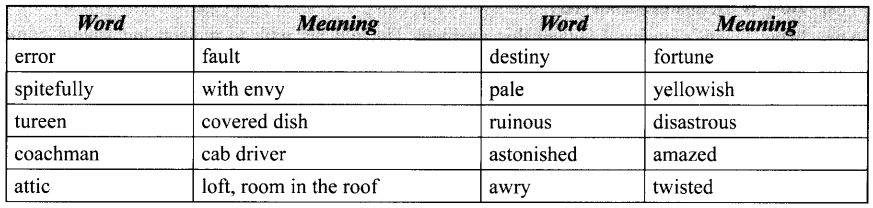
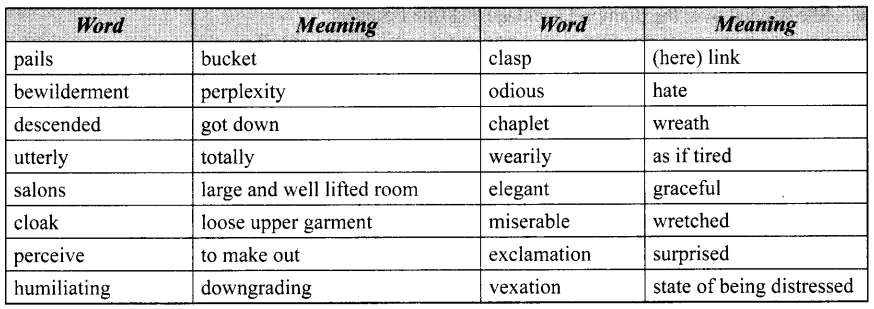
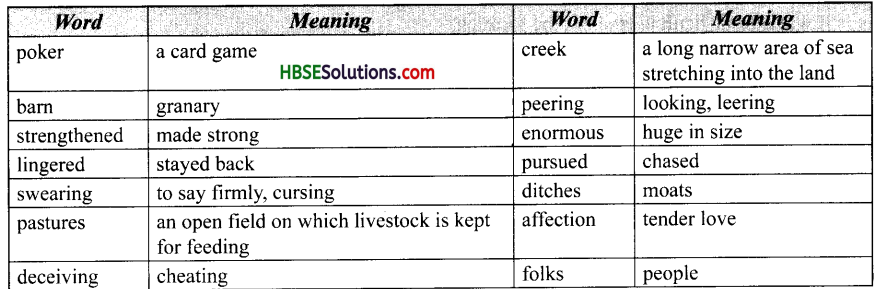
HBSE 10th Class English Solutions Footprints without Feet Chapter 8 The Hack Driver 1 HBSE 10th Class English Solutions Footprints without Feet Chapter 8 The Hack Driver 2

HBSE 10th Class English Solutions Footprints without Feet Chapter 8 The Hack Driver Read More »

HBSE 10th Class English Solutions Footprints without Feet Chapter 7 The Necklace

Haryana State Board HBSE 10th Class English Solutions Footprints without Feet Chapter 7 The Necklace Textbook Exercise Questions and Answers.

Haryana Board 10th Class English Solutions Footprints without Feet Chapter 7 The Necklace

HBSE 10th Class English The Necklace Textbook Questions and Answers

The Necklace Solutions HBSE 10th Class

Read and Find Out (Page – 39)

1. What kind of person is Mme Loisel? Why is she always unhappy?
Answer:
Mme Loisel was a pretty young lady born in a family of clerks. She felt that she was born for all the delicacies and luxuries. Instead, she had to live a simple and economical life. She completely disliked her circumstances. This made her angry and unhappy.

2. What kind of a person is her husband?
Answer:
Her husband was a clerk in the office of the Board of Education. Unlike Mme Loisel, he was content with his life. While Mme Loisel used to suffer thinking about luxuries and delicacies, he could derive great sense of satisfaction even from a humble ‘potpie’. He was also a loving husband, as is seen from his behaviour towards his wife. He readily parted with the four hundred francs that he had saved to buy a gun, so that Mme Loisel would be able to wear a nice dress to the Minister’s ball. This shows that his wife’s happiness was more important to him.

The Necklace Important Questions HBSE 10th Class

Readand Find Out (Page – 41)

1. What fresh problem now disturbs Mme Loisel?
Answer:
After buying a pretty dress, Mme Loisel was bothered by yet another problem. She had no jewel to adorn herself with. She said that she would have a poverty-stricken look. Her husband suggested that she should wear some natural flowers. However, she refused and said that there was nothing more humiliating than to have a shabby air in the midst of rich women.

2. How is the problem solved?
Answer:
Mme Loisel’s husband solved this problem. He told his wife to request her friend, Mme Forestier to lend her some jewels. When she went to Mme Forestier, the latter brought a jewel case, so that Mme Loisel could choose whichever jewels she liked.

The Necklace Solution HBSE 10th Class

HBSE 9th Class English Solutions Footprints without Feet Chapter 1 A Triumph of Surgery

Rand Find Out (Page – 42)

1. What do M. and Mme Loisel do next?
Answer:
When M. and Mme Loisel realized that the necklace was missing, they tried finding out where she could have lost it. They concluded that it could have been dropped in the cab. They did not know its number. Therefore, Loisel went over the track where they had walked. When he found nothing, he went to the police and to the cab offices. He even put an advertisement in the newspapers, offering a reward. He then asked Matilda to write a letter to Mme Forestier, explaining that she had broken the clasp of the necklace and would get it repaired. This gave them time to find the necklace. However, they eventually decided to replace the necklace with a new one.

2. How do they replace the necklace?
Answer:
Loisel asked Matilda to write a letter to Mme Forestier, explaining that she had broken the clasp of the necklace and would get it repaired. They found a chaplet of diamonds in a shop of the Palais-Royal. This necklace seemed to be exactly like the one that had been lost. They could buy it for thirty-six thousand francs. Loisel had eighteen thousand francs, which his father had left him. He borrowed the rest from various sources. Finally, he bought the necklace and gave it to Matilda for her to take it back to Mme Forestier.

Necklace Chapter Class 10 Questions And Answers HBSE

Think about It

1. The course of the Loisel’s life changed due to the necklace. Comment.
Answer:
The course of the Loisel’s life changed due to the necklace. After replacing the lost necklace with a new one, they had to repay all the money that they had borrowed to buy the new necklace. They sent away the maid and changed their lodgings. They rented some rooms in an attic. Matilda learnt the odious work of a kitchen. She washed the dishes, soiled linen, their clothes and dishcloths. She took down the refuse to the street each morning and brought up the water, stopping at each landing to catch her breath. She went to the grocer’s, the butcher’s, and the fruiterer’s, with her basket on her arm, shopping, haggling to save her money. Loisel worked in the evenings, putting the books of some merchants in order. At night, he did copying at five sous a page. This lasted for ten years, and at the end of the said period, they were able to repay their lenders.

2. What was the cause of Matilda’s ruin? How could she have avoided it?
Answer:
The cause of Matilda’s ruin was her dissatisfaction with whatever life offered to her. She was always unhappy. She felt that she was bom for all the delicacies and luxuries. She disliked her circumstances.
She could have avoided this situation by being content with what she had.

Necklace Class 10 Solutions HBSE

HBSE 9th Class English Solutions Footprints without Feet Chapter 1 A Triumph of Surgery

3. What would have happened to Matilda if she had confessed to her friend that she had lost her necklace?
Answer:
If Matilda would have confessed to her friend that she had lost her necklace, she might have been in lesser trouble than what she faced after having replaced the necklace. Her friend would definitely be angry with her. Most probably, she would have asked Matilda to replace it. She would have given her the details from where she had bought the necklace and how much it had cost her. Matilda would thus have known that the jewels in the necklace were not real diamonds. It would have cost her a far lesser amount to replace it. Matilda would thus have saved herself and her husband from all the troubles they went through.

4. If you were caught in a situation like this, how would you have dealt with it?
Answer:
This question requires you to use your own perspective as well as your analytical skills. The answer to the question would vary from one person to another. It is suggested that you read the text carefully and try attempting it on your own.

The Necklace Chapter HBSE 10th Class

Talk about It

1. The characters in this story speak in English. Do you think this is their language? What clues are there in the story about the language its characters must be speaking in?
Answer:
The characters in the story speak in English but this is not their language. They must be speaking French and there are many clues from which it can be proved. Like the currency they used was ‘francs’, the Minister’s ball invination carried some specific French words, the name of the jewellery shop Palais-Royal and the names of the characters in the story, shows the French backdrop.

2. Honesty is the best policy.
Answer:
Do it yourself.

3. We should be content with what life gives us.
Answer:
Do it yourself.

HBSE 9th Class English Solutions Footprints without Feet Chapter 1 A Triumph of Surgery

HBSE 10th Class English The Necklace Important Questions and Answers

Very Short Answer Type Questions

Class 10 Footprints Without Feet Chapter 7 Question Answer HBSE Question 1.
When did the party end? What did Matilda find when she reached home?
Answer:
The party ended at four o’clock in the morning. Matilda and her husband returned their home. She stood in front of the mirror to see herself again. But she was shocked to find that she had lost the necklace.

Necklace Questions And Answers HBSE 10th Class Question 2.
What would Matilda often dream of?
Answer:
Matilda would often dream of all the delicacies, luxuries, elegant dinners, marvellous dishes, rich silver, beautiful dresses, jewels, adoration and a life of glory. She would escape into her dreams from the dullness of her very humble existence.

HBSE 9th Class English Solutions Footprints without Feet Chapter 1 A Triumph of Surgery

Question 3.
Why did Matilda throw the invitation spitefully?
Answer:
Matilda was simply displeased when her husband showed the invitation. She felt humiliated and threw the invitation spitefully as she had nothing beautiful enough to wear at such a grand gathering.

Question 4.
Describe Mme Loisel’s success at the ball.
Or
Do you think Mme Loisel had an enjoyable evening at the ball? Give reasons for your answer. [CBSE 2014]
Answer:
Mme Loisel was the centre of attraction at the ball. Her beauty, her grace, her joy and the gorgeous smile captivated all. Men sought to be presented to her. She danced happily at her conquest of all.

Question 5.
How was Mme Loisel’s condition after ten years?
Answer:
Ten years of poverty and hardship took away Matilda’s youth and beauty. Now she had become a strong and hard woman, who was poorly dressed with untidy hair and red ragged hands.

Question 6.
Why was Matilda’s friend astonished to see her at the end of the story?
Answer:
Mme Forestier, Matilda’s friend, could not recognise her as she seemed to be an old and worn out poor woman. Matilda was no longer in her former beautiful and joyous self.

Question 7.
Comment on the use of irony in the text.
Answer:
The irony in the story is based on the fact that the Loisels spend 10 years of toil and frugality paying for a necklace which turns out to be a cheap imitation.

Short Answer Type Questions

Question 1.
Why did Matilda think that she was born in a family of clerks due to some error of destiny?
Answer:
Matilda was a young and beautiful lady with high dreams and aspirations. She had, no hopes, no fame and no wealth. She had lost all her hopes of marrying a rich man. Realising that her dreams are high and to fulfil those she should have been born into an affluent family, she termed her birth in the family of clerks some error of destiny.

Question 2.
What did Matilda and her husband do to find the necklace?
Answer:
They checked into the folds of Matilda’s dress, her cloak and pockets. Her husband went back on the route to the party venue to search for the necklace. He returned at seven o’clock. Then he informed the police. He also gave an advertisement in the newspaper and also announced a reward. But the necklace was found nowhere.

HBSE 9th Class English Solutions Footprints without Feet Chapter 1 A Triumph of Surgery

Question 3.
Why did Matilda not like to visit her rich friends?
Answer:
Matilda was bom in the family of clerks but her dreams were very high. She dreamt of a grand house, costly dishes, good dresses and jewels. She was disillusioned that she was not able to get them. When she visited her rich friend, she really suffered because she became intensely conscious of her poverty in the presence of her rich friend. She suffered more when she returned to her modest and miserable surroundings.

Question 4.
What excuse did Loisels put up to explain the delay in returning the necklace?
Answer:
Loisels had lost the necklace and needed time to find an identical one. Thus, Loisels wrote a letter to Mme Forestier with an excuse that the clasp of the necklace was broken and they needed time to get it repaired.

Question 5.
How did Loisels manage to pay for the necklace?
Answer:
The necklace cost Loisels thirty six thousand francs. Loisel had to chip in his entire inheritance of eighteen thousand francs and the rest he had to borrow from the usurers.

Question 6.
How did Mme Loisel now know the life of necessity? [CBSE 2016]
Answer:
To pay the debt of eighteen thousand francs, Loisels let go of their decent living. They lived
in impoverished neighbourhood. Matilda had to cook, clean, wash, mend, bring water and bargain with the butcher and grocer. Her husband worked day and night to save every sou.

Question 7.
What do you think of Mme Loisel as a husband? Cite instances from the text to support your answer.
Answer:
Mme Loisel was a caring and supportive husband. He sacrificed his wishes and the money he inherited from his father for his wife. This can be shown when he gave four hundred francs saved for the gun to her wife so that she could buy a new dress for Minister’s ball.

Essay Type Questions

Question 1.
Do you think that Matilda’s dream was fulfilled at the Ball party? Why did the people in the party want to mix up with her?
Answer:
Matilda always believed in pomp and show although her means did not support her. After getting invitation for the Ball party, she wanted to present herself for this occasion. She did not want to show her poverty-stricken image amidst the rich ladies and gentlemen of the society. To attend this party, she purchased a new costume. Later on, she changed her mind and expressed her desire for a jewel. It was beyond the means of Mr. Loisel. So, he advised her to take the necklace from her friend. Matilda also took the necklace from her friend, Mme Forestier and wore at the Ball party. She enjoyed the party a lot and danced with much enthusiasm. Her only intention was to get admiration from others. This way Matilda’s dream was fulfilled.

Matilda was very elegant and graceful. She was the most beautiful lady. That is why all the men noticed her. All the people asked her name and wanted to mix up with her. Her personality was really appealing.

HBSE 9th Class English Solutions Footprints without Feet Chapter 1 A Triumph of Surgery

Question 2.
Mme Loisel’s disposition invites her doom. Comment in the context of the text you’ve read.
Answer:
Mme Loisel belongs to a family of clerks. Her existence is quite average. They live on meagre income, enough for basic needs but not to fulfil aspirations. She gets married to a clerk and is so caught up with her dreams of wealth and pleasure that she is out of touch with the truths of her real life. In order to keep up appearances just to flatter her pride, she blows up four hundred francs on a gorgeous dress. And, not contented, she goes on borrowing a necklace from her friend. And, all of this is just to impress the wealthy and the rich with her beauty and glamour. No doubt, her pride is flattered and her wish of fine dining, expensive dresses and jewels satisfied but at a great price. Unfortunately, the necklace is lost and the couple has to cough up their entire inheritance and borrow as well to replace it. Repayment of the debt eats away the next ten years of their youth. They live poor. All the household chores and cares of a life of poverty visit them. Hence, her disposition invites her doom.

Question 3.
Mme Forestier proved to be a true friend. Elucidate. [CBSE 2015]
Answer:
Mme Forestier turns out to be an interesting character. She plays a vital role in the story.
As a friend to Matilda, we find her to be really genuine as she helps Matilda in the hour of her need. When Mme Loisel needs to borrow jewels, she turns to Mme Forestier. Mme Forestier does not refuse. Displaying her generosity, she opens up the entire array of her jewels for Matilda to choose from. Also, she is considerate when Loisels delay the return of the necklace. Surprisingly, at the end of the story, she concludes the entire narrative. Without even a moment’s hesitation, she reveals to Matilda that her necklace was just a fake. She is not at all worried in the light of the fact that she may have to return the necklace. It shows her honesty. Rather, she, like a true friend, feels bad for Matilda at her unnecessary suffering. We find her sympathising with Mme Loisel. She is indeed a gem of a friend.

Question 4.
Do you think the story is aptly titled? Justify your answer.
Answer:
The whole narrative of the story ‘ The Necklace’ revolves around a young woman Matilda, who in her foolish pride borrows a necklace inviting misery and sorrow for herself as well as for her husband. The necklace has lost and the Loisels fall into a tremendous debt. They spend the next ten years of their life in paying debt for the replacement of the lost necklace. Their entire life moves around impoverished, everyday saga of misery and hunger and the necklace, in fact, changes the very course of their life. Also, it is against the backdrop of the necklace that Matilda’s pride and dishonesty are highlighted. At the same time, the necklace serves a twist at the end as it turns out to be a fake one. The story is, hence, most aptly titled as the necklace is, in fact, the leading character of this ironic tale of desire, the doom and the tragedy.

The Necklace Summary

‘The Necklace’ Introduction

About the Author

  • Henri Rene Albert Guy de Maupassant (5 August 1850 – 6 July 1893) was a French writer, remembered as a master of the short story form, and as a representative of the naturalist school of writers. He who depicted human lives, destinies and social forces in disillusioned and often pessimistic terms.
  • Maupassant was a protege of Gustave Flaubert and his stories are characterised by economy of style and efficient, effortless denouements (outcomes).
  • He wrote some 300 short stories, six novels, three travel books, and one volume of verse. His first published story, “Boule de Suif’ (“Ball of Fat”, 1880), is often considered his masterpiece.
  • Guy De Maupassant penned his own epitaph: “I have coveted everything and taken pleasure in nothing.”

Gist of the Story

Matilda, a young and pretty lady was bom into a family of clerks. She was simple and had married a pretty office clerk. She dared not to visit his friendly schoolmate’s house which was richly furnished. One day Mr Loisel and Mme Loisel got invitation of dinner from the Minister of Public Instruction. The husband felt elated to get the select invitation but the wife got irritated because she didn’t have proper clothes and jewellery to wear. Her husband gave her money to buy a dress. She got herself a very beautiful dress for the ball but was still sad as she didn’t have any jewellery to wear. At her husband’s suggestion, Mme Loisel went to Mme Forestier’s house, she got ready to lend her entire jewellery. However, she borrowed only the diamond necklace.

Mme Loisel danced at the ball with enthusiasm. She looked pretty. It made her swell with joy. After the party her husband wrapped her shoulders in modest wraps while exiting the gate. They hired a carriage and reached home instantly. She noticed that the necklace was missing. They looked all around but they didn’t find it, then Loisel found a chaplet of diamonds in a shop. It was exactly like the lost necklace, they bought it for thirty six thousand francs. They handed the jewel to Mme Forestier but she did not open it.

The Loisel sent away the maid and lived in rented room in an attic. They led miserable life for few years. This way, they repaid their loan. When Mrs Loisel met Mme Forestier while they were taking a walk she revealed that her false necklace was only worth five hundred francs.

HBSE 9th Class English Solutions Footprints without Feet Chapter 1 A Triumph of Surgery

‘The Necklace’ Summary

Brief Introduction: This story revolves around Matilda and her necklace. Matilda had to pay a lot for pomp and show.

Matilda, pretty young lady: Matilda was a very pretty, young lady. But, unfortunately, she was bom into a family of clerks. She did not want to be married either to a rich or distinguished person. She was simple but unhappy. She married to a petty clerk in the office of the Board of Education.

Pained at her miserable condition: She was pained at her miserable condition. She was bom for all delicacies and luxuries. She suffered from the poverty of her apartment, the shabby walls and the worn chairs. All these things always pained her. She loved attractive frocks, dishes and jewels.

An invitation card given to Mr. Loisel: Matilda’s husband, Mr. Loisel was given a printed card. It was an invitation card for a dinner organised by the Minister of Public Instruction. At this place, her husband worked. He anticipated that his wife would be delighted to get the invitation. But she was annoyed. She told that she had nothing to wear on such a big occasion. She would not go there without a dress. He should give it to others. Hearing this, his husband got annoyed. He was also frustrated to hear such a thing. Then he asked her about the cost of the dress. She told that it would cost 400 francs. He agreed to pay the amount which he had kept to buy a gun for his hunting parties.

Day of the Ball approached: The day of the ball approached. But Mme Loisel was sad, and anxious. Her husband asked her the reason of anxiety. He also asked her what the matter was. At this, Matilda replied that she had not got a jewel. It was a humiliating thing for her to be in the company of rich ladies. An idea struck in Mr. LoiseTs mind. He told her to borrow jewels from her friend, Mme Forestier.

Matilda reached at Mme Forestier’s house: Matilda reached at Mme Forestier’s house and narrated her the entire story. Hearing her story, Mme Forestier went to open her jewel case and told her to choose any item whatever she liked. After seeing a lot of items, Matilda’s eyes fell on a diamond necklace. Her friend gave it to her happily. She became happy and went to her house.

Mme Loisel more elegant: The Ball started. Mme Loisel was looking very beautiful and elegant. She was the most attractive personality in the party. All wanted to get mix up with her and also to be introduced to her.

Mme Loisel’s necklace got lost: After the party finished, all the people went home. Mme Loisel had a full view of herself in her glory before the mirror. She cried noisily. There was no necklace around her neck. The necklace was lost. Knowing this, Mr. Loisel went out of his room, searched the necklace into the streets, went to cab offices to police and also advertised in newspapers, offering a reward. But it did not work. No necklace was found. They were hopeless now. They went into the shop and found the same necklace valued at forty thousand francs. Ultimately, they got it for thirty-six thousand francs.

Miserable condition of Mme Loisel: To purchase the necklace, Mr. Loisel took eighteen thousand francs which his father had left and borrowed the rest. Later they purchased the same type of necklace and gave to Mme Forestier. She did not open the jewel box and kept it in the case. Later on, the scenario completely changed. Her condition became miserable. Now Mme Loisel washed the dishes and linen, did all the household chores and rented some rooms in the attic. Mr. Loisel worked in the evening at some merchant’s office. He did copying at five sous a page at night. They had to toil hard to pay their debts. After ten years, they paid all their debts.

False Necklace: One day, Mme Loisel met Mme Forestier while taking a walk. But she did not recognise her. Matilda told her that she had to do a lot of struggle due to her necklace. She also narrated the entire story pertaining to the necklace. She had to work hard to buy the lost necklace. It changed the entire course of action of her life. At this, Mme Forestier replied, ‘Oh! My poor Matilda, my necklace was false.’ It was not worth more than five hundred francs.

HBSE 9th Class English Solutions Footprints without Feet Chapter 1 A Triumph of Surgery

Lesson at a Glance

  • Matilda (Mme Loisel) was a very pretty, young and attractive lady.
  • Due to errors of destiny, she was bom into a family of clerks.
  • It was her perception that she was only bom for all delicacies and luxuries of life.
  • The poverty of her apartment, the shabby walls and the worn chairs always tortured and angered her.
  • She only liked lavish food served in marvellous dishes.
  • One day, her husband gave her a printed card. It was an invitation to a ball party.
  • At this, she did not feel delighted. Instead she threw the invitation card upon the table.
  • When her husband told about the party, she told that she didn’t have a proper dress. So, she could not attend this party.
  • She also told her husband to give this card to some colleague whose wife was better fitted out.
  • Mr. Loisel asked her about the cost of a good and fancy dress. She told him that it would cost four hundred francs.
  • As the day of the ball approached, Mme Loisel was very anxious and dejected.
  • After this, she told that she did not have a jewel to adorn herself with. Her look seems to be poverty-stricken. So she would not attend the party.
  • Her husband also told to wear some natural flowers but she did not get ready.
  • Then he advised her to borrow jewels from her friend Mme Forestier.
  • She went to Mme Forestier’s house and told her about the necklace. Then she brought before Mme Loisel a large jewel-case.
  • After going through a lot of items, she chose a superb necklace of diamonds. She was very happy after seeing this.
  • When she asked her friend Mme Forestier about this, she replied affirmatively.
  • Mme Loisel wore this and she was looking elegant and gracious. All the men looked at her and also wanted to have her company.
  • She enjoyed the party and danced with more enthusiasm.
  • After reaching her house when she removed the wraps from her shoulders before the glass, she found that there was no necklace around her neck. She cried suddenly.
  • Mr. Loisel went out in search of the lost necklace. He went to the police, cab offices and also gave an advertisement in the newspapers.
  • At the end of the day, they had become hopeless. Now, they went to a shop of the Palais-Royal and bought a necklace for thirty-six thousand francs.
  • Apart from eighteen thousand francs of Mr. Loisel’s father, he borrowed the rest.
  • She handed over the diamond necklace to Mme Forestier.
  • Mme Loisel now knew the horrible life of necessity. To pay this debt, they sent away the maid, changed their lodgings and rented some rooms in an attic. She also washed the dishes, clothes and dishcloths etc.
  • The husband also worked in evenings and put the books of some merchants in order.
  • Mme Loisel was too old now. She had become a strong and hard woman. Now she spoke in a loud tone.
  • One Sunday, she met a woman walking with a child. It was Mme Forestier.
  • Now Matilda narrated the entire story of her miserable condition. And the necklace was only responsible for this.
  • At this, Mme Forestier said that it was the false necklace. It was not worth than five hundred francs.

Character Sketch

Matilda: Matilda (Mme Loisel) was a beautiful, elegant and charming lady. Although she wanted to lead a luxurious life but she did not have the means to do so. She married to a petty clerk in the office of the Board of Education. She was simple but always remained unhappy. Matilda got an invitation to the Ball party. But she replied negatively to her husband and told about the fancy dresses. When it was made available to her, she demanded a necklace. She only believed in fun and frolic. Although she did not have the proper means yet she wanted to lead a luxurious life. She wanted appreciation and admiration from others. She felt happy when people appreciated her beauty, elegance and grace just to show off a day at the Ball party. She lost her necklace which she had borrowed from Mme Forestier. For this, she had to lead a miserable life for almost ten years. This way it can be said that Matilda did not know how to live within limited resources. She always believed in living beyond means. That is why she suffered from this sort of problem.

Mr Loisel: Mr Loisel was just opposite to his wife. He adopted all means to fulfil the desire of Mrs. Loisel. He was an honest and down-to-earth man. When he got the invitation to a ball with his wife, he felt elated. He suggested his wife to borrow a necklace from her rich friend Mme Forestier. But, unfortunately Matilda lost her necklace and he used his hard-earned savings to buy a diamond necklace. For this, he had to work very hard to repay the debt. He was a man who lived his life within his means.

HBSE 9th Class English Solutions Footprints without Feet Chapter 1 A Triumph of Surgery

‘The Necklace’ Word-Meanings

HBSE 10th Class English Solutions Footprints without Feet Chapter 7 The Necklace 1 HBSE 10th Class English Solutions Footprints without Feet Chapter 7 The Necklace 2

HBSE 10th Class English Solutions Footprints without Feet Chapter 7 The Necklace Read More »

HBSE 10th Class Sanskrit व्याकरणम् संख्यावाचक शब्दः

Haryana State Board HBSE 10th Class Sanskrit Solutions व्याकरणम् Sankhyavachak Shabd संख्यावाचक शब्दः Exercise Questions and Answers.

Haryana Board 10th Class Sanskrit व्याकरणम् संख्यावाचक शब्दः

Sankhyavachak Shabd In Sanskrit HBSE 10th Class

संख्यावाचक शब्द – अंक

पुंल्लिंगस्रीलिंगस्त्रीलिंगनपुंसकलिंग
1. एक:एकाचतस्ब:एकम्
2. द्वौद्वेचतस्र:त्वे
3. त्रय:तिस्र:चतसृभि:त्रीणि
4. चत्वारःचतस्र:चतसृभि:चत्वारे
5. पर्चपञ्चचतसृभ्य:पब्च

HBSE 10th Class Sanskrit व्याकरणम् संख्यावाचक शब्दः

संख्यावाचक शब्द अंक
एक:1
द्वौ2
त्रय:3
चत्वार:4
पज्च5
षट्6
अष्ट7
अष्ट8
दश9
एकादश10
द्वादश11
त्रयोदश12
चतुर्दश13
पञ्चदश14
षोडश15
सप्तदश16
अष्टादश17
एकोनविंशति:18
विंशति:19
एकविंशति:20
द्वाविंशति:21
त्रयोविंशति:22
चतुर्विशति:23
पर्चविंशति:24
षड्विंशति:25
सप्तविंशति:26
सप्तविंशति:27
अष्टाविंशति:28
नवविंशति:29
त्रिशत्30
एकत्रिंशत्31
द्वात्रिंशत्32
त्रयस्त्रिशत्33
चतुस्त्रिशत्34
पञ्चत्रिंशत्35
षट्त्रिंशत्36
सप्तत्रिंशत्37
अष्टात्रिंशत्38
नवत्रिंशत्39
चत्वारिशत्40
एकचत्वारिशत्41
द्वाचत्वारिशत्42
त्रयश्चत्वारिशत्43
चतुश्चत्वारिंशत्44
पज्चचत्वारिंशत्45
षट्चत्वारिंशत्46
सप्तचत्वारिशत्47
अष्टचत्वारिंशत्48
नवचत्वारिंशत्49
पर्चाशत्50
एकपज्चाशत्51
द्विप ्चाशत्52
त्रयःपउ्चाशत्53
चतु:पर्चाशत्54
पङ्चपज्चाशत्55
षट्प अच्चाशत्56
सप्तपज्वाशत्57
अष्टपज्चाशत्58
नवपख्चाशत्59
षष्टि:60
एकषष्टि:61
द्विषष्टि:62
त्रय:षष्टि:63
चतु: षष्टि:64
पक्वषष्टि:65
षट्षष्टि:66
सप्तषष्टि:67
अष्टषष्टि:68
नवषष्टि:69
सप्तति:70
एकसप्तति:71
द्विसप्तति:72
त्रय:सप्तति:73
चतुःसप्ततिः74
प््चसप्तति:75
षट्सप्तति:76
सप्तसप्तति:77
अष्टसप्तति:78
नवसप्तति:79
अशीति:80
एकाशीति:81
द्वयशीति:82
त्र्यशीति:83
चतुरशीति:84
पज्चाशीति:85
षडशीति:86
सप्ताशीति:87
अष्टाशीति:88
नवाशीतिः89
नवति:90
एकनवति:91
द्विनवतिः92
त्रयोनवति:93
चतुर्नवति:94
पर्चनवरि:95
षष्णवति:96
सप्तनवति:97
अष्टानवतिः98
नवनवतिः99
शतम्100

Sankhyavachak HBSE 10th Class

HBSE 10th Class Sanskrit व्याकरणम् संख्यावाचक शब्दः

नोट-विद्यार्थी निम्नलिखित भी ध्यान से पढ़ें
त्रय:त्रिंशत् अधिकं शतम्-133, एक पञ्चाधिकशत् 151, द्विशतम् (200), त्रिशतम् (300), चतुश्शतम् (400), पञ्चशतम् (500) षट्शतम् (600), सप्तशतम् (700), अष्टशतम् (800), नवशतम् (900),सहस्रम् (1000)।
लक्षम् (1,00,000), द्विलक्षम् (2,00,000), त्रिलक्षम् (3,00,000) इत्यादि। कोटिः (1,00,000,00), द्विकोटि: (2,00,00,000) इत्यादि।

निर्देश-सौ से अधिक संख्या के लिए अधिक अथवा उत्तर शब्द का प्रयोग करते हैं।
101 = एकाधिकं शतम् अथवा एकाधिकशतम्।
110 = दशाधिकशतम
125 = पञ्चविंशत्यधिकं शतम् अथवा पञ्चविशत्यधिकशतम्।
126 = षड्विंशत्यधिकशतम्।
212 = द्वादशोत्तरं द्विशतम्।
संख्यावाचक शब्दों के दो भेद हैं
(1) संख्यावाचक जैसे-एक, द्वि, त्रि।
(2) संख्यापूरक जैसे-प्रथम, द्वितीय, तृतीय।

Sankhyavachak In Sanskrit HBSE 10th Class

HBSE 10th Class Sanskrit व्याकरणम् संख्यावाचक शब्दः

उचित शब्द भरकर रिक्तस्थानों की पूर्ति कीजिए

(1) चित्रे ——– वायुयानम् अस्ति। (एकः । एकम् । एकेन)
(2) भगवतः शिवस्य ——- नेत्राणि सन्ति। (त्रयः / तिस्रः / त्रीणि)
(3) हस्तौ ———- स्तः। (द्वौ / द्वे)
(4) वेदाः ——- सन्ति। (चत्वारः / चतस्रः / चत्वारि)
(5) अश्वस्य ——– पादाः भवन्ति। (चतस्रः/चत्वार:/चत्वारि)
(6) गणेशस्य ——- दन्तः अस्ति। (एकः / एका / एकम्)
(7) दशरथस्य ——- पत्न्यः आसन्। (त्रयः / तिस्रः / त्रीणि)
(8) मम ———— कर्णौ स्तः। (द्वौ / द्वे)
(9) नासिकायां ——– छिद्रे स्तः। (द्वौ/द्वे)
(10) सः ——– पुस्तकम् पठति। (एकः / एका / एकम्)
(11) तस्य ——— भ्रातरः सन्ति। (त्रयः / तिस्रः / त्रीणि)
(12) सः ——- वृक्षाणि अकृन्तत्। (चत्वारः । चतस्रः / चत्वारि)
(13) मम ——– नासिका अस्ति। (एकः / एकम् / एका)
(14) तस्मिन् उद्याने ——- बालिके भ्रमतः । (द्वौ / द्वे)
(15) अस्मिन् आम्रवृक्षे ——- आम्राणि सन्ति । (चत्वारः । चतस्रः । चत्वारि)
(16) चित्रे ——- मूषकाः सन्ति । (त्रयः / तिस्रः / त्रीणि)
(17) तडागे ——- मत्स्याः आसन्। (चत्वारः । चतस्रः । चत्वारि)
(18) ——- पथिक: नगरम् गच्छति। (एकम् । एकः / एका)
(19) तत्र ——- शिशवः क्रीडन्ति। (त्रयः । तिस्रः / त्रीणि)
(20) पुस्तकालये —— मित्रे पठतः। (द्वौ / द्वे)
(21) सः ——– पृष्ठानि वाचयति। (चत्वारः / चतस्रः / चत्वारि)
(22) मम —— एव भ्राता अस्ति। (एकः / एका / एकम्)
(23) वृक्षे ———- लताः सन्ति। (त्रयः / तिस्रः / त्रीणि)
(24) तस्य —— हस्तौ स्तः। (द्वौ / द्वे)
(25) मम गृहे —— पुस्तकानि सन्ति। (चत्वारः / चतस्रः । चत्वारि)
उत्तराणि:
(1) एकम्।
(2) त्रीणि।
(3) द्वौ।
(4) चत्वारः।
(5) चत्वारः ।
(6) एकः।
(7) तिस्रः ।
(8) द्वौ।
(9) टे।
(10) एकम्।
(11) त्रयः ।
(12) चत्वारि।
(13) एका।
(14) द्वे।
(15) चत्वारि ।
(16) त्रयः ।
(17) चत्वारः।
(18) एकः ।
(19) त्रयः।
(20) द्वे।
(21) चत्वारि।
(22) एकः ।
(23) तिस्रः ।
(24) द्वौ।
(25) चत्वारि।

संख्यावाचक शब्द HBSE 10th Class

HBSE 10th Class Sanskrit व्याकरणम् संख्यावाचक शब्दः

अन्य महत्त्वपूर्ण उदाहरण

I. अधोलिखितवाक्येषु अङ्कानां स्थाने संख्यावाचक-विशेषणपदानि शब्देषु प्रयुज्य उत्तराणि उत्तरपुस्तिकायां लिखत
अस्माकं पृथ्वी (i) (7)…… द्वीपेषु विभक्ता। (ii) (3)…….सागराः भारतभूमेः चरणप्रक्षालनं कुर्वन्ति। (iii) (5)……. नदीभिःपञ्चापप्रदेश: शोभते। (iv) (9)…….ग्रहेषु पृथिवी अन्यतमः ग्रहः, तत्र भारतभूमिः विराजते।।
उत्तराणि:
(i) सप्तसु
(ii) त्रयः
(iii) पञ्चभिः
(iv) नवसु।

II. अड्कानां स्थाने संख्यावाचक विशेषणपदानि प्रयुज्य उत्तराणि उत्तरपुस्तिकायां लिखत
उत्सवे प्रायः (i) 100 जनाः उपस्थिताः आसन्। मञ्चे (ii) 4 विशिष्टाः अतिथयः आसन्। (iii) 10 छात्रैः स्वागतगानं गीतम् । (iv) 3 बालिकाभिः श्लोकपाठः कृतः।
उत्तराणि:
(i) शतं,
(ii) चत्वारः,
(iii) दशभिः,
(iv) तिसृभिः ।

III. अधोलिखित-अनुच्छेदे अड्कानां स्थाने संख्यावाचक-विशेषणानि प्रयुज्य उत्तराणि उत्तरपुस्तिकायां लिखत
वेदाः (i) ………..4………. सन्ति। पुराणानां संख्या (ii) ………..18………. अस्ति । रामायणे (iii) ………..7………. काण्डानि सन्ति। अस्य विपुलस्य साहित्यस्य कीर्तिः (iv) ……….10……….. दिक्षु व्याप्ता।
उत्तराणि:
(i) चत्वारः ,
(ii) अष्टादश,
(iii) सप्त,
(iv) दश।

IV. अधोलिखितवाक्येषु अड्कानां स्थाने संख्यावाचकविशेषणैः रिक्तस्थानपूर्ति संस्कृतेन कृत्वा पुनः उत्तरपुस्तिकायां लिखत
मम विद्यालये (i) ………..(12)….. कक्षाः सन्ति । तेषु प्रायः (ii) ………..(500)….. छात्राः पठन्ति । (iii) ………..(50)….. अध्यापकाः परिश्रमेण अस्मान् पाठयन्ति। गतवर्षे परीक्षापरिणामः (iv) ………..(90)….. प्रतिशतम् आसीत्।
उत्तराणि:
(i) द्वादश
(ii) पञ्चशतम्
(iii) पञ्चाशत्
(iv) नवतिः

V. अड्कानां स्थाने संस्कृत संख्यावाचक-विशेषणपदानि प्रयुज्य उत्तराणि उत्तरपुस्तिकायां लिखत
अस्माकं ग्रामे (i) ……….85………. कृषकाः सन्ति। तेषु ……….3………. (ii) ………. कृषकाः अस्मिन् वर्षे पारितोषिकं लब्धवन्तः। (iii) ………………… भगिन्यौ मङ्लगीतम् आगायताम्। (iv) ………1……… भगिनी जलपानव्यवस्थामकरोत् ।
उत्तराणि:
(i) 85 = पञ्चाशीतिः
(ii) 3 = त्रयः
(iii) 2 = द्वे
(iv) 1 = एका।

HBSE 10th Class Sanskrit व्याकरणम् संख्यावाचक शब्दः

VI. अधोलिखितानि वाक्यानि (अङ्कानां स्थाने) संस्कृतसंख्याविशेषणैः पूरयित्वा पुनः लिखत
प्रातःकाले भ्रमणाय अहं वाटिकां गच्छामि। तत्र (49) आम्रवृक्षाः सन्ति। जम्बूफलवृक्षाणां (76) वृक्षाः तथा च (11) निम्बवृक्षाः मध्ये च विशालः (1) पिप्पलः शोभते।
उत्तरम्:
प्रात:काले भ्रमणाय अहं वाटिकां गच्छामि। तत्र एकोनपञ्चाशत् आम्रवृक्षाः सन्ति । जम्बूफलवृक्षाणां षट्सप्ततिः वृक्षाः तथा च एकादश निम्बवृक्षाः मध्ये च विशालः एकः पिप्पल: शोभते।

VII. अधोदत्तेषु वाक्येषु अड्कानां स्थाने संस्कृतसंख्यावाचकविशेषणानि पूरयत
मम गृहस्य समीपे 3………… तरणताला: सन्ति। तत्र 1……… तरणप्रतियोगिता आयोजिता अभवत्। प्रतियोगितायाम् अस्याम् 30……….. बालिकाः 45……….. बालकाः च भागं गृहीतवन्तः।
उत्तरम्:
मम गृहस्य समीपे 3 त्रयः तरणतालाः सन्ति । तत्र 1 एका तरणप्रतियोगिता आयोजिता अभवत् । प्रतियोगितायाम् अस्याम् 30 त्रिंशत् बालिकाः 45 पञ्चचत्वारिंशत् बालकाः च भागं गृहीतवन्तः ।

VIII. अङ्कानां स्थाने संस्कृतसंख्यावाचक-विशेषणपदानि प्रयुज्य उत्तराणि लिखत
ग्रामस्य प्राथमिकपाठशालायां 20 छात्राः, 15 बालिकाः, 3 अध्यापकाः 2 अध्यापिके च प्रतिदिनम् स्वस्वकार्यं कुर्वन्ति ।
उत्तरम्:
ग्रामस्य प्राथमिकपाठशालायां विंशतिः छात्राः, पञ्चदश बालिकाः, त्रय: अध्यापका: द्वे अध्यापिके च प्रतिदिनम् स्वस्वकार्यं कुर्वन्ति।

IX. अङ्कानां स्थाने संस्कृत-संख्यावाचक-विशेषणपदानि प्रयुज्य उत्तराणि लिखत
विद्यालये दशमकक्षायां (i) 97 छात्राः संस्कृतविषये उत्तीर्णाः । तेषु (ii) (54) बालिकाः सन्ति । प्रथमे (iii) (4) बालिकाः (iv) (3) बालकाः च संस्कृत-अकादम्याः छात्रवृत्तिं लब्धवन्तः ।
उत्तर:
म्विद्यालये दशमकक्षायां (i) सप्तनवतिः छात्राः संस्कृतविषये उत्तीर्णाः । तेषु (ii) चतुःपञ्चाशत् बालिकाः सन्ति । प्रथमे (iii) चतस्रः बालिकाः (iv) त्रयः बालकाः च संस्कृत-अकादम्याः छात्रवृत्तिं लब्धवन्तः ।

HBSE 10th Class Sanskrit व्याकरणम् संख्यावाचक शब्दः

x. अङ्कानां स्थाने संस्कृतसंख्यावाचकविशेषणपदानि प्रयुज्य उत्तराणि लिखत
वृक्षे (i) ……………………………….. । (ii) ……………………………….कोकिलाः स्थिताः। अकस्मात् (iii) …………………………….. कपोताः कुतश्चिद् उड्डीय समागताः। इदानीं वृक्षे। (iv) ………………26 ……………. पक्षिणः सन्ति।
उत्तरम्:
(i) चत्वारः
(ii) त्रयः/तिस्रः
(iii) नवदश/एकोनविंशतिः
(iv) षड्विंशतिः

XI. अङ्कानां स्थाने संस्कृतसंख्यावाचकविशेषणपदानि प्रयुज्य उत्तराणि लिखत
विद्यालये दशमकक्षायां (i) ………………..42……………………छात्राः संस्कृतं पठन्ति। तेषु । (ii) ……………………………बालिकाः सन्ति। गत वर्षे (iii) ……………………………. बालकौ (iv) ……………………. बालिकाः च छात्रवृत्तिं प्राप्नुवन्।
उत्तरम्:
(i) द्विचत्वारिंशत्
(ii) नवविंशतिः/एकोनत्रिंशत्
(iii) द्वौ
(iv) चतस्रः ।

HBSE 10th Class Sanskrit व्याकरणम् संख्यावाचक शब्दः

अभ्यासार्थम्

1. अधोदत्तेषु वाक्येषु अड्कानां स्थाने संस्कृत संख्यावाचकविशेषणानि पूरयत
(i) राज्ञः —4— पुत्राः आसन्।
(ii) एकदा –1—- वृद्धा अपतत् ।
(iii) तत्र —-2– मित्रे अवसताम् ।
(iv) विद्यालये —3— बालिकाः पठन्ति।

2. कोष्ठकात् शुद्धम् उत्तरं विचित्य रिक्तस्थानानि पूरयत
(i) अहम् —— पत्रम् लिखामि। (एकः / एका / एकम्)
(ii) ————- लोचनानि यस्य सः महादेवः । (त्रयः । तिस्रः । त्रीणि)
(iii) मम —— कर्णौ स्तः। (द्वौ / द्वे)
(iv) चित्रे ——- मृगाः सन्ति । (चत्वारः / चतस्रः / चत्वारि)

3. कोष्ठकात् शुद्धम् उत्तरं विचित्य रिक्तस्थानानि पूरयत.
(i) पाण्डवाः —— आसन्। (पञ्चाः / पञ्च / पञ्चानि)
(ii) गजस्य —— पादाः भवन्ति। । (चत्वारः / चतस्रः । चत्वारि)
(iii) गृहे —— मूषकौ धावतः । (द्वौ / द्वे)
(iv) त्र्यम्बकस्य ——- लोचनानि सन्ति। (त्रयः / त्रीणि / तिस्रः)

4. कोष्ठकात् शुद्धम् उत्तरं विचित्य रिक्तस्थानानि पूरयत
(i) मम कक्षायाम् —— सुन्दरं चित्रं अस्ति । (एक: / एकम् / एकेन)
(ii) पञ्चाननस्य —— मुखानि सन्ति। (पञ्चानि । पञ्च / पञ्चाः)
(iii) बलरामस्य —— भुजौ पाताम्। (द्वौ / द्वे)
(iv) ——- दण्डिप्रबन्धाः त्रिषु लोकेषु विश्रुताः । (त्रयः / त्रीणि / तिस्रः)

HBSE 10th Class Sanskrit व्याकरणम् संख्यावाचक शब्दः

5. कोष्ठकात् शुद्धम् उत्तरं विचित्य रिक्तस्थानानि पूरयत
(i) हस्ते………. अमुल्यः भवन्ति । (पञ्च/पञ्चाः/पञ्चानि)
(ii) वृक्षे ……… शुकौ स्तः। (द्वे। द्वौ)
(iii) पुरुषार्थाः …….. सन्ति। (चतस्रः/चत्वारि/चत्वारः)
(iv) सरोवरे ………. कमलानि विकसन्ति। (तिस्रः/त्रयः/त्रीणि)

6. अधोलिखितवाक्येषु अङ्कानां स्थाने संख्यावाचकविशेषणैः रिक्तस्थानपूर्ति संस्कृतेन कृत्वा पुनः उत्तरपुस्तिकायां लिखत
मम विद्यालये (i) ………….. (12) ………… कक्षाः सन्ति। तेषु प्रायः (ii) …………. (500) ……………. छात्राः पठन्ति। (iii) …………….. (50) …………….. अध्यापकाः परिश्रमेण अस्मान् पाठयन्ति। गतवर्षे परीक्षा परिणामः (iv) …………… (90) ………….. प्रतिशत आसीत्।

7. अधोलिखितवाक्ये अङ्कानां स्थाने संख्यावाचकविशेषणैः रिक्तस्थानपूर्ति संस्कृतेन कृत्वा पुनः उत्तरपुस्तिकायां लिखत
मम विद्यालये (1) ………….. प्रवेशद्वारं (3) ………… सहायकानि द्वाराणि (23) ………….. · अध्यापकाः (8) …………… परिचारकाः च सन्ति।

8. अधोलिखितवाक्ये अङ्कानां स्थाने संख्यावाचकविशेषणैः रिक्तस्थानपूर्ति संस्कृतेन कृत्वा पुनः उत्तरपुस्तिकायां लिखत
(क) अश्वस्य (4) ………………. पादाः सन्ति।
(ख) सप्ताहे (7) ……………… दिवसाः भवन्ति।
(ग) क्रीडाक्षेत्र (18) …………. मित्राणि क्रीडन्ति।
(घ) नरस्य हस्तौ (2) ……….. भवतः।

HBSE 10th Class Sanskrit व्याकरणम् संख्यावाचक शब्दः Read More »

HBSE 10th Class Sanskrit व्याकरणम् धातुरुप प्रकरणम्

Haryana State Board HBSE 10th Class Sanskrit Solutions व्याकरणम् Dhatu Roop Prakaran धातुरुप प्रकरणम् Exercise Questions and Answers.

Haryana Board 10th Clas s Sanskrit व्याकरणम् धातुरुप प्रकरणम्

व्याकरणम् धातुरुप प्रकरणम् HBSE Sanskrit 10th Class

1. √भू (होना)

पुरूषएकवचनद्विवचनबहुवचन
प्रथमपुरुषभवतिभवतःभवन्ति
मध्यमपुरुषभवसिभवथ:भवथ
उत्तमपुरुषभवामिभवाव:भवाम:

लुट्लकार

पुरूषएकवचनद्विवचनबहुवचन
प्रथमपुरुषभविष्यतिभविष्यत:भविष्यन्ति
मध्यमपुरुषभविष्यसिभविष्यथ:भविष्यथ
उत्तमपुरुषभविष्यामिभविष्यावःभविष्याम:

लोट्लकार

पुरूषएकवचनद्विवचनबहुवचन
प्रथमपुरुषभवतुभवताम्भवन्तु
मध्यमपुरुषभवभवतम्भवत
उत्तमपुरुषभवानिभवावभवाम

लङ्लकार

पुरूषएकवचनद्विवचनबहुवचन
प्रथमपुरुषअभवत्अभवताम्अभवन्
मध्यमपुरुषअभव:अभवतम्अभवत
उत्तमपुरुषअभवत्अभवावअभवाम

विधिलिङ् लकार

पुरूषएकवचनद्विवचनबहुवचन
प्रथमपुरुषभवेत्भवेताम्भवेयु:
मध्यमपुरुषभवे:भवेतम्भवेत
उत्तमपुरुषभवेयम्भवेवभवेम

व्याकरणम् धातुरुप प्रकरणम् 10th Class HBSE Sanskrit

HBSE 10th Class Sanskrit व्याकरणम् धातुरुप प्रकरणम्

2. √पठ् ( पढ़ना)
लट्लकार

पुरूषएकवचनद्विवचनबहुवचन
प्रथमपुरुषपठतिपठतःपठन्ति
मध्यमपुरुषपठसिपठथ:पठथ
उत्तमपुरुषपठामिपठाव:पठामः

लुट्लकार

पुरूषएकवचनद्विवचनबहुवचन
प्रथमपुरुषपठिष्यतिपठिष्यतःपठिष्यन्ति
मध्यमपुरुषपठिष्यतिपठिष्यथ:पठिष्यथ
उत्तमपुरुषपठिष्यामिपठिष्याव:पठिष्याम:

लोट्लकार

पुरूषएकवचनद्विवचनबहुवचन
प्रथमपुरुषपठतुपठताम्पठन्तु
मध्यमपुरुषपठपठतम्पठत
उत्तमपुरुषपठानिपठावपठाम

लड्लकार

पुरूषएकवचनद्विवचनबहुवचन
प्रथमपुरुषअपठत्अपठताम्अपठन्
मध्यमपुरुषअपठ:अपठलम्अपठत
उत्तमपुरुषअपठम्अपठावअपठाम

विधिलिड् लकार

पुरूषएकवचनद्विवचनबहुवचन
प्रथमपुरुषपठेत्पठेताम्पठेयु:
मध्यमपुरुषपठे:पठेतम्पठेत
उत्तमपुरुषपठेयम्पठेवपठेम

HBSE 10th Class Sanskrit व्याकरणम् धातुरुप प्रकरणम्

HBSE 10th Class Sanskrit व्याकरणम् धातुरुप प्रकरणम्

3. √पा (पिब्) पीना
लट्लकार

पुरूषएकवचनद्विवचनबहुवचन
प्रथमपुरुषपिबतिपिबतःपिबन्ति
मध्यमपुरुषपिबसिपिबथ:पिबथ
उत्तमपुरुषपिबामिपिबाव:पिबाम:

लोट्लकार

पुरूषएकवचनद्विवचनबहुवचन
प्रथमपुरुषपिबतुपिबताम्पिबन्तु
मध्यमपुरुषपिबपिबतम्पिबत
उत्तमपुरुषपिबानिपिबावपिबाम

लड्लकार

पुरूषएकवचनद्विवचनबहुवचन
प्रथमपुरुषअपिबत्अपिबताम्अपिबन्
मध्यमपुरुषअपिब:अपिबतम्अपिबत
उत्तमपुरुषअपिबम्अपिबावअपिबाम

विधिलिड् लकार

पुरूषएकवचनद्विवचनबहुवचन
प्रथमपुरुषपिबेत्पिबताम्पिबयु:
मध्यमपुरुषपिबे:पिबेतम्पिबेत
उत्तमपुरुषपिबेयम्पिबेवपिबेम

लुट्लकार

पुरूषएकवचनद्विवचनबहुवचन
प्रथमपुरुषपास्यतिपास्यतःपास्यन्ति
मध्यमपुरुषपास्यसिपास्यथ:पास्यथ
उत्तमपुरुषपास्यामिपास्याव:पास्याम:

HBSE 10th Class Sanskrit व्याकरणम् धातुरुप प्रकरणम्

4. √गम् ) गच्छ (जाना)
लट्लकार

पुरूषएकवचनद्विवचनबहुवचन
प्रथमपुरुषगच्छतिगच्छत:गच्छान्ति
मध्यमपुरुषगच्छसिगच्छथ:गच्छथ
उत्तमपुरुषगच्छामिगच्छाव:गच्छाम:

लुट्लकार

पुरूषएकवचनद्विवचनबहुवचन
प्रथमपुरुषगमिष्यतिगमिष्यतःगमिष्यन्ति
मध्यमपुरुषगमिष्यसिगमिष्यथ:गमिब्यथ
उत्तमपुरुषगमिष्यामिगमिष्यावःगमिष्याम:

लोट्लकार

पुरूषएकवचनद्विवचनबहुवचन
प्रथमपुरुषगच्छतुगच्छतामगच्छन्तु
मध्यमपुरुषगच्छगच्छतम्गच्छत
उत्तमपुरुषगच्छानिगच्छावगच्छाम

लुट्लकार

पुरूषएकवचनद्विवचनबहुवचन
प्रथमपुरुषगमिष्यतिगमिष्यत:गमिष्यन्ति
मध्यमपुरुषगमिष्यसिगमिष्यथ:गमिष्यथ
उत्तमपुरुषगमिष्यामिगमिष्याव:गमिष्याम:

विधिलिड् (आज्ञा)

पुरूषएकवचनद्विवचनबहुवचन
प्रथमपुरुषगच्छेत्गच्छेताम्गच्छेयु:
मध्यमपुरुषगच्छे:गच्छेतम्गच्छेत
उत्तमपुरुषगच्छेयम्गच्छेवगच्छेम

HBSE 10th Class Sanskrit व्याकरणम् धातुरुप प्रकरणम्

5. √खाद (खाना)
लट्लकार (वर्तमान काल)

पुरूषएकवचनद्विवचनबहुवचन
प्रथमपुरुषखादतिखादतःखादन्ति
मध्यमपुरुषखादसिखादथ:खादथ
उत्तमपुरुषखादामिखादाव:खादामः

लोट्लकार (आदेश)

पुरूषएकवचनद्विवचनबहुवचन
प्रथमपुरुषखादतुखादताम्खादन्तु
मध्यमपुरुषखादखादतम्खादत
उत्तमपुरुषखादानिखादावखादाम

लङ् लकार ( भूतकाल )

पुरूषएकवचनद्विवचनबहुवचन
प्रथमपुरुषअखादत्अखादताम्अखादन्
मध्यमपुरुषअखादअखादतम्अखादत
उत्तमपुरुषअखादम्अखादावअखादाम

विधिलिड् (आज्ञा)

पुरूषएकवचनद्विवचनबहुवचन
प्रथमपुरुषखादेत्खादेताम्खादेयु
मध्यमपुरुषखादे:खादेतम्खादेत
उत्तमपुरुषखादेमम्खादेवखादेम

लृट्लकार ( भविष्यतकाल )

पुरूषएकवचनद्विवचनबहुवचन
प्रथमपुरुषखादिष्यतिखादिष्यतःखादिष्यन्ति
मध्यमपुरुषखादिष्यसिखादिष्यथ:खादिष्यथ
उत्तमपुरुषखादिष्यामिखादिष्याव:खादिष्याम:

HBSE 10th Class Sanskrit व्याकरणम् धातुरुप प्रकरणम्

6. √स्मृ (स्मरण करना)
लट्लकार

पुरूषएकवचनद्विवचनबहुवचन
प्रथमपुरुषस्मरतिस्मरतःस्मरन्ति
मध्यमपुरुषस्मरसिस्मरथ:स्मरथ
उत्तमपुरुषस्मरामिस्मराव:स्मरामः

लोट्लकार

पुरूषएकवचनद्विवचनबहुवचन
प्रथमपुरुषस्मरतुस्मरताम्स्मरन्तु
मध्यमपुरुषस्मरस्मरतम्स्मरत
उत्तमपुरुषस्मराणिस्मरावस्मराम

लङ्लकार

पुरूषएकवचनद्विवचनबहुवचन
प्रथमपुरुषअस्मरत्अस्मरताम्अस्मरन्
मध्यमपुरुषअस्मर:अस्मरतम्अस्मरत
उत्तमपुरुषअस्मरम्अस्मरावअस्मराम

विधिलिङ्(आज्ञा)

पुरूषएकवचनद्विवचनबहुवचन
प्रथमपुरुषस्मरेत्स्मरेताम्स्मरेयु:
मध्यमपुरुषस्मरे:स्मरेतम्स्मरेत
उत्तमपुरुषस्मरेयम्स्मरेवस्मरेम

लुट्लकार

पुरूषएकवचनद्विवचनबहुवचन
प्रथमपुरुषस्मरिष्यतिस्मरिष्यत:स्मरिष्यन्ति
मध्यमपुरुषस्मरिष्यसिस्मरिष्यथ:स्मरिष्यथ
उत्तमपुरुषस्मरिष्यामिस्मरिष्याव:स्मरष्यिाम:

HBSE 10th Class Sanskrit व्याकरणम् धातुरुप प्रकरणम्

7. √पच् (पकाना) परस्मैपद
लट्लकार

पुरूषएकवचनद्विवचनबहुवचन
प्रथमपुरुषपचतिपचत:पचन्ति
मध्यमपुरुषपचसिपचथ:पचथ
उत्तमपुरुषपचामिपचाव:पचाम:

लुट्लकार

पुरूषएकवचनद्विवचनबहुवचन
प्रथमपुरुषपक्ष्यतिपक्ष्यतःपक्ष्यन्ति
मध्यमपुरुषपक्ष्यसिपक्ष्यथ:पक्ष्यथ
उत्तमपुरुषपक्ष्यामिपक्ष्याव:पक्ष्याम:

लोट्लकार

पुरूषएकवचनद्विवचनबहुवचन
प्रथमपुरुषपचतुपचताम्पचन्तु
मध्यमपुरुषपचपचतम्पचत
उत्तमपुरुषपचन्तिपचावपचाम

लड्लकार

पुरूषएकवचनद्विवचनबहुवचन
प्रथमपुरुषअपचत्अपचताम्अपचन्
मध्यमपुरुषअपचःअपचतम्अपचत
उत्तमपुरुषअपचम्अपचावअपचाम

विधिलिड् लकार

पुरूषएकवचनद्विवचनबहुवचन
प्रथमपुरुषपचेत्पचेताम्पचेयु:
मध्यमपुरुषपचे:पचेतम्पचेत
उत्तमपुरुषपचेयम्पच्वेवपचेम

HBSE 10th Class Sanskrit व्याकरणम् धातुरुप प्रकरणम्

8. √अस् (होना)
लट्लकार

पुरूषएकवचनद्विवचनबहुवचन
प्रथमपुरुषअस्तिस्तःसन्ति
मध्यमपुरुषअसिस्थःस्थः
उत्तमपुरुषअस्मिस्वःस्मः

लुट्लकार

पुरूषएकवचनद्विवचनबहुवचन
प्रथमपुरुषभविष्यतिभविष्यतःभविष्यन्ति
मध्यमपुरुषभविष्यसिभविष्यथ:भविष्यथ
उत्तमपुरुषभविष्यामिभविष्याव:भविष्याम:

लोट्लकार

पुरूषएकवचनद्विवचनबहुवचन
प्रथमपुरुषअस्तुस्ताम्सन्तु
मध्यमपुरुषएथिस्तम्स्तः
उत्तमपुरुषअसानिअसावअसाम

लड्लकार

पुरूषएकवचनद्विवचनबहुवचन
प्रथमपुरुषआसीत्आस्ताम्आसन्
मध्यमपुरुषआसी:आस्तम्आस्त
उत्तमपुरुषआसम्आस्वआस्म

विधिलिड् लकार

पुरूषएकवचनद्विवचनबहुवचन
प्रथमपुरुषस्यात्स्याताम्स्यु:
मध्यमपुरुषस्या:स्यातम्स्यात
उत्तमपुरुषस्याम्स्यावस्याम

HBSE 10th Class Sanskrit व्याकरणम् धातुरुप प्रकरणम्

9. √कृ (करना)
लट्लकार

पुरूषएकवचनद्विवचनबहुवचन
प्रथमपुरुषकरोतिकुरुत:कुर्वन्ति
मध्यमपुरुषकरोषिकुरुथ:कुरुथ
उत्तमपुरुषकरोमिकुर्व:कुर्म:

लृट्लकार

पुरूषएकवचनद्विवचनबहुवचन
प्रथमपुरुषकरिष्यतिकरिष्यतःकरष्यिन्ति
मध्यमपुरुषकरिष्यसिकरिष्यथ:करिष्यथ
उत्तमपुरुषकरिष्यामिकरिष्याव:करिष्याम:

लोट्लकार

पुरूषएकवचनद्विवचनबहुवचन
प्रथमपुरुषकरोतुकुरुताम्कुर्वन्तु
मध्यमपुरुषकुरुकुरुतम्कुरुत
उत्तमपुरुषकरवाणिकरवावकरवाम

लड्लकार

पुरूषएकवचनद्विवचनबहुवचन
प्रथमपुरुषअकरोत्अकुरुताम्अकुर्वन्
मध्यमपुरुषअकरो:अकुरुतम्अकुरुत
उत्तमपुरुषअकरवम्अकुर्वअकुर्म

विधिलिड् लकार

पुरूषएकवचनद्विवचनबहुवचन
प्रथमपुरुषकुर्यात्कुर्याताम्कुर्यु:
मध्यमपुरुषकुर्या:कुर्यातम्कुर्यात
उत्तमपुरुषकुर्याम्कुर्यावकुर्याम

HBSE 10th Class Sanskrit व्याकरणम् धातुरुप प्रकरणम्

10. √शकृ-समर्थ होना
लट्लकार

पुरूषएकवचनद्विवचनबहुवचन
प्रथमपुरुषशक्नोतिशक्नुत:शक्नुवन्ति
मध्यमपुरुषशक्नोषिशक्नुथ:शक्तुथ
उत्तमपुरुषशक्नोमिशक्नुवःशक्नुमः

लृट्लकार

पुरूषएकवचनद्विवचनबहुवचन
प्रथमपुरुषशक्ष्यतिशक्ष्यत:शक्ष्यन्ति
मध्यमपुरुषशक्ष्यसिशक्ष्यथ:शक्ष्यथ
उत्तमपुरुषशक्ष्यामिशक्ष्याव:शक्ष्याम:

लोट्लकार

पुरूषएकवचनद्विवचनबहुवचन
प्रथमपुरुषशक्नोतुशक्नुताम्शक्नुवन्तु
मध्यमपुरुषशक्नुहिशक्नुतम्शक्नुत
उत्तमपुरुषशक्नवानिशक्नवावशक्नवाम

लड्लकार

पुरूषएकवचनद्विवचनबहुवचन
प्रथमपुरुषअशक्नोत्अशक्नुताम्अशक्नुवन्
मध्यमपुरुषअशक्नो:अशक्नुतम्अशक्नुत
उत्तमपुरुषअश्क्नवम्अशक्नुवअशक्नुम

विधिलिड् लकार

पुरूषएकवचनद्विवचनबहुवचन
प्रथमपुरुषशक्नुयात्शक्नुयाताम्शक्नुयु:
मध्यमपुरुषशक्नुया:शक्नुयातम्शक्नुयात
उत्तमपुरुषशक्नुयाम्शक्नुयावशक्नुयाम

HBSE 10th Class Sanskrit व्याकरणम् धातुरुप प्रकरणम्

11. √प्रच्छ > पृच्छू (पूछना)
लट्लकार

पुरूषएकवचनद्विवचनबहुवचन
प्रथमपुरुषपृच्छतिपृच्छतःपृच्छन्ति
मध्यमपुरुषपृच्छसिपृच्छथ:पृच्छथ
उत्तमपुरुषपृच्छामिपृच्छाव:पृच्छाम:

लृट्लकार

पुरूषएकवचनद्विवचनबहुवचन
प्रथमपुरुषप्रक्ष्यतिप्रक्ष्यतःप्रक्ष्यन्ति
मध्यमपुरुषप्रक्ष्यसिप्रक्ष्यथ:प्रक्ष्यथ
उत्तमपुरुषप्रक्ष्यामिप्रक्ष्याव:प्रक्ष्याम:

लोट्लकार

पुरूषएकवचनद्विवचनबहुवचन
प्रथमपुरुषपृच्छतुपृच्छताम्पृच्छन्तु
मध्यमपुरुषपृच्छपच्छतम्पृच्छत
उत्तमपुरुषपृच्छानिपृच्छावपृच्छाम

लड्लकार

पुरूषएकवचनद्विवचनबहुवचन
प्रथमपुरुषअपृच्छत्अपृच्छताम्अपृच्छन्
मध्यमपुरुषअपृच्छ:अपृच्छतम्अपृच्छत
उत्तमपुरुषअपृच्छम्अपृच्छावअपृच्छाम

विधिलिड् लकार

पुरूषएकवचनद्विवचनबहुवचन
प्रथमपुरुषपृच्छेत्पृच्छेतामपृच्छेयुः
मध्यमपुरुषपृच्छे:पृच्छेतम्पृच्छेत
उत्तमपुरुषपृच्छेयम्पृच्छेवपृच्छेम्

HBSE 10th Class Sanskrit व्याकरणम् धातुरुप प्रकरणम्

12. √पत् ( गिरना )
लट्लकार (वर्तमानकाल)

पुरूषएकवचनद्विवचनबहुवचन
प्रथमपुरुषपततिपततःपतन्ति
मध्यमपुरुषपतसिपतथ:पतथ
उत्तमपुरुषपतामिपताव:पताम:

लड्लकार (भूतकाल)

पुरूषएकवचनद्विवचनबहुवचन
प्रथमपुरुषअपतन्अपताम्अपतन्
मध्यमपुरुषअपत:अपततम्अपतत
उत्तमपुरुषअपतम्अपतावअपताम

लृट्लकार (भविष्यतकाल)

पुरूषएकवचनद्विवचनबहुवचन
प्रथमपुरुषपतिष्यतिप्तिष्यतःपतिष्यन्ति
मध्यमपुरुषपतिष्यसिपतिष्यथःपतिेष्यथ
उत्तमपुरुषपतिष्यामिपतिष्याम:पतिष्याम:

विधिलिड् (आज्ञा)

पुरूषएकवचनद्विवचनबहुवचन
प्रथमपुरुषपतेत्पतेताम्पतेयु:
मध्यमपुरुषपते:पतेतम्पतेत
उत्तमपुरुषपतेयम्पतेवपतेम

लोट्लकार

पुरूषएकवचनद्विवचनबहुवचन
प्रथमपुरुषपततुपतताम्पतन्तु
मध्यमपुरुषपतपततम्पतत
उत्तमपुरुषपतानिपतावपताम

HBSE 10th Class Sanskrit व्याकरणम् धातुरुप प्रकरणम्

दिवादिगण
13. √नश् ( नष्ट होना )
लट्लकार

पुरूषएकवचनद्विवचनबहुवचन
प्रथमपुरुषनश्यतिनश्यतःनश्यन्ति
मध्यमपुरुषनश्यसिनश्यथ:नश्यथ
उत्तमपुरुषनश्यामिनश्याव:नश्याम:

लृट्लकार

पुरूषएकवचनद्विवचनबहुवचन
प्रथमपुरुषनड्क्ष्यतिनड्क्ष्यत:नड्क्ष्यन्ति
मध्यमपुरुषनड्क्ष्यसिनड्क्ष्पथ:नड्क्ष्यथ
उत्तमपुरुषनड्क्ष्यामिनड्क्ष्याव:नड्क्ष्याम:

लोट्लकार

पुरूषएकवचनद्विवचनबहुवचन
प्रथमपुरुषनश्यतुनष्यताम्नश्यन्तु
मध्यमपुरुषनश्यनश्यतम्नश्यत
उत्तमपुरुषनश्यानिनश्यावनश्याम

लड्लकार

पुरूषएकवचनद्विवचनबहुवचन
प्रथमपुरुषअनश्यत्अनश्यताम्अनश्यन्
मध्यमपुरुषअनश्यःअनश्यतम्अनश्यत
उत्तमपुरुषअनश्यम्अनश्यावअनश्याम

विधिलिड् लकार

पुरूषएकवचनद्विवचनबहुवचन
प्रथमपुरुषनश्येत्नश्येताम्नश्येयु:
मध्यमपुरुषनश्ये:नश्येतम्नश्येत
उत्तमपुरुषनश्येयम्नश्येवनश्येम

HBSE 10th Class Sanskrit व्याकरणम् धातुरुप प्रकरणम्

14. √कथू (कहना )
1. परस्मैपद
लट्लकार

पुरूषएकवचनद्विवचनबहुवचन
प्र० पु०कथयतिकथयत:कथयन्ति
म० पु०कथयसिकथयथःकथयथ
उ० पु०कथयामिकथयाव:कथयाम:

लोट्लकार

पुरूषएकवचनद्विवचनबहुवचन
प्र० पु०कथयतुकथयताम्कथयन्तु
म० पु०कथयकथयतम्कथयत
उ० पु०कथयानिकथयावकथयाम

लड्लकार

पुरूषएकवचनद्विवचनबहुवचन
प्र० पु०अकथयत्अकथयताम्अकथयन्
म० पु०अकथयःअकथयतम्अकथयत
उ० पु०अकथयम्अकथयावअकथयाम

विधिलिड्

पुरूषएकवचनद्विवचनबहुवचन
प्र० पु०कथयेत्कथयेताम्कथयेयु:
म० पु०कथये:कथयेतम्कथयेत
उ० पु०कथयेयम्कथयेवकथयेम

लृट्लकार

पुरूषएकवचनद्विवचनबहुवचन
प्र० पु०कथयष्यितिकथयिष्यतःकथयष्यिन्ति
म० पु०कथयष्यिसिकथयिष्यथ:कथयष्यिथ
उ० पु०कथयिष्यामिकथयिष्यावःकथयिष्याम:

HBSE 10th Class Sanskrit व्याकरणम् धातुरुप प्रकरणम्

15. √चुरू ( चोरी करना )
परस्मैपद
लट्लकार

पुरूषएकवचनद्विवचनबहुवचन
प्र० पु०चोरयतिचोरयत:चोरयन्ति
म० पु०चोरयसिचोरयथ:चोरयथ
उ० पु०चोरयामिचोरयाव:चोरयाम:

लोट्लकार

पुरूषएकवचनद्विवचनबहुवचन
प्र० पु०चोरयतुचोरयताम्चोरयन्तु
म० पु०चोरयचोरयतम्चोरयत
उ० पु०चोरयाणिचोरयावचोरयाम

लड्लकार

पुरूषएकवचनद्विवचनबहुवचन
प्र० पु०अचोरयत्अचोरयताम्अचोरयत्
म० पु०अचोरय:अचोरयतम्अचोरयत
उ० पु०अचोरयम्अचोरयावअचोरयाम

विधिलिड्

पुरूषएकवचनद्विवचनबहुवचन
प्र० पु०चोरयेत्चोरयेताम्चोरयेयु:
म० पु०चोरये:चोरयेतम्चोरयेत
उ० पु०चोरयेयम्चोरयेवचोरयेम

लृट्लकार

पुरूषएकवचनद्विवचनबहुवचन
प्र० पु०चोरयिष्यतिचोरयिष्यतःचोरयिष्यन्ति
म० पु०चोरयिष्यसिचोरयिष्यथ:चोरयिष्यथ:
उ० पु०चोरयिष्यामिचोरयिष्याव:चोरयिष्याम:

HBSE 10th Class Sanskrit व्याकरणम् धातुरुप प्रकरणम्

16. √सेव् (सेवा करना )
भ्वादिगण आत्मनेपद
लट्लकार

पुरूषएकवचनद्विवचनबहुवचन
प्र० पु०सेवतेसेवेतेसेवन्ते
म० पु०सेवसेसेवेथेसेवध्वे
उ० पु०सेवेसेवावहेसेवामहे

लृट्लकार

पुरूषएकवचनद्विवचनबहुवचन
प्र० पु०सेविष्यतेसेविष्येतेसेविष्यन्ते
म० पु०सेविष्यसेसेविष्येथेसेविष्यध्वे
उ० पु०सेविष्येसेविष्यावहेसेविष्यामहे

लोट्लकार

पुरूषएकवचनद्विवचनबहुवचन
प्र० पु०सेवताम्सेवेताम्सेवन्ताम्
म० पु०सेवस्वसेवेथाम्सेवध्वम्
उ० पु०सेवैसेवावहैसेवामहै

लड्लकार

पुरूषएकवचनद्विवचनबहुवचन
प्र० पु०असेवतअसेवेताम्असेव्न्त
म० पु०असेवथा:असेवेथाम्असेवध्वम्
उ० पु०असेवेअसेवावहिअसेवामहि

विधिलिड्

पुरूषएकवचनद्विवचनबहुवचन
प्र० पु०सेवेतसेवेयाताम्सेवेरन्
म० पु०सेवेथा:सेवेयाथाम्सेवेध्वम्
उ० पु०सेवेयसेवेवहिसेवेमहि

HBSE 10th Class Sanskrit व्याकरणम् धातुरुप प्रकरणम्

17. √लभ् (पाना )
लट्लकार

पुरूषएकवचनद्विवचनबहुवचन
पुरूषलभतेलभेतेलभन्ते
प्रथमपुरुषलभसेलभेथेलभध्वे
मध्यमपुरुषलभेलभावहेलभामहे

लृट्लकार

पुरूषएकवचनद्विवचनबहुवचन
पुरूषलप्स्यतेलप्स्येतेलप्स्यन्ते
प्रथमपुरुषलप्स्यसेलप्स्येथेलप्स्यव्व
मध्यमपुरुषलप्स्येलप्यावहेलप्यामहे

लोट्लकार

पुरूषएकवचनद्विवचनबहुवचन
पुरूषलभताम्लभेताम्लभन्ताम्
प्रथमपुरुषलभस्वलभेथाम्लभध्वम्
मध्यमपुरुषलभैलभावहैलभामहै

लड्लकार

पुरूषएकवचनद्विवचनबहुवचन
पुरूषअलभतअलभेताम्अलभन्त
प्रथमपुरुषअलभथा:अलभेथाम्अलभध्वम्
मध्यमपुरुषअलभेअलभावहिअलभामहि

विधिलिड् लकार

पुरूषएकवचनद्विवचनबहुवचन
पुरूषलभेतलभेयाताम्लभेरन्
प्रथमपुरुषलभेथा:लभेयाथाम्लभेध्वम्
मध्यमपुरुषलभेयलभेवहिलभेमहि

HBSE 10th Class Sanskrit व्याकरणम् धातुरुप प्रकरणम्

18. √वृध् बढ़ना
लट्लकार

पुरूषएकवचनद्विवचनबहुवचन
पुरूषवर्धतेवर्धेतेवर्धन्ते
प्रथमपुरुषवर्धसेवर्धेथेवर्धध्वे
मध्यमपुरुषवर्धेवर्धावहेवर्धामहे

लोट्लकार

पुरूषएकवचनद्विवचनबहुवचन
पुरूषवर्धताम्वर्धेताम्वर्धन्ताम्
प्रथमपुरुषवर्धस्ववर्धेथाम्वर्धध्वम्
मध्यमपुरुषवर्धवर्धावहैवर्धामहै

लृट्लकार

पुरूषएकवचनद्विवचनबहुवचन
पुरूषवर्धिष्यतेवर्धिष्येतेवर्धियन्ते
प्रथमपुरुषवर्धिष्यसेवधिष्येथेवर्धिष्यध्वे
मध्यमपुरुषवर्धिष्येवर्धिष्यावहेवर्धिष्यामहे

लड्लकार

पुरूषएकवचनद्विवचनबहुवचन
पुरूषअवर्धतअवर्धेताम्अवर्धन्त
प्रथमपुरुषअवर्धथा:अवर्धेथाम्अवर्धध्वम्
मध्यमपुरुषअवर्धेअवर्धावहिअवर्धामहि

विधिलिड् लकार

पुरूषएकवचनद्विवचनबहुवचन
पुरूषवर्धेतवर्धेयाताम्वधेरन्
प्रथमपुरुषवर्धेथा:वर्धेयाथाम्वर्धेध्वम्
मध्यमपुरुषवर्धेयवर्धेवहिवर्धेमहि

HBSE 10th Class Sanskrit व्याकरणम् धातुरुप प्रकरणम्

19. √वृत् (वर्त )-होना
लट्लकार

पुरूषएकवचनद्विवचनबहुवचन
पुरूषवर्ततेवर्तेतेवर्तन्ते
प्रथमपुरुषवर्तसेवर्तेथेवर्तध्वे
मध्यमपुरुषवर्तेवर्तावहेवर्तामहे

लोट्लकार

पुरूषएकवचनद्विवचनबहुवचन
पुरूषवर्तताम्वर्तेताम्वर्तन्ताम्
प्रथमपुरुषवर्तस्ववर्तेथाम्वर्तर्वम्
मध्यमपुरुषवर्तेवर्तावहैवर्तामहै

लृट्लकार

पुरूषएकवचनद्विवचनबहुवचन
पुरूषवर्तिष्यतेवर्तिष्येतेवर्तिष्यन्त्त
प्रथमपुरुषवर्तिष्यसेवर्तिष्येथेवर्तिष्यध्वे
मध्यमपुरुषवर्तिष्येवर्तिष्यावहेवर्तिष्यामहे

लड्लकार

पुरूषएकवचनद्विवचनबहुवचन
पुरूषअवर्ततअवर्तेताम्अवर्तन्त
प्रथमपुरुषअवर्तथा:अवर्तेथाम्अवर्तध्वम्
मध्यमपुरुषअवर्तेअवर्तावहिअवर्तामहि

विधिलिड् (आज्ञा)

पुरूषएकवचनद्विवचनबहुवचन
पुरूषवर्तेतवर्तेयाताम्वर्तेरन्
प्रथमपुरुषवर्तेथा:वर्तेयाथाम्वर्तेध्वम्
मध्यमपुरुषवर्तेयवर्तेवहिवर्तेमहि

HBSE 10th Class Sanskrit व्याकरणम् धातुरुप प्रकरणम्

20. √रुच् (चमकना, पसन्द आना)
लट्लकार

पुरूषएकवचनद्विवचनबहुवचन
पुरूषरोचतेरोचेतेरोचन्ते
प्रथमपुरुषरोचसेरोचेथेरोचध्वे
मध्यमपुरुषरोचेरोचावहेरोचामहे

लृट्लकार

पुरूषएकवचनद्विवचनबहुवचन
पुरूषरोचिष्यतेरोचिष्येतेरोचिष्यन्ते
प्रथमपुरुषरोचिष्यसेरोचिष्येथेरोचिष्यध्वे
मध्यमपुरुषरोचिष्येरोचिष्यावहेरोचिष्यामहे

लोट्लकार

पुरूषएकवचनद्विवचनबहुवचन
पुरूषरोचताम्रोचेताम्रोचन्ताम्
प्रथमपुरुषरोचस्वरोचेथाम्रोचध्वम्
मध्यमपुरुषरोचैरोचावहैरोचामहै

लड्लकार

पुरूषएकवचनद्विवचनबहुवचन
पुरूषअरोचतअरोचेताम्अरोचन्त
प्रथमपुरुषअरोचथा:अरोचेथाम्अरोचध्वम्
मध्यमपुरुषअरोचेअरोचावहिअरोचामहि

विधिलिड् लकार

पुरूषएकवचनद्विवचनबहुवचन
पुरूषरोचेतरोचेयाताम्रोचेरन्
प्रथमपुरुषरोचेथा:रोचेयाथाम्रोचेध्वम्
मध्यमपुरुषरोचेयरोचेवहिरोचेमहि

HBSE 10th Class Sanskrit व्याकरणम् धातुरुप प्रकरणम्

21. √जन् ( पैदा होना )
लदू ( आत्मनेपद )

पुरूषएकवचनद्विवचनबहुवचन
प्र० पु०जायतेजायेतेजायन्ते
म० पु०जायसेजायेथेजायध्वे
उ० पु०जायेजायावहेजायामहे

लोट्लकार

पुरूषएकवचनद्विवचनबहुवचन
प्र० पु०जायताम्जायेताम्जायन्ताम्
म० पु०जायस्वजायेथाम्जायद्वम्
उ० पु०जायैजायावहैजायामहै

लड्लकार

पुरूषएकवचनद्विवचनबहुवचन
प्र० पु०अजायतअजायेताम्अजायन्त
म० पु०अजायथा:अजायेथाम्अजायद्वम्
उ० पु०अजायेअजायावहिअजायामहि

विधिलिड्

पुरूषएकवचनद्विवचनबहुवचन
प्र० पु०जायेतजायेयाताम्जायेरन्
म० पु०जायेथा:जायेयाथाम्जायेध्वम्
उ० पु०जायेयजायेवहिजायेमहि

लृट्लकार

पुरूषएकवचनद्विवचनबहुवचन
प्र० पु०जनिष्यतेजनिष्येतेजनिष्यन्ते
म० पु०जनिष्यसेजनिष्येथेजनिष्यध्वे
उ० पु०जनिष्येजनिष्यावहेजनिष्यामहे

HBSE 10th Class Sanskrit व्याकरणम् धातुरुप प्रकरणम्

धातून अधिकृत्य वाक्येषु क्रियाप्रयोगः

I. अधोलिखितेषु वाक्येषु निर्दिष्ट-क्रियापदं प्रयुज्य रिक्तस्थानानि पूरयत
1. अद्य रविवासरः अस्ति श्वः सोमवासरः …………….. । (भू, लुट्)
2. तत्र किम् ………………. । (भू, लङ्)
3. छात्राः ……………….. । (पठ्, लोट्)
4. बालिकाः ……………….. बालकाः च लिखन्ति। (पठ्, लट्)
5. भवन्तः मा ……………… । (हस्, विधिलिङ्)
6. बालकाः उच्चैः ……………… । (हस्, लङ्)
7. छात्राः आचार्यम् ………………..। (नम्, लङ्)
8. वयम् ईश्वरं ………………। (गम्, लुट)
9. आवाम् अद्य विद्यालयं न ……………….. । (गम्, विधिलिङ्)
10. भो छात्रा:! तत्र न ……………….. । (गम्, विधिलिङ्)
11. अत्र वयं ………………। (अस्, लट्)
12. तत्र कोऽपि न ………………..। (अस्, लङ्)
13. शत्रून् ………………..। (हन्)
14. शत्रून् ………………. । (हन्, लोट्, मध्यम, पुरुष, एकवचन)
15. ते कथं ……………….. ? (क्रुध्, लट्)
16. अद्य प्रभृति अहं न ……………….. । (क्रुध्, लट्)
17. मा ………………..। (क्रुध्, लोट्, बहुवचनम्)
18. यः न ददाति न भुङ्क्ते, तस्य धनं ………………..। (नश्)।
19. यः अन्येभ्य ज्ञानं न दास्यति तस्य ज्ञानं ……………….. । (नश्)
20. मेघाः गर्जन्ति मयूराः च ……………….. । (नृत्)
21. अहं रजनी च उत्सवे ………………..। (नृत्)
22. धर्मं चरत सुखं च ……………….. । (आप्)
23. अस्य वर्षस्य प्रथमपुरस्कारम् अहम एव……………….। (आप)
24. अतिवृद्धाः कुत्रापि गन्तुं न ………………… | ( शक्)
25. किम् अहम् एतत् कार्यं कर्तुं ……………….. । (शक्, लुट)
26. ह्यः त्वं किं कथयितुम् ……………….. । (इच्छ)
27. सर्वेषां सदा कल्याणम् एव ……………….. । (इच्छ, लोट्, बहुवचनम्)
28: हे पुत्र! मातरं किं ………………..। (पृच्छ्)
29. अध्यापिका छात्रान् प्रश्नान् ………………..। (पृच्छ्, लुट)
30. अधुना अहं किं ………………. ? (कृ, लोट्)
31. सर्वे छात्राः कथाकार्यम् …………………। (कृ, लङ्)
32. अस्य उत्तरं तु सर्वे एव ………………..। (ज्ञा, लट्)
33. यस्मिन् ज्ञाते सर्वं ज्ञातं भवति तत् तत्त्वं ………………. । (ज्ञा, विधिलिङ्)
34. अधुना यूयं किं ……………….. ? (भक्ष, लुट)
35. आवाम् ह्यः फलानि ……………….. । (भक्ष) ।
36. भवन्तः कथं ……………….. अहं तु अत्रैव अस्मि। (चिन्त्)
37. सः ……………… अहं धनी भविष्यामि। (चिन्त्, लङ्) .
38. सः मातापितरौ ………………..। (सेव्) सेवते
39. असहायान् ………………..। (सेव्, लोट्, बहुवचनम्) सेवध्वम्
40. यः परिश्रमं करिष्यमित स एव फलं ….. ……………….. । (लभ) लप्स्यते
41. चिरं जीव सुखं च ………………. । (लभ) लभस्व
42. सुखं कस्मै न ……………….. ? (रुच्) रोचते
43. रात्रौ प्रकाशेन भवनानि ………………. । (रुच्, लङ्) अरोचन्त
44. निर्धनाः धनं ………………. । (याच्) याचन्ते
45. वयम् ईश्वरं बुद्धिम् एव ………………… । (याच्, विधिलिङ्) याचेमहि
46. कृषक: अन्नानि गृहं ……………….. । (नी, आत्मनेपदम् लुट्) नेष्यति
47. युवां पुस्तकानि कुत्र …………….. ? (नी, परस्मैपदम्, लङ्) अनयतम्
48. एतत् उद्यानं मम मनः ………………..। (ह, आत्मनेपदम्) हरते
49. वयं तव वस्तूनि न …………… । (हृ, परस्मैपदम्) हरिष्यामः
50. भक्ताः ईश्वरम् ………………। (भज्, आत्मनेपदम्, लङ्) अभजन्त
51. ……………….. गोबिन्दं मूढमते। (भज्, परस्मैपदम्) भज
52. आवाम् ईश्वरं ………………। (भज्, परस्मैपदम्) भजावः
53. माता प्रतिदिनं भोजनं ………………..। (पच, परस्मैपदम्) पचति
54. भगिनि! शीघ्रं भोजनं ………………। (पच्, आत्मनेपदम्) पचस्व
55. पाचकाः भोजनं ……………….. । (पच्, आत्मनेपदम्, लट्)
उत्तराणि
भविष्यति
अभवत्
पठन्तु
पठन्ति
हसेयुः
अहसन्
अनमन्
नमामः
गमिष्याव:
गच्छेत
स्मः
आसीत्
घ्नन्ति
जहि
क्रध्यन्ति
क्रोत्स्यामि
क्रुध्यत
नश्यति
नक्ष्यति
नृत्यन्ति
नर्तिष्याव:
आप्नुत
आप्स्यामि
शक्नुवन्ति
शक्ष्यामि
ऐच्छः
इच्छत
पृच्छसि
प्रक्ष्यति
करवाणि
अकुर्वन्
जानन्ति
जानीयाः
भक्षयिष्यथ
अभक्षयाव
चिन्तयन्ति
अचिन्तयत्
सेवते
सेवध्वम्
लप्यते
लभस्व
रोचते
अरोचन्त
याचन्ते
याचेमहि
नेष्यति
अनयतम्
हरते
हरिष्याम:
अभजन्त
भज
भजाव:
पधति
पढस्त
पद्ययन्ये

HBSE 10th Class Sanskrit व्याकरणम् धातुरुप प्रकरणम्

2. कोष्ठकात् शुद्धम् उत्तरं विचित्य रिक्तस्थानानि पूरयत
(i) पाण्डवाः —— आसन्। (पञ्चाः । पञ्च / पञ्चानि)
(ii) गजस्य —— पादाः भवन्ति। (चत्वारः / चतस्रः । चत्वारि)
(iii) गृहे —— मूषकौ धावतः। (द्वौ / द्वे)
(iv) त्र्यम्बकस्य —— लोचनानि सन्ति। (त्रयः । त्रीणि / तिस्रः)

3. कोष्ठकात् शद्धम् उत्तरं विचित्य रिक्तस्थानानि पूरयत
(i) मम कक्षायाम् ——- सुन्दरं चित्रं अस्ति। (एकः / एकम् / एकेन)
(ii) पञ्चाननस्य ——- मुखानि सन्ति। (पञ्चानि / पञ्च / पञ्चाः)
(iii) बलरामस्य —— भुजौ पाताम्। (द्वौ / द्वे)
(iv) —— दण्डिप्रबन्धाः त्रिषु लोकेषु विश्रुताः। (त्रयः / त्रीणि / तिस्रः)

4. कोष्ठकात् शुद्धम् उत्तरं विचित्य रिक्तस्थानानि पूरयत
(i) हस्ते……….. अमुल्यः भवन्ति। (पञ्च/पञ्चाः/पञ्चानि)
(ii) वृक्षे ………. शुकौ स्तः । (द्वे। द्वौ)
(iii) पुरुषार्थाः …….. सन्ति। (चतस्रः/चत्वारि/चत्वारः)
(iv) सरोवरे ……….. कमलानि विकसन्ति। (तिस्रः/त्रयः/त्रीणि)

5. अधोलिखितवाक्येषु अङ्कानां स्थाने संख्यावाचकविशेषणैः रिक्तस्थानपूर्ति संस्कृतेन कृत्वा पुनः उत्तरपुस्तिकायां लिखत
मम विद्यालये (i) ……………. (12) ………….. कक्षाः सन्ति। तेषु प्रायः (ii) ………….. (500) …………….. छात्रा: पठन्ति । (iii) …………….. (50) …………….. अध्यापकाः परिश्रमेण अस्मान् पाठयन्ति। गतवर्षे परीक्षा परिणामः (iv) ……………… (90) ……………… प्रतिशत आसीत् ।

6. अधोलिखितवाक्ये अङ्कानां स्थाने संख्यावाचकविशेषणैः रिक्तस्थानपूर्ति संस्कृतेन कृत्वा पुनः उत्तरपुस्तिकायां लिखत
मम विद्यालये (1) …………….. प्रवेशद्वारं (3) …………….. सहायकानि द्वाराणि (23) …………….. अध्यापकाः (8) …………….. परिचारकाः च सन्ति।

HBSE 10th Class Sanskrit व्याकरणम् धातुरुप प्रकरणम्

7. अधोलिखितवाक्ये अङ्कानां स्थाने संख्यावाचकविशेषणैः रिक्तस्थानपूर्तिं संस्कृतेन कृत्वा पुनः उत्तरपुस्तिकायां लिखत
(क) अश्वस्य (4) ………………. पादाः सन्ति।
(ख) सप्ताहे (7) ……………… दिवसाः भवन्ति।
(ग) क्रीडाक्षेत्र (18) ………….. मित्राणि क्रीडन्ति।
(घ) नरस्य हस्तौ (2) ………….. भवतः ।


HBSE 10th Class Sanskrit व्याकरणम् धातुरुप प्रकरणम् Read More »