Class 10

HBSE 10th Class Hindi Vyakaran संज्ञा

Haryana State Board HBSE 10th Class Hindi Solutions Hindi Vyakaran Sangya संज्ञा Exercise Questions and Answers.

Haryana Board 10th Class Hindi Vyakaran संज्ञा

विकारी

जिन शब्दों में लिंग, वचन, कारक, काल, वाच्य आदि के कारण परिवर्तन होता है, उन्हें विकारी शब्द कहते हैं। संज्ञा, सर्वनाम, विशेषण, क्रिया आदि विकारी शब्द हैं क्योंकि इनके मूल रूप में लिंग, वचन और कारक के कारण परिवर्तन आ जाता है।

संज्ञा

संज्ञा HBSE 10th Class Hindi Vyakaran प्रश्न 1.
संज्ञा की परिभाषा देते हुए उसके भेदों के नाम लिखिए।
उत्तर:
संज्ञा का शाब्दिक अर्थ है-नाम। यह नाम किसी भी वस्तु, व्यक्ति, प्राणी या भाव का हो सकता है। अतः संज्ञा की परिभाषा इस प्रकार से दी जा सकती है-किसी वस्त, स्थान, प्राणी या भाव के नाम का बोध कराने वाले शब्दों को ‘संज्ञा’ कहते हैं; जैसे राम, मोहन, हिमालय, गुलाब, लड़का, मनुष्य, गाय, प्रेम, ऊँचा आदि।

संज्ञा के तीन भेद हैं-
(1) जातिवाचक
(2) व्यक्तिवाचक
(3) भाववाचक।

HBSE 10th Class Hindi Vyakaran संज्ञा

संज्ञा 10th Class Hindi Vyakaran HBSE  प्रश्न 2.
जातिवाचक संज्ञा की परिभाषा देते हुए उसके कुछ उदाहरण भी दीजिए।
उत्तर:
जिन शब्दों से किसी जाति के सभी पदार्थों या प्राणियों का बोध हो, उन्हें जातिवाचक संज्ञा कहते हैं; जैसे पुस्तक, नदी, पर्वत, गाँव, प्रदेश, सेना आदि जातिवाचक संज्ञाएँ हैं।
(i) घोड़ा, गाय, शेर, कोयल, मोर, बैल आदि पशु-पक्षियों के नाम हैं।
(ii) आम, केला, कमल, गुलाब आदि फल-फूलों के नाम हैं।
(iii) पर्वत, नदी, पुस्तक, पैन, घड़ी आदि वस्तुओं के नाम हैं।
(iv) शिक्षक, लेखक, चित्रकार, लोहार आदि व्यावसायिक नाम हैं।
(v) नगर, गाँव, चौराहा आदि स्थानवाचक नाम हैं।
(vi) लड़का, लड़की, नर, नारी आदि मनुष्य जाति के नाम हैं।

प्रश्न 3.
व्यक्तिवाचक संज्ञा किसे कहते हैं? उदाहरण सहित व्याख्या कीजिए।
उत्तर:
जिन शब्दों से किसी व्यक्ति, स्थान, वस्तु आदि के नाम का ज्ञान हो, उन्हें व्यक्तिवाचक संज्ञा कहते हैं; जैसे राम, मोहन, भारत, करनाल, हिमालय, यमुना आदि।
(i) रमेश, सीता, मोहन, सुमन आदि व्यक्तियों के नाम हैं।
(ii) भारत, श्रीलंका, करनाल आदि स्थानों के नाम हैं।
(iii) हिमालय, कैलाश आदि पर्वतों के नाम हैं।
(iv) गंगा, यमुना, सरस्वती, हिंद महासागर आदि नदियों और समुद्रों के नाम हैं।
(v) पद्मावत, रामचरितमानस, साकेत, कामायनी आदि पुस्तकों के नाम हैं।

प्रश्न 4.
भाववाचक संज्ञा की सोदाहरण परिभाषा दीजिए।
उत्तर:
जिन शब्दों से व्यक्ति, वस्तु आदि के धर्म, गुण, भाव, दशा आदि का बोध होता हो, उन्हें भाववाचक संज्ञा कहा जाता है; जैसे मधुरता, वीरता, बचपन आदि।
(i) मित्रता, सज्जनता, शत्रुता आदि गुण-दोष हैं।
(ii) आनंद, क्रोध, श्रद्धा, भक्ति आदि भाव हैं।
(iii) बचपन, यौवन, बुढ़ापा आदि दशाएँ हैं।

संज्ञा के अन्य दो भेद

प्रश्न 5.
संज्ञा के द्रव्यवाचक एवं समूहवाचक अन्य दो भेदों की उदाहरण सहित परिभाषा दीजिए।
उत्तर:
1. द्रव्यवाचक: जिन शब्दों से किसी धातु अथवा द्रव्य का बोध हो, उन्हें द्रव्यवाचक संज्ञा कहते हैं; जैसे सोना, चाँदी, लोहा, दूध, तेल पानी आदि।
2. समूहवाचक: जिन शब्दों से व्यक्ति, वस्तु, स्थान आदि के समूह अथवा समुदाय का ज्ञान हो, उन्हें समूहवाचक संज्ञा कहते हैं; जैसे कक्षा, संघ, गाँव आदि। लेकिन अगर हम गहराई के साथ विचार करें तो पता चलता है कि ये जातिवाचक संज्ञा में ही समाहित हो जाते हैं।

व्यक्तिवाचक संज्ञा का जातिवाचक संज्ञा के रूप में प्रयोग

HBSE 10th Class Hindi Vyakaran संज्ञा

प्रश्न 6.
व्यक्तिवाचक संज्ञा जातिवाचक संज्ञा के रूप में कब और कैसे प्रयुक्त होती है?
उसर-जब अपने विशेष गुणों या अवगुणों के कारण व्यक्तिवाचक संज्ञा अधिक का बोध कराने लगे तब वह जातिवाचक संज्ञा बन जाती है; जैसे-
देश में आज भी जयचंदों और विभीषणों की कमी नहीं है।
इस वाक्य में जयचंद और विभीषण शब्द व्यक्तिवाचक संज्ञाएँ नहीं हैं। यहाँ जयचंद का अर्थ है ‘देशद्रोही लोग’ और ‘विभीषण’ का अर्थ है ‘घर के भेदी’। अतः ये शब्द जातिवाचक हो गए हैं। कुछ अन्य उदाहरण देखिए-
(क) उसकी बात विश्वास करने योग्य है, वह बिल्कुल भीष्म पितामह है।
(ख) कलियुग में हरिश्चंद्र कहाँ मिलते हैं?
(ग) हमें आज जयचंदों पर कड़ी नज़र रखनी होगी।

जातिवाचक संज्ञा का व्यक्तिवाचक संज्ञा के रूप में प्रयोग

प्रश्न 7.
जातिवाचक संज्ञा व्यक्तिवाचक संज्ञा के रूप में कैसे प्रयोग होती है? उदाहरण देकर समझाइए।
उत्तर:
जब कोई जातिवाचक संज्ञा व्यक्ति विशेष के लिए प्रयुक्त हो, तब वह जातिवाचक संज्ञा होती हुई भी व्यक्तिवाचक संज्ञा बन जाती है; जैसे
(i) भारत गांधी का देश है।
(ii) नेहरू भारत के प्रथम प्रधानमंत्री थे।
उपर्युक्त वाक्यों में प्रयुक्त जातिवाचक संज्ञाएँ ‘गांधी’ और ‘नेहरू’, व्यक्ति विशेष की ओर संकेत कर रही हैं। इसलिए ये जातिवाचक होती हुई भी व्यक्तिवाचक संज्ञाएँ हैं।

टिप्पणियाँ:
1. जब कभी द्रव्यवाचक संज्ञा शब्द बहुवचन के रूप में द्रव्यों का बोध कराता है, तब वह जातिवाचक संज्ञा बन जाता है; जैसे यह फर्नीचर कई प्रकार की लकड़ियों से बना है।
इसी प्रकार, समूहवाचक संज्ञा जब बहुत-सी समूह इकाइयों का बोध कराती है, तब वे बहुवचन में प्रयुक्त होते हैं; जैसे
(i) दोनों सेनाएँ आपस में बड़े जोरों से लड़ीं।
(ii) इस गाँव में हरिजनों के घर-परिवार रहते हैं।

2. जब कभी भाववाचक संज्ञा शब्द बहुवचन में प्रयुक्त होते हैं, तब वे जातिवाचक संज्ञा बन जाते हैं; जैसे-
(i) बुराइयों से सदा बचो।
(ii) आपस में उनकी दूरियाँ बढ़ती गईं।

3. कुछ भाववाचक शब्द मूल शब्द होते हैं; जैसे प्रेम, घृणा आदि। अधिकांश भाववाचक शब्द यौगिक होते हैं; जैसे अच्छाई, बुढ़ापा आदि।

HBSE 10th Class Hindi Vyakaran संज्ञा

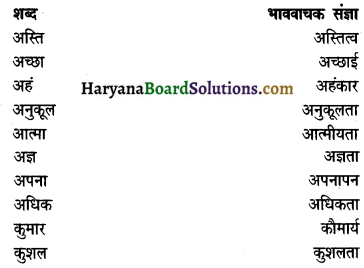
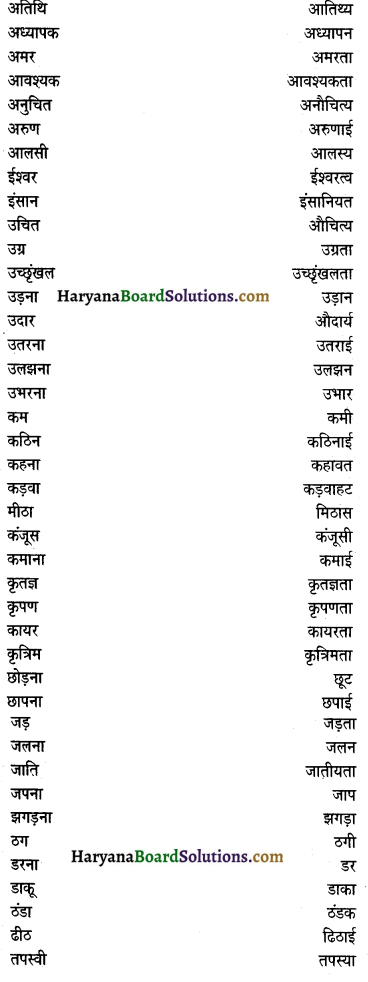
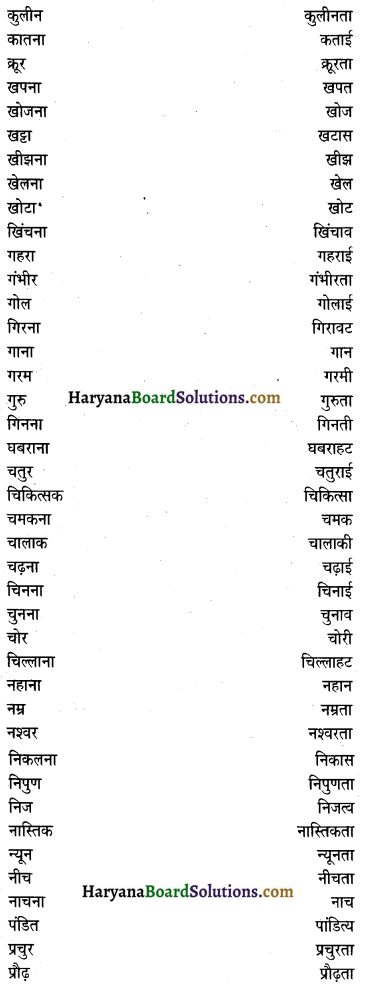
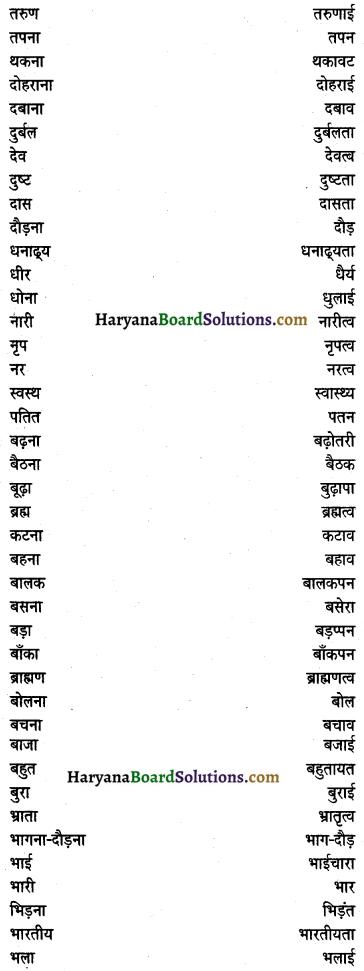
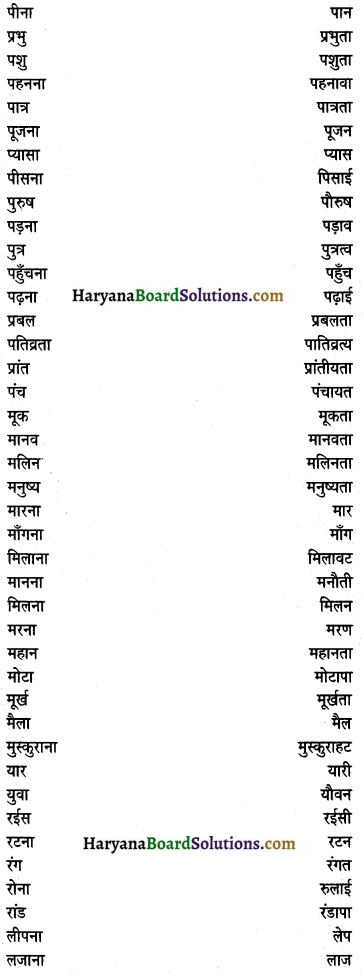
भाववाचक संज्ञाओं की रचना

प्रश्न 8.
भाववाचक संज्ञाएँ किस प्रकार के शब्दों से और कैसे बनती हैं?
उत्तर:
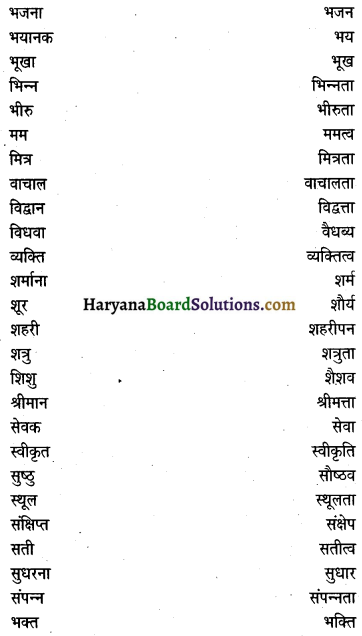
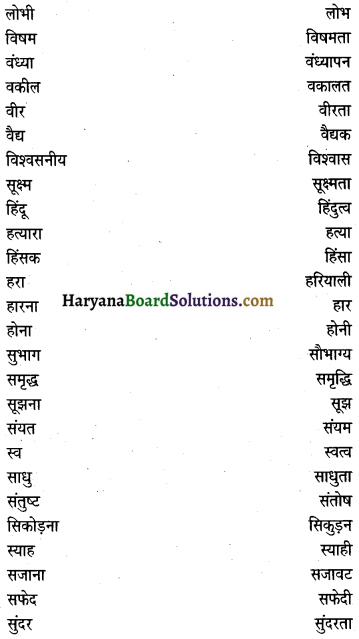
भाववाचक संज्ञाएँ अमूर्त एवं मानसिक संकल्पनाएँ होती हैं। भाववाचक संज्ञाएँ नीचे दिए गए शब्दों से बनती हैं
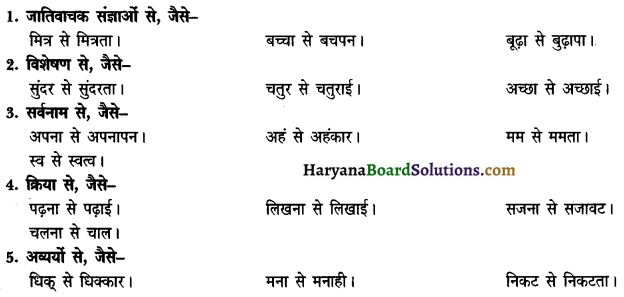
HBSE 10th Class Hindi Vyakaran संज्ञा -1

भाववाचक संज्ञाओं की रचना
HBSE 10th Class Hindi Vyakaran संज्ञा -2
HBSE 10th Class Hindi Vyakaran संज्ञा -3
HBSE 10th Class Hindi Vyakaran संज्ञा -4
HBSE 10th Class Hindi Vyakaran संज्ञा -5
HBSE 10th Class Hindi Vyakaran संज्ञा -6

HBSE 10th Class Hindi Vyakaran संज्ञा

HBSE 10th Class Hindi Vyakaran संज्ञा -7
HBSE 10th Class Hindi Vyakaran संज्ञा -8

HBSE 10th Class Hindi Vyakaran संज्ञा

संज्ञा शब्दों की रूप-रचना

प्रश्न 9.
रूप-रचना किसे कहते हैं तथा रूप-परिवर्तन कैसे होता है?
उत्तर:
निम्नलिखित वाक्यों को ध्यान से पढ़िए-
लड़का जा रहा है। (‘लड़का’ मूल शब्द)
तीन लड़का जा रहा है। (अशुद्ध वाक्य)
तीन लड़के जा रहे हैं। (शुद्ध वाक्य, ‘लड़का’ का बहुवचन रूप।)
उस लड़का ने पुस्तक देखी। (अशुद्ध वाक्य)
उस लड़के ने पुस्तक देखी। (शुद्ध वाक्य)
‘लड़का’ परसर्ग के साथ आने वाला रूप। सभी लड़का को परिश्रम से पढ़ना चाहिए। (अशुद्ध वाक्य)
सभी लड़कों को परिश्रम से पढ़ना चाहिए। (शुद्ध वाक्य) ‘लड़का’ का बहुवचन परसर्ग के साथ आने वाला रूप।
उपर्युक्त वाक्यों से स्पष्ट है कि संज्ञा शब्द कभी अपने मूल रूप में प्रयुक्त होता है और कभी परिवर्तित रूप में। ये परिवर्तन रूप-रचना के अंतर्गत आते हैं। रूप-रचना में बताया जाता है कि कहाँ शब्द अपने मूल रूप में आता है और कहाँ परिवर्तित रूप में तथा शब्द के रूप में परिवर्तन कैसे होता है।

प्रश्न 10.
संज्ञा के कितने रूपावली वर्ग होते हैं?
उत्तर:
संज्ञा के चार रूपावली वर्ग होते हैं
(1) पुल्लिंग आकारांत लड़का, बच्चा, कमरा, खिलौना आदि।
(2) पुल्लिंग आकारांत से भिन्न-घर, मुनि, माली, गुरु, चाक, चौबे, जौ आदि।
(3) स्त्रीलिंग इ/ईकारांत तथा इया प्रत्ययांत-विधि, रीति, नदी, कोठरी, बेटी, बुढ़िया आदि।
(4) स्त्रीलिंग इ/ईकारांत आदि से भिन्न-माता, बहन, वस्तु, बहू, बालू, गौ आदि।

HBSE 10th Class Hindi Vyakaran संज्ञा

वचन

प्रश्न 11.
वचन किसे कहते हैं? हिंदी में वचन कितने प्रकार के होते हैं? उदाहरण सहित उत्तर दीजिए।
उत्तर:
संज्ञा अथवा अन्य विकारी शब्दों के जिस रूप से संख्या का बोध हो, उसे वचन कहते हैं, जैसे लड़का, पुस्तकें आदि। हिंदी में वचन दो प्रकार के माने गए हैं-
1. एकवचन
2. बहुवचन।
1. एकवचन: शब्द के जिस रूप से एक वस्तु या एक व्यक्ति का बोध हो, उसे एकवचन कहते हैं; जैसे लड़का, घोड़ा, नदी, वृक्ष, पक्षी आदि।
2. बहुवचन: शब्द के जिस रूप से एक से अधिक वस्तुओं या व्यक्तियों का बोध हो, उसे बहुवचन कहते हैं; जैसे लड़के, घोड़े, नदियाँ, स्त्रियाँ आदि।

प्रश्न 12.
उदाहरण देकर एकवचन और बहुवचन का अंतर बताइए।
उत्तर:
जिन शब्दों से किसी वस्तु के एक होने का पता चले, उसे एकवचन और जिन शब्दों से वस्तु के एक से अधिक होने का पता चले, उन्हें बहुवचन कहते हैं; जैसे पुस्तक, मेज़, लड़का। ये शब्द एकवचन के उदाहरण हैं। इसी प्रकार, पुस्तकें, मेजें, लड़कों आदि बहुवचन शब्द हैं।

प्रश्न 13.
गणनीय एवं अगणनीय संज्ञाओं का अंतर स्पष्ट कीजिए।
उत्तर:
गणनीय संज्ञाएँ उन्हें कहते हैं जो गिनी जा सकें; जैसे लड़का, पैन, पुस्तक, गिलास, वृक्ष, आदमी आदि। अगणनीय संज्ञाएँ उन्हें कहते हैं जिन्हें गिना न जा सके, केवल तोला या नापा जा सके; जैसे आटा, दूध, पानी, तेल आदि।

HBSE 10th Class Hindi Vyakaran संज्ञा

वचन प्रयोग संबंधी कुछ नियम

प्रश्न 14.
हिंदी भाषा में वचन-प्रयोग संबंधी सामान्य नियमों का उदाहरण सहित वर्णन कीजिए।
उत्तर:
हिंदी भाषा में एक वस्तु या व्यक्ति के लिए एकवचन तथा एक से अधिक वस्तुओं और व्यक्तियों के लिए बहुवचन का प्रयोग किया जाता है। हिंदी में इनके अतिरिक्त कुछ और भी नियम हैं जो वचन प्रयोग में प्रयुक्त होते हैं; यथा
(क) सम्मान व्यक्त करने के लिए एकवचन को बहुवचन में प्रयुक्त किया जाता है जैसे
(i) पिता जी दिल्ली गए हैं।
(ii) गुरु जी कक्षा में हैं।
(iii) मंत्री जी मंच पर पधार चुके हैं।
(iv) श्रीकृष्ण हिंदुओं के अवतार हैं। यहाँ एकवचन का प्रयोग बहुवचन में हुआ है। इसे आदरार्थक बहुवचन कहते हैं।

(ख) हिंदी में हस्ताक्षर, प्राण, दर्शन, होश आदि का बहुवचन में प्रयोग होता है; जैसे
(i) तुम्हारे हस्ताक्षर बहुत सुंदर हैं।
(ii) तुम्हारे प्राण बच गए, यही गनीमत है।
(iii) आपके तो दर्शन भी दुर्लभ हो गए हैं।
(iv) आज का समाचार सुनकर उसके होश उड़ गए।

(ग) कुछ एकवचन शब्द गण, लोग, जन, समूह, वृंद आदि हिंदी शब्दों के साथ जुड़कर बहुवचन में प्रयुक्त होते हैं; यथा-
(i) आज मज़दूर लोग हड़ताल पर हैं।
(ii) अध्यापक-वृंद परीक्षाओं में व्यस्त हैं।
(iii) अपार जन-समूह दिखाई दे रहे हैं।
(iv) कृषक-वृंद हल चला रहे हैं।
(v) छात्रगण आजकल अनुशासनहीनता पर उतर आए हैं।

(घ) जाति, सेना, दल शब्दों के साथ प्रयुक्त होने से एकवचन का बहुवचन में प्रयोग-
(i) नारी जाति प्रगति-पथ पर अग्रसर है।
(ii) छात्र-सेना हड़ताल पर है।
(iii) सेवा-दल रोगियों की सेवा कर रहा है।

(ङ) व्यक्तिवाचक एवं भाववाचक संज्ञाएँ सदा एकवचन में रहती हैं; जैसे
(i) राम खेल रहा है।
(ii) सत्य की सदा जीत होती है।
(iii) उसने झूठ नहीं बोला।
(iv) प्रेम सदा अमर रहता है।

(च) कुछ शब्द सदा एकवचन में ही रहते हैं। जैसे-जनता, वर्षा, आग; जैसे
(i) आग कितनी तेज़ जल रही है।
(ii) जनता सदा पिसती रहती है।
(iii) कितनी अच्छी वर्षा हो रही है।

(छ) बहुवचन के स्थान पर एकवचन का प्रयोग-कभी-कभी जातिवाचक संज्ञा अपनी सारी जाति या समूह की बोधक होती हुई भी अधिक संख्या, परिमाण या गुण को सूचित करने के लिए एकवचन में प्रयुक्त होती है; जैसे
(i) आज का मानव स्वार्थी हो गया है।
(ii) कुत्ता स्वामिभक्त होता है।
(iii) मथुरा का पेड़ा विश्व भर में प्रसिद्ध है।
(iv) उसने जुए में बहुत रुपया लुटाया है।
(v) बाज़ार में अंगूर सस्ता बिक रहा है।

वचन बदलने के नियम
1. अकारांत शब्दों के अंतिम ‘आ’ को ए कर देने से बहुवचन-
एकवचन – बहुवचन
कपड़ा – कपड़े
बेटा – बेटे
बच्चा – बच्चे
लोटा – लोटे
घोड़ा – घोड़े
पंखा – पंखे
लड़का – लड़के
घड़ा – घड़े

अपवाद: नेता, राजा, पिता, योद्धा, मामा, नाना, चाचा, सूरमा आदि शब्द इस नियम के अपवाद हैं।

HBSE 10th Class Hindi Vyakaran संज्ञा

2. आकारांत तथा अकारांत शब्दों के अंतिम ‘अ’, ‘आ’ को ‘एं’ कर देने से बहुवचन-
अकारांत शब्द-
पुस्तक – पुस्तकें
नहर – नहरें
बहिन – बहिनें
आँख – आँखें
रात – रातें
दीवार – दीवारें
गाय – गायें
कलम – कलमें
सड़क – सड़कें
बोतल – बोतलें
किताब – किताबें

आकारांत शब्द-
कथा – कथाएँ
माला – मालाएँ
अध्यापिका – अध्यापिकाएँ
गाथा – गाथाएँ
विद्या – विद्याएँ
भावना – भावनाएँ
माता – माताएँ
आत्मा – आत्माएँ
लता – लताएँ
कन्या – कन्याएँ
झील – झीलें

3. इकारांत तथा ईकारांत शब्दों के अंत में ‘याँ’ जोड़ने से बहुवचन। इस अवस्था में ई का इ भी हो जाता है।

घोड़ी – घोड़ियाँ
शक्ति – शक्तियाँ
समिति – समितियाँ
रोटी – रोटियाँ
निधि – निधियाँ
लड़की – लड़कियाँ
राशि – राशियाँ
बेटी – बेटियाँ
पंक्ति – पंक्तियाँ
नदी – नदियाँ
रात्रि – रात्रियाँ
लिपि – लिपियाँ
रीति – रीतियाँ
स्त्री – स्त्रियाँ

4. उकारांत, ऊकारांत, एकारांत, ओकारांत शब्दों में एँ जोड़कर बहुवचन। ‘ऊ’ का ‘उ’ भी हो जाता है।

धेनु – धेनुएँ
गौ – गौएँ
धातु – धातुएँ
वधू – वधुएँ
बहु – बहुएँ
वस्तु – वस्तुएँ
ऋतु – ऋतुएँ

5. ‘या’ अथवा ‘इया’ से समाप्त होने वाले शब्दों में केवल अनुस्वार जोड़कर बहुवचन बनाना-

बिटिया – बिटियाँ
चिड़िया – चिड़ियाँ
चुहिया – चुहियाँ
बुढ़िया – बुढ़ियाँ
गुड़िया – गुड़ियाँ
कुतिया – कुतियाँ
बछिया – बछियाँ
डिबिया – डिबियाँ

HBSE 10th Class Hindi Vyakaran संज्ञा

6. ‘अ’ तथा ‘आ’ से समाप्त होने वाले शब्दों में अंतिम ‘अ’ या ‘आ’ के स्थान पर ओं लगाकर बहुवचन बनाना-

घर से – घरों से
झील पर – झीलों पर
घोड़े पर – घोड़ों पर
माता की – माताओं की
बंदर का – बंदरों का
खरबूजा – खरबूजों

7. उकारांत या ऊकारांत शब्दों के अंत में ‘ओं’ प्रत्यय लगाकर बहुवचन बनाना। ऐसे शब्दों में अंतिम ‘ऊ’ को ‘उ’ हो जाता है।

ऋतु – ऋतुओं
बहू – बहुओं
धातु – धातुओं
वधू – वधुओं
वस्तु – वस्तुओं
चाकू – चाकुओं
धेनू – धेनुओं
डाकू – डाकुओं

8. इकारांत तथा ईकारांत शब्दों के संबोधन बहुवचन में ‘यो’ प्रत्यय लगाकर बहुवचन बनाना। प्रत्यय पूर्व स्वर दीर्घ का हस्व हो जाता है।

लड़की! – लड़कियो!
मुनि! – मुनियो!
भाई! – भाइयो!
सिपाही! – सिपाहियो!

9. ‘अ’ और ‘आ’ अंत वाले शब्दों में ओं लगाकर बहुवचन बनाना-

बहन – बहनों
माता – माताओं
कन्या – कन्याओं
भ्राता – भ्राताओं

वाक्य-रचना पर वचन का प्रभाव

प्रश्न 15.
वाक्य-रचना पर वचन-परिवर्तन या वचन का क्या प्रभाव पड़ता है? उदाहरण सहित उत्तर दीजिए।
उत्तर:
वचन-परिवर्तन के कारण वाक्य के विभिन्न अंगों में भी परिवर्तन होता है। वचन परिवर्तन विशेषण, क्रिया, क्रियाविशेषण को प्रभावित करता है; जैसे

1. बालक ने अच्छा गीत गाया। – एकवचन
बालकों ने अच्छे गीत गाए। – बहुवचन

लड़की पुस्तक पढ़ रही है। – एकवचन
लड़कियाँ पुस्तकें पढ़ रही हैं। -बहुवचन

2. बच्चा चलता-चलता गिर पड़ा। – एकवचन
बच्चे चलते-चलते गिर पड़े। – बहुवचन

HBSE 10th Class Hindi Vyakaran संज्ञा

लिंग

प्रश्न 16.
लिंग किसे कहते हैं? उदाहरण सहित उत्तर दीजिए।
उत्तर:
जिस संज्ञा शब्द से किसी पुरुष जाति या स्त्री जाति का पता चले, उसे लिंग कहते हैं अर्थात् जिन चिह्नों से शब्दों का स्त्रीवाचक या पुरुषवाचक होने का पता चले, उन्हें लिंग कहते हैं; जैसे ‘छात्र’ पुल्लिंग तथा ‘छात्रा’ स्त्रीलिंग है।

प्रश्न 17.
हिंदी में लिंग कितने प्रकार के होते हैं? उदाहरण देकर समझाइए।
उत्तर:
हिंदी में मुख्यतः दो प्रकार के लिंग माने जाते हैं-
1. पुल्लिंग
2. स्त्रीलिंग।

1. पुल्लिंग: जिन संज्ञा शब्दों से पुरुष जाति का बोध हो, उन्हें पुल्लिंग कहते हैं; जैसे बेटा, हाथी, कुत्ता आदि।
2. स्त्रीलिंग: जिन संज्ञा शब्दों से स्त्री जाति का बोध हो, उन्हें स्त्रीलिंग कहते हैं; जैसे लड़की, रानी, कुतिया, बकरी आदि।

टिप्पणी:
हिंदी में जड़ वस्तुओं के लिंग के लिए समस्या है; जैसे पर्वत, नदी, हवा, दही, घी आदि में स्त्रीलिंग या स्त्री जाति तथा पुल्लिंग या पुरुष जाति जैसी कोई चीज़ नहीं होती किंतु व्याकरणिक दृष्टि से संज्ञा शब्द का स्त्रीलिंग या पुल्लिंग . होना ज़रूरी है। सजीव प्राणियों में नर या मादा लगाकर भी लिंग निर्धारित कर लिया जाता है; यथा नर भेड़िया या मादा भेड़िया आदि।

हिंदी में कुछ ऐसे भी शब्द हैं जिनमें लिंग-परिवर्तन नहीं होता; यथा प्रधानमंत्री, राष्ट्रपति, डॉक्टर, प्रिंसिपल, मैनेजर आदि। इन पदों पर पुरुष भी हो सकते हैं तथा नारी भी। ऐसे पदवाची शब्द उभयलिंगी शब्द कहलाते हैं।

HBSE 10th Class Hindi Vyakaran संज्ञा

लिंग संबंधी युग्म शब्द

प्रश्न 18.
हिंदी में लिंग संबंधी युग्म शब्दों से क्या अभिप्राय है? उदाहरण सहित स्पष्ट कीजिए।
उत्तर-हिंदी में पुल्लिंग तथा उनके स्त्रीलिंग रूपों के लिए पृथक-पृथक शब्द प्रचलित हैं, उन्हें युग्म शब्द कहते हैं, जैसे-
माता-पिता – विद्वान्-विदुषी
पुरुष-स्त्री – सम्राट्-साम्राज्ञी
गाय-बैल – विधुर-विधवा
राजा-रानी – वर-वधू

हिंदी तथा संस्कृत के लिंग शब्दों में अंतर

प्रश्न 19.
संस्कृत में प्रचलित लिंग से हिंदी में पाई जाने वाली भिन्नता को व्यक्त कीजिए।
उत्तर:
कुछ संस्कृत शब्दों में प्रचलित लिंगों की हिंदी में भिन्नता पाई जाती है; जैसे संस्कृत में आत्मा, महिमा, पुल्लिंग माने जाते हैं किंतु हिंदी में ये स्त्रीलिंग के रूप में स्वीकार किए गए हैं। ‘अग्नि’ शब्द भी ऐसा ही है।

लिंग परिवर्तन संबंधी नियम

(क) अकारांत तत्सम शब्दों के ‘अ’ को ‘आ’ कर देने से-

पुल्लिंग – स्त्रीलिंग
सुत – सुता
प्रिय – प्रिया
छात्र – छात्रा
शिष्य – शिष्या
पूज्य – पूज्या
बाल – बाला
तनुज – तनुजा
कांत – कांता
आचार्य – आचार्या
मूर्ख – मूर्खा

(ख) अकारांत शब्दों के अंतिम ‘अ’ या ‘आ’ को ‘ई’ कर देने से-

देव – देवी
मृग – मृगी
पहाड़ – पहाड़ी
कबूतर – कबूतरी
दास – दासी
सुअर – सुअरी
पुत्र – पुत्री
चाचा – चाची
साला – साली
लड़का – लड़की
घोड़ा – घोड़ी
मामा – मामी
बेटा – बेटी
गधा – गधी
भतीजा – भतीजी
बंदर – बंदरी
बकरा – बकरी
भाँजा – भाँजी

HBSE 10th Class Hindi Vyakaran संज्ञा

(ग) परिवर्तन के बिना शब्दों के अंत में ‘नी’ प्रत्यय लगाकर

सिंह – सिंहनी
भील – भीलनी
ऊँट – ऊँटनी
मज़दूर – मज़दूरनी
जाट – जाटनी
सियार – सियारनी
शेर – शेरनी
मोर – मोरनी
राजपूत – राजपूतनी

(घ) परिवर्तन के बिना शब्दों के अंत में ‘आनी’ प्रत्यय जोड़ने से

देवर – देवरानी
भव – भवानी
नौकर – नौकरानी
सेठ – सेठानी
मेहतर – मेहतरानी
चौधरी – चौधरानी
रुद्र – रुद्राणी
क्षत्रिय – क्षत्राणी
इन्द्र – इन्द्राणी
जेठ – जेठानी

(ङ) अंतिम स्वर में कुछ परिवर्तन करके ‘इन’ प्रत्यय लगाने से

नाइ – नाइन
कुम्हार – कुम्हारिन
तेलि – तेलिन
पड़ोसी – पड़ोसिन
ठठेरा – ठठेरिन
धोबी – धोबिन
दर्जी – दर्जिन
माली – मालिन
भक्त – भक्तिन
जुलाहा – जुलाहिन
ग्वाला – ग्वालिन
कहार – कहारिन
चमार – चमारिन
भंगी – भंगिन
नाती – नातिन
दूल्हा – दूल्हिन
पापी – पापिन

HBSE 10th Class Hindi Vyakaran संज्ञा

(च) अंतिम स्वर के स्थान पर ‘आइन’ प्रत्यय लगाकर तथा अन्य स्वरों में कुछ परिवर्तन करके-

लाला – ललाइन
ठाकुर – ठकुराइन
चौबे – चौबाइन
गुरु – गुरुआइन
मिसिर – मिसराइन
बाबू – बबुआइन
चौधरी – चौधराइन

(छ) अंतिम ‘अ’ या ‘आ’ को ‘इया’ बनाकर-

बंदर – बंदरिया
बूढ़ा – बुढ़िया
कुत्ता – कुतिया
डिब्बा – डिबिया

(ज) शब्दों के अंतिम ‘अक’ को ‘इका’ बनाकर-

पाठक – पाठिका
लेखक – लेखिका
गायक – गायिका
बालक – बालिका
अध्यापक – अध्यापिका
उपदेशक – उपदेशिका
सेवक – सेविका
पाचक – पाचिका
निरीक्षक – निरीक्षिका
नायक – नायिका

(झ) अंतिम ‘वान’ और ‘मान’ के स्थान पर ‘अती’ लगाकरगुणवान
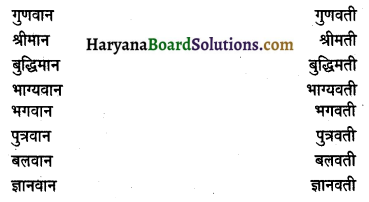
HBSE 10th Class Hindi Vyakaran संज्ञा -9

(ञ) कुछ पुल्लिंग शब्दों के स्त्रीलिंग में विशेष रूप बन जाते हैं
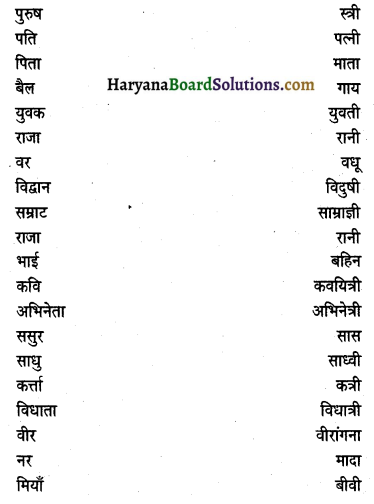
HBSE 10th Class Hindi Vyakaran संज्ञा -10

प्रश्न 20.
लिंग-परिवर्तन के कारण हिंदी में होने वाले परिवर्तनों का उल्लेख कीजिए।
उत्तर:
लिंग-परिवर्तन के कारण हिंदी भाषा में दो स्तरों पर परिवर्तन देखा जा सकता है
1. शब्द स्तर पर।
2. वाक्य स्तर पर।।
1. शब्द स्तर पर होने वाले परिवर्तन का वर्णन पहले किया जा चुका है।
2. वाक्य स्तर पर होने वाले परिवर्तन निम्नलिखित हैं-
(i) अच्छा गायक अच्छा गीत गाता है।
अच्छी गायिका अच्छा गीत गाती है।

(ii) तुम्हारा लड़का पढ़ता-पढ़ता सो गया।
तुम्हारी लड़की पढ़ती-पढ़ती सो गई।

(iii) मेरा पुत्र विद्यालय जाता है।
मेरी पुत्री विद्यालय जाती है।
उपर्युक्त वाक्यों को देखने पर स्पष्ट हो जाता है कि लिंग-परिवर्तन के कारण वाक्यों की क्रिया में, विशेषण में, क्रियाविशेषण में तथा संबंध कारकीय प्रयोगों में परिवर्तन आ जाता है।

HBSE 10th Class Hindi Vyakaran संज्ञा

प्रश्न 21.
निम्नलिखित वाक्यों में रेखांकित शब्दों के लिंग तथा वचन बताएँ
1. मेरे पास एक पुस्तक है।
2. अध्यापक विद्यार्थियों को पढ़ा रहा है।
3. बालिका ने भिखारी को रोटी दी।
4. बाज़ार में फूल नहीं मिलते।
5. खेत में किसान हल चलाता है।
उत्तर:
1. पुस्तक-स्त्रीलिंग एकवचन।
2. अध्यापक-पुल्लिंग बहुवचन।
विद्यार्थियों-पुल्लिंग बहुवचन।
3. बालिका स्त्रीलिंग बहुवचन।
रोटी-स्त्रीलिंग एकवचन।
4. फूल-पुल्लिंग एकवचन।
5. किसान-पुल्लिंग एकवचन।

कारक

प्रश्न 22.
कारक की परिभाषा देते हुए उसके रूपों का वर्णन कीजिए।
उत्तर:
“कारक’ शब्द का अर्थ है-क्रिया को करने वाला अर्थात क्रिया को पूरी करने में किसी-न-किसी भूमिका को निभाने वाला।

परिभाषा: संज्ञा या सर्वनाम के जिस रूप से उसके संबंध का वाक्य के दूसरे शब्दों से पता चले, उसको कारक कहते हैं। यह संबंध-ज्ञान कभी तो पृथक शब्द के रूप में या चिहनों के रूप में होता है तथा कभी यह मूल शब्द में घुला-मिला रहता है। कभी मूल शब्द में केवल कुछ विकार हो जाता है तथा परसर्ग के रूप में भी जुड़ा रहता है।

कारकों का रूप प्रकट करने के लिए उनके साथ जो शब्द-चिह्न लगे रहते हैं, उन्हें विभक्ति कहते हैं। इन कारक-चिह्नों को परसर्ग भी कहते हैं।
कारक सहित शब्द के दो रूप होते हैं मूल रूप एवं विकारी रूप। शब्द के इन दोनों रूपों में कभी विभक्ति का प्रयोग होता है और कभी नहीं होता; जैसे
1. मोहन पुस्तक पढ़ता है। (मोहन कर्ता, पुस्तक कर्म, दोनों विकार रहित)
2. मोहन ने पुस्तक को फेंक दिया। (मोहन कर्ता, पुस्तक कर्म, दोनों के साथ परसर्ग चिह्न ‘ने’ और ‘को’)
3. बालकों से पुस्तक ले लो। (बालक कर्ता में विकार और परसर्ग दोनों परंतु पुस्तक विकार रहित)

HBSE 10th Class Hindi Vyakaran संज्ञा

कारक के भेद

प्रश्न 23.
हिंदी कारकों के कितने भेद होते हैं? उदाहरण सहित स्पष्ट कीजिए।
उत्तर:
हिंदी में कारकों के आठ भेद माने जाते हैं
(i) कर्ता-क्रिया को करने वाला।
(ii) कर्म-जिस पर क्रिया का प्रभाव या फल पड़े।
(iii) करण-जिस साधन से क्रिया संपन्न हो।
(iv) संप्रदान-जिसके लिए क्रिया की जाए।
(v) अपादन-जिससे अलगाव हो।
(vi) अधिकरण-क्रिया के संचालन का आधार।
(vii) संबंध-क्रिया का अन्य पदों से संबंध सूचित करने वाला।
(viii) संबोधन-जिससे संज्ञा को पुकारा जाए।

प्रश्न 24.
हिंदी में प्रयुक्त होने वाले कारकों के चिह्नों या विभक्तियों का उल्लेख कीजिए।
उत्तर:
हिंदी में आठ कारक हैं। इनके नाम और चिह्न निम्नलिखित प्रकार से हैं
कारक – विभक्ति चिहन या परसर्ग
1. कर्ता – ने अथवा कुछ नहीं
2. कर्म – को अथवा कुछ नहीं
3. करण – से, के द्वारा, के साथ (साधन)
4. संप्रदान – को, के लिए
5. अपादान – से पार्थक्य
6. संबंध – का, के, की (रा, रे, री या ना, ने, नी)
7. अधिकरण – में, पर
8. संबोधन – हे, रे, अरे, री, अरी, ओ (संबोधन शब्द से पूर्व जुड़ता है)

नोट- ये परसर्ग संज्ञा शब्दों से अलग लिखे जाते हैं लेकिन सर्वनामों के साथ जुड़कर आते हैं; यथा-
1. राम ने रावण को बाण से मारा।
2. तुमको, उसने, आपकी इत्यादि।

HBSE 10th Class Hindi Vyakaran संज्ञा

कारक संबंधी नियम

प्रश्न 25.
हिंदी के सभी कारकों का सोदाहरण परिचय दीजिए।
उत्तर:
1. कर्ता कारक क्रिया करने वाले को कर्ता कारक कहते हैं। इसका परसर्ग ‘ने’ है। इसका प्रयोग सकर्मक धातुओं के साथ भूतकाल में होता है। वर्तमान और भविष्यत काल में इस परसर्ग का प्रयोग नहीं होता।
मोहन पत्र लिखता है। (वर्तमान काल)
मोहन पत्र लिखेगा। (भविष्यत काल)
मोहन ने पत्र लिखा। (भूतकाल)
इन तीनों वाक्यों में लिखने की क्रिया करने वाला मोहन है। अतः मोहन ही कर्ता है।
यद्यपि कर्ता की मूल विभक्ति ‘ने’ है तथापि कभी-कभी अन्य विभक्तियों के साथ भी कर्ता का बोध होता है; जैसे-

अब मोहन को सो जाना चाहिए।
कृष्णा को आज दिल्ली जाना होगा।
यात्री को आज हरिद्वार पहुंचना है।
यहाँ ‘मोहन’, ‘कृष्णा’ तथा ‘यात्री’ के लिए ‘को’ कर्ता कारक है।

असमर्थता के लिए कर्ता के साथ ‘से’ विभक्ति का प्रयोग होता है; जैसे-
रोगी से बैठा नहीं जा रहा है।

कर्मवाच्य एवं भाववाच्य में कर्ता के साथ क्रमशः ‘से’, ‘के द्वारा’ विभक्ति का प्रयोग किया जाता है; जैसे
1. मोहन से पुस्तक पढ़ी गई।
2. सिपाहियों द्वारा चोर पीटा गया।
3. बच्चों द्वारा चित्र बनाए गए।

2. कर्म कारक:
क्रिया का फल जिस शब्द पर पड़ता है, उसे कर्म कारक कहते हैं। कर्म कारक की विभक्ति ‘को’ होती है। कभी-कभी विभक्ति का प्रयोग नहीं होता।
इन पुस्तकों को उठा लो।
राम को कहो।
रवि पुस्तक पढ़ता है।
इन वाक्यों में ‘पुस्तकों को’ ‘राम को’ तथा ‘पुस्तक’ कर्म कारक के प्रयोग हैं। द्विकर्मक वाक्यों में मुख्य और गौण दो कर्म होते हैं। मुख्य कर्म क्रिया के समीप रहता है। उसमें विभक्ति नहीं लगती; यथा-शिक्षक ने विद्यार्थी को पाठ पढ़ाया।
यहाँ पाठ मुख्य कर्म है और विद्यार्थी गौण कर्म।

3. करण कारक:
जिस शब्द रूप की सहायता से क्रिया का व्यापार होता है, उसे करण कारक कहते हैं। इसके विभक्ति चिह्न हैं-‘से’, ‘द्वारा’, ‘के द्वारा’, ‘के साथ’; यथा-
राम ने रावण को बाण से मारा।
मुझे पत्र द्वारा सूचित करना।
मज़दूर ने गुड़ के साथ रोटी खाई।
बच्चों ने पैंसिल से चित्र बनाया।
शिकारी ने बंदूक से शेर को मारा।

HBSE 10th Class Hindi Vyakaran संज्ञा

4. संप्रदान कारक:
जिसके लिए क्रिया की जाती है, संज्ञा या सर्वनाम के उस रूप को संप्रदान कारक कहा जाता है; जैसे राजा भिखारी को दान देता है। यहाँ भिखारी के लिए दान दिया जाता है, इसलिए यहाँ ‘भिखारी’ संप्रदान कारक है। इसके विभक्ति चिह्न हैं-‘के लिए’, ‘को’ या ‘के वास्ते’ आदि। अन्य उदाहरण-
मैंने आप के लिए भोजन छोड़ा।
पिता ने पुत्र को पुस्तक दी।
वह अपने भाई के लिए दवाई साया।
सैनिक देश की रक्षा के वास्ते सीमा पर डटे हुए हैं।

5. अपादान कारक:
संज्ञा के जिस रूप से एक वस्तु तथा व्यक्ति के दूसरी वस्तु तथा व्यक्ति से पृथक होने, डरने, सीखने, लजाने अथवा तलना करने का भाव हो, उसे अपादान कारक कहते हैं। इसमें ‘से’ विभक्ति चिहन का प्रयोग होता है, यथा
वृक्षों से पत्ते गिरते हैं।
में घर से आया हूँ।
गंगा हिमालय से निकलती है।

6. संबंध कारक:
शब्द के जिस रूप से किसी व्यक्ति या पदार्थ का दूसरे व्यक्ति या पदार्थ से संबंध प्रकट होता है, उसे संबंध कारक कहते हैं। ‘का’, ‘के’, ‘की’ इसके विभक्ति चिहून हैं। संज्ञा सर्वनाम पुल्लिंग के साथ ‘का’, स्त्रीलिंग के साथ ‘की’ तथा बहुवचन के साथ ‘के’ परसर्ग का प्रयोग होता है; यथा
शीला सीता की बहिन है।
राम के दो भाई हैं।
आपकी पुस्तक मेरे पास है।

7. अधिकरण कारक:
संज्ञा या सर्वनाम के जिस रूप से किसी के आधार का बोध होता है, उसे अधिकरण कारक कहते है। जैसे रुपया मेरे हाथ में है। बच्चा छत पर है। यहाँ हाथ में और छत पर’ अधिकरण कारक हैं। अतः ‘में’, ‘पर’ तथा ‘के ऊपर’ इसकी विभक्तियों हैं; यथा
पानी में मगरमच्छ रहता है।
पुस्तक मेज़ पर रखी है।
छत के ऊपर गेंद पड़ी है।
अनेक बार ‘के मध्य’, ‘के बीच’, ‘के भीतर’ आदि का भी प्रयोग होता है; जैसे-
घर के भीतर चलो।।
इस डिबिया के अंदर कितनी गोलियों हैं?

कभी-कभी विभक्ति रहित अधिकरण का भी प्रयोग होता है; जैसे-
तुम्हारे घर क्या होगा?
इस जगह पूर्ण शांति है।

8. संबोधन कारक: संज्ञा के जिस रूप से किसी को पुकारा जाए, उसे संबोधन कारक कहते हैं। इसमें शब्द से पूर्व है, अरे, ओ, अजी आदि का प्रयोग होता है; जैसे-
रामू! घर चलो।
अरे पुत्र! मेरे पास आओ।
भाई साहब! मेरी बात सुनो।
बहुवचन में शब्दांत में ‘ओ’ प्रत्यय लगता है; यथा-
बच्चो! शोर मत करो।
हे बालक! तुम कहीं चले गए थे।

HBSE 10th Class Hindi Vyakaran संज्ञा

कारकों को एक दृष्टि में समझने के लिए निम्नलिखित तालिका देखिए-
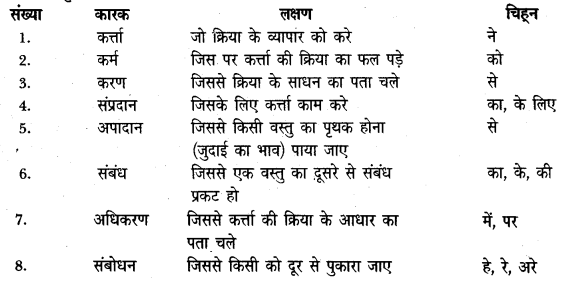
HBSE 10th Class Hindi Vyakaran संज्ञा -11

परीक्षोपयोगी महत्त्वपूर्ण प्रश्न

प्रश्न 1.
संज्ञा किसे कहते हैं? कोई तीन उदाहरण लिखिए।
उत्तर:
जो शब्द किसी व्यक्ति, वस्तु, स्थान और भाव का बोध कराएँ, उन्हें संज्ञा कहते हैं। उदाहरणार्थ-पुस्तक, दिल्ली, वृक्ष, घृणा आदि।

प्रश्न 2.
संज्ञा के कितने भेद होते हैं? प्रत्येक का एक-एक उदाहरण दीजिए।
उत्तर:
संज्ञा के निम्नलिखित तीन भेद होते हैं
(1) व्यक्तिवाचक संज्ञा; जैसे हिमालय, राम, करनाल आदि।
(2) जातिवाचक संज्ञा; जैसे मनुष्य, नगर, पुस्तक आदि।
(3) भाववाचक संज्ञा; जैसे अच्छाई, मिठास, बुराई, भलाई आदि।

प्रश्न 3.
नीचे दिए गए गद्यांश को ध्यान से पढ़िए और संज्ञा शब्दों को छाँटकर उसके तीनों भेदों के दो-दो उदाहरण दीजिए।
“मोहन एक अच्छा लड़का है। एक दिन वह पहाड़ पर गया। उस पहाड़ को हिमालय पर्वत कहा जाता है। गंगा नदी हिमालय से ही निकलती है। मोहन की बचपन से ही यह इच्छा थी कि वह पहाड़ों की ऊँचाई और नदियों की गहराई को निकटता से देखे।” उसने इनको हरिद्वार में देखा। इनकी सुंदरता देखकर वह प्रसन्न हो गया।
उत्तर:
व्यक्तिवाचक संज्ञा-शब्द: मोहन, हिमालय, गंगा, हरिद्वार।
जातिवाचक संज्ञा-शब्द: लड़का, दिन, पहाड़, पर्वत, नदी।
भाववाचक संज्ञा-शब्द: बचपन, इच्छा, ऊँचाई, गहराई, सुंदरता, प्रसन्न।

प्रश्न 4.
द्रव्यवाचक और समूहवाचक संज्ञाओं के दो-दो उदाहरण देकर वाक्यों में प्रयोग कीजिए।
उत्तर:
द्रव्यवाचक संज्ञाएँ: सोना एवं लकड़ी
सोना: सोने से आभूषण बनाए जाते हैं।
लकड़ी: आजकल लकड़ी बहुत महँगी हो गई है।

समूहवाचक संज्ञाएँ: सेना एवं कक्षा
सेना: भारतीय सेना अपनी बहादुरी के लिए प्रसिद्ध है।
कक्षा: अध्यापक कक्षा को पढ़ा रहा है।

HBSE 10th Class Hindi Vyakaran संज्ञा

प्रश्न 5.
नीचे दिए गए शब्दों से भाववाचक संज्ञा बनाइएअच्छा, लड़का, सुंदर, शत्रु, बच्चा, लड़ना, बुरा, बूढ़ा, कड़वा, गरम, अपना, मीठा, पंडित, चतुर, बुनना।
उत्तर:
अच्छा-अच्छाई
लड़का-लड़कपन
सुंदर-सुंदरता
शत्रु-शत्रुता
बच्चा-बचपन
लड़ना-लड़ाई
बुरा-बुराई
बूढ़ा-बुढ़ापा
कड़वा-कड़वाहट
गरम-गरमी
अपना-अपनापन
मीठा-मिठास
पंडित-पांडित्य
चतुर-चतुराई
बुनना-बुनावट

प्रश्न 6.
निम्नलिखित पुल्लिंग शब्दों के स्त्रीलिंग रूप लिखिएबेटा, चूहा, लड़का, बंदर, नाती, धोबी, नौकर, मोर, शेर, सदस्य, लेखक, कवि, देवर, माली, श्रीमान।
उत्तर:
बेटा-बेटी
चूहा-चुहिया
लड़का-लड़की
बंदर-बंदरिया
नाती-नातिन
धोबी-धोबिन
नौकर-नौकरानी
मोर-मोरनी
शेर-शेरनी
सदस्य-सदस्या
पुस्तक-पुस्तकें.
लेखक-लेखिका
कवि-कवयित्री
देवर-देवरानी
माली-मालिन
श्रीमान श्रीमती

HBSE 10th Class Hindi Vyakaran संज्ञा

प्रश्न 7.
निम्नलिखित शब्दों के मूल विभक्ति में बहुवचन रूप लिखिएजाति, बहन, रोटी, पुस्तक, माला, कक्षा, बस, कहानी, महिला, राज, गुड़िया, बहू, कमरा, चिड़िया, परछाई।
उत्तर:
जाति-जातियाँ
बहन-बहनें
रोटी-रोटियाँ
माला-मालाएँ
कक्षा-कक्षाएँ
बस बसें
कहानी-कहानियाँ महिला-महिलाएँ
राज-राजगण। गुड़िया-गुड़ियाँ
बहू-बहुएँ कमरा कमरे
चिड़िया-चिड़ियाँ
परछाई-परछाइयाँ

प्रश्न 8.
नीचे दिए गए वाक्यों में बहुवचन के गलत प्रयोगों को पहचानिए और उन्हें सही रूप में लिखिए
1. उन स्त्री ने खाना खा लिया।
2. दो लड़के आ रहा हैं।
3. महिलाओं लड़ रही हैं।
4. उन कमरे में बिजली नहीं है।
5. उसकी रुचिएँ फिल्म देखना और कहानी पढ़ना हैं।
6. भारत में कई पवित्र नदियाँ हैं।
उत्तर:
शुद्ध रूप-
1. उन स्त्रियों ने खाना खा लिया।
2. दो लड़के आ रहे हैं।
3. महिलाएँ लड़ रही हैं।
4. उन कमरों में बिजली नहीं है। .
5. उसकी रुचि फिल्में देखना और कहानियाँ पढ़ना है।
6. भारत में अनेक पवित्र नदियाँ हैं।

HBSE 10th Class Hindi Vyakaran संज्ञा

प्रश्न 9.
कारक किसे कहते हैं? कारक के भेदों का परिचय दीजिए।
उत्तर:
संज्ञा या सर्वनाम के जिस रूप से उसका क्रिया के साथ संबंध ज्ञात हो, उसे कारक कहते हैं। भेद-कारक के आठ भेद माने जाते हैं, जिनका संक्षिप्त परिचय इस प्रकार है-
1. कर्ता कारक (क्रिया को करने वाला)
2. कर्म कारक (जिस पर क्रिया का प्रभाव या फल पड़े)
3. करण कारक (जिस साधन से क्रिया हो)
4. संप्रदान कारक (जिसके लिए क्रिया की गई हो)
5. अपादान कारक (अलग होने का भाव)
6. अधिकरण कारक (क्रिया के संचालन का आधार)
7. संबंध कारक (क्रिया से भिन्न किसी अन्य पद से संबंध बताने वाला)
8. संबोधन कारक (संबोधित करने वाले शब्द)

प्रश्न 10.
‘ने’ परसर्ग का प्रयोग करते हुए निम्नलिखित वाक्यों को बदलिए
1. राम खाना खा रहा है।
2. श्याम मोहन को पुस्तक देता है।
3. गोपाल रोटी खा चुका।
4. आप यह क्यों कह रहे हैं?
5. प्रधानमंत्री सूखाक्षेत्र का दौरा कर रहे हैं।
उत्तर:
1. राम ने खाना खा लिया है।
2. श्याम ने मोहन को पुस्तक दी है।
3. गोपाल ने रोटी खा ली है।
4. आपने यह क्यों कहा है?
5. प्रधानमंत्री ने सूखाक्षेत्र का दौरा किया है।

प्रश्न 11.
निम्नलिखित वाक्यों से कारकों को छाँटकर उनके नाम लिखिए
1. मोहन चाकू से फल काट रहा है।
2. मोहन ने सोहन को अपनी पुस्तक दे दी है।
3. रमेश को स्कूल जाना है।
4. वह इलाज के लिए दिल्ली आ रहा है।
5. गंगा हिमालय से निकलती है।

6. मैं कलम से पत्र लिखूगा।
7. वह दुकान पर नहीं है।
8. वह कल घर पर था।
9. परीक्षा मार्च में होगी।
10. मैं शाम को आऊँगा।
उत्तर:
1. मोहन (कत्ता), फल (कम), चाकू से (करण)।
2. मोहन ने (कत्ता) सोहन को (कम) पुस्तक (कम)।
3. रमेश को (कत्ता) स्कूल (अधिकरण)।
4. वह (कत्ता) इलाज के लिए (संप्रदान) दिल्ली (अधिकरण)।
5. गंगा (कत्ता) हिमालय से (अपादन)।
6. मैं (कत्ता) कलम से (करण) पत्र (कम)।
7. वह (कत्ता) दुकान पर (अधिकरण)।
8. वह (कत्ता) घर पर (अधिकरण)।
9. परीक्षा (कम) मार्च में (अधिकरण)।
10. मैं (कत्ता) शाम को (अधिकरण)।

HBSE 10th Class Hindi Vyakaran संज्ञा

प्रश्न 12.
निम्नलिखित शब्दों में से गणनीय और अगणनीय संज्ञा शब्दों की अलग-अलग सूची बनाइएपेड़, कुर्सी, पानी, किताब, हवा, नदी, गेहूँ, आटा, दूध, घर।
उत्तर:
1. गणनीय संज्ञा-शब्द-पेड़, कुर्सी, किताब, नदी, घर।
2. अगणनीय संज्ञा-शब्द-पानी, हवा, गेहूँ, आटा, दूध।

प्रश्न 13.

ऐसे दो वाक्य बनाइए, जिनमें व्यक्तिवाचक संज्ञा जातिवाचक संज्ञा के रूप में प्रयुक्त हुई हो।
उत्तर:
(1) देश में जयचंदों की कमी नहीं है।
(2) कंसों से बचकर रहो।

प्रश्न 14.
कर्म और संप्रदान अथवा करण और अपादान कारकों का अंतर स्पष्ट करते हुए दो-दो उदाहरण दीजिए।
उत्तर:
कर्म और संप्रदान-प्रायः ‘को’ परसर्ग कर्म के लिए आता है लेकिन अनेक बार संप्रदान कारक के लिए भी ‘को’ परसर्ग का प्रयोग हो जाता है। संप्रदान कारक में किसी को कुछ देने अथवा कुछ उपकार करने का भाव होता है। अतः जहाँ देने या करने की क्रिया हो, वहाँ संप्रदान कारक माना जाएगा शेष प्रयोगों में कर्म कारक; यथा-
संप्रदान कारक : मैंने सीता को पैन दिया।
कर्म कारक: मैंने श्याम को बुलाया।

करण और अपादान:
करण और अपादान दोनों कारकों में से’ परसर्ग का प्रयोग होता है। इसलिए दोनों के अंतर का प्रश्न उत्पन्न होता है। जहाँ ‘से’ परसर्ग अलग होने का भाव प्रकट करे, वहाँ अपादान कारक होगा और जहाँ ‘से’ परसर्ग साधन के अर्थ में आता है, वहाँ करण कारक होगा। यथा-
अपादान कारक-
वृक्षों से पत्ते गिरते हैं।
लड़के स्कूल से आए हैं।

करण कारक-
मोहन रिक्शा से आया है।
पेड़ों से हमें लकड़ी मिलती है।

प्रश्न 15.
व्यक्तिवाचक, जातिवाचक एवं भाववाचक संज्ञा के दो-दो उदाहरण देकर उन्हें वाक्यों में प्रयोग कीजिए।
उत्तर:
1. व्यक्तिवाचक संज्ञा:
उदाहरण-चंडीगढ़, गंगा।
वाक्य-(i) चंडीगढ़ पंजाब की राजधानी है।
(ii) गंगा हमारी पवित्र नदी है।

2. जातिवाचक संज्ञा:
पशु एवं पुस्तक।
वाक्य-
(i) राम के घर पशु नहीं हैं।
(ii) पुस्तकों में ज्ञान भरा पड़ा है।

3. भाववाचक संज्ञा:
वीरता, प्रेम।
वाक्य-
(i) वीरता मानव का महान गुण है।
(ii) प्रेम से सबको जीता जा सकता है।

HBSE 10th Class Hindi Vyakaran संज्ञा

प्रश्न 16.
निम्नलिखित गद्यांश को पढ़कर इसमें से संज्ञा शब्द छाँटकर उनके नाम लिखिए
एक दिन आनंद की इस दीवार में एक दरार पड़ गई और तब मुझे सोचना पड़ा कि अपने घर, अपने पड़ोस, अपने नगर की सभाओं में समता, सहारा, ज्ञान और आनंद के उपहार पाकर भी मेरी स्थिति एकदम हीन है और हीन भी इतनी कि मेरा कहीं भी कोई अपमान कर सकता है।
उत्तर:
संज्ञा शब्द – संज्ञा का नाम
आनंद – भाववाचक संज्ञा
दीवार – जातिवाचक संज्ञा
दरार – भाववाचक संज्ञा
घर – जातिवाचक संज्ञा
पड़ोस – जातिवाचक संज्ञा
नगर – जातिवाचक संज्ञा
सभा – जातिवाचक संज्ञा
समता – भाववाचक संज्ञा
सहारा – भाववाचक संज्ञा
ज्ञान – भाववाचक संज्ञा
उपहार – भाववाचक संज्ञा
स्थिति – भाववाचक संज्ञा
हीन – भाववाचक संज्ञा
अपमान – भाववाचक संज्ञा

प्रश्न 17.
दो ऐसे वाक्य बनाइए जिनमें जातिवाचक संज्ञा व्यक्तिवाचक संज्ञा के रूप में प्रयुक्त हुई हो।
उत्तर:
(1) पंडित जी हमारे प्रधानमंत्री थे।
(2) भारत गाँधी का देश है।
यहाँ पंडित’ और ‘गाँधी’ जातिवाचक संज्ञाएँ होती हुई भी व्यक्ति विशेष की ओर संकेत कर रही हैं।

प्रश्न 18.
पाँच ऐसी भाववाचक संज्ञाएँ लिखिए जो मूलतः भाववाचक संज्ञाएँ न हों अपित अन्य शब्दों से बनी हुई हों। जैसे-चढ़ना (क्रिया) से चढ़ाई।
उत्तर:
भाववाचक संज्ञाएँ – शब्द जिनसे ये संज्ञाएँ बनी हैं।
कालिमा – ‘काला’ विशेषण से
मिलन – “मिलना’ क्रिया से
ममता – ‘मम’ सर्वनाम से
मनुष्यत्व – ‘मनुष्य’ जातिवाचक संज्ञा से
निकटतां – ‘निकट’ अव्यय से।

प्रश्न 19.
निम्नलिखित वाक्यों में मोटे अक्षरों में मुद्रित संज्ञाओं से लिंग, वचन और कारक बताइए
(क) पढ़ते समय मेरी आँखों से पानी निकलता है।
(ख) बिजली के चले जाने पर हम मोमबत्ती जलाते हैं।
(ग) उद्यान में फूल खिल रहे हैं।
(घ) प्रकाश से अंधकार नष्ट होता है।
(ङ) उसे तार द्वारा सूचित कर रहा हूँ।
उत्तर:
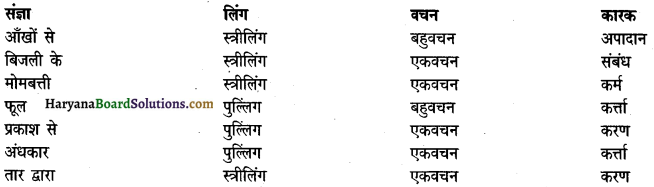
HBSE 10th Class Hindi Vyakaran संज्ञा -12

HBSE 10th Class Hindi Vyakaran संज्ञा

प्रश्न 20.
तीन उदाहरण देकर लिंग परिवर्तन के कारण वाक्य स्तर पर होने वाले परिवर्तन स्पष्ट कीजिए।
उत्तर:
1. अच्छा गायक अच्छा गीत गाता है। अच्छी गायिका अच्छा गीत गाती है।
यहाँ लिंग परिवर्तन से विशेषण तथा क्रिया में परिवर्तन हुआ है।

2. तुम्हारा पुत्र पढ़ता-पढ़ता सो गया। तुम्हारी पुत्री पढ़ती-पढ़ती सो गई।
यहाँ लिंग-परिवर्तन के कारण संबंध कारक, क्रियाविशेषण तथा क्रिया पद में परिवर्तन हुआ है।

3. मेरी बेटी महाविद्यालय जाती है। मेरा बेटा महाविद्यालय जाता है।
यहाँ लिंग परिवर्तन के कारण विशेषण तथा क्रिया में परिवर्तन हुआ है।

प्रश्न 21.
आदरार्थक बहुवचन से क्या तात्पर्य है? उदाहरण देकर समझाइए।
उत्तर:
एकवचन संज्ञा के साथ जब आदर के लिए बहुवचन का प्रयोग किया जाता है तो उसे आदरार्थक बहुवचन कहते हैं। यथा
1. मंत्री जी मंच पर पधार गए हैं।
2. प्रधानमंत्री रूस गए हैं।
3. प्राचार्य महोदय अपने कार्यालय में हैं।
4. महात्मा गांधी हमारे राष्ट्रपिता थे।
उपर्युक्त वाक्य में एक व्यक्ति का वर्णन है परंतु आदर-प्रदर्शन के लिए बहुवचन का प्रयोग किया गया है।

प्रश्न 22.
निम्नलिखित अप्राणिवाचक संज्ञा शब्दों का लिंग बताइएहीरा, दाँत, चाँदी, चंद्रमा, चैत्र, लंका, शस्त्र, विस्तार
उत्तर:
हीरा-पुल्लिंग
दाँत-पुल्लिंग
चाँदी-स्त्रीलिंग
चंद्रमा-पुल्लिंग
चैत्र-पुल्लिंग
लंका-स्त्रीलिंग
शस्त्र-पुल्लिंग
विस्तार-पुल्लिंग

प्रश्न 23.
निम्नलिखित मोटे एवं रेखांकित पदों का कारक बताइए
(क) सुनीता स्कूल से आई है।
(ख) रात को आकाश में तारे चमकते हैं।
(ग) रमेश को स्कूल जाना है।
(घ) शिकारी ने पक्षी को मार गिराया।
(ङ) मैंने पेंसिल से चित्र बनाया है।
(च) बालक ने भिखारी को रुपया दिया।
उत्तर:
(क) सुनीता- कर्ता कारक
(ख) रात को- अधिकरण कारक
(ग) रमेश को- कर्ता कारक
(घ) पक्षी को- कर्म कारक
(ङ) पेंसिल से- करण कारक
(च) भिखारी को- संप्रदान कारक।

HBSE 10th Class Hindi Vyakaran संज्ञा

प्रश्न 24.
किन-किन कारणों से संज्ञा शब्दों में रूपांतर होता है? एक-एक उदाहरण देकर स्पष्ट कीजिए।
उत्तर:
संज्ञा शब्दों में लिंग, वचन और कारक के कारण परिवर्तन होता है। यथा-
लिंग- लड़का-लड़की, नर-नारी।
वचन- बेटा-बेटे नारी-नारियाँ।
कारक- पिता-पिता ने पिता को, पिता से, पिता के लिए, पिता का, पिता में, हे पिता!

प्रश्न 25.
पाँच ऐसे शब्द लिखिए जो सदा स्त्रीलिंग ही हों।
उत्तर:
रोटी, गाय, कोयल, मोभी, मैना।

प्रश्न 26.
पाँच ऐसे शब्द लिखिए जो नित्य पुल्लिंग रूप में ही प्रयुक्त होते हों।
उत्तर:
कौआ, तोता, खरगोश, उल्लू, खटमल।
HBSE 10th Class Hindi Vyakaran संज्ञा Read More »

HBSE 10th Class Social Science Solutions Economics Chapter 5 उपभोक्ता अधिकार

Haryana State Board HBSE 10th Class Social Science Solutions Economics Chapter 5 उपभोक्ता अधिकार Textbook Exercise Questions and Answers.

Haryana Board 10th Class Social Science Solutions Economics Chapter 5 उपभोक्ता अधिकार

HBSE 10th Class Economics उपभोक्ता अधिकार Textbook Questions and Answers

आओं-इन पर विचार करें (पृष्ठ संख्या 78)

उपभोक्ता अधिकार प्रश्न उत्तर HBSE 10th Class प्रश्न-1.
उपभोक्ता दलों द्वारा कौन-कौन से उपाय अपनाए जा सकते हैं?
उत्तर-

  1. उपभोक्ता के अधिकारों एवं कर्त्तव्य पर लेख लिखना।
  2. उपभोक्ता जागरूकता पर प्रदर्शनी की आयोजन करना।
  3. राशन की दुकानों में अनुचित कार्यो को देख-रेख करना।
  4. सड़क यात्री परिवहन में अत्यधिक भीड़भाड़ पर नजर रखना।
  5. उपभोक्ताओं के हितों के खिलाफ और अनुचित शैली में सुधार के लिए व्यावसायिक कंपनियों और सरकार दोनों पर दबाव डालना।

HBSE 10th Class Economics Chapter 5 उपभोक्ता अधिकार प्रश्न-2.
नियम और कानून होने के बावजूद उनका अनुपालन नहीं होता है। क्यों? विचार-विमर्श करें।
उत्तर-

  1. कानून लागू करने वाले कर्मचारी भ्रष्ट होते हैं। वे बेईमान व्यापारियों और दुकानदारों से रिश्वत लेकर उन्हें बच निकलने का अवसर देते हैं।
  2. दुकानदार भाई-भतीजावाद का सहारा लेकर भी नियमों और कानूनों को तोड़ते रहते हैं।
  3. अशिक्षा के कारण लोग अनभिज्ञ होते हैं यहाँ तक कि शिक्षित उपभोक्त भी वस्तुओं की कीमत, गुणवत्ता आदि के विषय में कोई परवाह नहीं करते हैं। इसलिए दुकानदारों के लिए संबंधित नियमों और कानूनों को जोड़ना आसान हो जाता
  4. यदि वस्तु की आपूर्ति उसकी मांग की अपेक्षा कम होती है तो उसकी कीमत बढ़ जाती है। इससे विक्रेताओं में जमाखोरी की प्रवृत्ति को बढ़ावा मिलता है।
  5. यदि किसी वस्तु का उतपादन कुछ कंपनियों ही करती हैं तो वह उसकी आपूर्ति कम कर उसकी कीमत बढद्या देती

आओ-इन पर विचार ( पृष्ठ संख्या 79)

उपभोक्ता अधिकार HBSE 10th Class Economics प्रश्न-1.
निम्नलिखित उत्पादों/सेवाओं (आप सूची में नया नाम जोड़ सकते हैं) पर चर्चा करें कि इनमें उत्पादकों द्वारा किन सुरक्षा नियमों का पालन करना चाहिए?
(क) एल.पी.जी. सिलिडर, (ख) सिनेमा थिएटर, (ग) सर्कस, (घ) दवाइयाँ, (च) खाद्य तेल, (छ) विवाह पंडाल (ज) एक बहुमंजिली इमारत।
उत्तर-
(क) एल.पी.जी. सिलडर-सिलिंडर की गुणवत्ता एवं सही वजन सुनिश्चित किया जाना चाहिए।
(ख) सिनेमा थिएटर-निकास द्वार, अग्निशामक यंत्र आदि का समुचित प्रबंध होना चाहिए।
(ग) सर्कस-सर्कस मालिक को अग्निशामक यंत्र, जंगली जानवरों के लिए सुरक्षित पिंजड़ा, प्रशिक्षित कर्मचारी आदि का उचित प्रबंध कर लेना चाहिए।
(घ) दवाइयाँ-इन पर निर्माण की तारीख खराब होने की अंतिम तिथि, बैच संख्या अधिकता खुदरा औरवस्तु के अवयवों की छपाई होनी चाहिए।
(च) खाद्य तेल-इसमें किसी तरह की मिलावट नहीं होनी चाहिए। बोतल पर एगमार्क अवश्य होना चाहिए।
(छ) विवाह पंडाल-सुरक्षित पंडाल, अग्निशामक यंत्र, समुचित विकास द्वार आदि का उचित प्रबंध होना चाहिए।

प्रश्न-2.
आपने आपपास के लोगों के साथ हुई किसी दुर्घटना या लापरवाही की किसी घटना का पता कीजिए, जहाँ आपको लगता हो कि उसका जिम्मेदार उत्पादक हैं इस पर विचार-विमर्श करें।
उत्तर-
छात्र स्वयं करें।

पाठ्गत प्रश्नात्तर

आओ-इन पर विचार( पृष्ठ संख्या 81)

प्रश्न-1.
‘जब हम वस्तुएँ खरीदते हैं तो पाते हैं, कि कभी-कभी पैकेट पर छपे मूल्य से अधिक या कम मूल्य लिया जाता है” इसके संभावित कारणों पर बात करें। क्या उपभोक्ता समूह इस मामले में कुछ कर सकते हैं? चर्चा करें।
उत्तर-
किसी वस्तु का अधिकतम खुदरा मूल्य से अधिक मूल्य लेने का संभावित कारण यह हो सकता है-विक्रेता अधि क लाभ कमाने के लिए अधिक मूल्य माँगते हैं। दूसरी ओर, किसी वस्तु का मल्य उपभोक्ता द्वारा मोल-जोल करने के कारण अधिकतम खुदरा मूल्य से कम मांगा जाता है। उपभोक्ता दलों को विक्रेताओं पर अधिकतम खुदरा मूल्य से कम मूल्य रखने के लिए दबाव डालना चाहिए।

प्रश्न-2.
कुछ डिब्बाबंद वस्तुओं के पैकेट को लें, जिन्हें आप खरीदना चाहते हैं, और उन पर दी गई जानकारियों की परीक्षण करें। और देखें कि वे किस प्रकार उपयोगी हैं। क्या आप सोचते हैं कि उन डिब्बाबंद वस्तुओं पर कुछ ऐसी जानकारियाँ दी जानी चाहिए, जो उन पर नहीं हैं? चर्चा करें।
उत्तर-

  1. प्रयोग किए गए अवयव-यदि यह प्रमाणित हो जाता है कि उत्पादक ने उन सभी अवयवों का प्रयोग नहीं किया है जिनकी चर्चा उसने पैकेट पर की है, तो उपभोक्ता शिकायत कर सकता हैं, मुआवजा पाने या वसतु बदलने की माँग कर सकता है।
  2. कीमत-विक्रेता अधिकतम खुदरा मूल्य से अधिक मूल्य नहीं ले सकता है।
  3. बैच संख्या-यह आसानी से समझा जा सकता है कि किसी विशेष बैच संख्या का उत्पाद दोषपूर्ण हैं।
  4. खराब होने की अंतिम तिथि-यदि लोग अंतिम तिथि समाप्त हो गई दवाओं को बेचते है।, तो उनके खिलाफ कड़ी कार्यवाही की जा सकती है।
  5. उत्पादक का पता-यदि वस्तुएँ दोषपूर्ण पाई जाती है, तो लोग उतपादक के पास पहुँचकर अपनी शिकायत कर सकते हैं।

प्रश्न-3.
लोग नागरिकों की समस्याओं जैसे-खराब सड़कों या दूषित पानी और स्वास्थ्य सुविधाओं के बारे में शिकायतें करते है, लेकिन कोई नहीं सुनता। अब कानून आपको प्रश्न पूछने का अधिकार देता है। क्या आप इससे सहमत हैं? विचार कीजिए।
उत्तर-
यह सत्य हैं कि RTI नागरिकों को प्रश्न पूछने का अधिकार देता है। यह कानून नागरिकों को सरकारी विभागों के कार्यकलापों की सभी सूचनाएँ पाने के अधिकार को सुनिश्चित करता है।

ओओ-इन पर विचार करें (पृष्ठ संख्या 82)

प्रश्न-1.
यहाँ कुछ ऐसी वस्तुओं के लुभाने वाले विज्ञापन दिए गए हैं, जिन्हें हम बाजार से खरीदते है। इनमें वास्तव में क्या कोई विज्ञापन है, जो सचमुच में उपभोक्ताओं को लाभ पहुँचाता हो? इस पर विचार विमर्श कीजिए।
1. प्रत्येक 500 ग्राम के पैक पर 15 ग्राम की अतिरिक्त छुट।
2. अखबार के ग्राहक बनें, साल के अंत में उपहार पायें।
3. खुरचिये और 10 लाख तक का इनाम जीतिए।
4. 500 ग्राम ग्लूकोज डिब्बे के भीतर एक दूध का चाकलेट।
5. पैकेट के भीतर एक सोने का सिक्का ।
6. 2000 रुपये तक का जूता खरीदें और 500 रुपये तक का एक जोड़ी जूता मुफ्त पाएँ।
उत्तर-
1. प्रत्येक 500 ग्राम के पैक पर 15 ग्राम की अतिरिक्त छूट।
6. 2000 रुपये तक का जूता खरीदें और 500 रुपये तक का एक जोड़ी जूता पाएँ! आओ-इन पर विचार करें (पृष्ठ संख्या 84)

प्रश्न-2.
निम्नलिखित को सही क्रम में रखें
(क) अरिता जिला उपभोक्ता अदालत में एक मुकदमा दायर करती है।
(ख) वह शिकायत के लिए पेशेवर व्यक्ति से मिलती है।
(ग) वह महसूस करती है। कि दुकानदार ने उसे एक दोषयुक्त सामग्री दी है।
(घ) वह अदालती कार्यवाहियों में भाग लेना शुरू कर देती है।
(ङ) वह शाखा कार्यालय जाती है। और डीलर के विरुद्ध शिकायत दर्ज करती हैं, लेकिन कोई प्रभाव नहीं पड़ता।
(च) अदालत के समक्ष पहले उससे बिल और वारंटी प्रस्तुत करने को कहा गया।
(छ) वह एक खुदरा विक्रेता से दीवाल घड़ी खरीदती
(ज) कुछ ही महीनों के भीतर, न्यायालय ने खुदरा विक्रेता को आदेश दिया कि उसकी पुरानी दीवाल घड़ी की जगह बिना कोई अतिरिक्त मूल्य लिए उसे एक नीय घड़ी दी जाए।
उत्तर-

  1. (छ),
  2. (ख),
  3. (ग),
  4. (ङ)
  5. (क),
  6. (घ),
  7. (च),
  8. (ज)।

आओ-इन पर विचार करें (पृष्ठ संख्या 86)

प्रश्न-1.
इस अध्याय के पोस्टों के कार्टूनों को देखें-एक उपभोक्ता के दृष्टिकोण से किसी वस्तु विशेष की उससे संबंधित विभिन्न पहलुओं पर विचार करें। इसके लिए एक पोस्टर बनाएँ।
उत्तर-
छात्र स्वयं करें।

प्रश्न-3.
उपभोक्ता संरक्षण परिषद और उपभोक्ता अदालत में क्या अंतर है?
उत्तर-
उपभोक्ता संरक्षण परिषद-भारत में उपभोक्ता आंदोलन ने विभिन्न ऐच्छिक संगठनों के निर्माण को प्रेरित किया है, जिन्हें सामान्यतया उपभोक्ता फोरम या उपभोक्ता संरक्षण परषिद् के नाम से जाना जाता है।
उपभोक्ता अदालत–उपभोक्ता संरक्षण अधिनियम, 1986 के अंतर्गत एक त्रिस्तरीय न्यायिक तत्र स्थापित किया गया है जिन्हें सामान्सतया जिला, राज्य और राष्ट्रीय स्तरों पर उपभोक्ता अदालतें कहा जाता है।

प्रश्न-4.
उपभोक्ता सुरक्षा अधिनियम, 1986 एक उपभोक्ता को निम्नलिखित अधिकार प्रदान करता है
(क) चयन का अधिकार
(ख) सूचना का अधिकार
(म) निवारण का अधिकार
(घ) प्रतिनिधित्व का अधिकार
(च) सुरक्षा का अधिकार
(छ) उपभोक्ता शिक्षा का अधिकार।
निम्नलिखित मामलों को उनके सामने दिए गए खानों में अलग शीर्षक और चिह्न के साथ श्रेणीबद्ध करें
उत्तर-
(क) लता को एक नये खरीदे गए आयरन-प्रेस से विद्यत का झटका लगा। उसने तुरंत दुकानदार से शिकायत की। (सुरक्षा का अधिकार)
(ख) जॉन विगत कुछ महीनों से एम.टी.एन.एल. द्वारा दी गई सेवाओं से असंतुष्ट है। उसने जिला स्तरीय उपभोक्ता फोरम में मुकदमा दर्ज किया। (निवारण का अधिकार)
(ग) तुम्हारे मित्र ने एक दवा खरीदी, जो समाप्ति तारीख (एक्सपायरी डेट) पार कर चुकी है और तुम उसे शिकायत दर्ज करने की सलाह दे रहे हों। (सूचना का अधिकार)
(घ) इकबाल कोई भी सामग्री खरीदने से पहले उसके आवरण पर दी गई सारी जानकारियों की जाँच करता है। (उपभोक्ता शिक्षा का अधिकार)
(च) आप अपने क्षेत्र के केबल ऑपरेटर द्वारा दी जाने वाली सेवाओं से असंतुष्ट हैं, लेकिन आपके पास कोई विकल्प नहीं है। (चयन का अधिकार)
(छ) आपने ये महसूस किया कि दुकानदार ने आपको खराब कैमरा दे दिया है। आप मुख्य कार्यालय में दृढ़ता से शिकायत करते हैं। (प्रतिनिधित्व का अधिकार)

प्रश्न-5.
यदि मानकीकरण वस्तुओं की गुणवत्ता को सुनिश्चित करता हैं, तो क्यों बाजार में बहुत-सी वस्तुएँ बिना आई.एस.आई. अथवा एगमार्क प्रमाणन, के मौजूद
हैं।?
उत्तर-
बाजार में कई वस्तुएँ बिना आई.एस.आई. अथवा एगमार्क प्रमाणन के उपलब्ध होती हैं। क्योंकि सभी उत्पादकों के लिए मानकों को अपनाना और अपनी वस्तुओं को एगमार्क या आई.एस.आई. जैसे संस्थानों से प्रमाणित कराना अनिवार्य नहीं है।

प्रश्न-6.
हॉलमार्क या आई.एस.ओ. प्रमाणन उपलब्ध कराने वालों के बार में जानकारी प्राप्त करें।?
उत्तर-
भारतीय मानक ब्यरों (BIS) हॉलमार्क प्रमाणन प्रदान करते हैं। स्वर्ण आभूषणों के हॉलमार्क प्रमाणन संपूर्ण देश के प्रादेशिक और शाखा कार्थोलयों के BIS नेटवर्क द्वारा प्रदान किए जाते हैं।
अंतर्राष्ट्रीय मानकीकरण संगठन (ISO) अंतर्राष्ट्रीय स्तर पर वस्तुओं के मानकों को प्रमाणित करता हैं, इसकी स्थापना 1974 में की गई थी। यह जेनेवा में स्थित है।
बी.आई.एस. अंतर्राष्ट्रीय मानकीकरण संगइन (आई.एस. ओ.) का एक कार्यशील सदस्य है इसलिए यह भारतीय व्यापार और उद्योग के हितों की सुरक्षा के लिए अंतर्राष्ट्रीय मानकों के विकास में महत्त्वपूर्ण भूमिका निभाता है।

पाठ्य-पुस्तक के प्रश्नोत्तर

प्रश्न-1.
बाजार में नियमों तथा विनियमों की आवश्यकता क्यों पड़ती हैं? कुछ उदाहरणों द्वारा समझाएँ।
उत्तर-
बाजार में सुरक्षा निम्नलिखित कारणों से जरूरी हैं
(क) बाजार में उपभोक्ता का कई तरीके से शोषण होता है। जैसे-व्यापारियों द्वारा उपभोक्ता को उचित तौल से कत वस्तु उपलब्ध कराना।
(ख) कुल मूल्य में उन शुल्कों को जोड़ दिया जाता है जिनका वर्णन पहले न किया गया हों।
(ग) कई बार व्यापारी मिलावटी अथवा दोषपूर्ण वस्तुएँ बेचते हैं।
(घ) जब उत्पादक शक्तिशाली होते हैं। और उपभोक्ता कम खरीददारी करते है।। तथा बिखरे होते हैं, तो बाजार उचित तरीके से काम नहीं करता है। कई बार बड़ी-बड़ी कंपनियाँ उपभोक्ताओं को अपनी ओर आकर्षित करने के लिए मीडिया तथा अन्य स्रोतों से गलत सूचना देती हैं। जैसे-एक कंपनी ने शिशुओं के लिए दूध पाउडर के अपने उत्पादन को माता के दूध से बेहतर बताकर कई वर्षों तक खूब बेचा। कई वर्षों के संघर्ष के बाद इस कंपनी ने यह स्वीकार किया कि वह झेठे दावे करती आ रही है।

प्रश्न-2.
भारत में उपभोक्ता आंदोलन की शुरुआत किन कारणों से हुई। इसके विकास के बारे में पता लगाएँ।
उत्तर-
(क) भारत में उपभोक्ता आंदोलन का जन्म, अनैतिक और अनुचित वसायिक कार्यो से उपभोक्ताओं के हितों की रक्षा करने तथा प्रोत्साहित करने के लिए हुआ।
(ख) हमारे देश में 1960 के दशक में व्यवस्थित रूप से उपभोक्ता आंदोलन का उदय खाद्यान्न की कमी, जमाखोरी, कालाबाजरी, खाद्य पदार्थो एवं खाद्य तेल में मिलावट के कारण हुआ।
(ग) 1970 के दशक में उपभोक्ता संस्थाओं न वृहत् सतर पर उपभोक्ता अधिकार से संबंधित आलेखों के लेखन तथा प्रदर्शनी लगाना शुरू किया। – (घ) उन्होंने सड़क यात्री परिवहन में अत्यधिक भीड़-भाड तथा राशन दुकानों में होने वाले अनुचित कार्यों पर नजर रखने के लिए उपभोक्ता दल बनाया। हाल के वर्षों में इन उपभोक्ता दलों की संख्या में काफी वृद्धि हुई है।

प्रश्न-3.
दो उदारहण देकर उपभोक्ता जागरूकता की जरूरत का वणग्न करें।
उत्तर-
(क) उपभोक्ता जागरूकता अत्यन्त आवश्यक है जिससे कि व्यापारी उपभोक्ताओं का शोषण न कर सकें।
(ख) जागरूक उपभोक्ता; उपभोक्ता संरक्षण कार्यक्रमों तथा उपभोक्ता अदालतों का लाभ उठा सकते हैं।

प्रश्न-4.
कुछ ऐसे कारकों की चर्चा करें जिनसे उपभोक्ताओं का शोषण होता हैं?
उत्तर-
व्यापारियों द्वारा उपभोक्ताओं के शोष्क्षण के लिए निम्नलिखित तरीकों को अपनाया जाता है।

  • कम तौलकर-यह उपभोक्ताओं के शोषण का एक अति सामान्य तरीका है। जिसमें व्यापारी उपभोक्ता का उचित तौल से कम वस्तु उपलब्ध कराता है।
  • कम माप-मापी जाने वाली वस्तुओं मे कम माप देकर व्यापारियों द्वारा उपभोक्ताओं का शोषण किया जाता है।
  • अधिक कीमत-निर्धारित मूल्य से अधिक मूल्य वसूल करना व्यापारियों की एक प्रचलित प्रवृति है। उपभोक्ता भी उचित मूल्य की जानकारी के अभाव में व्यवसायियों द्वारा ठग लिए जाते हैं।
  • घटिया सामान-उपभोक्ताओं को मानकर स्तर से निम्न स्तर की सामग्री बेचा जाना भी शोषण का एक तरीका है।
  • नकली माल-असली पुर्जा के स्थान पर नकली पुर्जा और माल का बेचा जाना भी शोष्क्षण का एक सामान्य तरीका
  • मिलावटी व अशुद्ध माल-अनुचित लाभ के लिए व्यवसायियों द्वारा महँगे पदार्थो में सस्ते व अशुद्ध पदार्थो को मिलाना इस प्रकार के शोषण का उदारहण है।
  • सुरक्षा उपायों की अपर्याप्तता-विद्युत तंत्र आदि को मानक स्तर से कम स्तर का बेचना जिससे कि सुरक्षा संबंधी खतरा बना रहता है। इससे उपभोक्ताओं के साथ दुर्घटना होने की आशंका बनी रहती हैं।
  • कृत्रिम अभाव-व्यापारियों द्वारा जमाखेरी, कालाबाजारी आदि के माध्यम से कई बार आवश्यक वस्तुओं का कृत्रिम अभाव पैदा कर दिया जाता है। जिससे वे उन वस्तुओं को ऊँची कीमत पर बंच सकें। यह उपभोक्ता शोषण का एक बहुत ही प्रचलित लेकिन निंदनीय स्वरूप है।
  • अपूर्ण या मिथ्या आनकारी-कई बार उत्पादकों द्वारा उपभोक्ताओं को जानकारी को इस प्रकार तोड़ मरोड़कर या आधे अधूरे ढंग से प्रस्तुत किया जाता है कि उपभोक्ता के सामने वास्तविक स्थिति नहीं आ पाती और उपभोक्ता वस्तु की कमियों से रू-ब-रू नहीं हो पाता।
  • विक्रय के पश्चात् सेवा का प्रदान न किया जाना-यह भी उपभोक्ता शोषण का एक बहुप्रचलित रूप हैं, इसमें एक बार वसतु को बेच देने के बाद उत्पादक उपभोक्ता को यह सेवा प्रदान करने से या तो मना कर देता है या टालमटोल ओर आनाकानी करता है, जो उसे उपभोक्ता को उपलब्ध कराना चाहिए।

प्रश्न-5.
उपभोक्ता सुरक्षा अधिनियम, 1986 के निर्माण की जरूरत क्यों पड़ी?
उत्तर-
(क) विक्रेताओं के कई अनुचित व्यवसायों में शामिल होने के कारण उपभोक्तओं में असंतोष फैल गया था।
(ख) बाजार में उपभोक्ता को शोषण से बचाने के लिए कोई कानूनी व्यवस्था उपलब्ध नहीं थीं।
(ग) 1960 के दशक में भारत में उपभोक्ता आंदोलन का उदय हुआ और अपने प्रयासों से यह आंदोलन उपभोक्ता हितों के खिलाफ और अनुचित व्यवसाय शैली में सुधार के लिये व्यापारिक कंपनियों व सरकार दोनों पर दबाव डालने में सफल हुआ।
(घ) परिणामस्वरूप भारत सरकार ने 1986 ई. में उपभोक्ता सुरक्षा अधिनियम बनाया।

प्रश्न-6.
अपने क्षेत्र के बाजार में जाने पर उपभोक्ता के रूप में अपने कछ कर्तव्यों का वर्णन करें।
उत्तर-
अधिकार और कर्त्तव्य एक ही सिक्के के दो पहलू होते हैं। अधिकारों को ग्रहण करते समय यह दायित्व अपने _ आप उत्पन्न हो जाता है। कि कर्तव्यों का पालन किया जाए।
उपभोक्ताओं को जहाँ अधिकार मिले हुए हैं वहीं उनके कुछ दायित्व हैं जो निम्नलिखित हैं-

  1. किसी भी वस्तु को क्रय करते समय उपभोक्ताओं को सामान की गुणवत्ता का ख्याल रखना चाहिए।
  2. वस्तु क्रय करते समय उपभोक्ताओं को गांरटी कार्ड अवश्य लेना चाहिए।
  3. उपभोक्ता उन्हीं वस्तुओं को क्रय करें जिन पर आई. एस.आई. एगमार्क जैसे मानक चिन्ह दिये हुए हों।
  4. उपभोक्ता सामान या सेवा को खरीदने समय उसकी . रसीद अवश्य प्राप्त करें।
  5. उपभोक्ताओं का यह कर्त्तव्य बनता है कि वं ‘उपभोक्ता जागरूकता संगठन’ का गठन करें; साथ ही इस संगठन को सरकार तथा अन्य संस्थाओं द्वारा उपभोक्ताओं की समस्याओं के लिए स्थापित विभिन्न कमेटियों में प्रतिनिधित्व भी प्रदान करवायें।
  6. उपभोक्ता किसी वस्तु या सेवा में आने वाली समस्या के लिए शिकायत अवश्य दर्ज करायें चाहे वह समस्या छोटी हो या बड़ी।
  7. उपभोक्ता किसी सामग्री से सम्बन्धित शिकायत दर्ज कराने से यह सोचकर न रुकें कि वह वस्तु बहुत ही कम मूल्य वाली हैं।
  8. प्रत्येक उपभोक्ता का यह परम कर्तव्य है कि वह अपने लिए सुरक्षित अधिकारों के विषय में सम्पूर्ण जानकारी रखे और अपने अधिकारों का प्रयोग करें। साथ ही दूसरे उपभोक्ताओं को भी इनके बारे मे जानकारी दे, और उन्हें भी अपने अधिकारों के प्रयोग के लिए प्रेरित करें।

प्रश्न-7.
मान लीजिए, आप शहद का बोतल और एक बिस्किट का पैकेट खरीदते हैं। खरीदते समय आप कौन सा लोगों या चिन्ह देखेंग और क्यों?
उत्तर-
(क) शहद का बोतल या बिस्किट का पैकेट खरीदते समय हमें एगमार्क चिनहे देखना चाहिए।
(ख) क्योंकि कृषि उतपादों तथा खाद पदार्थो की गुणवत्ता मानकीकरण के आधकार पर जो उत्पाद मानकों को पूरा करते हैं उन्हें एगमार्क का चिन्ह प्रदान किया जाता है।

प्रश्न-8.
भारत में उपभोक्जाओं को समर्थ अनाने के लिए सरकार द्वारा किन कानूनी मानदंडों को लागू करना चाहिए?
उत्तर-
उपभोक्ताओं के अधिकारों तथा हितों की रक्षा के लिए मुख्यतः तीन प्रकार के उपाय अपनाये गये हैं

  1. कानूनी उपाय-इसके अंतर्गत उपभोक्ताओं के हितों के लिए कानून व अधिनियम आदि बनाना शमिल है।
  2. प्रशसनिक उपाय-उपभोक्ता के हितों की रक्षा के लिए जो सार्वजनिक वितरण व्यवस्था आरम्भ की गई है। वह प्रशासनिक उपाय का ही उदाहरण हैं
  3. तकनीकीउ उपाय-इसके अंतर्गत वस्तुओं का मनकीकरण किया जाना शामिल है। इन उपायों को निम्न बिन्दुओं के माध्यम से स्पष्ट किया जा सकता है :

(क) उपभोक्ता हित सम्बन्धी कानून-उपभोक्ताओं के हितों के संरक्षण के लिए सरकार ने 1986 में उपभोक्ता संरक्षण अधिनियम बनाया। इसके द्वारा उपभोक्ताओं के हितों की रक्षा के लिए तथा उनके झगड़ों के निपटारे के लिए जिला, राज्य और राष्ट्रीय स्तर पर उपभोक्ता हितों की समितियाँ बनायी गई। इनके माध्यम से उपभोक्ताओं के हितों को तो संरक्षण दिया ही जाता है; साथ ही उनकी शिकायतों को सरल रूप से, तीव्रता से और कम खर्च में दूर किया जाता है। उपभोक्ता अदालतों को इस सम्बंध में यह आदेश दिया गया है कि वे शिकायतों का निपटारा तीन महीने के अन्दर-अन्दर कर दें।

(ख) सार्वजनिक वितरण प्रणाली-आय की दृष्टि से कमजोर वर्ग वाले लोगों को अनाज की उपलब्धता सुनिश्चित कराने हेतु सरकार ने सार्वजनिक वितरण व्यवस्था का आरम्भ किया है ताकि इस वर्ग के उपभोक्ताओं के हितों की रक्षा हो सके और उन्हें आवश्यक वस्तुओं को प्राप्त करने में किसी प्राकर से शोषण का सामना न करना पड़े।
इस व्यवस्था के द्वारा जमाखोरी, कालाबाजारी और मुनाफाखोरी आदि पर अंकुश लगाना भी संभव हो सका है।

(ग) वस्तुओं का मानकीकरण-उपभोक्ता हितों को संरक्षण देने के लिए सरकार ने कुछ ऐसी संस्थाओं का निर्माण किया है जो वस्तुओं के मानक स्तर का निर्धारण करती है और जांच के माध्यम से यह सुनिश्चित भी करती हैं कि वस्तुएँ मानक स्तर के अनुरूप हैं कि नहीं। इसके बाद ये वस्तुओं को अपना चिन्ह प्रदान करती हैं जिसके चलते उपभोक्ताओं को यह जानकारी प्राप्त हो जाती है। कि वस्तु विश्वसनीय स्तर पर मानकीकृत है। मानकीकरण संस्थाएँ जिन वस्तुओं को अपना चिह्न प्रदान करती हैं उनकी किसी भी समय आकस्मिक रूप से जांच भी कर लेती हैं ताकि उन वस्तुओं की गुणवत्ता कम होने की कोई आशंका न हों।
इस प्रकार यह स्पष्ट हैं कि सरकार ने उपभोक्ता संरक्षण के लिए पर्याप्त उपाय किये हुए हैं। आवश्यकता बस इस बात की है कि उपभोक्ता स्वयं के अधिकारों के विषय में जागरूक हों।

प्रश्न-9.
उपभोक्ताओं के कुछ अधिकारों को बताएँ और प्रत्येक अधिकार पर कुछ पंक्तियाँ लिखें। .
उत्तर-
उपभोक्ताओं के निम्नलिखित अधिकारों को उपभोक्ताओं के साथ-साथ व्यापारी वर्ग की भी ध्यान में रखना चाहिए।

  1. सुरक्षा का अधिकार-व्यापारी वर्ग को चाहिए कि ऐसी वस्तुओं का उत्पादन न करें जो उपभोक्ताओं को समुचित सुरक्षा प्रदान न करें। उत्पादकों को केवल मानकीकृत और स्तरीय वस्तुओं का ही उत्पादन करना चाहिए। व्यापारी वर्ग ऐसी किसी भी वस्तु की बिक्री से अपने को बचाये रखें जो कि उपभोक्ताओं के जीवन तथा सम्पत्ति के लिए किसी भी रूप में खतरनाक हों।
  2. सूचना का अधिकार-व्यावसायिकों को चाहिए कि वे अपने उत्पादों पर गुणवत्ता, मात्रा, शुद्धात स्तर व मूल्य सम्बन्धी सम्पूर्ण सूचनाएँ प्रदान करें।
  3. चुनाव का अधिकार-उत्पादक वस्तुओं की इतनी विविध मात्र उलपब्ध करायें कि उपभोक्ताओं को चुनाव का सम्पूर्ण अवसर प्राप्त हो सके।
  4. सुनवाई का अधिकार-व्यापारी वर्ग को चाहिए कि उपभोक्ता हितों से जुड़ी संस्थाओं व संगठनों की कार्यवाहियों पर समुचित ध्यान व समय दें, साथ ही उनके निर्देशानुसार स्वयं के उत्पादों की गुणवत्ता में वृद्धि करते चलें।
  5. शिकायतों के निपटारे का अधिकार-व्यापारी वर्ग का यह नैतिक दायित्व बनता है कि उपभोक्ताओं के शोषण व अनुचित व्यापारिक क्रियाओं के विरुद्ध शिकायतों को पूरी तत्परता से निपटायें।
  6. उपभोक्ता शिक्षा-उपभोक्ताओं को तो स्वयं के अधि कारों के बारे में जानना ही हैं, साथ ही व्यापारी वर्ग को भी उपभोक्ताओं के हितों और अधिकारों की सम्पूर्ण जानकारी होनी चाहिए, जिससे कि वे उन कार्यो को न करें जिनसे
    उपभोक्ताओं के अधिकारों का उल्लंघन होता हों।

प्रश्न-10. उपभोक्ता अपनी एक जुटला का प्रदर्शन कैसे कर सकते हैं?
उत्तर-
(क) उपभोक्ता एकता के लिए उपभोक्ता जागरूकता अत्यन्त जरूरी है। उपभोक्ताओं को अपने अधिकारों की पूर्ण जानकारी होनी चाहिए।
(ख) उपभोक्ताओं को वस्तुओं तथा सेवाओं के क्रय-विक्रय के व्यावसायिक पक्षों की जानकारी तो होनी ही चाहिए, साथ __ ही पदार्थों की गुणवत्ता की भी पूरी जानकारी होनी चाहिये।
(ग) उपभोक्ता जागरूकता से उपभोक्ता आंदोलन को मजबूत बनाया जा सकता है। उपभोक्ता मिलकर अपने अधि कारों की माँग कर सकते हैं तथा उपभोक्ता शोषण के खिलाफ अपनी आवाज बुलंद कर सकते हैं।

प्रश्न-11.
भारत में उपभोक्ता आंदोलन की प्रगति की समीक्षा (आलोचनात्मक मुल्यांकन) करें।
उत्तर-
(क) उपभोक्ता आंदोलन उपभोक्ताओं के असतोष का परिणाम था, क्योंकि विक्रेता कई अनुचित व्यवसायों में शामिल होते थे। उपभोक्ता को बाजार में शोषण से रक्षा के लिए कोई कानून व्यवस्था मौजूद नहीं थी।
(ख) भारत में सामाजिक बल के रूप में उपभोक्ता आंदोलन का जन्म अनुचित एवं अनैतिक व्यावसायिक कार्यो से उपभोक्ताओं के हितों की रक्षा करने के उद्देश्य से हुआ।
(ग) 1970 के दशक तक उपभोक्ता संस्थाएँ वृहत् स्तर पर उपभोक्ता अधिकार से संबंधित आलेखों के लेखन तथा प्रदर्शनी का आयोजन करने लगी थीं।
(घ) सड़क यात्री परिचहन में अत्यधिक भीड़-भाड़ तथा सरकारी राशन दुकानों में होने वाले अनुचित कार्यों पर नजर रखने के लिए उपभोक्ता दलों का निर्माण किया गया। धीरे-धरे हमारे देश में इन उपभोक्ता दलों की संस्था में काफी वृद्धि
(ङ) अपने सक्रिय प्रयासों से उपभोक्ता आंदोलन, उपभोक्ताओं के हितों के खिलाफ और अनुचित व्यवसाय शैली में सुधार के लिए व्यापारिक कंपनियों एवं सरकार दोनों पर दबाव डालने में सफल हुआ।
(च) भारत में उपभोक्ता आंदोलन को सबसे बड़ी सफलता 1986 ई. में मिली, जब भारत सरकार ने ‘उपभोक्ता सुरक्षा अधिनियम’ पारित किया।

प्रश्न-12.
निम्नलिखित का मिलान करें-
1. एक उत्पाद के घटकों का विवरण — (क) सुरक्षा का अधिकार
2. एगमार्क — (ख) उपभोक्ता मामलों में संबंध
3. स्कूटर में खराब इंजन के कारण हुई दुर्घटना — (ग) अनाजों और खाद्य तेल का प्रमाण पत्र
4. जिला उपभोक्ता विकसित विकसित करने वाली एजेंसी — (घ) उपभोक्ता कल्याण संगठनों की अंतराष्ट्रीय संस्था
5. उपभोक्ता इंटरनेशनल — (ड) सूचना का अधिकार
6. भारतीय मानक विभाग — (च) वस्तुओं औश्र सेवाओं के लिए मानक
उत्तर-
1-ड, 2-ग, 3-क, 4-ख, 5-3, 6-च।

प्रश्न-13.
सही/गलत बताएँ।

(क) कोपरा केवल सामानों पर लागू होता है।
उत्तर-
गलत।

(ख) भारत, विश्व के उन देशें में से एक है जिसके पास उपभोक्ताओं की सामयाओं के निवारण के लिए विशिष्ट अदालते हैं।
उत्तर-
सही।

(ग) जब उपभोक्ता को ऐसा लगे कि उसका शोषण हुआ हैं, तो उसे जिला उपभोक्ता अदालत में निश्चित रूप से मुकद्दमा मायर करना चाहिए।
उत्तर-
सही।

(घ) जब अधिक मूल्य का नुकसान हो सिर्फ, तभी उपभोक्ता अदालत में जाना लाभाद होता है।
उत्तर-
गलत।

(ङ) हालमार्क, आभूषणों की गुणवत्ता बनाए रखने वाला प्रमाण है।
उत्तर-
सही

(च) उपभोक्ता समस्याओं के निवारण की प्रक्रिया अत्यंय सरल और शीघ्र होती है।
उत्तर-
गलत

(छ) उपभोक्ता को मुआवजा पाने का अधिकार है, जो क्षति की मात्रा पर निर्भर करता है।
उत्तर-
सही।

HBSE 10th Class Social Science Solutions Economics Chapter 5 उपभोक्ता अधिकार Read More »

HBSE 10th Class Social Science Solutions Economics Chapter 4 वैश्वीकरण और भारतीय अर्थव्यवस्था

Haryana State Board HBSE 10th Class Social Science Solutions Economics Chapter 4 वैश्वीकरण और भारतीय अर्थव्यवस्था Textbook Exercise Questions and Answers.

Haryana Board 10th Class Social Science Solutions Economics Chapter 4 वैश्वीकरण और भारतीय अर्थव्यवस्था

HBSE 10th Class Economics वैश्वीकरण और भारतीय अर्थव्यवस्था Textbook Questions and Answers

पाठ्गत-प्रश्नोत्तर

आओ-इस पर विचार करें (पृष्ठ संख्या 57)

वैश्वीकरण और भारतीय अर्थव्यवस्था के प्रश्न उत्तर HBSE 10th Class Economics प्रश्न
यह दर्शाने के लिए निम्न कथन की पूर्ति करें कि वस्त्र उद्योग में उत्पादन-प्रक्रिया केसे विश्व-भर फैली हुई हैं।
उत्तर-
एक ब्रांड लेबल पर ‘में इन थाइलैण्ड’ लिखा है, परन्तु उसमें एक भी भाई उत्पाद नहीं है। हम विनिर्माण प्रक्रिया का विश्लेषण करते हैं और प्रत्येक चरा में सर्वोत्तम निर्माण को देखते हैं हम इसे विश्व स्तर पर कर रहे हैं जैसे, वस्त्र निर्माण में कंपनी कोरिया से सूत ले सकता है, चीन में कपडा का विनिर्माण कर सकती है तथा सम्पूर्ण विश्व में बेच सकती है।

आओ-इन पर विचार करें (पृष्ठ संख्या 59)

निम्नलिखित अनुच्छेद को पढ़ें और प्रश्नों का उत्तर दें :
एक अमेरिकी कंपनी फोर्ड मोटर्स विश्व के 26 देशों में प्रसार के साथ विश्व की सबसे बड़ी मोटरगाड़ी निर्मामा कंपनी है। फोर्ड मोटर्स 1995 में भारत आयी और चेन्नई के निकट 1, 700 करोड़ रूपए का निवेश करके एक विशाल संयंत्र की स्थापना की। यह संयंत्र भारत में जीपों एवं ट्रकों के प्रमुख निर्माता महिन्द्र एंड महिन्द्र के सहयोग से स्थापित किया गया। वर्ष 2004 तक फोर्ड मोटर्स भारतीय बाजारों में 27,000 कारें बेच रही थी, जबकि 24,000 कारों का निर्यात भारत से दक्षिण अक्रीका, मेक्सिको और ब्राजील किया गया। कंपनी विश्व के दूसरे देशों में अपने संयंत्रों के लिए फोर्ड इंडिया का विकास पुर्जा आपूर्ति केन्द्र के रूप में करना चाहती है।

वैश्वीकरण और भारतीय अर्थव्यवस्था HBSE 10th Class Economics प्रश्न 1.
क्या आप मानते हैं कि फोर्ड मोटर्स एक बहुराष्ट्रीय कंपनी है? क्यों?
उत्तर-
फोर्ड मोटर्स एक बहुराष्ट्रीय कंपनी है। क्योंकि यह एक से अधिक देश में उत्पादन का स्वामित्व अथवा नियंत्रण करती है इसका उत्पादन विश्व के 26 दिनों में 140 संयंत्रों के रूप में फैला हुआ है।

वैश्वीकरण और भारतीय अर्थव्यवस्था Class 10 HBSE Economics प्रश्न 2.
विदेशी निवेश क्या है? फोर्ड मोटर्स में कितना निवेश किया था?
उत्तर-
बहुराष्ट्रीय कंपनियों द्वारा किए गए निवेश को विदेशी निवेश कहते हैं फोर्ड मोटर्स भारत में 1700 करोड़ रुपये का निवेश किया।

प्रश्न 3.
भारत में उत्पादन संयंत्र स्थापित करके फोर्ड मोटर्स जैसी बहुराष्ट्रीय कंपनियां केवल भारत जैसे देशों के विशाल बाजार का ही लाभ नहीं उठाती हैं, बल्कि कम उत्पादन लगात का भी लाभ प्राप्त करती हैं। कथन की व्याख्या करें।
उत्तर-
बहुराष्ट्रीय कंपनियाँ उतपादन संयंत्र की स्थापना सामान्यत: वहाँ करती है। जहाँ:
(क) संभावित बाजार नजदीक हो।
(ख) कुशल और अकुशल श्रमिक कम लगातों पर उपलब्ध हों।
(ग) उत्पादन क अन्य कारकों की उपलब्धता सुनिश्चित हों।
(घ) संबंधित सरकारी नीतियाँ बहुराष्ट्रीय कंपनियों के अनुकूल हो।
इसलिए भारत बहुराष्ट्रीय कंपनियों के लिए एक मनपसंद देश है।

प्रश्न 4.
आपके विचार से कंपनी अपने वैश्विक कारोबार के लिए कार के पुजों के विनिर्माण केद्रं के रूप में भारत का विकास क्यों करना चाहती है? निम्न कारकों पर विचार करें-(अ) भारत में श्रम और अन्य संसाधनों पर लागत (ब) कई स्थानीय विनिर्माताओं की उपस्थिति, जो फोर्ड मोटर्स को कल-पुर्जो की आपूर्ति करते हैं। (स) अधिक संख्या में भारत और चीन के ग्राहकों से निकटता।
उत्तर-
(अ) भारत में श्रम और अन्य संसाधनों की लागत कम है। बड़ी संख्या में कुशल और अकुशल श्रमिक कम मजदूरी पर उपलब्ध होते हैं।
(ब) भारत में कई स्थानीय विनिर्माता फोर्ड मोटर्स को कल-पुर्जो की आपूर्ति करते हैं, जिनके पास कीमत, गुणवत्ता प्रदान करते और श्रम दशाओं को निर्धारित करने की अपार क्षमता होती है।
(स) यह कंपनी भारत को कार के पुों के विनिर्माण करने के लिए आधार के रूप में विकसित करना चाहती है, क्योंकि भारत और चीन में बड़ी संख्या में संभावित क्रेता हैं।

प्रश्न 5.
भारत में फोर्ड मोटर्स द्वारा कारों के निर्माण से उत्पादन किस प्रकार परस्पर संबंधित होगा?
उत्तर-
(क) फोर्ड मोटर्स ने भारत में जीपों एवं ट्रकों के प्रमुख निर्माता महिन्द्रा एंड महिन्द्रा के साथ संयुक्त रूप से उत्पादन संयंत्र स्थापित किया।
(ख) यह कंपनी भारत में छोटे उत्पादकों को उत्पादन हेतु आदेश देती है।
(ग) यह स्थानीय कंपनियों से निकट प्रतिस्पर्धा करती है।

प्रश्न 6.
बहुराष्ट्रीय कंपनियाँ, अन्य कंपनियों से किर प्रकार अलग हैं?
उत्तर-
बहुराष्ट्रीय कंपनी

  1. यह एक से अधिक देशों में उत्पादन का स्वामित्व या नियंत्रण रखती है।
  2. यह उन देशों में उत्पादन हेतु कारखाने या कार्यालय स्थापित करती है। जहाँ श्रम एवं अन्य संसाधन सस्ता होता है।
  3. बहुराष्ट्रीय कंपनी के लिए उत्पादन की लागत कम होती है, इसलिए यह अधिक लाभ कमाती है।

अन्य कंपनी

  1. यह एक देश के भीतर ही उत्पादन का स्वामित्व या नियंत्रण रखती है।
  2. इसके पास ऐसा कोई विकल्प नहीं होता है।
  3. इसके पास अधिक लाभ कमाने लिए ऐसी कोई संभावना नहीं होती है।

प्रश्न 7.
लगभग सभी बहुराष्ट्रीय कंपनियाँ, अमेरिका, जापान या यूरोप की हैं जैसे, नोकिया, कोका-कोला, पेप्सी, होन्डा, नाइक। क्या आप अनुमान कर सकते हैं कि ऐसा क्यों हैं?
उत्तर-
बहुराष्ट्रीय कंपनियों को देश के बाहर अपने उत्पादन और बाजारों का विस्तार करने के लिए बड़ी मात्रा में धन की आवश्यकता होती है। इतना अधिक धन सामान्यतः अविकसित या विकासशील देशों की कंपनियों के पास नहीं होती है यही कारण है कि प्रायः सभी प्रमुख बहुराष्ट्रीय कंपनियाँ अमेरिका, जापान या यूरोप की हैं।

आओं-इन पर विचार करें (पृष्ठ संख्या 61)

प्रश्न 1.
अतीत में देशों को जोड़ने वाला मुख्य माध्यम क्या था? अब यह अलग कैसे है?
उत्तर-
अतीत में देशों को जोड़ने वाला मुख्य माध्य विदेश व्यापार था। अतीत में विदेश व्यापार समुद्री मार्गो द्वारा किए जाते थे परतु अब यह कई मार्गो, जैसे-समुद्री मार्गो, वायु मार्गो, थल मार्गो अर्थात् सड़कों, दूरसंचार माध्यमों आदि के द्वारा किया जाता है।

प्रश्न 2.
विदेश व्यापार और विदेशी निवेश में अंतर स्पष्ट करें।
उत्तर-
विदेश व्यापार-इसका अर्थ विदेशों से वस्तुओं को खरीदना और बेचना है। यह उत्पादकों को घरेलू बाजारों के बाहर पहुँचने का अवसर प्रदान करता है। … विदेशी निवेश-अधिक लाभ कमाने के लिए बहुराष्ट्रीय कंपनियों द्वारा किए गए निवेश को विदेशी निवेश कहते हैं।

प्रश्न 3.
हाल के वर्षों में चीन, भारत से इस्पात आयात कर रहा है। व्याख्या करें कि चीन द्वारा इस्पात का आयात कैसे प्रभावित करेगा
(क) चीन की इस्पात कंपनियों को
(ख) भारत की इस्पात कंपनियों को
(ग) चीन में अन्य औद्योगिक वस्तुओं के उत्पादन के लिए इस्पात खरीदने वाले उद्योगों को
उत्तर-
(क) चीन की इस्पात कंपनियाँ उत्पादों को कम बेच पाएगी जिससे उन्हें घाटा हो सकता है।
(ख) भारत की स्टील कंपनियाँ अपने व्यवसायों का विस्तार करेंगी।
(ग) चीन में अन्य औद्योगिक वस्तुओं के उत्पादन के लिए इस्पात खरीदने वाले उद्योगों को इससे लाभ होगा क्योंकि उनहें कम कीमतों पर चुनाव का अवसर अधिक मिलेगा।

प्रश्न 4.
चीन के बाजारों में भारत से इस्पात का आयात किस प्रकार दोनों देशों के इस्पात-बाजार के एकीकरण में सहायता करेगा? व्याख्या करें।
उत्तर-
(क) भारतीय इस्पात घरेलू वाजार से चीन के बाजार तक पहुँचेगा।
(ख) बाजारों में इस्पातों के चुनाव में वृद्धि होगी।
(ग) दोनों बाजारों में समान गुणवत्ता वाले इस्पातों की कीमतें बराबर होंगी।
(घ) दोनों देशों के उत्पादक एक-दूसरे से निकट प्रतिस्पध f कर सकेंगे।

आओं-इन पर विचार करें। (पृष्ठ संख्या 62)

प्रश्न 1.
विदेश व्यापार के उदारीकरण से आप क्या समझते हैं?
उत्तर-
विदेश व्यापार और विदेशी निवेश पर सरकार द्वारा निर्धारित अवरोधकों एवं प्रतिबन्धों को हटाने की प्रक्रिया ही विदेश व्यापार का उदारीकरण कहलाता है।

प्रश्न 2.
आयात पर कर एक प्रकार का व्यापार अवरोधक है। सरकार आयात होने वाली वस्तुओं की संख्या भ्ज्ञी सीमित कर सकती हैं इसे कोटा कहते हैं। क्या आप चीन के खिलौनों के उदाहरण से व्याख्या कर सकते हैं कि व्यापार अवरोधक के रूप में कोटा का प्रयोग कैसे किया जा सकता हैं? आपके विचार से क्या इसका प्रप्रयोग किया जाना चाहिए? चर्चा करें। .
उत्तर-
यदि भारतीय सरकार चीन के खिलौफ पर कोटा लगाती है तो भारतीय बाजारों में इन खिलौनों की आपूर्ति कम हो जागीए। भारतीय क्रेताओं के पास सस्ती कीमतों पर चीन के खिलौने खरीदने का विकप्ल कम हो जाएगा। भारतीय खिलौना निर्माताओं को अधिक हानि नहीं उठानी पड़ेगी क्योंकि भारतीय खिलौनों की माँग मे थोड़ी मात्रा में ही गिरावट आएगी। इस प्रकार, कोटा का प्रयोग व्यापार अवरोधक के रूप में किया जा सकता है।
भारत में अब इसके प्रयोग की आवश्यकता नहीं है। बल्कि भारतीय उत्पादकों को विश्व स्तर पर प्रतिस्पर्धा करनी चाहिए।

आओ-इन पर विचार करें (पृष्ठ संख्या 66)

प्रश्न 2.
आपके विचार से विभिन्न देशें के बीच अधिकाधिक न्यायसंगत व्यापार के लिए क्या किया जा सकता है?
उत्तर-
(क) विश्व व्यापार संगठन, अंतर्राष्ट्रीय मुद्रा कोष जैसे अन्तर्राष्ट्रीय संगठनों को मजबूत बनाया जाना चाहिए।
(ख) विकासशील देशें को, अन्तर्राष्ट्रीय संगठनों के सामने मिलकर और मजबूती से अपना पक्ष प्रस्तुत करना चाहिए।

प्रश्न 3.
उपर्युक्त उदाहरण में, हमने देखा कि अमेरिकी सवरकार किसानों को उत्पादन के लिए भारी धन राशि देती है। कभी-कभी सरकार कुछ विशेष प्रकार की वस्तुओं जैसे पर्यावरण के अनुकूल वस्तुओं के उत्पादन को बढ़ावा देने के लिए सहायता देती है। यह न्यायसंगत है या नहीं, चर्चा करें।
उत्तर-
यदि सरकारें कुछ विशेष प्रकार की वस्तुओं जैसे पर्यावरण के अनुकूल वस्तुओं के उत्पादन को बढ़ावा देने के लिए सहायता देती है। तो वह अनुचित नहीं है। क्योंकि पर्यावरण समस्या सम्पूर्ण विश्व के लिए चिन्ता का विषय है इसलिए विश्व के सम्पूर्ण देशों के लिए समान कानून होना चाहिए।

आओ-इन पर विचार करें (पृष्ठ संख्या 67)

प्रश्न 1.
प्रतिस्पर्धा से भारत के लोगों को कैसे लाभ हुआ है?
उत्तर-
(क) उपभोक्ताओं, विशेषकर शहरी क्षेत्रों में रह रहे धनी वन के उपभोक्ताओं के समक्ष पहले से अधिक विकल्प हैं। वे अब अनेक वस्तुओं की उत्कृष्टता, गुणवत्ता और कम कीमत से लाभान्वित हो रहे हैं। परिणामतः ये लोग पहले की तुलना मे आज अपेक्षाकृत उच्चतर जीवन स्तर का उपभोग कर रहे हैं।
(ख) बहुराष्ट्रीय कंपनियाँ विशेषज्ञकर सेलफोन, मोटरगाडियां, इलेक्ट्रॉनिक उत्पादों, ठंडे पेय पदार्थो और जंक खाद्य (fast food) पदार्थो जैसी वस्तुओं एवं बैंकिग जैसी सेवाओं में निवेश की हैं। अतः इन उद्योगों में रोजगार के नए अवसर भी पैदा हुए
(ग) इन उद्योगों की कच्चे माल आदि की आपूर्ति करने वाली स्थानीय कंपनियों का विकास हुआ है।
(घ) कई बड़ी कंपनियों ने उन्नत प्रौद्योगिकी और उत्पादन विधियों में निवेश कर अपना उत्पादन मानकों में वृद्धि की है।
(ङ) कुछ कंपनियों ने विदेशी कंपनियों के साथ सफलतापूर्वक सहयोग कर लाभ-अर्जित किया है।
(च) कुछ बड़ी भारतीय कंपनियां अपने काम-काज को विश्व-भर में फैलाकर बहुराष्ट्रीय कंपनियों के रूप में उभरी हैं। उदाहरण के लिए, टाटा मोटर्स, इंफोसिस, रैनबैक्सी आदि।

प्रश्न 2.
क्या और भारतीय कंपनियों को बहुराष्ट्रीय कंपनियों के रूप में उभारना चाहिए? इससे देश की जनता को क्या लाभ होगा?
उत्तर-
भारतीय कंपनियों को बहुराष्ट्रीय कंपनियों के रूप में अवश्य उभारना चाहिए। इससे देश की जनता को निम्नलिखित लाभ होगा
(क) भारतीयों को रोजगार के अधिक अवसर प्राप्त होंगे। (ख) ये कंपनियाँ नयी प्रौद्योगिकी लाएँगी।
(ग) ये कंपनियां सस्ती दरों पर गुणवत्ता वाली वस्तुएँ उपलब्ध कराएँगी।
(घ) ये अपने साथ देश के लिए विदेशी मुद्रा लाएँगी।

प्रश्न 3.
सरकारें अधिक विदेशी निवेश आकर्षित करने का प्रयास क्यों करती हैं?
उत्तर-
(क) विदेशी निवेशों से देश में रोजगार के नए अवसर पैदा होंगे।
(ख) यह स्थानीय कंपनियों को परिवहन एवं प्रशिक्षण एजेंटों जैसी सहायक सेवाओं में अधिक निवेश के लिए प्रोत्साहित करती है।
(ग) विदेशी निवेश से प्राप्त लाभों का एक हिस्सा प्रायः संबंधित उद्योगों के विस्तार एवं आधुनिकीकरण में निवेश किया जाता है।
(घ) सरकार विदेशी फर्मों के लाभ पर कर लगाकर राजस्व प्राप्त करती है।

आओ-इन पर विचार करें (पृष्ठ संख्या 68)

प्रश्न 1.
रवि की लघु उत्पादन इकाई बढ़ती प्रतिस्पध से किस प्रकार प्रभावित हुई?
उत्तर-
(क) सरकार ने 2001 में विश्व व्यापार संगठन में हुए समझौते के अनुसार संधारित्रों के आयात पर से प्रतिबंधों को हटा लिया।
(ख) बहुराष्ट्रीय कंपनियों के ब्राड़ो से प्रतिस्पर्धा ने भारतीय टेलिविजन कंपनियों जो रवि के संधारित्रों की क्रेता थीं, को बहुराष्ट्रीय कंपनियों के लिए संयोजन कार्य करने के लिए विवश कर दिया।
(ग) इसक अतिरिक्त, कई टेलिविजन कंपनियों ने संध रित्रों का आयात करना अधिक लाभप्रद समझा क्योंकि आयातित सामानों की कीमत रवि जैसे लोगों द्वारा निर्धारित कीमत से आधी होती थी।
(घ) रवि अब पहले की अपेक्षा आधे से भी कम संध रित्रों का उतपादन करता है। साथ ही, अब उसके साथ केवल सात कर्मचारी काम कर रहे हैं।

प्रश्न 2.
दूसरे देशों के उत्पादकों की तुलना में उत्पादन लागत अधिक होने के कारण क्या रवि जैसे उत्पादकों को उत्पादन रोक देना चाहिए? आप क्या सोचते हैं?
उत्तर-
रवि जैसे उत्पादकों को उत्पादन नहीं रोकना चाहिए, बल्कि उन्नत प्रौद्योगिकी एवं उत्पादन विधियों को अपनाकर __ अपनी लागत घटानी चाहिए एवं उत्पादन मानकों में बढ़ोतरी करनी चाहिए।
इसके अलावा सरकार को ऐसे उत्पादकों को उचित ब्याज दर पर ऋण उपलब्ध करानी चाहिए।

प्रश्न 3.
नवीनतम अध्ययनों ने संकेत किया है कि भारत के लघु उतपादकों को बाजार में बेहतर प्रतिस्पर्धा के लिए तीन चीजों की आवश्यकता हैं-
(अ) बेहतर सड़कें, बिजली, पानी, कच्चा माल, विपणन और सूचना तंत्र,
(ब) प्रौद्योगिकी में सुधार एवं आधुनिकीकरण और
(स) उचित ब्याज दर पर साख की समय पर उपलब्धता।
(i) क्या आप व्याख्या कर सकते हैं कि ये तीन चीजें भारतीय उत्पादकों को किस प्रकार मदद करेंगी?
(ii) क्या आप मानते हैं कि बहुराष्ट्रीय कंपनियाँ इन क्षेत्रों में निवेश करने के लिए इच्छुक होंगी? क्यों?
(iii) क्या आप मानते हैं कि इन सुविधाओं को उपलब्ध कराने में सरकार की भूमिका हैं? क्यों?
(iv) क्या आप कोई ऐसा उपाय सुझा सकते है। जिसे कि सरकार अपना सके? चर्चा करें।
उत्तर-
(i) ये चीजें भारतीय उत्पादकों को निम्न प्रकार से मदद कगी

(अ) बेहतर सड़कें-ये कच्चे मालों एवं उत्पादित वस्तुओं के परिवहन में सहायता देंगी।
बिजली-यह मशीनों को चलाने के लिए अति आवश्यक जल-यह उत्पादन प्रक्रिया के लिए आवश्यक है।
कच्चा माल-यह वस्तुओं के उत्पादन के लिए मूलभूत आवश्यकता है। विपणन और सूचना तंत्र-उत्पादित वस्तुओं को बेचने के लिए अच्छे विपणन और सूचना तंत्र की आवश्यकता होती है।
(ब) प्रौद्योगिकी में सुधार एवं उसका आध निकीकरण-वस्तुओं की गुणवत्ता में वृद्धि करती है और उनकी लागतों को कम करती है।
(स) उचित ब्याज दरों एवं समय पर साख की उपलब्धता-उद्यमियों को नयी प्रौद्योगिकी एवं उत्पादन विधियों
में निवेश के लिए प्रेरित करती है। इससे वस्तुओं की गुणवता __ में वृद्धि होगी ओर कीमतों में कमी आएगी और छोटे उत्पादक बाजार में बेहतर प्रतिस्पर्धा की स्थिति में होंगे।
(ख) बहुराष्ट्रीय कंपनियाँ इन क्षेत्रों में निवेश करने के लिए इच्छुक होंगी। क्योंकि इन क्षेत्रों में निवेश करने से पूंजी विलम्ब से वासप प्राप्त होती है। और कमाई भी बहुत कम होती है।
(ग) इन सुविधाओं को उपलब्ध कराने में सरकार की मुख्य भूमिका होती है। क्योंकि इन सुविधाओं से सामाजिक कल्याण में वृद्धि होती हैं जो किसी भी सरकार का प्रमुख उद्दश्य होता है।
(घ) सरकार को अपने कार्यालयों से भ्रष्टाचार, भाई-भतीजावाद आदि दूर करना चाहिए और उद्यमियों को और अधिक सुविधाएँ उपलब्ध करानी चाहिए।

आओ-इन पर विचार (पृष्ठ संख्या 70)

प्रश्न 1.
वस्त्र उद्योग के श्रमिकों, भारतीय निर्यातकों और विदेशी बहुराष्ट्रीय कंपनियों को प्रतिस्पर्धा ने किस प्रकार प्रभावित किया हैं?
उत्तर-
(क) श्रमिक
(क) श्रमिक अब अस्थायी रूप से काम करते हैं।
(ख) उन्हें अधिक घंटे काम करने पड़ते हैं। उसके लिए अतिरिक्त भुगतान नहीं मिलता है।
(ग) उनहें व्यस्त मौसम में नियमित रूप से रात के समय में भ्ज्ञी काम करने पड़ते हैं।
(घ) मजदूरी कम हो गई है।

(ख) भारतीय निर्यातक
(क) उन्हें बहुराष्ट्रीय कंपनियों से सस्ती दरों पर उत्पादन आदेश प्राप्त होता हैं
(ख) उन्हें अपनी लागतों को कम करने के लिए कठिन प्रयास करना पड़ता है।
(ग) वे श्रम लागतों को कम करने के लिए विवश हैं। (घ) वे श्रमिकों को अस्थयी रूप से ही काम पर लगते
(ग) विदेशी बहुराष्ट्रीय कंपनियाँ
(क) वे अपने लाभ को बढ़ाने के लिए सस्ती वस्तुएँ प्राप्त करने में सक्षम होती है।
(ख) वस्त्र निर्यातकों में प्रतिस्पर्धा के फलस्वरूप इन बहुराष्ट्रीय कंपनियों को अत्यधि लाभ प्राप्त हुआ है।

प्रश्न 2.
वैश्वीकरण से मिले लाभों में श्रमिकों को न्यायसंगत हिस्सा मिल सके, इसके लिए प्रत्येक निम्न वर्ग क्या कर सकता है?
(क) सरकार
(ख) निर्यातक फैक्ट्रियों के नियोक्ता
(ग) बहुराष्ट्रीय कंपनियाँ
(घ) श्रमिक
उत्तर-
(क) सरकार-श्रम कानून बनाकर और उन्हें उचित ढंग से लागू कर श्रमिकों को संरक्षण प्रदान कर सकती है।
(ख) निर्यातक फैक्ट्रियों के नियोक्ता-ये श्रमिकों को उचित मजदूरी और रोजगार सुरक्षा प्रदान कर सकते हैं।
(ग) बहुराष्ट्रीय कंपनियाँ-इन्हें उन निर्यातकों को उत्पादन-आदेश देना चाहिए जो श्रम कानूनों का उचित रूप में पालन करते हों।
(घ) श्रमिक-मजदूर संघों की स्थापना कर उनके माध्यम से लाभ में अपना उचित हिस्सा प्राप्त करने हेतु निर्यातकों पर दबाव डाल सकते हैं।

प्रश्न 3.
वर्तमान समय में भारत में बहस है कि क्या कंपनियों को रोजगार नीतियों के मुद्दे पर लचीलापन अपनाना चाहिए। इस अध्याय के आधार पर नियोक्ताओं और श्रमिकों के पक्षों का संक्षिप्त विवरण दें।
उत्तर-
नियोक्ताओं का पक्ष
(क) वे श्रमिकों को अस्थायी रूप से काम पर लगाना पसंद करते हैं।
(ख) नियोक्ता प्रतिस्पर्धा के कारण अपनी लागतों को कम करने का भरपूर प्रयास करते हैं।
(ग) वे श्रमिकों को केवल अस्थायी रूप से रोजगार पर इसलिए लगाना चाहते हैं ताकि उन्हें श्रमिकों को पूरे वर्ष भुगतान न करना पड़े।

श्रमिकों का पक्ष-
(क) वे रोजगार की लचीली नीतियों के पक्ष में नहीं होते हैं। इसलिए रोजगार की यह दशा दर्शाती है कि श्रमिकों को वैश्वीकरण के लाभ का उचित हिस्सा नहीं मिला है।
(ख) उनकी आय पहले की अपेक्षा आधे से भी कम हो गई है उन्हें दैनिक मजदूरी के अलावा और कोई अन्य नहीं मिलता है।

पाठ्य-पुस्तक के प्रश्नोत्तर

प्रश्न 1.
वैश्वीकरण से आप क्या समझते हैं? अपने शब्दों में स्पष्ट कीजिए।
उत्तर-
वैश्वीकरण विभिन्न देशों के बीच तीव्र एकीकरण की प्रक्रिया है। अधिकाधिक विदेशी निवेश और विदेश व्यापार के कारण यह संभव हो रहा है। वैश्वीकरण की प्रक्रिया में बहुराष्ट्रीय कंपनियां मुख्य भूमिका निभा रही है। आधुनिक समय में उतपादन कार्य अत्यन्त जटिल तरीके से संपनन हो रहा है। इसका कारण यह है कि अधिकांश बहुराष्ट्रीरा कंपनियाँ विश्व के उन स्थानों की ओर जा रही हैं जो उकने उत्पादन के लिए सस्ता हो, जहाँ बाजार नजदीक हो और ससती दर पर श्रमिक उपलब्ध हों। कभी-कभी ये बहुराष्ट्रीय कंपनियाँ स्थानीय कंपनियों के साथ गठजोड़ कर उत्पादन करती हैं, जिससे दोनों को फायदा होता है।

प्रश्न 2.
भारत सरकार द्वारा विदेश व्यापार एवं विदेशी निवेश पर अवरोधक लगाने के क्या कारण थे? इन अवरोधकों को सरकार क्यों हटाना चाहती थी?
उत्तर-
(क) 1947 ई. में स्वतंत्रता प्राप्ति के बाद भारत सरकार ने विदेश व्यापार एवं विदेशी निवेश पर प्रतिबंध लगा रखा था। क्योंकि घरेलू उत्पादकों को विदेशी प्रतिस्पर्धाक खिलाफ संरक्षण देने के लिए यह आवश्यक था।
(ख) 1950 एवं 1960 के दशक में जब उद्योगों की स्थापना हुई तो इन नवोदित उद्योगों को आयात से प्रतिस्पर्धा करने की अनुमति नहीं दी गई।
(ग) सन् 1991 में भारत सरकार ने यह निश्चय किया कि भारतीय उत्पादक विश्व-स्तरीय उत्पादकों से प्रतिस्पर्धा करने में सक्षम हैं।
(घ) यह भी महसूस किया गया कि प्रतिस्पर्धा से देश के उत्पादकों के प्रदशन में सुधार आएगा और उत्पादों की गुणवत्ता में भी सुधार होगा। कई प्रभावशली अन्तर्राष्ट्रीय संगठनों ने भी इस निर्णय का समर्थन किया। इसलिये सरकार ने इन अवरोध कों को हटाने का निश्चय किया।

प्रश्न 3.
श्रम कानूनों में लचीलापन कंपनियों को कैसे मदद करेगा?
उत्तर-
(क) भारत में विदेशी निवेश आकर्षित करने हेतु सरकार ने श्रम काननों में लचीलापन अपनाने की अनुमति दी है। हाल के वर्षों में सरकार न कंपनियों को अनेक नियमों से छूट लेने की अनुमति भी दी है।
(ख) अब नियमित आधार पर श्रमिकों को रोजगार देने के बजाय कंपनियाँ छोटी अवधि जब काम का बदाव धिक होता है।, के लिए श्रमिकों को रोजगार पर रखती हैं। इससे कंपनी की श्रम-लागत कम होती है और उनका लाभांश बढ़ता है। विश्वव्यापी नेटवक से युक्त बड़ी बहुराष्ट्रीय कंपनियाँ अधि क लाभ अर्जित करने के लिए सस्ती वसतुओं की मांग करती हैं इससे उनहें प्रतिस्पर्धा में बनने रहने में सहायता मिलती है।

प्रश्न 4.
दूसरे देशों में बहुराष्ट्रीय कंपनियाँ किस प्रकार उत्पादन पर नियंत्रण स्थापित करती है?
उत्तर-
(क) सामान्यत: बहुराष्ट्रीय कंपनियां उसी स्थान पर उत्पादन कार्य शुरू करती हैं जहाँ बाजार नजदीक हो, सस्ते दर पर श्रमिक उपलब्ध हों और सरकारी नीतियां भ्ज्ञी उनके हितों के अनुकूल हों।
(ख) बहुराष्ट्रीय कंपनियों के निवेश का सामान्य तरीका होता हैं, स्थानीय कंपनियों को खरीदना, उसके बाद उतपादन का प्रसार करना।
(ग) बहुराष्ट्रीय कंपनियाँ एक अन्य तरीके से भी उत्पादन नियंत्रित करती हैं। विकसित देशों की बड़ी बहुराष्ट्रीय कंपनियां छोटे उत्पादकों को उत्पादन का आदेश देती हैं वस्त्र, जूत चप्पल एवं खेल के सामान आदि ऐसे उद्योग हैं। जिनका उत्पादन छोटे स्तर के उत्पादकों द्वारा किया जाता है। बहुराष्ट्रीय कंपनियों को इन उतपादों की अपूर्ति कर दी जाती है। जो अपने ब्रांड नाम से बाजार में बेचती हैं।

प्रश्न 5.
विकसित देश, विकासशील देशों से उनके व्यापार और निवा का उदारीकरण क्यों चाहते हैं? क्या आप मानते हैं कि विकासशील देशों को भी बदले मे ऐसी मांग करनी चाहिए?
उत्तर-
(क) विकसित देशों की बड़ी बहुराष्ट्रीय कंपनियाँ प्रायः उन स्थानों पर उत्पादन कार्य संचालित करना चाहिए हैं जो बाजार के नजदीक हों, जहाँ कम लागत पर कुशल और अकुशल श्रम उपलब्ध हों तथा उस देश की सरकारी नीतियाँ भ्ज्ञी ऐसी हां जो उनके हितों के अनुरूप हों।
(ख) विकासशील देशों में ये सारी सुविधाएँ मौजूद हैं अतः विकसित देश विकासशील देशों से उनके व्यापार और -निवेश का उदारीकरण चाहते हैं।
(ग) विकासशील देशों को भी बदले में ऐसी मांग अवश्य करनी चाहिये क्योंकि विकसित देशों में अनुचित ढंग से व्यापार अवरोधकों को बरकरार रखा है। जबकि, विश्व व्यापर संगठन के नियमों के कारण विकासशील देश व्यापार अवरोधकों को हटाने के लिए विवश हुए हैं। कृषि उतपादों के व्यापार पर वर्तमान बहस इसका एक ज्वलंत उदाहरण हैं।

प्रश्न 6.
वैश्वीकरण का प्रभाव एक समान नहीं है। इस कथन की अपने शब्दो में व्याख्या कीजिए।
उत्तर-
(क) वैश्वीकरण का लाभ धनी वर्ग के उपभोक्ताओं को अधिक हुआ है। इन उपभोक्ताओं के पास आज पहले की अपेक्षा ज्यादा विकल्प हैं। उत्पादों की उत्कृष्टता, गुणवता तथा कम कीमत का लाभ भी उन्हें मिल रहा है। इनका जीवन स्तर भी ऊँचा हुआ है।
(ख)विगत वर्षों में विदेशी निवेश उन्ही उद्योगों और सेवाओं में हुआ है, जिनमें निर्यात की संभावना ज्यादा है। इन श्रेत्रकों में नये उद्योगों की स्थापना भी हुई है और नये रोजगार का भी सृजन हुआ है इन उद्योगों को कच्चे माल की आपूर्ति करने वाली स्थानीय कंपनियों का भी विस्तार हुआ है। और कुछ ने तो अपनी उत्पादन प्रक्रिया का आधुनिकीकरण भी किया।
(ग) दूसरी ओर वैश्वीकरण और प्रतिस्पर्धा के दबाव ने श्रमिकों के जीवन को व्यापक रूप से प्रभावित किया है। बढ़ती प्रतिस्पर्धा के कारण अधिकांश नियोक्ता इन दिनों रोजगार देने में लचीलापन पंसद करते हैं। इस कारण श्रमिकों को रोजगार सुरक्षा का लाभ नहीं मिल पाता है।
(घ) अधिक लाभ अर्जित करने के उद्देश्य से नियोक्ता श्रम लागत में कौती करने की कोशिश करते हैं। इसलिए श्रमिकों को अस्थायी रोजगार मिलता है। उनहें बहुत लंबे कार्य घंटों तक काम करना पड़ता है लेकिन मजदूरी कम मिलती है। इस प्रकार, यह स्पष्ट है कि वैश्वीकरण का प्रभाव समान नहीं है।

प्रश्न 7.
व्यापार और निवेश नीतियों का उदारीकरण वैश्वीकरण प्रक्रिया में सहायता कैसे पहुँचाती हैं?
उत्तर-
(क) सरकारें विदेश व्यापार में बढ़ोत्तरी या कमी करने तथा देश में आयतित वस्तुओं की मात्रा निश्चित करने के लिए व्यापार अवरोधक लगाती हैं।
(ख) उपभोक्ताओं के लिए उचित मूल्य सुनिश्चित करना तथा घरेलू उत्पादकों को संरक्षण प्रदान करना भी इसका एक कारण हो सकता है।
(ग) विगत कुछ वर्षों में अनेक देशों के बीच अधिकाधि क व्यापार व निवेश में योगदान करने वाला मुख्य कारक हैं-अनेक प्रकार के व्यापार और निवेश अवरोधकों या प्रतिबंध ों में कटौती करना जैसे-पिछले दो दशकों में भारत सरकार ने व्यापार व निवेश अवरोधको में कमी की है।
(घ) परिणामतः वस्तुओं के आयात में सुविधा होती है। और विदेशी कंपनियाँ दूसरी जगहों पर अपने कार्यालय और कारखाने सथापित कर सकेंगी।
(ङ) व्यापार के उदारीकरण से व्यापारियों को मुक्म रूप से निर्णय लेने की अनुमति होती हैं, जिससे वह अपनी इच्छानुसार आयात-निर्यात कर सकते हैं।

प्रश्न 8.
रिक्त स्थानों की पूर्ति कीजिए-
दो दशक पहले की तुलना में भारतीय खरीददारों के पास वस्तुओं के अधिक विकल्प है। यह ………. की प्रक्रिया से नजदीक से जुड़ा हुआ है। भारत के बाजारों में अनेक दूसरे देशों में उत्पादित वस्तुओं को बेचा जा रहा है। इसका अर्थ है कि अन्य देशों के साथ ………… बढ़ रहा है। इससे भी आगे भारत में बहुराष्ट्रीय कंपनियो द्वारा उत्पादित ब्रांडों की बढ़ती संख्या हम भारत के बाजारों में देखते हैं। बहुराष्ट्रीय कंपनियाँ भारत में निवेश कर रही है। क्योंकि ……..। जबकि बाजार में उपभोक्ताओं
के लिए अधिक विकल्प इसलिए बढ़ते …………..और …….. …..के प्रभाव का अर्थ है उत्पादकों के बीच अधिकतम …… ……।
उत्तर-
वैश्वीकरण; व्यापार; भारत एक बड़ा बाजार है; उत्पादन; वैश्वीकरण; प्रतिस्पर्धा।

प्रश्न 9.
निम्नलिखित को सुमेलित कीजिए-
(क) बहुराष्ट्रीय कंपनियाँ छोटे उत्पादकों से सस्ते दरों पर खरीदती हैं।
(ख) आयात पर कम और कोटा का उपयोग व्यापार नियमन के लिए किया जाता है
(ग) विदेशों में निवेश करने वाली भारतीय
(घ) आई टी ने सेवाओं के उत्पादन के प्रसार में साहयता की है।
(ङ) अनेक बहुराष्ट्रीय कंपनियों ने उत्पादन करने के लिए निवेश किया है।
उत्तर-
(क)-ब;
(ख)-य;
(ग)-द;
(घ)-स;
(ङ)-अ।

प्रश्न 10.
सही विकल्प का चयन कीजिए
(अ) वैश्वीकरण के विगत दो दशकों में द्रुत आवागमन देखा गया है
(क) देशों के बीच वस्तुओं, सेवाओं और लोगों का
(ख) देशों के बीच वस्तुओं, सेवाओं और निवेशों का
(ग) देशों के बीच वस्तुओं, निवेशों और लोगों का
उत्तर-
(ख) देशों के बीच वस्तुओं, सेवाओं और निवेशों का

(आ) विश्व के देशों में बहुराष्ट्रीय कंपनियों द्वारा निवेश का सबसे अधिक सामान्य मार्ग हैं।
(क) नये कारखानों की स्थापना
(ख) स्थानीय कंपनियों को खरीद लेना
(ग) स्थानीय कंपनियों से साझेदारी करना
उत्तर-
(ख) स्थानीय कंपनियों को खरीद लेना

(इ) वैश्वीकरण ने जीवन-स्तर के सुधार में सहायता पहुँचाई हैं।
(क) सभी लोगों के
(ख) विकसित देशों के लोगों के
(ग) विकासशील देशों के श्रमिकों के
(घ) उपर्युक्त में से कोई नहीं।
उत्तर-
(घ) उपर्युक्त में से कोई नहीं।

HBSE 10th Class Social Science Solutions Economics Chapter 4 वैश्वीकरण और भारतीय अर्थव्यवस्था Read More »

HBSE 10th Class Social Science Solutions History Chapter 1 The Rise of Nationalism in Europe

Haryana State Board HBSE 10th Class Social Science Solutions History Chapter 1 The Rise of Nationalism in Europe Textbook Exercise Questions and Answers.

Haryana Board 10th Class Social Science Solutions History Chapter 1 The Rise of Nationalism in Europe

HBSE 10th Class History The Rise of Nationalism in Europe Intext Questions and Answers

Activity (Page No. 3)

Class 10 History Chapter 1 Questions And Answers HBSE Question 1.
In what way do you think this print (textbook Fig. 1) depicts a utopian vision ?
Answer:
The picture was prepared by the French artist Frederic Sorrieu in year 1848, visualising his dream of a world made up of ‘democratic and social Republics’. This figure shows the people of Europe and America marching in a long train, and offering homage to the statue of Liberty as they pass by it. Therefore, this picture depicts an ideal but imaginary situation which could not be really possible.
HBSE 10th Class Social Science Solutions History Chapter 1 The Rise of Nationalism in Europe - 5

Activity (Page No. 11)

The Rise Of Nationalism In Europe Class 10 Solutions HBSE Question 1.
Plot on a map of Europe the changes drawn up by the Vienna Congress.
Answer:
HBSE 10th Class Social Science Solutions History Chapter 1 The Rise of Nationalism in Europe - 1

Activity (Page No. 16)

Class 10 History Chapter 1 HBSE Question 1.
Imagine you are a weaver who saw the events as they unfolded. Write a report on what you saw.
Answer:
A large crowd of weavers emerged from their homes and marched in pairs up to the mansion of their contractor, demanding higher wages. When they asked for their rightful returns, the latter scolded and beat the weavers. A furious group of weavers forced their way into the house of the contractor, smashed its elegant window- panes, furniture, etc. Another group broke into the storehouse and plundered it of supplies of cloth, which they tore to shreds. The contractor fled with his family. Next day, he returned with the army. In the revenge that followed, eleven weavers were shot dead.

HBSE 10th Class Social Science Solutions History Chapter 1 The Rise of Nationalism in Europe

Activity (Page No. 20)

Question 1.
Describe the caricature. How does it represent the relationship between Bismarck and the elected deputies of Parliament ? What interpretation of democratic processes is the artist trying to convey ?
Answer:
In the figure (given on textbook page no. 20), Bismarck is shown with the hunter in his hand in the German Parliament. The rest of the parliamentary members are afraid of him. They bow their heads to show their respect to Otto von Bismarck. This caricature depicts that Bismarck ruled on the minds of the members of German Parliament. He controlled his subjects. Here, the artist comically explains the functioning of the democratic system in which the existence of democracy was in fact a farce. Actually, it was the dictatorship of one person who was dominant in the Parliament.

Activity (Page No. 21)

Question 1.
Look at textbook fig. 14 (a). Do you think that the people living in any of these regions thought of themselves as Italians?
Examine Fig. 14 (b). Which was the first region to become a part of unified Italy? Which was the last region to join? In which year did the largest number of states join?
Answer:
(a) Yes, the people living in the Kingdom of two Sicilies Venetia and Lombardy, thought of themselves as Italians.
HBSE 10th Class Social Science Solutions History Chapter 1 The Rise of Nationalism in Europe - 2
(b) (i) Venetia region was the first to become a part of unified Italy.
HBSE 10th Class Social Science Solutions History Chapter 1 The Rise of Nationalism in Europe - 3
(ii) The Kingdom of both Sicilies was the last region to join unified Italy.
(iii) In the year 1858-60, the largest number of states joined Italy.

Activity (Page No. 22)

Question 1.
The artist has portrayed Garibaldi as holding on to the base of the boot, so that the King of Sardinia-Piedmont can enter it from the top. Look at the map of Italy once more. What statement is this caricature making?
Answer:
According to the caricature, the shoes depict the Kingdom of two Sicilies over which Garibaldi achieved victory, and later on he presented these shoes to the king of Sardinia-Piedmont, who was proclaimed as the king of United Italy. The given figure 14 (a) depicts the role of Garibaldi in the unification of Italy.

Activity (Page No. 24)

Question 1.
With the help of the chart in Box 3 of the textbook identify the attributes of Veit’s Germania and interpret the symbolic meaning of the painting. In an earlier allegorical rendering of 1836, Veit had portrayed the Kaiser’s crown at the place where he has now located the broken chain. Explain the significance of this change.
Answer:
The picture painted by Phillip Veit shows the rising of German nation. It is the beginning of a new era in which liberal nationalist ideology would be predominant. A new German nation is very powerful and always ready to make a war or peace with its neighbouring states. It is completely free from the control of autocracy. Germania wears a crown of oak leaves, which stands for heroism. To change the previous picture of Germania, the broken chain was portrayed at the place of Kaiser’s crown, which depicts that Germany is completely independent from the autocratic rule of monarchy.

HBSE 10th Class Social Science Solutions History Chapter 1 The Rise of Nationalism in Europe

Question 2.
Describe what you see in Fig. 18. What historical events could Hubner be referring to in this allegorical vision of the nation?
Answer:
HBSE 10th Class Social Science Solutions History Chapter 1 The Rise of Nationalism in Europe - 4
This picture was painted by Julius Hubner in the year 1850. Hubner has shown a disgraced Germania fallen in front of the Kaiser’s crown. Germania was an allegory for German pride and heroism. One can see German pride and strength razed to the ground. The crown is lying down in the dust. It is the sunset for Germany with dark clouds hovering all-around. The painting depicts a deep sense of hurt and anguish that the Germans experienced at the failure of the Frankfurt Parliament in 1848.

Activity (Page No. 25)

Question 3.
Look once more at Fig. 10 of the textbook. Imagine you were a citizen of Frankfurt in March 1848 and were present during the proceedings of the parliament. How would you (a) as a man seated in the hall of deputies, and (b) as a woman observing from the galleries, relate to the banner of Germania hanging from the ceiling ?
Answer:
(a) If I were seated as a man in the hall of deputies, I would feel that the portrait or banner of Germania was real.
(b) If I had been observing from the gallery as a woman, then I would have felt that this picture partially represented the liberal-nationalist ideology.

Discuss (Page No. 4)

Question 1.
Summarise the attributes of a nation, as Renan understands them. Why, in his view, are nations important?
Answer:
The attributes of a nation, as presented by Ernst Renan are the following:

  1. A nation is the culmination of a long past of endeavours, sacrifice and devotion.
  2. A heroic past, great men, glory, is the social capital, upon which, one bases a national idea.
  3. A nation is a large-scale solidarity. Its existence is a daily plebiscite.
  4. If anyone has the right to be consulted, it is the inhabitant.
  5. A nation never has any real interest in annexing or holding on to a country against its will.
  6. The existence of nations is a good thing, and is even a necessity.

Discuss (Page No. 10)

Question 1.
Describe the political ends that List hopes to achieve through economic measures.
Answer:
Friedrich List, professor of Economics, visualised that economics measures could help forge a united nation.
This is possible in the following ways :

  1. By removal of barriers on the movement of goods, services, people and capital, the whole country becomes one big market. All agents of the economy can freely move within this market.
  2. The size of a market expands. All the economic agents develop a vested interest in this expanded market. They become interdependent on each other. This free economic system promotes economic, social and political unification among them.

Discuss (Page No. 11)

Question 1.
What is the caricaturist trying to depict?
Answer:
Treaty of Vienna, 1815, resulted in the setting up of conservative regimes, which proved autocratic in nature. These regimes did not tolerate any criticism or dissent. They imposed strict censorship. Freedom of speech was curbed. Nobody was allowed to give expression to their thoughts. People could keep their thoughts to themselves, and could not share them with anybody else. This caricature is bringing out the idea, that it was very painful and rejecting for them.

HBSE 10th Class Social Science Solutions History Chapter 1 The Rise of Nationalism in Europe

Discuss (Page No. 15)

Question 1.
Discuss the importance of language and popular traditions in the creation of national identity.
Answer:
The importance of language and popular traditions in the creation of national identity can be proved by the following facts :

  1. It was through folk songs, folk poetry and folk dances that the true spirit of nation was popularised.
  2. Language and traditions brought different sections of society into the mainstream.
  3. Language and traditions united people, and tied them in the threads of pride.

Discuss (Page No. 16)

Question 1.
Describe the cause of the Silesian weavers’ uprising. Comment on the view – point of the journalist.
Answer:
The causes of the Silesian weavers’ uprising against contractors are :

  1. Contractors gave them orders for finished textiles, but drastically reduced their payments for finished clothes.
  2. The viewpoint of the journalist was that the condition of the weavers was extremely miserable and the desperate need for jobs was taken advantage of by the contractors to reduce the prices of goods they ordered.

Discuss (Page No. 18)

Question 1.
Compare the positions on the question of women’s rights voiced by the three writers cited above. What do they reveal about liberal ideology?
Answer:

  1. The liberal politician Carl Welcker agreed with the idea of no political rights for women. According to him, women were weaker, dependent and timid, and required the protection of men.
  2. Louise Otto – Peters argued that mankind could not be free in totality, unless and until the women, one half of the total population, were given equal rights as men.
  3. An anonymous reader argued that, very frequently, women performed better than men, proved themselves more intelligent than men and contributed in a greater measure to the welfare of society. In the given circumstances, there was absolutely no rationale in denying equal rights to both sexes. In brief, the liberal ideology was under attack on the gender issue. One could safely predict that it would be difficult to resist women’s demand for equality before law.

Knowledge Basket

Collect pictures of Marianne and Germania and paste these pictures on white chart paper. Now, discuss about these pictures in the classroom.
Hint : Do it yourself.

Find out more about nationalist symbols in countries outside Europe. For one or two countries, collect examples of pictures, posters or music that are symbols of nationalism. How are these different from European examples ?
Answer:
Guidelines :
(a) The students can do it themselves under the guidance of their parents and teachers.
(b) Search them on internet or in newspapers, or good libraries.

HBSE 10th Class Social Science Solutions History Chapter 1 The Rise of Nationalism in Europe

HBSE 10th Class History The Rise of Nationalism in Europe Textbook Questions and Answers

Question 1.
Write a note on:
(a) Guiseppe Mazzini
(b) Count Camillo de Cavour
(c) The Greek war of independence
(d) Frankfurt Parliament
(e) The role of women in nationalist struggles
Answer:
(a) Guiseppe Mazzini:

  1. Guiseppe Mazzini was a famous Italian revolutionary.
  2. He is known for his noble efforts to achieve the unification of Italy.
  3. He was bom in Genoa in the year 1807.
  4. Inspired by patriotism, he became a member of the secret society of the Carbonari.
    As a young man of 24, he was sent into exile in the year 1831 A.D. for attempting a revolution in Liguria.
    He subsequently founded two more underground societies, first, Young Italy in Marseilles, and then Young Europe in Berne, whose members were like-minded young men from Poland, France, Italy and German states.
  5. Mazzini believed that God had intended nations to be the natural units of mankind. So Italy could not continue to be a patchwork of small states. It had to be forged into a single unified republic within a wider alliance of nations. This unification alone, could be the basis of Italian liberty.
  6. Mazzini’s relentless opposition to monarchy and, his vision of democratic republics frightened the conservatives.

(b) Count Camillo de Cavour:

  1. Count Camillo de Cavour was the chief minister of the Sardinia-Piedmont state of Italy.
  2. The real credit for the unification of Italy goes to Cavour.
  3. He was neither a revolutionary nor a democrat.
  4. Like many other wealthy and educated members of the Italian elite, he spoke French much better than he did Italian.
  5. Through a tactful diplomatic alliance with France, engineered by Cavour, Sardinia- Piedmont succeeded in defeating the Austrian forces in the year 1859.
  6. He led the movements to unify the regions of Italy.
  7. The historians bestow upon him, the honour of being, ‘The Bismarck of Italy”.

(c) The Greek war of Independence:

  1. Greece had been a part of the Ottoman Empire since the fifteenth century.
  2. The war of independence amongst the Greeks started in the year 1821.
  3. Nationalists in Greece got support from other Greeks living in exile and also from many West Europeans who had sympathies for the ancient Greek culture.
  4. Poets and artists lauded Greece as the cradle of European civilization and mobilised
    I public opinion to support its struggle against a Muslim empire.
  5. The English poet, Lord Byron, organised funds and later went to fight in the war, where he died of fever in the year 1824.
  6. Finally, the Treaty of Constantinople of 1832 made Greece an independent nation.

(d) Frankfurt Parliament:

  1. It is the name of the German National Assembly, founded during the revolution of 1848. It tried to unite Germany in a democratic way.
  2. With the objective of constituting the united German nation, a Parliament met at Frankfurt on 18 May 1848.
  3. The Parliament was attended by 831 deputies. The members had drafted the constitution for new the German nation.
  4. The Parliament proposed the unification of Germany under the king of Prussia. The King of Prussia, Friedrich Wilhelm IV, however, opposed the idea of becoming a consitutional monarch and declined the offer.
  5. The new constitution was rejected by Friedrich Wilhelm IV, the King, of Prussia.
    The Frankfurt Parliament failed to unite Germany, thus ending the first phase of the unification of Germany.

(e) The role of women in nationalist struggles:

  1. Women played an important role in nationalist struggles all over the world.
  2. In all the European states, women took an active part in the nationalist struggles of their countries.
  3. The issue of extending political rights to women was a controversial one within the liberal movement, in which large numbers of women participated actively over the years.
  4. Women had formed their own political associations, founded newspapers and taken part in political meetings and demonstrations.
  5. Despite this, they were denied suffrage during the election of the Assembly.
  6. When the Frankfurt parliament convened in the Church of St. Paul, women were admitted only as observers, to stand in the visitors’ gallery.

Question 2.
What steps did the French revolutionaries take to create a sense of collective identity among the French people ?
Answer:
To create a sense of collective identity among the French people, the French revolutionaries took the following steps :

  1. The ideas of la Patrie (the fatherland) and le citoyen (the citizen) emphasised the notion of a united community, enjoying equal rights under a constitution.
  2. A new French flag, the tricolour, was chosen to replace the former French standard.
  3. The Estates General was elected by the body of active citizens, and renamed the National Assembly.
  4. New hymns were composed, martyrs’ oaths taken and commemorated, all in the name of the nation.
  5. A centralised administrative system was set up to formulate uniform laws for all citizens within French territory.
  6. Internal customs duties and dues were abolished and a uniform system of weights and measures was adopted.
  7. Regional dialects were discouraged and French became the common language of the nation.
  8. The revolutionaries further declared that it was the mission and the destiny of the French nation to liberate the people of Europe from despotism, in other words, to help other people of Europe to become nations.

HBSE 10th Class Social Science Solutions History Chapter 1 The Rise of Nationalism in Europe

Question 3.
Who were Marianne and Germania ? What was the importance of the way in which they were portrayed ?
Answer:
Marianne:
They were the female allegory of France. During the French revolution, artists used the female allegory or symbols to portray ideas such as Liberty, Justice and the Republic. In France, she was christened Marianne, a popular Christian name, which underlined the idea of a people’s nation. Her characteristics were drawn from those of Liberty and the Republic-the red cap, the tricolour, the cockade. To popularise the national symbols, the statues of Marianne were erected in public squares. Marianne images were also marked on coins and stamps.

Germania: Germania became the allegory of the German nation. In visual representations, Germania wears a crown of oak leaves, as the German oak stands for heroism.

The inscription on Germania’s sword reads: ‘The German sword protects the German Rhine.’ In this way, the picture of Germania in female form represents the specific symbols of ideas such as Liberty, Justice and the Republic. The above female allegories represented their countries as if these were a person.

Question 4.
Briefly trace the process of German unification.
Answer:

  1. In 1848, the middle class citizens of Germany tried to unite different regions of the German confederation into a nation-state, governed by an elected parliament.
  2. This liberal initiative to nation – building was however, repressed by the combined forces of the monarchy and the military, supported by the large landowners (called Junkers) of Prussia.
  3. Prussia took on the leadership of the movement for national unification.
  4. Its chief minister, Otto von Bismarck, was the architect of this process, carried out with the help of the Prussian army and bureaucracy.
  5. Three wars over seven years – with Austria, Denmark and France – ended in Prussian victory and completed the process of unification.
  6. In January 1871, the Prussian King William I, was proclaimed German Emperor in a ceremony held at Versailles.
  7. In this way, the process of unification of Germany was completed.

Question 5.
What changes did Napoleon introduce to make the administrative system more efficient in the territories ruled by him?
Answer:
To make the administrative system more efficient in the territories ruled by him, Napoleon introduced the following changes :

  1. He incorporated revolutionary principles, in order to make the administrative system more rational and efficient.
  2. He introduced the Napoleonic Code which did away with all privileges based on birth,
  3. He established equality before the law and secured the right to property.
  4. He simplified the administrative divisions, abolished the feudal system and freed the peasants from serfdom and manorial dues.
  5. He standardised weight and measures, and common national currency was also introduced for the growth of trade.

HBSE 10th Class Social Science Solutions History Chapter 1 The Rise of Nationalism in Europe

Discuss:

Question 1.
Explain what is meant by the 1848 revolution of the liberals. What were the political, social and economic ideas supported by the liberals?
Answer:
The 1848 revolution of the liberals in France paved the way for the adiction of the monarch, and a republic based on universal male suffrage was introduced. The liberals wanted to establish an independent nation-state, where all people are equal before the law.

The liberals supported the following political, social and economic ideas :

  1. Due to the food shortage and unemployment in 1848, the common man’s life became miserable. To solve this problem, the liberals took the recourse of revolution.
  2. The demand for the formation of national assemblies based on universal suffrage was rising.
  3. The liberal middles class men and women of Germany, Italy, Poland, etc. combined their demands for constitutionalism with national unification.
  4. They took advantage of the growing popular unrest to push their demands for the creation of a nation-state on parliamentary principles-a constitution, freedom of the press and freedom of association. .
  5. During the liberal revolution, the demand of extending political rights to women was rising.
  6. Demands to abolish serfdom and bonded labour also arose.

Question 2.
Choose three examples to show the contribution of culture to the growth of nationalism in Europe.
Answer:
Culture played an important role in creating the idea of the nation. In Europe, this cultural movement was named as Romanticism. The examples of Romanticism are following :

(1) Folk Culture: The famous German philosopher Johann Gottfried Herder claimed that true German culture was to be discovered among the ‘common people’ – dasvolk. It was through folk songs, folk poetry and folk dances, that the true spirit of the nation was popularised.

(2) Language: Language too, played an important role in developing nationalist sentiments. Its prominent example was Poland. After Russian occupation, the Polish language was forced out of schools and the Russian language was imposed everywhere. A large number of priests and bishops were put in jail or sent to Siberia by the Russian authorities as punishment for their refusal to preach in the Russian language. The use of Polish came to be seen as a symbol of the struggle against the Russian dominance.

(3) Music: In the case of Poland, national feelings were kept alive through music. Karol Kurpinski, a Polish citizen, celebrated the national struggle through his operas and music turning folk dances like the polonaise and mazurka into nationalist symbols.

HBSE 10th Class Social Science Solutions History Chapter 1 The Rise of Nationalism in Europe

Question 3.
Through a focus on any two countries, explain how nations developed over the nineteenth century. OR Explain the process of unification of Italy.
Answer:
During the 19th century, a number of countries became developed through different ways, in which Germany and Italy were the important nations.
(1) Germany:

  • In Germany, nationalist feelings were widespread among middle classes. In 1848 they endeavoured to unite the different regions of the German confederation into a nation- state governed by an elected parliament (Frankfurt Parliament).
  • This liberal initiative to nation-building was, however, repressed by the combined forces of the monarchy and the military, supported by the large landowners of Prussia.
  • From then on, Prussia took on the leadership of the movement for national unification. This unification process was carried out under the leadership of Otto von Bismarck, Chief Minister of Prussia.
  • Three wars over seven years-with Austria, Denmark and France ended in Prussian victory and completed the process of unification.
  • After the unification, the new state placed a strong emphasis on modernising the currency, banking, legal and judicial systems in Germany.

2. Italy :

  • Italians were scattered over several dynastic states as well as the multinational Habsburg Empire. During the middle of the 19th century, Italy was divided into seven states, of which only one, Sardinia-Piedmont, was ruled by an Italian princely house. The north was under Austrian Habsburgs, the centre was ruled by the Pope and the southern regions were under the domination of the Bourbon kings of Spain.
  • Even the Italian language had not acquired one common form and still had many regional and local variations.
  • During the 1830s, Giuseppe Mazzini had sought to put together a coherent programme for a unitary Italian Republic. He had also formed a secret society called ‘Young Italy’ for the dissemination of his nationalist ideas.
    The failure of revolutionary uprisings, both in 1831 and 1848, meant that the mantle now fell on Sardinia-Piedmont under its ruler King Victor Emmanuel II to unify the Italian states through war.
  • Chief Minister Cavour led the movement to unify the regions of Italy. Through
    a tactful diplomatic alliance with France, engineered by Cavour, Sardinia-Piedmont succeeded in defeating the Austrian forces in 1859.
  • Apart from regular troops, a large number of armed volunteers, under the leadership of Giuseppe Garibaldi, joined the fray.
  • In 1860, they marched into South Italy and the Kingdom of Two Sicilies and succeeded in winning the support of the local peasants, in order to drive out the Spanish rulers.
  • In 1861, Victor Emmanuel II was proclaimed king of United Italy. In this way, the unification of Italy was completed.

Question 4.
How was the history of nationalism in Britain unlike the rest of Europe ?
Answer:

  1. In Europe, nationalism developed as a result of powerful revolutions, wars and armed rebellions. Its examples are the unification of Germany and Italy. But in Britain, the formation of the nation-state was not a result of sudden upheaval or revolution. It was the result of a long – drawn process.
  2. The spirit of nationalism emerged in Britain, inspite of many ethnic groups, like English, Welsh, Scot or Irish making up the -population, whereas in most of the other European nations, people belonged to same ethnic groups.
  3. The English Parliament, which had seized power from the monarchy in 1688, was the instrument through which the nation-state came into existence, whereas in the rest of Europe, kings or other national heroes played a major role in the formation of a nation-state.

HBSE 10th Class Social Science Solutions History Chapter 1 The Rise of Nationalism in Europe

Question 5.
Why did nationalist tensions emerge in the Balkans ?
Answer:
After 1871, the most serious source of nationalist tension in Europe was the Balkan region. The reasons were :

  1. The Balkan was a region of geographical and ethnic variations.
  2. A huge part of the Balkans was under the control of the Ottoman Empire.
  3. All through the 19th century, the Ottoman Empire had sought to strengthen itself through modernisation and internal reforms, but with very little success.
  4. As the different Slavic nationalities struggled to define their identity and independence, the Balkan area became an area of intense conflict.
  5. The Balkan states were fiercely jealous of each other and each hoped to gain more territory at the expense of the others. During this period, there was intense rivalry among the European powers over trade and colonies, as well as naval and military might.
  6. Each power – Russia, Germany, England, Austro – Hungary – was keen on countering the hold of other powers over the Balkans. This led to a series of wars in the region, and finally, the First World War.

HBSE 10th Class Social Science Solutions History Chapter 1 The Rise of Nationalism in Europe Read More »

HBSE 10th Class Social Science Solutions History Chapter 2 Nationalism in India

Haryana State Board HBSE 10th Class Social Science Solutions History Chapter 2 Nationalism in India Textbook Exercise Questions and Answers.

Haryana Board 10th Class Social Science Solutions History Chapter 2 Nationalism in India

HBSE 10th Class History Nationalism in India Intext Questions and Answers

Activity (Page No. 31)

Class 10 History Chapter 2 Questions And Answers HBSE Question 1.
Read the text carefully. What did Mahatma Gandhi mean when he said satyagraha is active resistance ?
Answer:
Gandhiji meant that satyagraha does not mean to inflict pain on the enemy, rather it is the pure soul force. Truth is the substance of soul and so, it is the substance of satyagraha. It does not mean destruction, but it means to clear the minds of enemies and convert destructive thoughts into constructive ones, by showing them love, compassion and truth. Hence, satyagraha is active resistance.

Activity (Page No. 34)

Nationalism in India Class 10 Solutions HBSE Question 1.
The year is 1921. You are a student in a government-controlled school. Design a poster urging school students to answer Gandhiji’s call to join the Non-cooperation Movement.
Answer:
Do it yourself with the help of the textbook.

HBSE 10th Class Social Science Solutions History Chapter 2 Nationalism in India

Activity (Page No. 35)

Class 10 History Chapter 2 HBSE Question 1.
If you were a peasant in Uttar Pradesh in 1920, how would you have responded to Gandhiji’s call for Swaraj? Give reasons for your response.
Answer:
If I were a peasant in Uttar Pradesh in 1920,1 would have responded to Gandhiji’s call for Swaraj in a positive non-violent manner because, in many places, local leaders told me that Gandhiji had declared that no taxes were to be paid and land was to be redistributed among the poor.

Activity (Page No. 36)

Question 1.
Find out about other participants in the National Movement who were captured and put to death by the British. Can you think of a similar example from the national movement in Indo-China (Chapter 2)?
Answer:
Do it yourself.

Activity (Page No. 48)

Question 1.
Look at textbook Figs. 12 and 14. Do you think these images will appeal to all castes and communities? Explain your views briefly.
Answer:
No, I don’t think these images will appeal to all castes and communities of India, because these images show Bharat Mata in the incarnation of Hindu goddess. This gives a religious outlook to the image. The image should reflect the nationalist idea of unity of all castes and communities.

HBSE 10th Class Social Science Solutions History Chapter 2 Nationalism in India

Discuss (Page No. 43)

Question 1.
Why did various classes and groups of Indians participate in the Civil Disobedience Movement?
Answer:
To enhance their limited benefits, various classes and groups of Indians participated in the Civil Disobedience Movement.

Their participation had the following reasons :

  1. For the rich peasant communities, the meaning of the movement was the refusal of the government to reduce the revenue.
  2. Poor peasants considered Swaraj as the time when they would have their own land, and would not have to pay rents or do begar.
  3. To businessmen, Swaraj meant a time when colonial restrictions on business would no longer exist, and trade and industry would flourish without any obstruction.
  4. Working class dreamt of high wages and excellent working conditions.
  5. Women took Swaraj as the attainment of elevated status, and equality with men in Indian society.

Discuss (Page No. 45)

Question 1.
Read the Source D carefully. Do you agree with Iqbal’s idea of communalism ? Can you define communalism in a different way?
Answer:
No, I do not agree with Iqbal’s idea of communalism because it was based upon the thought that India is a land of racial and religious diversity. Therefore, it needs a separate electorate for Muslims. I think, communalism is controlled by, and limited to a specific or local community. It does not have any element of nation in it, which was the motive of nationalists’ struggle for independence of India.

HBSE 10th Class Social Science Solutions History Chapter 2 Nationalism in India

HBSE 10th Class History Nationalism in India Textbook Questions and Answers

Question 1.
Explain :
(a) Why growth of nationalism in the colonies is linked to an anti-colonial movement.
(b) How the First World War helped in the growth of the National Movement in India.
(c) Why Indians were outraged by the Rowlatt Act.
(d) Why Gandhiji decided to withdraw the Non-cooperation Movement.
Answer:
(a) (i) In India, as in other colonies, the growth of modern nationalism is intimately connected to the anti-colonial movement. The sense of being oppressed under colonialism, provided a shared bond, that tied many different groups together.
(ii) The European powers considered their culture to be more civilised, modern and superior. They forcefully started imposing their culture on the colonies. This also aroused the feeling of nationalism.
(iii) The anti-colonial movement was a united struggle by the people against the foreigners. The united struggle was responsible for arousing and developing the spirit of nationalism.

(b) (i) Heavy loss of men and materials in first world war created new political and economic situations in the country.
(ii) During the war, the villagers were forcibly recruited in army and had to do begar, that led to widespread anger among Indians.
(iii) Failure of crops at the same time and no support from the government created extra discontent among the people.
(iv) The war led to a huge increase in defence expenditure, that forced government to generate more revenue by imposing taxes.

(c) (i) Rowlatt Act gave the British government enormous powers to repress political activities. Under this Act, detention of political prisoners without trial, for two years, was allowed. This led to widespread discontent among Indians.

(d) Gandhiji decided to withdraw the Non-cooperation Movement in 1922, due to violent incident of Chauri-Chaura in Gorakhpur district of Uttar Pradesh, in which, 22 policemen were burnt alive by the angry crowd.

Question 2.
What is meant by the idea of satyagraha?
Answer:

  1. Satyagraha was a non – violent method of mass agitation against the oppressor.
  2. It emphasised the power of truth and the need to search for truth. It suggested that if the cause was true, if the struggle was against injustice, there was no need for physical force to fight the oppressor.
  3. Without being aggressive, a satyagrahi could win the battle through non-violence. This could be done by appealing to the conscience of the oppressor.
  4. People, including the oppressors, had to be persuaded to see the truth, instead of being forced to accept truth through the use of violence.
  5. By this struggle, truth was bound to be victorious.

Question 3.
Write a newspaper report on:
(a) The Jallianwala Bagh Massacre
(b) The Simon Commission
Ans.
(a) On 13 April 1919, large crowd gathered at Jallianwala Bagh in Amritsar to celebrate Baisakhi. Some people came to protest against the new repressive measures adopted by the British government, that is, imposition of Rowlatt Act. General Dyer, the Commander, in order to teach the people a lesson for violating the martial law, came in with a small military force and fired upon the unarmed citizens, women and children too, killing hundreds of them.

(b) The Simon Commisson was constituted by the Tory Government in Britain under the chairmanship of Sir John Simon. The objective of the commission was to look into the functioning of the constitutional system in India, and suggest changes. But, nationalists in India opposed the commission. This was because it had not a single Indian member. They were all Britishers. Therefore, when the Simon Commission arrived in India in 1928, it was greeted with the slogan ‘Go Back Simon’. All parties, including Congress and the Muslim League, participated in the demonstrations.

HBSE 10th Class Social Science Solutions History Chapter 2 Nationalism in India

Question 4.
Compare the images of Bharat Mata in this chapter with the image of Germania in chapter 1.
Answer:
Image of Bharat Mata:

  1. It was the symbol of Indian nation.
  2. It was painted by Abanindranath Tagore in year 1905.
  3. In this picture, the mother figure is shown as dispensing learning, food and clothing. The garland in one hand emphasises her ascetic quality.
  4. Bharat Mata is shown as a calm, composed, divine and spiritual lady.

Image of Germania:

  1. It was the symbol of German Nation.
  2. It was painted by Philip Veit in year 1848.
  3. In this picture, Germania is shown carrying a sword in one hand and a flag in another hand.
  4. Germania is shown as a brave and courageous lady, who is protecting her nation.

Discuss

Question 1.
List all the different social groups which joined the Non-cooperation Movement of 1921. Then choose any three and write about their hopes and struggles to show why they joined the movement.
Answer:
(i) The different social groups which joined the Non-cooperation Movement of 1921 are :
(a) Middle-class people in towns, like students, teachers, doctors, lawyers, etc.
(b) Political parties except the Justice Party of Madras, the party of Non-Brahmans.
(c) Peasants in rural areas.
(d) Plantation workers.
(e) Tribal people.

HBSE 10th Class Social Science Solutions History Chapter 2 Nationalism in India

(ii) (a) Middle – Class People in Towns : The middle-class people in cities responded to the call of Swaraj. Thousands of students left government-controlled schools and colleges, teachers resigned and lawyers gave up their legal practices, merchants and traders refused to trade in foreign goods or finance foreign trade. Foreign goods were boycotted by middle class people The middle-class people in the towns took part in this movement because they saw the movement as a way to freedom from foreign domination.

(b) Peasants in Rural Areas : From several rural areas, peasants joined the Non¬cooperation Movement. The movement was primarily against landlords and talukdars. They had taken part in this movement because they hoped that by doing so, they would be saved from both, the oppressive landlords and the high revenue taxes of the British Colonial Government.

(c) Plantation Workers : Plantations workers joined the movement led by Mahatma Gandhi. They also stood to gain by this movement. They had taken part in this agitation with the hope that they would get the right to move freely in and outside the confined space of the plantation. They hoped that once swaraj came everyone would be given land in his own village.

Question 2.
Discuss the Salt March to make clear why it was an effective symbol of resistance against colonialism. (CBSE 2017. 2018, Delhi outside!
Answer:
Mahatma Gandhiji launched his Civil Disobedience Movement with his famous Dandi March (or Salt March) on March 12, 1930. The Salt March started from Sabarmati Ashram. Gandhiji marched on foot to a small village Dandi (Gujarat), on the Western Coast of India. He was accompanied by 78 followers. He reached Dandhi on April 6, 1930 and there, he broke the salt laws.

1. To break any British law was surely an important step against colonialism. Especially, when such a law, as salt law was broken, it had a far wider repercussion on the whole structure of colonialism because salt, being a commodity of every individual’s consumption, was one of the most essential items of food. The tax on salt and the government monopoly was seen as an oppressive act of the colonial government.

2. Over the whole journey of 240 miles from Gandhiji’s Ashram in Sabarmati to Dandi, thousands of people came daily to hear Mahatma Gandhi, who told them the meaning of Satyagraha and Swaraj and urged them to defy the British peacefully.

3. On April 6, 1930, Mahatma Gandhi and his volunteers manufactured salt by boiling sea water. It was an open challenge to the British laws. This marked the beginning of the Civil Disobedience Movement. Thus, the Salt March proved to be an effective symbol of resistance against colonialism.

Question 3.
Imagine you are a woman participating in the Civil Disobedience Movement. Explain what the experience meant to your life.
Answer:
When I walked with thousands of the like-minded women in a march under the Civil Disobedience Movement, the feeling of having done something for my beloved country came to my mind. I also participated in protest marches, manufactured salt, and picketed foreign clothes and liquor shops. Like other women, I also went to jail. During the movement, I found that basically, women in urban areas from high caste families were more active, while in rural areas, they came from rich peasant households. While I marched on Gandhiji’s call, I also began to realize service to the nation as my sacred duty. Like other women, I also felt that some radical change in the position of women was visualized. I felt, that this movement put the women at par with Indian men, in company of a great guide – Mahatma Gandhi.

HBSE 10th Class Social Science Solutions History Chapter 2 Nationalism in India

Question 4.
Why did political leaders differ sharply over the question of separate electorates?
Answer:
Political leaders represented the different classes and communities of Indian society. For example, Dr. B.R. Ambedkar led oppressed classes or Dalits of India. Similarly, Muhammad Ali Jinnah represented muslim social group of Indians. These leaders wanted to uplift the status of their followers by securing some special political rights, securing separate electorates for them. But in Congress party, especially Gandhiji believed that separate electorates would adversely affect the unity of India. He was against it, and took fast unto death at a point of time. That’s why, the political leaders differed sharply over the question of separate electorates.

Knowledge Basket

Find out about the anti-colonial movement in Indo-China. Compare and contrast India’s national movement with the ways in which Indo – China became independent.
Answer:
Anti-Colonial Movement in Indo – China: Indo-China is a part of the Asian continent. Indo – China comprises the modem countries of Vietnam, Laos and Cambodia. Its early history shows many different groups of people living in this area under the shadow of the powerful empire of China. Even when an independent country was established in what is now northern and central Vietnam. Its rulers continued to maintain the Chinese system of government as well as Chinese culture. The colonization of Vietnam by the French brought the people of the country into conflict with the colonizers in all areas of life. Nationalism in Vietnam emerged through the efforts of different sections of society to fight against the French, and all they represented.

Comparison between India’s National Movement with that of Indo-China :

  1. India was a colony of the British while Indo-China was a colony of the France.
  2. Both countries carried on struggle for many years against colonial power.
  3. One leader of freedom struggle of India was Mahatma Gandhi, while the leader of Indo-China freedom struggle was Ho-ch-Minh.
  4. In both countries, peasants played a great role in the freedom struggle.
  5. Both India and Vietnam underwent turbulent pertitions.

HBSE 10th Class Social Science Solutions History Chapter 2 Nationalism in India Read More »

HBSE 10th Class Social Science Solutions History Chapter 4 The Age of Industrialisation

Haryana State Board HBSE 10th Class Social Science Solutions History Chapter 4 The Age of Industrialisation Textbook Exercise Questions and Answers.

Haryana Board 10th Class Social Science Solutions History Chapter 4 The Age of Industrialisation

HBSE 10th Class History The Age of Industrialisation Intext Questions and Answers

Activity (Page No. 83)

The Age Of Industrialisation HBSE 10th Class Question 1.
The way in which historians focus on industrialisation rather than on small workshops is a good example of how what we believe today about the past is influenced by what historians choose to notice and what they ignore. Note down one event or aspect of your own life which adults such as your parents or teachers may think is unimportant, but which you believe to be important.
Answer:
Students may attempt themselves.

The Age Of Industrialisation Class 10 Questions And Answers Question 2.
Look at text book figs. 4 and 5. Can you see any difference in the way the two images show industrialisation ? Explain your view briefly.
Answer:
(i) In figure 4, a Lancashire cotton mill is glowing with electricity in the twilight, which adds to the beauty of the city.
HBSE 10th Class Social Science Solutions History Chapter 4 The Age of Industrialisation - 2
(ii) On the other hand, if we see we can notice the chimneys of industrial units in Manchester are blowing, and the smoke which is thus emitted characterises the industrial landscape. It symbolises environmental pollution. Therefore, the main difference between both the figures is that while figure 4 is indicating beauty, figure 5 is indicating pollution.
HBSE 10th Class Social Science Solutions History Chapter 4 The Age of Industrialisation - 3

HBSE 10th Class Social Science Solutions History Chapter 4 The Age of Industrialisation

Activity (Page No. 85)

Age Of Industrialisation HBSE 10th Class Question 1.
Imagine that you are a merchant writing back to a salesman who has been trying to persuade you to buy a new machine. Explain in your letter what you have heard and why you do not wish to invest in the new technology.
Answer:
Dear salesman, I have heard that machines require large capital investment. Their maintenance is expensive. Machines are oriented for producing uniform and standardised goods for a mass market, but the demand in the market is often for goods with intricate designs and specific shapes. Therefore, I do not wish to invest in new technology.

Thanks for your approach.
John Patrick

Activity (Page No. 89)

On a map of Asia, find and draw the sea and land links of the textile trade from India to Central Asia, West Asia and South-east Asia.
Answer:
HBSE 10th Class Social Science Solutions History Chapter 4 The Age of Industrialisation - 1

Discuss (Page No. 87)

Age Of Industrialisation Class 10 HBSE Question 1.
Look at Figs. 3, 7 and 11. Then re-read source B. Explain why many workers were opposed to the use of the Spinning Jenny.
Answer:
Spinning Jenny was the machine that made it possible to yam many spindles from one wheel. Whereas, in earlier times, one wheel could yam only one spindle. At that time, all members of a family were employed. But, productivity increased due to Spinning Jenny and so, many spindles could be yarned at one time from one wheel. This led to increase in unemployment. Therefore, many workers opposed to the use of Spinning Jenny.
HBSE 10th Class Social Science Solutions History Chapter 4 The Age of Industrialisation - 4 HBSE 10th Class Social Science Solutions History Chapter 4 The Age of Industrialisation - 5
HBSE 10th Class Social Science Solutions History Chapter 4 The Age of Industrialisation - 6

HBSE 10th Class Social Science Solutions History Chapter 4 The Age of Industrialisation

HBSE 10th Class History The Age of Industrialisation Textbook Questions and Answers

The Age Of Industrialisation Class 10 HBSE Question 1.
Explain the following:
(a) Women workers in Britain attacked the Spinning Jenny.
(b) In the seventeenth century, merchants from towns in Europe began employing peasants and artisans within the villages.
(c) The port of Surat declined by the end of the eighteenth century.
(d) The East India Company appointed gomasthas to supervise weavers in India.
Answer:
Spinning Jenny was invented by James Hargreaves in the year 1764. This machine speeded up the spinning process and reduced labour demands.
(a) Women workers in Britain, attacked the Spinning Jenny because by turning one single wheel, a worker could set in motion, a number of spindles and spin’ several threads at the same time. This increased not only the productivity but also led to unemployment of women, who survived on hand spinning. Therefore, angry women attacked the Spinning Jenny.

(b) In the seventeenth century, with the expansion of world trade and the acquisition of colonies in different parts of the world, the demand for goods began growing. But, merchants could not expand production within towns. This was because, here, urban crafts and trade guilds were powerful. Rulers granted different guilds the monopoly right to produce and trade in specific products. It was, therefore, difficult for new merchants to set up business in towns. So, they turned to the countryside, supplying money to peasants and artisans, persuading them to produce for an international market.

(c) The port of Surat on the west coast of India was the major port to handle the Indian foreign trade with the west, before the age of machines. It linked India to the Gulf and the Red Sea ports. But towards the end of the 18th century, various European companies gradually gained power by securing the monopoly rights of trade. They developed and patronised their own ports like Bombay and Calcutta. This resulted in a decline of the old port of Surat, through which local merchants had operated. Exports from this port fell dramatically. In the last years of the seventeenth century, the gross value of trade that passed through Surat had been ₹16 million. In 1740s, it had slumped to ₹3 million.

HBSE 10th Class Social Science Solutions History Chapter 4 The Age of Industrialisation

(d) The Indian weavers produced coarse cloth for the East India Company as well as the French, Dutch and Portuguese. The East India Company wanted to assert a monopoly right to trade. It tried to develop a system of management and control that would eliminate competition and ensure regular supplies of Indian goods, especially Indian cotton and silk goods. In order to establish a direct control over the weavers, it decided to eliminate the existing traders and brokers. With this purpose in view, the East India Company appointed paid servants called the gomasthas to supervise weavers, collect supplies, and examine the quality of clothes.

Age Of Industrialisation Class 10 Solutions HBSE Question 2.
Write True or False against each statement:
(a) At the end of the nineteenth century, 80 per cent of the total workforce in Europe was employed in the technologically advanced industrial sector.
(b) The international market for fine textiles was dominated by India till the eighteenth century.
(c) The American Civil War resulted in the reduction of cotton exports from India.
(d) The introduction of the fly shuttle enabled handloom workers to improve’g|heir productivity.
Answer:
(a) False
(b) True
(c) False
(d) True.

Age Of Industrialisation Class 10 Questions And Answers HBSE Question 3.
Explain what is meant by proto-industrialisation.
Answer:
‘Proto’ word indicates the first or early form of something. By proto industrialisation, historians refer to the period before industrialisation. The presence of cottage industries was named as Proto-industrialisation. It was a mixture of production in factories and cottage industries.

Discuss:

Question 1.
Why did some industrialists in nineteenth-century Europe prefer hand labour over machines ?
Answer:
Some European industrialists in nineteenth-century preferred hand labour over machines due to the following reasons:
(i) In Victorian Britain, there was no shortage of human labour. Poor peasants and workers moved to the cities in large numbers in search of jobs, waiting for work. So, industrialists had no problem of labour shortage or high wage costs. They did not want to introduce machines that made them get rid of cheaply available human labour and required large capital investment.

(ii) In many industries, like gas works and breweries, book-binding and printing, etc. the demand for labour was seasonal. Therefore, industrialists usually preferred hand labour in all such industries, employing workers for the season.

(iii) Machines were oriented to produce uniform standardised goods for a mass market. But, the demand in the market was often for goods with intricate designs and specific shapes.

(iv) Many articles like hammers, axes, etc. required human skill, not mechanical technology, to produce.

(v) In Victorian Britain, the aristocrats and the bourgeoisie preferred things produced by hand. Handmade products symbolised refinement and class. They were better finished, individually produced and carefully designed.

HBSE 10th Class Social Science Solutions History Chapter 4 The Age of Industrialisation

Question 2.
How did the East India Company procure regular supplies of cotton and silk textiles from Indian weavers?
Answer:
1. Appointment of Gomastha: The East India Company appointed Gomastha to supervise weavers, collect supplies, and examine the quality of cloth.

2. Monopoly over Company Weavers: East India Company prevented company weavers from dealing with other buyers. One way of doing this was through the system of advances.

3. Loan availability for Weavers: Once an order was placed, the weavers were given loans to purchase the raw material for their production. Those, who took loans, had to hand over the cloth they produced to the Gomastha. They could not take it to any other trader. In this way, the company weavers were prevented from dealing with other buyers.

Question 3.
Imagine that you have been asked to write an article for an encyclopaedia on Britain and the history of cotton. Write your views using information from the entire chapter.
Answer:
Britain and History of Cotton:
The earliest factories in England came up by the 1730s, but it was only in the late eighteenth century, that the number of factories multiplied. Cotton was the first symbol of the new era in Britain. Its production boomed in the late nineteenth century. In 1760, Britain was importing 2.5 million pounds of raw cotton to feed its cotton industry. By 1787, this import increased to 22 million pounds. A series of inventions in the eighteenth century increased the efficacy of each step of the production process (carding, twisting, spinning and rolling).

They made possible, the production of stronger threads and yam. Richard Arkwright created the cotton mill. Growing at a rapid pace, cotton was the leading sector in the first phase of industrialisation, upto the 1840s. A cotton mill was set up in Lancashire in Britain. A spinning factory was set up in 1830s, in which giant wheels, moved by steam power, could set in motion hundreds of spindles to manufacture thread. James Hargreaves devised a Spinning Jenny which was used to speed up the spinning process.

Britain had successfully controlled and dominated the trade in cotton-raw materials, cotton fabrics, coarse or fine varieties. It had established markets all over its colonies for selling the Manchester-made cotton textiles, which were cheaper than the hand-made cotton clothes. Indian fine textiles were in great demand in Europe. The East India Company indebted Indian weavers and supervised them with the help of Gomasthas. This ensured regular supply of both, hand-made fine variety of cotton fabric, as well as raw cotton. In this way, Britain dominated the textile industries over the centuries.

HBSE 10th Class Social Science Solutions History Chapter 4 The Age of Industrialisation

Question 4.
Why did industrial production in India increase during the First World War?
Answer:
Industrial production in India increased during the First World War due to the following reasons :

  1. The war created a dramatically new situation.
  2. With British mills busy with war production to meet the needs of the army, Manchester imports into India declined.
  3. Suddenly, Indian mills had a vast home market to supply.
  4. As the war prolonged, Indian factories were called upon to supply war needs jute bags, cloth for army uniforms, tents and leather boots, horse and mule saddles and a host of other items.
  5. Many new factories were set up and old ones ran multiple shifts.
  6. Many new workers were employed and everyone was made to work for longer hours. Over the war years, industrial production boomed.

Knowledge Basket

Match the following terms of Column ‘A’ with suitable options from Column ‘B’.

Column ‘A’Column ‘B’
(a) ‘Proto’(i)  an agent or a middleman between the merchant and weavers.
(b) Gomastha(ii) A person employed by the Industrialist to get new recruits.
(c) Jobber(iii) Indicating the first or early form of something.
(d) Fuller(iv) an Indian soldier in the service of the British army.
(e) Sepoy(v) A person who fulls, i.e. gathers cloth by pleating.

Answer:
(a) → (iii)
(b) → (i)
(c) → (ii)
(d) → (v)
(e) → (iv)

Select any one industry in your region and find out its history. How has the technology changed? Where do the workers come from? How are the products advertised and marketed? Try and talk to the employers and some workers to get their views about the industry’s history.
Answer:
Do yourself with the help of your teacher.

Collect pictures of Spinning Jenny, Fly Shuttle, Steam Engine through Internet. Now paste them on a chart paper.
Answer:
Do yourself.

HBSE 10th Class Social Science Solutions History Chapter 4 The Age of Industrialisation Read More »

HBSE 10th Class Social Science Solutions Economics Chapter 2 भारतीय अर्थव्यवस्था के क्षेत्रक

Haryana State Board HBSE 10th Class Social Science Solutions Economics Chapter 2 भारतीय अर्थव्यवस्था के क्षेत्रक Textbook Exercise Questions and Answers.

Haryana Board 10th Class Social Science Solutions Economics Chapter 2 भारतीय अर्थव्यवस्था के क्षेत्रक

HBSE 10th Class Economics भारतीय अर्थव्यवस्था के क्षेत्रक Textbook Questions and Answers

पाठगत प्रश्नोत्तर

आओ-इन पर विचार करें (पृष्ठ संख्या 21)

अध्याय 2 भारतीय अर्थव्यवस्था के क्षेत्रक के प्रश्न उत्तर HBSE 10th Class प्रश्न 1.
विभिन्न क्षेत्रकों की परस्पर-निर्भरता दिखाते हुए उपर्युक्त सारणी को भरें।
उत्तर-
उदाहरण-

  1. कल्पना करें कि यदि किसान किसी चीनी मिल को गन्ना बेचने से इंकार कर दें, तो क्या होगा। मिल बंद हो जाएगी।
    कल्पना करें कि यदि कम्पनियाँ भारतीय बाज़ार से कपास नहीं खरीदती और अन्य देशों से कपास आयात करने का निर्णय करती हैं, तो कपास की खेती का क्या होगा? भारत में कपास की खेती कम लाभकारी रह जाएगी और यदि किसान शीघ्रता से अन्य फसलों की ओर उन्मुख नहीं होते हैं, तो वे दिवालिया भी हो सकते हैं तथा कपास की कीमत गिर जाएगी।
  2. किसान, ट्रैक्टर, पम्पसेट, बिजली, कीटनाशक और उर्वरक जैसी अनेक वस्तुएँ खरीदते हैं। कल्पना करें कि यदि उर्वरकों और पम्पसेटों की कीमत बढ़ जाती है, तो क्या होगा? खेती | पर लागत बढ़ जाएगी और किसानों का लाभ कम हो जाएगा।
  3. औद्योगिक और सेवा क्षेत्रकों में काम करने वाले लोगों को भोजन की आवश्यकता होती है। कल्पना करें कि यदि ट्रांसपोर्टरों ने हड़ताल कर दी है और ग्रामीण क्षेत्रों से सब्जियाँ, दूध इत्यादि ले जाने से इंकार कर दिया, तो क्या होगा? शहरी क्षेत्रों में भोजन की कमी हो जाएगी और किसान अपने उत्पाद बेचने में असमर्थ हो जायेंगे।

यह क्या प्रदर्शित करता है?

  1. यह द्वितीय या औद्योगिक क्षेत्रक का उदाहरण है, जो प्राथमिक क्षेत्रक पर निर्भर है।
    यह प्राथमिक या कृषि एवं संबंधित क्षेत्रक का द्वितीयक क्षेत्रक पर निर्भरता को प्रदेर्शित करता है।
  2. यह प्राथमिक क्षेत्रक का द्वितीयक क्षेत्रक पर निर्भरता को दर्शाता है।
  3. द्वितीयक एवं तृतीयक क्षेत्रक प्राथमिक क्षेत्रक पर निर्भर होते हैं। जबकि प्राथमिक क्षेत्रक तृतीयक क्षेत्रक पर निर्भर करता है। अर्थात् सभी क्षेत्रक अत्यधिक परस्पर निर्भर होते हैं।

भारतीय अर्थव्यवस्था के क्षेत्रक प्रश्न उत्तर HBSE 10th Class प्रश्न 2.
पुस्तक में वर्णित उदाहरणों से भिन्न उदाहरणों के आधार पर प्राथमिक, द्वितीयक और तृतीयक क्षेत्रकों के अंतर की व्याख्या करें।
उत्तर-
प्राथमिक क्षेत्रक-जब हम प्राकृतिक संसाधनों का सीधे उपयोग करके किसी वस्तु का उत्पादन करते हैं तो इसे प्राथमिक क्षेत्रक की गतिविधि कहा जाता है।
उदाहरण के लिए, चावल और गेहूँ की खेती।
द्वितीयक क्षेत्रक-इस क्षेत्रक के अन्तर्गत वे क्रियाएँ शामिल होते हैं जो प्राकृतिक या प्राथमिक उत्पादों को विनिर्माण प्रक्रिया के माध्यम से अन्य रूपों में परिवर्तित करती हैं।
उदाहरण के लिए, बाँस एवं सबाई घास से कागज का निर्माण गन्ने से गुड़ बनाना आदि।
तृतीयक क्षेत्रक-इसके अन्तर्गत वे क्रियाएँ आती हैं जो प्राथमिक और द्वितीयक क्षेत्रकों के विकास में मदद करती है। . उदाहरण के लिए, रेलवे, दूरसंचार, दुकानदार, वकील आदि।

भारतीय अर्थव्यवस्था के क्षेत्रक Class 10 प्रश्न उत्तर HBSE प्रश्न 3.
निम्नलिखित व्यवसायों को प्राथमिक, द्वितीयक और तृतीयक क्षेत्रकों में विभाजित करें:

  • दर्जी
  • टोकरी बुनकर
  • फूल की खेती करने वाला
  • दूध-विक्रेता
  • मछुआरा
  • पुजारी
  • कूरियर पहुँचाने वाला
  • दियासलाई कारखाना में श्रमिक
  • महाजन
  • माली
  • कॉल सेंटर कार्मचारी
  • मधुमक्खी पालन

उत्तर-
HBSE 10th Class Social Science Solutions Economics Chapter 2 भारतीय अर्थव्यवस्था के क्षेत्रक 1

भारतीय अर्थव्यवस्था के क्षेत्रक Class 10 HBSE प्रश्न 4.
विद्यालय में छात्रों को प्रायः प्राथमिक और द्वितीयक अथवा वरिष्ठ और कनिष्ठ वर्गों में विभाजित किया जाता है। इस विभाजन की कसौटी क्या है? क्या आप मानते हैं कि यह विभाजन उपयुक्त है? चर्चा करें।
उत्तर-
(क) विद्यालय में छात्रों को प्राथमिक और द्वितीयक अथवा वरिष्ठ और कनिष्ठ वर्गों में विभाजन की कसौटी शिक्षा का स्तर है।
(ख) यह एक उपयुक्त वर्गीकरण है।
प्राथमिक शिक्षा-हमारे संविधान मे देश को 1960 ई. तक 14 वर्ष से कम आयु के सभी बच्चों को मुफ्त एवं अनिवार्य शिक्षा सुनिश्चित करने का निर्देश दिया था यह प्राथमिक शिक्षा के अन्तर्गत आता है।
द्वितीयक (माध्यमिक) शिक्षा-द्वितीयक या माध्यमिक स्तर की शिक्षा (14-18 आयु वर्ग) छात्रों को उच्च शिक्षा में प्रवेश के लिए तैयार करता है।

आओ-इन पर विचार करें (पृष्ठ संख्या 23)

भारतीय अर्थव्यवस्था के क्षेत्रक Class 10 Solutions HBSE प्रश्न-1.
विकसित देशों का इतिहास क्षेत्रकों में हुए परिवर्तन के संबंध क्या संकेत करते हैं।
उत्तर-
(क) विकसित देशों का इतिहास यह संकेत करता है कि विकास के प्रारंभिक अवस्था में प्राथमिक क्षेत्रक आर्थिक क्रिया का सर्वाधिक महत्त्वपूर्ण क्षेत्रक था। जैसे-जैसे खेती की विधियों में परिवर्तन हुआ, कृषि क्षेत्रक पहले की अपेक्षा अधि क अनाज उत्पादित करने लगा और यह समृद्ध होने लगा। अधि कांश लोग इसी क्षेत्रक में कार्यरत थे।
(ख) सौ से अधिक वर्षों के बदा जब विनिर्माण की नई विधियाँ आई तो फैक्ट्रियों की स्थापना और विस्तार होने लगा। इस प्रकार, द्वितीयक क्षेत्रक धीरे-धीरे कुल उत्पादन और रोजगार में सर्वाधिक महत्त्वपूर्ण हो गया।
(ग) विगत् 100 वर्षों के दौरान द्वितीयक से तृतीयक क्षेत्रक में परिवर्तन हो गया है। सेवा खेत्रक कुल उत्पादन और रोजगार की दृष्टि से सर्वाधिक महत्त्वपूर्ण हो गया है।
विकसित देशों में क्षेत्रकों के बीच परिवर्तन का यही सामान्य पैटर्न देखा गया है।

भारतीय अर्थव्यवस्था के क्षेत्रक HBSE 10th Class प्रश्न 2.
अव्यवस्थित वाक्यांश से जी.डी.पी. गणना हेतु महत्त्वपूर्ण पहलुओं को व्यवस्थित एवं सही करें।।
उत्पादित वस्तुओं और सेवाओं की गणना करने के लिए हम उनकी संख्याओं को जोड़ देते हैं। हम विगत पाँच वर्षों में उत्पादित सभी वस्तुओं की गणना करते हैं।
चूँकि हमें किसी चीज़ को छोड़ना नहीं चाहिए इसलिए हम इन वस्तुओं और सेवाओं के मूल्य का योगफल प्राप्त करते हैं।
उत्तर-
जी.डी.पी. की गणना के लिए हम किसी विशेष वर्श के दौरान प्रत्येक क्षेत्रक में उत्पादित सभी अंतिम वस्तुओं एवं सेवाओं के मूल्यों की गणना करते हैं। चूँकि हमें किसी चीज को छोड़ना नहीं चाहिए, इसलिए हम प्रत्येक क्षेत्रक में उत्पादित वस्तुओं एवं सेवाओं के मूल्य का योगफल प्राप्त करते

आओ-इन पर विचार करे (पृष्ठ संख्या 24)

आरेख का अवलोकन करते हुए निम्नलिखित का उत्तर दें- .
आरेख 1-प्राथमिक, द्वितीयक और तृतीयक क्षेत्रक द्वारा जी.डी.पी.
HBSE 10th Class Social Science Solutions Economics Chapter 2 भारतीय अर्थव्यवस्था के क्षेत्रक 2
HBSE 10th Class Social Science Solutions Economics Chapter 2 भारतीय अर्थव्यवस्था के क्षेत्रक 3

प्रश्न 1.
1973 में सबसे बड़ा उत्पादक क्षेत्रक कौन था?
उत्तर-
1973 में सबसे बड़ा उत्पादक क्षेत्रक प्राथमिक क्षेत्रक था।

प्रश्न 2.
2003 में सबसे बड़ा उत्पादक क्षेत्रक कौन था?
उत्तर-
तृतीयक क्षेत्रक 2003 में सबसे बड़ा उत्पादक क्षेत्रक था।

प्रश्न 3.
क्या आप बता सकते हैं कि तीस वर्षों में किस क्षेत्रक में सबसे अधिक संवृद्धि हुई?
उत्तर-
इन तीस वर्षों में सबसे अधिक संवृद्धि तृतीयक क्षेत्रक में हुई।

प्रश्न 4.
2003 में भारत का जी.डी.पी. क्या था?
उत्तर-
2003 में भारत का जी.डी.पी. 2,10,000 करोड़ रुपये था।

आओ-इन पर विचार करें (पृष्ठ संख्या 27)

प्रश्न 1.
आलेख 2 और 3 में दिए गए आँकड़े का प्रयोग कर सारणी की पूर्ति करें और नीचे दिए गए प्रश्नों का उत्तर दें।
तालिका 2.2 जी.डी.पी. और रोजगार में प्राथमिक क्षेत्रक की हिस्सेदारी
HBSE 10th Class Social Science Solutions Economics Chapter 2 भारतीय अर्थव्यवस्था के क्षेत्रक 4
उत्तर
तालिका 2.2 जी.डी.पी. और रोजगार में प्राथमिक क्षेत्रक की हिस्सेदारी
HBSE 10th Class Social Science Solutions Economics Chapter 2 भारतीय अर्थव्यवस्था के क्षेत्रक 5
इन तीस वर्षों में प्राथमिक क्षेत्रक में निम्नलिखित परिवर्तन देखा गया है
(क) जी.डी.पी. में प्राथमिक क्षेत्रक का हिस्सा 45% से घटकर 25% हो गया।
(ख) परन्तु रोजगार की दृष्टि से प्राथमिक क्षेत्रक में 73% से 61% तक की कमी हुई है।
(ग) देश के आधे से अधिक श्रमिक प्राथमिक क्षेत्रक में कार्य कर रहे हैं। परन्तु वे देश की जी.डी.पी. का लगभग एक चौथाई भाग ही उत्पादित करते हैं।
(घ) कृषि क्षेत्रक में आवश्यकता से अधिक लोग कार्य कर रहे हैं।

प्रश्न 2.
सही उनर का चयन करें-
अल्प बेरोजगारी तब होती है जब लोग-
(अ) काम करना नहीं चाहते हैं।
(ब) सुस्त ढंग से काम कर रहे हैं।
(स) अपनी क्षमता से कम काम कर रहे हैं।
(द) उनके काम के लिए भुगतान नहीं किया जाता है।
उत्तर-
(स) अपनी क्षमता से कम काम कर रहे हैं।

प्रश्न 3.
विकसित देशों में देखे गए लक्षण की भारत में हुए परिवर्तनों से तुलना करें और वैषम्य बतायें। भारत में क्षेत्रकों के बीच किस प्रकार के परिवर्तन वांछित थे, जो नहीं हुए?
उत्तर-
विकसित देश-

(क) विकास की प्रारंभिक अवस्था में प्राथमिक क्षेत्रक उत्पादन और रोजगार दोनों दृष्टि से आर्थिक क्रिया का सर्वाधिक महत्त्वपूर्ण क्षेत्रक था।
(ख) अर्थव्यवस्था के विकास के साथ द्वितीयक क्षेत्रक कुल उत्पादन और रोजगार की दृष्टि से सर्वाधिक महत्त्वपूर्ण हो गया।
(ग) जब देश विकास के उच्चतर स्तरों पर पहुँचता है तो जी.डी.पी. और रोजगार में सेवा क्षेत्रक की हिस्सेदारी सर्वाधिक होती है।

भारत-

(क) भारत में भी प्रारंभिक अवस्था में प्राथमिक क्षेत्रक कुल उत्पादन और रोजगार की दृष्टि से सर्वाधिक महत्त्वपूर्ण था।
(ख) परंतु भारत में द्वितीयक क्षेत्रक अभी तक न तो उत्पदन ओर न ही रोजगार की दृष्टि से सर्वाधिक महत्त्वपूर्ण क्षेत्रक हुआ है।
(ग) 1990 तक भारत के जी.डी.पी. में सेवा क्षेत्रक की हिस्सेदारी 40.59% हो गया जो अन्य दोनों क्षेत्रकों से अधिक था। परन्तु रोजगार की दृष्टि से अभी भी सर्वाधिक लोग प्राथमिक क्षेत्रक में नियोजित हैं।

(क) वह वांछित था कि अर्थव्यवस्था के विकास के साथ द्वितीयक क्षेत्रक प्राथमिक क्षेत्रक को प्रतिस्थापित कर जी.डी.पी. की दृष्टि से सर्वाधि महत्त्वपूर्ण क्षेत्रक बन जाता लेकिन ऐसा भारत में नहीं हुआ। तृतीयक क्षेत्रक द्वितीयक क्षेत्रक से आगे बढ़ गया।

(ख) यह भी वांछित था कि विकास के साथ रोजगार में प्राथमिक क्षेत्रक की हिस्सेदारी कम होती और द्वितीयक एवं तृतीयक क्षेत्रकों की हिस्सेदारी बढ़कर अधिक हो जाती लेकिन भारत में ऐसा भी नहीं हुआ।

प्रश्न 4.
हमें अल्प बेरोजगारी के संबंध में क्यों विचार करना चाहिए?
उत्तर-
अल्प बेरोजगारी वह स्थिति है जब लोग नियोजित तो दिखाई देते हैं। परन्तु वास्तव में अल्पबेरोजगार होते हैं। इस स्थिति में आवश्यकता से अधिक लोग एक ही काम मे लगे रहते है। अर्थात् वे अपनी क्षमता से कम काम करते हैं। इस स्थिति को छुपी हुई या प्रछन्न बेरोजगारी भी कहा जाता है।
भारत में लाखों लोग अप्ल बेरोजगार हैं। यह स्थिति प्रायः कृषि क्षेत्र में पायी जाती है। इसके अतिरिक्त यह अन्य क्षेत्रों मे भी पायी जाती है। जैसे शहरी क्षेत्रों में सेवा क्षेत्रक में कार्यरत अनियत श्रमिक। यदि ये लोग और कहीं काम कर रहे होते तो उनके द्वारा अर्जित आय से उनकी कुल पारिवारिक आय में वृद्धि होती। अतः अल्प बरोजगारी भारत के लिए एक चिंता का विषय है। इस संबंध में विचार करना अति आवश्यक है।

पृष्ठ संख्या-28

प्रश्न-
आपके विचार से आपके क्षेत्र में किस समूह के लोग बेरोजगार अथवा अप्ल बेरोजगार हैं? क्या आप कुछ उपाय सुझा सकते हैं, जिन पर अमल किया जा सके?
उत्तर-हमारे क्षेत्र में निम्नलिखित समूह के लोग बेराजगार अथवा अप्ल बेरोजगार हैं-
(क) अनुसूचित जाति
(ख) अनुसूचित जनजाति
(ग) खेतिहर मजदूर
(घ) छोटे किसान आदि।
इनके लिए निम्नलिखित उपाय सुझाए जा सकते हैं
(क) रोजगार सृजन कार्यक्रमों को सम्पूर्ण लगन एवं ईमानदारी से लागू करना।
(ख) सिंचाई सुविधाओं में वृद्धि।
(ग) स्वरोजगार हेतु बेरोजगार या अल्प बेरोजगार व्यक्तियों को आसान ब्याज दर पर ऋण सुविधाएँ प्रदान करना।

आओं-इन पर विचार करें। (पृष्ठ संख्या 29)

प्रश्न-1.
आपके विचार से एन.आर.ई.जी.ए.को ‘काम का अधिकार’ क्यों कहा गया हैं?
उत्तर-एन.आर.ई.जी.ए. 2005 को ‘कम अधिकार’ इसलिए कहा गया है। क्योंकि, राष्ट्रीय ग्रामीण रोजगार गारंटी अधिनियम 2005 प्रतिवर्ष प्रत्येक ग्रामीण परिवार को 100 दिनों का रोजगार सुनिश्चित करता है। यदि किसी आवेदक को 15 दिनों के भीतर रोजगार प्रदान नहीं किया जाता है। तो वह दैनिक रोजगार भत्ता का अधिकारी होगा। इस कानून के अन्तर्गत प्रस्तावित रोजगार का एक-तिहाई भाग महिलाओं के लिए आरक्षित होगा।

प्रश्न-2.
कल्पना कीजिए, कि आप ग्राम के प्रधान हैं और उस हैसियत से कुछ ऐसे क्रियाकलापों का सुझाव दीजिए जिसे आप मानते हैं कि उससे लोगों की आय में वृद्धि होगी और उसे इस अधिनियम के अन्तर्गत शामिल किया जाना चाहिए। चर्चा करें।
उत्तर-
(क) सिंचाई सुविधाओं का विस्तार होना चाहिए। इसे कृषि क्षेत्रक मे आय एवं रोगार में वृद्धि होगी।
(ख) सार्वजनिक परिवहन पर निवेश में वृद्धि की जानी चाहिए।
(ग) लोगों को खेती की आधुनिक विधियाँ अपनाने के लिए प्रोत्साहित किया जाना चाहिए।
(घ) ग्रामीणों का आसान ब्याज दर पर ऋण उपलब्ध कराया जाना चाहिए।
(ङ) गाँवों में लघु उद्योगों के विकास के लिए लोगों को उचित प्रशिक्षण की सुविध प्रदान की जानी चाहिए।

प्रश्न-3.
यदि किसानों को सिचाई और विपणन सुविधाएँ उपलब्ध कराई जाती है। जो रोजगार और आय में वृद्धि कैसे होगी?
उत्तर-
सिंचाई भारत के कई क्षेत्रों में वर्षा न केवल अपर्याप्त बल्कि अनिश्चित होती है इसलिए, इन क्षेत्रों में सिंचाई सुविधाएँ वर्ष में एक से अधिक फसल उपजान सहायक होगा। हम जितना अधिक फसल उपजाएँगे, एक ही भूखंड पर रोजगार और आय में उतनी वृद्धि होगी। इस तरह सिंचाई कृषि उत्पादन, रोजगार एवं आय में वृद्धि का एक महत्त्वपूर्ण साधन
विपणन-विपणन सुविधाओं के अन्तर्गत कृषि उत्पादों की भंडारण सुविधाएँ, अधिक समय तक उपज करने की क्षमता, व्यापक और सस्ती यातायात सुविधाएँ बाजार दशाओं के विषय में सूचना आदि शमिल होती है। इन सुविधाओं के मिलने से किसान क्षेती जारीरख सकता. है और अपनी ऊपज को आसानी से उचित मूल्य पर बेच सकता है।

प्रश्न-4.
शहरी क्षेत्री में रोजगार में वृद्धि कैसे की जा सकती है?
उत्तर-
(क) लघु एवं कुटीर उद्योगों को प्रोत्साहित की जानी चाहिए।
(ख) विद्युत आपूर्ति, कच्चे माल और यातायात से संबंधि त समस्याओं को दूर किया जाना चाहिए। उद्योग अपनी पूर्ण · उत्पादन क्षमता का उपयोग कर सकें।
(ग) व्यावसायिक शिक्षा पर विशेष ध्यान दिया जाना चाहिए।
(घ) सरकार को चाहिए कि वह स्व-रोजगार को प्रोत्साहित करे।
(ङ) पर्यटन, सूचना एवं प्रौद्योगिकी जेसे सेवाक्षे?ा में रोजगार की व्यापार संभानाएँ है। इन क्षेत्रों में समुचित आयोजन और सरकारी सहायता कर आवश्यकता है।
(च) रोजगार सृजन कार्यक्रमों को ईमानदारी से लागू किया जाना चाहिए।

सारणी-संगठित और असंगठित क्षेत्रक मे श्रमिको की अनुमानित संख्या (दस लाख में)
HBSE 10th Class Social Science Solutions Economics Chapter 2 भारतीय अर्थव्यवस्था के क्षेत्रक 6

(क) असंगठित क्षेत्रक में कृषि में लगे लोगों का प्रतिशत 64.86% है।
(ख) यह सत्य हे कि कृषि असंगठित क्षेत्रकी गतिविधि है। क्योंकि कृषि इकाइयों सरकार द्वारा पंजीकृत नहीं होती है।
यद्यपि यहाँ भी नियम और विनियम है परंतु इनका पालन नहीं होता है।
(ग) भारत में 92.96% श्रमिक असंगठित क्षेत्रक में हैं। भारत में लगभग7.04% श्रमिकों को ही संगठित क्षेत्रक में रोजगार उपलब्ध है।

पृष्ठ संख्या 33

प्रश्न-
हमारे चारों ओर अनेक आर्थिक गतिविधियाँ संचालित होती हैं। उन पर तर्कसंगत ढंग से विचार करने के लिए वर्गीकरण की प्रक्रिया अपरिहार्य है। हम क्या निष्कर्ष चाहते हैं, इस आधार पर वर्गीकरण की अनेक कसौटियाँ हो सकती है। वर्गीकरण की प्रक्रिया वस्तुस्थिति का मूल्यांकन करने में सहायता करती है।
आर्थिक गतिविधियों को तीन क्षेत्रकों-प्राथमिक, द्वितीयक ओर तृतीयक में विभाजित करने के लिए कार्य के स्वभाव को कसौठी के रूप में उपयोग किया गया। इस वर्गीकरण के अधार पर हम भारत मे कुल उतपादन _और रोजगार के पद्धति का विश्लेषण करने में समर्थ हुए।
इसी प्रकार, हमने आर्थिक गतिविधियों को संगठित और असंगठित क्षेत्रक में विभाजित किया और इस विभाजन का प्रयोग इन दो क्षेत्रकों में रोजगार की स्थिति देखने के लिए किया।

वर्गीकरण अभ्यास से व्युत्पन्न सबसे महत्त्वपूर्ण निष्कर्ष संकेत किया गया? क्या आप जानकारियों को निम्ननिखित क्या थे। वे समस्याएँ और समाधान क्या थे, जिनकी ओर सारणी में संक्षिप्त रूप में व्यक्त कर सकते हैं?
HBSE 10th Class Social Science Solutions Economics Chapter 2 भारतीय अर्थव्यवस्था के क्षेत्रक 7
उत्तर-
HBSE 10th Class Social Science Solutions Economics Chapter 2 भारतीय अर्थव्यवस्था के क्षेत्रक 8

आओं-इन पर विचार करें (पृष्ठ संख्या 31)

प्रश्न-1.
निम्नलिखित उदाहरणे को देखें। कया इनमें से कौन असंगठित क्षेत्रक की गतिविधियाँ हैं?
(क) विद्यालय में पढ़ाता एक शक्षक।
(ख) बाजार में अपनी पीठ पर सीमेंन्ट की बोरी ढोता हुआ एक श्रमिक
(ग) अपने खेत की सिंचाई करता एक किसान
(घ) अस्पताल में मरीज का इलाज करता एक डॉक्टर
(ङ) एक ठेकेदार के अधीन काम करता एक दैनिक मजदूरी वाला श्रमिक
(च) एक बड़े कारखाने में काम करने जाता एक कारखाना श्रमिक
(छ) अपने घर में काम करता एक करघा बनुकर।
उत्तर-
(क), (ख), (ग), और (छ)।

प्रश्न-2.
संगठित क्षेत्रक में नियमित काम करने वाले एक व्यक्ति और असंगठित क्षेत्रक में काम करने वाले किसी दूसरे व्यक्ति से बात करें। सर्भ पहलुओं पर उनकी कार्य-स्थितियों की तुलना करें।
उत्तर-
विनय कुमार एक सूचना एवं प्रौद्योगिकी कंपनी अर्थात् संगठित क्षेत्र स्थायी रूप से कार्य करता है। दीनाथ असंगठित क्षेत्र के अन्तर्गत दैनिक मजदूरी पर श्रमिक के रूप में कार्यरत है।
HBSE 10th Class Social Science Solutions Economics Chapter 2 भारतीय अर्थव्यवस्था के क्षेत्रक 9

पाठ्य-पुस्तक के प्रश्नोत्तर

प्रश्न-1.
कोष्ठक में दिए गए सही विकल्प का प्रयोग कर रिक्त स्थानों की पूर्ति कीजिए—
(क) सेवा क्षेत्रक में रोजगार में उत्पादन के समान अनुपात में वृद्धि ………हुई हैं/नहीं हुई हैं)
(ख) ………..क्षेत्रक के सभी श्रमिकों को वर्ष भर के लिए रोजगार नहीं मिलता है। (ततीयक/कषि)
(ग) ………..क्षेत्रक के अधिकांश श्रमिकों को रोजगार-सुरक्षा प्राप्त होती है। (संगठित/असंगठित)
(घ) भारत में ………. संख्या में श्रमिक असंगठित क्षेत्रक में काम कर रहे हैं (बड़ी/छोटी)
(ङ) क्षेत्रक के धीमें प्रसार के कारण ………क्षेत्रक में आवश्यकता से अधिक लोग लगे हुए हैं (सेवा/कृषि, संगठित, असंगठित)
(च) कपास एक ……….उत्पादन है और कपड़ा एक ……….उत्पाद है। (कृतिक/विनिर्मित)
(छ) प्राथमिक, द्वितीयक और तृतीयक क्षेत्रक क्षेत्रक की गतिविधियाँ……….हैं। (स्वतंत्र/परस्पर निर्भर)
उत्तर-
(क) नहीं हुई है;
(ख) कृषि;
(ग) संगठित;
(घ) बड़ी;
(ङ)सेवा, कृषि;
(छ) प्राकृतिक, विनिर्मित;
(ज) परस्पर निर्भर।
उत्तर-

प्रश्न-2.
सही उत्तर का चयन करें।
(अ) सार्वजनिक और निजी क्षेत्रक के आधार पर विभाजित है। (एक का चयन करें।)
(क) रोजगार की शर्तो
(ख) आर्थिक गतिविधि के स्वभाव
(ग) उद्यमों के स्वामित्व
(घ) उद्यम में नियोजित श्रमिकों की संख्या
उत्तर-
(क) रोजगार की शर्तो

(ब) एक वस्तु का अधिकांशतः प्राकृतिक प्रक्रिया से उत्पादन …………..क्षेत्रक की गतिविधि है।
(क) प्राथमिक
(ख) द्वितीयक
(ग) तृतीयक
(घ) सूचना औद्योगिकी
उत्तर-
(ख) द्वितीयक

(स) किसी विशेष वर्ष में उत्पादित ……..के मूल्य के कुल योगफल को जी.डी.पी. कहते हैं।
(क) सभी वस्तुओं और सेवाओं
(ख) सभी अंतिम वस्तुओं और सेवाओं
(ग) सभी मध्यवर्ती वस्तुओं और सेवाओं
(घ) सभी मध्यवर्ती एवं अंतिम वस्तुओं और सेवाओं
उत्तर-
(ग) सभी मध्यवर्ती वस्तुओं और सेवाओं

द) जी.डी.पी. के पदों में वर्ष 20003 में तृतीयक क्षेत्रक की हिस्सेदारी …………है।
(क) 20 प्रतिशत से 30 प्रतिशत के बीच
(ख) 30 प्रतिशत से 40 प्रतिशत के बीच
(ग) 50 प्रतिशत से 60 प्रतिशत के बीच
(घ) 70प्रतिशत
उत्तर-
(घ) 70प्रतिशत

प्रश्न-3.
निम्नलिखित को सुमेलित कीजिएकृषि क्षेत्रक की समस्याएँ
1. असिंचित भूमि
2. आय में उतार-चढ़ाव
3. कर्ज भार
4. मंदी काल में रोजगार नहीं
5. कटाई के तुरन्त बाद स्थानीय व्यापारियों को अपना आनाज बेचने को विवश

कुछ संभावित उपाय

(अ) कृषि-आधारित मिलों की स्थापना
(ब) सरकारी विपणन समिति
(स) सरकार द्वारा आनाजों की वसूली
(द) सरकार द्वारा नहारों का निर्माण
(य) कम ब्याज पर बैंकों द्वारा साख उपलबध कराना।
उत्तर-
1. (द);
2. (ब);
3. (द);
4. (अ);
5. (स)।

प्रश्न-4.
असंगत की पहचान करें और बताइए क्यों?
(क) मार्गदर्शक, धोबी, दर्जी, कुम्हार
(ख) शिक्षक, डॉक्टर, सब्जी विक्रेता, सौंदर्य प्रसाधक
(ग) डाकिया, कूरियर प्रदाता, सैनिक, पुलिस कॉस्टेबल
(घ) एम.टी.एन.एल. भारतीय रेल, एयर इण्डिया, सहारा एयरलाइन्स, ऑल इण्डिया रेडियो।
उत्तर-
(क) मार्गदर्शकः क्योंकि अन्य सभी सेवाएँ प्रदान करते हैं।
(ख) सब्जी विक्रेताः क्योंकि वह सामान बेचता है।
(ग) कूरियर प्रदाताः क्योंकि वह निजी क्षेत्रक के अंतर्गत कार्य करता है।
(घ) सहारा एयरलाइन्स : क्योंकि यह निजी क्षेत्रक __ अंतर्गत आती है।

प्रश्न-5.
एक शोध छात्र सूरत शहर में काम करने वाले लोगों से मिला और निम्न आँकड़े जुटाए-
HBSE 10th Class Social Science Solutions Economics Chapter 2 भारतीय अर्थव्यवस्था के क्षेत्रक 10
तालिका-को पूरा कीजिए। इस शहर में असंगठित क्षेत्रक में श्रमिकों प्रतिशत क्या हैं?
उत्तर-
रोजगार की प्रकृति : संगठित, असंगठित, असंगठित, 50 प्रतिशत श्रमिकों का प्रतिशतः 70

प्रश्न-6.
क्या आप मानते हैं कि आर्थिक गतिविधियों का प्राथमिक द्वितीयक एवं तृतीयक क्षेत्र में विभाजन की उपयोगिता है? व्याख्या कीजिए कि कैसे?
उत्तर-
आर्थिक गतिविधियों को प्राथमिक, द्वितीयक एवं तृतीयक क्षेत्र में बाँटने की उपयोगिता है। इसका मुख्य कारण निम्नलिखित हैं
(क) प्राथमिक क्षेत्रक की गतिविधियाँ प्राकृतिक संसाधनों के प्रत्यक्ष उपयोग पर निर्भर हैं। जैसे, कृषि, मछली पालन, खनन आदि।
(ख) द्वितीयक क्षेत्रक की गतिविधियों में प्राकृतिक उत्पादों को विनिर्माण प्रक्रिया द्वारा अन्य रूपों में परिवर्तित किया जाता है। जैसे, कपास से कपड़ा बनाना, गन्ने से चीनी बनाना आदि।
(ग) तृतीयक क्षेत्रक की गतिविधियों प्राथमिक और द्वितीयक क्षेत्रकों के विकास में मद्द करती है। जैसे, बैंकिग, बीमा, परिवहन, आदि।

प्रश्न 7.
इस अध्याय में आए प्रत्येक क्षेत्रक को रोजगार और सकल घरेलू उत्पाद (जी.डी.पी.) पर ही क्यों केन्द्रित करना चाहिए? क्या अन्य वाद-पदों का परीक्षण किया जा सकता है? चर्चा करें।
उत्तर-
इसका मुख्य कारण निम्नलिखित है-
(क) देश में संतुलित क्षेत्रीय विकास के खातिर
(ख) देश के लोगों के बीच आय एवं सम्पत्ति की समान वितरण के लिए
(ग) गरीबी उन्मूलन के लिए
(घ) प्रौद्योगिकी का आधुनिकीकरण हेतु
(ङ) देश की आत्म-निर्भरता।

प्रश्न 8.
जीविका के लिए काम करने वाले अपने आस-पास के वयस्कों के सभी कार्यों की लंबी सूची बनाइए। उन्हें आप किस तरीके से वर्गीकृत कर सकते हैं? अपने चयन की व्याख्या कीजिए।
उत्तर-
HBSE 10th Class Social Science Solutions Economics Chapter 2 भारतीय अर्थव्यवस्था के क्षेत्रक 11
इस प्रकार जीविकोपार्जन हेतु किए गए उपरोक्त कार्यों को निम्न आधार पर वर्गीकृत किया जा सकता
(क) कार्यो की प्रकृति
(ख) रोजगार की स्थितियाँ
(ग) स्वामित्व।

आर्थिक क्रियाओं की प्रकृति के आधार पर इन्हें निम्न क्षेत्रकों के रूप में जा सकता है
(क) प्राथमिक क्षेत्रक-इसमें वे आर्थिक क्रियाएँ शामिल होती हैं जो सीधे प्राकृतिक संसाधनों के उप द्वारा की जाती है। जैसे, कृषि कार्य, मछली पालन, खनन आदि।
(ख) द्वितीयक क्षेत्रक-इकके अंतर्गत वे क्रियाएँ शामिल होती हैं जो प्रकृतिक या प्राथमिक उत्पादों विनिर्माण प्रक्रिया द्वार अन्य रूपों में परिवर्तित करती है। जैसे, गन्ने से चीनी निर्माण।
(ग) तृतीयक क्षेत्रक-इसके अंतर्गत वे क्रियाएं आती हैं जो प्राथमिक और द्वितीयक क्षेत्रकों के विकास सहायक होती हैं। उदाहरण के लिए बैंकिग, बीमा, आदि।

प्रश्न 9.
तृतीयक क्षेत्रक अन्य क्षेत्रकों से कैसे भिन्न है? सोदाहरण व्याख्या कीजिए।
उत्तर-
तृतीय क्षेत्रक अन्य दो क्षेत्रकों से भिन्न है। क्योंकि अन्य दो क्षेत्रक वस्तुएँ उत्पादित करती हैं, जबकि यह क्षेत्रक कोई वस्तु उत्पादित नहीं करता है। इस क्षेत्रक में शामिल क्रिया प्राथमिक एवं द्वितीयक क्षेत्रकों के विकास में सहायक होती है। जैसे परिवहन, संचार, बैंकिग, बीमा आदि।

प्रश्न 10.
प्रच्छन्न बेरोजगारी से आप क्या समझते हैं? शहरी एवं ग्रामीण क्षेत्रों से उदाहरण देकर व्याख्या कीजिए।
उत्तर-
प्रछन्न बेरोजगारी या छपी हुई बेरोजगारी के अंतर्गत लोग नियोजित लगते है लेकिन वास्तव में बेरोजगार होते हैं। इसके अंतर्गत किसी काम में लोग आवश्यकता से अधिक संख्या में लगे होते हैं।

ग्रातीण क्षेत्रों से उदाहरण-इस प्रकार की बेरोजगारी प्रायः कृषि क्षेत्र में पाई जाती है। उदाहरण के लिए 10 लोगों के एक परिवार के पास एक खेती योग्य भूखडं जहाँ वे सभी काम करमे हैं। यदि इनमें से 5 लोग हआ लिए जाते हैं तो भी उत्पादन में कोई कमी नहीं होती है। इसलिए ये 5 अतिरिक्त लोग प्रछनन रूप से नियोजित होते है।

शहरी क्षेत्रों से उदहारण-शहरी क्षेत्रों में छोटे-मोटे दुकानों एवं व्यवसायों में लगे परिवारों की स्थिति छूपी बेरोजगारी पाई जाती है।

प्रश्न 11.
खुली बेरोजगारी और प्रच्छन्न बेरोजगारी के बीच विभेद कीजिए।
उत्तर-
खुली बेरोजगारी-जब देश की श्रमशक्ति फायदे मंद रोजगार के अवसर प्राप्त नहीं कर पाती है तो इस स्थिति __ को खुली बेरोजगारी कहते हैं। इस प्रकार की बेरोजगारी प्रायः देश के औद्योगिक क्षेत्र में पाई जाती है।
प्रछन्न बेरोजगारी-जब लोग नियोजित लगते होते हैं, परंतु वास्तव में बेरोजगार होते हैं, तो इस स्थिति को प्रछन्न या छुपी बेरोजगार कहते है। इसके अंतर्गत किसी काम में लोग आवश्यकता से अधिक संख्या में लगे होते हैं इस प्रकार की बेरोजगारी प्रायः कृषि क्षेत्र में पाई जाती है।

प्रश्न 12.
“भारतीय अर्थव्यवस्था के विकास में तृतीयक क्षेत्रक कोई महन्वपूर्ण भूमिका नहीं निभा रहा है।” क्या आप इससे सहमत है? अपने उनर के समर्थन में कारण दीजिए।
उत्तर-
यह कहना अनुचित है कि भारतीय अर्थव्यवस्था के विकास में तृतीयक क्षेत्रक कोई महत्त्वूपर्ण भूमिका नहीं निभा रहा है।
जी.डी.पी. यह क्षेत्रक प्राथमिक क्षेत्रक के स्थान पर देश का सर्वाधिक उतपादक क्षेत्रक बन गया है। 1973 में जी.डी. पी. में तृतीयक क्षेत्रक का हिस्सा लगभग 35% था जो 2003 में बढ़कर 50% से अधिक हो गया। यद्धपि 1973 से 2003 के बीच के 30 वर्षों में तीनों क्षेत्रकों के उत्पादन में वृद्धि हुई है, परंतु तृतीयक क्षेत्र में यह वृद्धि सर्वाधिक रही है।
रोजगार इसी अवधि में तृतीयक क्षेत्रक के रोजगार में

वृद्धि दर लगभग 300% रही है जबकि द्वितीयक क्षेत्र में यह वृद्धि दर 250% रही। प्राथमिक क्षेत्रक में यही वृद्धि नहीं के बराबर रही।

प्रश्न 13.
“भारत में सेवा क्षेत्रक दो विभिन्न प्रकार के लोग नियोजित करता है।” ये लोग कौन हैं?
उत्तर-
भारत में सेवा क्षेत्रक निम्नलिखित दो भिन्न प्रकार के लोग नियोजित करता हैं
(क) उन सेवाओं में लगे लोग जो वस्तुओं के उत्पादन मे सीधे तौर पर सहायता कर सकते है। परविहन, संचार, बैंकिग, आदि क्षेत्रों में लगे लोग।
(ख) ऐसी सेवाओं में लगे लोग जो वस्तुओं के उत्पादन में सीधे तौर पर सहायता नहीं करते हैं। जैसे शिक्षक, डाक्टर, धोबी मोची, वकील आदि।.

प्रश्न 14.
“असंगठित क्षेत्रक में श्रमिकों का शोषण किया जाता है।” क्या आप इस विचार से सहमत हैं? अपने उनर के समर्थन में कारण दीजिए।
उत्तर-
(क) यह सत्य है कि असंगठित क्षेत्र में श्रमिकों का शोषण किया जाता है। असंगठित क्षेत्र छोटी-छोटी और बिखरी इकाइयों से निर्मित होता है, जो अधिकांशतः सरकारी नियंत्रण से बाहर होती हैं।
(ख) इस क्षेत्रक में नियमों व विनियमों का अनुपालन नहीं होता है।
(ग) यहाँ वेतन कम मिलता है और प्रायः नियमित रोजगार नहीं मिलता है।
(घ) यहाँ अतिरिक्त समय में काम करने,सवेतन छुट्टी, अवकाश, बीमारी के कारण छुट्टी दे दी जाती है।
(ङ) बहुत से लोग नियोक्ता की पसंद पर निर्भर होते हैं।

प्रश्न 15.
अर्थव्यवस्था में गतिविधिया! रोजगार की परिस्थितियों के आधार पर कैसे वर्गीकृत की जाती हैं?
उत्तर-
रोजगार की परिस्थितियों के आधार पर आर्थिक गतिविधियों को दो भागों में वर्गीकृत किया जा सकता हैं
(क) संगठित क्षेत्रक (ख) असंगठित क्षेत्रक।

प्रश्न 16.
संगठित और असंगठित क्षेत्रकों में विद्यमान रोजगार-परिस्थितियों की तुलना करें।
उत्तर
संगठित क्षेत्रक-

  1. ये क्षेत्रक सरकार द्वारा पंजीकृत होते हैं।
  2. ये सरकारी नियमों व विनियमों का पालन करते हैं।
  3. रोजगार की अवधि नियमित होती है तथा लोगों के पास सुनिश्चित काम होता है।
  4. कर्मचारियों को रोजगार-सुरक्षा का लाभ मिलता है।
  5. कर्मचारियों सवेतन छुट्टी अवकाश-भुगतान, भविष्य निधि, सेवानुदान आदि सुविधा का उपयोग करते हैं।
  6. कर्मचारियों को सेवानिवृत होने पर पेंशन भी मिलता है।

असंगठित क्षेत्रक-

  1. ये क्षेत्रक अधिकांशतः सरकारी नियंत्रण से बाहर होते
  2. ये सरकारी नियमों व विनियमों का पालन नहीं करते हैं।
  3. रोजगार की अविध अनियमित होती है तथा रोजगार में भारी अनिश्चितता है।
  4. इस क्षेत्रक में लोगों को रोजगार सुरक्षा का कोई आश्वासन नहीं होता है।
  5. यहाँ अतिरिक्त समय में काम करने, सवेतन छुट्टी, अवकाश, बीमारी के कारण छुट्टी आदि का प्रावधान नहीं होता है।
  6. सेवानिवृत्ति होने पर पेंशन आदि सुविधाओं का प्रावधान नहीं होता है।

प्रश्न 17.
रा. ग्रा. रो. गा. अ. 2005 (MGNREGA 2005) के उपेश्यों की व्याख्या कीजिए।
उत्तर-
राष्ट्रीय ग्रामीण रोजगार गांरटी अधिनियम 2005 का मुख्य उद्देश्य निम्नलिखित है-
(क) सभी सक्षम लोगों को जिन्हें काम की जरूरत है, उन्हें सरकार द्वारा वर्ष में 100 दिन रोजगार की गारंटी देना।
(ख) यदि सरकार रोजगार उपलब्ध न करा पाए तो लोगों को बेरोगारी भत्ता देना।
(ग) उन कामों को वरीयता देना, जिनसे भविष्य में भूमि से उत्पादन बढ़ाने में मदद मिले।

प्रश्न 18.
अपने क्षेत्र से उदाहरण लेकर सार्वजनिक और निजी क्षेत्रक की गतिविधियों एवं कायोच्चद्व की तुलना तथा वैषम्य कीजिए।
उत्तर-
निजी क्षेत्र के उद्यम

  1. निजी क्षेत्र के उद्यमों को चाले का दायित्व किसी एक व्यक्तियों के समूह पर होता है।
  2. इस प्रकार के उद्यमों का स्वामित्व एक व्यक्ति या अलग-अलग व्यक्तियों के समूह के पास होता है।
  3. इस प्रकार के उद्यमों का उद्देश्य निजी लाभ प्राप्त करना है।
  4. इस प्रकार के उद्यम पूँजीवादी अर्थव्यवस्था का प्रतिनिधि त्व करते हैं।
  5. हिन्दुस्तान लीवर, बजाज, रिलायंस इंडस्ट्रीज लिमिटेड आदि इस क्षेत्र का प्रतिनिधित्व करते हैं

सार्वजनिक क्षेत्र के उद्यम

  1. इस प्रकार के उद्यमों को चलाने का दायित्व सरकार पर होता है।
  2. इस प्रकार के उद्यमों का स्वामित्व सरकार या राज्य के पास होता है।
  3. इस प्रकार के उद्यमों का उद्देश्य जनता के हितों की पूर्ति करना है।
  4. इस प्रकार के उद्यम सार्वजनिक अर्थव्यवस्था का प्रतिनिधित्व करते हैं।
  5. स्टील अथॉरिटी ऑफ इंडिया, आई. सी., डी.. टी. सी. आदि इस वर्ग का प्रतिनिधित्व करते हैं।

प्रश्न 19.
अपने क्षेत्र से एक-एक उदाहरण देकर निम्न तालिका को पूरा कीजिए और चर्चा कीजिए-
HBSE 10th Class Social Science Solutions Economics Chapter 2 भारतीय अर्थव्यवस्था के क्षेत्रक 12
उत्तर-
HBSE 10th Class Social Science Solutions Economics Chapter 2 भारतीय अर्थव्यवस्था के क्षेत्रक 13

प्रश्न 20.
सार्वजनिक क्षेत्रक की गतिविधियों के कुछ उदाहरण दीजिए और व्याख्या कीजिए कि सरकार द्वारा इन गतिविधियों का कार्यान्वयन क्यों किया जाता
उत्तर-
(क) रेलवे, डाकघर और इन्डियन ऑयल कारपोरेशन आदि सार्वजनिक क्षेत्रक की गतिविधियाँ है।
(ख) आधुनिक युग में सरकारें सभी तरह की गतिविधि यों पर व्यय करती है। कई वस्तुएँ और सेवाएँ ऐसी होती हैं जिनकी आवश्यकता समाज के सभी सदस्यों को होती है। लेकिन निजी क्षेत्रक उचित मूल्य पर उपलब्ध नहीं करा पाते हैं।
(ख) इनमें से कुछ चीजों पर बहुत अधिक व्यय करना होता है, जो निजी क्षेत्रक की क्षमता से बाहर होती है।
(ग) इन वस्तुओं को खरीदने की क्षमता भी कई लोगों के पास नहीं होती है।
(घ) फिर यदि वे इन चीजों को उपलब्ध कराते हैं तो इसकी ऊंची कीमत वसूलते हैं। जैसे, सड़कों, पुलों, पत्तनों, बिजली आदि का निर्माण और बाँध आदि से सिंचाई की सुविधा उपलब्ध कराना।
(ङ) इसीलिए सरकार ऐसे भारी व्यय स्वयं उठाती है। और सभी लोगों के लिए इन सुविधाओं को सुरक्षित करती है।

प्रश्न 21.
व्याख्या कीजिए कि एक देश के आर्थिक विकास में सार्वजनिक क्षेत्रक कैसे योगदान करता है?
उत्तर-
सार्वजनिक क्षेत्रक में अधिकांश परिसंपत्तियों पर सरकार का स्वामित्व होता है और सरकार ही सभी संवाएँ उपलब्ध कराती है। किसी देश के आर्थिक विकास में सार्वजनिक क्षेत्रक का महत्त्वपूर्ण योगदान होता है। आधुनिक सरकारें सभी तरह की गतिविधियों पर खर्च करती है। कुछ कार्य ऐसे हाते हैं जिन पर बहुत अधिक खर्च आता है। जैसे सड़कों, पुलों,
रेलवे, पत्तनों, बिजली आदि का निर्माण। इतना व्यय करना निजी क्षेत्रक की क्षमता से बाहर होता है। इसलिए सरकार ऐसे भारी व्यय स्वयं उठाती है। कुछ ऐसी गतिविधियाँ होती हैं, जिन्हें सरकारी समर्थन की जरूरत होती है। जैसे-उत्पादन मूल्य पर बिजली की बिक्री से औधोगिक उत्पादन लागत बढ़ सकती हे हो सकता है। कि कई लघु इाकइयाँ बंद हो जाएँ। ऐसी
स्थिति में सरकार उस दर पर बिजली उत्पादन ओर वितरण के लिए कदम उठाती है जिस पर ये उद्योग बिजली खरीद सकते हैं। सरकार लागत का कुछ अंश वहन करती है। इसी तरह, सरकार किसानों को उचित मूल्य दिलाने के लिए उनसे गेहूँ और चावल खरीदती है। और अपने गोदामों में भण्डारित करती है। इसके बाद राशन-दुकानों के माध्यम से उपभोक्ताओं को उचित मूल्य पर बेचती है। इस प्रकार सार्वजनिक क्षेत्रक देश के आर्थिक विकास में महत्त्वपूर्ण योगदान करता हैं

प्रश्न 22.
असंगठित क्षेत्रक के श्रमिकों को निम्नलिखित मुपों पर संरक्षण की आवश्यकता है-मजदूरी, सुरक्षा और स्वास्थ्य। उदाहरण सहित व्याख्या कीजिए।
उत्तर-
असंगठित क्षेत्रक के श्रमिकों को जमदूरी, सूरक्षा और स्वास्थ्य जैसे मुद्दों पर संरक्षण की आवाश्यकता है। इसके निम्नलिखित करण हैं
मजदूरी-
(क) अतिरिक्त घंटे के लिए भुगतान के बिना ही दिन में 12 घंटों से भी अधिक काम करता पड़ता है।
(ख) उन्हें दैनिक मजदूरी के अतिरिक्त कोई अन्य भत्ता नहीं मिलता है।
(ग) उनहें रोजगार सुरक्षा प्राप्त नहीं होता है।
(घ) रोजगार में मजदूरी बहुत कम मिलती है।

सुरक्षा-चूंकि वे सामान्यतः ईट भट्ठी, खदान, पटाखे फैक्टरी जैसे कई जोखिम भेर उद्योगों में काम करते हैं, इसलिए उन्हें सरंक्षण की अति आवश्यकता है।

स्वारथ्य-उन्हें पौष्टिक भोजन नहीं मिलपाता है। परिणामस्वरूप, उनकी स्वारथ्य स्थिति बहुत कमजोर होती है अत: उनहें संरक्षण की सख्त आवश्यकता हैं

प्रश्न 23.
अहमदाबाद में किए गए एक अमययन में पाया गया कि नगर के 15,00,000 श्रमिकों में से 11,00,000 श्रमिक असंगठित क्षेत्रक में काम करते थे।
वर्ष 1997-98 में नगर की कुल आय 600 करोड़ रुपए थी इसमें से 320 करोड़ रुपए संगठित क्षेत्रक से बाप्त होती थी। इस आ!कड़े को तालिका में बदर्शित कीजिए। नगर में और अधिक रोजगार-सृजन के लिए किन तरीकों पर विचार किया जाना चाहिए?
उत्तर-
सारणी 1997-98 में अहमदाबाद में संगठित और असंगठित क्षेत्रकों में आय एवं रोजगार
HBSE 10th Class Social Science Solutions Economics Chapter 2 भारतीय अर्थव्यवस्था के क्षेत्रक 14
नगर में और अधिक रोजगार-सृजन के लिए निम्न तरीकों पर विचार किया जाना चाहिए
(क) शिक्षा प्रणाली को रोजगारोन्मुख बनाया जाना चाहिए।
(ख) सरकार को लघु एवं कुटीर उद्योग को प्रोत्साहित करनी चाहिए।
(ग) सरकार को कम बयाज दरों एवं आसान शर्तो पर ऋण उपलब्ध करानी चाहिए जिससे लोग अपना व्यवसाय प्रारंभ कर सकें।

प्रश्न 24.
निम्नलिखित तालिका में तीनों क्षेत्रकों का सकल घरेलू उत्पाद (जी.डी.पी.) रुपए (करोड़) में दिया गया है-
HBSE 10th Class Social Science Solutions Economics Chapter 2 भारतीय अर्थव्यवस्था के क्षेत्रक 15
(क) वर्ष 1950 एवं 2000 के लिए जी.डी.पी. में तीनों क्षेत्रकों की हिस्सेदारी की गणना कीजिए।
(ख) इन आँकड़ों को अध्याय में दिए आलेख-2 के समान एक दण्ड-आलेख के रूप में प्रदर्शित कीजिए।
(ग) दण्ड-आलेख से हम क्या निष्कर्ष बाप्त करते है?
उत्तर-
(क) निम्न तालिका वर्ष 1950 एवं 2000 के लिए जी.डी.पी. में तीन क्षेत्रकों की हिस्सेदारी को दर्शाता है-
HBSE 10th Class Social Science Solutions Economics Chapter 2 भारतीय अर्थव्यवस्था के क्षेत्रक 16

(ग) जी.डी.पी. में प्राथमिक क्षेत्रक की हिस्सेदारी कम हुई है जबकि इसमें द्वितीयक एवं तृतीयक क्षेत्रकों की हिस्सेदारी में वृद्धि हुई है।

HBSE 10th Class Social Science Solutions Economics Chapter 2 भारतीय अर्थव्यवस्था के क्षेत्रक Read More »

HBSE 10th Class Social Science Solutions Economics Chapter 1 विकास

Haryana State Board HBSE 10th Class Social Science Solutions Economics Chapter 1 विकास Textbook Exercise Questions and Answers.

Haryana Board 10th Class Social Science Solutions Economics Chapter 1 विकास

HBSE 10th Class Economics विकास Textbook Questions and Answers

पाठगत-प्रश्नोत्तर

आओ-इन पर विचार करें (पृष्ठ संख्या 6)

Chapter 1 विकास Class 10 HBSE Economics प्रश्न 1.
अलग-अलग लोगों की विकास की ध परणाएँ अलग क्यों हैं? नीचे दी गई व्याख्याओं में कौन सी अधिक महत्त्वपूर्ण है और क्यों?
(क) क्योंकि लोग भिन्न होते हैं।
(ख) क्योंकि लोगों के जीवन की परिस्थितियाँ भिन्न हैं।
उत्तर-
(क) क्योंकि लोगों के जीवन की परिस्थितियाँ भिन्न हैं।
क्योंकि लोग उन्हीं वस्तुओं को चाहते हैं जो उनके लिए सर्वाधिक महत्त्वपूर्ण होती हैं।

विकास Class 10 Questions And Answers HBSE Economics प्रश्न 2.
क्या निम्न दो कथनों का एक अर्थ है, कारण सहित उत्तर दीजिए।
(क) लोगों के विकास के लक्ष्य भिन्न होते हैं।
(ख) लोगों के विकास के लक्ष्यों में परस्पर विरोध होता है।
उत्तर-
उपरोक्त दोनों कथनों के अर्थ भिन्न हैं। इसे निम्न उदाहरण द्वारा स्पष्ट किया जा सकता है।
शहरी अमीर परिवार का लड़का अच्छी शिक्षा और निवेश के लिए पूँजी चाहता है। दूसरी ओर, नर्मदा घाटी का आदिवासी
पुनर्वास और नियमित कार्य चाहता है। ये विकास के लक्ष्य भिन्न अवश्य हैं, परन्तु परस्पर विरोधी नहीं हैं।

प्रश्न 3.
कुछ ऐसे उदाहरण दीजिए, जहाँ आय के अतिरिक्त अन्य कारक हमारे जीवन के महत्त्वपूर्ण पहलू
उत्तर-
निम्नलिखित स्थितियों में आय के अतिरिक्त कुछ और कारक हमारे जीवन के महत्त्वपूर्ण पहलू होते हैं
(क) ग्रामीण महिला के लिए लिंग समानता, आय की अपेक्षा अधिक महत्त्वपूर्ण होता है। __(ख) अनुसूचित जाति एवं अनुसूचित जनजाति के लोगों के लिए सामाजिक समानता, सम्मान, आय से अधिक महत्त्वपूर्ण
(ग) अनियत श्रमिकों के लिए रोजगार सुरक्षा, आय से अधिक महत्त्वपूर्ण कारक है।

प्रश्न 4.
ऊपर दिये गए खण्ड के कुछ महत्त्वपूर्ण विचारों को अपनी भाषा में समझाइए।
उत्तर-
आय और अन्य लक्ष्य खण्ड के कुछ महत्त्वपूर्ण विचार निम्नलिखित है
(क) लोग नियमित कार्य, बेहतर मजदूरी और अपने उत्पादों के लिए अच्छी कीमतों द्वारा अधिक आय चहाते हैं।
(ख) आय के अतिरिक्त भी लोगों के अन्य विकास लक्ष्य होते हैं जैसे, समाज में बराबरी, स्वतंत्रता, सुरक्षा, शिक्षा, स्वास्थ्य सेवा, आत्म-सम्मान आदि।
(ग) यदि महिलाएँ वेतनभोगी कार्य करती हैं तो घर और समाज में उनका आदर बढ़ता है।
(घ) एक सुरक्षित वातावरण के कारण ज्यादा महिलाएँ विभिन्न प्रकार की नौकरियाँ या व्यापार कर सकती हैं।

आओ-इन विचार करें (पृष्ठ संख्या 7)

निम्नलिखित स्थितियों पर चर्चा कीजिए

प्रश्न 1.
दाहिनी ओर दिए गए चित्र को देखिए। इस प्रकार के क्षेत्र के विकासात्मक लक्ष्य क्या होने चाहिए?
उत्तर-
इस प्रकार के क्षेत्र के लिए विकासात्मक लक्ष्य निम्नलिखित होने चाहिए
(क) झुग्गी-झोपड़ियों में रहने वाले लोगों के लिए पकके घर बनाए जाने चाहिए।
(ख) उनके लिए जल आपूर्ति और सफाई सुविधाओं का उचित प्रबन्ध।
(ग) नियमित कार्य और बेहतर मजदूरी के माध्यम से उनकी आय में वृद्धि।
(घ) उनके बच्चों के लिए अच्छी शिक्षा व्यवस्था होनी चाहिए।

प्रश्न 2.
इस अखबार की रिपोर्ट देखिए और दिए गए प्रश्नों के उनर दीजिए।
एक जहाज ने 500 टन तरल जहरीले अवशेष एक शहर के खुले कूड़े घर और आसपास के समुद्र में डाल दिए। यह अफ्रीका देश के आइवरी कोस्ट में अबिदजान शहर में हुआ। इन ख़तरनाक जहरीले अवशेषों से निकलने वाले धुएँ से लोगों ने जी मितलाना, चमड़ी पर ददोरे पड़ना, बेहोश होना, दस्त लगना इत्यादि की शिकायतें की। एक महीने के बाद 7 लोग मारे गए, 20 अस्पताल में भरती हुए और विषाक्तता के कारण 26, 000 लोगों का इलाज किया गया।
पेट्रोल और धातुओं से संबंधित एक बहुराष्ट्रीय कंपनी ने आइवरी कोस्ट की एक स्थानीय कंपनी को अपने _जहाज़ से जहरीले पदार्थ फेंकने का ठेका दिया था।
(क) किन लोगों को लाभ हुआ और किन को नहीं?
(ख) इस देश के विकास के लक्ष्य क्या होने चाहिए?
उत्तर-
(क) स्थानीय कंपनी मालिक और बहुराष्ट्रीय कंपनी को इससे लाभ हुआ जबकि आइवरी कोस्ट, अफ्रीका के आबिदजान शहर के बड़ी संख्या में स्थानीय लोगों को इस कार्य से हानि हुई।
(ख) इस देश के विकास के लक्ष्य औद्योगिक कचरों की उचित निकासी और जन-सामान्य के लिए बेहतर स्वास्थ्य सुविध होनी चाहिए।

प्रश्न 3.
आपके गाँव या शहर या स्थानीय इलाके के विकास के लक्ष्य क्या होने चाहिए?
उत्तर-
हमारे गाँव के विकास के लक्ष्य निम्न होने चाहिए
(क) रोजगार के अवसर।
(ख) स्थानीय विद्यालयों में अच्छी शिक्षा व्यवस्था।
(ग) गरीब परिवारों के लिए पक्के घर।
(घ) प्राथमिक स्वास्थ्य केन्द्र और अस्पताल।

कार्यकलाप 1

यदि विकास की धारणा में ही भिन्नता और परस्पर विरोध हो सकता है, तो निश्चित रूप से विकास के तरीकों में भी भिन्नता हो सकती है। अगर आप ऐसे किसी विवाद से परिचित हैं, तो आप विभिन्न व्यक्तियों के तर्क जानने का प्रयास कीजिए। यह आप लोगों से बातचीत करके या अख़बारों और टेलीविजन के मामयम से जान सकते हैं।
उत्तर-
छात्र स्वयं करें।

प्रश्न
तालिका 1.2 में दिए आंकड़ों के अनुसार, दोनों देशों की औसत आय निकालिए। (पृष्ठ संख्या 9)
(क) क्या आप इन दोनों में रहकर समान रूप से सुखी होंगे?
(ख) क्या दोनों देश बराबर विकसित हैं?
उत्तर-
HBSE 10th Class Social Science Solutions Economics Chapter 1 विकास 1

(क) नहीं, हमें दोनों देशों में रहने में बराबर खुशी नहीं होगी। इसका कारण कि देश ख में आय का वितरण समान
नहीं है।
(ख) नहीं, दोनों देश बराबर विकसित नहीं हैं। देश क में
नागरिकों में आया क वितरण समान है। दूसरी ओर, देश ख में 5 में से 4 नागरिक गरीब है।

आओ-इन पर विचार करें (पृष्ठ संख्या 9)

प्रश्न 1.
तीन उदाहरण दीजिए, जहाँ स्थितियों की तुलना के लिए औसत का प्रयोग किया जाता है।
उत्तर-
निम्न स्थितियों की तुलना के लिए औसत का इस्तेमाल किया जाता है
(क) क्रिकेट खिलाड़ियों के उपलब्धिों की तुलना के लिए।
(ख) अनियत श्रमिकों की आय की तुलना के लिए।
(ग) किसी परीक्षा में छात्रों की उपलब्धियों की तुलना के लिए।

प्रश्न 2.
आप क्यों सोचते हैं कि औसत आय विकास को समझने का एक महत्त्वपूर्ण मापदण्ड है? व्याख्या कीजिए।
उत्तर-
विभिन्न देशों की जनसंख्या भिन्न-भिन्न होती है, इसलिए. कुल आय की तुलना करने में हमें यह पता नहीं चलता कि औसत व्यक्ति कितना कमा रहा है। यह औसत आय से ही जाना जा सकता है।

प्रश्न 3.
प्रतिव्यक्ति आय के माप के अतिरिक्त, । आय के कौन से अन्य लक्षण हैं जो दो या दो से अधिक देशों की तुलना के लिए महत्त्व रखते हैं?
उत्तर-
प्रति व्यक्ति आय के आकार के अतिरिक्त, आय का समान वितरण दो या दो से अधिक देशों की तुलना के लिए महत्त्व रखते हैं।

प्रश्न 4.
मान लीजिए कि रिकॉर्ड ये दिखाते हैं कि किसी देश की आय समय के साथ बढ़ती जा रही है। क्या इससे हम इस निष्कर्ष पर पहुँच सकते हैं कि अर्थव्यवस्था के सभी भाग बेहतर हो गए हैं? अपना उत्तर उदाहरण सहित दीजिए।
उत्तर-
समय के साथ किसी देश की औसत आय में वृद्धि का यह अर्थ नहीं होता है कि अर्थव्यवस्था के सभी भाग बेहतर हो गए हैं। जेसे भारत की औसत आय कुछ विशेष वर्षों को छोड़कर स्वतंत्रता के बाद से निरन्तर बढ़ रही है। परन्तु देश की कुल आय में कृषि का योगदान निरन्तर घट रहा है।

प्रश्न 5.
विश्व विकास रिपोर्ट 2012 के अनुसार निम्न-आय वाले देशों की प्रतिव्यक्ति आय ज्ञात कीजिए।
उत्तर-
विश्व विकास रिपोर्ट 2006 के अनुसार मध्य आय देशों की प्रति व्यक्ति आय आधार वर्ष के रूप में 2004 में 37,000 रुपये से 453,000 रुपये के बीच है।

प्रश्न 6.
एक अनुच्छेद लिखिए कि भारत को एक विकसित देश बनने के लिए क्या करना या प्राप्त करना चाहिए?
उत्तर-
एक विकसित देश बनने के लिए भारत को अपनी जी.डी.पी. में वृद्धि दर बढ़ानी चाहिए। कृशि एवं लघु उद्योगों के विकास पर अधिक ध्यान देने की जरूरत हैं।
भारत की कुल श्रम-शक्ति का 60% से भी अधिक भाग कृषि क्षेत्र में लगा हुआ है, जो भारतीय सकल राष्ट्रीय उत्पाद में केवल 27% का योगदान देता हैं वैश्वीकरण की प्रक्रिया में इस क्षेत्र की उपेक्षा के कारण इस क्षेत्र की वृद्धि दर में गिरावट आई है। अतः यह जरूरी है कि किसानों को कृषि आगतों,
प्रशिक्षण, ऋण एवं विपणन आदि सुविधाएँ प्रदान कर इस क्षेत्र की वृद्धि दर को बढ़ाया जाय।।
हमारी कुल श्रम-शक्ति का लगभग 16% भाग उद्योग क्षेत्र में है, जो भारत के जी.डी.पी. में लगभग 25% का ही योगदान देता हैं अतः हमें बुनियादी सरंचना, उत्पादन की श्रम-गहन तकनीक, प्रशिक्षण, ऋण एवं विपणन सुविधाओं में विस्तार करना चाहिए।

आओ-इन पर विचार करे (पृष्ठ संख्या 12)

प्रश्र 1.
तालिका 1.3 और 1.4 के आँकड़ों को देखिए। क्या हरियाणा केरल से साक्षरता दर आदि में उतना ही आगे है जितना कि प्रतिव्यक्ति आय के विषय में?
तालिका 1.3 चयनित राज्यों की प्रति-व्यक्ति आय
HBSE 10th Class Social Science Solutions Economics Chapter 1 विकास 2

तालिका 1.4 हरियाणा, केरल और बिहार के कुछ तुलनात्मक आँकड़

HBSE 10th Class Social Science Solutions Economics Chapter 1 विकास 3
उत्तर-
नहीं, हरियाणा की प्रति व्यक्ति आय बिहार की प्रति व्यक्ति आय से लगभग पाँच गुणा अधिक हैं परन्तु हरियाण की साक्षरता दर (82%) बिहार की साक्षरता दर (62%) से लगभग डेढ़ गुण ही अधिक है।

प्रश्न 2.
ऐसे दूसरे उदाहरण सोचिए, जहाँ वस्तुएँ और सेवाएँ व्यक्तिगत स्तर की अपेक्षा सामूहिक स्तर पर उपलब्ध कराना अधिक सस्ता है।
उत्तर-
(क) अस्पताल-सामूहिक या सार्वजनिक असपताल निश्चय ही अधिक सस्ता और बेहतर है, क्योंकि प्रत्येक परिवार के लिए घर पर ये सुविधाएँ रखना संभव नहीं है।
(ख) बिजली-राज्य विद्युत बोर्ड से बिजली प्राप्त करना धार में जेनरेअर रखने से अधिक सस्ता है।
(ग) पानी-घरों में जल बोर्ड द्वारा पानी सप्लाई सस्ता है।

प्रश्न 3.
अच्छे स्वास्थ्य और शिक्षा सुविधाओं की उपलब्धता क्या केवल सरकार द्वारा इन सुविधाओं के लिए किए गए व्यय पर ही निर्भर करती है? अन्य कौन से कारक प्रासांगिक हो सकते हैं?
उत्तर-यद्यपि अच्छे स्वास्थ्य और शिक्षा सुविधाओं की उपलब्धाता इन सुविधाओं पर सरकार द्वारा व्यय की गई मुद्रा की रकम पर अत्यधिक निर्भर करती है, परन्तु यह केवल इसी कारक पर निर्भर नहीं करती है। अन्य महत्त्वपूर्ण कारक निम्नलितखत है-
(क) इन सुविधाओं के प्रति सरकार का समर्पण
(ख) इन क्षेत्रों में निजी सहभागिता
(ग) स्वास्थ्य और शिक्षा प्रति जनजागरण।

प्रश्न 4.
तमिलनाडु में ग्रामीण क्षेत्रों के 90 प्रतिशत लोग राशन की दुकानों का प्रयोग करते हैं, जबकि पश्चिम बंगाल में केवल 35 प्रतिशत ग्रामीण निवासी इसका प्रयोग करते हैं। कहाँ के लोगों का जीवन बेहतर होगा और क्यों?
उत्तर-
तमिलनाडु के लोग बेहतर स्थिति में होंगे। इसका कारण है कि यहाँ ग्रामीण क्षेत्रों के 75% लोग राशन की दुकानों का इस्तेमाल करते हैं। ये लोग राशन की दुकानों से खाद्यान्न, चीनी, मिट्टी का तेल आदि बाजार की कीमत से कम कीमत पर प्राप्त कर सकते हैं, राशन कार्ड के साथ कोई भी परिवार प्रत्येक महीना राशन की दुकान से इइ वस्तुओं की एक निध रित मात्रा खरीद सकता है। सार्वजनिक वितरण प्रणाली दुकान या राशन की दुकान कम कीमतों पर गरीब उपभोक्ताओं को खाद्यान्न उपलब्ध कराने और कीमत स्थिर रखने में सरकारी नीति का सार्वधिक प्रभावी उपकरण साबित हुआ है।

कार्यकलाप 2

तालिका 1.5 को मयान से अमययन कीजिए और निम्न अनुच्छेदों में रिक्त स्थानों को भरिए। हो सकता है इसके लिए आपको तालिका के आधार पर कुछ गणना करनी पड़े।
तालिका 1.5 उत्तर प्रदेश की ग्रामीण जनसंख की शैक्षिक उपलब्धि श्रेणी
HBSE 10th Class Social Science Solutions Economics Chapter 1 विकास 4
उत्तर-
(क) सभी आयु वर्गों की साक्षरता दर, जिसमें युवक और वृद्ध दोनों सम्मिलित हैं, ग्रामीण. पुरुषों के लिए 52% थी और ग्रामीण महिलाओं के लिए 19% थी। यही नहीं कि बहुत से वयस्क स्कूल ही नहीं जा पाए। 52.5% इस समय स्कूल में नहीं हैं।
(ख) 69% प्रतिशत ग्रामीण लड़कियाँ और 36% प्रतिशत ग्रामीण लड़के स्कूल नहीं जा रहे हैं। इसलिए, 10 से 14 की आयु के बच्चों में से 61% प्रतिशत ग्रामीण लड़कियाँ और 32% प्रतिशत ग्रामीण लड़के निरक्षर हैं। . (ग) हमारी स्वतंत्रता के 68 वर्षों के बाद भी, 10-14
आयु के वर्ग में इस उच्च स्तर की निरक्षरता बहुत चिंताजनक है। बहुत से अन्य राज्यों में भी 14 वर्ष की आयु तक के सभी बच्चों को निशुल्क तथा अनिवार्य शिक्षा प्रदान करने के संवैध निक लक्ष्य के निकट भी नहीं पहुँच पाए हैं, जबकि इस लक्ष्य को 1960 तक पूरा करना था।

पाठ्य-पुस्तक के प्रश्नोत्तर

प्रश्न 1.
सामान्यतः किसी देश का विकास किस आधार पर निर्धारित किया जा सकता है-
उत्तर-
(क) प्रतिव्यक्ति आय
(ख) औसत साक्षरता स्तर
(ग) लोगों की स्वास्थ्य स्थिति
(घ) उपरोक्त सभी

प्रश्न 2.
निम्नलिखित पड़ोसी देशों में से मानव विकास के लिहाज से किस देश की स्थिति भारत से बेहतर है?
उत्तर-
(क) बांग्लादेश
(ख) श्रीलंका
(ग) नेपाल
(घ) पाकिस्तान

प्रश्न 3.
मान लीजिए कि एक देश में चार परिवार हैं। इन परिवारों की प्रतिव्यक्ति आय 5, 000 रुपये हैं। अगर तीन परिवारों की आय व्मशः 4, 000, 7, 000 और 3, 000 रुपये हैं, तो चौथे परिवार की आय क्या
उत्तर-
(क) 7, 500 रुपये
(ख) 3, 000 रुपये
(ग) 2, 000 रुपये
(घ) 6, 000 रुपये

प्रश्न 4.
विश्व बैंक विभिन्न वगोछद्व का वर्गीकरण करने के लिये किस प्रमुख मापदण्ड का प्रयोग करता है? इस मापदण्ड की, अगर कोई हैं, तो सीमाए! क्या हैं?
उत्तर-
(क) विश्व बैंक विभिन्न वर्गों का वर्गीकरण करने के लिए प्रति व्यक्ति अप जिसे औसत आय भी कहते हैं, को प्रमुख मापदण्ड के रूप इस्तेमाल करता है।
(ख) इस मापदण्ड की एक सीमा यह है कि हालाँकि औसत आय तुलना के लिए उपयोगी है परंतु इससे यह पता नहीं चलता कि यह आय लोगों में किस तरह वितरित है।

प्रश्न 5.
विकास मापने का यू.एन.डी.पी. का मापदण्ड किन पहलुओं में विश्व बैंक के मापदण्ड से अलग है?
उत्तर-
(क) यू. एन. डी. पी. द्वारा प्रकाशित मानव विकास रिपोर्ट देशों की तुलना लोगों के शैक्षिक, स्वास्थ्य स्तर एवं प्रति व्यक्ति आय के आधार पर करती है।
(ख) जबकि विश्व बैंक की विश्व विकास रिपोर्ट 2006 में, देशों का वर्गीकरण करने में प्रति व्यक्ति आय आ औसत आय का इस्तेमाल किया गया है।

प्रश्न 6.
हम औसत का प्रयोग क्यों करते हैं? इनके प्रयोग करने की क्या कोई सीमाए! हैं? विकास से जुड़े अपने उदाहरण देकर स्पष्ट कीजिए।
उत्तर-
(क) विभिन्न देशों के बीच तुलना के लिए कुल आय को अच्छा मापदण्ड नहीं माना जाता है। क्योंकि विभिन्न देशों की जनसंख्या अलग-अलग होती है। अतः कुल आय की तुलना करने से यह पता नहीं चल पाता है कि औसत व्यक्ति क्या कमा सकता है। इससे यह भी पता नहीं चल पाता है कि क्या एक देश के लोग दूसरे देश के लोगों से बेहतर परिस्थिति में हैं?
(ख) इसलिए औसत का प्रयोग किया जाता है, जिससे तुलना करने में आसानी होती है।
औसत आय = राष्ट्रीय आय
कुल जनसंख्या
(ग) औसतें तुलना के दृष्टिकोण से उपयोगी है, इससे असमानताएँ छुप जाती हैं। उदाहरण के लिए मान लीजिये देश A और B में पाँच-पाँच निवासी रहते हैं जिनकी मासिक औसत आय निम्नलिखित तालिका के अनुसार है।
HBSE 10th Class Social Science Solutions Economics Chapter 1 विकास 5

इस तालिका से स्पष्ट है कि दोनों देश बराबर विकसित नहीं हैं। यदि हमें इन दो देशों में से किसी एक देश में रहने को कहा जाय तो हममें से कुछ लोग B देश में रहना पसंद करेंगे यदि हमें यह आश्वासन मिले कि हम उस देश के पाँचवें नागरिक होंगे। मगर यदि हमारी नागरिकता लॉटरी द्वारा निश्चित हो तो ज्यादातर लोग A देश में रहना चाहेंगे क्योंकि हालाँकि दोनों देशों की औसत आय लगभग एक समान है परंतु A देश के लोग न तो बहुत हमीर हैं न ही बहुत गरीब, पर B देश के हर पाँच नागरिक में सिर्फ एक अमीर है जबकि अन्य चार गरीब हैं।
(घ) हालाँकि औसत आय तुलना के लिए उपयोगी है लेकिन इससे यह पता नहीं चलता कि यह आय लोगों में किस तरह वितरित है।

प्रश्न 7.
प्रतिव्यक्ति आय कम होने पर भी केरल का मानव विकास क्रमांक हरियाणा से ऊँचा है। इसलिए प्रतिव्यक्ति आय एक उपयोगी मापदण्ड बिल्कुल नहीं है और राज्यों की तुलना के लिए इसका उपयोग नहीं करना चाहिए। क्या आप सहमत हैं? चर्चा कीजिए।
उत्तर-
प्रतिव्यक्ति आय विकास के सर्वाधिक महत्त्वपूर्ण मापदंडों में से एक है। क्योंकि अर्थिक आय से अधिक से मात्रा में भौतिक वस्तुएँ उपलब्ध हो सकती हैं। विकास के मापदंड के रूप में प्रतिव्यक्ति आय का प्रयोग विश्व बैंक द्वारा भी किया जाता है। अतः यह कहना उचित नहीं है कि प्रतिव्यक्ति आय एक उपयोगी मापंदड नहीं है। परंतु इस मापंदड की निम्नलिखित सीमाएँ हैं
(क) प्रति व्यक्ति आय और मानव-विकास क्रमांक का अंर्तसंबंध किसी समरूपता का परिचायक नहीं है।
(ख) मुद्रा की सहायता से अच्छे जीवन के लिए आवश्यक सभी वस्तुएँ एवं सेवाएँ नहीं खरीदी जा सकती। जैसे-मृद्रा हमारे लिए प्रदूषण मुक्त पर्यावरण नहीं खरीद सकता है।
(ग) आय स्वयं में उन सेवाओं और वस्तुओं का पर्याप्त सूचक नहीं है जो लोग प्रयोग कर सकते हैं।

प्रश्न 8.
भारत के लोगों द्वारा ऊर्जा के किन पेतों का प्रयोग किया जाता है? ज्ञात कीजिए। अब से 50 वर्ष पश्चात् क्या संभावनाएँ हो सकती हैं?
उत्तर-
(क) परंपरागत स्त्रोत : (i) प्राकृतिक गैस, (ii) पेट्रोलियम, (iii) बिजली, (iv) कोयला
(ख) गैर-परंपरागत स्त्रोत : (i) पवन उर्जा, (ii) ज्वारीय उर्जा, (iii) सौर उर्जा, (iv) बायो गैस
ऐसी संभावना है कि अब से 50 पश्चात् भारत में उर्जा के गैर-परंपरागत स्त्रोतों को अधिकाधिक उपयोग हो रहा होगा। क्योंकि उर्जा के परंपरागत स्त्रोतों स्टॉक सीमित है।

प्रश्न 9.
धारणीयता का विषय विकास के लिए क्यों महन्वपूर्ण है?
उत्तर-
धारणीयता वह विकास है जो वर्तमान में पर्यावरण को क्षति पहुँचाए बिना होना चाहिए। इस क्रम में आने वाली पीढ़ियों की आवश्यकताओं का ध्यान रखा जाना चाहिए।
निम्नलिखित कारणों से धारणीयता का विषय विकास के लिए महत्त्वपूर्ण है
(क) प्राकृतिक संसाधनों जैसे, कोयला, कच्चा तेल आदि का भंडार सीमित है।
इनके खत्म हो जाने पर भविष्य में विश्व में सभी देशों व विकास खतरे में पड़ सकती है।
(ख) कोयला, कच्चा तेल, खनिज पदार्थ आदि विकास के लिए आवश्यक है परंतु ये हमारे वातावरण को प्रदूषित करते है और पर्यावरण को नुकसान पहुंचाते हैं।

प्रश्न 10.
धरती के पास सब लोगों की आवश्यकताओं को पूरा करने के लिये पर्याप्त संसाधन हैं, लेकिन एक भी व्यक्ति के लालच को पूरा करने के लिए पर्याप्त संसाधन नहीं हैं। यह कथन विकास की चर्चा में कैसे प्रासंगिक है? चर्चा कीजिए।
उत्तर-
यह सत्य है कि पृथ्वी के पास सब लोगों की जरूरतें पूरा करने के लिए पर्याप्त संसाधन हैं लेकिन एक भी
व्यक्ति के लोभ को पूरा करने के लिए पर्याप्त संसाधन नहीं हैं। धरती के भीतर लौह खनिज जैसे-लौह आयस्क, मैंगनीज आयस्क, क्रोमाइट, पाइराइट, टंगस्टन, निकिल, कोबाल्ट; अलौह खनिज जैसे-सोना, चाँदी, सीसा, टिन, बॉक्साइट, मैग्नीशियम आदि तथा अधात्विक खनिज जैसे-पोटाश, अभ्रक, कोयला, जिप्सम, पेट्रोलियम आदि का भंडार है। इसके साथ प्रकृति ने हवा, पानी जंगल, विभिन्न प्रकार के जीव जंतु आदि उपलब्ध कराए हैं। इन सभी संसाधनों का उपयोगकर्ता मानव मात्र हैं। इन संसाधनों के सदुपयोग से मानव जीवन सुखी बन सकता है।

परंतु अपने लोभ के कारण मनुष्य प्रकृति के विनाश पर आमादा है। कई प्राकृतिक संसाधन नाशवान होते हैं। चूँकि ऐसे संसाधन एक बार उपयोग के बाद पुन: उपयोग में नहीं आ सकते अतः इनके समुचित प्रबंधन तथा संरक्षण की अतीव आवश्यकता है, जिससे उनका उपयोग लंबे समय तक किया जा सके। लेकिन वास्तविकता यह है कि अत्यधिक लाभ के लिए इन संसाधनों का दोहन इस तरह किया जा रहा है कि इनका भंडार तो खत्म हो ही रहा है साथ ही पर्यावरण संतुलन को भी खतरा उत्पन्न हो गया है।

प्रश्न 11.
पर्यावरण में गिरावट के कुछ ऐसे उदाहरणों की सूची बनाइए जो आपने अपने आस-पास देखे हों।
उत्तर-

(i) पेड़ों की अंधाधुंध कटाई और जंगलों का विनाश।
(ii) शहर की गंदगी नदी में फेंकने के कारण नदी का जल प्रदूषण।
(iii) घर का कूड़ा इधर-उधर फेंकने के कारण गंदगी __ और बीमारियों के फैलने का खतरा।
(iv) फैक्टरियों के चिमनियों से निकलने वाले धुएँ के कारण वायु प्रदूषण।

प्रश्न 12.
तालिका 1.6 में दी गई प्रत्येक मद के लिए ज्ञात कीजिए कि कौन-सा देश सबसे। पर है और कौन-सा सबसे नीचे।
उत्तर-
(i) प्रतिव्यक्ति आय (अमरीकी डॉलर में)
a. सबसे ऊँचा-श्री लंका (4, 390)
b. सबसे नीचा-मयनमार (1, 027)
(ii) जन्म के समय संभावित आयु
a. सबसे ऊँचा-श्री लंका (74 वर्ष)
b. सबसे नीचा-मयनमार (61 वर्ष)
(iii) साक्षारता दर 15+ वर्ष की जनसंख्या के लिए
a. सबसे ऊँचा-श्री लंका (91)
b. सबसे नीचा-बांग्लादेश (41)
(iv) तीन स्तरों के लिए सकल नामांकत अनुपात
a. सबसे ऊँचा-श्री लंका (69%)
b. सबसे नीचा-पाकिस्तान (35%)
(v) विश्व में मानव विकास सूचकांक का क्रंमाक
a. सबसे ऊँचा-श्री लंका (93)
b. सबसे नीचा-मयनमार (138)।

प्रश्न 13.
नीचे दी गई तालिका में भारत में अल्प-पोषित व्यस्कों के अनुपात को दिखाया गया है। यह वर्ष 2001 में देश के विभिन्न राज्यों के एक सर्वेक्षण पर आधारित है। तालिका का अध्ययन कर निम्नलिखित प्रश्नों का उत्तर दीजिये।
HBSE 10th Class Social Science Solutions Economics Chapter 1 विकास 6

(क) उपरोक्त आँकड़ों के आधार पर केरल और मध्य प्रदेश के लोगों के पोषण स्तरों की तुलना कीजिए।
उत्तर-
अपरोक्त आंकड़ों से स्पष्ट है कि केरल में पुरुष वर्ग में 22 लोग कुपोषित थे जबकि मध्यप्रदेश में यही संख्या 43 थी अर्थात् केरल की अपेक्षा लगभग दो गुना। इसी प्रकार महिला वर्ग में केरल में 19 महिलाएँ कुपोषित थीं जबकि मध्य प्रदेश में 42 महिलाएँ कुपोषित थीं। अर्थात् दो गुना से भी ज्यादा।

(ख) क्या आप अन्दाजा लगा सकते हैं कि देश के 40 प्रतिशत लोग अल्पपोषित क्यों है, यद्यपि यह तर्क दिया जाता है कि देश में पर्याप्त खाद्य है? अपने शब्दों में विवरण दीजिए।
उत्तर-
1970 के दशक में खाद्य सुरक्षा का अर्थ था-‘आध रिक खाद्य पदार्थों की सदैव पर्याप्त उपलब्धता’। अमर्त्य सेन ने खाद्य सुरक्षा में एक नया आयाम जोड़ा और हकदारियों के आध र पर खाद्य तक पहुँच पर जोर दिया। हकदारियों का अभिप्राय राज्य का सामाजिक रूप से उपलब्ध कराई गई अन्य पूर्तियों के साथ-साथ उन वस्तुओं से है, जिनका उत्पादन और विनिमय बाजार में किसी व्यक्ति द्वारा किया जा सकता है। तदनुसार, खाद्य सुरक्षा के अथ्र में काफी परिवर्तन हुआ है। विश्व खाद्य शिखर सम्मेलन, 1995 में यह घोषणा की गई कि ‘वैयक्तिक, पारिवारिक, क्षेत्रीय, राष्ट्रीय तथ वैश्विक स्तर पर खाद्य सुरक्षा का अस्तित्व तभी है, तब सक्रिय और स्वस्थ जीवन व्यतीत करने के लिए आहार संबंधी जरूरतों और खाद्य पदार्थो को पूरा करने के लिए पर्याप्त, सुरक्षित एवं पौष्टिक खाद्य तक सभी लोगों की भौतिक एवं आर्थिक पहुँच सदैव हो।’ इसके अतिरिक्त घोषणा में यह भी स्वीकार किया गया कि “खाद्य तक पहुँच बढ़ाने में निर्धनता का उन्मूलन किया जाना परमावश्यक है।”

HBSE 10th Class Social Science Solutions Economics Chapter 1 विकास Read More »

HBSE 10th Class Social Science Solutions Civics Chapter 8 लोकतंत्र की चुनौतियाँ

Haryana State Board HBSE 10th Class Social Science Solutions Civics Chapter 8 लोकतंत्र की चुनौतियाँ Textbook Exercise Questions and Answers.

Haryana Board 10th Class Social Science Solutions Civics Chapter 8 लोकतंत्र की चुनौतियाँ

HBSE 10th Class Civics लोकतंत्र की चुनौतियाँ Textbook Questions and Answers

लोकतंत्र की चुनौतियां प्रश्न उत्तर HBSE 10th Class Civics प्रश्न 1.
इनमें से प्रत्येक कार्टून लोकतंत्र की एक चुनौती को देखता है। बताएं कि वह चुनौती क्या है? यह भी बताएं कि इस अध्याय में चुनौतियाँ की जो तीन श्रेणियाँ बताइ गई हैं, यह उनमें से किस श्रेणी की चुनौती है।
उत्तर-
(i) मुबारक फिर चुने गए
यह कार्टून चुनावों में सशक्त लोगों के प्रस्ताव को व्यक्त करता है। अनेक देशों में लोकतंत्र को मजबूत करने की जरूरत है। यह तीसरी प्रकार की चुनौती है:
लोकतात्रिक संस्थाओं को मजबूत करना।

(ii) लोकतंत्र पर नजर
यह कार्टून इस तथ्य पर जोर देता है कि ऐसे क्षेत्रों में जहाँ लोकतंत्र है ही नहीं, वहाँ लोकतंत्र को बुनियादी रूप से शुरू करने की जरूरत है। यह पहली प्रकार की चुनौती हैः
बुनियादी लोकतंत्रिक व्यवस्थाओं को आरंभ करना, जहाँ लोकतंत्र नहीं है।

(iii) उदारवादी लैंगिक समानता
यह कार्टून इस तथ्य पर जोर देता है कि लोकतंत्र के दायरे में महिलाओं की भागीदारी को सम्मिलित करने की जरूरत है। यह दूसरी प्रकार की चुनौती है।
लोकतंत्र का प्रसार लोकतांत्रिक संस्थाओं में अनेकों समूहों व महिलाओं के योगदान पर बल देना।

(iv) चुनाव अभियान का पैसा की भूमिका
यह कार्टून स्पष्ट करता है कि लोकतंत्र में चुनावों के दौरान धन का कितना अधिक महत्त्व होता है। अमीर व सशक्त व्यक्ति चुनावों में पैसा लगाकर अपने समर्थन के लोगों को निर्णय-निर्माण की स्थिति में ले आते हैं। यह तीसरी प्रकार की चुनौती है :
लोकतंत्र में किसी वर्ग विशेष का प्रभाव नहीं होना चाहिए। इससे लोकतंत्र कमजोर पड़ता है।

लोकतंत्र की चुनौतियां Class 10 HBSE Civics प्रश्न 2.
लोकतंत्र की अपनी यात्रा के सभी महत्त्वपूर्ण पड़ावों पर लौटने से हम हमारी यादें ताज़ा कर सकते हैं तथा उन पड़ावों पर लोकतंत्र के समाने वाली कौन-सी चुनौतियाँ देखते हैं?
उत्तर-
HBSE 10th Class Social Science Solutions Civics Chapter 8 लोकतंत्र की चुनौतियाँ 1
HBSE 10th Class Social Science Solutions Civics Chapter 8 लोकतंत्र की चुनौतियाँ 2
HBSE 10th Class Social Science Solutions Civics Chapter 8 लोकतंत्र की चुनौतियाँ 3
HBSE 10th Class Social Science Solutions Civics Chapter 8 लोकतंत्र की चुनौतियाँ 4

Democracy Definition In Hindi HBSE 10th Class Civics प्रश्न 3.
अब जबकि आपने इन सभी चुनौतियों को लिख डाला है तो आइए इन्हें कछ बड़ी श्रेणियों में डालें नीचे लोकतांत्रिक राजनीति में कुछ दायरों को खानों में रखा गया है। पिछले खंड में एक या एक से अधिक देशों में आपने कुछ चुनौतियाँ लक्ष्य की थी। कुछ कार्टूनों में भी आपने इन्हें देखा। आप चाहे तो नीचे दिए गए खानों के समाने मेल का ध्यान रखते हुए इन चुनौतियों को लिख सकते हैं। इनके अलावा भारत में भी इन खानों में भी दिए जाने वाले एक-एक उदाहरण दर्ज करें। अगर आपको कोई चुनौती इन खानों में फिट बैठती नहीं लगती तो आप नयी श्रेणियाँ बनाकर उनमें इन मुद्दों को रख सकते हैं।
उत्तर:
संवैधानिक बनावट
घाना : नए संविधान की आवश्यकता हैं
म्यांमार : लोकतांत्रिक की बहाली के लिए नया संविधान बनाया जाए।? सऊदी अरब : लोकतंत्र की स्थापना व समान अधिकार
भारत : संविधान का समय-समय पर मूल्यांकन।

लोकतांत्रिक अधिकार
दक्षिणी अफ्रीका : संविधान को लागू करके लोकतांत्रिक अधिकारों को प्रयोजन
चीली : कभी देशों से बाहर निकाले गए दलों की वापसी हो।
म्यांमार : सू को छोड़ा जाए।
भारत : महिलाओं के लिए केन्द्र व राज्यों में 33% आरक्षण की व्यवस्था।

संस्थाओं का काम काज
चीली : नागरिक नियंत्रण में वृद्धि
घानाः कार्यपालिका अध्यक्ष का नियमित व सामाजिक चुनाव व प्रभावकारी संस्थाओं की व्यवस्था।
भारत : राजकीय संस्थाओं में भ्रष्टाचार उन्मूलन के प्रयास किए जाएं।

चुनाव
पोलैंड : राजनीतिक दलों के दायरे में सामान्य चुनाव हो।
म्यांमार : बहुदलीय व्यवस्थाओं के दायरे में चुनाव कराए जाएं।
भारत : निपष्क्ष, नियमित, स्वतंत्र, सामायिक चुनाव।
पाकिस्तान : लोकतंत्र को बहाली के आम चुनाव हों।
इराक : बहुदलीय व्यवस्था का प्रयोजन व चुनाव

संघवाद विकेंद्रीकरण
घाना : संघीय सिद्धांतों का प्रयोजन व उनका सूचार कार्य संचालन
भारत : केन्द्र-राज्य संबंधों का सामाजिक मूल्यांकन तथा सूभावित सुझावों का कार्यरूप हो।

विविधता को समेटना
इराक, श्रीलंका, सऊदी अरब, यूगोस्लाविया, नेपाल आदि देशों में सामाजिक विविधताओं में परस्पर तालमेल हो। भारतः विभिन्न सामाजिक वर्गों के उत्थान के प्रयास किए जाएँ।

राजनीतिक संगठन
म्यांमार : में सामाजिक संगठनों को दल बनाने की अनुमति हो; नेपाल में संविधान सभा का निर्माण हो;
अंतर्राष्ट्रीय संस्थाओं के महत्त्व का सम्मान हो।

कोई अन्य श्रेणी सामाजिक व आर्थिक विकास
भारत : सामाजिक संगठनों का भ्रष्टाचार नेताओं पर नियंत्रण हो। विभिन्न देशों में आर्थिक-सामाजिक विकास हेतु योजनाएं बनायी जाएं लोकतंत्रा की सफलता के लिए सामाजिक-आर्थिक नींव मजबूत होनी चाहिए। भारत के आधुनिकीकरण हेतु आर्थिक विकास पर जोर तथा सामाजिक तालमेल के महत्त्व पर बल दिया जाए। राष्ट्रीय एकता व अखण्डता किसी भी लोकतांत्रिक व्यवस्था को सशक्त बनाती है। किसी देश में इनकी चुनौतियां गंभीर हो सकती है। अतः सभी देशों में सद्भावना, सहनशीलता
परस्पर संबंध आदि को बढ़ावा दिया जाना चाहिए।

कोई अन्य श्रेणी राष्ट्रीय एकता
भारत : एकता व अखंडता विकास की पूंजी है।

लोकतंत्र की चुनौतियां Class 10 Notes HBSE Civics प्रश्न 4.
इन श्रेणियों का नया वर्गीकरण करें। इन बार इसके लिए हम उन मानकों को आधार बनाएंगे जिनकी चर्चा अध्याय के पहले हिस्से में हुई है। इन सभी श्रेणियों के लिए कम-से-कम एक उदाहरण भारत से भी खोजे।
उत्तर-
आधार तैयार करने की चुनौतियाँ – म्यांमार, सऊदी अरब तथा अन्य उन सभी देशों में जहाँ लोकतंत्र नहीं है, वहां लोकतंत्र की स्थापना के लिए बुनियादी वातावरण बनया जाए। पाकिस्तान में लोकतंत्र की
बहाली हो।
विस्तार की चुनौती – आयरलैण्ड, इराक, श्रीलंका, मैक्सिकों, इन जैसे अन्य देशों में लोकतंत्र के विस्तार हेतु बाधाएं दूर करायी जाएं तथा उसके विस्तार के लिए अधिकाधिक लोगों व समूहों को लोकतंत्र में सम्मिलित किया जाए।
लोकतंत्र को गहराई तक मजबूत बनाने की चुनौती –
संयुक्त राष्ट्र अमेरिका, बेल्जियम, दक्षिण अफ्रीका आदि देशों में लोकतंत्र के संचालन में पैसे, जोर-जबदस्ती, अपराधीकरणर आदि को रोका जाए। भारत में लोकतंत्र के संचालन के लिए संस्थात्मक बाधाएं व स्वच्छ शासन दिए जाने के प्रभाव हैं।

आइए, अब सिर्फ भारत के बारे में विचार करें। समकालीन भारत के लोकतंत्र के सामने मौजूद चुनौतियों पर गौर करें। इनमें से उन पाँच की सूची बनाइए जिन पर पहले ध्यान दिया जाना चाहिए। यह सूची प्राथमिकता को भी बताने वाली होनी चाहिए यानी आप जिस चुनौती को सबसे महत्त्वपूर्ण और भारी मानते हैं उसे सबसे ऊपर रखें। शेष को इसी फ्रम से बाद में। ऐसी चुनौती का एक उदाहरण दें और बताएं कि आपकी प्राथमिकता में उसे कोई खास जगह क्यों दी गई है।
उत्तर-
im

HBSE 10th Class Civics Chapter 8 लोकतंत्र की चुनौतियाँ प्रश्न 5.
अच्छे लोकतंत्र को परिभाषित करने के लिए अपना मत दीजिए। (अपना नाम लिखें) क, ख, ग, की अच्छे लोकतंत्र की परिभाषा (अधिकतम 50 शब्दों में)
उत्तर-
लोकतंत्र शासन का वह रूप है जहाँ समस्त शासन की नींव लोगों की सहमति पर आधारित होती है, लोग सरकार बनाते हैं, लोग सरकार चलाते हैं। तथा सरकार भी लोगों के हित में काम करती है। लोकतंत्र शासन के रूप में अतिरिक्त एक स्वच्छ सामाजिक व्यवस्था है जहाँ सब वर्ग सद्भावना व सहयोग से एक-दूसरे के साथ रहते हुए सामुदायिक एकता को मजबूत बनाते हैं। विशेषाताएँ [सिर्फ बिंदुवार लिखें। जितने बिंदु आप बताना चाहें उतने बता सकते हैं। इसे कम-से-कम बिंदुओं में निपटने का प्रयास करें।]

  1. समानता लोकतंत्र की एक प्रमुख विशेषता है: लोगों का एक समान समझा जाना।
  2. स्वतंत्रता समानता के साथ मिल एक लोकतांत्रिक समाज बनती है। इस से अभिप्राय है : सरकार तक अपनी बात कहने की छूट।
  3. कल्याणकारिता लोकतंत्र की एक अन्य विशेषता है: लोकतांत्रिक सरकार सर्वहित व सर्वकल्याण हेतु शासन करती है।
  4. बन्धुत्व वह भाव है जो लोकतंत्र को सीमेंट प्रदान करता है। लोगों में एकता अखण्डता, सामंजस्य, सहनशीलता सहयोग।
  5. जनसहमति, जनमत, जागृति-लोकतांत्रिक की अन्य विशेषताएं।

HBSE 10th Class Social Science Solutions Civics Chapter 8 लोकतंत्र की चुनौतियाँ Read More »

HBSE 10th Class English Solutions Footprints without Feet Chapter 3 The Midnight Visitor

Haryana State Board HBSE 10th Class English Solutions Footprints without Feet Chapter 3 The Midnight Visitor Textbook Exercise Questions and Answers.

Haryana Board 10th Class English Solutions Footprints without Feet Chapter 3 The Midnight Visitor

HBSE 10th Class English The Midnight Visitor Textbook Questions and Answers

The Midnight Visitor Solutions HBSE 10th Class Question 1.
How is Ausable different from other secret agents?
(ऑसबल दूसरे गुप्तचरों से कैसे भिन्न है?)
Answer:
Ausable is a secret agent. But he is different from other secret agents. Generally, a secret agent has such a personality that he is not easily recognized in a crowd. But Ausable is short and very fat. His accent is also marked.
(ऑसबल एक गुप्तचर है। लेकिन वह दूसरे गुप्तचरों से भिन्न है। प्रायः एक गुप्तचर का व्यक्तित्व इस प्रकार का होता है कि उसे भीड़ में आसानी से पहचाना नहीं जा सकता है। लेकिन ऑसबल छोटा और अत्यधिक मोटा है। उसका बोलने का लहजा भी भिन्न है।)

HBSE 10th Class English Solutions Footprints without Feet Chapter 3 The Midnight Visitor

The Midnight Visitor Hindi Translation HBSE 10th Class Question 2.
Who is Fowler and what is his first authentic thrill of the day?
(फाऊलर कौन है और उस दिन का उसका वास्तविक रूप से पहला रोमांच क्या है?)
Answer:
Fowler is a young writer. He wants to meet Ausable because he wants to write
(ऑसबल कहता है कि वह छज्जे पर स्थित आम खिड़की के माध्यम से कमरे में घुसा है। उसने कहा कि वह छज्जे के बारे में होटल के प्रबंधकों से शिकायत करेगा।)

Think about it

Class 10 Footprints Without Feet Chapter 3 HBSE Question 1.
“Ausable did not fit any description of a secret agent Fowler had ever read.” What do secret agents in books and films look like, in your opinion? Discuss in groups or in class some stories or movies featuring spies, detectives and secret agents, and compare their appearance with that of Ausable in this story. (You may mention characters from fiction in languages other than English. In English fiction you may have come across Sherlock Holmes, Hercule Poirot, or Miss Marple. Have you watched any movies featuring James Bond?)
(फाऊलर ने गुप्तचरों के बारे में जितना भी पढ़ रखा था उसके अनुसार ऑसबल बिल्कुल भी एक गुप्तचर जैसा नहीं लग रहा था। आपके विचार में पुस्तकों और फिल्मों में गुप्तचर कैसे दिखते हैं टोलियाँ बनाकर या कक्षा में गुप्तचरों, भेदियों और जासूसों वाली कहानियों और फिल्मों पर चर्चा करें और उनमें वर्णित पात्रों की ऑसबल के साथ तुलना करें। (आप अंग्रेज़ी भाषा से अलग अन्य भाषाओं के उपन्यासों में से भी पात्र ले सकते हैं। अंग्रेज़ी उपन्यासों में आपने शेरलॉक होम्स, हरक्यूल पाइरॉट और मिस मार्पल के बारे में पढ़ा होगा। क्या आपने जेम्स बाँड की कोई फिल्म देखी है?)
Answer:
Ausable does not look like a secret agent. There is a particular picture of a secret agent in the mind of the public. Ausable does not fit in that picture. The secret agents in books and films look differently. A secret agent should have a personality that does not become too evident. If a secret agent is very fat or very thin, he may be recognized by others. In films, the secret agent has a hat on his head. Yes, I. have seen some movies featuring James Bond, these are : The Golden Eye, Tomorrow Never Dies. The Moonraker, etc.
(ऑसबल एक गुप्तचर की भाँति नहीं दिखता है। लोगों के मन में गुप्तचर की एक विशेष तस्वीर होती है। ऑसबल उस तस्वीर में सही नहीं बैठता है। किताबों और फिल्मों में गुप्तचर भिन्न दिखते हैं। एक गुप्तचर का व्यक्तित्व ऐसा होना चाहिए जोकि बिल्कुल अलग नजर नहीं आना चाहिए। यदि गुप्तचर बहुत मोटा या बहुत पतला है तो उसे दूसरों के द्वारा पहचाना जा सकता है। फिल्मों में, गुप्तचर के सिर पर टोप होता है। हाँ, मैंने जेम्स बाँड की कुछ फिल्में देखी हैं, ये फिल्में हैं ‘The Golden Eye’, “Tomorrow Never Dies’, ‘The Moonraker’इत्यादि।)

The Midnight Visitor Summary Class 10 HBSE Question 2.
How does Ausable manage to make Max believe that there is a balcony attached to his room? Look back at his detailed description of it. What makes it a convincing story?
(ऑसबल मैक्स को कैसे यकीन दिला देता है कि उसके कमरे के बाहर एक छज्जा बना है? इसके पीछे वर्णित विस्तृत व्याख्या को देखिए। कौन-सी बात इसे एक विश्वसनीय कहानी बनाती है?)
Answer:
First of all Ausable says that max would have entered the room through a window in the balcony. Then he says there is a balcony before his room and the other adjoining it. After some time he says that he would complain to the management about the balcony. Then he tells Max this balcony goes to the next room from his room’s window. All these things convince Max that there is a balcony. When there is a knocking on the door, Ausable tells Max that there is police at the door. Max is frightened. He tries to go into the balcony from the window. But there is no balcony. He falls from the window to meet his death.

(सबसे पहले तो ऑसबल कहता है कि मैक्स ने छज्जे पर स्थित खिड़की के माध्यम से कमरे में प्रवेश किया होगा। तब वह कहता है कि उसके कमरे के सामने दूसरे कमरे के साथ मिलता हुआ एक छज्जा है। कुछ समय के पश्चात् वह कहता है कि वह छज्जे के बारे में होटल के प्रबंधकों से बात करेगा। तब वह मैक्स को बताता है कि यह छज्जा उसके कमरे की खिड़की से होकर दूसरे कमरे तक जाता है। ये सारी चीजें मैक्स को छज्जे के होने के बारे में विश्वास दिला देती हैं। जब दरवाजे पर दस्तक की आवाज आती है तो ऑसबल मैक्स से कहता है कि दरवाजे पर पुलिस है। मैक्स डर जाता है। वह खिड़की के रास्ते छज्जे पर जाने का प्रयास करता है। परन्तु वहाँ पर कोई छज्जा नहीं है। वह खिड़की से नीचे गिर जाता है और मर जाता है।).

HBSE 10th Class English Solutions Footprints without Feet Chapter 3 The Midnight Visitor

The Midnight Visitor Summary In Hindi HBSE 10th Class Question 3.
Looking back at the story, when do you think Ausable thought up his plan for getting rid of Max? Do you think he had worked out his plan in detail right from the beginning? Or did he make up a plan taking advantage of events as they happened?
(कहानी पर नजर मारते हुए बताइए कि ऑसबल ने मैक्स से छुटकारा पाने की योजना कब सोची थी? क्या आपके विचार में उसने शुरू से ही अपनी योजना को विस्तार से अमल में लाना शुरू कर दिया था? अथवा क्या उसने घटित परिस्थितियों का फायदा उठाकर अपनी योजना बना ली?)
Answer:
When Ausable switched on the light, he saw Max in his room. Max had a small automatic pistol in his hand. Ausable felt shocked to see him. But his mind was very sharp. He decided there and then to get rid of Max. It appears that he had not worked out his plan in detail right from the beginning. He made the plan only when he saw Max there.

(जब ऑसबल ने बत्ती जलाई तो उसने अपने कमरे में मैक्स को देखा। मैक्स के हाथ में एक छोटी स्वचालित पिस्तौल थी। उसे देखकर ऑसबल को सदमा पहुँचा। लेकिन उसका दिमाग बहुत तेज था। उसने तभी मैक्स से छुटकारा पाने के बारे में सोच लिया। ऐसा लगता है कि उसने आरंभ से ही अपनी योजना को अमल में लाने का कार्य नहीं किया था। उसने केवल मैक्स को देखकर ही अपनी योजना बनाई।)

Talk about it

The Midnight Visitor Very Short Question Answer HBSE 10th Class Question 1.
In this story, Ausable shows great presence of mind,’ or the ability to think quickly and act calmly and wisely, in a situation of danger and surprise. Give examples from your own experience, or narrate a story, which shows someone’s presence of mind.
(इस कहानी में ऑसबल अत्यधिक हाजिर जवाबी अथवा खतरे और हैरानी वाली परिस्थिति में शीघ्र सोचकर, शांत मन से और बुद्धिमानी के साथ निर्णय लेने का प्रदर्शन करता है। अपने अनुभव के आधार पर कुछ उदाहरण दीजिए, या किसी की दिमागी चुस्ती से संबंधित कुछ उदाहरण दीजिए।)
Answer:
I remember one incident which was related to me by one of my friends. It concerns a young man who appeared for an interview for a high level post in a company. The chairman of the interview committee wanted to confuse the candidate. But the young man had great presence of mind. The chairman asked the candidate whether he would like to be asked one difficult question or two easy questions. The candidate said that he would like to be asked one difficult question. The interviewer asked him, “Which came first night or day?” The candidate thought for some time and then said, “Day.” At this the chairman asked him, “How have you calculated that the day came first, and not the night?” At this the candidate replied, “You had promised that you would ask only one difficult question. The chairman appreciated the candidate’s presence of mind and selected him for the job.

(मुझे एक घटना याद है जो मुझे मेरे एक मित्र के द्वारा सुनाई गई थी। यह घटना एक नवयुवक से संबंधित है जोकि एक कंपनी में एक ऊँचे दर्जे के पद के लिए साक्षात्कार देने आया था। साक्षात्कार समिति के सभापति ने उसे उलझाने का प्रयास किया। लेकिन नवयुवक अत्यधिक दिमागी चुस्ती वाला था। सभापति ने उससे पूछा कि वह क्या चाहेगा कि उससे एक कठिन प्रश्न अथवा दो आसान प्रश्न पूछे जाएँ। प्रत्याशी ने उत्तर दिया कि वह चाहेगा कि उससे एक कठिन सवाल पूछा जाए। साक्षात्कार लेने वाले ने पूछा, “पहले क्या आया था, दिन या रात?” प्रत्याशी ने थोड़ी देर सोचा और फिर कहा, “दिन” इस पर सभापति ने उससे पूछा, “आपने यह गणना कैसे कर ली कि पहले दिन आया था, रात नहीं?” इस पर प्रत्याशी ने उत्तर दिया, “आपने वचन दिया था कि आप केवल एक कठिन प्रश्न पूछेगे।” सभापति ने प्रत्याशी की दिमागी चुस्ती की तारीफ की और नौकरी के लिए उसका चयन कर लिया।)

Class 10 Footprints Without Feet Chapter 3 Question Answer HBSE Question 2.
Discuss what you would do in the situations described below. Remember that presence of mind comes out of a state of mental preparedness. If you have thought about possible problems or dangers, and about how to act in such situations, you have a better chance of dealing with such situations if they do arise.
A small fire starts in your kitchen.
1. A child starts to choke on a piece of food.
2. An electrical appliance starts to hiss and gives out sparks.
3. A bicycle knocks down a pedestrian.
4. It rains continuously for more than twenty-four hours.
5. A member of your family does not return home at the usual or expected time.
You may suggest other such situations.

(चर्चा करें कि निम्नलिखित स्थितियों में आप क्या करते। याद रहे कि हाजिर-जवाबी एक मानसिक तैयारी की दशा में ही आती है। यदि आपने संभव कठिनाइयों और खतरों के बारे में सोच लिया है और इन परिस्थितियों में कैसे काम करना है, तो यदि ऐसी परिस्थितियाँ पैदा होती हैं तो आपके पास इनसे निपटने के बेहतर अवसर उपलब्ध होंगे।)
1. आपकी रसोई में थोड़ी आग लग जाती है।
2. भोजन का टुकड़ा बच्चे के गले में फंस जाता है।
3. एक विजली उपकरण आवाज के साथ चिंगारियाँ बाहर निकालने लगता है।
4. साइकिल पदयात्री के साथ टकरा जाती है।
5. चौबीस घंटे से भी अधिक समय तक लगातार वर्षा होती है।
6. आपके परिवार का एक सदस्य निर्धारित अथवा संभावित समय पर घर नहीं लौटता है।
(आप ऐसी कुछ अन्य परिस्थितियाँ भी सुझा सकते हैं।)
Answer:
For discussion at the class level with the help of the teacher.
(विद्यार्थी अध्यापक की सहायता से स्वयं करें।)

HBSE 10th Class English The Midnight Visitor Important Questions and Answers

Very Short Answer Type Questions

Question 1.
Who was Ausable?
Answer:
Ausable was a secret agent.

Question 2.
Who was Fowler?
Answer:
Fowler was a romantic writer.

Question 3.
What did Max have in his hand?
Answer:
He had a pistol in his hand.

Question 4.
Who was in Ausable’s room?
Answer:
An intruder, named Max, was in Ausable’s room.

HBSE 10th Class English Solutions Footprints without Feet Chapter 3 The Midnight Visitor

Question 5.
Who came to meet Ausable?
Answer:
Fowler came to meet Ausable.

Question 6.
From where was Ausable brought to Paris?
Answer:
Ausable was brought to Paris from Boston.

Question 7.
Where was Ausable staying?
Answer:
He was staying on the sixth floor of a French hotel.

Question 8.
How did Fowler feel to meet Ausable?
Answer:
He was disappointed to meet Ausable.

Question 9.
What was someone expected to bring to Ausable’s room?
Answer:
Someone was expected to bring a paper containing important information about new missiles.

HBSE 10th Class English Solutions Footprints without Feet Chapter 3 The Midnight Visitor

Question 10.
What was the name of the waiter?
Answer:
His name was Henry.

Question 11.
Who knocked at Ausable’s room/door?
Answer:
The waiter of the hotel, Henry, Knocked at Ausable’s room/door.

Question 12.
How has Max got in?
Answer:
Max got in with the help of a passkey by opening the main door.

Question 13.
What did Ausable tell Max, who was knocking at the door?
Answer:
Ausable told Max that the police were knocking at the door.

Question 14.
Who jumped onto the balcony?
Answer:
Max jumped onto the balcony.

HBSE 10th Class English Solutions Footprints without Feet Chapter 3 The Midnight Visitor

Question 15.
Was there a balcony outside the window of Ausable’s room?
Answer:
No, there was not any balcony outside the window of Ausable’s room.

Question 16.
When Ausable and Fowler entered the room what did they see?
Answer:
They saw that a man was standing in the centre of the room with a pistol in his hand.

Short Answer Type Questions

Question 1.
Why did Fowler want to meet Ausable? Why was he disappointed?
(फाऊलर ऑसबल से क्यों मिलना चाहता था? उसे निराशा क्यों हुई?)
Answer:
Fowler was a young and romantic writer. He wanted to meet Ausable because he was a secret agent. He was disappointed to meet Ausable because he was a fat sloppy fellow. He was not romantic. He lived in a small room in a gloomy hotel
(फाऊलर एक यवा और रोमांचकारी लेखक था। वह ऑसबल से मिलना चाहता था क्योंकि वह एक गुप्तचर था। वह ऑसबल से मिलकर थोड़ा निराश हुआ क्योंकि वह मोटा पिलपिला व्यक्ति था। वह रोमांचकारी नहीं था। वह एक अँधेरे वाले होटल के छोटे से कमरे में रहता था।)

Question 2.
What was someone expected to bring to Ausable’s room?
(ऑसबल के कमरे में किसी के क्या लेकर आने की संभावना वी?)
Answer:
Someone was expected to bring a paper containing important information to Ausable’s room.
(किसी के एक महत्त्वपूर्ण सूचना का पत्र लेकर ऑसबल के कमरे में आने की संभावना थी।)

Question 3.
Who was in Ausable’s room? What was in his hand?
(ऑसबल के कमरे में कौन था? उसके हाव में क्या था?)
Answer:
A man named Max was there in Ausable’s room. He was another secret agent. He had an automatic pistol in his hand..
(मैक्स नाम का एक आदमी ऑसबल के कमरे में था। वह एक अन्य गुप्तचर था। उसके हाथ में एक स्वचालित पिस्तौल थी।)

Question 4.
What did the secret agent tell Max when he heard the knock?
(गुप्तचर ने मैक्स को क्या बताया जब उसने दरवाजे पर खटखटाहट सुनी?)
Answer:
He told Max that it would be the police. He said that he had called the police for the protection of such an important paper that he was going to receive that night. He wanted to have extra protection for the report.
(उसने मैक्स को बताया कि वह पुलिस होगी। उसने कहा कि उसने स्वयं ही पुलिस को इतने महत्त्वपूर्ण पत्र की सुरक्षा के लिए बुलाया था जिसको वह उस रात प्राप्त करने जा रहा था। वह रिपोर्ट के लिए अतिरिक्त सुरक्षा चाहता था।)

HBSE 10th Class English Solutions Footprints without Feet Chapter 3 The Midnight Visitor

Question 5.
Did Ausable know that it was the waiter who had knocked at the door?
(क्या ऑसबल जानता था कि जिसने दरवाजे पर दस्तक दी है वह बैरा था?)
Answer:
Yes, Ausable knew that the man knocking at the door was the waiter. He had ordered him to bring a bottle of wine. And he knew that the waiter must have come with the drinks.
(हाँ, ऑसबल जानता था कि दरवाजे पर दस्तक दे रहा आदमी बैरा था। उसने उसे एक बोतल शराब लाने का आदेश दिया था। और वह जानता था कि बैरा निश्चित रूप से शराब लेकर ही आया होगा।)

Question 6.
Was there a balcony outside the window? Give instances from the text in support of your answer.
(क्या खिड़की से बाहर कोई छज्जा वा? अपने उत्तर के समर्थन में पाठ में से उदाहरण दीजिए।)
Answer:
No, actually there was not a balcony outside the window. Ausable had falsely told Max about the balcony. When Max dropped himself to the balcony, he screamed. He fell down to the ground from the sixth floor. In the end, Ausable told Fowler, “No, he won’t return.”
(नहीं, वास्तव में खिड़की के बाहर छज्जा नहीं था। ऑसबल ने मैक्स को छज्जे के बारे में झूठ बताया था। जब मैक्स ने छज्जे के ऊपर छलांग लगाई तो वह चिल्लाया। वह छठी मंजिल से जमीन पर जा गिरा। अंत में, ऑसबल ने फाऊलर को बताया, “नहीं, वह कभी नहीं लौटेगा।”)

Question 7.
What story did Ausable tell Max about the balcony? Why did he tell him so?
(ऑसबल मैक्स को छज्जे के बारे में क्या कहानी बताई? उसने उसे ऐसा क्यों बताया?)
Answer:
Ausable told Max that there was a balcony just outside the window of the room. That balcony leads to the next compartment of the hotel. Last week another person also intruded his room through the balcony. It was all a part of his plan to trap Max.
(ऑसबल ने मैक्स को बताया कि कमरे की खिड़की के ठीक बाहर एक छज्जा था। वह छज्जा होटल के अगले कमरे की ओर जाता है। पिछले हफ्ते एक अन्य व्यक्ति ने छज्जे के माध्यम से मेरे कमरे में घुसपैठ की। यह मैक्स को फँसाने की उसकी योजना का एक हिस्सा था।)

HBSE 10th Class English Solutions Footprints without Feet Chapter 3 The Midnight Visitor

Question 8.
How did Ausable get rid of Max?
(ऑसबल ने मैक्स से कैसे छुटकारा पाया?)
Answer:
Ausable cocked up a story. He told Max that there was a balcony just below of his window. He told him that the balcony was a part of the next room. When the waiter knocked at the door, Ausable told Max that it would be the police. Max was nervous. He dropped himself to the balcony through the window. But outside there was no balcony. He fell down and died.
(ऑसबल ने एक मनगढ़ंत कहानी बनाई। उसने मैक्स को बताया कि उसकी खिड़की के नीचे एक छज्जा है। उसने उसे बताया कि यह छज्जा अगले कमरे का एक भाग है। जब बैरे ने दरवाजे पर दस्तक दी, ऑसबल ने मैक्स को बताया कि वह पुलिस होगी। मैक्स घबरा गया। उसने खिड़की के रास्ते छज्जे पर छलांग लगा दी। लेकिन खिड़की के बाहर कोई छज्जा नहीं था। वह नीचे गिर गया और मारा गया।)

Question 9.
How did Ausable behave to see Max in his room?
(मैक्स को अपने कमरे में देखकर ऑसबल ने कैसा व्यवहार किया?)
Answer:
To see Max in his room Ausable remained cool and silent. He was not afraid of Max. He seemed to be angry with the management of the hotel regarding the balcony below the window of his room.
(मैक्स को अपने कमरे में देखकर ऑसबल शांत और खामोश रहा। वह मैक्स से डरा हुआ नहीं लग रहा था। वह अपनी खिड़की के नीचे छज्जे को लेकर होटल के प्रबंधकों से नाराज़ दिखाई दिया।)

Question 10.
Describe Ausable.
(ऑसबल का वर्णन कीजिए।)
Answer:
Ausable was a secret agent. He was a fat and sloppy fellow. He was not a romantic figure. He had come to Paris from Boston twenty years ago. He could speak French and German passably. He had a style of his own in American language.
(ऑसबल एक गुप्तचर था। वह एक मोटा और पिलपिला व्यक्ति था। वह एक रोमांचकारी व्यक्ति नहीं था। वह बीस वर्ष पहले बोस्टन से पैरिस आया था। वह कामचलाऊ ढंग से जर्मन और फ्रैंच भाषा बोल सकता था। लेकिन अमेरिकी भाषा बोलने का उसका अपना एक विशेष ढंग था।)

HBSE 10th Class English Solutions Footprints without Feet Chapter 3 The Midnight Visitor

Question 11.
Who came to meet Ausable? What was his profession?
(ऑसबल से मिलने कौन आया? उसका पेशा क्या था?)
Answer:
Fowler came to meet Ausable. He was professionaly writer. He wants to write about a secret agent. So he wanted to meet Ausable because he was a secret agent.
(ऑसबल से मिलने फाऊलर आया। वह एक लेखक था। वह एक गुप्तचर के बारे में लिखना चाहता था। इसलिए वह ऑसबल से मिलना चाहता था क्योंकि ऑसबल एक गुप्तचर था।).

Essay Type Questions

Question 1.
Why did Fowler want to meet Ausable? In the beginning of the story Fowler felt disappointed with Ausable. Do you think Fowler had the same feeling towards the end of the story? Give reasons for your answer.
(फाऊलर ऑसबल से क्यों मिलना चाहता था? कहानी के आरंभ में फाऊलर ऑसबल के साथ मुलाकात से उदास था। क्या आप सोचते हो कि कहानी के अंत में भी उसकी यही भावना थी? अपने उत्तर के पक्ष में तर्क दीजिए।)
Answer:
Fowler wanted to meet Ausable because he was a secret agent. In the beginning of the story Fowler felt disappointed with Ausable because he did not at all look like a secret agent of his imagination. He found him quite boring. He did not want to be with him any more. But when he found Max in his room with a gun, he was thrilled. He found that Ausable was not at all perturbed.He cocked-up a story about the balcony outside his window. When the waiter knocked at the door. Ausable told Max that it wo told him that he had called the police for the security of that important paper. Hearing this Max jumped outside the window to the balcony. But there was no balcony. He fell down from the sixth floor and died. Thus, Fowler was thrilled to see all this. So towards the end of the story he was not disappointed with Ausable.

(फाऊलर ऑसबल से इसलिए मिलना चाहता था क्योंकि वह एक गुप्तचर था। कहानी के आरंभ में फाऊलर ऑसबल को देखकर बहुत निराश हुआ क्योंकि वह उसकी कल्पनाओं के गुप्तचर की भाँति बिल्कुल भी नज़र नहीं आ रहा था। उसने उसे बिल्कुल नीरस पाया। वह उसे बिल्कुल भी और अधिक नहीं चाहता था। लेकिन जब उसने मैक्स को उसके कमरे में हाथ में बंदूक लिए खड़ा पाया तो वह रोमांचित हो गया। उसने देखा कि ऑसबल बिल्कुल भी परेशान नहीं था। उसने अपने कमरे की खिड़की के बाहर छज्जे के बारे में एक मनगढ़ंत कहानी बनाई। जब बैरे ने दरवाजे पर दस्तक दी तो ऑसबल ने मैक्स को बताया कि यह पुलिस होगी। उसने उसे बताया कि उसने ही पुलिस को इतने महत्त्वपूर्ण पत्र की सुरक्षा के लिए बुलाया था। यह सुनकर मैक्स खिड़की में से बाहर छज्जे पर कूदा। लेकिन वहाँ छज्जा नहीं था। वह छठी मंजिल से नीचे गिरा और मारा गया। इस प्रकार फाऊलर यह सब देखकर बहुत रोमांचित हुआ। इसलिए कहानी के अंत में वह ऑसबल के प्रति निराश नहीं था।)

HBSE 10th Class English Solutions Footprints without Feet Chapter 3 The Midnight Visitor

Question 2.
Describe the incident leading to the death of Max.
(मैक्स की मृत्यु की घटना का वर्णन कीजिए।)
Answer:
Ausable was a secret agent. He was living in a French hotel. His room was at the sixth and top floor of the hotel. One evening a young writer named Fowler came to ineet him. When they entered the room and switched on the light, they found a man standing in the centre of the room. He had a pistol in his hand. His name was Max. He came there to grab the important report from Ausable. Seeing Max, Ausable remained cool and silent. But he seemed to be angry with the management of the hotel. He said below his window anyone could enter the room. When there was a sudden knock at the door, Ausable said that it might be the police. He said that he himself had called the police. Max jumped through the window to the balcony. But in reality there was no balcony. So, Max fell down to the ground from the sixth floor and was killed.

(ऑसबल एक गुप्तचर था। वह एक फ्रैंच होटल में रह रहा था। उसका कमरा होटल की छठी और सबसे ऊपरी मंजिल पर स्थित था। एक शाम फाऊलर नामक युवा लेखक उससे मिलने आया। जब उन्होंने कमरे में प्रवेश किया और बिजली जलाई, उन्होंने कमरे के मध्य में एक आदमी को खड़ा पाया। उसके हाथ में एक पिस्तौल थी। उसका नाम मैक्स था। वह वहाँ ऑसबल से महत्त्वपूर्ण रिपोर्ट छीनने आया था। मैक्स को देखकर ऑसबल शांत और खामोश रहा। लेकिन वह होटल के प्रबंधकों के प्रति नाराज नजर आया। उसने कहा कि उसकी खिड़की के नीचे छज्जे से कोई भी व्यक्ति उसके कमरे में प्रवेश कर सकता था। जब दरवाजे पर अचानक दस्तक हुई, ऑसबल ने कहा कि यह पुलिस होगी। उसने कहा कि उसने स्वयं पुलिस को बुलाया था। मैक्स खिड़की में से बाहर छज्जे के ऊपर कूदा। लेकिन वास्तव में वहाँ कोई छज्जा नहीं था। इसलिए मैक्स छठी मंजिल से नीचे जमीन पर जा गिरा और मारा गया।)

Question 3.
Write a character sketch of the secret Agent Ausable.
(गुप्तचर ऑसबल का चरित्र-चित्रण कीजिए।)
Answer:
Ausable was a secret agent. He was a fat and sloppy fellow. In his appearance, he did not seem to be a romantic figure. He came to Paris from Boston twenty years ago. He could speak French and German passably. He had not lost the American accent.
Ausable was a very intelligent person. He had a great presence of mind. He did not loose heart in difficult situation, when he faced a man with a pistol in his hand. He remained cool. He cocked-up a story about the balcony. He made Max nervous by telling him about the police. He got Max killed without any fighting and shooting. Fowler who was disappointed to meet him in the beginning of the story, was very much impressed with his intelligence and presence of mind at the end of the story.

(ऑसबल एक गुप्तचर था। वह एक मोटा और पिलपिला व्यक्ति था। देखने में वह एक रोमांचकारी व्यक्ति नजर नहीं आता था। वह बीस वर्ष पहले बोस्टन से पैरिस आया था। वह कामचलाऊ ढंग से जर्मन और फ्रैंच भाषा बोल सकता था। उसने अमरीकी लहजे को नहीं खोया था। . ऑसबल एक बहुत ही प्रतिभाशाली व्यक्ति था। वह बहुत ही चालाक था। कठिन स्थिति में जब उसका सामना एक पिस्तौल वाले व्यक्ति से हुआ तो उसने हिम्मत नहीं हारी। वह शांत रहा। उसने छज्जे के बारे में एक मनगढ़ंत कहानी बनाई। उसने मैक्स को पुलिस के बारे में बताकर घबराहट में डाल दिया। उसने बिना किसी लड़ाई या गोलाबारी के मैक्स को मार दिया। फाऊलर, जो कहानी के आरंभ में उससे मिलकर निराश हुआ था, कहानी के अंत में उसकी बुद्धिमानी और चतुराई से बहुत अधिक प्रभावित हुआ।)

Question 4.
What makes you think Max was a careless and foolish fellow?
(आप ऐसा क्यों सोचते हो कि मैक्स एक लापरवाह और मूर्ख व्यक्ति था?)
Or
Though Max was very cunning, still he was but a little spy’ before Ausable. Explain.
(यद्यपि मैक्स बहुत चालाक था, लेकिन फिर भी वह ऑसबल के सामने “बौना गुप्तचर” सिद्ध हुआ। वर्णन कीजिए।)
Or
How did Ausable befool Max ? Describe.
(ऑसबल ने मैक्स को कैसे मूर्ख बनाया? वर्णन कीजिए।)
Answer:
Though Max was very cunning, he was indeed no match to Ausable. He was easily misled by Ausable into believing that there was a balcony attached to the room. He also made him fool by cocking up a false story about the police knocking at the door though he knew that it was the waiter. Ausable’s facial expressions were so normal that Max could not believe he was telling lies to him. Ausable was able to get rid of Max with very little efforts. So we can say that Max was “alittle spy” before Ausable. .

(यद्यपि मैक्स बहुत चालाक था, लेकिन ऑसबल के मुकाबले में वह बिल्कुल तुच्छ था। ऑसबल ने उसको अपने कमरे के बाहर एक छज्जा होने के बारे में आसानी से मूर्ख बना दिया। उसने दरवाजे पर दस्तक के बारे में पुलिस के होने की झूठी कहानी बनाकर उसे जल्दी से मूर्ख बना दिया यधपि वह जानता था कि दस्तक बैरा दे रहा था। ऑसबल के चेहरे के भाव इतने सामान्य थे कि मैक्स इस बात पर बिल्कुल भी विश्वास नहीं कर सका कि ऑसबल उसे झूठी कहानियाँ सुना रहा है। ऑसबल ने बहुत कम प्रयासों से ही मैक्स से मुक्ति पा ली। अतः हम कह सकते हैं कि मैक्स ऑसबल के सामने “एक बौना गुप्तचर” था।)

HBSE 10th Class English Solutions Footprints without Feet Chapter 3 The Midnight Visitor

Question 5.
How did Ausable use the knock’ at the door in his favour? What light does it throw on his character?
(ऑसबल दरवाजे पर हुई ‘दस्तक’ को अपने पक्ष में कैसे करता है? यह घटना उसके चरित्र पर क्या प्रकाश डालती है?)
Answer:
Ausable was a secret agent. He was staying in a hotel. A guest named Fowler comes to meet him. Ausable gives an order to the waiter for a bottle of wine and two glasses. When they entered the room, they were surprised to see an intruder named Max in the room. That man had a pistol in his hand. After sometime there was a knock at the door. Ausable knew that it was the waiter but he told Max that it would be the police. He said that he himself had called the police for the protection of the important report. Hearing this Max jumped out of the window on to the balcony. There was no balcony. He fell down and died. This episode shows that Ausable had great presence of mind. He was a clever spy indeed.

(ऑसबल एक गुप्तचर था। वह एक होटल में ठहरा हुआ था। फाऊलर नामक एक मेहमान उससे मिलने के लिए आता है। ऑसबल बैरे को एक बोतल शराब और दो गिलास लाने का आदेश देता है। जब वे कमरे में प्रवेश करते हैं तो वे अपने कमरे में मैक्स नामक एक घुसपैठिए को देखकर बड़े हैरान हुए। उस व्यक्ति के हाथ में एक पिस्तौल थी। थोड़ी देर बाद दरवाजे पर दस्तक होती है। ऑसबल जानता था कि वह बैरा था, लेकिन वह मैक्स को बताता है कि यह पुलिस होगी। उसने कहा कि उसने उस महत्त्वपूर्ण रिपोर्ट की सुरक्षा के लिए स्वयं पुलिस को बुलाया था। यह सुनकर मैक्स खिड़की से छज्जे पर कूद गया। वहाँ कोई भी छज्जा नहीं था। वह नीचे गिर गया और मर गया। यह घटना दिखाती हैं कि ऑसबल बहुत हाजिर जवाब था। वह वास्तव में एक चालाक गुप्तचर था।)

Multiple Choice Questions

Question 1.
What was Ausable’s profession?
(A) a tourist
(B) secret agent
(C) diplomat
(D) soldier
Answer:
(B) secret agent

Question 2.
Where was Ausable staying?
(A) Inn
(B) French hotel
(C) Fowler’s home
(D) American hotel
Answer:
(B) French hotel

Question 3.
Ausable was brought to Paris twenty years ago from:
(A) London
(B) Moscow
(C) Bonn
(D) Boston
Answer:
(D) Boston

Question 4.
Who came to meet Ausable?
(A) Ausable’s father
(B) Policeman
(C) Fowler
(D) Max
Answer:
(C) Fowler

HBSE 10th Class English Solutions Footprints without Feet Chapter 3 The Midnight Visitor

Question 5.
What was Fowler’s profession?
(A) writer
(B) actor
(C) secret agent
(D) policeman
Answer:
(A) writer

Question 6.
Fowler was .. ……. to meet Ausable.
(A) happy
(B) excited
(C) disappointed
(D) unaffected
Answer:
(C) disappointed

Question 7.
Who is the guest in the story “The Midnight Visitor’?
(A) Ausable
(B) Max
(C) Henry
(D) Fowler
Answer:
(D) Fowler.

Question 8.
Who was Max?
(A) the manager of the hotel
(B) another secret agent
(C) Ausable’s friend
(D) Fowler’s friend
Answer:
(B) another secret agent

Question 9.
Where was Ausable’s room situated in the hotel?
(A) on ground floor
(B) on first floor
(C) on the sixth and top floor
(D) on second floor
Answer:
(C) on the sixth and top floor

Question 10.
Who knocked at Ausable’s door?
(A) a policeman
(B) Max
(C) the waiter
(D) Fowler
Answer:
(C) the waiter

Question 11.
Max entered Ausable’s room through the …….
(A) balcony
(B) main door
(C) back door
(D) roof
Answer:
(B) main door

Question 12.
With whom was Ausable going to raise the issue of balcony?
(A) the French Government
(B) the management of the hotel
(C) Max
(D) none of these
Answer:
(B) the management of the hotel

HBSE 10th Class English Solutions Footprints without Feet Chapter 3 The Midnight Visitor

Question 13.
Why did Max enter Ausable’s room?
(A) to meet Ausable
(B) to snatch an important report
(C) to give information to Ausable
(D) to spend the night
Answer:
(B) to snatch an important report

Question 14.
What was Max holding in his hand?
(A) a pistol
(B) a knife
(C) a stick
(D) a piece of paper
Answer:
(A) a pistol

Question 15.
What story Ausable cocked-up to Max?
(A) about the report
(B) about a balcony
(C) about his fatness
(D) about Fowler
Answer:
(B) about a balcony

Question 16.
Where was the balcony?
(A) outside the window of the room
(B) on the roof of the room
(C) outside the back door of the room
(D) none of these
Answer:
(A) outside the window of the room.

Question 17.
Where did Max jump through the window?
(A) roof of the other room
(B) balcony
(C) inside the other room
(D) office of the hotel
Answer:
(B) balcony

Question 18.
How did Fowler feel in the end of the story?
(A) disappointed
(B) thrilled
(C) sad
(D) unhappy
Answer:
(B) thrilled

The Midnight Visitor Summary in English

The Midnight Visitor Introduction in English

Atusable is a secret agent. He is expecting to get an important paper. Max, an intruder, enters his room. He wants to get that paper from Ausable. He has a pistol in his hand. Ausable, being quite normal, plays upon a trick on Max and gets him killed without any fighting and shooting.

The Midnight Visitor Summary in English

Ausable was a secret agent. He was staying in a French hotel. A young and romantic writer named Fowler came to meet him. Fowler was disappointed to see Ausable. He was a sloppy fat fellow. His room was at the top and sixth floor of that musty and gloomy hotel. When they both entered the room and Ausable switched on, they found that a man was standing in the centre of the room. He had a pistol in his hand. It was the first thrill of the day for Fowler. The name of the man with a gun was Max.

He said that he had come there to snatch the report from Ausable which he was expecting to receive. Ausable about the balcony. He told him that there was a balcony just below the window of his room and last month too an unknown person had entered the room through that balcony. Max told Ausable that he had used a master key to enter the door. He wished that he should have entered through the balcony way. It would have been much easier. There was still half an hour for the report to arrive. There was a sudden knocking at the door. Ausable smiled.

He said it must be the police because he himself had called them for the protection of such an important report. Max was nervous. He jumped through the window to the balcony. But there was no balcony as Ausable had told. He fell down to the ground from the sixth floor and was killed. Then the door opened. The waiter entered the room with a tray, a bottle of wine and two glasses. Ausable had ordered for them. The waiter left. Fowler did not know anything about the balcony. He feared that Max would return soon. But Ausable told him the fact that he would never return. Thus, Fowler was much impressed by his cleverness and presence of mind.

The Midnight Visitor Summary in Hindi

The Midnight Visitor Introduction in Hindi

(ऑसबल एक गुप्तचर है। वह एक महत्त्वपूर्ण पत्र प्राप्त करने की प्रतीक्षा कर रहा है। मैक्स नाम का एक घुसपैठिया उसके कमरे में घुसता है। वह ऑसबल से उस पत्र को प्राप्त करना चाहता है। उसके हाथ में एक स्वचालित पिस्तौल है। ऑसबल बिल्कुल सामान्य रहते हुए उस पर एक चाल चलता है तथा बिना किसी लड़ाई और गोलाबारी के उसे मार देता है।)

The Midnight Visitor Summary in Hindi

ऑसबल एक गुप्तचर था। वह एक पँच होटल में ठहरा हुआ था। एक युवा और रोमांचकारी लेखक, जिसका नाम फाऊलर था, उससे मिलने आया। फाऊलर ऑसबल को देखकर निराश हुआ। वह पिलपिला मोटा व्यक्ति था। उसका कमरा उस दुर्गंध और अँधेरे वाले होटल की सबसे ऊपरी और छठी मंजिल पर था। जब उन दोनों ने कमरे में प्रवेश किया और ऑसबल ने बिजली जलाई, तो उन्होंने पाया कि कमरे के बीच में एक आदमी खड़ा था। उसके हाथ में एक पिस्तौल थी। फाऊलर के लिए यह उस दिन का पहला रोमांच था। बंदूक वाले उस व्यक्ति का नाम मैक्स था। उसने कहा कि वह वहाँ ऑसबल से वह गुप्त सूचना छीनने आया है जिसको प्राप्त करने की वह प्रतीक्षा कर रहा था। ऑसबल शांत और ठंडा रहा। वह होटल के प्रबंधकों के प्रति गुस्सा करता प्रतीत हुआ। उसने छज्जे के बारे में एक मनगढ़त कहानी बनाई।

उसने उसे बताया कि उसके कमरे की खिड़की के नीचे एक छज्जा है और पिछले महीने भी एक अनजान व्यक्ति छज्जे के रास्ते से उसके कमरे में घुस गया था। मैक्स ने ऑसबल को बताया कि उसने कमरे में प्रवेश करने के लिए गुप्त चाबी का प्रयोग किया। उसने इच्छा व्यक्त की कि उसने भी छज्जे के रास्ते से प्रवेश किया होता। यह कुछ ज्यादा आसान होता। रिपोर्ट (सूचना) आने में अभी आधा घंटा शेष था। दरवाजे पर अचानक जोर की दस्तक हुई। ऑसबल मुस्कुराया। उसने कहा कि यह अवश्य ही पुलिस होगी क्योंकि उसने ही उन्हें इतनी महत्त्वपूर्ण सूचना की सुरक्षा के लिए बुलाया था।

मैक्स घबरा गया। वह खिड़की से छज्जे के ऊपर कूदा। लेकिन जैसा ऑसबल ने बताया था, वहाँ कोई छज्जा नहीं था। वह छठी मंजिल से नीचे जमीन पर जा गिरा और मारा गया। तब दरवाजा खुला। बैरे ने ट्रे, शराब की बोतल और दो गिलास लेकर कमरे में प्रवेश किया। ऑसबल ने इन चीजों के लिए आदेश दिया था। बैरा चला गया। फाऊलर को छज्जे के बारे में कुछ मालूम नहीं था। उसे डर था कि मैक्स जल्दी ही छज्जे से वापस प्रवेश कर जाएगा। लेकिन ऑसबल ने उसे सच्चाई बताई कि वह कभी वापस नहीं आएगा। इस प्रकार फाऊलर उसकी चतुराई और सूझ-बूझ से बहुत अधिक प्रभावित हुआ।

The Midnight Visitor Translation in Hindi

[PAGE 14]: फाऊलर ने कभी जी कुछ भी पढ़ रखा था उसके अनुसार ऑसबल किसी भी प्रकार से उस विवरण के अनुसार ठीक नहीं बैठता था। अँधेरे वाले फ्रांसीसी होटल के दुर्गंध वाले गलियारे में से, जिसमें ऑसबल का कमरा था, फाऊलर उसका पीछा करते हुए निराशा महसूस कर रहा था। यह छठी और आखिरी मंजिल पर एक छोटा-सा कमरा था और जिसका , वातावरण एक रोमांचकारी व्यक्ति के अनुकूल नहीं था। ऑसबल, एक बात है, मोटा, बहुत ही मोटा था। और फिर उसका बोलने का एक लहजा था। यधपि वह फ्रांसीसी और जर्मनी भाषा भी काम चलाऊ ढंग से बोल लेता था, उसने कभी भी अमेरिकन लहजे को नहीं खोया था, जो वह बीस वर्ष पहले बोस्टन से पेरिस लाया गया था।

आप निराश लगते हो।” ऑसबल ने अपनी गर्दन घुमाकर कहा, “आपको बताया गया कि मैं एक गुप्तचर हूँ, एक जासूस, जो जासूसी और खतरे के काम करता है। आप मुझसे मिलना चाहते थे क्योंकि आप लेखक, युवा और रोमांचकारी हो।” आप रात के समय रहस्यमय चीजों की कल्पना करते हो, जैसे बंदूकों की आवाज और शराब में नशीली दवाइयों की कल्पना। “इसके बजाए आपने फ्रैंच संगीत हाल में एक मोटे पिलपिले व्यक्ति के साथ नीरस शाम बिताई है, जिसके हाथों में काले नयनों वाली सुंदरियों के हाथों संदेश आने की बजाए, मुलाकात का समय प्राप्त करने के लिए केवल साधारण टेलीफोन कॉल आते हैं। आप तो उकता गए होंगे!” मोटा आदमी मन-ही-मन हँसा जब उसने अपने कमरे का दरवाजा खोला और अपने परेशान मेहमान को अंदर आने के लिए एक ओर हटकर खड़ा हो गया। “आप भ्रममुक्त हो गए हो।’ ऑसबल ने उसे बताया, “लेकिन मेरे युवा मित्र प्रसन्न रहो। अभी आप एक पत्र देखोगे, एक महत्त्वपूर्ण पत्र, जिसके लिए अनेक पुरुषों और महिलाओं ने अपना जीवन जोखिम में डाला है, मेरे पास आओ।

HBSE 10th Class English Solutions Footprints without Feet Chapter 3 The Midnight Visitor

[PAGE 15]: जल्दी ही किसी दिन वह पत्र इतिहास के मार्ग को बहुत अधिक प्रभावित कर सकता है। क्या वह विचार नाटक है, क्या वह नहीं है?” जब ऑसबल यह बोला, उसने अपने पीछे दरवाजा बंद कर दिया। तब उसने बत्ती जलाई। और जैसे ही बत्ती जली, फाऊलर ने उस दिन का अपना पहला वास्तविक रोमांच देखा। क्योंकि कमरे के बीच में, एक आदमी अपने हाथों में एक छोटी स्वचालित पिस्तौल लिए हुए खड़ा था। ऑसबल ने कई बार पलकें झपकाई। उसने जोर से साँस खींचकर कहा, “मैक्स, तुमने तो मुझे बिल्कुल चौंका दिया था। मैंने सोचा तुम बर्लिन में हो। तुम मेरे कमरे में क्या कर रहे हो?” . मैक्स दुबला-पतला था, लंबा नहीं, और उसके चेहरे से एक लोमड़ की शक्ल का आभास होता था। उसके हाथ में बंदूक के अतिरिक्त वह बिल्कुल भी डरावना नज़र नहीं आता था। “सूचना”, वह बुड़बुड़ाया। “वह सूचना जो आज रात नए प्रक्षेपास्त्रों के संबंध में आपके पास लाई जा रही है। मैंने सोचा कि . मैं उसे आपसे ले लूँगा। वह आपके हाथों की अपेक्षा मेरे हाथों में अधिक सुरक्षित रहेगी।”

(PAGE 16]: ऑसबल एक बाजूवाली कुर्सी के पास गया और उस पर साँस भरते हुए बैठ गया। उसने गंभीरतापूर्वक कहा, “इस बार मैं इस प्रश्न को प्रबंधकों के सामने उठाने जा रहा हूँ। मैं बहुत परेशान हूँ। एक महीने में यह दूसरा अवसर है जब कोई उस परेशान कर देने वाले छज्जे से मेरे कमरे में घुसा है!” फाऊलर की दृष्टि कमरे की अकेली खिड़की की ओर गई। यह एक साधारण खिड़की थी जिस पर अब रात्रि का दबाव पड़ रहा था। “छज्जा?” मैक्स ने उत्सुकतापूर्वक पूछा। “नहीं, मेरे पास एक गुप्त चाबी है। मुझे छज्जे के बारे में नहीं पता था। यदि मुझे । इसके बारे में पता होता तो शायद इससे मेरी कुछ परेशानी कम हो जाती।”

“यह मेरा छज्जा नहीं है।” ऑसबल गुस्से से चिल्लाया। “इसका संबंध अगले कमरे से है।” उसने व्याख्यात्मक दृष्टि से फाऊलर की ओर देखा। “आप जानते हो”, उसने कहा, “यह कमरा एक बड़ी इकाई का हिस्सा हुआ करता था और अगला कमराउस दरवाजे में से रहने का कमरा हुआ करता था। इसका छज्जा, जो अब मेरी खिड़की के नीचे तक आता है। आप इसमें अगले दरवाजे से खाली कमरे में से प्रवेश कर सकते हो और पिछले महीने किसी ने ऐसा ही किया था। प्रबंधकों ने इसे बंद करने का वायदा किया था। लेकिन उन्होंने ऐसा नहीं किया। मैक्स ने फाऊलर की ओर देखा, जो ऑसबल से कुछ फुट दूर अकड़ा हुआ-सा खड़ा था और आदेशात्मक संकेत से बंदूक हिलाते हुए कहा, “कृपया बैठ जाइए।” उसने कहा। मुझे लगता है, “हमें आधा घंटा प्रतीक्षा करनी होगी।” “इकतीस मिनट।” ऑसबल ने चिड़चिड़ेपन से कहा, “मुलाकात का समय 12 बजकर 30 मिनट था। मैक्स, काश मुझे मालूम होता कि तुम्हें सूचना के बारे में कैसे पता चला।” छोटा जासूस दुष्ट हँसी हँसा। “और काश हमें मालूम होता कि तुम्हारे आदमियों ने उस सूचना को कैसे प्राप्त किया। लेकिन कोई क्षति नहीं की गई है। मैं उसे आज रात वापस प्राप्त कर लूँगा। वह क्या है? दरवाजे पर कौन है?”

दरवाजे पर अचानक दस्तक की आवाज सुनकर फाऊलर उछला। ऑसबल जरा-सा मुस्कुराया। “वह पुलिस होगी,” उसने कहा! “मेरा मानना है कि इतना महत्त्वपूर्ण पत्र, जिसके लिए हम प्रतीक्षा कर रहे हैं, उसकी अतिरिक्त सुरक्षा होनी चाहिए। मैंने उन्हें बताया था कि मेरे पास आकर सुनिश्चित कर लें कि सब कुछ ठीक-ठाक है।” मैक्स ने घबराहट में अपना होंठ काटा। पूनः दस्तक की आवाज हई। . ऑसबल ने पूछा, “मैक्स, अब तुम क्या करोगे? यदि मैं दरवाजा नहीं खोलता हूँ तो वे किसी भी तरीके से अंदर आ जाएँगे। दरवाजे पर ताला नहीं लगा हुआ है और वे गोली चलाने से भी नहीं हिचकिचाएँगे।” मैक्स का चेहरा गुस्से के कारण एकदम काला पड़ गया जैसे ही वह तेजी के साथ खिड़की की ओर गया। उसने अपनी टाँग बाहर अंधेरे में निकाल ली। उसने चेतावनी दी “उन्हें दूर भेज दो! मैं छज्जे पर प्रतीक्षा करूँगा। उन्हें दूर भेज दो वरना मैं गोली चला दूंगा और मैं अपना भाग्य आजमाता हूँ।” दरवाजे पर दस्तक की आवाज ऊँची हो गई और एक आवाज आई, “मि. ऑसबल! मि. ऑसबल।”

HBSE 10th Class English Solutions Footprints without Feet Chapter 3 The Midnight Visitor

[PAGE 17]: अपने शरीर को अकड़ा हुआ रखते हुए ताकि बंदूक मोटे आदमी और उसके अतिथि की ओर रहे, और उस आदमी ने अपने आपको सहारा देने के लिए अपने खाली हाथ से खिड़की की चौखट को कसकर पकड़ लिया। तब उसने अपनी दूरी टाँग ऊपर करके खिड़की की सिल के ऊपर घुमाई। दरवाजे की दस्ती (मूठ) घूमी। अपने आपको मुक्त करवाने और छज्जे के ऊपर गिरने के लिए मैक्स ने अपने बाएँ हाथ से फुर्ती के साथ धक्का दिया। और तब जब वह गिरा तो उसने जोर से चीख मारी। दरवाजा खुला और एक बैरा एक ट्रे, एक बोतल और दो गिलास लिए खड़ा था। “श्रीमान जी, यह रही शराब, जिसके लिए आपने आदेश दिया था।” उसने ट्रे मेज पर रखी दी, निपुणता के साथ बोतल का ढक्कन खोला, और कमरे से चला गया।
सफेद चेहरा लिए हुए और काँपते हुए फाऊलर उसके पीछे चल दिया। वह हकलाकर बोला, “लेकिन….. लेकिन……..पुलिस की क्या खबर है?” “कभी कोई पुलिस नहीं थी।” ऑसबल ने गहरी साँस लेते हुए कहा, “केवल बैरा, हैनरी था।” फाऊलर ने बात शुरू की, “लेकिन जो आदमी छज्जे पर है उसकी क्या खबर है…..?” ऑसबल ने कहा, “नहीं, वह वापस नहीं आएगा।” ‘मेरा युवा मित्र, आपको पता होना चाहिए, बाहर छज्जा ही नहीं है।

The Midnight Visitor Word – Misndgs in Hindi

[PAGE 14]: Description = written account (लिखित विवरण); secret = mysterious (गुप्त); agent = who works for some agency (अभिकत्ता); following = succeeding (अनुसरण करते हुए); musty = foul smelling (दुर्गध वाला); corridor = an open gallery (गलियारा); gloomy = dark(अंधकारमय); accent = tone of voice (बोलने का लहजा); disappointed = frustrated (निराश); romantic =imaginative (रोमांचकारी); passably = just adequately (काम चलाऊ रूप से); imagined = thought in mind (कल्पना करना); mysterious = curiously (रहस्यपूण); sloppy = unsystematic (अव्यवस्थित ढंग से); ordinary = simple (साधारण); appointment = settlement (नियुक्ति); chuckled $=$ grinned (खिसियांया); frustrated = disappointed (निराश); disillusioned = set free from false belief (भ्रममुक्त)।

[PAGE 15]: Switched on = joined electric current (बिजली चालू कर देना); thrill = sensation (रोमांच); automatic = moving of itself (स्वचालित); blinked = closed and opened the eyes (आँखों का झपकना); wheezed = spoke breathing, noisily and heavily (हाँफते हुए बोलना); slender = lean and thin (दुबला-पतला); except = in addition to (के अतिरिक्त); murmured = complained in low sound (बुड़बुड़ाया)।

HBSE 10th Class English Solutions Footprints without Feet Chapter 3 The Midnight Visitor

[PAGE 16]: Heavily = sorrowfully (दुखी मन से); management = governing body (प्रबंधक समिति); grimly = seriously (गंभीर रूप से); nuisance = troublesome (कष्टकारी); curiously = with anxiety (उत्सुकतापूर्वक ढंग से); passkey = private key (गुप्त चाबी); explained = to clear the meaning of (व्याख्या करना); apartment = chamber (कमरा); glanced = viewed (देखा); explanatory = containing explanations (व्याख्यात्मक); promised = gave assurance (वायदा किया); stiffly = straight (तना हुआ); gesture = bodily movement (हाव-भाव); evilly = wicked (दुष्टतापूर्वक ढंग से); protection = safety (बचाव); nervously = uneasily (बेचैनी); repeated = to do again (पुनः); hesitate = to be doubtful (हिचकिचाना); swiftly = quickly (तेजी के साथ); balcony = front side of a house on the roof (छज्जा)।

[PAGE 17]: Twisted = distorted (ऐंठना); grasped = hold tightly (जोर-से पक़ड़ना); swung = to move to and fro (झूलना); doorknob = door handle (दरवाजे की हत्थी); screamed = cried (चिल्लाया); shrilly = with a sharp sound (तीव्र ध्वनि के साथ); deftly = quickly and cleverly (तेज़ी और चतुराई से); uncorked = opened (खोला); stammered = spoke with halts (हकलाकर बोला)।

HBSE 10th Class English Solutions Footprints without Feet Chapter 3 The Midnight Visitor Read More »

HBSE 10th Class English Solutions Footprints without Feet Chapter 6 The Making of a Scientist

Haryana State Board HBSE 10th Class English Solutions Footprints without Feet Chapter 6 The Making of a Scientist Textbook Exercise Questions and Answers.

Haryana Board 10th Class English Solutions Footprints without Feet Chapter 6 The Making of a Scientist

HBSE 10th Class English The Making of a Scientist Textbook Questions and Answers

The Making Of A Scientist Important Questions HBSE

Read and Find Out (Page – 32)

1. How did a book become a turning point in Richard Ebright’s life?
Answer:
By the time Richard Ebright was in the second grade, he had collected all twenty-five species of butterflies found around his hometown. According to him, this would probably have been the end to his butterfly collecting. However, a book made him think otherwise. The book titled ‘The Travels of Monarch TC became a turning point in his life. The book was about how monarch butterflies migrated to Central America. This opened up the world of science to the eager young butterfly collector. At the end of the book, readers were invited to help study butterfly migrations. He actively participated in tagging butterflies to help in the research being conducted by Dr Frederick A. Urquhart. He went on to raise an entire flock of butterflies in the basement of his home. Thus, it can be said that the book had managed to keep his enthusiasm alive by making him aware of the never-ending possibilities in the world of science.

2. How did his mother help him?
Answer:
Richard Ebright’s mother helped him by encouraging his interest in learning. She took him on trips, bought him telescopes, microscopes, cameras, mounting materials and other equipments, and helped him in many other ways. If he did not have anything to do, she found things for him to leam. Even the book that became a turning point in his life was given to him by his mother. Hence, it can be said that his mother played a crucial role in the making of the scientist.

Read and Find Out (Page – 34)

1. What lesson does Ebright learn when he does not win anything at a science fair?
Answer:
When Richard Ebright did not win anything at the science fair, he realized that the winners
had tried to conduct real experiments. He, on the other hand, had simply made a neat display. He had shown slides of frog tissues under a microscope. It was the first time that he got a hint of what real science was. This event served to develop the competitive spirit in him. Ultimately, it was this spirit of enthusiasm and competitiveness that drove him to achieve new heights in science.

The Making Of A Scientist Summary Class 10 HBSE

HBSE 10th Class English Solutions Footprints without Feet Chapter 6 The Making of a Scientist

2. What experiments and projects does he then undertake?
Answer:
After losing out at the science fair, Richard Ebright undertook various experiments and projects. For his eighth grade project, he tried finding the cause of a viral disease that killed nearly all monarch caterpillars every few years. He tried raising caterpillars in the presence of beetles as he thought the disease might have been carried by a beetle. He did not get any results. However, he went ahead and showed that he had tried the experiment, and this time he won.

The next year, his science fair project was to test the theory that viceroy butterflies copied monarchs in order to prevent being eaten by birds. His project was to see whether birds would eat monarchs. He found that a starling would not eat ordinary bird food, but ate all the monarchs it could get. This project was placed first in the zoology division and third overall in the county science fair.

In his second year at high school, he did the research that led to the discovery of an unknown insect hormone. It also led to his new theory on the life of cells. He tried to find the purpose of the twelve tiny gold spots on a monarch pupa. Along with another excellent science student, he built a device which showed that the spots were producing a hormone necessary for the butterfly’s full development. This project won the first place in the county fair and also an entry into the International Science and Engineering Fair, where it was adjudged the third best in zoology.
In his senior year, he grew cells from a monarch’s wing in a culture and showed that the cells would divide and develop into normal butterfly wing scales only if they were fed the hormone from the gold spots. That project won first place in zoology at the International Fair.

The summer after his freshman year at Harvard, Richard worked on the hormone secreted from the gold spots, and was able to identify the chemical structure of the hormone. During his junior year, he got the idea for his new theory on the life of cells. Along with his room¬- mate, James R. Wong, he worked on his theory and wrote a paper explaining the same.

HBSE 10th Class Chapter 6 The Making of a Scientist

3. What are the qualities that go into the making of a scientist?
Answer:
The author mentions three qualities that go into the making of a scientist, i. e., mind, curiosity, and the will to win for the right reasons. Richard Ebright was a very intelligent student. He was also a champion debater, a public speaker, a good canoeist and an expert photographer. He always gave that extra effort. He was competitive, but for the right reasons. From the first he had a driving curiosity along with a bright mind; and it was this curiosity that ultimately led him to his theory about cell life.

Chapter 6 The Making of a Scientist HBSE 10th Class

Think about It

1. How can one become a scientist, an economist, a historian… ? Does it simply involve reading many books on the subject? Does it involve observing, thinking and doing experiments?
Answer:
This question requires you to use your own perspective as well as your analytical skills. The answer to the question would vary from one person to another. It is suggested that you read the text carefully and try attempting it on your own.

2. You must have read about cells and DNA in your science books. Discuss Richard Ebright’s work in the light of what you have studied. If you get an opportunity to work like Richard Ebright on projects and experiments, which field would you like to work on and why?
Answer:
This question requires you to use your own perspective as well as your analytical skills. The answer to the question would vary from one person to another. It is suggested that you read the text carefully and try attempting it on your own.

Talk about It

1. Children everywhere wonder about the world around them. The questions they ask are the beginning of scientific inquiry. Given below are some questions that children in India have asked Professor Yash Pal and Dr Rahul Pal as reported in their book, Discovered Questions (NCERT, 2006).
(i) What is DNA fingerprinting? What are its uses?
(ii) HOW do honeybees identify their own honeycombs?
(iii) Why does rain fall in drops?
Can you answer these questions? You will find Professor Yash Pal’s and Dr Rahul Pal’s answers (as given in Discovered Questions) on page 75.
Answer:
(i) DNA fingerprinting is a method used to identify an individual from a sample of DNA
by looking at unique patterns in their DNA.

Uses of DNA fingerprinting:

  • It is widely used to find out the real biological parent in paternity-maternity disputes.
  • It is used to identify the real culprit involved in crimes, such as murder, rape etc.
  • It is also used to find the original background and historical migration of a particular racial group.
  • It is also used in gene therapy.

(ii) Honeybees have an incredible sense of direction and smell. They are guided by the queen pheromone which is unique to the hive. Bees smell their pheromone secreted by them on their own hive and identify their hive combs.
(iii) Water remains suspended in the clouds and when the force of gravity exceeds the force of updraft, it starts falling.
Because of surface tension of water, it forms spherical or round drops, as a sphere has the minimum surface area for a given volume.

2. You also must have wondered about certain things around you. Share these questions with your class, and try and answer them.
Answer:
Do it yourself.

HBSE 10th Class English Solutions Footprints without Feet Chapter 6 The Making of a Scientist

HBSE 10th Class English Solutions Footprints without Feet Chapter 6 The Making of a Scientist

HBSE 10th Class English The Making of a Scientist Important Questions and Answers

Very Short Answer Type Questions

Question 1.
Richard became a collector at an early age. How?
Answer:
Richard was the only child of his parents. He had no company at home to play with. So, he started collecting things in his spare time. He would collect coins, fossils, rocks and butterflies as a hobby.

Question 2.
Comment on the role played by Richard’s mother in his success.
Or
How did Ebright’s mother help him in becoming a scientist?
Answer:
Richard’s mother made his son the centre of her life. She would buy microscopes, telescopes and books for him. She arranged trips for him and would also prepare difficult tasks for him. This helped him to learn a lot.

Question 3.
How did ‘The Travels of Monarch X’ prove a turning point in his life?
Answer:
Richard was bored with collecting butterflies. At this time, his mother got the book ‘The Travels of Monarch X for him. After reading the book, he studied the migration of butterflies and it opened the world of science to him.

Question 4.
Which project did Richard undertake in the eighth grade?
Answer:
Richard undertook the project to find the cause of a viral fever that had killed thousands of butterflies. He thought that a beetle might carry the virus although he was not able to prove it.

Question 5.
Richard’s project on the purpose of the twelve tiny gold spots on a monarch pupa was highly valuable in two ways. List the two ways.
Answer:
This project had a huge impact. First, he discovered a hormone that was necessary for the growth of the pupa. Secondly, he got a chance to work at a famous laboratory.

Question 6.
Mention any two of Ebright’s contributions to the world of science.
Answer:
Ebright discovered a hormone that was necessary for the growth of a butterfly. His other important contributions proved to be his study of how cells read their DNA.

Question 7.
In addition to science, what were the other interests of Richard?
Answer:
In addition to science, Richard was a good debater and a public speaker as well as a canoeist and an all-around-outdoor person. He loved photography as well.

Question 8.
Hobbies play a very important role in one’s life. Elaborate this with reference to “The Making of a Scientist”.
Answer:
Richard Ebright started collecting butterflies as a hobby. This led him to research and discover many things. Hence, hobbies play an important role in one’s life.

Question 9.
What were the factors which contributed in making Ebright a scientist?
Answer:
Three qualities of Ebright which contributed in making him a scientist were; a first rate mind, a sense of curiosity and a will to win for the right reason.

Short Answer Type Questions

Question 1.
What rare achievement did Richard manage at the age of twenty-two?
Answer:
Richard had a rare honour at the age of twenty-two. He wrote an article with his friend about a theory of how cells work. The article was published in the scientific journal ‘Proceedings of the National Academy of Science’. No one had this achievement at such a young age before him.

Question 2.
Why did Richard lose interest in tagging butterflies?
Answer:
Richard raised thousands of butterflies, tagged them and released them to study their migration. But soon, he lost interest because only two of his tagged butterflies returned to him and they had travelled only seventy-five miles.

Question 3.
Mr. Weiherer pays a glowing tribute to Richard. What did he say?
Answer:
Mr. Weiherer was Ebright’s social studies teacher. He praised him for his brilliant mind, his curiosity and a will to win for the right reason. He also admired Richard for his spirit to do his very best all the time.

HBSE 10th Class English Solutions Footprints without Feet Chapter 6 The Making of a Scientist

Question 4.
Why do viceroy butterflies copy the monarch butterflies?
Answer:
Birds eat viceroy butterflies because they taste good to them, whereas monarch butterflies do not taste good to the birds. So the viceroys try to copy the monarchs to protect themselves from the birds.

Question 5.
Ebright’s basement became a home to thousands of monarch butterflies. How?
Answer:
Ebright’s basement became a home to thousands of monarch butterflies because he raised some of the butterflies in his basement. He catched a monarch butterfly, took her eggs and raised them. He also taggled the wings of butterflies and let them go.

Essay Type Questions

Question 1.
Richard’s mother had a great influence on him. Discuss.
Or
Discuss the role of Ebright’s mother in making him a scientist. [CBSE 2011]
Answer:
Richard’s mother played an important role in making him a great scientist. She would take him on trips to encourage learning. He was a single child. After the death of his father his mother made him the focus of her life. She would buy him all kinds of microscopes, telescopes and other equipment. After dinner, she gave him problems to solve. This helped Richard to learn a lot. She was his only companion for a long time. It was his mother who got him the book ‘The Travels of Monarch N. This book opened the world of science for Richard. She also wrote to Dr Urquhart to guide her son. The scientist helped Richard and guided him. Thus, his mother actually shaped him into an extraordinary scientist.

Question 2.
Ebright’s study of monarch pupas had a far reaching impact. Elaborate.
Answer:
For a long time the scientific community had regarded the bright spots on a monarch pupa as purely ornamental. But Dr Urquhart did not believe it. Nor did Richard. He started his experiments on the monarch pupa. He built a device with the help of a friend. This led to the discovery of a hormone. Richard proved that the hormone was necessary for the growth of the butterfly. This discovery got him many honours. Also, it led to another important study. He began working on how cells read their DNA. DNA is the carrier of heredity and is called the blueprint of life. His theory could find answers to many cancers and diseases.

Question 3.
Richard Ebright displayed a well-rounded personality. Do you agree? Elucidate in the
context of the given text. [CB SE 2016]
Answer:
Richard’s genius was obvious by the time he was in his second grade. He managed to collect all twenty-five species of butterflies around his hometown and classify them. He also loved to collect coins, fossils and rocks. Science was not his only passion. He was an active member of his school’s oratory club and model United Nations club and was an effective debater and a public speaker. He loved photography as well.
He was an enthusiastic canoeist and an all-around outdoors-person. Learning was easy for him. So he found it simple to devote time and energy to many other interests. He became a champion in whatever he did. He believed in the spirit of competition to win. But, he did not wish to defeat others just to win. He wanted to win to do his best. Thus, he displayed a well- rounded personality.

Question 4.
Dr Urquhart contributed significantly to Ebright’s growth as a scientist. Explain.
Answer:
Richard had become bored with collecting butterflies. His mother got him a book on the
migration of butterflies. Richard came in contact with Dr Urquhart through the book. Dr Urquhart directed him to study the migration pattern of butterflies.
When he did not win any prize in the science fair in seventh grade, he again wrote to Dr Urquhart to guide him. The scientist gave him many suggestions for new experiments. Richard performed these experiments throughout his high school and won many prizes. Later, he worked on why bright spots are found on a monarch pupa, motivated by Dr Urquhart. It led to the discovery of a new hormone. The discovery of this new hormone further led to an important theory. The theory was about how cells read their DNA. In this way Dr Urquhart proved to be his true mentor.

Question 5.
What are the values required to become a successful scientist like Richard Ebright? Elaborate with reference to the lesson ‘The Making of a Scientist’.
Answer:
Curiosity to know more and a motivation to find reasons for existence of anything or any phenomenon are necessary for becoming a successful scientist. The urge to know more develops the scientific aptitude in a person. At a very young age, Ebright became competitive by participating in various county fairs. He never lost hope and kept on trying to do better. In addition to curiosity and motivation, Ebright displayed the qualities of hard work, sincerity, determination and patience. He also accepted failure and success in the right spirit. Thus, he became a successful scientist.

HBSE 10th Class English Solutions Footprints without Feet Chapter 6 The Making of a Scientist

Question 6.
What role did Ebright’s mother play in his life? Discuss it on the basis of the lesson.
Answer:
After the death of Ebright’s father, her mother played an instrumental role in his life. She also
stood behind him. Every evening they spent together at the dining table. She also developed
his interest in learning. She took him on trips, bought him microscopes, telescopes, cameras and other instruments. She worked as a bridge between her son and Urquhart. Ebright was mainly interested in collecting things. When he was in third, her mother gave him a children’s book called ‘The Travels of Monarch X. It aroused his curiosity in collecting butterflies. This way we can say that Ebright’s mother was a source of inspiration for him. Through her inspiration, he could become a great scientist.

The Making of a Scientist Summary

‘The Making of a Scientist’ Introduction

About the Author

• Robert W. Peterson (1925 – February 11,2006 Warren, Pennsylvania) was an American newspaper writer who later became a freelance author of magazine articles and books, mainly on the topics of sports and Scouting. His 1970 chronicle of Negro league baseball titled Only the Ball Was White was hailed by The New York Times as having “recaptured a lost era in baseball history and a rich facet of black life in America”.
• He was raised in Warren, Pennsylvania Peterson played baseball while attending Upsala College. He was a writer and editor with the old New York World-Telegram newspaper, which folded in 1966. Peterson died of lung cancer on February 11,2006, in Salisbury, Pennsylvania. At the time of his death, he was on a committee selecting Negro league players for the Hall of Fame.
• Peterson’s book, The Boy Scouts: An American Adventure, was written in 1984 on the eve of the 75th anniversary of the Boy Scouts of America (BSA). Peterson also wrote numerous articles for Scouting magazine between 1970s -1990s, such as a tribute to William Hillcourt in 1985, acclaiming the influential BSA leader as “the foremost influence on development of the Boy Scouting program”. He subsequently wrote another article for Scouting magazine about Hillcourt in 2001. Among the articles Peterson penned for the BSA’s Scouting magazine was an account of Scouting activities in the Japanese-American internment camps during World War II.

Gist of the Story

Richard H. Ebright published the theory of how cells work in an article in the Proceedings of the National Academy of Science at the age of twenty two.

Richard H. Ebright grew up in north of Reading in Pennsylvania. There he was not able to do anything. He was not able to play football or baseball too. But he collected things only.
In kindergarten, Ebright collected butterflies. He also collected rocks, fossils, and coins. He would observe sky at night too. His mother developed his interest in learning. She took him on trips, bought him telescope, microscope, cameras, mounting materials, and other materials required for learning. He lost his father when he was in third grade. Her mother always discussed with him every night and gave him mental exercise instead of physical exercise, which he wanted to learn. Ebright had also collected all twenty five species of butterflies found around his hometown.

Richard’s mother gave him a children’s book called “The Travels of Monarch A” which discussed how monarch butterflies migrate to Central America.

At the end of the book, readers were asked to tag butterflies for research by Dr. Frederick A. Urquhart of the University of Toronto, Canada. Anyone who found a tagged butterfly was asked to send the tag to Dr Urquhart.
Richard rose a flock of butterflies. Caught a female monarch, took her eggs, and raised them in his basement through their life cycle, from egg to caterpillar to pupa to adult butterfly. Then he would tag the butterflies’ wings and let them go. For several years, his basement was home to thousands of monarchs in different stages of development.

He got a hint of what real science is when he entered a county science fair. He lost there and said that that was a sad feeling to sit there and not to get anything while everybody else had won something. He realized that winners had tried to do real experiments.
Ebright also tried to find the cause of a viral disease that killed nearly all monarch caterpillars every few years. Ebright thought the disease might be carried by a beetle. So he rose caterpillars in the presence of beetles. But he didn’t get any real result. But he went ahead and showed that he had tried the experiment.

His science fair project also tested the theory that viceroy butterflies copy monarchs. Monarchs don’t taste good to birds. Viceroys, on the other hand, do taste good to birds. So the more they look like monarchs, the less likely they are to become a bird’s dinner. Ebright’s project was to see whether, in fact, birds would eat monarchs. He also found that a starling would not eat ordinary bird food. It would eat all the monarchs it could get. This project was placed first in the zoology division and overall third in the county science fair.

Richard Ebright also began the research that led to his discovery of an unknown insect hormone. Indirectly, it also led to his new theory on the life of cells. The question he tried to answer was simple: What is the purpose of the twelve tiny gold spots on a monarch pupa?
Ebright and other science students built a device that showed that the spots were producing a hormone necessary for the butterfly’s full development to find the answer.

This project won Ebright first place in the county fair and entry into the International Science and Engineering Fair. Richard Ebright continued his advanced experiments on the monarch pupa.

‘The Making of a Scientist’ Summary

Brief Introduction: In this lesson, the author has presented the views of a scientist on the scientific world with a new theory.

Article published in the magazine: Richard H. Ebright and his college roommate explained the theory in an article published in the Proceedings of the National Academy of Science when he was barely twenty-two years of age. He excited the scientific world with a new theory on how cells work. His first experiment started with butterflies.
Fascination for collecting butterflies: Ebright did not play football or basketball. He had fascination only for collecting butterflies. He also collected rocks, fossils and coins.

Mother – a driving force: His mother was a driving force in his career. She also encouraged his interest in learning. She helped him in many ways. She provided him telescopes, microscopes, cameras, mounting materials and also took him on trips. After the death of his father, he was the only ray of hope for her. Every evening at the dining room table she made him leam many things. When he was in the second grade, Ebright had collected twenty-five species of butterflies around his hometown.

The Travels of Monarch X: Ebright’s mother gave him the book The Travels of Monarch X which discussed how monarch butterflies migrate to central America. It also opened the world of science to the young collector. Readers were also invited to help them study butterfly migrations. They were asked to tag butterflies for research by Dr Frederick A. Urquhart of Toronto University. Ebright also attached light adhesive tags to the wings of monarchs. He also made an experiment on female monarch, took her eggs, raised them in his basement through their life cycle. The life cycle was like this:
egg → butterfly → pupa → adult butterfly
His basement was home to thousands of monarchs in different stages of development.

HBSE 10th Class English Solutions Footprints without Feet Chapter 6 The Making of a Scientist

Finding the cause of viral disease: While in eighth grade, Ebright tried to find the cause of a viral disease which killed all monarch caterpillars every few years. According to him, the disease might be carried by a beetle. He was also testing the theory that viceroy butterflies copy monarchs. Ebright’s project was also placed first in the zoology division. In the county science fair, it also stood third.

Continuing his advanced experiments: Richard Ebright continued his advanced experiments on the monarch pupa when he was in his high school junior. He went ahead and grew cells from a monarch’s wing in a culture. It showed that the cells would divide and develop into normal butterfly wing scales only if they were fed the hormone from the gold spots. This project gave him first place for zoology at the International Fair.

Identifying hormone’s chemical structure: Through the sophisticated instruments of laboratory, Ebright identified the chemical structure of the hormone. He also got the idea for his new theory about cell life. He also knew how the cell can read the blueprint of its DNA, the substance in the nucleus of a cell that controls heredity. It also determines the form and function of the cell. DNA is also the blueprint for life.

Extra-curricular activities: Richard Ebright was also interested in other extra-curricular activities. He became a champion debater, public speaker, a good canoeist and an all-around outdoors-person. He had much fascination for photography particularly of nature and scientific exhibits. Richard A. Weiherer was the most important person for him. He opened his mind to new ideas.

Qualities of a scientist: Ebright had all the qualities which a scientist should have. He did not believe in the dictum.
Winning for winning’s sake: He just wanted to be the best. He had a scientific bent of mind. He never lost his scientific curiosity.

Lesson at a Glance

  • Richard H. Ebright and his college roommate published the theory on how cells work in an article in the Proceedings of the National Academy of Science.
  • Ebright grew up in the north of Reading, Pennsylvania.
  • He could not play football or baseball but he could only collect things.
  • Ebright collected butterflies in kindergarten. He also collected rocks, fossils and coins.
  • He was a curious astronomer who gazed at stars throughout night.
  • His mother encouraged his interest in learning.
  • She often took him on trips, bought him telescopes, microscopes, cameras, mounting materials and other equipment.
  • His father died only when he was in third grade.
  • He earned up top grades in school.
  • When he was in the second grade, Ebright had collected twenty-five species of butterflies found around his hometown.
  • A children’s book, “The Travels of Monarch X’ told how monarch butterflies migrated to Central America and opened the world of science to Ebright.
  • Readers were also invited to help study butterfly migration.
  • Dr Frederick A. Urquhart of the University of Toronto, Canada told them to tag butterflies for research.
  • Around Reading, the butterfly collecting season went on for six weeks.
  • Ebright raised a flock of butterflies, caught a female monarch, took her eggs, and raised them in his basement through their life cycle. This cycle ranged from egg to caterpillar to pupa to adult butterfly.
  • His basement was home to a number of monarchs in different stages of development.
  • In the seventh grade, he got a hint of what real science is.
  • He was only concerned with the subject of insects.
  • Dr. Urquhart gave Ebright suggestions for experiments which gave him prize in country and international science fairs.
  • Ebright tried to find the cause of a viral disease which kills all monarch caterpillars every year.
  • The next year his science fair project was testing the theory that viceroy butterflies copy monarchs.
  • Ebright found that a starling would not eat ordinary bird food.
  • Richard Ebright also led to his discovery of an unknown insect hormone.
  • He wanted to know the purpose of the twelve tiny gold spots on a monarch pupa.
  • It was the assumption of everyone that the spots were just ornamental.
  • To get its answer, Ebright and his colleagues built a device that showed that the spots were producing a hormone that is essential to the full development of the butterfly.
  • This experiment gave him a new recognition into the International Science and Engineering Fair.
  • When he was in his senior level, he grew cells from a monarch’s wing in a culture. It also showed that the cells would divide and develop into normal butterfly wing scales only if they were fed the hormone from the gold spots. This project won him first place for zoology at the International Fair.
  • Ebright also did more work on the hormone from the gold spots.
  • Now, he was able to identify the hormone’s chemical structure.
  • DNA is the substance in the nucleus of a cell that controls heredity. It determines the form and function of the cell. Thus DNA is the blueprint for life.
  • Richard Ebright did his graduation from Harvard with the highest honours.
  • Richard Ebright was also a champion debater and public speaker and a good canoeist.
  • He was very competitive.
  • He was not interested in winning for winning’s sake.
  • He just wanted to do the best job he could.
  • Ebright had all the qualities of a scientist prevalent in him.

Character Sketch

Richard H. Ebright: Richard H. Ebright was a great scientist and debater. He was really a genius. He created a sensation in the scientific world with a new theory on how cells work. He did his experiments on butterflies. Since childhood, he had the fascination of collecting butterflies. He also did a lot of work on monarch butterflies, the cell and its DNA. It determines the form and function of the cell. It is also the blueprint for life. His mother was a source of inspiration for him.

Dr Urquhart: Dr Urquhart played an instrumental role in Ebright’s life. He taught at the University of Toronto, Canada. He was famous for his work on monarch butterflies. He moulded the career of Ebright with new ideas and suggestions.
Richard A. Weiherer: Richard A. Weiherer taught social studies to Ebright. Ebright respected and admired him most. He turned Ebright’s energy towards the Debating and Model, United Nations clubs. He also played an important role in his life.

HBSE 10th Class English Solutions Footprints without Feet Chapter 6 The Making of a Scientist

‘The Making of a Scientist’ Word-Meanings

HBSE 10th Class English Solutions Footprints without Feet Chapter 6 The Making of a Scientist 1

HBSE 10th Class English Solutions Footprints without Feet Chapter 6 The Making of a Scientist Read More »