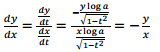
Author name: Prasanna

HBSE 8th Class Social Science Solutions Geography Chapter 5 Industries

Haryana State Board HBSE 8th Class Social Science Solutions Geography Chapter 5 Industries Textbook Exercise Questions and Answers.

Haryana Board 8th Class Social Science Solutions Geography Chapter 5 Industries

HBSE 8th Class Geography Industries Textbook Questions and Answers

ACTIVITY

Chapter 5 Industries Class 8 HBSE Question 1.
Give some examples of agro based industries.
Answer:
Food processing, vegetable oil, cotton textile, dairy products and leather industries.

Class 8 Geography Chapter 5 Industries Question Answer HBSE Question 2.
Find out the inputs, outputs and processes involved in the manufacture of a leather shoe.
Answer:
Inputs : Raw materials like leather, labour, cost of land, transport, infrastructure.
Processes : Activities to convert hide into tough leather, spinning, printing.
Outputs : Leather shoes.

HBSE 8th Class Social Science Solutions Geography Chapter 5 Industries

Class 8 Industries Question Answer HBSE Question 3.
Trace the journey of your shirt from a cotton field to your wardrobe.
Answer:
The shirt which we use is made up of cotton. Cotton is grown in the fields. Cotton buds are plucked and cotton is separated. Cotton seeds also separated and then it is processed for spinning. It is done by hand dr looms. Now machines are used which are run by power. After spinning the weaving process starts and cotton cloth is ready for making shirt which is used by us. In this process power, labour and capital in big amount is used.

Class 8 Geography Chapter 5 Industries HBSE Question 4.
What inputs in quantity are required to manufacture one tonne of steel?
Answer:
It requires 8 tonne of coal, 4 tonnes of iron ore and one tonne of lime stone.

LET’S DO

Industries Class 8 HBSE Geography Question 5.
On the outline map of India locate the places that supply raw material to TISCO.
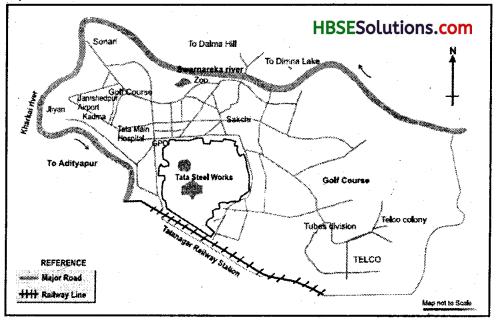
HBSE 8th Class Social Science Solutions Geography Chapter 5 Industries 1a
Answer:
The raw material with their source required for TISCO:

  • Iron-ore : From Orissa and Chhattisgarh.
  • Limestone, dolomite and manganese from Orissa and Chhattisgarh.
  • Water is supplied from Kharkai and Subarnrekha rivers.

Class 8 Geography Chapter 5 HBSE Question 6.
On the outline map of the world mark the places which provide raw material to cotton textile industry of Osaka.
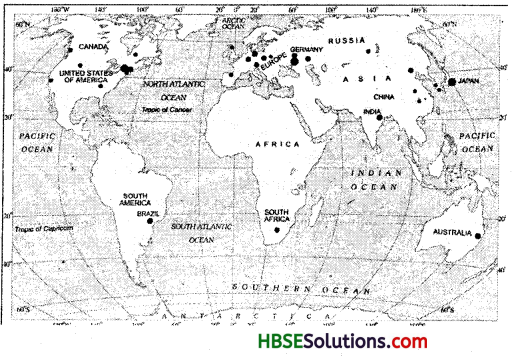
HBSE 8th Class Social Science Solutions Geography Chapter 5 Industries 1b
Answer:
The main raw material of cotton textile industry is cotton. For Osaka textile industry cotton is imported from India, USA and Egypt.

Geography Chapter 5 Class 8 HBSE Question 7.
Bangalore has some important public sectors and research institutions. Find out the full forms of the organisations listed below
BEL, BHEL, HAL, NAL, DRDO, ISRO, ITI, nSc, NCBS, and UAS.
Answer:
BEL – Bharat Electrical Ltd.
BHEL – Bharat Heavy Electrical Limited.
HAL – Hindustan Aeronautics Ltd.
NAL – National Aeronautics Ltd.
DRDO – Defence Reaserch and Development Organisation
ISRO – Indian Space Research Organisation
ITI – Industrial Training Institute
IISc – Indian Institute Of Science
NCBS – National Centre for Biological Science
UAS – University Administration and Services
BEL, BHEL, HAL, NAL, DRDO, ISRO, ITI, nSc, NCBS, and UAS.

Question 8.
Collect different types of cloth pieces from the tailor’s shop and classify them under cotton, silk, synthetic and woollen. Find out the raw materials used in their manufacturing.
Answer:

  • Cotton – From agriculture
  • Silk – Silk worm
  • Synthetic – Petroleum products
  • Woollen – Sheep

HBSE 8th Class Social Science Solutions Geography Chapter 5 Industries

EXERCISES

Question 1.
Answer the following questions.
(i) What is meant by the term ‘industry’?
Answer:
Industry refers to an economic activity that is concerned with production of goods, extracton of minerals and provision of services.

(ii) What are the main factors which influence the location of an industry ?
Answer:
The factors affecting the location of an industry are the availability of raw material, land, water, labour, capital, transport and market.

(iii) Which industry is often referred to as the backbone of modem industry and why?
Answer:
Iron and steel is often referred as the backbone of modem industry. Almost everything we use is either made of iron or steel or has been made with tools or machines of this metal. Ships, trains, tracks are made largely with steel. Oil wells are drilled with steel machinery. Steel pipelines transport oil. Minerals are mined with steel equipment. Farm machines are mostly steel. Large buildings have steel framework.

(iv) Why cotton textile industry expanded rapidly in Mumbai ?
Answer:
The warm, moist climate, port for importing machinery, availability of raw material and skilled labour resulted in rapid expansion of cotton textile industry in Mumbai.

(v) What are the similarities between information technology (IT) industry in Bangalore and California?
Answer:

BangaloreCalifornia
1. Bangalore is located in Deccan plateau of India.1. Silicon Valley is a part of Santa Clara Valley in California.
2. The city is known for mild climate throughout the year.2. The area has temperate climate.
3. Bangalore has the largest number of IT. colleges and software companies.3. Close to some of the advanced scientific and technological centres of the world.
4. It is considered dust- free city.4. Pleasant climate with attractive and a clean environment.
5. It is located close to major roads and airports.5. It is also close to major roads and airports.
6. Good access to market and skilled workforce.6. Good access to market and skilled workforce.

Question 2.
Tick the correct answer:
(i) Silicon Valley is located in
(a) Bangalore
(b) California
(c) Ahmedabad
Answer:
(b) California.

(ii) Which one of the following industries is known as sunrise industry?
(a) Iron and steel industry
(b) Cotton textile
(c) Information technology
Answer:
(c) Information technology.

(iii) Which one of the following is a ‘natural fibre’?
(a) Nylon
(b) Jute
(c) Acrylic
Answer:
(b) Jute.

Question 3.
Distinguish between the following:
(i) Agro-based and mineral-based industry.
(ii) Public sector and joint sector industry.
Answer:
(i)

Agro-Based IndustryMineral-Based Industry
1. Agro-based industries use plant and animal based products as their raw materials.1. Mineral based industries are primary industries that use mineral ores as their raw material.
2. Food processing, vegetable oil are examples of agro- based industries.2. Iron made from iron-ore is a product of mineral

(ii)

Public Sector IndustryJoint Sector Industry
1. Public Sector industries are owned and operated by government.1. Joint sector industries are owned and operated by state and a group of individuals.
2. Example : Hindustan Aeronautics Ltd., Steel Authority of India Ltd.2. Example : Maruti Udyog Ltd.

HBSE 8th Class Social Science Solutions Geography Chapter 5 Industries

Question 4.
Give two examples of the following in the space provided.
(i) Raw materials: __________ and __________
(ii) End products : __________ and __________
(iii) Tertiary activities : __________ and __________
(iv) Agro-based industries: __________ and __________
(v) Cotton industries : __________ and __________
(vi) Co-operatives : __________ and __________
Answer:
(i) Iron ore, cotton.
(ii) Baskets, Handicrafts.
(iii) Commerce, Banking.
(iv) Food processing, Vegetable oil.
(v) Basket weaving, Pottery
(vi) Amul, Mother Dairy.

ACTIVITY

Question 5.
Activity
How to identify a location for establishing an industry?
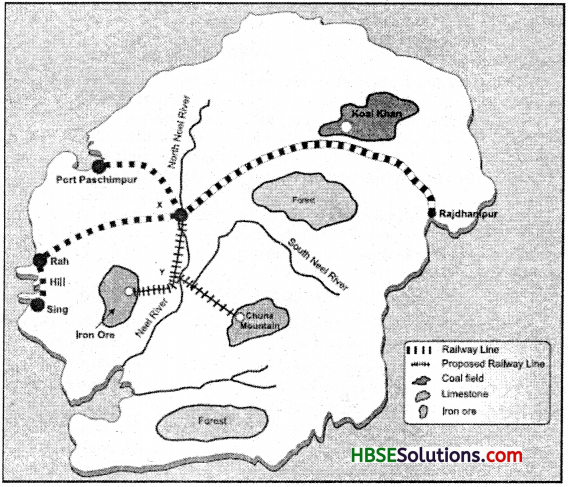
Divide your class into groups. Each group is a Board of Directors faced with the problem of choosing a suitable site for an iron and steel plant Developen Dweep. A team of technical experts have submitted a report with notes and a map. The team considered access to iron-ore, coal, water and limestone as well as the main market, sources of labour and port facilities. The team has suggested two sites, X and Y. The Board of Directors have to take the final decision of where to locate the steel plant.

  • Read the report submitted by the team.
  • Study the map to find out the distances of the resources from each site.
  • Give each resource a “weight” from 1 to 10, according to its importance. The greater the ‘pull’ of the factor on the industry, the higher the, weight from 1 to 10.
  • Complete the table.
  • The site with the lowest total should be the most satisfactory site.
  • Remember each group of directors can decide differently.

REPORT

Factors/Resources affecting the location of a proposed Iron and Steel Plant on Developen Dweep.
Iron-ore : This is a very large deposit of low grade iron-ore. Long distance transportation of the ore would be uneconomic.
HBSE 8th Class Social Science Solutions Geography Chapter 5 Industries 1
→ Coal : The only coalfield contains rich deposits of high grade coal. Transportation of the coal is by railway, which is relatively cheap.

→ Limestone : This is widely available over the island, but the purest deposits are in the Chuna Mountains.

→ Water: Both the tributaries of river Neel carry sufficient water to supply a large iron and steel plant in all seasons. The sea water, because of its high salt content is unsuitable.

→ Market : It is expected that the chief market for the plant’s products will be the engineering works of Rajdhanipur. Transport costs for the products mainly small steel bars and light steel plates would be relatively low.

→ Labour Supply : This will have to be recruited mainly from the unskilled workers in the 3 fishing villages of Hii, Rah and Sing. It is expected that most workers will commute daily from their present homes.

→ Port Facilities : These are at present minimal. There is a good, deep natural harbour at port Paschimpur developed to import metal alloys.
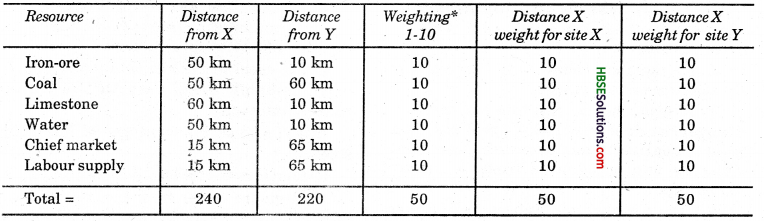
HBSE 8th Class Social Science Solutions Geography Chapter 5 Industries 2
the larger the pull, the higher the weighting.

HBSE 8th Class Geography Industries Important Questions and Answers

Very Short Answer Type Questions

Question 1.
On what bases industries can be classified?
Answer:
Industries can be classified on the following bases : (a) raw materials, (b) size, (c) ownership.

Question 2.
Classify the industries on the basis of ownership.
Answer:
Private sector, state owned or public sectors, joint sector and co-operative sector.

HBSE 8th Class Social Science Solutions Geography Chapter 5 Industries

Question 3.
Name the major industrial regions of the world.
Answer:

  • Eastern North America
  • Western and Central Europe
  • Eastern Europe
  • Eastern Asia.

Question 4.
Why do industrial accidents or disaster occur?
Answer:
Industrial accidents occur mainly due to technical failure or irresponsibile handling of hazardous material.

Short Answer Type Questions

Question 1.
Explain how products of mineral based industries feed other industries.
Answer:
Iron made from iron-ore is the product of mineral based industry. This is used as raw material for the manufacture of various products such as heavy machinery, building materials and railway coaches.

Question 2.
What is the difference between private sector and public sector industries?
Answer:
Private sector industries are owned and operated by individuals or a group of individuals. Public sector industries are owned and operated by the government.

Question 3.
Write the difference between joint sector and co-operative sector industries.
Answer:
1. Joint sector industries are owned and operated by the state and individuals or a group of individuals.
2. Cooperative sector industries are owned and operated by the producers or suppliers of raw materials, workers or both.

Question 4.
Name the major industrial regions of India.
Answer:

  • Mumbai Pune Cluster
  • Bangalore Tamil Nadu region
  • Hugli region
  • Ahmedabad Baroda region
  • Chottanagpur Industrial belt
  • Visakhapatnam Guntur belt,
  • Gurgaon Delhi Meerut region
  • Kollam Thiruvananthapuram region.

Question 5.
What was the cause of industrial diaster which occurred in Bhopal on December 3,1984?
Answer:
The industrial disaster in Bhopal on 3 December, 1984 occurred due to the leakage of high poisonous Methyl Isocynate (MIC) gas alongwith Hydrogen Cyanide and other reactive products.

HBSE 8th Class Social Science Solutions Geography Chapter 5 Industries

Long Answer Type Questions

Question 1.
Why was Sakchi (Jamshedpur) chosen to set up the steel plant TISCO? Give reason.
Answer:
Sakchi was chosen to set-up steel plant (TISCO) for various reasons:

  • It was close to the iron-ore, coal and manganese deposits. TISCO gets coal from Jharia coalfields and iron-ore, limestone, dolomite and manganese from Orissa and Chhattisgarh.
  • The Kharkai and Subarnarekha rivers ensured suffficient water supply.
  • Kolkata provided a large market.
  • Government initiatives provided adequate capital for its later development.

Question 2.
Describe the locational advantages of Pittsburgh Steel City in the United States America.
Answer:
Locational advantages of Pittsburgh steel city :

  • Coal is available locally.
  • Iron-ore comes from the iron mines at Minnesota about 1500 km from Pittsburgh.
  • The world’s best route: the famous Great Lakes waterway is available for shipping ore cheaply
  • Train carry the ore from the Great Lakes to the Pittsburgh area.
  • The Ohio, the Monogahela and Allegheny rivers provide adequate water supply.

Question 3.
Describe the favourable locational factors that were responsible for the development of the textile industry in Ahmedabad.
Answer:

  • Ahmedabad is situated in the heart of a cotton growing area. This ensures easy availability of raw material.
  • The humid climate is ideal for spinning and weaving.
  • The flat terrain is suitable for the establishment of the mills.
  • The densely populated states of Gujarat and Maharashtra provide both skilled and semiskilled labour
  • There are well developed road and railway network.
  • Nearby Mumbai port facilities import of machinery and export of cotton textiles.

Question 4.
‘Ahmedabad’ is situated in the heart of a cotton growing area’. Write its advantages.
Answer:

  • Location of Ahmedabad ensures easy availability of raw material.
  • The humid climate there is ideal for textile processes.
  • The plain area and easy availability of land helps establish mills.
  • Gujarat and Maharashtra provide for skilled and semi-skilled labour.
  • Easy access to market is provided through transportation by well-developed roads and railway network.

HBSE 8th Class Social Science Solutions Geography Chapter 5 Industries

MAP-TIME

On an outline map of the world, mark 5 major iron-ore producing areas.
Answer:
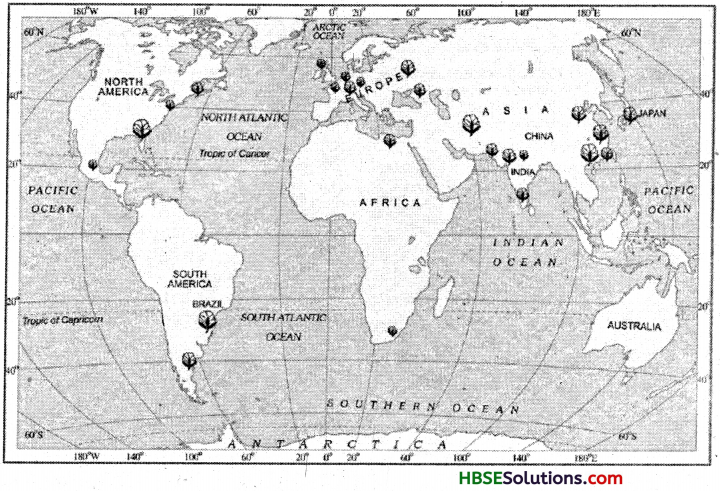
HBSE 8th Class Social Science Solutions Geography Chapter 5 Industries 3Industries Class 8 HBSE Notes

  • Industry: It is an economic activity that is concerned with production of goods, extraction of minerals or provision of services.
  • Agro Based Industries: These industries use plant and animal based products as their raw material. For example, Food processing, cotton textile industries.
  • Mineral Based Industries : These industries use mineral ores as their raw materials. For example, Iron-Steel Industry,
  • Marine Based Industries: These industries use products from seas and oceans as raw materials. For example, Industries processing sea food.
  • Forest Based Industries: These industries utilise forest produce as raw materials. For example, Industries associated with pulp and paper, pharmaceuticals.
  • Small Scale Industries : They use lesser amount of capital and technology.
  • Large Scale Industries: They are industries that use larger capital and technology to produce large volumes of products.
  • Private Sector Industries: These industries are owned and operated by individuals or a group of individuals.
  • Joint Sector Industries: These are owned and operated by the state and individuals or a group of individuals. For example, Maruti Udyog Ltd.
  • Co-operative Sector Industries : These industries are owned and co-operated by producers suppliers, workers, or both. For example, Amul, Mother Dairy.
  • IT Industry: It deals in the storage, processing and distribution of information.

HBSE 8th Class Social Science Solutions Geography Chapter 5 Industries Read More »
HBSE 8th Class Social Science Solutions Geography Chapter 4 Agriculture

Haryana State Board HBSE 8th Class Social Science Solutions Geography Chapter 4 Agriculture Textbook Exercise Questions and Answers.

Haryana Board 8th Class Social Science Solutions Geography Chapter 4 Agriculture

HBSE 8th Class Geography Agriculture Textbook Questions and Answers

EXERCISES

Class 8 Geography Chapter 4 Solution HBSE Question 1.
Answer the following questions:
(i) What is agriculture?
Answer:
The science and art of cultivation on the soil, raising crops and rearing livestock is called agriculture. It is a primary activity and one of the oldest occupations known to the humans.

(ii) Name the factors influencing agriculture.
Answer:
The factors influencing agriculture are:
(a) Climate
(b) Soil
(c) Relief
(d) Other factors like availability of irrigation facilities, size of landholdings, transport facilities, nearness of market etc.

(iii) What is shifting cultivation? What are its disadvantages?
Answer:
Shifting cultivation is that process of agriculture where a small area of a forest is cleared by cutting down all the trees and the area is burned. The ashes are mixed with soil to make it more fertile and the land is used for growing crops. After a couple of years, when the land becomes less fertile, it is abandoned.

The disadvantages of shifting cultivation are:
(а) It has led to deforestation and loss of natural vegetation.
(b) It leads to soil erosion and soil loss.

(iv) What is plantation agriculture?
Answer:
Plantation agriculture is a type of commercial farming practised on farms called estates to grown a single crop like tea, coffee, sugarcane, rubber, banana etc. The plantations are managed like industrial units.

(v) Name the fibre crops and name the climatic conditions required for their growth.
Answer:
The fibre crops are : Cotton, Jute
Climatic conditions for their growth are:
Cotton :
(а) High temperature of about 27°C during the growing period.
(b) Rainfall of about 60 cm to 100 cm in frequent showers.
(c) Fertile, well drained soil.
(d) Dry, clear and sunny weather during the ripening of the cotton bolls.

Jute:
(а) Warm and wet climate.
(b) Alluvial soil, well-drained.
(c) Heavy rainfall.

Class 8 Geography Chapter 4 HBSE Question 2.
Tick (✓) the correct answer:
(i) Horticulture means:
(a) growing of fruits and vegetables
(b) primitive farming
(c) growing of wheat
Answer:
(a) growing of fruits and vegetables.

(ii) Golden fibre refers to :
(a) tea
(b) cotton
(c) jute
(c) jute.
Answer:
(c) jute.

(iii) Leading producers of coffee _________.
(a) Brazil
(b) India
(c) Russia
Answer:
(a) Brazil.

HBSE 8th Class Social Science Solutions Geography Chapter 4 Agriculture

Chapter Agriculture Class 8 HBSE Question 3.
Give reasons :
(i) In India agriculture is a primary activity.
Answer:
About 75 percent of India’s population lives in villages and depend directly or indirectly on agriculture. It provides food for human beings and raw materials for agro-based industries.

(ii) Different crops are grown in different regions.
Answer:
Different crops are grown in different regions because the different climatic conditions and favourable soil are required for different crops which is found in different regions.

Question 4.
Distinguish between the followings:
(i) Primary activities and tertiary activities.
(ii) Subsistence farming and intensive farming.
Answer:
(i)

Primary ActivitiesTertiary Activities
Primary activities include all those connected with extraction and production of natural resources.Tertiary activities are the activities which provide support to primary and secondary sectors through services.
For example: Agriculture, fishing, mining etc.For example: Transport, trade, banking, insurance advertising.

(ii)

Subsistence FarmingIntensive Farming
(a) This is mainly practised to meet the needs of the farmer’s family.(a) The farmer tries to get the maximum possible output from a small plot of land. It is practised in densely populated countries in the monsoon region.
(b) The farmer uses primitive methods to produce a variety of crops.(b) The farmer uses simple tools and abundant human labour.
(c) All types of manure and a little of chemical fertilizers are used.(c) This is mostly done on fertile soil.

Question 5.
Activity :
(i) Collect seeds of wheat, rice, jowar, bajra, ragi, maize, oilseeds and pulses available in the market. Bring them to the class and find out in which type of soil they grow.
Answer:

  • Wheat: It grows good in well-drained loamy soil. Black soil provides excellent quality grain.
  • Rice : It grows well in alluvial clayey soil which can retain water.
  • Jowar, Bajra, Ragi : These can be grown in less fertile and sandy soil.
  • Maize : It requires well-drained, deep and fertile soil.
  • Oilseeds: Groundnuts are grown in alluvial soil and in black soil. Mustard requires alluvial soil.
  • Pulses : They are grown in less fertile alluvial soil and red soil.

(ii) Find out the difference between the life style of farmers in the USA and India on the basis of pictures collected from magazines, books and newspapers and the internet.
Answer:
The following points will clear the difference between the life style of farmers in USA and India.

Life Style of Farmers In USA:

  • Farmers have large size of farms ranging between 100-300 hectares.
  • They use high dose of fertilizers.
  • They use modern techniques and machines like harvesters in agriculture.
  • They generally live in farm houses.
  • They use high quality seeds and take adequate measures to control pests and improve soil fertility.
  • They are generally educated. They work like businessmen and maintain proper accounts of expenditure and income.
  • They sell their produce in big markets and export to other countries also.

Life Style of Farmers In India:

  • The farmers generally do not have farms more than 1.5 hectares in area.
  • They generally hire big machines for farming or work with small machines.
  • They are not aware of the properties of soil and lack soil testing facilities.
  • The farmers lack storage facilities and sell produce in the nearby markets (mandis).
  • They are not educated and cannot keep account of farm activities.
  • They live in kuchcha houses in villages.
  • All the members of family are engaged in agricultural activities.

HBSE 8th Class Social Science Solutions Geography Chapter 4 Agriculture

Question 6.
FOR FUN
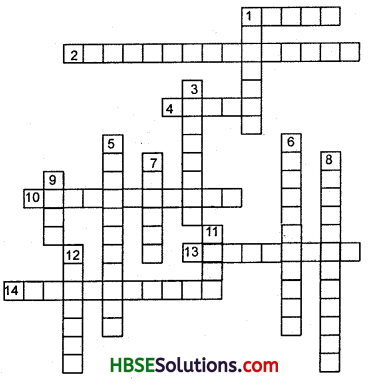
Solve the crossword puzzle with the help of given clues:
HBSE 8th Class Social Science Solutions Geography Chapter 4 Agriculture 1
Across :
1. Crop that needs well drained fertile soils, moderate temperatures and lots of sunshine (5).
2. Increasing production through use of HYV seeds, chemical fertilisers and pesticides (5,10).
4. USA, Canada, Russia, Australia are major producers of this crops (5)
10. Type of farming to meet family needs (11)
13. Rearing of animals for sale (9)
14. Growing grapes for wines (11)

Down:
1. Coarse grains are also called (7)
3. Cultivation involving slash and burn (8)
5. Growing of crops, fruits and vegetables (11)
6. Tea, coffee, sugarcane and rubber are grown in (11)
7. Requires 210 frost-free days for growth (6).
8. Growing of flowers (12)
9. Also called ‘Golden Fibre’ (4)
11. Also known as paddy (4)
12. Activity concerned with extraction of natural resources (7)
Answer:
Across :
1. MAIZE
2. GREEN REVOLUTION
4. WHEAT
10. SUBSISTENCE
13. LIVESTOCK
14. VITICULTURE

Down :
1. MILLETS
3. SHIFTING
5. AGRICULTURE
6. PLANTATIONS
7. COTTON
8. HORTICULTURE
9. JUTE
11. RICE
12. PRIMARY

HBSE 8th Class Geography Agriculture Important Questions and Answers

Very Short Answer Type Questions

Question 1.
What are the two essentials for agricultural activity?
Answer:
Favourable topography of soil, climate.

Question 2.
Name three secondary activities.
Answer:
Manufacturing of steel, baking of bread, weaving of cloth.

Question 3.
What is arable land?
Answer:
The land on which the crops are grown is known as arable land.

Question 4.
What is organic farming?
Answer:
In this type of farming, organic manure and natural pesticides are used instead of chemicals.

HBSE 8th Class Social Science Solutions Geography Chapter 4 Agriculture

Question 5.
What types of farming are included in commercial farming?
Answer:
Commercial farming includes commercial grain farming, mixed farming and plantation agriculture.

Question 6.
What is done in mixed farming?
Answer:
In mixed farming the land is used for growing food and fodder crops and rearing livestock.

Short Answer Type Questions

Question 1.
What climatic conditions are required for the cultivation of cotton?
Answer:

  • high temperature.
  • light rainfall
  • two hundred and ten frost-free days.
  • bright sunshine.

Question 2.
What are different types of fibre crops?
Answer:
Fibre Crops : Fibre is a material produced from vegetables, animals, minerals and chemicals. Vegetables fibres are procured from seeds, stems, leaves and fruit cases. Animal fibres are produced from insects like silkworms, from animals like sheep, goats, yaks, llamas, rabbits, reindeers and camels. Minerals fibres, like glass, are made from silica sand. Synthetic fibres are obtained from chemical treatment of natural cellulose, made of wood pulp. Two important sources of vegetable fibre are cotton and jute.

Long Answer Type Questions

Question 1.
Describe the regions where commercial grain farming is practised.
Answer:
(a) Commercial grain farming is practised in the temperate grasslands of North America, Europe and Asia.
(b) These regions are sparsely populated with large farms sprading over hundreds of hectares.
(c) Due to severe winters only a single crop can be grown.

Question 2.
Write a short note on millets.
Answer:

  • Millets are also known as coarse grains and can be grown on less fertile and sandy soils.
  • It is a hardy crop that needs low rainfall and high to moderate temperature and adequate rainfall.
  • Millets are grown in India, Nigeria, China and Niger.

Question 3.
Write the geographical conditions required for the cultivation of tea.
Answer:

  • Tea requires cool climate and well distributed high rainfall throughout the year for the growth of its tender leaves.
  • It needs well-drained loamy soils and gentle slopes.
  • Large number of labour is required to pick the leaves.

HBSE 8th Class Social Science Solutions Geography Chapter 4 Agriculture

Agriculture Class 8 HBSE Notes

  • Agriculture : The science and art of cultivation on the soil, raising crops and rearing livestock.
  • Sericulture : Commerical rearing of silk worms.
  • Pisciculture : Breeding of fish in specially constructed tanks and ponds.
  • Viticulture : Cultivation of grapes.
  • Horticulture : Growing vegetables, flowers and fruits for commerical use.
  • Subsistence Farming : This is the type of farming carried out by a farmer to satisfy the needs of his family alone.
  • Nomadic Farming: Nomadic farming refers to the practice of farming in which herdsmen move from one place to another, with their families and their livestocks.
  • Commercial Farming: The crops are grown and animals are reared to sell in the market.
  • Mixed Farming : In the mixed farming, livestocks are reared along with the farming of food and fodder crops.
  • Agricultural Development : Agricultural development refers to the increase in farm production in order to meet the demands of growing population.

HBSE 8th Class Social Science Solutions Geography Chapter 4 Agriculture Read More »
HBSE 8th Class Social Science Solutions Geography Chapter 6 Human Resource

Haryana State Board HBSE 8th Class Social Science Solutions Geography Chapter 6 Human Resource Textbook Exercise Questions and Answers.

Haryana Board 8th Class Social Science Solutions Geography Chapter 6 Human Resource

HBSE 8th Class Geography Human Resource Textbook Questions and Answers

Human Resources Class 8 Solutions HBSE Question 1.
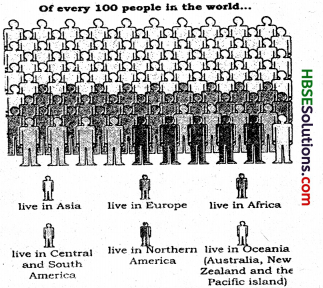
Look at Fig. 6.1 and find out continents which has population:
(a) Only 5 percent
(b) Only 13 percent
(c) Only 1 percent
(d) Only 12 percent
Answer:
(a) North America
(b) Africa
(c) Oceania (Australia)
(d) Europe
HBSE 8th Class Social Science Solutions Geography Chapter 6 Human Resource 1

Class 8 Geography Chapter 6 Human Resources Question Answer HBSE Question 2.
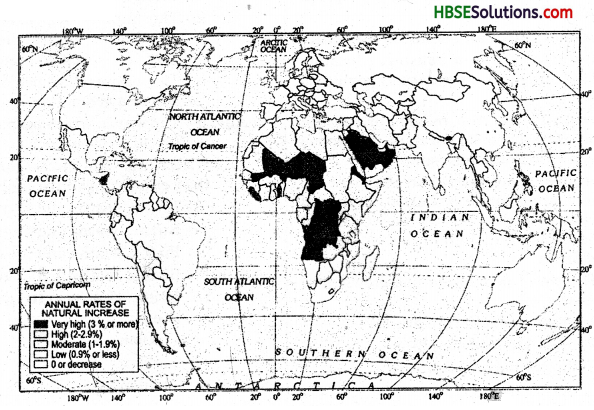
Look at Fig. 6.2. below and find out of these countries how many are in Asia. Colour them on world map.
HBSE 8th Class Social Science Solutions Geography Chapter 6 Human Resource 2
Answer:
The countries in Asia are : China, India, Indonesia, Pakistan, Bangladesh and Japan.

EXERCISES

Human Resource Geography HBSE 8th Class Question 1.
Answer the following questions:
(i) Why are people considered a resource?
(ii) What are the causes for the uneven distribution of population in the world?
(iii) The world population has grown very rapidly. Why?
(iv) Discuss the role of any two factors influencing population change.
(v) What is meant by population composition?
(vi) What are population pyramids? How do they help in understanding about the population of a country?
Answer:
(i) People are considered a resource because it is the people who work on the natural resources of a country to produce wealth and raise standard of living.

(ii) Causes for the uneven distribution of population
(a) Geographical Factors:
→ Topography : People always prefer to live on plains rather than mountains and plateaus because these areas are suitable for farming, manufacturing and service activities. The Ganga plains are the most densely populated areas of the world while mountains like Andes, Alps and Himalayas are sparsely populated.

→ Climate: People usually avoid extreme climates that are very hot or very cold like Sahara desert, Polar regions of Russia, Canada and Antarctica.

→ Soil: Fertile soils provide suitable land for agriculture. Fertile plains such as Ganga and Brahmaputra in India, Hwang-Ho, Chang Jiang in China and the Nile in Egypt are densely populated.

→ Water: People prefer to live in the areas where fresh water is easily available. The river valleys of the world are densely populated while deserts have sparse population.

→ Minerals : Area with mineral deposits are more populated. Diamond mines of South Africa and discovery of oil in the Middle East lead to setting of people in 1 these areas.

HBSE 8th Class Social Science Solutions Geography Chapter 6 Human Resource

(b) Socio-cultural and economic Factors
→ Social: Areas of better housing, education and health facilities are more densely populated e.g., Pune.

→ Cultural : Places with religion or cultured significance attract people. Varanasi, Jerusalem and Vatican City are some examples.

→ Economic : Industrial areas provide employment apportunities. Large number of people are attracted to these areas. Osaka in Japan and Mumbai in India are two densely populated areas.

(iii) The world population has grown very rapidly because of:
(а) Decrease in death rate due to :

  • Increase food supplies
  • Better medical facilities

(b) Birth rate still very high.

(iv) Population change refers to change in the number of people living during a specified period of time. Main factors influencing population change are:

  • The difference between the birth rate and death rate (natural growth rate) is the main cause of population change.
  • Migrations also bring about population change. Migration refers to the movement of people in and out of an area. People may move within a country or between countries.

(v) The different characteristics of a population in terms of age, sex, literacy level, health conditon, occupation and income level together form the composition of the population.

(vi) The distribution of various age groups in the population is shown by the age structure and male-female ratio diagram. This is called population pyramid.

The shape of the population pyramid of a country reveals two major details about the people age-group and sex-ratio. It also tells us how many dependents are there in a country.

Chapter 6 Geography Class 8 HBSE Question 2.
Tick the correct answer:
(i) Which does the term population distribution refer to?
(a) How population in a specified Area changes over time.
(b) The number of people who die in relation to the number of people born in a specified area.
(c) The way in which people are spread across a given area.
Answer:
(c) The way in which people are spread across a given area.

(ii) Which are the three main factors that cause population change?
(a) Births, deaths and marriage
(b) Births, deaths and migration
(c) Births, deaths and life expectancy
Answer:
(b) Births, deaths and migration.

(iii) In 1999, the world population reached ________.
(а) 1 billion
(b) 3 billion
(c) 6 billion
Answer:
(c) 6 billion.

HBSE 8th Class Social Science Solutions Geography Chapter 6 Human Resource

(iv) What is a population pyramid?
(a) a geographical presentation of the age, sex composition of a population.
(b) When the population density of an area is so high that people live in tall buildings.
(c) Pattern of population distribution in large urban areas.
Answer:
(c) 6 billion

Human Resources In Geography HBSE 8th Class Question 3.
Complete the sentences below using some of the following words.
sparsely, favourable, fallow, artificial, fertile, natural, extreme, densely
When people are attracted to an area it becomes ________ populated. Factors that influence this include ________ climate, good supplies of ________ resources and ________ land.
Answer:
densely, favourable, natural, fertile.

ACTIVITY

Human Resources 8th Class HBSE Question 4.
Discuss the characteristics of a society with “too many under 15s” and one with “too few under 15’s”.
Hint : need for schools, pension schemes, teachers, toys, wheel chairs, labour, supply, hospitals.
Answer:
People of different age groups have different requirements. If a society has too many under 15s; it will require more teachers, toys, schools as per the needs of children. Labour supply will be less.

If a society has too few under 15s, it implies it has more adult population which will require more pension schemes, hospitals, wheel chairs Labour supply will be more.

HBSE 8th Class Geography Human Resource Important Questions and Answers

Very Short Answer Type Questions

Class 8 Chapter 6 Geography Question Answer HBSE  Question 1.
When did the Ministry of Human Resource Development establish? What was its aim?
Answer:
The Ministry of Human Resource Development was established in 1985. Its main aim was to improve people’s skills.

Geography Class 8 Chapter 6 Question Answer HBSE Question 2.
What do you understand by the pattern of population distribution?
Answer:
The way in which people are spread across the earth surface is known as the pattern of population distribution.

Class 8 Geography Chapter 6 Questions And Answers HBSE Question 3.
Which are the most crowded areas of the world?
Answer:

  • South and South-East Asia
  • Europe
  • North-Eastern North America.

HBSE 8th Class Social Science Solutions Geography Chapter 6 Human Resource

Short Answer Type Questions

Resources 8th Class HBSE Question 1.
Sixty percent of the world’s population stay in just 10 countries. Name any eight of them.
Answer:

  • China
  • India
  • USA
  • Indonesia
  • Brazil
  • Pakistan
  • Bangladesh
  • Russia
  • Nigeria
  • Japan.

Class 8 Chapter 6 Geography HBSE Question 2.
What is the average density of population of the world? Which part of the world- have the highest density of population?
Answer:
The average density of population of the world is 45 persons per sq km. South central Asia has the highest density of population.

Geography Chapter 6 Class 8 HBSE Question 3.
In the early 1970s, the world population was 3 billion. In 1999, the population doubled to 6 billion. What were the factors responsible for this growth?
Answer:
Factors responsible for this population growth were :

  • Better food supplies
  • Better medicines and
  • Reduced Death Rate
  • Number of births medical facilities remained fairly high.

Human Resources Geography HBSE 8th Class Question 4.
Does emigration and immigration affect the population size of a country? Give example in support of your answer.
Answer:
Emigration and immigration do affect the population size of a country. Example: the population of United States of America and Austrilia increased due to immigration while Sudan has experienced a loss in population due to emigration.

HBSE 8th Class Social Science Solutions Geography Chapter 6 Human Resource

Long Answer Type Questions

Human Resources Class 8 Questions And Answers HBSE Question 1.
Explain how social, cultural and economise factors affect the distribution of population?
Answer:
Social factors: Area of better housing, education and health facilities are more densely populated, e.g., Pune, Bangalore, Chandigarh. Cultural factors : Places of religious or cultural signifi cance attract people. For example, Varanasi, Jerusalem and Vatican city.
Economic factors: Industrial areas provide employment opportunities, thus, attract large number of people. For example, Osaka, Mumbai.

Question 2.
Until the 1300s, the world’s population grew steadily but slowly. Give reasons.
Answer:

  • Large number of babies were born, but they died early too.
  • Lack of proper health facilities.
  • Sufficient food was not available to masses.
  • Farmers were not able to produce enough to meet the food requirements of all the people.

Question 3.
What is the general trend of international and internal (within a nation) migration?
Answer:

  • The general trend of international migration is from less developed nations to the more developed nations in search of better employment opportunities.
  • Within a nation, people move from the rural to urban areas in search of employment education and health facilities.

Question 4.
How does the population pyramid of a country in which both birth and death rates are high look? What do you conclude from such pyramid?
Answer:
The population pyramid of a country in which both birth and death rates are high, is broad at the base and rapidly narrows towards the top. This is because, although many children are born, a large percentage of them die in their infancy, relatively few become adults and there are very few old people.

Question 5.
How do soil and water affect the distribution of population?
Answer:
→ Soil: Fertile soil provides suitable land for agriculture. Fertile plains such as Ganga and Brahmaputra in India, the Nile in Egypt are densely populated.

→ Water : People prefer to live in the areas where sufficient amount of fresh water is available. The river valleys of the world are densely populated while deserts are sparsely populated.

HBSE 8th Class Social Science Solutions Geography Chapter 6 Human Resource

Question 6.
How to topography and climate affect distribution of population?
Answer:
→ Topography : People prefer to live on plains rather than mountains and plateaus because plains are suitable for farming, manufacturing, transportation, etc. The Hwang Ho plains are densely populated while mountains like Andes, Alps, Himalayas are sparsely populated.

→ Climate : Regions of very hot and very cold climate like Sahara desert, Antarctica are sparsely populated.

Picture Based Questions

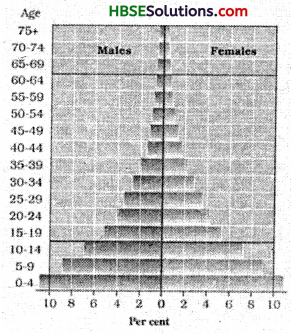
Look at the population pyramid shown in the adjoining picture. Answer the questions that follow:
HBSE 8th Class Social Science Solutions Geography Chapter 6 Human Resource 3

Question 1.
To which country does it belong to?
Answer:
It belongs to Kenya.

Question 2.
Why is it broad at the base?
Answer:
This is broad at the base because many children are born.

Question 3.
Why does the population pyramid rapidly narrows towards the top
Answer:
The population pyramid rapidly narrows towards the top because though many children are born, a large percentage of them die in their infancy, relatively few become adults and there are very few old people.

Human Resource Class 8 HBSE Notes

  • Human Resources: All human beings engaged in some useful activities represent the human resources.
  • Pattern of Population Distribution: The way in which people are spread across the earth’s surface is known as the pattern of population distribution.
  • Population Density : Population density is the number of people living in a unit area of the earth’s surface.
  • Population Change : The population change refers to change in the number of people during a specific time.
  • Migration : Migration is the movement of people in and out of an area.
  • Life Expectancy : It is the number of years that an average person can expect to live.
  • Birth Rate : The number of live births per 1000 people.
  • Death Rate : The number of deaths per 1,000 people.

HBSE 8th Class Social Science Solutions Geography Chapter 6 Human Resource Read More »

HBSE 8th Class Social Science Solutions History Chapter 12 स्वतंत्रता के बाद भारत

Haryana State Board HBSE 8th Class Social Science Solutions History Chapter 12 स्वतंत्रता के बाद भारत Textbook Exercise Questions and Answers.

Haryana Board 8th Class Social Science Solutions History Chapter 12 स्वतंत्रता के बाद भारत

HBSE 8th Class History स्वतंत्रता के बाद भारत Textbook Questions and Answers

आइए कल्पना करें

आप एक आदिवासी तथा एक आरक्षण-विरोधी व्यक्ति की बहस सुन रहे हैं। कल्पना कीजिए कि दोनों व्यक्ति अपनी ओर से क्या दलील दे रहे होंगे? इस चर्चा को अभिनय करके दिखाइए।
उत्तर:
उस व्यक्ति के तर्क या बातचीत जो आरक्षण के विरोध में था :
1. आरक्षण समानता की भावना के विरुद्ध है।

2. यह शैक्षिक संस्थाओं में अधिक योग्य विद्यार्थियों के प्रवेश के मार्ग में अवरोधक खड़ा करता है।

3. साधारण श्रेणी की वर्तमान पीढ़ी के लिए आरक्षण एक सजा है, एक ऐसे अपराध के लिए जिससे उसका कुछ लेना-देना नहीं। इस पीढ़ी के लोग अनुसूचित जातियों, अनुसूचित जनजातियों या अन्य सामाजिक-आर्थिक दृष्टि से कमजोर लोगों की स्थिति के लिए जिम्मेदार नहीं हैं।

4. आरक्षण कम बौद्धिक स्तर के लोगों को अध्यापकों, चिकित्सकों, अभियंताओं, जजों आदि में शामिल करने के लिए विवश करता है। जब बौद्धिक सेवाओं के अधिकांश प्रशासनिक एवं उपयोगी लोगों का मानसिक या बौद्धिक स्तर कम योग्यता

आरक्षण के समर्थन अथवा पक्ष में दिए गये तर्क हैं. :
1. आदिवासी या जनजातियों के लोग ही इस देश के वास्तविक निवासी हैं।

2. हम लोगों को कई पीढ़ियों से मैदानी या बाहरी लोगों. विशेषकर सौदागरों, साहूकारों, भू-माफियाओं, विदेशी कंपनियों, शोषणकर्ताओं अथवा लालची मालिकों द्वारा शोषित किया गया है।

3. हमें शिक्षा के क्षेत्र में पिछड़ा रखा गया है, स्वास्थ्य सेवाएँ एवं नवीनतम जानकारियाँ आदि भी हमें नहीं दी गयी हैं।

4. आरक्षण की मदद से हम शीघ्र ही उन्नति कर लेंगे। आरक्षण हमें शिक्षा संस्थाओं, प्रशिक्षण संस्थाओं, सरकारी नौकरियों, पंचायतों, राज्य विधायिकाओं तथा संसद में अधिक स्थान प्राप्ति में सक्षम बनायेगा। अधिक अवसर हमें अधिक कार्यक्षम बनाएँगे जिससे हम कुछ ही वर्षों में अन्य साधारण श्रेणी के लोगों के समक्ष प्रतियोगिता की स्थिति में आ जायेंगे।

फिर से याद करें

स्वतंत्रता के बाद भारत के प्रश्न उत्तर HBSE 8th Class प्रश्न 1.
नवस्वाधीन भारत के सामने कौन सी तीन समस्याएँ थीं?
उत्तर:
1. देश विभाजन के कारण लगभग 80 लाख लोग (8 मिलियन) उस देश से नये भारत में आये, जिसे 14 अगस्त 1947 से पाकिस्तान कहा जाता है। उन लोगों को अपने लिए घर तथा नौकरियाँ ढूँढ़नी पड़ी। नयी सरकार को इस भयंकर समस्या का समाधान करना ही था।

2. दूसरी समस्या देशी रियासतों की समस्या से नये भारत को जूझना था। इनकी कुल संख्या 556 थी। प्रत्येक देशी रियासत किसी राजा/नरेश या नवाब के अधीन थी। इनमें प्रायः सभी को भारत संघ में शामिल होने के लिए राजी कर लिया गया।

3. दीर्घ काल में, नये राष्ट्र को एक ऐसी राजनीतिक प्रणाली अपनानी थी जो संपूर्ण राष्ट्र की जनसंख्या के सभी वर्गों की आशाओं एवं उम्मीदों पर खरी उतरती।

HBSE 8th Class Social Science Solutions History Chapter 12 स्वतंत्रता के बाद भारत

स्वतंत्रता के बाद भारत के प्रश्न उत्तर HBSE 8th Class History प्रश्न 2.
योजना आयोग की क्या भूमिका थी?
उत्तर:
योजना आयोग की भूमिका (The Role of Planning Commission) : सन् 1950 में सरकार ने देश के लिए एक योजना आयोग गठित किया। इसका कार्य था सरकार की नीतियों एवं कार्यक्रमों को सफलतापूर्वक, निर्धारित समय-सीमा में ही लागू करने के लिए आय-व्यय की मदें, क्षेत्र के नमूने (design) तैयार करना तथा प्रशासन एवं विभिन्न सरकारी विभागों, अधिकारियों आदि के माध्यम से उनको क्रियान्वित करना ताकि राष्ट्र आर्थिक क्षेत्र में विकास कर सके तथा प्राथमिक क्षेत्र में निर्धारित प्रगति दर को भी पा सके।

प्रारंभ में चूँकि राष्ट्रीय सरकार ने मिश्रित अर्थव्यवस्था (mixed economy) को अपनाया था इसलिए सार्वजनिक क्षेत्र (Public Sector) (या राज्य) तथा निजी क्षेत्र (Private Sector) (या गैर-सार्वजनिक क्षेत्र) के उद्यमों एवं एजेंसियों आदि को साथ-साथ काम करना था। सभी का एक सामान्य उद्देश्य था कि वे महत्त्वपूर्ण एक-दूसरे की पूरक (supplementary) भूमिकाओं का. निर्वाह करें, देश का उत्पादन (कृषि, उद्योग, व्यापार आदि में) बढ़ायें तथा लोगों के लिए रोजगार के अवसर पैदा करें ताकि बेरोजगारी दूर हो तथा निर्धनता समाप्त हो।

इस आयोग के समक्ष एक. विशिष्ट उद्देश्य यह भी था कि देश के सभी क्षेत्रों का किसी सीमा तक एक समान औद्योगिक एवं कृषि विकास हो ताकि सभी में संतोष भाव बना रहे तथा कुछ क्षेत्रों में असंतोष एवं यह भावना न आ पाये कि उनकी अनदेखी की जा रही है। यह राष्ट्र की संतुलित आर्थिक प्रगति के लिए जरूरी था। इसी से देश की अखंडता, एकता, सद्भाव, परस्पर सहयोग, सद्भावना, प्रेम एवं शांति सौहार्द को बनाये रखा जा सकता था।

स्वतंत्रता के बाद भारत Notes HBSE 8th Class प्रश्न 3.
रिक्त स्थान भरें :
(क) केंद्रीय सूची में …………………… और …………………… रखे गए थे।
(ख) समवर्ती सूची में ………….. और विषय रखे गए थे।
(ग) वह आर्थिक योजना, जिसमें सरकारी और निजी, दोनों क्षेत्रों को विकास में भूमिका दी गई थी, उसे …………………… मॉडल कहा जाता था।
(घ) …………………… की मृत्यु से इतना जर्बदस्त आंदोलन पैदा हुआ कि सरकार को आंध्र भाषी राज्य के गठन की माँग को मानना पड़ा।
उत्तर:
(क) कर लगाना, प्रतिरक्षा एवं विदेशी मामले। (taxes, defence and foreign affairs)
(ख) वन एवं कृषि (forest and agriculture)।
(ग) मिश्रित अर्थव्यवस्था (mixed economy)।
(घ) पोट्टि श्रीरामुलू (Potti Sriramulu)।

स्वतंत्रता के बाद भारत Question Answer HBSE 8th Class प्रश्न 4.
सही या गलत बताएँ:
(क) आजादी के समय ज्यादातर भारतीय गाँवों में रहते थे।
(ख) संविधान सभा कांग्रेस पार्टी के सदस्यों से मिलकर बनी
(ग) पहले राष्ट्रीय चुनावों में केवल पुरुषों को ही वोट डालने पर अधिकार दिया गया था।
(घ) दूसरी पंचवर्षीय योजना में भारी उद्योगों के विकास पर जोर दिया गया था।
उत्तर:
(क) सत्य
(ख) असत्य
(ग) असत्य
(घ) सत्य।

आइए विचार करें

प्रश्न 5.
“राजनीति में हमारे पास समानता होगी और सामाजिक व आर्थिक जीवन में हम असमानता की राह पर चलेंगे” कहने के पीछे डॉ. अंबेडकर का क्या आशय था?
उत्तर:
1. संविधान निर्माण में अनेक भारतवासियों ने योगदान दिया था लेकिन संभवतः सर्वाधिक महत्त्वपूर्ण योगदान डॉ. बी.आर. अंबेडकर ने दिया, जो ड्राफ्टिंग कमेटी के चेयरमैन थे और उन्हीं के निरीक्षण के अंतर्गत इस दस्तावेज ने अपना अंतिम रूप ग्रहण किया। –

2. संविधान सभा में दिये गये अपने अंतिम भाषण में डॉ. अंबेडकर ने स्पष्ट किया कि देश में राजनीतिक लोकतंत्र के साथ-साथ आर्थिक एवं सामाजिक लोकतंत्र को भी लाना ही होगा। मतदान का अधिकार देने मात्र से ही अन्य तरह की असमानताएँ नहीं हट जायेंगी जैसा कि धनी एवं निर्धन लोगों में अथवा उच्च जातियों एवं निम्न जातियों के मध्य में।।

3. नये संविधान के साथ, उन्होंने कहा, ‘भारत विभिन्नताओं के जीवन में प्रवेश करने जा रहा है। राजनीति में (अर्थात् प्रत्येक नागरिक के पास मत देने का अधिकार होगा अथवा चुनाव लड़ सकते हैं तथा वे एक राजनीतिक दल का गठन कर सकते हैं या किसी दल की सदस्यता ग्रहण कर सकते हैं।) तो हम समानता रखेंगे लेकिन आर्थिक एवं सामाजिक क्षेत्र में विषमता ही रहेगी।

राजनीतिक क्षेत्र में हम इस सिद्धांत को मान चुके हैं और लागू भी कर देंगे कि एक व्यक्ति, एक मत तथा सभी मतों का मूल्य बराबर होगा लेकिन सामाजिक और आर्थिक क्षेत्रों में हम एक आदमी का एक मूल्य या समानता के सिद्धांत को नहीं मानेंगे।

HBSE 8th Class Social Science Solutions History Chapter 12 स्वतंत्रता के बाद भारत

प्रश्न 6.
स्वतंत्रता के बाद देश को भाषा के आधार पर राज्यों में बाँटने के प्रति हिचकिचाहट क्यो थी?
उत्तर:
1. कांग्रेस ने अपने पुराने दिए गए वायदे को पूरा नहीं किया (Congress did not like to fulfil its old promise) : 1920 के दशक में इंडियन नेशनल कांग्रेस जो स्वतंत्रता संघर्ष के दौरान प्रमुख पार्टी थी ने वायदा किया था कि यदि उसे एक बार भारत स्वतंत्रता के बाद सत्ता मिल जाती है तो वह भाषायी आधार पर राज्यों का गठन करेगी तथा हर भाषा से संबंधित लोगों, अपना अलग-अलग प्रांत मिलेगा। जो भी हो, देश 15 अगस्त, 1947 को आजाद हुआ और सत्ता भी उसी के पास आ गयी लेकिन उसने इस दिशा में (भाषायी आधार पर राज्यों का गठन करना) एक भी कदम नहीं उठाया और अपने दिए गए वायदे का सम्मान नहीं किया। क्योंकि देश का विभाजन धर्म के आधार पर हुआ था, गाँधीजी के द्वारा कई बार देश विभाजन का विरोध करने के बावजूद देश स्वतंत्र तो हुआ लेकिन देश का विभाजन भी हुआ और भारत (हिंदुस्तान) के साथ-साथ पाकिस्तान भी अस्तित्व में आया।

2. सांप्रदायिक दंगों एवं भारी जन हानि के कारण (Due to communal riots and great human loss) : देश विभाजन के कारण लगभग 10 लाख से ज्यादा लोगों को अपनी जान से हाथ धोना पड़ा तथा लाखों लोग अपंग हो गये या भयंकर रूप से घायल एवं अपमानित हुए। कांग्रेस अब भाषा के आधार पर राज्यों के गठन को शुरू करके फिर हिंसा एवं दंगों का दौर शुरू नहीं करना चाहती थी।

3. तत्कालीन राजनीतिक क्षितिज के दो बड़े राजनीतिक सितारों ने भी इसको अपना समर्थन नहीं दिया (Two great leaders of their time did not favour) : उस समय के दो महान नेतागण–प्रधानमंत्री जवाहरलाल नेहरू तथा उप-प्रधानमंत्री वल्लभभाई पटेल भाषायी राज्यों के निर्माण के विरुद्ध थे। विभाजन के उपरांत, नेहरू ने कहा था, ‘विघटनकारी प्रवृत्तियाँ आगे बढ़ गयी हैं उन्हें रोकने के लिए, राष्ट्र को मजबूत एवं संगठित होना ही है।’ अथवा जैसा कि पटेल जी ने कहा था भारत की यह प्रथम एवं अंतिम आवश्यकता है कि इसमें इसे एक ही राष्ट्र बनाये रखा जाये। जो भी तत्व या कारक राष्ट्रीय एकता एवं सुदृढ़ता को बढ़ाने में सहायक हैं उन्हें प्रोत्साहित करना ही चाहिए और जो भी तत्व या कारक राष्ट्र की अखंडता, एकता के कार्य में खतरे पैदा करते हैं या अवरोधक खड़े करते हैं उन्हें हरसंभव तरीकों से तुरंत रोकना ही है। हमने इस बात पर भाषायी राज्य निर्माण को भी जाँचा-परखा है, यह परीक्षा में फेल रहा है, हम इन्हें किसी भी तरह से अपना समर्थन नहीं दे सकते।’

प्रश्न 7.
एक कारण बताइए कि आजादी के बाद भी भारत में अंग्रेजी क्यों जारी रही।
उत्तर:
1. स्वतंत्रता के उपरांत राष्ट्रीय भाषा या संपर्क भाषा का मामला भी संविधान सभा के सामने आया। इसके अनेक सदस्य कहने लगे कि देश की गुलामी के साथ ही विदेशी भाषा अंग्रेजी को भी अलविदा कह देना चाहिए और जो स्थान ब्रिटिश काल में अंग्रेजी को मिला हुआ था वह देश की सर्वाधिक जनसंख्या द्वारा बोली, समझी, लिखी तथा पढ़ी जाने वाली भाषा हिंदी को दे दिया जाना चाहिए। .

2. गैर-हिंदी भाषी लोगों की कुल अलग राय थी। संविधान सभा में बोलते हुए टी.टी. कृष्णामाचारी (T.T. Krishnamchari) ने कहा “मैं आपको दक्षिण के लोगों की तरफ से एक चेतावनी दे रहा हूँ, उनमें से कुछ ने तो यह धमकी तक दे डाली है कि वे भारत से अलग हो जायेंगे, यदि हिंदी उन पर थोपी गई तो।”

3. अंततः एक समझौता फार्मूला बनाने एवं फैसला लेने में प्रबुद्ध नेतागण सफल हो गये। ‘कार्यालय या सरकारी भाषा’ तो हिंदी बन जायेगी लेकिन न्यायालयों में, सरकारी सेनाओं में एवं संवादवहन के लिए एक राज्य से दूसरे राज्य के मध्य अंग्रेजी भाषा आजादी के बाद भी जारी रहेगी।

प्रश्न 8.
आजादी के बाद प्रारंभिक दशकों में भारत के आर्थिक विकास की कल्पना किस तरह की गई थी?
उत्तर:
स्वतंत्रता के उपरांत के प्रारंभिक दशकों में भारत का आर्थिक विकास (The economic development of India visualised in the early decades after independence):
1. विकास के लिए नियोजन : भारत को ऊपर उठाना एवं भारतवासियों को निर्धनता से छुटकारा दिलाना एवं आधुनिक तकनीकी का निर्माण करना एवं औद्योगिक आधार बनाना आदि नये राष्ट्र के प्रमुख उद्देश्य थे। 1950 में सरकार ने योजना आयोग गठित किया ताकि वह सरकार को योजना तैयार करने (design करने) एवं उसे लागू करने में सहायता करे ताकि अनुकूल नीतियाँ एवं आर्थिक वृद्धि, विकास तेजी से संभव हो सके।

2. भारत की प्रथम पंचवर्षीय योजना 1 अप्रैल 1951 से 31 मार्च 1956 तक कार्य करती रही। इस योजना में देश के कृषि विकास पर अधिक जोर दिया गया, क्योंकि भारत आज की तरह ही उस समय भी कृषि प्रधान देश था।

3. 1950 से 1990-91 तक भारत ने ‘मिश्रित अर्थव्यवस्था’ की नीति (या नमूने model) का अनुसरणं किया। 1956 में दूसरी पंचवर्षीय योजना का निर्माण किया गया। इस योजना ने भारी उद्योगों तथा विशाल बहुउद्देशीय बाँधों के निर्माण पर जोर दिया। चूँकि इनमें भारी निवेश राशि की जरूरत थी अतः ये कार्य या परियोजनाएँ आदि राज्य के नियंत्रण में ही हो सकते थे। आगे आने वाले अनेक दशकों तक यही नीति जारी रखी गई। इस तरीके (approach) या ढंग को अनेक लोगों का जहाँ समर्थन प्राप्त हुआ, वहीं कुछ इसके आलोचक भी थे।

4. स्वतंत्रता प्राप्ति के बाद से चूँकि हमारे देश ने जीवन के प्रत्येक क्षेत्र में असाधारण प्रगति की है तथा देश के तीन आर्थिक क्षेत्रों-कृषि, उद्योगों एवं तकनीकी ने भी राष्ट्र को प्रगति के मार्ग पर खूब बढ़ाया है इसीलिए देश शीघ्र ही एक सुपर पावर (super power) बन जायेगा, ऐसा अनेक अन्य देशों के राष्ट्राध्यक्ष मानने लग गये हैं। अनेक देशों ने भारत की प्रत्येक क्षेत्र में तीव्र प्रगति को मान लिया है।

5. स्वतंत्रता के उपरांत सरकार ने अनेक ऐसे कदम उठाये जिससे देश के सभी क्षेत्रों का संतुलित विकास हो सके। निःसंदेह हमारे राज्यों ने सामाजिक, आर्थिक क्षेत्रों में महत्त्वपूर्ण प्रगति की है लेकिन यह भी सत्य है कि स्वतंत्रता के उपरांत ही अनेक क्षेत्रों में असंतुलित एवं कुछ क्षेत्रों में अपर्याप्त प्रगति के कारण ही असंतोष एवं विरोध की जोरदार आवाजें उठती रही हैं। लोगों ने इसके विरुद्ध आवाज उठायी। अन्याय की इस दुःखद भावनाओं एवं महसूस के कारण ही अनेक आंदोलन भी उठे हैं।

प्रश्न 9.
मीरा बहन कौन थीं? उनके जीवन और आदर्शों के बारे में पता लगाएँ।
उत्तर:
1. मीरा बेन राष्ट्रपिता महात्मा गाँधी की एक महत्त्वपूर्ण अनुयायी (साथी/शिष्या) थीं। गांधीजी उन्हें अपनी बहन की तरह बहत ही वात्सल्य दिया करते थे। मीरा बेन गाँधीजी के आदर्शों, दर्शन, जीवनशैली एवं कार्यशैली से बहुत प्रभावित थी। वे गाँधीजी की सादगी, सत्य, अहिंसा, सत्याग्रह, मानवतावाद, समानता, स्वतंत्रता आदि से इतनी प्रभावित थी कि उन्होंने गाँधीजी के संपर्क में आने के बाद साबरमती आश्रम में भारतीय हितों के लिए कार्य किया।

2. मीरा बेन ने जातिवाद के विरुद्ध कार्य किया। वे जाति के आधार पर देश में विद्यमान ऊँच-नीच, छुआछूत के विरुद्ध थीं। उन्होंने लिंग के आधार पर विषमता का विरोध करते हुए महिलाओं के अधिकारों तथा नारी-पुरुष में समानता का समर्थन किया। उन्होंने कृषि, उद्योगों, साधारण शिक्षा के साथ-साथ विश्वविद्यालयी शिक्षा दिए जाने का भी समर्थन किया।

3. मीरा बेन पर्यावरण संरक्षण के महत्त्व को समझती थी। उन्होंने पर्यावरण संरक्षण के लिए भी कार्य किया। वे आर्थिक विकास के साथ-साथ पर्यावरण संरक्षण (अर्थात् वृक्षों की कटाई न हो, वन बने रहें, जल प्रदूषित न किया जाये, नदियों को प्रदूषण . से बचाया जाये) के प्रति भी समर्पित रहीं। साथ ही साथ मीरा बेन चाहती थी कि आधुनिक विज्ञान एवं प्रौद्योगिकी का अंधाधुंध इस्तेमाल न किया जाये।

4. 1949 में देश की स्वतंत्रता के उपरांत मीरा बेन ने लिखा था कि विज्ञान तथा बड़ी-बड़ी आधुनिक मशीनों से मानव को कुछ समय के लिए अल्पकालिक अनेक लाभ प्राप्त हो सकते हैं लेकिन इनसे दीर्घकाल में स्वयं मानव ही समाप्ति की ओर अग्रसर होता चला जाएगा। यदि हम चाहते हैं कि शारीरिक एवं मानसिक स्वास्थ्य रखने वाली हमारी भावी पीढ़ियाँ एवं मानव प्रजातियाँ विकसित होती रहें तो हमें प्रकृति या प्राकृतिक संतुलन का अध्ययन करना ही चाहिए तथा हमें अपने जीवन या जीवनशैली को प्राकृतिक नियमों के अंतर्गत विकसित करना चाहिए।

HBSE 8th Class Social Science Solutions History Chapter 12 स्वतंत्रता के बाद भारत

प्रश्न 10.
पाकिस्तान में भाषा के आथार पर हुए उन विवादों के बारे में और पता लगाएँ जिनकी वजह से बंगलादेश का जन्म हुआ। बंगलादेश को पाकिस्तान से आजादी कैसे मिली ?
उत्तर:
1. जिस समय भारत के विभाजन के उपरांत पाकिस्तान का निर्माण 14-15 अगस्त, 1947 को हुआ उस समय उन क्षेत्रों में (जो पाकिस्तान के क्षेत्र थे) उर्दू, फारसी, हिंदी, पंजाबी, बंगला, पश्तो, अंग्रेजी, सिंधी, मुल्तानी, बलूची भाषा आदि मुख्यतया बोली जाती थी। वस्तुतः मूलतः पाकिस्तान के दो भूखंड थे-पश्चिमी पाकिस्तान (जो आजकल पाकिस्तान है) तथा पूर्वी पाकिस्तान (जिसे आजकल बंग्लादेश कहते हैं।)

2. बंग्लादेश का निर्माण 1971 में हुआ। 1971 से पूर्व हुए आम चुनावों में अवामी पार्टी को भारी जनसमर्थन एवं स्थान मिले लेकिन देश के दो भू-भाग परस्पर बहुत दूर थे। पूर्वी पाकिस्तान की बंगाली भाषा और संस्कृति पश्चिमी पाकिस्तान से कई दृष्टियों से पूर्णतया भिन्न थीं। विकास की दृष्टि से इस भू-क्षेत्र की उपेक्षा होती रही। लोगों में उपेक्षा के कारण नाराजगी थी इसलिए 1971 में बंग्लादेश ने स्वयं को संप्रभुत्व राष्ट्र या पृथक पूर्ण स्वतंत्र राष्ट्र घोषित कर दिया। एक युद्ध लड़ा गया जिसमें पूर्वी पाकिस्तान (बंग्लादेश) की विजय तथा पश्चिमी पाकिस्तान की पराजय हुई। भारत सहित अनेक देशों ने पूर्वी पाकिस्तान को बंग्लादेश के रूप में मान्यता दे दी। शेख मुजीबुर रहमान जो स्वतंत्रता संघर्ष के नेता थे स्वतंत्र देश के प्रथम राष्ट्राध्यक्ष बने।…

HBSE 8th Class History स्वतंत्रता के बाद भारत Important Questions and Answers

अति लघु उत्तरात्मक प्रश्न

प्रश्न 1.
15 अगस्त, 1947 को लाल किले पर क्या घटित हुआ था?
उत्तर:
15 अगस्त, 1947 को लाल किले से भारत के प्रथम प्रधानमंत्री जवाहरलाल नेहरू ने राष्ट्रीय ध्वज लहराया। वहाँ लाखों लोगों ने प्रथम स्वतंत्रता दिवस मनाया।

प्रश्न 2.
क्या देशी रियासतों ने भारतीय संविधान सभा में भागेदारी की थी?
उत्तर:
हाँ, संविधान सभा में देशी रियासतों ने भी भागेदारी की थी।

प्रश्न 3.
स्वतंत्रता के बाद भारत सरकार के सामने दो तत्कालीन मामले (कार्य) क्या थे?
उत्तर:

  • पाकिस्तान से आये करोड़ों शरणार्थियों की समस्या का समाधान करना। उनका पुनर्वास एवं उन्हें रोजगार देना।
  • देश का एकीकरण एवं एकता बनाये रखना। विशेषकर 566 देशी रियासतों से भारत संघ में शामिल होने के लिए राजी कर लेना।

प्रश्न 4.
उन राज्यों (देशी रियासतों) के नाम लिखें जो 15 अगस्त, 1947 तक भारतीय संघ में शामिल नहीं हुए थे।
उत्तर:

  • जूनागढ़
  • हैदराबाद तथा
  • जम्मू और कश्मीर।

प्रश्न 5.
देशी रियासतों को सम्मिलित करने के कौन-से उपकरण थे?
उत्तर:

  • रियासतों की जनता ने भारत में शामिल होने का समर्थन किया तथा देशी राजाओं की स्वतंत्र रहने की स्थिति का विरोध किया।
  • तत्कालीन गृहमंत्री एवं देश के उपप्रधानमंत्री सरदार वल्लभभाई पटेल की योग्यता एवं कूटनीति ने बिना किसी विशेष कठिनाई के ही भारत संघ में शामिल होने के लिए विलय पत्र पर हस्ताक्षर करने के लिए राजी कर लिया था।

प्रश्न 6.
फ्रांस के नियंत्रण के अधीन भारतीय भू-भागों (क्षेत्रों) के नाम लिखें।
उत्तर:

  • पांडिचेरी (अब पुदुचेरी)
  • कारिकल
  • माहे तथा
  • चंद्रनगर।

HBSE 8th Class Social Science Solutions History Chapter 12 स्वतंत्रता के बाद भारत

प्रश्न 7.
जो क्षेत्र/भू-भाग पुर्तगालियों के अधीन थे उनके नाम लिखिए।
उत्तर:

  • दादरा एवं नगर हवेली
  • गोवा, दमन एवं दियू।

प्रश्न 8.
भारत में मिलने वाली (दिखाई देने वाली) पाँच विभिन्नताओं के नाम लिखिए।
उत्तर:

  • सांस्कृतिक विभिन्नता।
  • जाति एवं उपजातियों की विभिन्नता।
  • धर्म तथा पंथों की विभिन्नता।
  • खान-पान तथा वेश-भूषा की विभिन्नता।
  • भाषा, बोलियों तथा साहित्यिक विभिन्नताएँ।

प्रश्न 9.
1956 में स्टेट रिऑर्गनाइजेशन एक्ट के द्वारा स्थापित राज्यों तथा संघ क्षेत्रों की संख्या बताइए।
उत्तर:
14 राज्य एवं 5 संघीय क्षेत्र।

प्रश्न 10.
वर्तमान भारत में कुल राज्यों एवं संघीय क्षेत्रों की संख्या क्या है?
उत्तर:
28 राज्य तथा 7 संघीय क्षेत्र।

लघु उत्तरात्मक प्रश्न

प्रश्न 1.
भारतीय स्वतंत्रता अधिनियम 1947 ने देशी रियासतों (Princely States) को क्या स्तर (या स्थिति)दिया था?
उत्तर:
भारतीय स्वतंत्रता अधिनियम 1947 में देशी रियासतों (जिनकी संख्या उस समय कुल 566 थी) के लिए प्रावधान था कि वे चाहें तो स्वतंत्र रूप से अपनी स्थिति (status) बनाये रख सकती थीं या चाहें तो वे पाकिस्तान में या भारत में शामिल हो सकते थीं।

प्रश्न 2.
स्वतंत्रता प्राप्ति के समय भारत की जनसंख्या की रचना क्या थी? उस समय इसकी जो प्रमुख विभिन्नताएँ थीं, उनको लिखें।
उत्तर:
जिस समय भारत स्वतंत्र हुआ, उस समय देश की कुल जनसंख्या लगभग 347 करोड़ (यानी 345 मिलियन) थी। यह भी अनेक विभिन्नताओं में विभाजित दिखाई देती थी। देश में कई धर्मों तथा पंथों के लोग थे। देश में विभिन्न जातियों तथा उपजातियों के लोग रहते थे। बहुसंख्यक हिंदुओं के अतिरिक्त देश में मुसलमान, ईसाई, सिख, जैन, बौद्ध, पारसी आदि भी थे। देश में लोग विभिन्न भाषाएँ एवं बोलियाँ बोलते थे। वे विभिन्न तरह की वेशभूषा पहना करते थे, उनका भोजन एवं पकवान भी विभिन्न तरह के होते थे। वे विभिन्न व्यवसायों में संलग्न थे।

प्रश्न 3.
भारत में जम्मू और कश्मीर किस तरह से मिला था?
उत्तर:
पाकिस्तान के उकसाने पर 1947 में कबालियों ने कश्मीर पर आक्रमण कर दिया। वहाँ के शासक महाराजा हरिसिंह के अनुरोध पर भारतीय सेना कश्मीर में भेजी गयी और सेना ने पाकिस्तानी सेना (कबायली) को खदेड़ दिया। कश्मीर का अधिकांश भाग अक्टूबर 1947 में भारत संघ का अभिन्न अंग बन गया। दुर्भाग्यवश कश्मीर में कुछ भाग पर पाकिस्तान ने अधिकार बनाये रखा। संयुक्त राष्ट्र संघ की मध्यस्थता के कारण युद्धविराम एवं शांति स्थापित हो गयी। जो भाग आज भी पाकिस्तान ने हथिया रखा है उसे POK (पीओके) अथवा पाकिस्तान अधिकृत कश्मीर कहा जाता है।

प्रश्न 4.
जूनागढ़ की जनता ने अपने नवाब के विरुद्ध विद्रोह क्यों कर दिया था?
अथवा
किस तरह से जूनागढ़ भारत का अभिन्न अंग बनाया गया था?
उत्तर:
जूनागढ़ की भौगोलिक स्थिति भारत के अनुकूल थी। वहाँ की अधिकांश जनसंख्या हिंदुओं की थी लेकिन नवाब इस्लाम का अनुयायी था। वह पाकिस्तान में मिलना चाहता था। उसके इस निर्णय के विरुद्ध जनता ने विद्रोह कर दिया। जब नवाब ने जनता को कुचलने की विफल कोशिश की तो सरदार पटेल ने नवाब को वास्तविक स्थिति पहचानने को कहा। नवाब ने जनमत संग्रह एवं निर्णय पर जोर दिया। जनता ने भारत के पक्ष में निर्णय दिया। इस प्रकार जूनागढ़ भारत का अभिन्न अंग बन गया। नवाब जान बचा कर पाकिस्तान भाग गया।

प्रश्न 5.
किस प्रकार से हैदराबाद भारत में शामिल हुआ था?
उत्तर:
हैदराबाद का नवाब स्वतंत्र रहने का दावा करने लगा। उसके विरुद्ध उसी के राज्य की जनता ने विद्रोह किये। पटेल ने समय पर सेना भेजकर हैदराबाद को भारत संघ में शामिल होने के लिए मजबूर किया। हैदराबाद भारत संघ का अंग बन गया।

दीर्घ उत्तरात्मक प्रश्न

प्रश्न 1.
भारतीय संविधान निर्माताओं के कार्य के स्वरूप का वर्णन कीजिए।
उत्तर:
1. भारतीय संविधान के निर्माताओं के काम का स्वरूप बहुत ही कठिन एवं चुनौतीपूर्ण था। पाकिस्तान के अलग होने के बाद संविधान सभा के सदस्यों का पुनर्गठन तथा सभी वर्गों, धर्मों, क्षेत्रों, प्रांतों तथा देशी रियासतों के लोगों को प्रतिनिधित्व देना तथा सभी देशी रियासतों को यथासंभव शांति से भारतीय संघ में शामिल कर लेना, देश की एकता तथा अखंडता को बनाये रखना आदि अनेक चुनौतियों को सुलझाना था।

2. 566 रियासतों के लोगों तथा शासकों को यह विश्वास दिलाना कि उनके साथ सदा बराबरी एवं न्यायपूर्ण व्यवहार होगा तथा वे स्वतंत्र न रहें तथा न ही पाकिस्तान की तरफ मुँह करें।

3. देश में कुछ जनजाति बहुल जनसंख्या वाले पहाड़ी एवं जंगली प्रदेश थे। उन्हें मुख्यधारा में लाना तथा उन्हें उनकी संस्कृति की स्वतंत्र पहचान बनाये रखने के साथ-साथ उनके हितों को उचित संरक्षण, समानता एवं स्वतंत्रता देना।

4. लेकिन अंतिम पर सर्वाधिक महत्त्वपूर्ण कार्य संविधान निर्माताओं के समक्ष यह था कि देश को ऐसा लिखित संविधान दिया जाये जिसकी विशेषताएँ अद्भुत हों तथा उसमें सामाजिक, आर्थिक तथा राजनीतिक न्याय की व्यवस्थाएँ बनाना तथा देश का स्वरूप लोकतांत्रिक, गणराज्य, धर्मनिरपेक्षता, समाजवादी ढंग के समाज की रचना में सहायक होने के साथ-साथ अंतर्राष्ट्रीय शांति एवं सुरक्षा की गारंटी देने वाला भी हो। देश के सभी लोगों की भुखमरी, बेरोजगारी दूर हो तथा सभी को सम्मानपूर्ण, गरिमा से जीने का अधिकार प्राप्त हो सके। सभी को अपने विकास के समान अवसर मिल सके।

स्वतंत्रता के बाद भारत Class 8 HBSE Notes

1. मताधिकार (Franchise): मत देने का अधिकार।

2. भाषायी (Linguistic) : भाषा से संबंधित।

3. राज्य (State) : सरकार से संबंधित, (नोट : ध्यान रहे कि सर्वे (survey) में इस शब्द का प्रयोग उनके लिए नहीं किया गया है जो किसी देश में पाये जाते हैं।)

4. विस्थापित लोग (Displaced persons) : जो लोग देश विभाजन के फलस्वरूप अपने घरों एवं संपदा आदि को छोड़कर भारत में 1947 में आये थे।

5. देशी रजवाड़े (Princely States) : अंग्रेजों के अप्रत्यक्ष नियंत्रण के अंतर्गत जिन राज्यों को भारतीय (देशी) नरेश शासित कर रहे थे। उस समय उनकी संख्या लगभग 564 थी।

6. संपर्क भाषा या सामान्य लोगों की भाषा (Lingua franca) : लोगों की सामान्य भाषा।

7. सार्क (SAARC) : दक्षिण एशियाई क्षेत्रीय सहयोग संगठन।

8. शीत युद्ध (Cold War) : दो विश्व शक्तियों-संयुक्त राज्य अमेरिका तथा सोवियत संघ के मध्य,1945 से 1991 की कालावधि में व्याप्त तनाव व युद्ध की आशंका से युक्त वातावरण।

9. कुपोषण (Malnutrition) : पोषणयुक्त भोजन का अभाव।

HBSE 8th Class Social Science Solutions History Chapter 12 स्वतंत्रता के बाद भारत

10. संविधान (Constitution) : कानूनों का एक समुच्चय (A set of rules)।

11. मौलिक (Fundamental) : मूल, वास्तविक।

12. असहमत (Dissent) : असहमति (Disagreement)।

13. सत्याग्रह (Satyagraha) : सत्य के लिए निवेदन (प्रार्थना)।

14. द्विपक्षीय बातचीत (Bilateral Talks) : केवल दो देशों के बीच परस्पर बातचीत, व्यापार आदि।

15. मुक्ति आंदोलन (Liberation Movement): वह आंदोलन जो स्वतंत्रता प्राप्ति के लिए चलाया जाये।

16. राजदूत (Ambassador) : एक महत्त्वपूर्ण अधिकारी जिसे किसी देश की सरकार द्वारा अन्य देश में अपने राष्ट्र एवं उसके पक्ष का प्रतिनिधित्व करने के लिए नियुक्त किया गया हो या भेजा गया हो।

17. राजतंत्रशाही या राजतंत्र व्यवस्था (Monarchial system) : वह राजनीतिक या शासन संबंधी व्यवस्था जिसमें एक देश में राजा या महारानी अपने देश पर शासन करता/करती है। ब्रिटेन इसका एक उदाहरण है।

18. एकाधिकार (Monopoly): किसी एक ही व्यक्ति अथवा व्यक्तियों के एक समूह के द्वारा किसी आधिपत्य स्थापित करना। यह आधिपत्य औद्योगिक, आर्थिक या राजनीतिक (सत्ता) किसी भी क्षेत्र में हो सकता है।

19. निषेध (Prohibition) : किसी कार्य विशेष को करने की मनाही (to forbid something)।

20. विश्व का सबसे लंबा (या बड़ा) संविधान (The Longest Constitution of the World): भारतीय संविधान विश्व का सबसे विशाल संविधान है।

21. विश्व का सबसे बड़ा लोकतंत्र (The Largest Democracy of the World) : भारतीय लोकतंत्र, विश्व का सबसे बड़ा लोकतंत्र है।

22. स्वतंत्रता के समय भारत की तीन अद्भुत विशेषताएँ (Three unique features of India at the time of Independence):

  • भारत एक विशाल देश था, यद्यपि उसका विभाजन पाकिस्तान के निर्माण के साथ हो गया था।
  • इस देश में अनेक प्रकार की विभिन्नताएँ विद्यमान थीं।
  • संपूर्ण देश दो विशाल समूहों में बुरी तरह विभाजित तथा परस्पर घृणा एवं फूट से ग्रसित था।

23. कराची शहर, पाकिस्तान ने जहाँ अपना प्रथम स्वतंत्रता दिवस मनाया था (Pakistan Independence celebrations were held in Karachi) : यह उत्सव 14 अगस्त, 1947 को मनाया गया था।

24. एक अर्धरात्रि जब भारत ने अपना स्वतंत्रता दिवस मनाया था (Amid-night India celebrated her Independence): 14-15 अगस्त, 1947 की अर्धरात्रि को।

25. भारत का संविधान जिस काल-अवधि के मध्य बनाया गया था (The Constitution of India was framed . between) : दिसंबर, 1946 से 26 दिसंबर, 1949 के मध्य भारतीय संविधान बनाया गया था।

26. भारतीय संविधान पर हस्ताक्षर किए गये थे (India’s Constitution was signed) : 26 दिसंबर, 1949 को।

27. भारतीय संविधान जब लागू किया गया था (The Indian Constitution came into effect on) : 26 जनवरी, 1950 को। इसी दिन भारत गणतंत्र बना।

28. प्रस्तावना (Preamble) : संविधान के शुरू में दिया गया प्राक्कथन (Preface) जिसमें वे उद्देश्य दिए होते हैं जिनको पाने के लिए किसी देश के लोग संविधान निर्माण करते हैं एवं स्वयं को समर्पित करते हैं।

29. धर्मनिरपेक्ष राज्य (Secular State): एक ऐसा राज्य (देश) जो किसी धर्म विशेष को वरीयता (preferance) नहीं देता तथा सभी धर्मों एवं धर्मावलंबियों को कानून के समक्ष समान रूप से व्यवहार करता है।

30. आर्थिक न्याय (Economic Justice) : प्रत्येक नागरिक को सम्मानपूर्वक जीवन बिताने का अवसर प्रदान करना।

31. सामाजिक न्याय (Social Justice) : राज्य के द्वारा अपने सभी नागरिकों को समान समझना, उनके साथ समान व्यवहार करना तथा उनके मध्य धनी या निर्धन होने, जातिगत आधार तथा लिंग आदि के आधार पर भेदभाव न करना।

32. संविधान की प्रस्तावना का महत्त्व (Importance of Preamble of Constitution) : प्रस्तावना संविधान की आत्मा है।

33. संविधान सभा (Constituent Assembly) : लोगों की सभा (प्रत्यक्ष या अप्रत्यक्ष रूप से चुनी गई) जो किसी देश के लिए संविधान का निर्माण करती है।

34. संविधान सभा के सदस्य (Members of Constituent Assembly) : भारत की संविधान सभा में 308 सदस्य थे जिनमें विभिन्न राजनीतिक पार्टियों, क्षेत्रों एवं समूहों के सदस्य शामिल थे।

35. भारतीय संविधान लेखन का कुल कालांश (Total Period of writing of Indian Constitution) : 2 वर्ष, 11 माह तथा 18 दिनों में अर्थात् लगभग 3 वर्षों में भारतीय संविधान लेखन का कार्य पूरा हुआ।

36. ड्राफ्टिंग कमेटी (प्रारूप तैयार करने वाली समिति) (Drafting Committee) : संविधान सभा ने अपने सदस्यों में से ही एक ड्राफ्टिंग कमेटी बनायी थी।

HBSE 8th Class Social Science Solutions History Chapter 12 स्वतंत्रता के बाद भारत

37. ड्राफ्टिंग कमेटी के अध्यक्ष (Chairman of the Drafting Committee) : डॉ. भीमराव अंबेडकर।

38. संविधान सभा के अध्यक्ष (Chairman or the President of Constituent Assembly): डॉ. राजेंद्र प्रसाद संविधान सभा के अध्यक्ष थे।

39. संविधान सभा की प्रथम सभा (First Meeting of the Constituent Assembly) : यह 9 दिसंबर, 1947 को हुई थी।

40. संविधान सभा में प्रतिनिधित्व (Representation of Constituent Assembly) : इसमें विभिन्न समुदायों, राजनीतिक दलों, बहुत कम धार्मिक समूहों वाले या अल्पसंख्यकों जैसे फ्रैंक एन्थोनी (Frank Anthony), एंग्लो-इंडियन तथा एच.पी. मोदी . (H.P. Modi) पारसियों का प्रतिनिधित्व करते थे।

41. संविधान सभा में महिला सदस्य (Women members of Constituent Assembly): सरोजिनी नायडू एवं विजयलक्ष्मी पंडित।

42. मौलिक अधिकार (Fundamental Rights): वे अधिकार जो संविधान द्वारा सभी नागरिकों को उनकी उन्नति एवं विकास के लिए दिये जाते हैं। इनके पीछे कानून की शक्ति होती है।

43. केंद्र तथा राज्यों के मध्य प्रशासन विभाजन (Division of Administration among Centre and States) : सभी विषयों को तीन मुख्य सूचियों में विभाजित किया गया है। वे हैं : संघ सूची (इसमें 97 विषय हैं), राज्य सूची (इसमें 66 विषय हैं) तथा समवर्ती सूची (इसमें 47 विषय हैं।)

44. संघ सूची (Union List) : वे विषय जिन पर केवल संघीय या केंद्रीय सरकार ही कानून बना सकती है।

45. राज्य सूची (State List) : इसमें दिये गये विषयों पर प्रायः केवल राज्य सरकार ही कानून बना सकती है।

46. समवर्ती सूची (Concurrent List) : इसमें दिए गए विषयों पर संघ तथा राज्य दोनों सरकारें ही कानून बना सकती हैं।

47. डॉ. भीमराव अंबेडकर (Dr. B.R. Ambedkar): भारत के एक महान नेता, महान राष्ट्रभक्त, विद्वान तथा व्यक्तिगत तौर पर संविधान निर्माण का श्रेय उन्हें ही जाता है।

48. डॉ. राजेंद्र प्रसाद (Dr. Rajender Prasad) : उन्हें संविधान सभा का अध्यक्ष चुना गया था। वे भी महान स्वतंत्रता सेनानी, देशभक्त तथा भारत गणराज्य के प्रथम राष्ट्रपति निर्वाचित हुए थे।

49. जवाहरलाल नेहरू (Jawaharlal Nehru) : वे एक महान स्वतंत्रता सेनानी तथा स्वतंत्र भारत के प्रथम प्रधानमंत्री बने। कई वर्षों तक (1947 से 1964 तक) वह इसी पद पर रहे थे।

50. सरदार वल्लभभाई पटेल (Sardar Vallabhbhai Patel) : वह भारत के प्रथम उप-प्रधानमंत्री तथा प्रथम गृहमंत्री थे। उन्हें लौह पुरुष कहा जाता है। उन्होंने भारत की लगभग 560 से भी ज्यादा देशी रियासतें संघ में मिलायी थीं।

HBSE 8th Class Social Science Solutions History Chapter 12 स्वतंत्रता के बाद भारत Read More »
HBSE 8th Class Social Science Solutions History Chapter 8 देशी जनता को सभ्य बनाना राष्ट्र को शिक्षित करना

Haryana State Board HBSE 8th Class Social Science Solutions History Chapter 8 देशी जनता को सभ्य बनाना राष्ट्र को शिक्षित करना Textbook Exercise Questions and Answers.

Haryana Board 8th Class Social Science Solutions History Chapter 8 देशी जनता को सभ्य बनाना राष्ट्र को शिक्षित करना

HBSE 8th Class History देशी जनता को सभ्य बनाना राष्ट्र को शिक्षित करना Textbook Questions and Answers

आइए कल्पना करें

कल्पना कीजिए कि अंग्रेजी शिक्षा पर महात्मा गाँधी और मैकॉले के बीच चर्चा चल रही है और आप ध्यान से चर्चा सुन रहे हैं। आप एक पन्ने में लिखें कि दोनों क्या कह रहे हैं।
उत्तर:
1. सर्वप्रथम लार्ड मैकाले ने जो शिक्षा आयोग के अध्यक्ष थे उन्होंने महात्मा गाँधी से कहा कि मुझे तो भारत एक असभ्य देश नजर आता है और उसे सभ्य बनाने की आवश्यकता है। मेरे विचार से पूर्व (यानी सारे एशिया की, जिसमें भारत भी शामिल) के सार ज्ञान को किसी भी तरह से जो इंग्लैंड ने उत्पन्न किया है उससे तुलना के लायक भी नहीं है। वह उसके समक्ष कहीं ठहर ही नहीं सकता। कौन इस सत्य से इंकार कर सकता है। मैकाले ने तर्क दिया कि, ‘एक अलमारी जो अच्छे यूरोपीय रचनाओं से भरी हो, वह इतनी मूल्यवान एवं योग्य है कि पूरे भारत का आदिकाल से लेकर अब तक तथा अरैविया (Arabia) का साहित्य मिलाकर भी उसके समक्ष योग्य नहीं है।

2. लार्ड मैकाले ने इससे आगे कहा अंग्रेजी सरकार भारत में जन-धन को व्यर्थ ही बर्बाद कर रही है और करेगी यदि वह आंग्ल या भारत की प्राचीन भाषाओं, साहित्य आदि को शिक्षा पर खर्च करती है क्योंकि वह किसी भी काम का नहीं, उसका कोई भी मूल्य नहीं है।

मोहनदास करमचंद गाँधी की राय अथवा विचारों के बिदु:
1. महात्मा गाँधी ने तर्क देते हुए कहा कि औपनिवेशिक शिक्षा ने भारतवासियों के मस्तिष्क में हीन भावना को उत्पन्न किया है। इसने उन्हें केवल पश्चिमी सभ्यता को श्रेष्ठतर मानने की अवधारणा वाला ही बनाया है और पश्चिमी शिक्षा ने भारतवासियों के उस स्वाभिमान को बर्बाद कर दिया है जो उन्हें अपनी संस्कृति पर हुआ करता था। इस शिक्षा में एक विष था, महात्मा गाँधी ने कहा, यह पाप से भरा हुआ था, इसने भारतवासियों को गुलाम बना कर रख लिया है, इसके माध्यम से कोई भी कुरीति उनमें घर कर सकती है।

2. मोहनदास करमचंद गाँधी ने पश्चिमी विद्वानों और लोगों की इस धारणा एवं विश्वास को गलत बताया और उसका जोरदार शब्दों में विरोध किया कि हर चीज केवल पश्चिम से ही आई है तथा पश्चिम ही सब कुछ जानता है। पश्चिम ने ही सब कुछ खोजा है और वही पूर्व को सभ्य बना सकता है। जिन भारतीयों ने पश्चिमी शिक्षा की संस्थाओं में शिक्षा प्राप्त की है, उन्होंने अंग्रेजी शासन की प्रशंसा करनी शुरू कर दी है। महात्मा गाँधी एक ऐसी शिक्षा चाहते थे जो भारतवासियों को अपना आत्मसम्मान एवं स्वाभिमान की भावना पुनः प्राप्त करने में सहायता कर सके। राष्ट्रीय आंदोलन के दौरान उन्होंने विद्यार्थियों से जोर देकर कहा कि वे अंग्रेजों को दिखा दें कि भारतवासी अब और ज्यादा गुलाम नहीं बने रहना चाहते।

3. मैकाले के अन्य तर्क : एक बार फिर लार्ड मैकाले ने | पूरी ताकत एवं धैर्य के साथ जोर देते हुए कहा कि भारतवासियों nको अंग्रेजी भाषा पढ़ाने की आवश्यकता है। उसने कहा कि अंग्रेजी भाषा का ज्ञान भारतवासियों को दुनिया के सबसे श्रेष्ठ साहित्य पढ़ने का अवसर देगा जो इस भाषा में लिखा गया है। साथ ही साथ यही भाषा उन्हें (भारतीयों) को पश्चिम में विज्ञान तथा प्रौद्योगिकी |व दर्शन के क्षेत्र में हुए विकास से भी जागरूक (या अवगत) कराएगी। अंग्रेजी की शिक्षा देने से भी लोग सभ्य बनेंगे तथा उनकी रुचियाँ, मूल्य एवं संस्कृति बदलने में बड़ी भारी मदद मिलेगी।

4. अब फिर महात्मा गाँधी जी ने भारतीय भाषाओं का समर्थन करते हुए कहा कि मातृभाषा ज्ञान का स्वाभाविक माध्यम है। बच्चों को ज्ञान प्राप्ति एक प्राकृतिक एवं स्वाभाविक वातावरण में सर्वांगीण विकास हेतु केवल भारतीय भाषाओं के माध्यम से ही शिक्षा दी जानी चाहिए। अंग्रेजी में शिक्षा दिये जाने की परिस्थिति उत्पन्न कर भारतीयों को पंगु बनाया गया। इससे उन्हें उनके अपने सामाजिक वातावरण से ही दूर कर दिया गया तथा उन्हें अपने ही देश में अजनबी बना दिया गया। अंग्रेजी शिक्षा यह नहीं सिखाती कि सर्वसाधारण से किस तरह से संपर्क बनाया जाए।

फिर से याद करें

देशी जनता को सभ्य बनाना राष्ट्र को शिक्षित करना के प्रश्न उत्तर HBSE 8th Class प्रश्न 1.
निम्नलिखित के जोड़े बनाएँ :
(1) विलियम जोन्स – (क) अंग्रेजी शिक्षा को प्रोत्साहन
(ii) रवीन्द्रनाथ टैगोर – (ख) प्राचीन संस्कृतियों का सम्मान
(iii) थॉमस मैकॉले – (ग) गुरु
(iv) महात्मा गाँधी – (घ) प्राकृतिक परिवेश में शिक्षा
(v) पाठशालाएँ – (ङ) अंग्रेजी शिक्षा के निरुद्ध
उत्तर:
(i) विलियम जॉन्स — (ख) प्राचीन संस्कृतियों का सम्मान
(ii) रवीन्द्रनाथ टैगोर – (घ) प्राकृतिक परिवेश में शिक्षा |
(iii) टॉमस मैकॉले – (क) अंग्रेजी शिक्षा को प्रोत्साहन
(iv) महात्मा गाँधी – (3) अंग्रेजी शिक्षा के विरुद्ध
(v) पाठशालाएँ – (ग) गुरु। प्रश्न

HBSE 8th Class Social Science Solutions History Chapter 8 देशी जनता को सभ्य बनाना राष्ट्र को शिक्षित करना

देशी जनता को सभ्य बनाना राष्ट्र को शिक्षित करना के प्रश्न उत्तर HBSE 8th Class प्रश्न 2.
निम्नलिखित में से सही या गलत बताएँ :
(क) जेम्स मिल प्राच्यवादियों के घोर आलोचक थे। ( )
(ख) 1854 के शिक्षा संबंधी डिस्पैच में इस बात पर जोर दिया गया था कि भारत में उच्च शिक्षा का माध्यम अंग्रेजी होना चाहिए। ( )
(ग) महात्मा गाँधी मानते थे कि साक्षरता बढ़ाना ही शिक्षा का सबसे महत्त्वपूर्ण उद्देश्य है। ( )
(घ) रवीन्द्रनाथ टैगोर को लगता था कि बच्चों पर सख्त अनुशासन होना चाहिए। ( )
उत्तर:
(क) सत्य
(ख) सत्य
(ग) असत्य
(घ) असत्य

आइए विचार करें

देशी जनता को सभ्य बनाना राष्ट्र को शिक्षित करना Notes HBSE 8th Class प्रश्न 3.
विलियम जोन्स को भारतीय इतिहास, दर्शन और कानून का अध्ययन क्यों जरूरी दिखाई देता था?
उत्तर:
विलियम जोंस ने भारतीय इतिहास, दर्शन एवं कानून के अध्ययन को निम्नलिखित कारणों से आवश्यक समझा:
(i) वह प्राचीन भारत एवं पश्चिमी जगत दोनों ही संस्कृतियों का गहरा सम्मान करते थे। उन्होंने महसूस किया कि प्राचीनकाल में भारतीय संस्कृति और सभ्यता ने भव्यता को प्राप्त किया था, लेकिन धीरे-धीरे कालांतर में इसमें पतन आता चला गया।

(ii) अतीत काल में जो धार्मिक एवं कानूनी पाठयपुस्तकें लिखी गयीं प्राचीन भारत को जानने एवं समझने के लिए उनका अध्ययन करना आवश्यक है क्योंकि वे ही पुस्तकें हिंदुओं और मुसलमानों के वास्तविक विचारों एवं कानूनों को हमारे सामने ला सकती हैं और केवल इन्हीं रचनाओं के नए अध्ययन भावी भारत के विकास के लिए मूलभूत आधार तैयार कर सकते हैं।

(iii) विलियम जोंस ने प्राचीन पुस्तकों की तलाश करनी शुरू कर दी। उनके अर्थों को समझा, उनका अनुवाद किया तथा उनके अध्ययन से जो भी जानकारियाँ उसने प्राप्त की उन्हें अन्य लोगों को भी बताया।

(iv) उसका यह विश्वास था कि उसके द्वारा लिए गये परियोजन कार्य (प्रोजेक्ट वर्क्स) से न केवल अंग्रेजों को जानने में ही मदद मिलेगी बल्कि इससे भारतवासियों को भी अपने ही अतीत, अपनी विरासत एवं महान उपलब्धियों को जानने, समझने में भी मदद मिलेगी। इस तरह से इस प्रक्रिया में अंग्रेज तो भारतीय संस्कृति के संरक्षक तथा भारतवासी महान स्वामी बन सकेंगे।

देशी जनता को सभ्य बनाना राष्ट्र को शिक्षित करना Question Answer HBSE 8th Class प्रश्न 4.
जेम्स मिल और टॉमस मैकॉले ऐसा क्यों सोचते थे कि भारत में यूरोपीय शिक्षा अनिवार्य है ?
उत्तर:
1. जेम्स मिल एवं थोमस मैकाले दोनों ही अंग्रेज अधिकारी थे और वे भारतीय शिक्षा व्यवस्था के महान आलोचक थे। उन्होंने प्राच्य शिक्षा की अवधारणा की आलोचना की।

2. उन्होंने पश्चिम के ज्ञान की सभी लोगों के लिए वकालत की जिसमें भारतीय भी शामिल थे। उन्होंने कहा कि पूर्व का ज्ञान (अर्थात् उसमें भारत भी शामिल है) अशुद्धियों से भरपूर है तथा उसमें अवैज्ञानिक विचार हैं।

3. उन्होंने जोरदार तर्क दिया कि पूर्व का साहित्य गंभीर नहीं | (non-serious) है एवं वह हल्का -फुल्का अथवा सतही ही है।

4. जेम्स मिल ने घोषणा की कि अंग्रेजों के प्रयास वे नहीं होने चाहिए कि वे उन्हें केवल वह पढ़ायें (अध्ययन करायें) जो मूलनिवासी (natives) चाहते थे अथवा जिसकी वे इज्जत करते थे ताकि वे खुश हो सकें एवं ‘उनके दिलों में वे (अंग्रेज) एक स्थान बना सकें।’
शिक्षा का उद्देश्य केवल वही पढ़ाना होना चाहिए जो लाभकारी एवं व्यावहारिक है। इसलिए भारतीयों को उस विज्ञान एवं प्रौद्योगिकी की प्रगति से परिचित कराया जाना चाहिए जो अब तक पश्चिम ने प्राप्त कर ली है। उन्हें आदि कविता संग्रहों एवं धार्मिक साहित्य से ही परिचित कराने की बजाय, यही करना चाहिए।

5. 1830 के दशक आते-आते प्राच्यवादियों पर हमले और भी तेज हो गये। जो भी आलोचक थे उनमें से सबसे बड़े आलोचक थे थोमस बाबिंगटन मैकाले (Thomas Babington Macualay)| उनकी नजर में भारत एक असभ्य देश था जिसे सभ्य बनाने की जरूरत थी। उनके विचारानुसार पूर्वी ज्ञान की किसी भी इंग्लैंड (या पश्चिम) द्वारा जाने गये (या उत्पन्न किये) ज्ञान से तुलना नहीं की जा सकती।

6. मैकाले ने घोषणा की कि ‘दुनिया में कोई भी व्यक्ति इस तथ्य से इंकार नहीं कर सकता कि यूरोपीय पुस्तकालय की केवल एक अलमारी भारत तथा अरेजिया के संपूर्ण प्राचीन साहित्य से कहीं अधिक मूल्यवान एवं श्रेष्ठ या महत्त्वपूर्ण है।

प्रश्न 5.
महात्मा गाँधी बच्चों को हस्तकलाएँ क्यों सीखाना चाहते थे ?
उत्तर:
महात्मा गाँधी बच्चों को हस्तकलाएँ इसलिए सिखाना या पढ़ाना चाहते थे क्योंकि इसके माध्यम से बच्चों का सर्वांगीण (all round development) विकास होगा जो शिक्षा का वास्तविक उद्देश्य है। उन्होंने तर्क दिया कि लोगों को अपने ही हाथों से काम करना होगा इसलिए हस्तकला को सीखना हर एक के लिए लाभकारी है। हस्तकलाएँ बच्चों की मदद करती हैं कि विभिन्न चीजें किस तरह से कार्य करती हैं। इससे उनका मस्तिष्क विकसित होगा तथा उनमें समझने की योग्यता आयेगी।

प्रश्न 6.
महात्मा गाँधी ऐसा क्यों सोचते थे कि अंग्रेजी शिक्षा ने भारतीयों को गुलाम बना लिया है?
उत्तर:
महात्मा गाँधी सोचते थे कि अंग्रेजी शिक्षा ने भारतवासियों को दास बना लिया है क्योंकि औपनिवेशिक शिक्षा एक तरह से भारतवासियों में हीनता की भावना उत्पन्न कर रही है। इसने उनमें यह विचार पैदा किया है कि वे हर क्षेत्र में, हर ढंग से केवल पश्चिम को ही बढ़िया या श्रेष्ठतर माने/समझें। पश्चिमी सभ्यता भारतीय सभ्यता से श्रेष्ठ है। इसने भारतीयों में स्वाभिमान तथा अपने देश, समाज तथा सभ्यता पर गर्व करने की भावना को पूरी तरह बर्बाद कर दिया है।

अंग्रेजी शिक्षा में तो भारतीयों के लिए विष विद्यमान है, महात्मा गाँधी जी ने कहा। यह पापपूर्ण है, यह भारतीयों को दास बनाती है। इसने उन पर एक बुराई की छाया डाल दी है। पश्चिम की चमक-दमक से प्रभावित होना, हर उस चीज की प्रशंसा करना जो भी पश्चिम से आयी है, ऐसा करते-करते एक तरह से भारतीयों ने तो अंग्रेजी शासन की ही बड़ाई करनी शुरू कर दी है। (जो दमनकारी है, दासता की जननी है तथा भारतीय जीवन के हर पहलू का शोषण करने वाली है।) महात्मा गाँधी एक ऐसी शिक्षा चाहते थे जो भारतीयों के अपने आत्मसम्मान, स्वाभिमान को दिलाने में सहायक हो सके।

भारतीय राष्ट्रीय आंदोलन के दौरान गाँधी जी ने उस समय के विद्यार्थियों से जोर देकर कहा कि वे ब्रिटिश सरकार की शिक्षा संस्थाओं का बहिष्कार करें तथा राष्ट्रीय शिक्षा संस्थाएँ एवं संगठनों में भर्ती हों ताकि उनमें स्वदेश प्रेम, स्वामिान, आत्म-विश्वास एवं आत्मसम्मान उत्पन्न हो सके। उनका ऐसा करने मात्र से वे अंग्रेजों को बता देंगे कि भारतवासी अब और ज्यादा समय के लिए ब्रिटिश दासता में रहने की इच्छा नहीं रखते।

HBSE 8th Class Social Science Solutions History Chapter 8 देशी जनता को सभ्य बनाना राष्ट्र को शिक्षित करना

आइए करके देखें

प्रश्न 7.
अपने घर के बुर्जुगों (महा अभिभावकों) से पता करें कि स्कूल में उन्होंने कौन-कौन सी चीजें पढ़ी थी?
उत्तर:
विद्यार्थियों के लिए स्वाध्याय।

प्रश्न 8. अपने स्कूल या आस-पास के किसी अन्य स्कूल के इतिहास का पता लगाएं।
उत्तर:
स्वयं करें। अपने विद्यालय के प्राचार्य (प्रधानाचार्य) अथवा हैडमास्टर साहब अथवा उस व्यक्ति से संपर्क कीजिए जो आपके विद्यालय के इतिहास की जानकारी रखता हो। वे जो बिंदु बताएँ उन्हें नोट कीजिए तथा संक्षेप में उन्हें अपनी भाषा में लिखिए।

HBSE 8th Class History देशी जनता को सभ्य बनाना राष्ट्र को शिक्षित करना Important Questions and Answers

अति लघु उत्तरात्मक प्रश्न

प्रश्न 1.
भारत में औपनिवेशिक अथवा ब्रिटिश राज के क्या उद्देश्य थे?
उत्तर:

  • भारत में क्षेत्रीय विजय प्राप्त करना अर्थात भारतीय भू-भाग को गुलाम बनाना।
  • जहाँ तक संभव हो भारतीय राजस्व (या राज्य की आय) पर अपना ही नियंत्रण स्थापित करना।
  • उनके मस्तिष्क में एक सांस्कृतिक उद्देश्य भी था। वे भारत को सभ्य बनाना चाहते थे। वे भारतीय भाषा, साहित्य कलाशैली, सोचने के ढंग,रीति-रिवाजों एवं मूल्यों के साथ-साथ धर्म भी बदलना चाहते थे।

प्रश्न 2.
हेनरी थोमस कोलेबुक कौन था?
उत्तर:
हेनरी थोमस कोलेब्रुक संस्कृत भाषा का एक विद्वान था एवं वह हिंदू धर्म के धार्मिक ग्रंथों में गहरी रुचि रखता था तथ उन्हें अध्ययन करना चाहता था।

प्रश्न 3.
1781 में कलकत्ता (अब कोलकाता) में मदरसा स्थापित करने का क्या उद्देश्य था?
उत्तर:
1781 में कलकत्ता शहर में अंग्रेजों या ब्रिटिश ईस्ट इंडिया कंपनी द्वारा स्थापित मदरसे का उद्देश्य अरबी (Arabic) या अरबिया, परसियन (फारसी) एवं इस्लामिक कानून के अध्ययन को प्रोत्साहित करना था।

प्रश्न 4.
1791 में बनारस में हिंदू कॉलेज क्यों स्थापित | किया गया था?
उत्तर:
1791 में बनारस में हिंदू कॉलेज की स्थापना इसलिए की गयी ताकि प्राचीन भारतीय संस्कृत ग्रंथों के अध्ययन को प्रोत्साहित किया जाये जो देश के प्रशासन में सहायक या लाभकारी था। याद रहे इससे हिंदू कानूनों एवं अर्थ को समझने में भी मदद मिलती।

प्रश्न 5.
1835 के मैकाले के शिक्षा प्रपत्र की प्रमुख सिफारिशें क्या थी?
उत्तर:
इस प्रपत्र में मैकाले ने कहा था कि भविष्य में सरकार धनराशि पश्चिमी ढंग की अंग्रेजी भाषा के माध्यम से देने पर व्यय करेगी।

प्रश्न 6.
भारत की 19वीं शताब्दी की शिक्षा की मुख्य कमियाँ क्या थीं?
उत्तर:
19वीं शताब्दी तक भारत में दी जा रही शिक्षा प्रमुख रूप से स्वरूप (nature) में धार्मिक ही थी (मंदिरों तथा मदरसों एवं क्रिश्चियन स्कूलों में दी जा रही शिक्षा)। इनसे बहुत कम ही पाठ्यक्रमों को उच्च स्तरीय बनाने एवं उस ज्ञान (या जानकारी) को जो विज्ञान, प्रौद्योगिकी, दर्शन आदि के क्षेत्र में विदेशों में प्राप्त किया जा चुका था, कोई भी स्थान नहीं दिया गया था। अध्ययन की विधि को भी वैज्ञानिक नहीं बनाया गया था।

HBSE 8th Class Social Science Solutions History Chapter 8 देशी जनता को सभ्य बनाना राष्ट्र को शिक्षित करना

प्रश्न 7.
अंग्रेजी ईस्ट इंडिया कंपनी की शिक्षा क्षेत्र में गतिविधियों के बारे में दो वाक्य लिखें।
उत्तर:
1. ब्रिटिश ईस्ट इंडिया कंपनी ने महिलाओं, सर्वसाधारण के लिए विज्ञान तथा तकनीकी को शिक्षा एवं प्रौद्योगिक प्रशिक्षण को बढ़ावा देने के लिए कुछ भी नहीं किया था।

2. 19वीं शताब्दी के दूसरे दशक के मध्य यानी 1813 तक इस करोड़ों की जनसंख्या के देश में मात्र केवल एक लाख रुपए व्यय करने का लक्ष्य रखा गया था जो ऊँट के मुँह में जीरे के समान था। लेकिन 1854 में वुड डिस्पेच में पहली बार सर्वसाधारण की शिक्षा के उत्तरदायित्व को उठाने के लिए ब्रिटिश सरकार को कहा गया।

प्रश्न 8.
भारत में ब्रिटिश शिक्षा के दो प्रमुख उद्देश्यों को लिखें।
उत्तर:
(i) ब्रिटिश सरकार चाहती थी कि भारतीयों को केवल रंग एवं रूप में ही भारतीय रहने दिया जाये तथा उनके विचार, रुचि, सोच एवं मूल्यों की प्राथमिकता पूर्णतया पश्चिमी या अंग्रेजों जैसी ही हो। कंपनी किसी सीमा तक इस उद्देश्य से सफल भी रही।

(ii) इस शिक्षा का उद्देश्य यह था कि कंपनी के कार्यालयों | में बाबुओं (clerks) की एक लंबी फौज तैयार हो सके जो कम वेतन पर भी बड़े फक्र से अपनी सेवाएं देने के लिए तैयार हो सके। अंग्रेज वस्तुतः ऐसा कर भी सके।

प्रश्न 9.
आधुनिक शिक्षा की दो कमियों का उल्लेख करें।
उत्तर:

  • इस शिक्षा ने बच्चों के बहुमुखी विकास, मातृभाषा, जनसाधारण एवं लड़कियों की शिक्षा की अनदेखी की।
  • इस शिक्षा में विज्ञान तथा तकनीकी शिक्षा की ओर उचित ध्यान नहीं दिया गया।

प्रश्न 10.
विलियम केरे (William Carey) कौन था?
उत्तर:
विलियम करे स्काटलैंड से आया ईसाई मिशनरी से संबंधित कार्यकर्ता था। उसने भारत के सिरामपुर में एक मिशन की स्थापना की थी जो उस समय डेनिश ईस्ट इंडिया कंपनी (Danish East India Company) के अधीन था। इस मिशन ने 1800 ई. में एक छापाखाना (प्रिंटिंग प्रेस) तथा 1818 में एक कॉलेज स्थापित किया।

प्रश्न 11.
भारत में शिक्षा देने वाले स्थान के लिए प्रयोग किये जाने वाले तीन प्रसिद्ध शब्दों को लिखें।
उत्तर:

  • पाठशाला या विद्यालय
  • मदरसा तथा
  • स्कूल।

प्रश्न 12.
फ्रानकोइस सोलवयन (Francois Solyn) कौन था? वह भारत में कब आया? उसने यहाँ क्या किया था?
उत्तर:

  • कौन (Who) : फ्रानकोइस सोलवयन एक डच (हालैंड निवासी) था। वह एक चित्रकार था।
  • कब (When) : वह भारत में 19वीं शताब्दी के उत्तरार्ध में आया था।
  • कार्य (Work) : उसने अपनी पेंटिंग्स (चित्रों) में लोगों के दिन-प्रतिदिन के जीवन को चित्रित किया।

लघु उत्तरात्मक प्रश्न 

प्रश्न 1.
मैकाले के प्रपत्र (मिनट्स) के उपरांत अंग्रेजी सरकार ने क्या महत्त्वपूर्ण निर्णय, घोषणाएँ एवं कदम उठाए
उत्तर:
(i) मैकाले के प्रपत्र का अनुसरण करते हुए सरकार ने अंग्रेजी शिक्षा अधिनियम 1835 को लागू किया। इसमें यह निर्देश दिया गया कि उच्च शिक्षा का माध्यम अंग्रेजी भाषा होगी एवं आदि या प्राच्य संस्थाओं को सरकार की तरफ से प्रोत्साहन देने की नीति को रोक दिया गया। इसका प्रतिकूल प्रभाव कलकत्ता मदरसा तथा बनारस संस्कृत कॉलेज पर पड़ा।

(ii) इन संस्थाओं को अब ‘अंधकार फैलाने वाले मंदिरों के रूप में देखा जाने लगा तथा वे स्वयं में ही पतन की ओर उन्मुख होते जाएंगे।

(iii) स्कूलों के लिए अब अंग्रेजी की पाठ्यपुस्तके सरकार द्वारा तैयार की जाने लगीं।

प्रश्न 2.
बुड डिस्पैच क्या था?
उत्तर:
चार्ल्स वुड की नियुक्ति 1850 के दशक में की गयी थी। शिक्षा से संबंधित सिफारिशों को लागू करने के लिए वुड डिस्पैच 1854 जारी किया गया। ऐसा माना गया कि भारत में पाश्चात्य शिक्षा प्रसार के साथ ही ब्रिटिश सौदागरों तथा उद्योगपतियों को आर्थिक लाभ पहुंचेगा। इसमें कहा गया कि शिक्षा के प्रसार को निम्न स्तर के लोगों तक पहुँचाया जाये ताकि भारतवासियों को यह समझ में आ सके कि ब्रिटेन के साथ व्यापार एवं वाणिज्य बढ़ने से भारतवासियों को भारी लाभ होगा। वे (भारतीय) इस स्थिति में भी पहुंचेंगे कि जो संस्थान विकसित किये जा रहे हैं उनकी क्या महत्ता है। उन्हें यूरोपीय ढंग की जीवनशैली से परिचय कराया जायेगा। यह शिक्षा उनकी रुचियों एवं आकांक्षाओं में भी परिवर्तन लायेगी जिससे भारत में ब्रिटिश मालों (वस्तुओं) की मांग उत्पन्न होगी और जिन वस्तुओं की भारतवासी बड़ाई करेंगे (उनकी प्रशंसा करेंगे) उनका उत्पादन सारे यूरोपीय देशों में भी बढ़ेगा।

प्रश्न 3.
शांतिनिकेतन की स्थापना की क्या पृष्ठभूमि थी?
उत्तर:
जब गुरु रबिंद्रनाथ टैगोर एक बालक थे तो वे स्कूल जाने से घृणा किया करते थे। उन्होंने स्कूल को एक दम घोंटने वाला तथा दमनकारी संस्था पाया। उन्हें स्कूल एक जेल जैसा दिखाई देता था क्योंकि वहाँ वह ऐसा बिल्कुल भी नहीं कर सकता था जैसा करना उसे सुहाना लगता था। इसलिए जब अन्य बच्चे अपने अध्यापकों को ध्यान से सुनते थे, तो टैगोर का मस्तिष्क कहीं और घूम रहा होता था।

विद्यालय के दिनों में टैगोर को जो अनुभव कलकत्ता में मिला था उसने उनके विचारों को शिक्षा के बारे में बदल दिया। बड़ा होने पर, वह चाहते थे कि वे एक स्कूल की स्थापना करें जहाँ बच्चा खुश रहे, जहाँ वह मुक्त हो तथा कुछ रचनात्मक कार्य कर सके। जहाँ वह अपने विचारों एवं इच्छाओं को अपनी इच्छानुसार अभिव्यक्त कर सके या उन्हें शक्ल दे सके। इसलिए सन् 1901 में रबिंद्रनाथ टैगोर ने कलकत्ता के पास ही शांतिनिकेतन की स्थापना की ताकि वह शिक्षा संबंधी अपने दर्शन, विचार एवं संस्कारों को व्यावहारिक जामा पहना सकें।

HBSE 8th Class Social Science Solutions History Chapter 8 देशी जनता को सभ्य बनाना राष्ट्र को शिक्षित करना

प्रश्न 4.
बाल केंद्रित शिक्षा के बारे में टैगोर के क्या विचार थे एवं इससे भी बढ़कर वह इसके अध्यापक की भूमिका क्या हो, इस बारे में क्या विचार रखते थे?
उत्तर:
1. रबिंद्रनाथ टैगोर की इच्छा थी कि शिक्षा की प्रक्रिया बाल केंद्रित ही होनी चाहिए। उनकी अपनी भूमिका (एक गरु या अध्यापक के रूप में) संपूर्ण प्रक्रिया में मात्र एक अन्वेषक या सुपरवाइजर जैसी ही होनी चाहिए। अध्यापक को महसूस करना चाहिए कि बचपन को स्वयं शिक्षा पाने के लिए समझ की आवश्यकता होती ही है, वे चाहते थे कि स्कूलों या कक्षाओं में जटिल पाबंदीपूर्ण अनुशासन नहीं होना चाहिए जो हमारे देश में बचपन से ही बच्चों को ऐसा करने के लिए सिखाया जाता है।

2. अध्यापकों को कल्पना एवं सोच वाला होना चाहिए, उसे बच्चे को समझना चाहिए तथा उसे जानने की इच्छा को बढ़ावा देने के कार्य में मदद करनी चाहिए।

प्रश्न 5.
टैगोर एवं महात्मा गाँधी के शैक्षिक विचारों की तुलना करें।
उत्तर:
कई अर्थों में तो टैगोर तथा गाँधी जी शिक्षा के बारे में विचार एक जैसे ही थे। जो भी उनमें कुछ भेद भी थे, जो निम्नलिखित थे।
1. गाँधीजी पश्चिमी सभ्यता के बहुत बड़े आलोचक थे और पश्चिमी लोग जो मशीनों तथा प्रौद्योगिकी की ही पूजा-अर्चना (यानी गुणगान) करते थे उनसे वह बिल्कुल भी सहमत नहीं थे जबकि टैगोर जो भी भारतीय परंपरा से सर्वश्रेष्ठ था उसे आधुनिक पश्चिमी सभ्यता के तत्वों के साथ मिश्रित कर देना चाहते थे।

2 . गाँधीजी प्रारंभिक शिक्षा हस्तकला या क्राफ्ट पर आधारित करके देशप्रेम, स्वावलंबी, स्व-सम्मानीय बनाते हुए न केवल मात्र पढ़ने तथा लिखने तक ही सीमित रखना चाहते थे बल्कि वह उसे मानव व्यक्तित्व के तीनों पहलू-मस्तिष्क, शरीर एवं आत्मा के विकास या बालक के बहुआयामी विकास की प्रक्रिया बनाना चाहते थे। दूसरी ओर टैगोर ने शांतिनिकेतन में कला, संगीत तथा नृव्य के साथ-साथ विज्ञान एवं प्रौद्योगिकी शिक्षा पर भी जोर दिया।

दीर्घ उत्तरात्मक प्रश्न 

प्रश्न 1.
विलियम जोंस कौन था? आप भारत में उसकी गतिविधियों एवं कार्यों के बारे में क्या जानते हैं?
उत्तर:
विलियम जोंस:
1. जोस सन् 1793 में कलकत्ता (अब कोलकाता) में पहुंचा था। उसे सर्वोच्च न्यायालय का कनिष्ठ (जूनियर) न्यायाधीश नियुक्त किया गया था, जिस न्यायालय भारत में ईस्ट इंडिया कंपनी ने स्थापित किया था।

2. कानून में विशेषज्ञ होने के साथ-साथ वह एक भाषाविद् anguist) या भाषा-प्रवीण भी था। (वह व्यक्ति जिसने कई माओं का अध्ययन किया हो तथा एक विद्वान की भाँत उन्हें मता भी हो, लिग्विस्टि या भाषा-प्रवीण कहलाता है।)

3. आक्सफोर्ड विश्वविद्यालय में विलियम जोंस ने यूनानी एवं लैटिन भाषाओं का अध्ययन किया था। वह फ्रांसीसी एवं अंग्रेजी भी जानता था। उसने एक मित्र से अरबी (भाषा) को ग्रहण किया तथा फारसी भी सीखी।

4. कलकत्ता में रहते हुए विलियम जोंस ने एक पंडित के पास अनेक घंटे प्रतिदिन व्यतीत किये जिसने उसे संस्कृत भाषा से संबंधित सभी बातें जैसे भाषा, व्याकरण एवं कविताओं का अध्ययन कराया। शीघ्र ही उसने प्राचीन भारत की धार्मिक पुस्तकों जो कानून पर लिखी गयी थीं का अध्ययन किया। इसके साथ-साथ उसने प्राचीन भारतीय दर्शन, धर्म, राजनीति, नैतिकता, अंकगणित, औषधि विज्ञान एवं अन्य विज्ञानों पर रचनाओं का भी अध्ययन किया।

5. विलियम जोंस ने यह भी पाया कि उसकी ही भांति कुछ अन्य अंग्रेज अधिकारीगण भी जो उस समय कलकत्ता शहर में रह रहे थे, ऐसी ही रुचि ले रहे थे।

6. हेनरी थोमस कोलेब्रुक एवं नाथनाइल हालहेद जैसे अंग्रेज भी प्राचीन भारत की विरासत की खोज करने में व्यस्त थे। वे भारतीय भाषाओं का अध्ययन कर रहे थे तथा संस्कृत एवं फारसी की रचनाओं का अंग्रेजी में अनुवाद भी कर रहे थे। उनके साथ-साथ, विलियम जोंस ने बंगाल में एशियाटिक सोसाइटी की स्थापना की एवं उसने एक जरनल (पत्रिका) भी शुरू की जिसे एशियाटिक अनुसंधान कहा जाता था।

HBSE 8th Class Social Science Solutions History Chapter 8 देशी जनता को सभ्य बनाना राष्ट्र को शिक्षित करना

प्रश्न 2,
19वीं शताब्दी में भारत में ईसाई मिशनरियों द्वारा शिक्षा के क्षेत्र में क्या भूमिका निभायी गई थी?
उत्तर:
19वीं शताब्दी में भारत में ईसाई मिशनरियों ने शिक्षा के क्षेत्र में निम्नलिखित भूमिकाएं निभायी थीं:
1. 19वीं शताब्दी में भारत में जो भी ईसाई मिशनरियाँ कार्यरत थीं, उन्होंने व्यावहारिक शिक्षा के पक्ष में जो भी तर्क दिये जा रहे थे उसकी जोरदार आलोचना की। मिशनरियों ने जोर देकर कहा कि शिक्षा का प्रयोग लोगों के नैतिक चरित्र को सुधारने के लिए ही किया जाना चाहिए और यह कार्य भारत में सिर्फ ईसाई शिक्षा के माध्यम से ही किया जा सकता है।

2. 1813 तक, ईस्ट इंडिया कंपनी ने ईसाई मिशनरियों की गतिविधियों का विरोध किया था। उसे यह डर सता रहा था कि कहीं ईसाई मिशनरियों की गतिविधियों से स्थानीय लोगों में प्रतिक्रिया न भड़क उठे तथा वे भारत में अंग्रेजों की उपस्थिति से संदेहप्रद ही न हो जायें।

3. जब ईसाई मिशनरियाँ ब्रिटिश ईस्ट इंडिया कंपनी के नियंत्रण में आये हुए भू-भाग या क्षेत्र में अपने मिशन के कार्यालय या केंद्र स्थापित करने में सफल नहीं रहीं तो उन्होंने सेरामपुर (Serampur) में मिशन स्थापित करने का निर्णय लिया। यह भू-भाग उस समय डेनिस ईस्ट इंडिया कंपनी (Danish East India Compary) के नियंत्रण में था। 1800 ई. में एक छापाखाना (प्रिंटिंग प्रेस) लगाया गया एवं 1818 में एक कॉलेज की स्थापना की।

4. 19वीं शताब्दी की समाप्ति पर, संपूर्ण भारत में अनेक स्थानों पर ईसाई मिशनरियों के स्कूल स्थापित किए गए।

5. 1857 के बाद, जो भी हो, अंग्रेजी सरकार ने भारत में ईसाई मिशनरियों को सीधे एवं प्रत्यक्ष रूप से मदद करने में कुछ हिचकिचाहट की। उसके दिमाग में यह भावना थी कि यदि वह स्थानीय रीति-रिवाजों, परंपराओं, विश्वासों एवं धार्मिक विचारों में हस्तक्षेप करेगी तो आदिवासियों (मूल निवासियों) की राय ब्रिटिश विरोधी हो जायेगी तथा अंग्रेजी, सरकार के विरुद्ध लोगों का क्रोध फूट पड़ेगा।

देशी जनता को सभ्य बनाना राष्ट्र को शिक्षित करना Class 8 HBSE Notes

1. भाषाविद् (Linguist) : वह व्यक्ति जिसने अनेक भाषाओं का अध्ययन किया हो और अनेक भाषाओं को जानता हो उसे लिंगुइस्ट अथवा भाषाविद् कहते हैं।

2. मदरसा (Madrasa) : शिक्षा की जगह के लिए अरबी (भाषा) का एक शब्द/किसी भी तरह का स्कूल या कॉलेज, मदरसा कहलाता है।

3. पूर्वदेशीय भाषाओं के ज्ञाता (Orientalists) : एशिया के विद्वान स्तर की भाषा एवं संस्कृति को जानने वाले लोग।

4. मुंशी (Munshi) : वह व्यक्ति जो फारसी (या किसी अन्य भाषा) को पढ़ना, लिखना एवं पढ़ाना जानता हो।

5. देशी भाषा (Vernacular) : यह शब्द (पद) प्राय: स्थानीय भाषा अथवा लिपि के संदर्भ में प्रयोग किया जाता है. इसकाप्रयोग मानक भाषाओं से जिन भाषाओं को भिन रखना होता है उन्हीं के लिए किया जाता है। भारत जैसे औपनिवेशिक देश में अंग्रेजों ने इस शब्द का प्रयोग देश में आने वाली दैनिक भाषाओं को अंग्रेजी से पृथक करने के लिए, उन्हीं के लिए (स्थानीय भारतीय भाषाओं) ही प्रयोग किया। ‘अंग्रेजी’ औपनिवेशिक शासकों की अपनी भाषा थी।

6. हंटर कमीशन (आयोग) (Hunter Commission): शिक्षा संबंधी वह आयोग जिसे अंग्रेजी सरकार ने 1854 में शिक्षा संबंधी मामलों के लिए नियुक्त किया था। इस आयोग के अध्यक्ष हंटर थे।

7. वुड की चिट्ठी (या प्रपत्र) (Wood’s Despatch) : 1854 में जो ब्रिटिश सरकार द्वारा आयोग नियुक्त किया गया था उसकी सिफारिशों के आधार पर ही भारत में भावी शिक्षा कार्यक्रम को कैसे विकसित किया जायेगा, उस प्रपत्र को वुड की चिट्ठी या वुड डिस्पेच कहा जाता है। वुड डिस्पेच को ‘अंग्रेजी शिक्षा’ का मैग्ना कार्टा (Magna Carta) कहा जाता है।

8. भारतीय विश्वविद्यालय अधिनियम (The Indian University Act) : इसको लार्ड कर्जन ने 1904 में बनाया था तथा इसका अध्यक्ष टी. रलैफ (T. Raleigh) था।

HBSE 8th Class Social Science Solutions History Chapter 8 देशी जनता को सभ्य बनाना राष्ट्र को शिक्षित करना

9. नई तालीम (Nai Talim) : देश में जो नई शिक्षा योजना महात्मा गाँधी ने लागू की थी, उसे नई तालीम कहा गया है।

10. रेशम की खेती (Sericulture) : रेशम के कौड़ों को पालना. रेशम की खेती या सेरीक्लचर कहलाता है।

11. नई शिक्षा योजना (New Education System) : भारत में ब्रिटिश शासन काल में जो आधुनिक ढंग की शिक्षा शुरू की गयी थी, उसे नई शिक्षा योजना कहा जाता है। इसमें अंग्रेजी भाषा तथा साहित्य का अध्ययन भी शामिल था।

12. मूलनिवासी (Indigenous) : किसी देश के आदिवासी।

13. प्रगतिशील भारतवासी (Progressive Indians) : वे भारतवासी जो नये परिवर्तनों को बड़ी आसानी एवं स्वेच्छा से अंगीकार कर लेते थे।

14. बहिष्कार (Boycott): किसी भी सामाजिक या आर्थिक उत्सव या कार्यक्रम में सहयोग करने से मना करना ही बहिष्कार कहलाता है।

15. गुरु (Guru): टीचर या अध्यापक।

16. पाठशाला : स्कूल या विद्यालय।

HBSE 8th Class Social Science Solutions

HBSE 8th Class Social Science Solutions History Chapter 8 देशी जनता को सभ्य बनाना राष्ट्र को शिक्षित करना Read More »